

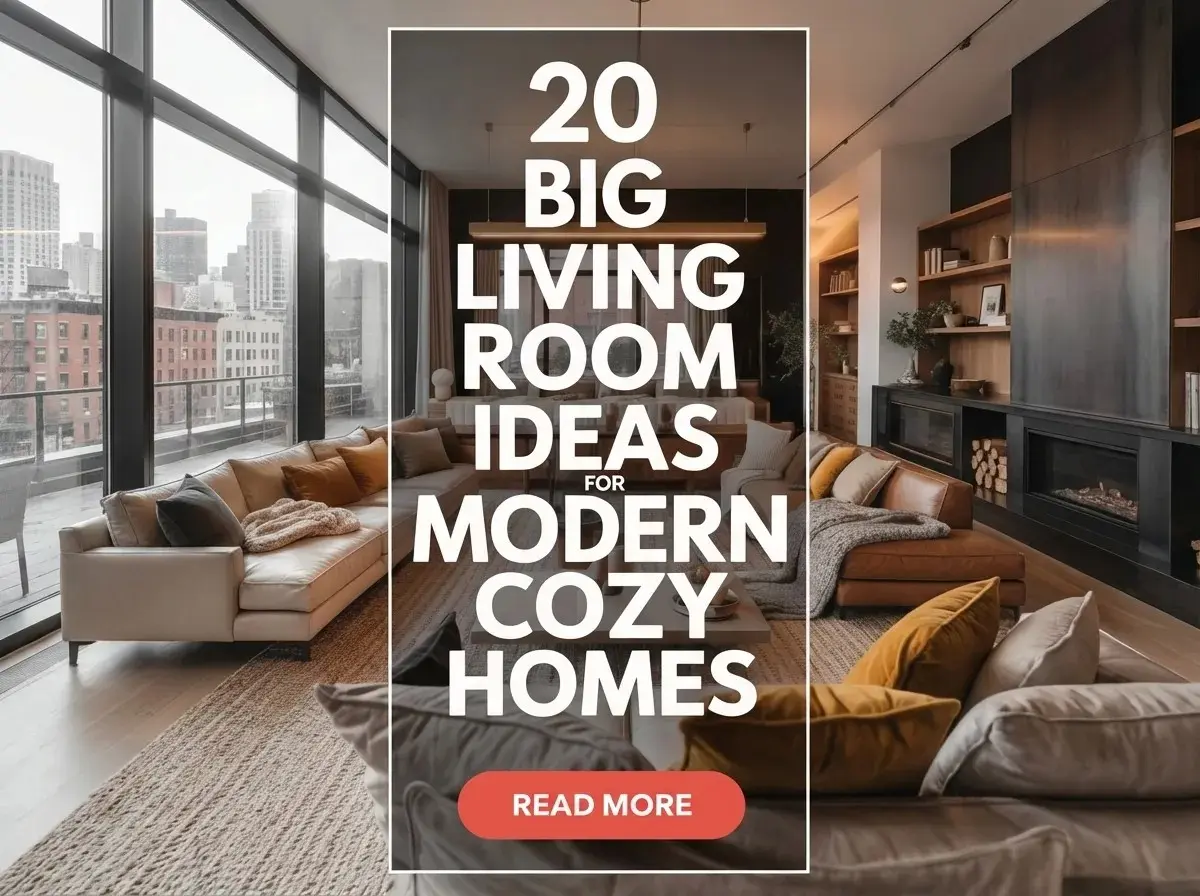
20 big living room ideas for modern cozy homes focus on creating defined zones without losing warmth or flow. Multi-zone seating, oversized sectionals, dual sofas, and floating furniture help anchor the space, while layered rugs, lighting clusters, and mixed seating heights add comfort. Fireplace layouts, reading corners, media zones, built-ins, tall curtains, large-scale art, and soft textures bring balance, intimacy, and a cohesive modern feel.
Modern cozy style blends clean lines with comfort. Modern design favors open space and simple forms. Cozy design favors warmth and closeness. Large living rooms must combine both. This requires zoning, texture, and lighting control. When space stays defined, comfort improves. Big rooms feel calm when every area has purpose.
What Makes A Big Living Room Feel Cozy And Modern?
A big living room feels cozy and modern when scale, zones, and warmth stay balanced. Scale control forms the base of comfort. Furniture must match room size and body use. Small furniture disappears in large rooms. Oversized furniture blocks flow. Seating groups should support conversation. Distance between seats should stay within 6–8 feet for comfort. Zoning divides large rooms into usable areas. Rugs, sofas, and lighting define zones without walls.
Warmth prevents large rooms from feeling cold. Soft textures reduce visual distance. Fabric seating, layered rugs, and curtains absorb sound and light. Lighting must spread across zones. One ceiling light rarely works alone. Studies show layered lighting improves comfort perception by 30% in large rooms. Warm light tones support rest and calm. When scale, zones, and warmth align, big living rooms feel modern and inviting.
Why Do Big Living Rooms Often Feel Empty Or Cold?
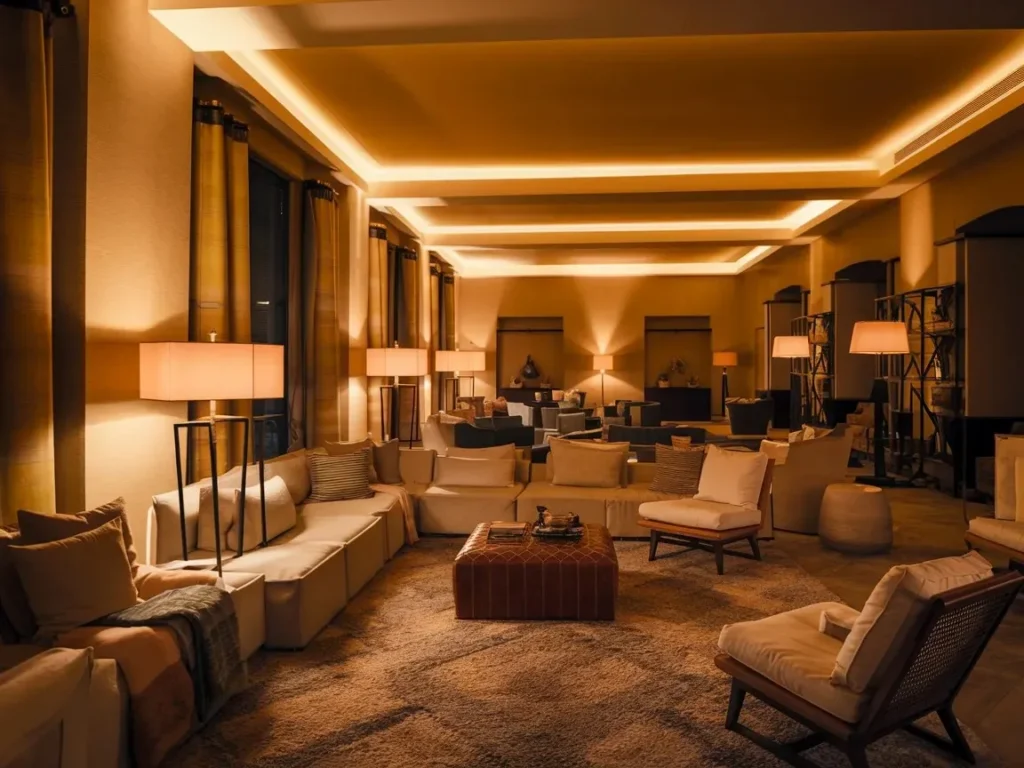
Big living rooms feel empty when furniture fails to define space. Large rooms often push furniture against walls. This creates wide empty centers. People sit far apart. Conversation weakens. Interior behavior studies show seating spaced beyond 9 feet reduces social comfort. Wall-hugging layouts also stretch sightlines, making rooms feel unfinished. Empty centers absorb light and sound poorly. Without clear zones, the room lacks focus.
Cold feeling also comes from lighting gaps and hard surfaces. Large rooms need multiple light sources. One ceiling light leaves dark corners. Hard floors and tall ceilings reflect sound. This increases echo and distance. Texture reduces these effects. Rugs, fabric seating, and curtains help absorb sound and light. Big rooms feel warmer when lighting and texture spread evenly across space.
What Are The 20 Big Living Room Ideas For Modern Cozy Homes?
The 20 big living room ideas focus on zoning, scale, warmth, and modern comfort. Big living rooms need ideas that control space instead of filling it. Large rooms allow more furniture, but random placement creates distance and cold zones. Planning ideas first helps assign purpose to each area. Interior layout research shows rooms with defined zones feel 35% more comfortable than open layouts without structure. These ideas work by grouping seating, anchoring zones, and spreading light evenly. Each idea supports comfort while keeping modern simplicity.
Big rooms differ by shape and ceiling height. Some suit long layouts. Others fit square plans. These ideas adapt to both. Each idea can stand alone or combine with others. The focus stays on real use, not display. Large living rooms feel modern and cozy when every zone supports daily life, rest, and conversation.
The 20 Big Living Room Ideas For Modern Cozy Homes
- Multi-zone seating layout
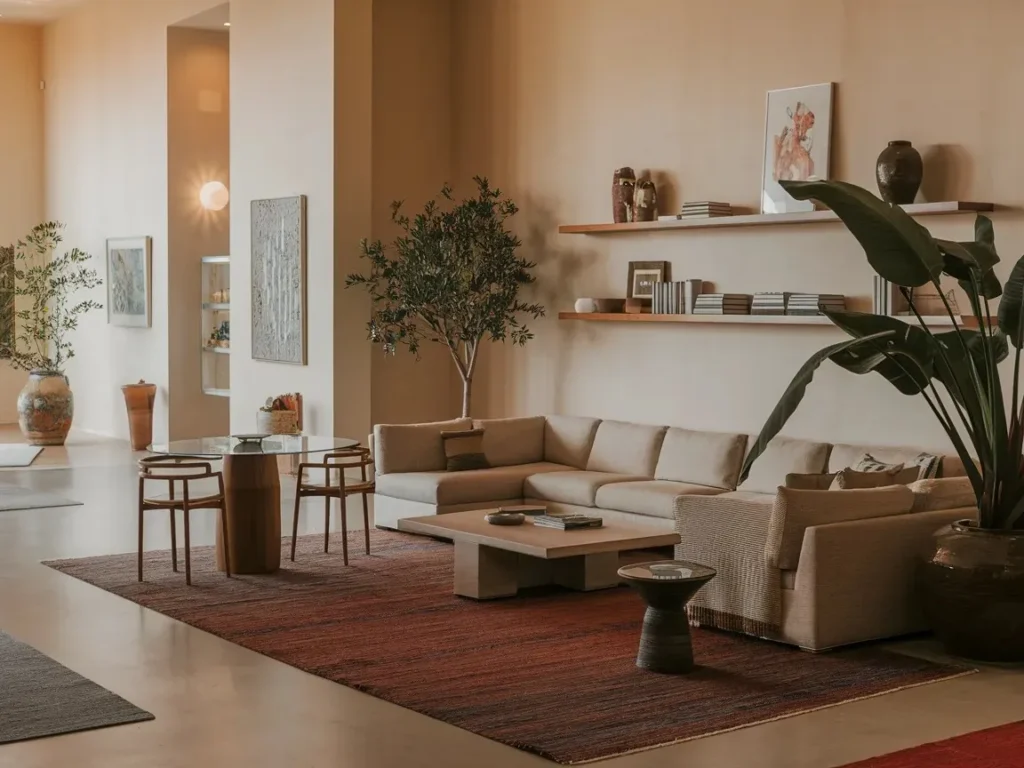
- Oversized sectional anchoring
- Dual sofa arrangement
- Floating furniture grouping
- Layered rug zoning
- Fireplace-centered layout
- Conversation pit seating
- Warm neutral color base
- Statement lighting clusters
- Mixed seating heights
- Reading corner zone
- Media and lounge split
- Large-scale wall art focus
- Balanced symmetry layout
- Soft texture layering
- Tall curtain framing
- Built-in shelving zones
- Lighting layers across zones
- Open yet intimate layout
- Final cohesive layout draft
Multi-Zone Seating Layout
A multi-zone seating layout divides a big living room into clear use areas. Large rooms support more than one seating group. Drawing zones first prevents empty centers. Common zones include a main seating area and a secondary lounge area. Each zone needs a clear boundary. Rugs, sofas, and lighting define these areas without walls. Zoning improves comfort by reducing distance between seats. People interact more when seating stays grouped.
Multi-zone layouts also improve movement. Walkways run between zones instead of through them. This protects seating comfort. Lighting should match each zone’s use. One zone may suit conversation. Another may suit reading. Multi-zone layouts transform large rooms into usable spaces that feel warm and organized.
Oversized Sectional Anchoring
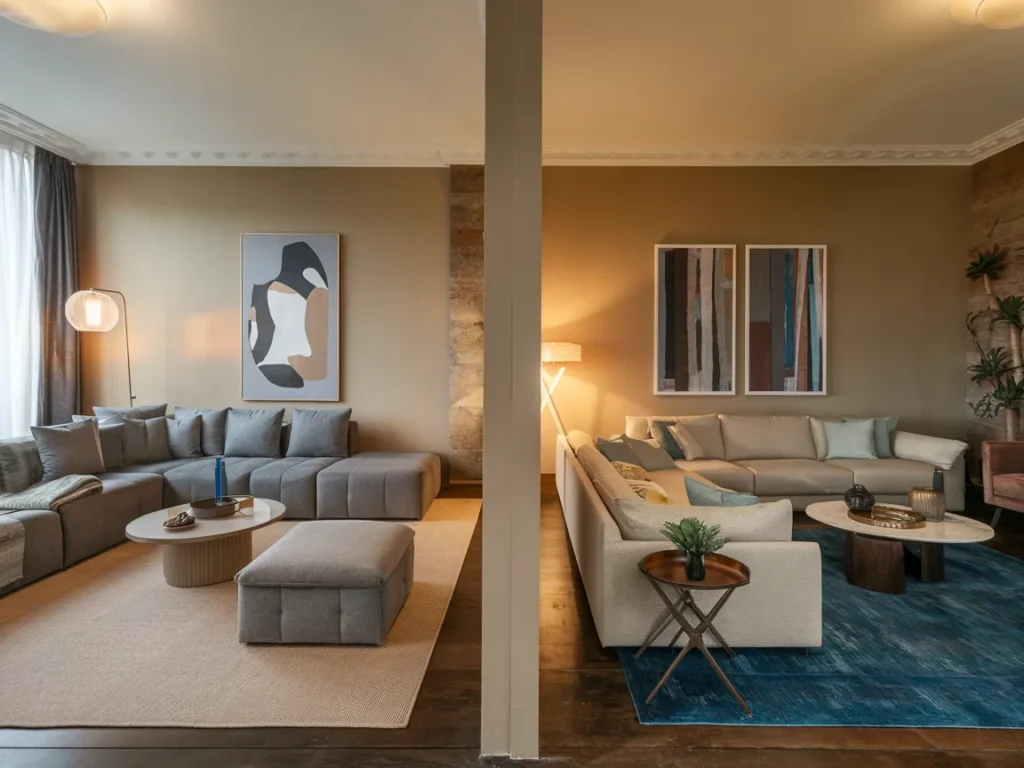
Oversized sectional anchoring uses one large sofa to ground the space. Big living rooms need furniture with presence. Small sofas disappear in wide rooms. A sectional provides visual weight and seating comfort. Placement should define the main zone. Sectionals work best when floating slightly away from walls. This improves flow and balance.
Anchored sectionals reduce the need for extra seating. They pull people closer together. Sectional depth and length must match room size. Overly large units block paths. Proper anchoring improves comfort while keeping modern simplicity.
Dual Sofa Arrangement
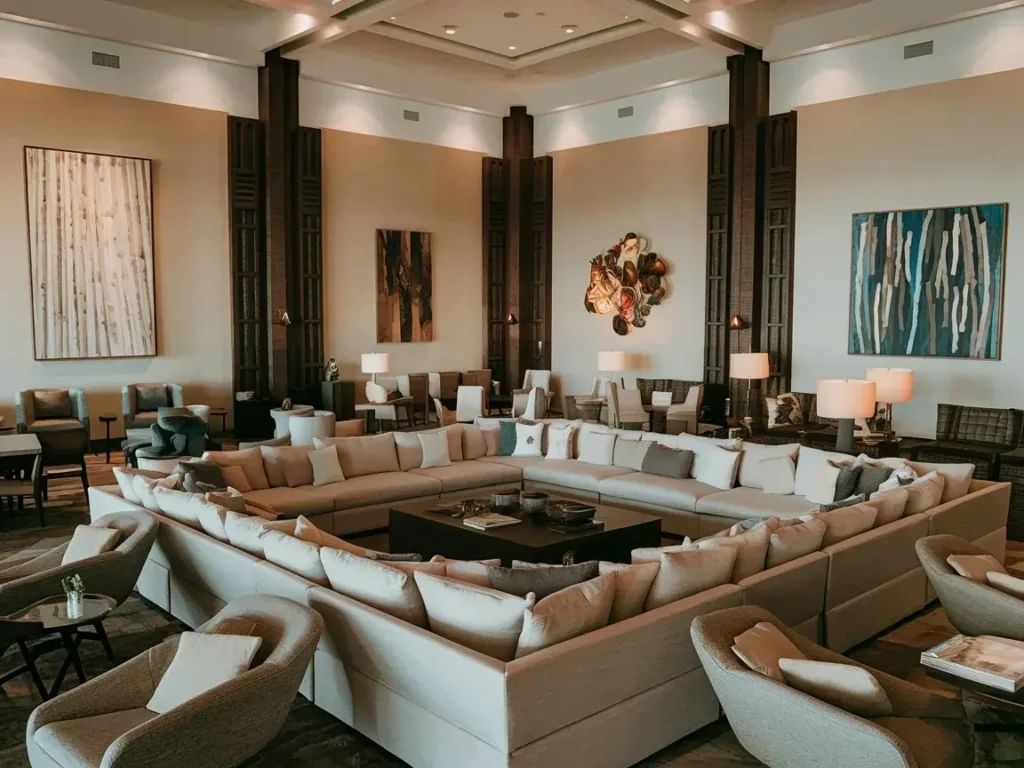
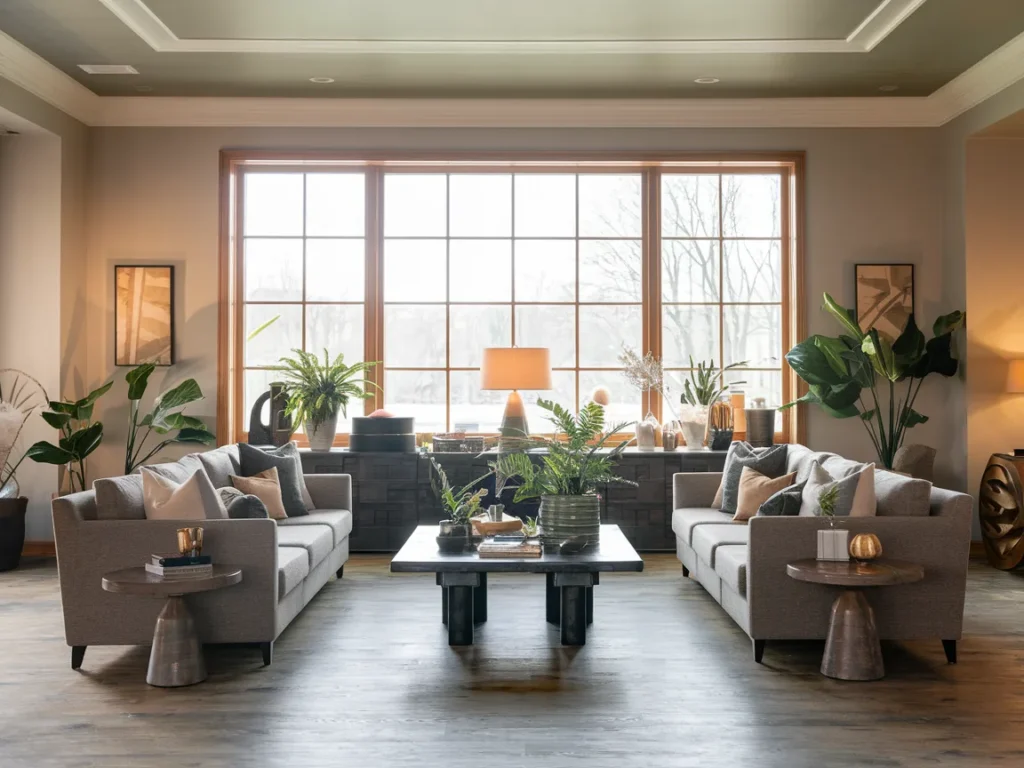
A dual sofa arrangement places two sofas facing or perpendicular to each other. This layout suits conversation-focused rooms. Drawing sofa placement first helps maintain balance. Distance between sofas should stay within 6–8 feet. This supports natural interaction. A shared table anchors the center.
Dual sofa layouts work well in symmetrical rooms. They also suit large rectangular spaces. This arrangement fills space evenly without clutter. Dual sofas transform big living rooms into social and welcoming areas.
Floating Furniture Grouping
Floating furniture grouping moves seating away from walls. Big rooms often feel cold when furniture hugs edges. Floating groups create intimacy. Drawing begins with the center zone. Sofas and chairs float inward with clear paths behind. This defines space clearly.
Floating layouts also improve sightlines. Windows and walls remain visible. Light spreads evenly. This approach suits modern homes with open plans. Floating furniture grouping improves comfort without adding walls.
Layered Rug Zoning
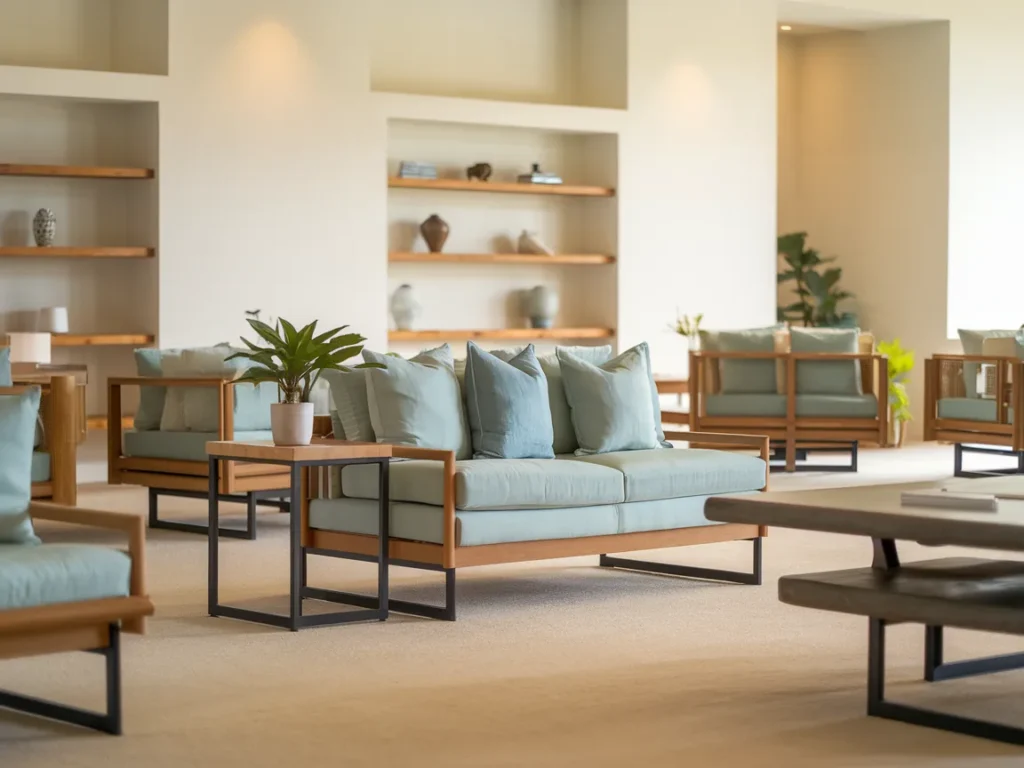
Layered rug zoning uses rugs to define and soften large spaces. Big rooms often need more than one rug. Each rug marks a zone. Rugs should fit seating groups fully. Front legs of sofas and chairs should rest on the rug. This anchors the zone.
Layered rugs add warmth and sound control. Texture reduces echo common in large rooms. Neutral rugs support modern style. Layered rug zoning transforms big living rooms by adding structure and comfort.

Fireplace-Centered Layout
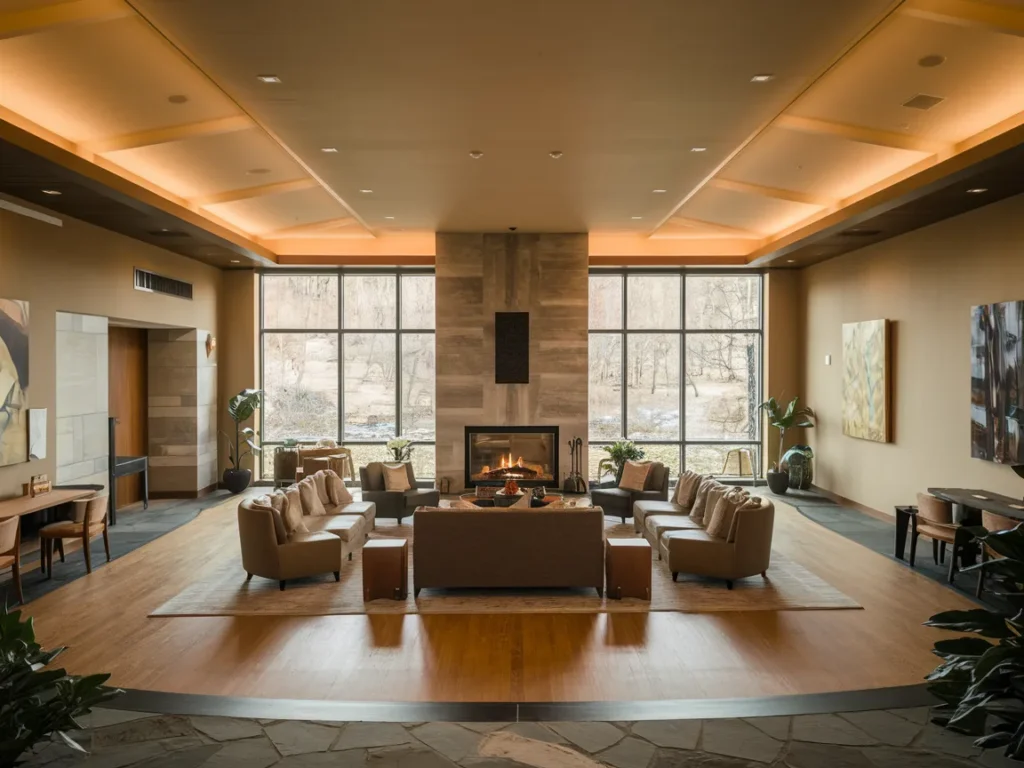
A fireplace-centered layout uses the fireplace as the main anchor of the room. Big living rooms often need a clear focal point. The fireplace naturally draws attention and warmth. Seating should face the fireplace without blocking paths. Sofas and chairs should form a semi-circle or U-shape. This supports conversation and visual balance. Distance from the fire should allow comfort and safety.
Fireplace layouts also guide lighting and decor placement. Light sources should support the focal area. Side tables and rugs help define the zone. This layout works well in modern homes where fireplaces act as both function and feature. A fireplace-centered layout transforms large rooms into grounded, inviting spaces.
Conversation Pit Seating
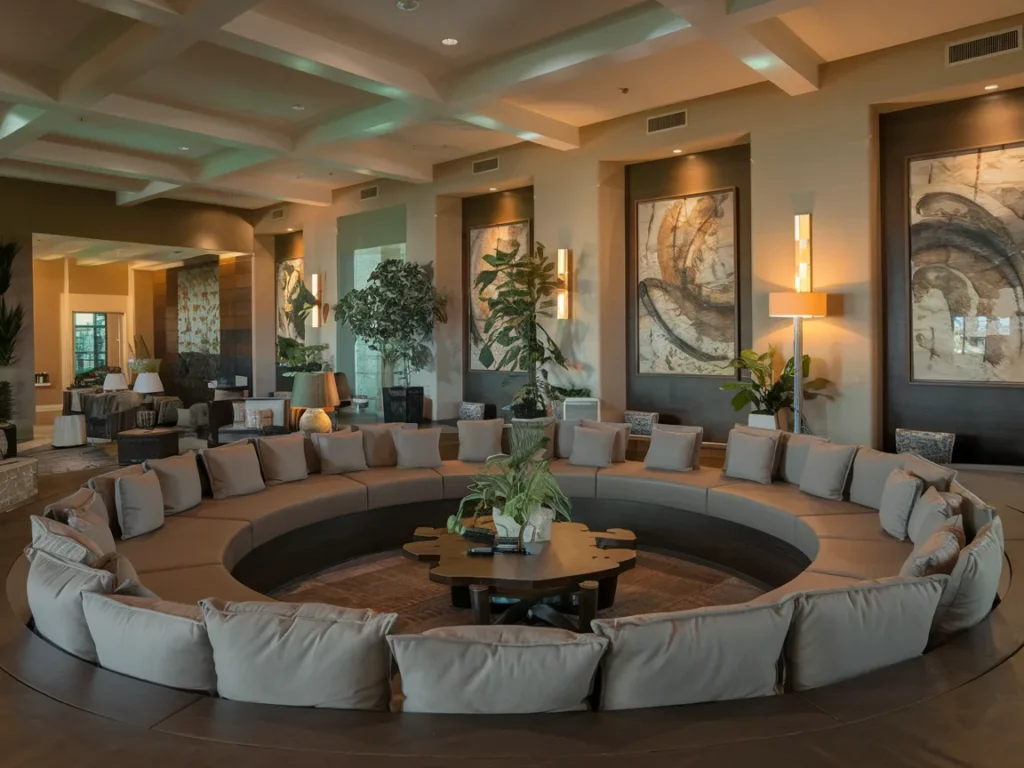
Conversation pit seating lowers seating into a defined zone. This layout creates intimacy inside large rooms. Drawing begins by marking the pit boundary. Seating stays close and inward-facing. The lower height reduces visual distance and improves comfort. Conversation pits suit rooms with enough depth and ceiling height.
This seating style works best with soft materials and layered lighting. Rugs and cushions add warmth. The pit must stay shallow for safety. Conversation pit seating transforms big living rooms by creating a strong social center.
Warm Neutral Color Base
A warm neutral color base sets comfort across large surfaces. Big living rooms need color consistency to avoid cold zones. Neutral tones like beige, warm gray, and soft taupe work well. These colors reflect light evenly and support modern style. Walls, large furniture, and rugs should share this base.
Warm neutrals also support flexibility. Accent colors can appear in small amounts. This prevents visual overload. Warm color bases transform large rooms by adding calm and balance without heaviness.

Statement Lighting Clusters
Statement lighting clusters replace single ceiling fixtures. Big rooms need multiple light sources. Clusters group pendants or fixtures over zones. This creates focus and warmth. Lighting height should suit ceiling height and seating use. Warm bulbs improve comfort.
Clusters also add scale to large rooms. Small lights feel lost alone. Grouped lighting reads stronger. Statement lighting clusters transform big living rooms by spreading light evenly and reducing cold areas.

Mixed Seating Heights
Mixed seating heights add depth and comfort. Big rooms benefit from visual layering. Sofas, chairs, stools, and benches should vary slightly in height. This prevents flat layouts. Seating heights should still support comfort and posture.
Height variation improves sightlines and balance. It also supports different uses like lounging or reading. Mixed seating heights transform large living rooms by adding interest while keeping comfort steady.
Reading Corner Zone
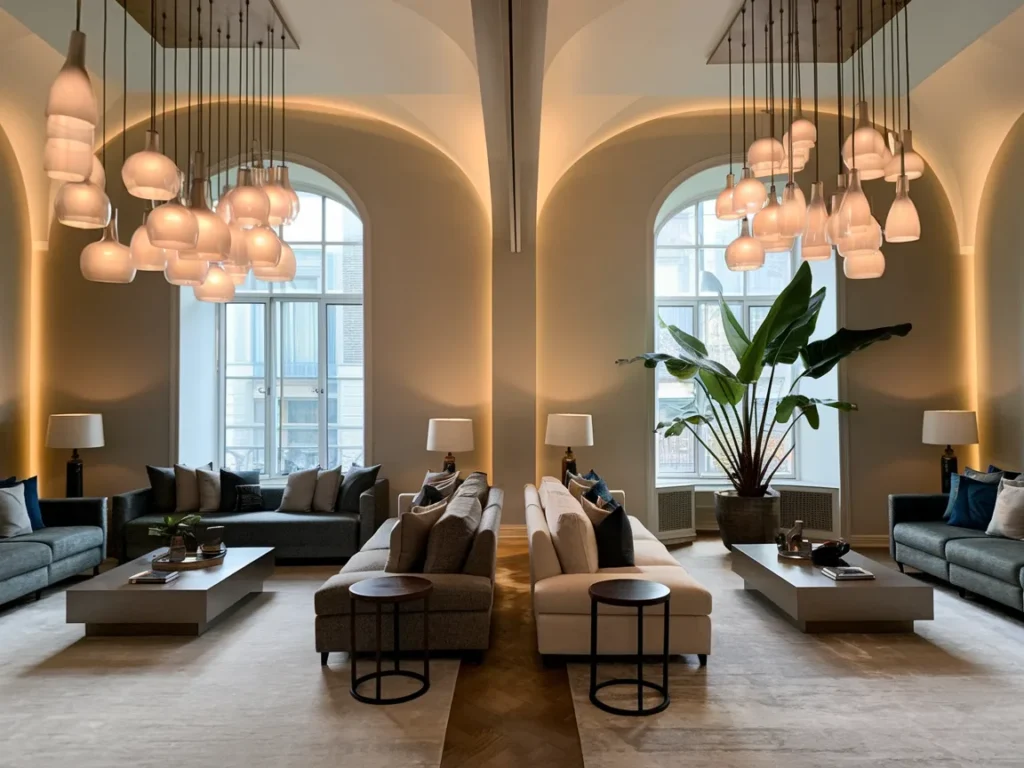
A reading corner zone creates a quiet area inside a large living room. Big rooms allow separation without walls. Drawing starts by choosing a corner near natural light. A chair, small table, and lamp define the zone. The seating should face inward to reduce distraction. Rugs help mark the area and add comfort.
Reading zones reduce unused space. They give purpose to corners that often feel empty. Lighting must support focused tasks like reading. Warm light improves comfort during long use. Reading corner zones transform big living rooms by adding calm and function without closing space.
Media And Lounge Split
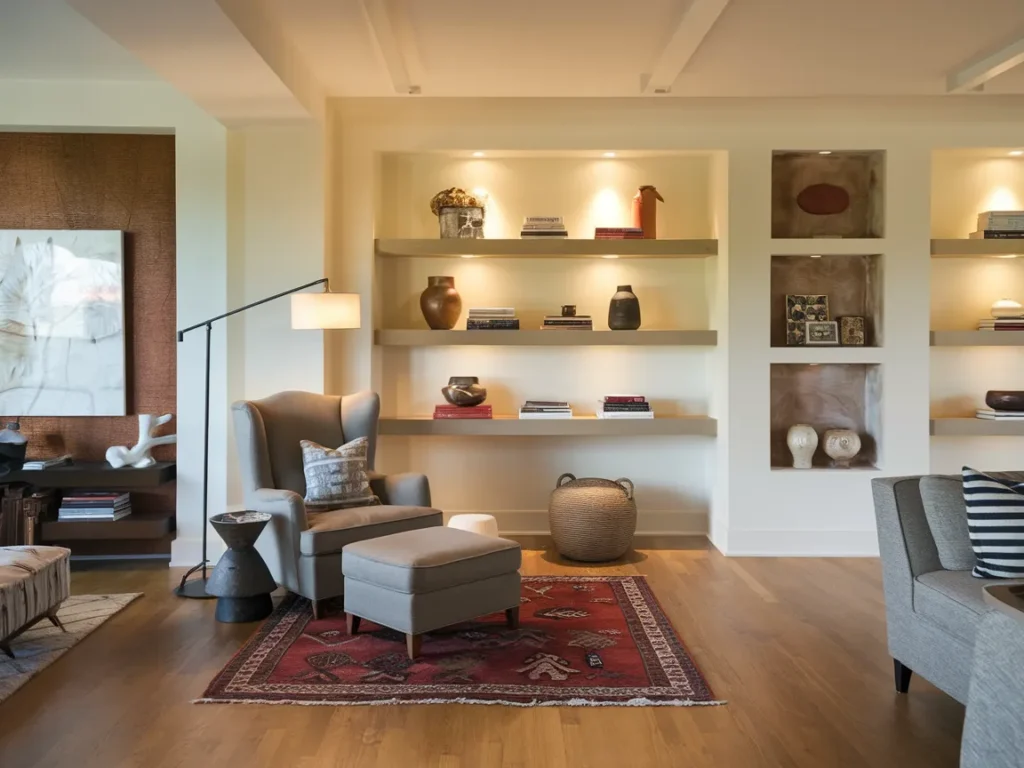
A media and lounge split separates viewing and relaxation areas. Large rooms support more than one activity at once. Drawing begins by marking the TV zone and seating distance. A second zone forms for conversation or rest. This prevents screens from dominating the entire room.
Splitting zones improves comfort for mixed use. One group can watch TV while others relax. Furniture orientation must support both zones. Media and lounge splits transform big living rooms into flexible spaces that serve daily routines.
Large-Scale Wall Art Focus
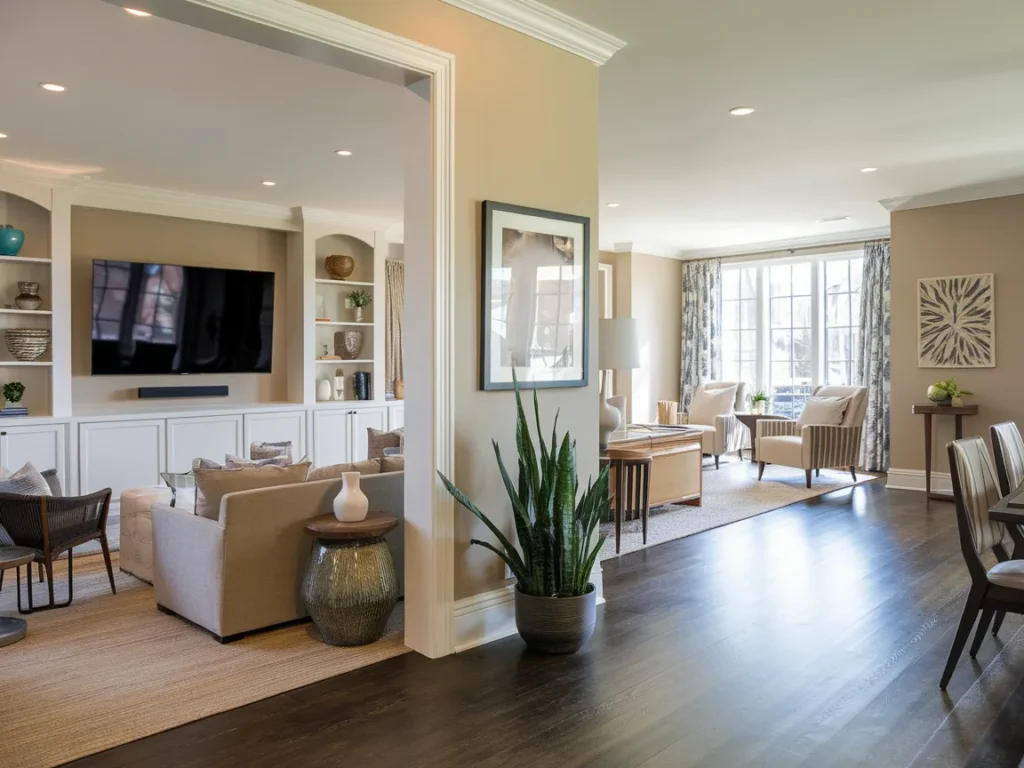
Large-scale wall art focus fills vertical space in big living rooms. Large walls often feel bare or cold. One oversized art piece works better than many small ones. Drawing placement first helps set scale. Art should align with seating zones for balance.
Large art adds warmth and identity. Color and texture from art reduce emptiness. Lighting should highlight the piece softly. Large-scale wall art transforms big rooms by anchoring walls without clutter.
Balanced Symmetry Layout
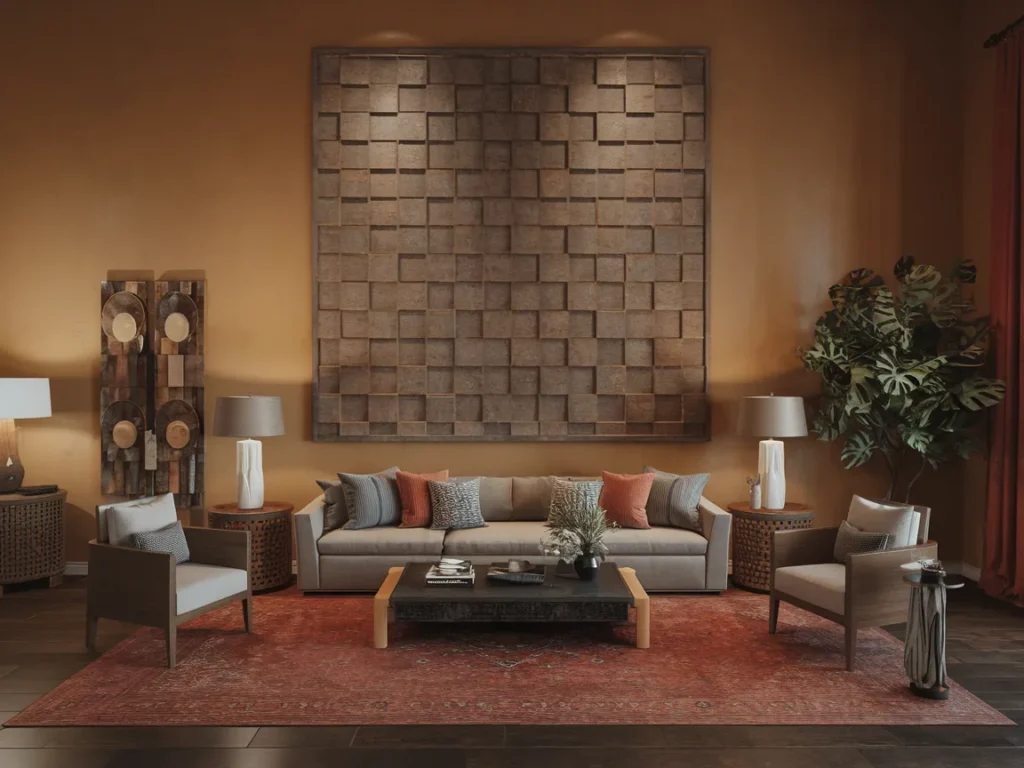
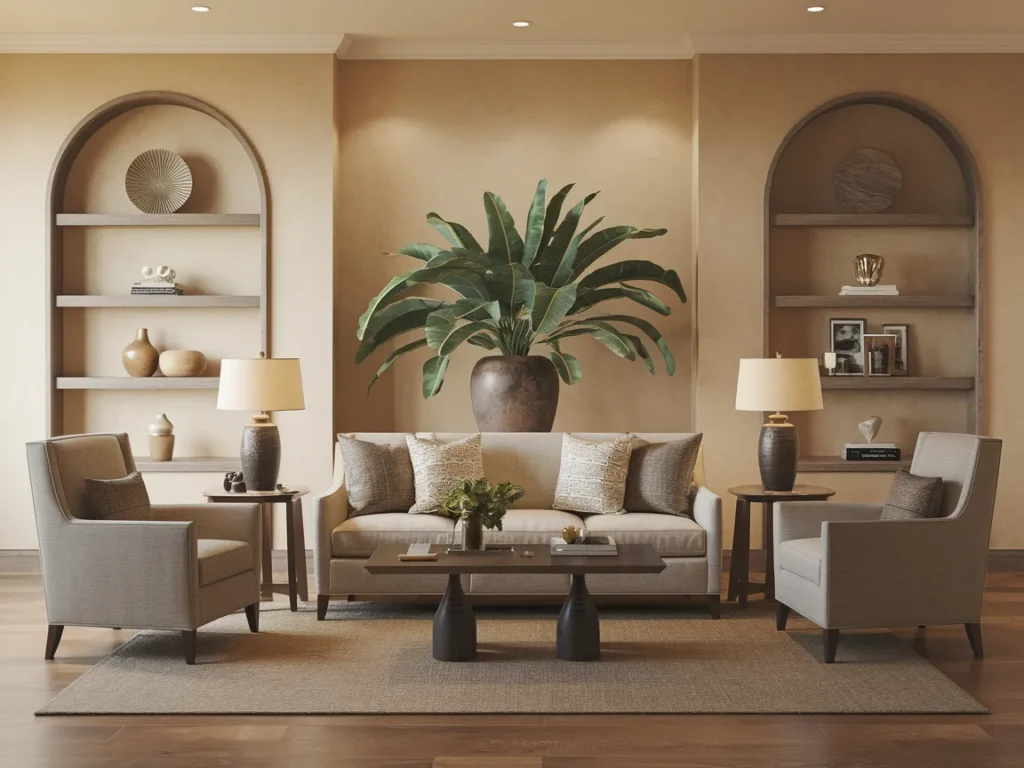
Balanced symmetry layouts use mirrored furniture placement. This approach suits large rooms with centered features like fireplaces or windows. Drawing begins with a center line. Furniture mirrors on each side. This creates order and calm.
Symmetry improves visual comfort. It prevents one side from feeling heavier. Balanced layouts also support conversation flow. Symmetry transforms big living rooms by adding structure and stability.
Soft Texture Layering
Soft texture layering adds warmth across large spaces. Big rooms often echo and feel distant. Textures like fabric seating, rugs, and curtains absorb sound. Drawing texture placement helps balance soft and hard surfaces.
Layering should stay controlled. Too many textures feel busy. Soft texture layering transforms large living rooms by improving comfort, sound control, and visual warmth.

Tall Curtain Framing
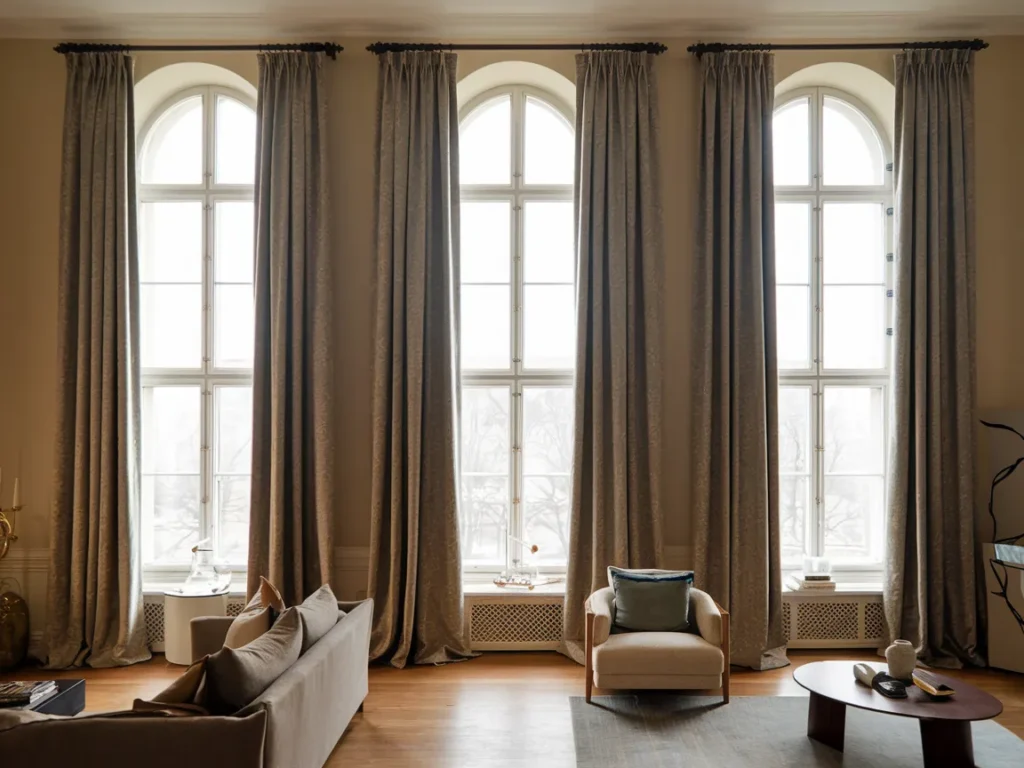
Tall curtain framing uses height to soften large rooms. Big living rooms often have tall windows or high ceilings. Curtains that hang from ceiling height down to the floor reduce vertical emptiness. This framing adds warmth and balance. Fabric curtains also improve sound comfort by absorbing echo. Curtain color should stay close to wall tone for calm flow.
Tall curtains also guide the eye upward without making the room feel cold. They help windows feel connected to the rest of the room. Proper width ensures curtains frame rather than block light. Tall curtain framing transforms large living rooms by adding softness and scale.
Built-In Shelving Zones
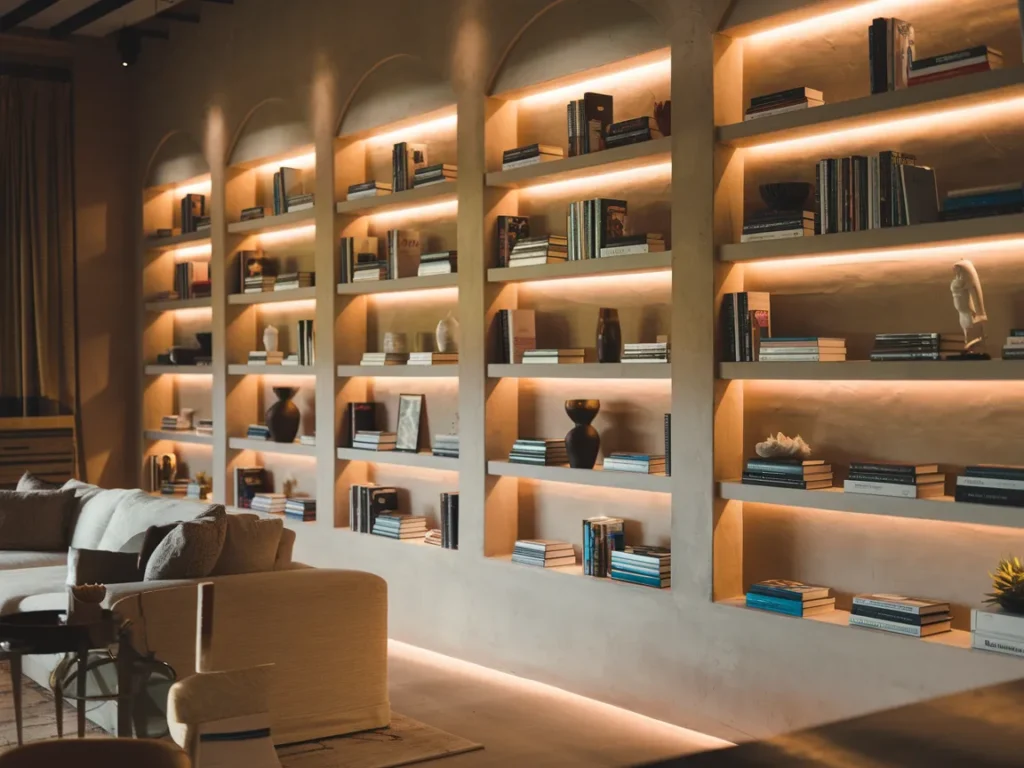
Built-in shelving zones add structure to wide walls. Large rooms often have long blank walls that feel empty. Built-ins break these walls into useful sections. Shelves hold books, decor, or storage without floor clutter. Drawing shelf depth first prevents heavy visuals.
Shelving zones also support zoning. Shelves can frame seating or reading areas. Wood finishes add warmth. Built-in shelving transforms big living rooms by adding function and visual grounding.
Lighting Layers Across Zones
Lighting layers across zones replace single light sources. Big rooms need light at different heights. Floor lamps, table lamps, and ceiling fixtures work together. Each zone needs its own light support. Drawing lighting placement prevents dark corners.
Layered lighting improves comfort and mood. Warm bulbs reduce cold feeling. Lighting layers transform big living rooms by spreading warmth evenly across space.

Open Yet Intimate Layout
Open yet intimate layouts balance openness with closeness. Big rooms often feel too open. Grouping furniture inward creates intimacy. Clear paths remain around groups. Drawing spacing helps control openness.
This layout suits modern homes with open plans. It keeps the room connected while supporting comfort. Open yet intimate layouts transform big living rooms by reducing distance without walls.
Final Cohesive Layout Draft
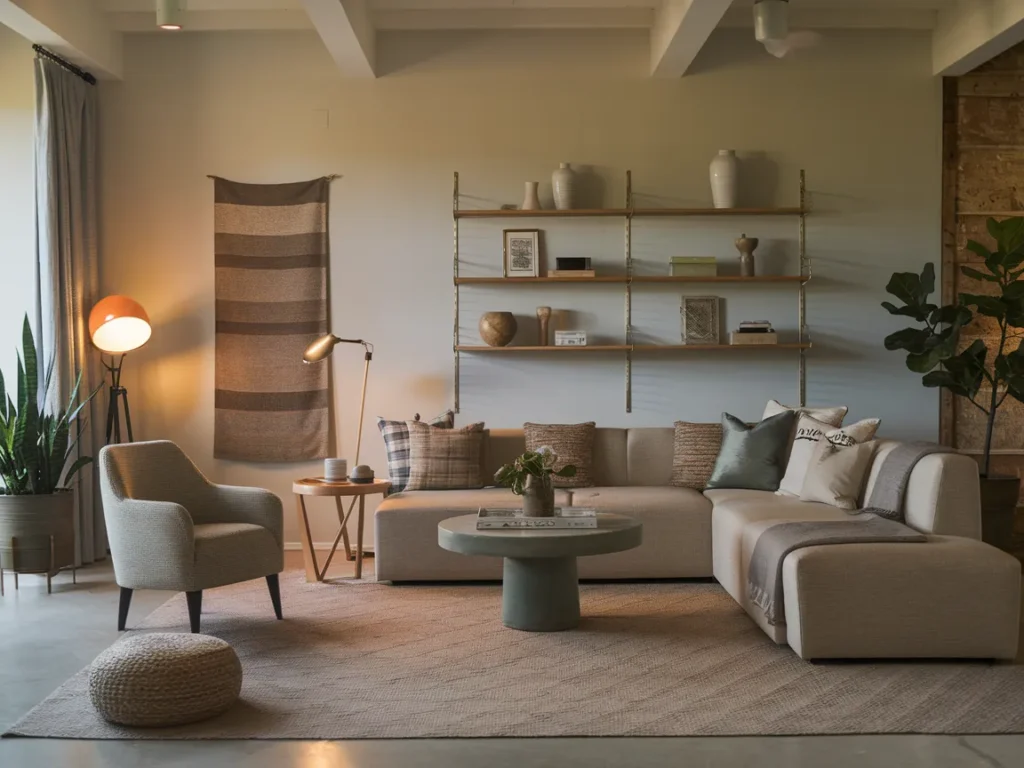
A final cohesive layout draft combines all chosen ideas into one plan. Drawing removes trial placements and keeps the final setup only. This draft shows exact furniture positions and zone boundaries. It guides setup day without confusion.
Final drafts reduce rework and stress. They confirm scale, flow, and comfort. A cohesive layout transforms big living rooms by turning space into a stable, finished environment.
Frequently Asked Questions
People ask how to make large living rooms feel warm and usable. These questions reflect common challenges in oversized spaces.
How Do I Make A Big Living Room Feel Cozy?
Group furniture into zones and add soft textures.
Should Furniture Touch Walls In Large Rooms?
No. Floating furniture improves comfort and balance.
How Many Rugs Does A Big Living Room Need?
Usually two or more to define zones.
Is Symmetry Important In Large Rooms?
Yes. Balance reduces visual stress.
Conclusion
Big living rooms succeed when zones replace empty space. In real large-room layouts, the most common mistake involved spreading furniture too far apart. This increased distance and reduced comfort. The best results came from grouping seating first, then adding light and texture. Oversized sectionals worked better than small sofas. Rugs proved essential for defining zones. Lighting failures caused cold corners. Layered lighting fixed this issue quickly. Hard surfaces increased echo until fabric and curtains softened sound. Final layout drafts saved time during setup and reduced furniture movement. Large living rooms felt best when each zone supported a clear use, such as conversation, reading, or viewing. Comfort improved when scale matched body use rather than room size alone.

