

Halloween indoor decor transforms a home by shifting mood, lighting, and atmosphere. Unlike everyday decor, Halloween styling focuses on mystery, contrast, and controlled darkness. Indoor spaces allow more detail because lighting, placement, and materials stay protected from weather. A spooky home does not rely on clutter or extreme props. It relies on suggestion, shadow, and texture. The best Halloween decor feels intentional rather than chaotic. Each element should contribute to suspense, not overwhelm the space. This guide focuses on indoor decor ideas that create a spooky feeling while keeping the home functional and visually balanced.
Indoor Halloween decor works best when layered. Lighting, wall decor, textiles, and small props work together to shape the experience. Rooms like living rooms, hallways, staircases, and dining areas offer strong opportunities for spooky styling. Decor should guide the eye and control attention. Too many decorations reduce impact. Well-placed decor builds tension slowly. This article lists Halloween indoor decor ideas that work across different home styles, from modern to traditional. The ideas prioritize atmosphere, safety, and ease of setup so the home feels spooky without becoming uncomfortable or cluttered.
22 Halloween Indoor Decor Ideas for a Spooky Home
Halloween indoor decor succeeds when it balances fear and style. The goal is not shock but mood. Indoor spaces benefit from controlled lighting and close-up detail. Spooky decor should feel intentional and immersive. Shadows, textures, and limited color palettes help build atmosphere. Many of the most effective Halloween interiors rely on black, gray, deep red, muted orange, and antique tones. Materials like fabric, wood, glass, and metal add depth. These decor ideas focus on creating a haunted feeling without damaging walls or furniture. Each idea works alone or combined with others depending on room size and preference.
Listing all ideas early helps readers choose what fits their space and comfort level. Some homes prefer light spooky styling, while others aim for full haunted-house atmosphere. The list below covers a range of intensity levels. Small decor changes can still create strong effects when placed well. Detailed explanations will follow later so each idea can be applied safely and effectively. For now, this overview gives a clear picture of how to transform indoor spaces for Halloween.
The 22 Halloween indoor decor ideas covered in this guide:
- Moody candle cluster displays
- Faux spider web wall accents
- Spooky mirror illusions
- Gothic table centerpieces
- Floating candle ceiling decor
- Dark fabric wall draping
- Haunted portrait gallery wall
- Skeleton seating decor
- Creepy window silhouette cutouts
- Lanterns with flickering lights
- Halloween-themed throw pillows
- Black floral arrangements
- Skull and bone shelf styling
- Fog-effect floor lighting
- Witch-themed corner displays
- Raven and crow decor accents
- Staircase banister Halloween styling
- Haunted book stack decor
- Dim colored bulb lighting
- Spooky wall decals
- Halloween scent styling
- Shadow projector lighting
Moody Candle Cluster Displays
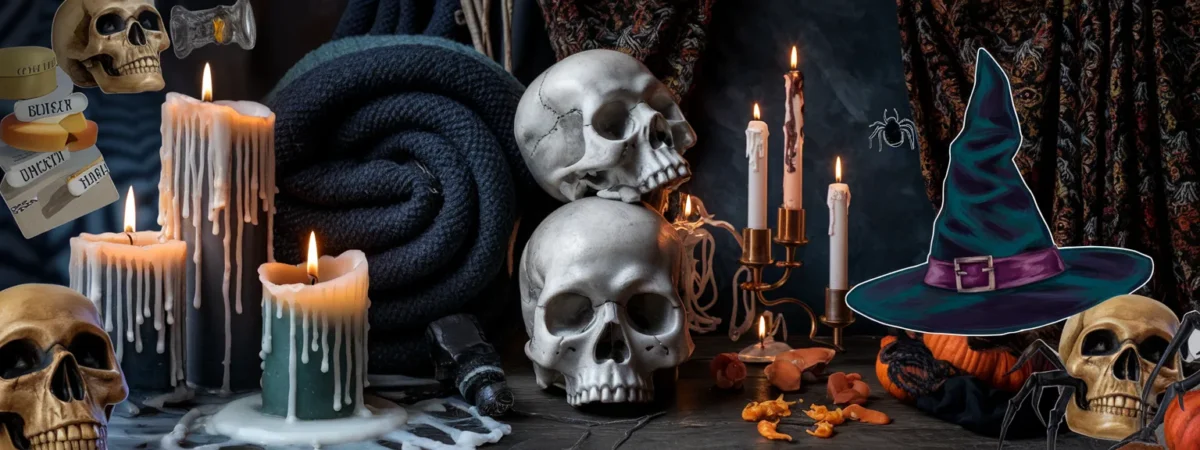
Moody candle cluster displays create atmosphere through light and shadow rather than decoration volume. Candles grouped together at varying heights draw the eye and soften the surrounding space. Indoors, candle clusters work best on mantels, dining tables, sideboards, or console tables. Use a mix of pillar candles, taper candles, and small votives to create visual depth. Dark candle colors like black, deep red, or burnt orange enhance the spooky mood. Candle holders in metal, stone, or aged wood add texture. Battery-operated candles work well for safety while still creating flicker. The goal stays subtle tension, not brightness. Candlelight should pool rather than flood the room.
Placement affects impact. Candles should sit in uneven groupings rather than straight lines. Leave surrounding areas dim so the candlelight becomes the focal point. Avoid placing candles near reflective surfaces that create glare. Adding a few skulls, old books, or dried branches near the cluster increases texture without clutter. Candle clusters transform indoor spaces by slowing the eye and building suspense. This decor choice works in both small and large rooms because it relies on mood rather than size.
Faux Spider Web Wall Accents
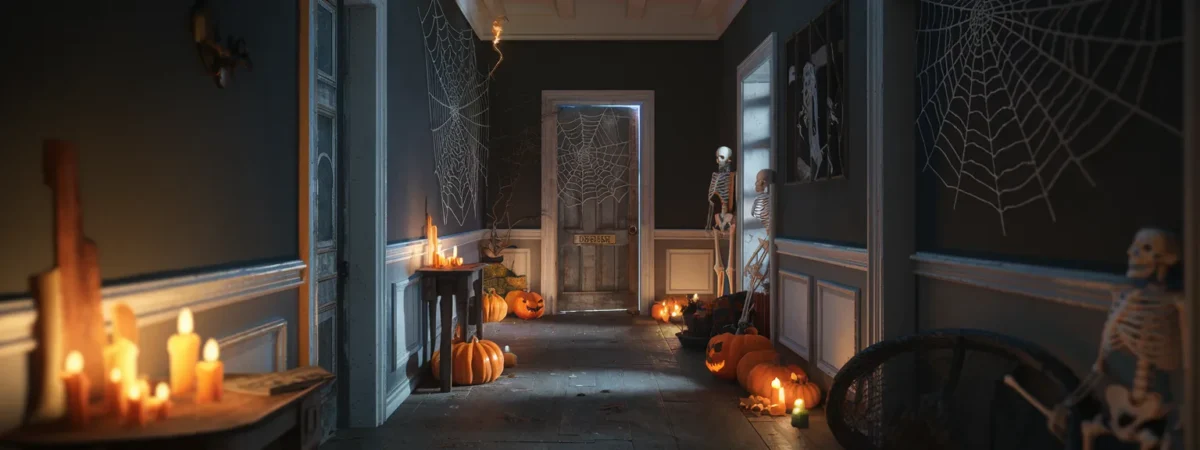
Faux spider web wall accents create instant Halloween atmosphere through texture and association. Indoors, spider webs work best when stretched lightly rather than packed densely. Thin webbing applied across corners, wall edges, shelves, or mirrors feels more believable and eerie. Overloaded webs quickly look artificial. Use cotton-based webs pulled thin to create irregular strands. Strategic placement around door frames or ceiling corners enhances realism. Webs catch light softly, which adds depth without blocking visibility.
Spider web accents pair well with small spider props placed sparingly. Avoid placing webs at eye level where they disrupt movement. Focus on upper corners or unused wall sections. Combining webs with dark wall colors or candlelight increases contrast. Spider web decor transforms indoor spaces by introducing tension without taking up physical space. This makes it ideal for hallways and staircases.
Spooky Mirror Illusions
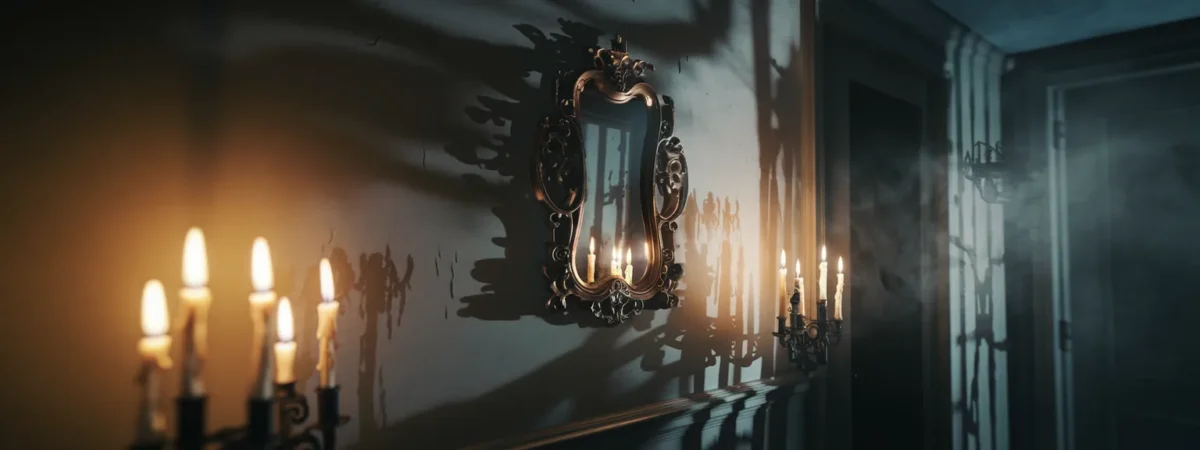
Spooky mirror illusions use reflection to create unease. Mirrors already carry mystery, making them effective Halloween decor elements. Simple additions like removable decals, fogged glass effects, or shadow silhouettes change how mirrors feel without damage. A cracked mirror decal or faint handprint illusion adds subtle fear. Mirrors placed in dim areas amplify candlelight and shadow movement. This makes the space feel alive.
Mirror illusions work best when understated. Avoid bold graphics that reduce realism. Use muted tones and partial coverage. Position mirrors where reflections appear unexpectedly, such as at the end of hallways. Spooky mirror decor transforms indoor spaces by creating psychological tension rather than visual clutter. It encourages second looks and slow movement, which deepens the Halloween experience.
Gothic Table Centerpieces
Gothic table centerpieces anchor Halloween decor in dining or living areas. These centerpieces rely on dark materials, layered textures, and vertical interest. Black table runners, aged trays, or dark wood bases provide a foundation. Add elements like skulls, candlesticks, dried flowers, and antique-style objects. Keep the centerpiece compact so the table remains usable. Gothic styling focuses on mood, not excess.
Balance matters in gothic decor. Mix matte and reflective surfaces carefully. Glass and metal catch light, while fabric absorbs it. Avoid bright colors that break the mood. Gothic table centerpieces transform indoor spaces by making everyday furniture part of the Halloween narrative. They work well for dinner parties or quiet evening ambiance.
Floating Candle Ceiling Decor
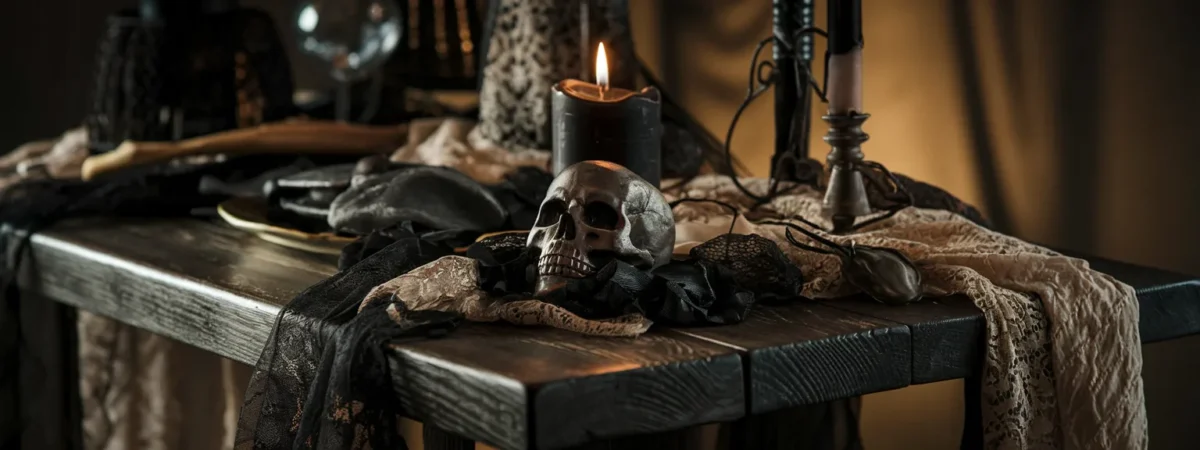
Floating candle ceiling decor creates dramatic impact by drawing attention upward. This decor uses lightweight faux candles suspended with clear fishing line. When paired with warm flickering lights, the effect feels magical and eerie. Floating candles work best in rooms with higher ceilings or over dining tables. Spacing should remain even to avoid tangling.
Lighting control is essential. Turn off overhead lights so floating candles stand out. Avoid overcrowding the ceiling. Fewer candles placed well feel more immersive. Floating candle decor transforms indoor spaces by creating a haunted, cinematic experience without floor clutter.
Dark Fabric Wall Draping
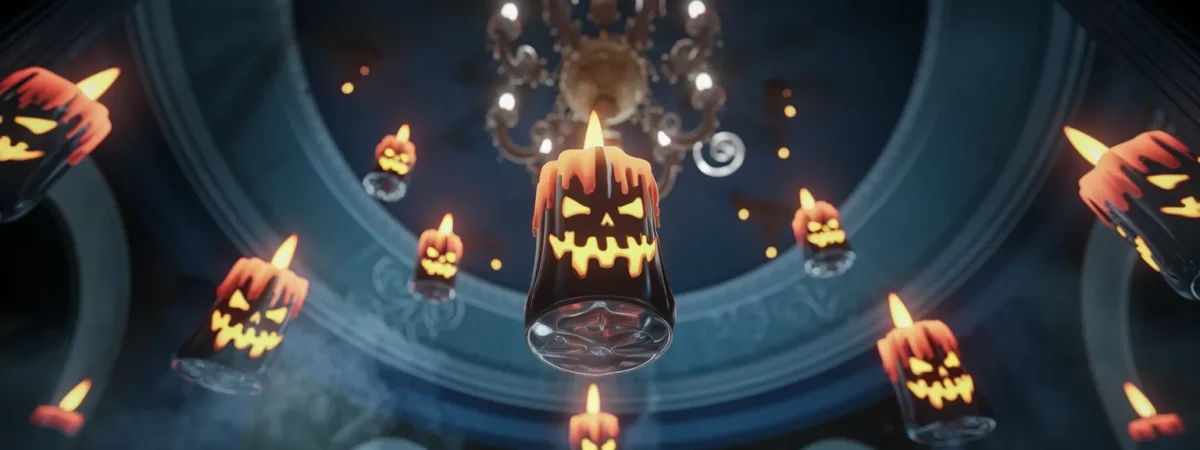
Dark fabric wall draping transforms indoor spaces by changing how walls feel and behave. Draping fabric over walls softens hard edges and absorbs light, which deepens shadows and creates a haunted mood. Use lightweight black, charcoal, or deep burgundy fabric so it hangs naturally without pulling fixtures. Fabric can drape behind furniture, over door frames, or along stairway walls. Avoid tight wrapping. Loose folds feel more organic and unsettling. Fabric instantly shifts the room away from everyday decor and into a Halloween setting without permanent changes.
Placement should feel intentional. Focus on one or two wall areas rather than the entire room. Pair fabric draping with candles or low lighting so shadows move across the folds. Avoid blocking vents or light switches. Dark fabric draping transforms indoor spaces by reducing brightness and creating visual depth. It works especially well in hallways and staircases where walls frame movement.
Haunted Portrait Gallery Wall
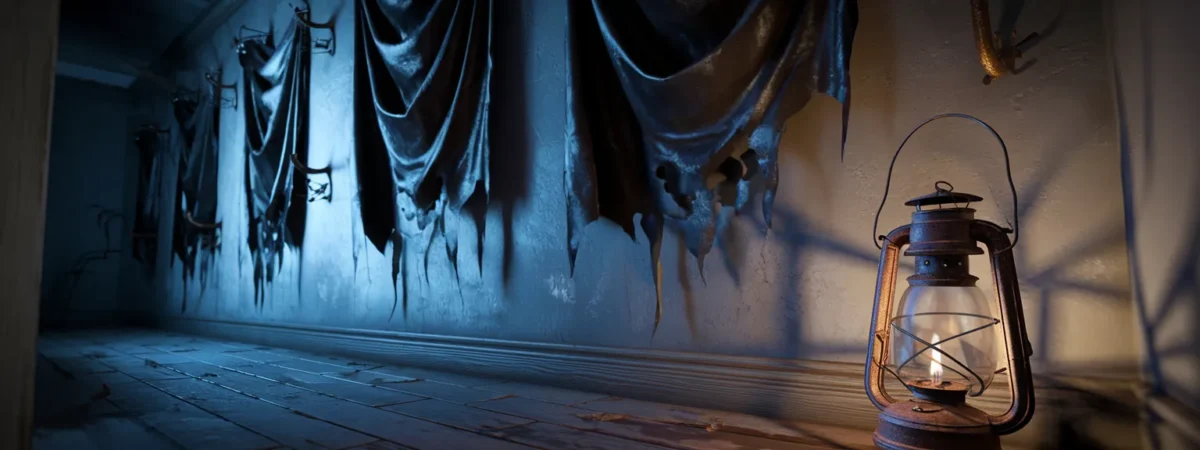
A haunted portrait gallery wall creates story and suspense through faces and frames. Use printed portraits of Victorian figures, faded photographs, or ghostly illustrations. Frames should look aged, ornate, or distressed. Arrange portraits close together to create density without clutter. The goal is to make the wall feel watched rather than decorative. Slightly crooked frames add unease without appearing messy.
Lighting defines the effect. Use dim accent lighting or candlelight below the frames so shadows stretch upward. Avoid bright overhead lights. Portraits work best in hallways, staircases, or near dining areas. This decor transforms indoor spaces by adding narrative tension. Viewers linger longer, scanning faces and details, which deepens the Halloween experience.

Skeleton Seating Decor
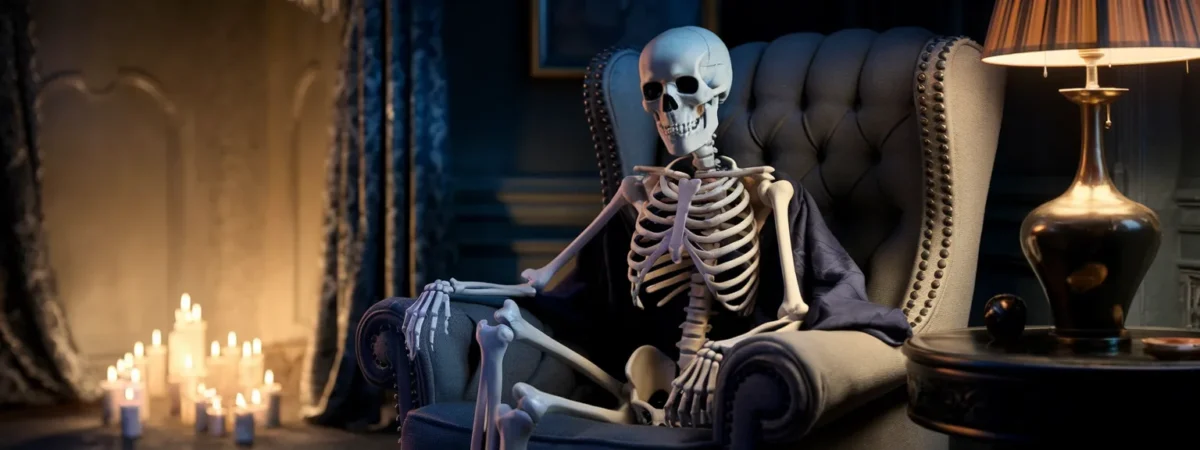
Skeleton seating decor adds dark humor and shock value without requiring complex setup. Use full or partial skeleton props placed naturally on chairs, sofas, or benches. Position skeletons as if they are resting, reading, or watching. This realism increases impact. Avoid stiff or straight poses. Slightly slouched positions feel more convincing and eerie.
Skeleton decor works best when limited to one or two figures. Too many skeletons reduce impact. Dress skeletons in simple fabric like cloaks or scarves for texture. Avoid blocking walkways or seating areas still in use. Skeleton seating transforms indoor spaces by introducing unexpected presence and visual storytelling without crowding the room.
Creepy Window Silhouette Cutouts
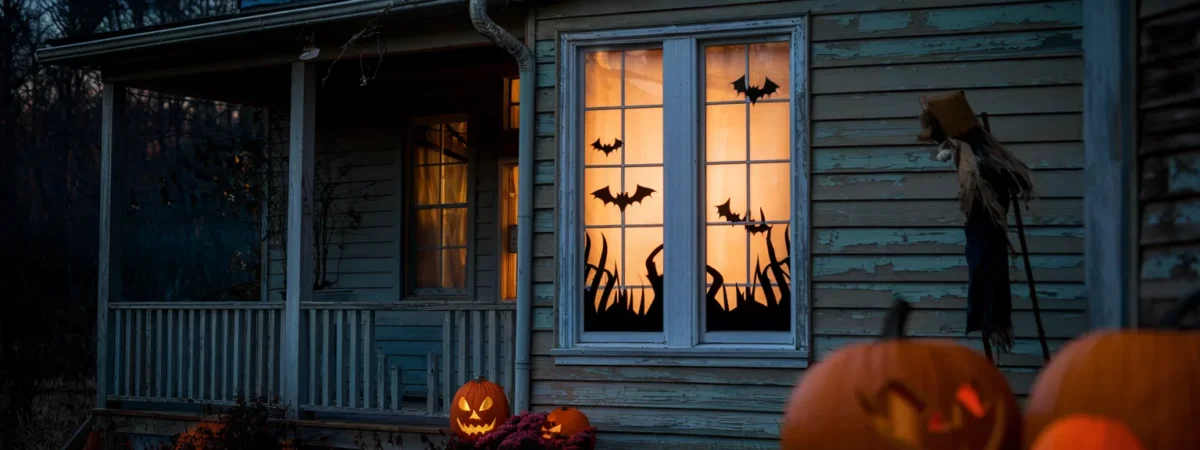
Creepy window silhouette cutouts use contrast to suggest danger or mystery beyond the glass. Black paper or vinyl silhouettes shaped like hands, figures, or branches create strong visual impact at night. Indoors, silhouettes should face outward so they appear from inside and outside perspectives. Use removable materials to protect windows.
Keep silhouettes simple. Too much detail reduces clarity from a distance. Pair silhouettes with dim interior lighting to increase contrast. Avoid covering the entire window. Negative space strengthens fear. Window silhouettes transform indoor spaces by extending the Halloween atmosphere beyond the room, making the home feel watched and mysterious.
Lanterns With Flickering Lights
Lanterns with flickering lights add portable atmosphere to indoor Halloween decor. Place lanterns along floors, stairs, or beside furniture. Black or aged metal lanterns feel more authentic than glossy finishes. Battery-powered flicker lights simulate flame safely. Group lanterns in odd numbers for natural balance.
Height variation increases effect. Combine floor lanterns with tabletop versions. Avoid bright bulbs that reduce mood. Lantern decor transforms indoor spaces by guiding movement and controlling attention through light placement. It works well in entryways and corridors where shadows stretch naturally.

Halloween-Themed Throw Pillows
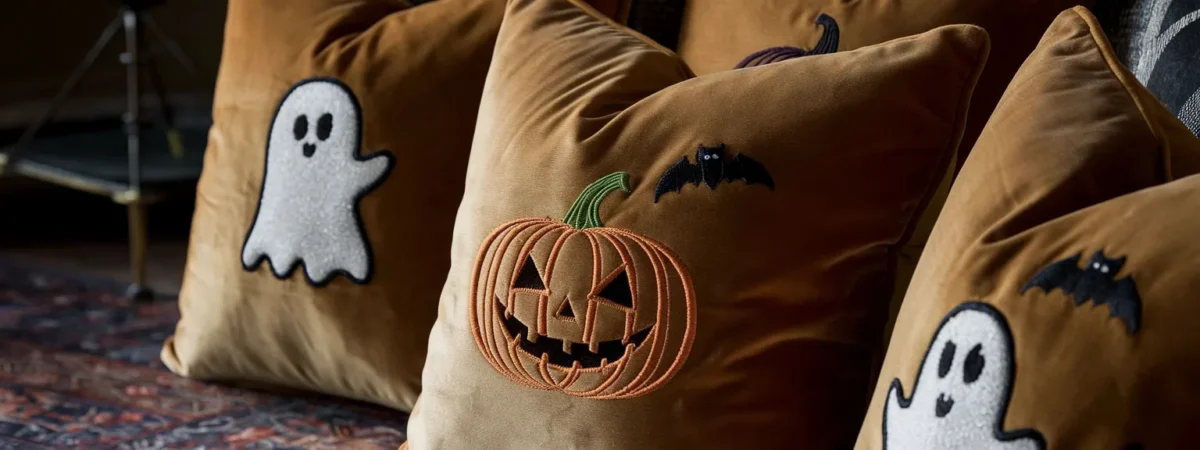
Halloween-themed throw pillows transform indoor seating areas without changing furniture. Pillows allow seasonal styling that feels intentional but temporary. Use covers in black, deep orange, charcoal, or muted purple. Subtle motifs such as ravens, moons, spiders, or gothic text work better than loud graphics. Texture matters more than print. Velvet, knit, or embroidered pillows absorb light and deepen the spooky mood. Place pillows on sofas, armchairs, or window seats. Limit the number so seating stays usable. Pillows should support comfort first, decor second.
Arrangement affects impact. Mix solid and patterned pillows for balance. Avoid symmetry that feels staged. Slight variation in size creates a natural look. Pillows pair well with throws and dark fabric draping. Halloween throw pillows transform indoor spaces by adding seasonal character without permanent change or clutter.
Black Floral Arrangements
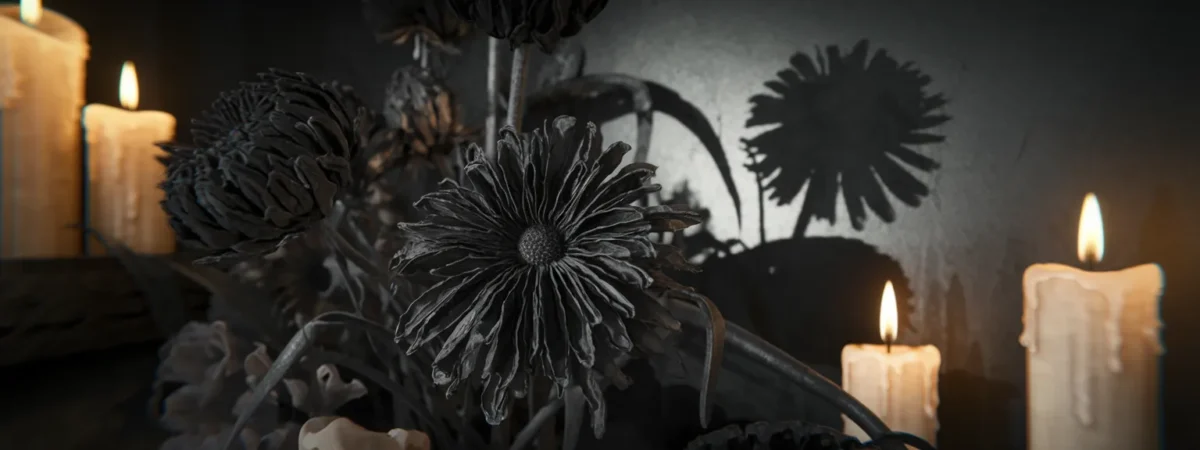
Black floral arrangements introduce gothic elegance and texture to Halloween decor. Use dried flowers, artificial blooms, or spray-painted stems in black, deep burgundy, or dark gray. Avoid fresh flowers that wilt quickly. Black florals work well in vases, bowls, or tabletop displays. Their shape adds height and movement without brightness. Indoors, black florals soften furniture lines while maintaining a moody tone.
Placement should feel intentional. Use black florals as focal points on tables or shelves rather than scattered accents. Pair them with candles or skull decor for texture contrast. Keep arrangements compact to avoid blocking movement. Black floral decor transforms indoor spaces by adding organic form without breaking the dark color palette.
Skull And Bone Shelf Styling
Skull and bone shelf styling creates eerie detail without filling floor space. Shelves allow small props to feel curated rather than chaotic. Use realistic skull replicas, small bone shapes, or anatomical decor. Place them among books, jars, or candles to create layered interest. Avoid lining items in straight rows. Irregular spacing feels more unsettling.
Balance matters to avoid clutter. Leave empty shelf space so each object stands out. Mix matte and slightly reflective surfaces for depth. Skull decor works best when limited to one shelf or section. Shelf styling transforms indoor spaces by adding detail that rewards close viewing without overwhelming the room.

Fog-Effect Floor Lighting
Fog-effect floor lighting adds movement and mystery to indoor Halloween decor. Use low-lying fog machines or fog-effect LED projectors near the floor. The fog should stay light and controlled. Heavy fog reduces visibility and comfort. Indoors, fog works best in entryways, hallways, or around furniture bases. Combined with dim lighting, fog catches light and creates a haunted atmosphere.
Placement requires care. Keep fog machines away from smoke detectors and electronics. Use short bursts rather than constant flow. Pair fog with lanterns or floor lighting to enhance effect. Fog-effect lighting transforms indoor spaces by adding motion and depth, making the environment feel alive and unpredictable.

Witch-Themed Corner Displays
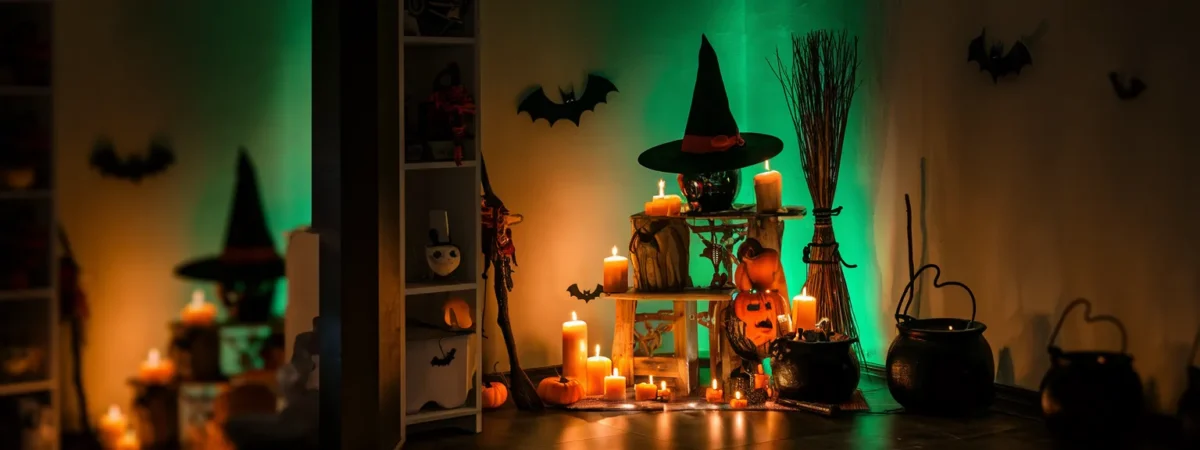
Witch-themed corner displays create storytelling moments in unused spaces. Corners often go unnoticed, making them ideal for immersive decor. Use items like cauldrons, broomsticks, spell books, crystals, and fabric cloaks. Arrange items as if mid-ritual rather than staged. Layer textures such as wood, fabric, and metal.
Lighting defines the mood. Use green or amber accent lights to suggest magic. Avoid bright light that breaks illusion. Witch-themed displays transform indoor spaces by adding narrative depth without interfering with daily movement.
Raven And Crow Decor Accents
Raven and crow decor accents add symbolism and atmosphere to Halloween interiors. These birds carry strong associations with mystery, night, and folklore, making them effective spooky elements without excess props. Use realistic bird figurines or silhouettes placed on shelves, mantel edges, or window ledges. Black feathers, matte finishes, and lifelike poses feel more convincing than cartoon styles. Ravens work best when positioned slightly above eye level, creating the sense of being watched. This subtle tension builds atmosphere without startling guests.
Placement should feel deliberate. One or two birds create impact; many reduce realism. Pair ravens with books, skulls, or lanterns to form small vignettes. Avoid placing them near bright light sources that flatten shadows. Raven decor transforms indoor spaces by adding narrative depth and quiet menace without cluttering surfaces.

Staircase Banister Halloween Styling
Staircase banister Halloween styling uses vertical space to guide the eye upward. Wrap banisters lightly with dark fabric, faux vines, or subtle webbing. Avoid tight wrapping, which looks artificial. Loose draping feels organic and eerie. Add small accents like dangling charms, skeletal hands, or mini lanterns spaced evenly along the rail. Staircases work well for decor because movement naturally draws attention.
Lighting enhances effect. Use small warm lights at the base of the stairs to cast upward shadows. Avoid bright overhead lighting. Keep steps clear for safety. Banister styling transforms indoor spaces by turning transitional areas into immersive Halloween moments without blocking movement.

Haunted Book Stack Decor
Haunted book stack decor adds storytelling to shelves, tables, or floor corners. Use old hardcover books with worn covers or faux antique spines. Stack books unevenly to avoid symmetry. Add props like fake spell labels, wax seals, or small skulls between stacks. Books suggest history and secrets, which deepens the haunted feeling.
Placement should stay controlled. One or two stacks work best. Avoid spreading book decor across many surfaces. Pair stacks with lanterns or ravens for cohesion. Haunted book stacks transform indoor spaces by creating narrative without noise, encouraging guests to look closer rather than glance past.
Dim Colored Bulb Lighting
Dim colored bulb lighting shifts the emotional tone of indoor spaces instantly. Use bulbs in muted orange, deep red, or soft purple tones rather than bright novelty colors. Replace lamps in key areas such as corners, table lamps, or wall sconces. Colored light changes how objects appear, deepening shadows and flattening familiar forms.
Control intensity carefully. Too much color feels artificial. Mix colored bulbs with warm white candlelight for balance. Avoid lighting every room the same way. Dim colored lighting transforms indoor spaces by creating unease and immersion without adding physical decor.
Spooky Wall Decals
Spooky wall decals provide high impact with minimal effort. Use removable decals shaped like cracks, creeping shadows, or crawling figures. Place decals near corners, door frames, or behind furniture to increase realism. Avoid central placement that feels staged. Decals work best when partially hidden.
Decal scale matters. Large decals suit wide walls, while smaller ones work near switches or frames. Keep color matte black or dark gray for realism. Spooky wall decals transform indoor spaces by adding surprise elements without permanent changes or clutter.
Halloween Scent Styling
Halloween scent styling transforms indoor decor by engaging the senses beyond sight. Smell strongly influences mood and memory, which makes it a powerful tool for spooky atmosphere. Use scents linked to warmth and darkness, such as smoky woods, clove, cinnamon, patchouli, leather, or subtle incense. Candles, wax melts, or essential oil diffusers work well indoors. The scent level should stay low and steady rather than strong. Overpowering fragrance causes discomfort and breaks immersion. A light scent layer supports the visual decor instead of competing with it.
Placement matters for effectiveness. Position scent sources near entry points, hallways, or central living areas so the aroma spreads naturally. Avoid placing scents near food or sleeping areas. Match scent choice to decor theme, such as smoky notes for gothic styling or herbal notes for witch-themed spaces. Halloween scent styling transforms indoor spaces by making the environment feel immersive and intentional without adding visual clutter.
Shadow Projector Lighting
Shadow projector lighting creates dynamic movement and fear through shifting silhouettes. Projectors cast shapes such as bats, branches, crawling shadows, or flickering patterns across walls and ceilings. Indoors, shadow projectors work best in darker rooms with limited ambient light. Position the projector low or off-center to distort shapes naturally. This unpredictability increases tension and atmosphere.
Control speed and intensity carefully. Slow movement feels more unsettling than fast animation. Avoid sharp edges that reveal artificial sources. Combine shadow projection with candlelight or dim lamps to soften transitions. Shadow projector lighting transforms indoor spaces by adding motion and surprise, making rooms feel alive and haunted without physical props.
Frequently Asked Questions
These questions address common concerns about creating spooky indoor decor while keeping spaces safe, usable, and visually balanced. The answers focus on atmosphere, placement, and restraint.
How Can I Make My Home Feel Spooky Without Clutter?
Focus on lighting, shadow, and texture instead of filling rooms with props.
Is Candle Decor Safe For Indoor Halloween Styling?
Battery-operated candles provide the same mood without fire risk.
Which Rooms Work Best For Halloween Indoor Decor?
Living rooms, hallways, staircases, and dining areas offer the strongest visual impact.
Can Halloween Decor Still Look Stylish?
Yes. Controlled color palettes and layered lighting help maintain balance, similar to principles used in layered lighting.
How Early Should Indoor Halloween Decor Be Set Up?
Indoor decor works best when added gradually, much like styling transitions used in seasonal interiors.
Final Thoughts And Practical Experience
This guide reflects hands-on experience styling indoor spaces for Halloween where atmosphere mattered more than decoration volume. I have worked in homes where early attempts at spooky decor failed because too many props competed for attention. Removing half the items often improved the mood immediately. Candle clusters created stronger tension than oversized figures. Shadow projection proved more effective than wall-to-wall decals. Dark fabric draping changed rooms faster than any single prop. Homes that used restrained palettes felt immersive rather than chaotic, similar to approaches seen in moody interiors. Lighting consistently shaped success. When warm flicker mixed with dim colored bulbs, rooms felt haunted without discomfort. Scent styling made spaces memorable when used lightly, but overpowering fragrance broke immersion. Staircases and hallways became standout areas because movement naturally amplified shadow and light. I observed that guests spent more time in spaces where decor suggested story instead of showing everything at once, a concept also used in styling. The most successful Halloween interiors stayed functional. Walkways remained clear. Seating stayed usable

