

Open concept kitchen living rooms connect cooking, dining, and seating into one shared area. Many US homes built after 2018 follow this plan. These spaces improve social use but fail without layout planning. Drawing ideas help define zones before furniture placement. Clear drawings prevent noise spread, traffic overlap, and wasted space.
Open layouts need structure. Without visual boundaries, rooms feel loud and confusing. Drawing layouts before furnishing shows scale issues early. Proper drawings improve movement paths and seating comfort. In 2026 homes, layout clarity matters more than decoration.
What Makes An Open Concept Kitchen Living Room Layout Work?
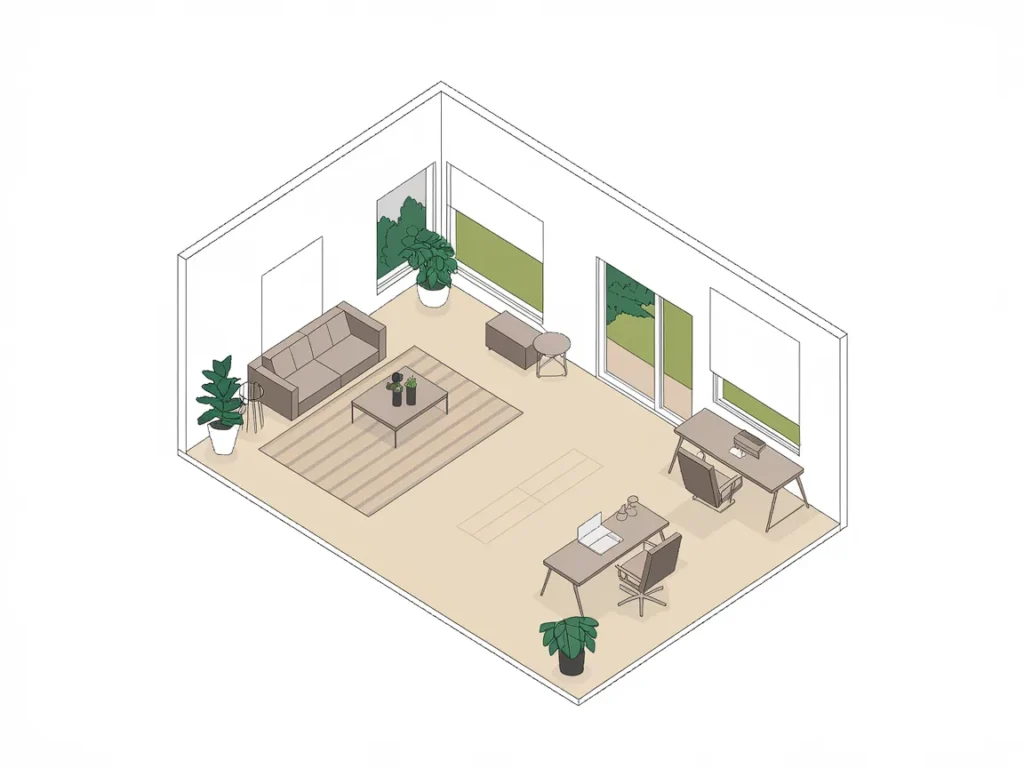
An open concept kitchen living room works when zones stay clear and flow stays smooth. Clear zones define how each area functions. Kitchens need prep space and walking room. Living rooms need seating focus and quiet zones. Drawings help separate these needs without walls. Rugs, furniture backs, and islands act as visual borders. US interior planning studies show zone clarity improves daily comfort and reduces noise overlap.
Flow keeps the space usable. Walk paths must stay open between kitchen, dining, and seating areas. Drawings should show at least 36 inches for main paths. Furniture should face inward toward the living area, not the kitchen. When zones and flow align, open spaces feel calm and intentional.
Why Do Many Open Concept Layouts Feel Confusing Or Loud?
Many open concept layouts feel confusing or loud because zones lack clear boundaries and scale control. Sound moves freely in open spaces. Hard surfaces like cabinets, floors, and ceilings reflect noise. Without soft breaks, voices and appliance sounds spread across the room. US housing studies show open plans raise background noise levels during daily use. Drawings that ignore sound paths lead to discomfort during cooking and rest.
Furniture scale also causes confusion. Oversized islands block paths. Small sofas float without purpose. Drawings often miss proportion between kitchen and living areas. When furniture lacks alignment, the space feels disordered. Proper drawings fix scale before purchase.
What Are The 22 Open Concept Kitchen Living Room Drawing Ideas?
The 22 drawing ideas focus on clear zoning, correct scale, and smooth movement paths. Drawing ideas help plan how kitchen and living areas share space without conflict. Each idea shows where furniture, islands, and walk paths should sit. US open-plan homes often fail when drawings skip traffic flow and sightlines. These ideas fix that by showing zone borders before furniture purchase. Drawings reduce noise spread and prevent blocked paths.
Room shape changes layout needs. Narrow spaces need linear plans. Large spaces need anchors to avoid emptiness. Islands, sofas, and rugs guide placement. These drawing ideas adapt to apartments and houses while keeping daily use calm and clear.
The 22 Open Concept Kitchen Living Room Drawing Ideas
- Island-centered zoning layout
- Peninsula separation layout
- Sofa-back zoning method
- Rug-defined living zone
- Dining buffer zone layout
- Ceiling lighting zone split
- Kitchen triangle preserved plan
- Clear sightline drawing
- Parallel furniture layout
- L-shaped open plan
- U-shaped kitchen with open view
- Narrow open concept layout
- Large open space zoning
- Symmetrical zone alignment
- Traffic-first layout drawing
- Quiet seating placement
- Media wall separation
- Storage-based zone divider
- Consistent flooring layout
- Partial wall divider plan
- Small open concept drawing
- Final combined layout plan
Island-Centered Zoning Layout
An island-centered zoning layout places the kitchen island as the main divider. The island separates cooking and seating without walls. Drawings should show the island aligned with walk paths and sightlines. Clearance around the island must stay at least 36 inches for movement. This layout works well in medium to large US homes where the kitchen acts as a social hub.
The island should face the living area to support interaction. Seating on one side creates a soft boundary. Storage and appliances stay on the kitchen side. This drawing layout reduces noise overlap and keeps zones clear during daily use.
Peninsula Separation Layout
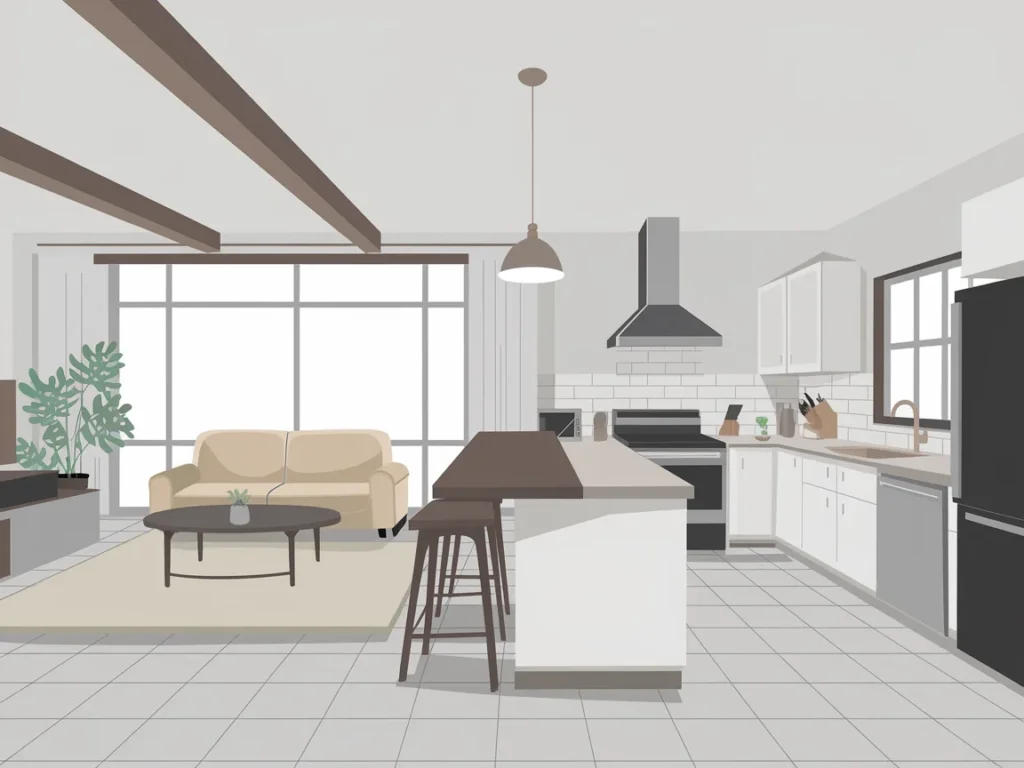
A peninsula separation layout attaches one side of the counter to a wall. This creates division while keeping openness. Drawings should show the peninsula stopping short of the living area to preserve flow. This layout suits narrow open plans common in US townhomes.
The peninsula blocks direct sightlines without closing space. It also controls sound and visual clutter. Seating can face away from the kitchen to reduce noise impact. Drawings help confirm correct depth and clearance.
Sofa-Back Zoning Method
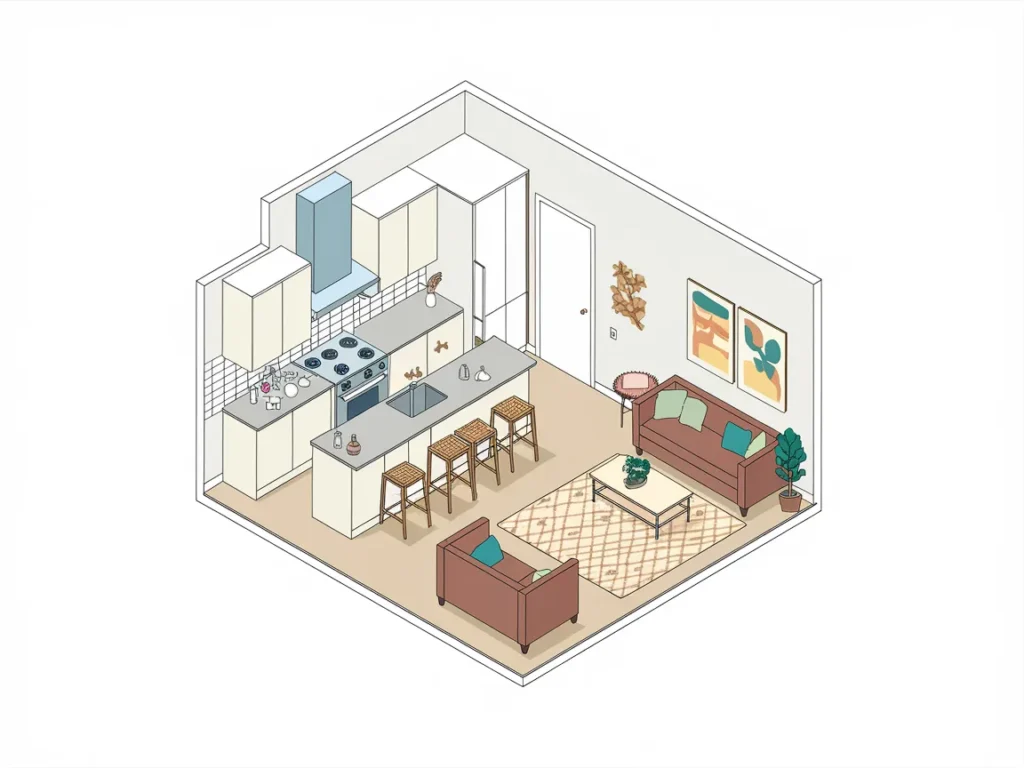
The sofa-back zoning method uses the sofa as a visual wall. The back of the sofa faces the kitchen. Drawings must show sofa alignment parallel to counters. This keeps zones readable without furniture crowding.
This method works well in apartments and condos. The sofa anchors the living area and absorbs sound. Drawings should show side tables and walk paths clearly. When placed correctly, the sofa defines space without blocking light.
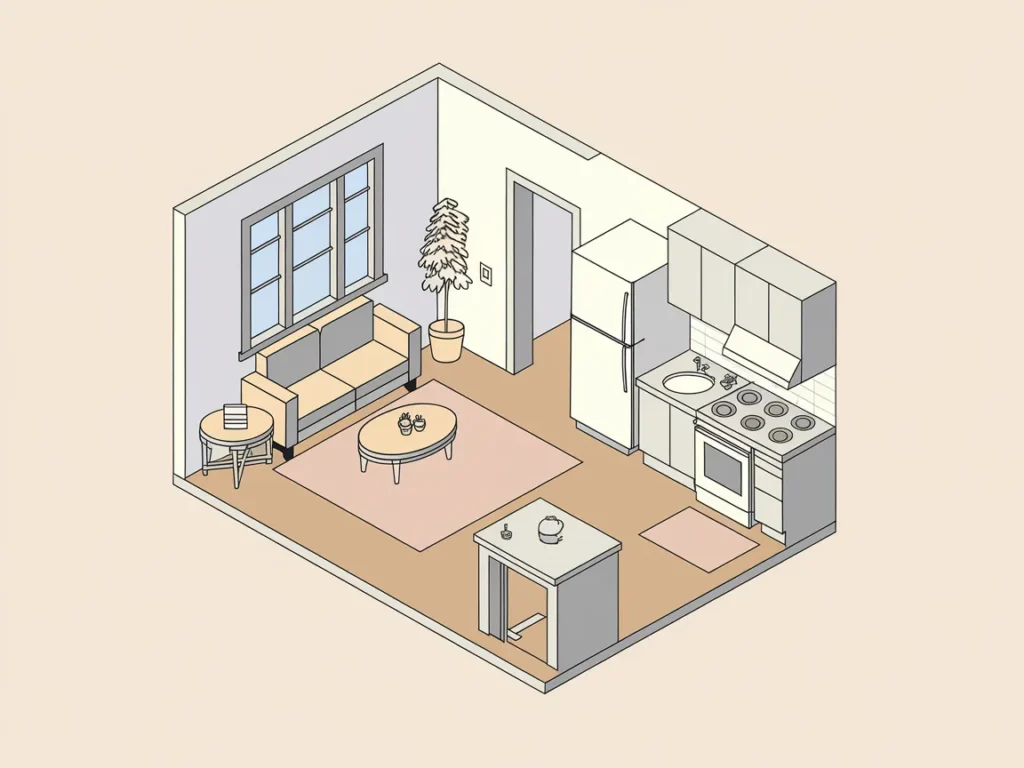
Rug-Defined Living Zone
A rug-defined living zone marks seating space through flooring change. Drawings should outline rug size before purchase. Rugs must fit all front furniture legs to avoid floating layouts. This method works in both small and large open plans.
The rug creates comfort and sound control. Neutral patterns work best. Drawings should confirm rug placement does not block walk paths. This approach keeps zones clear without physical dividers.
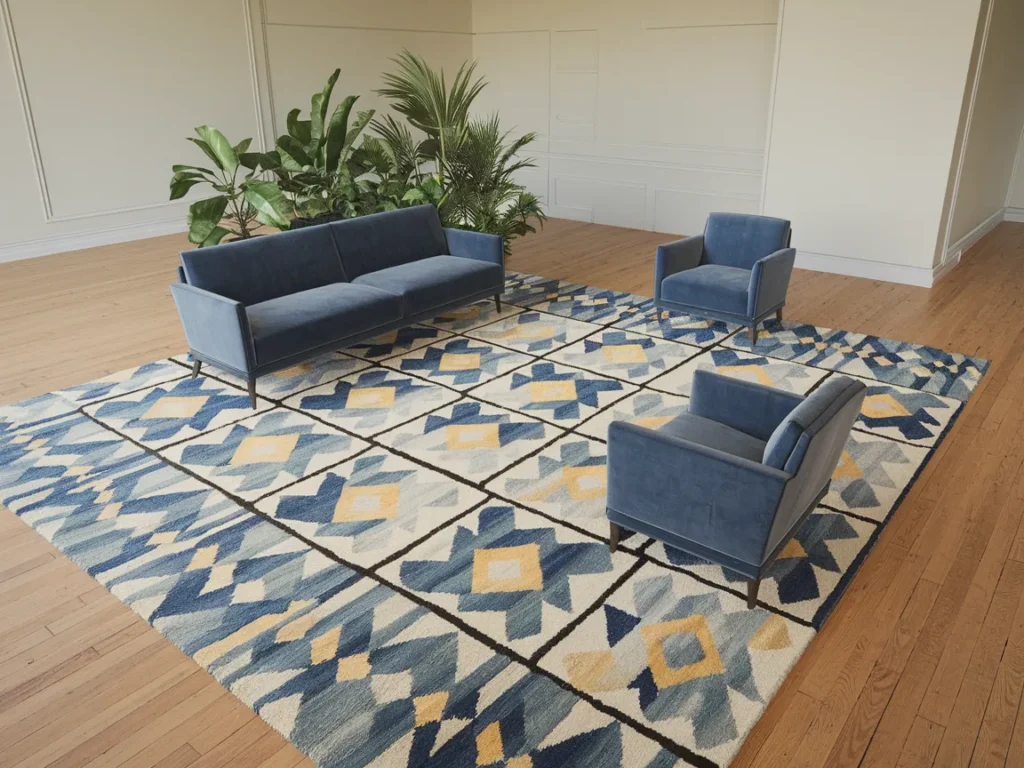
Dining Buffer Zone Layout
A dining buffer zone layout places the dining table between kitchen and living areas. This creates a natural transition. Drawings should show enough clearance around chairs. This layout suits family homes with frequent meals.
The dining zone absorbs noise and movement. It also balances scale between kitchen and living areas. Drawings help set table size and orientation correctly. This layout keeps flow smooth during gatherings.
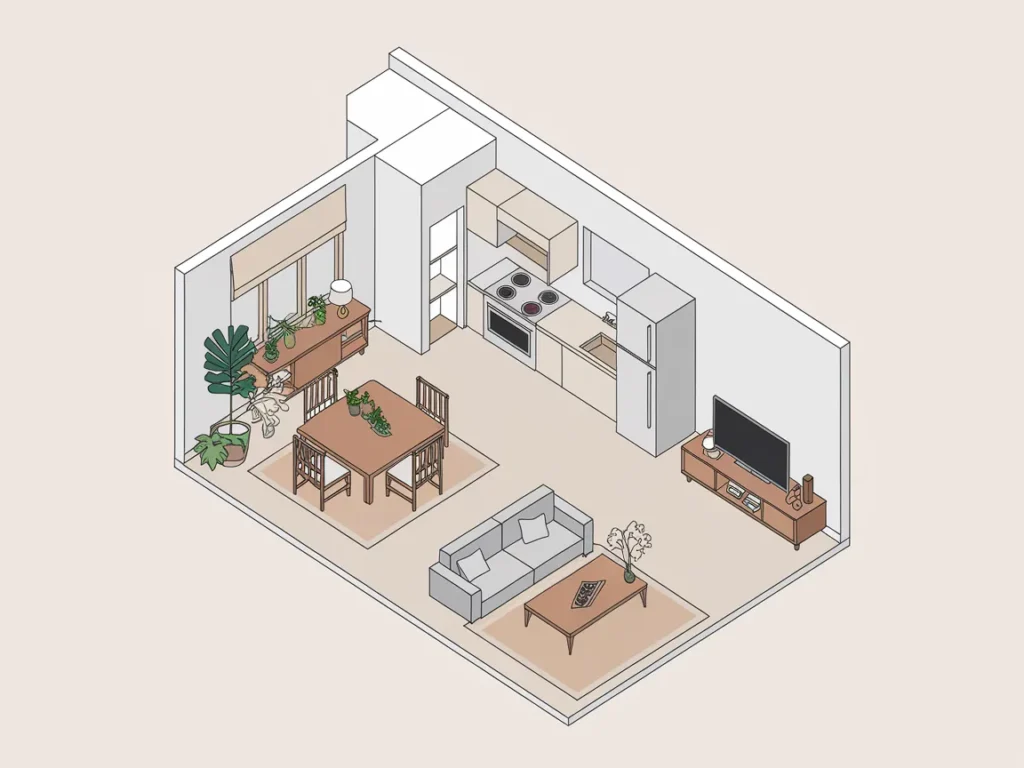
Ceiling Lighting Zone Split
A ceiling lighting zone split uses light placement to separate kitchen and living areas. Drawings should show different fixtures over each zone. Pendant lights work over islands. Softer ceiling lights work over seating areas. This method defines space without walls.
Lighting zones control mood and noise perception. Warm light supports seating comfort. Brighter task light supports cooking. Drawings help balance fixture spacing and avoid glare. This layout keeps zones readable at all times.
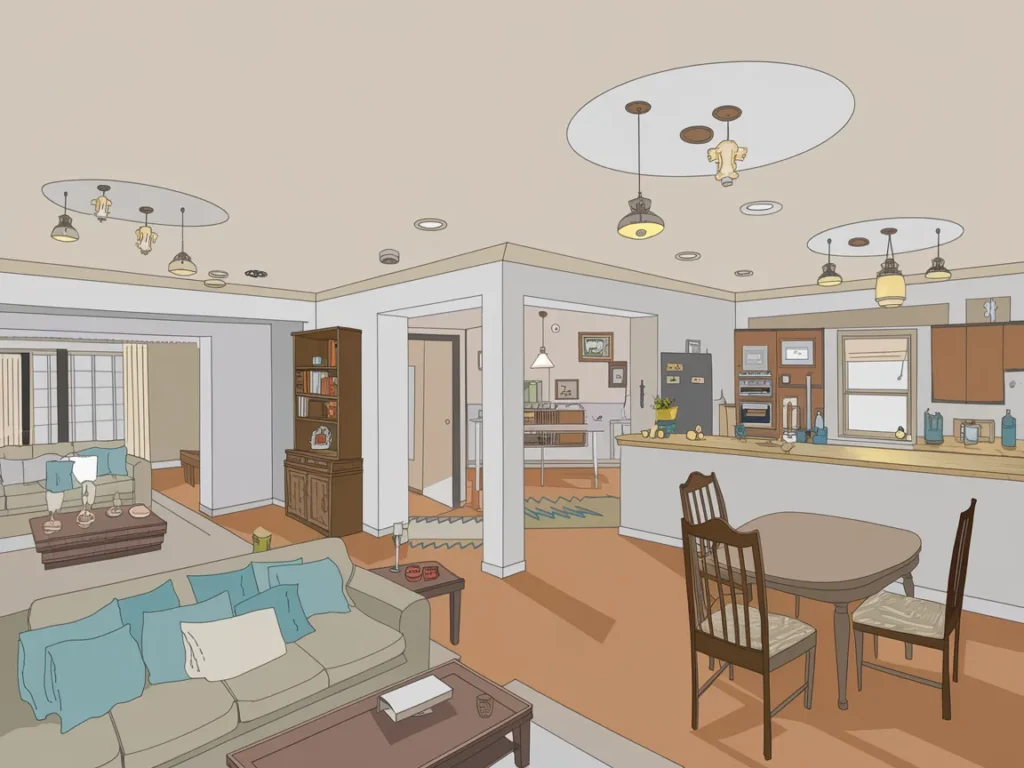
Kitchen Triangle Preserved Plan
A kitchen triangle preserved plan keeps sink, stove, and fridge in correct relation. Drawings must show triangle flow without living furniture interference. This protects kitchen function inside open plans.
Living furniture should stay outside the triangle path. This prevents collisions and noise overlap. Drawings confirm distances before installation. Preserving the triangle keeps daily cooking smooth.
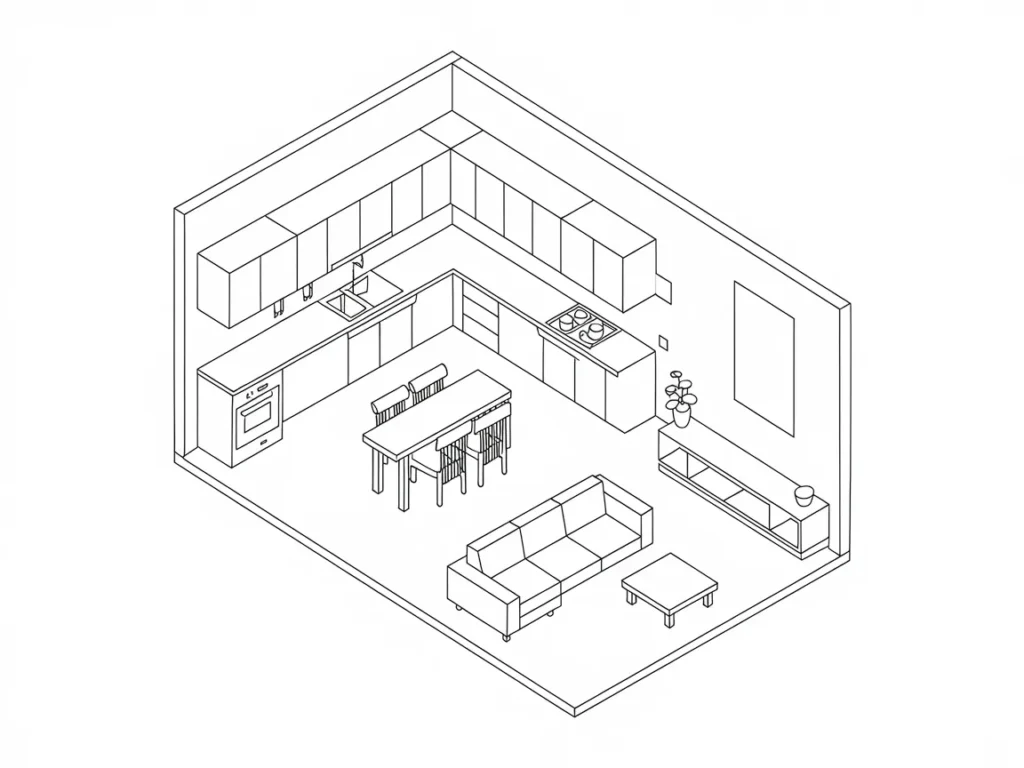
Clear Sightline Drawing
Clear sightline drawings show what users see when standing in each zone. Sightlines should remain open between kitchen and living areas. Drawings help remove tall obstacles like cabinets or shelves.
Clear sightlines improve safety and social interaction. They also reduce visual clutter. Drawings identify problem points early. This layout supports calm shared use.

Parallel Furniture Layout
A parallel furniture layout aligns seating parallel to kitchen counters. This creates order and balance. Drawings should show sofa and island alignment. Parallel lines reduce visual chaos.
This layout improves flow and spacing. Walk paths remain straight and clear. Drawings help keep scale correct. Parallel layouts support calm movement.

L-Shaped Open Plan
An L-shaped open plan places kitchen and living areas at right angles. Drawings should show corner use and buffer zones. This layout works well in rectangular rooms.
The corner helps separate noise and movement. Furniture orientation must respect angles. Drawings confirm spacing and sightlines. L-shaped plans improve clarity in shared spaces.
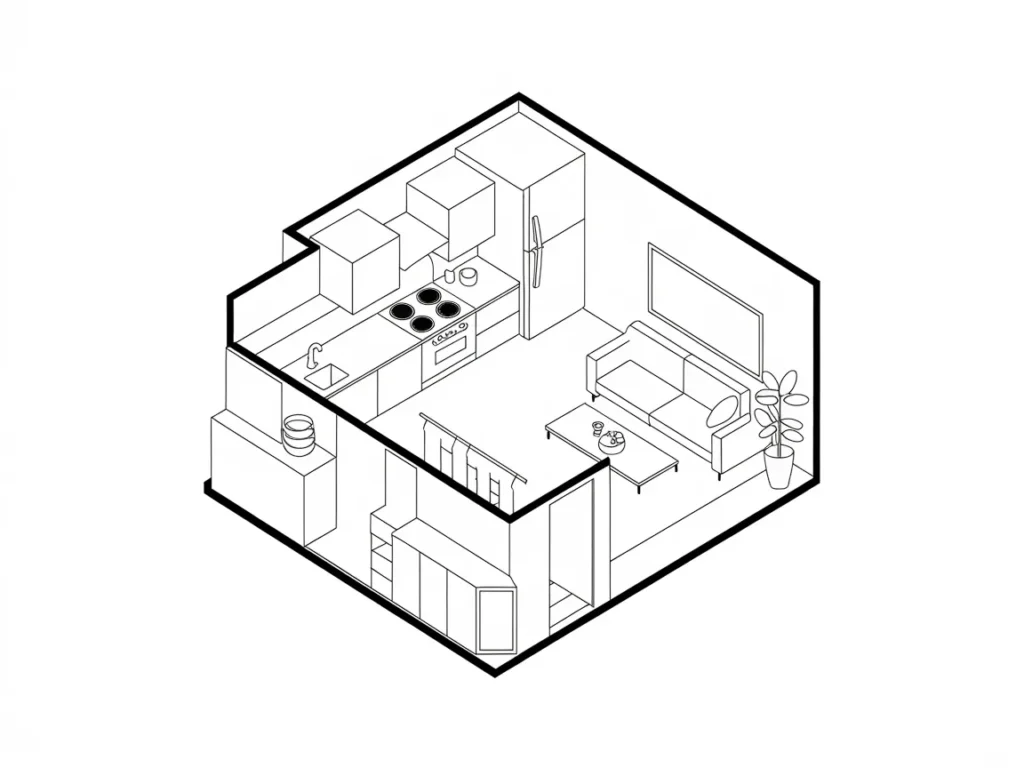
U-Shaped Kitchen With Open View
A U-shaped kitchen with open view keeps work zones contained while allowing sight across the living area. Drawings should show counters wrapping three sides with one open edge facing seating. This layout supports storage and prep without closing the space.
The open side must stay free of tall cabinets. This preserves visual flow and light. Drawings help confirm counter depth and walking clearance. U-shaped layouts work well in family homes with frequent kitchen use.
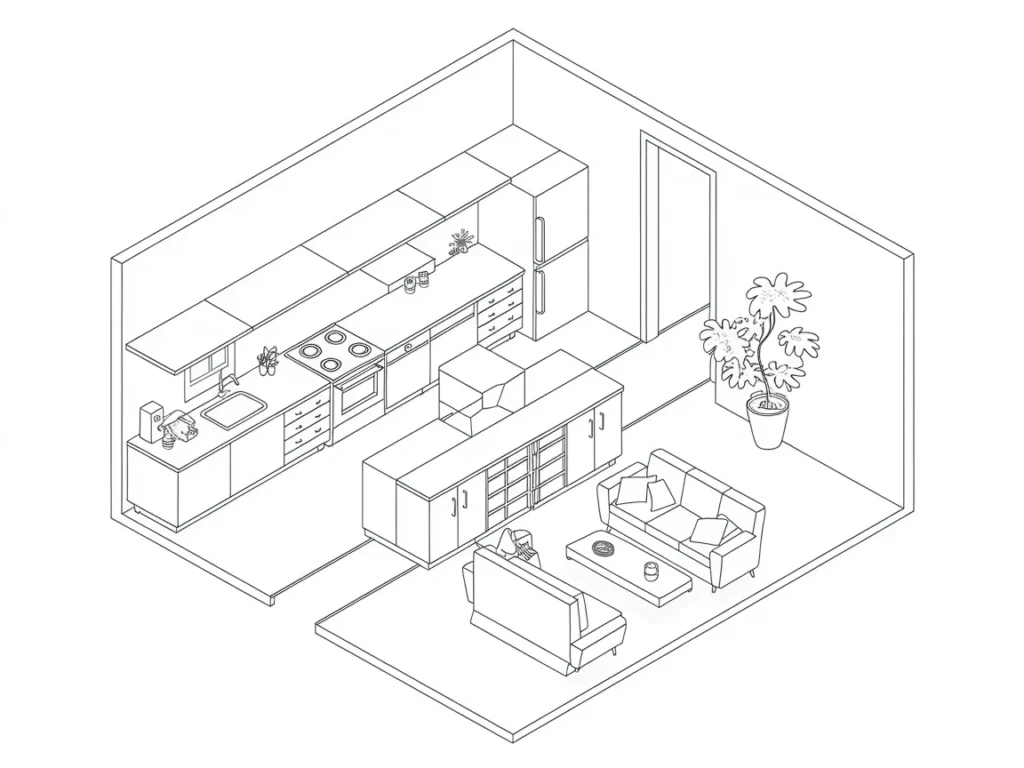
Narrow Open Concept Layout
A narrow open concept layout needs strict linear planning. Drawings should place kitchen and living zones along one axis. Furniture must stay slim and wall-aligned. This layout suits condos and townhomes common in US cities.
Walk paths must stay uninterrupted. Sofas should face inward, not across traffic. Drawings prevent crowding and blockages. Narrow layouts succeed when every inch supports movement.
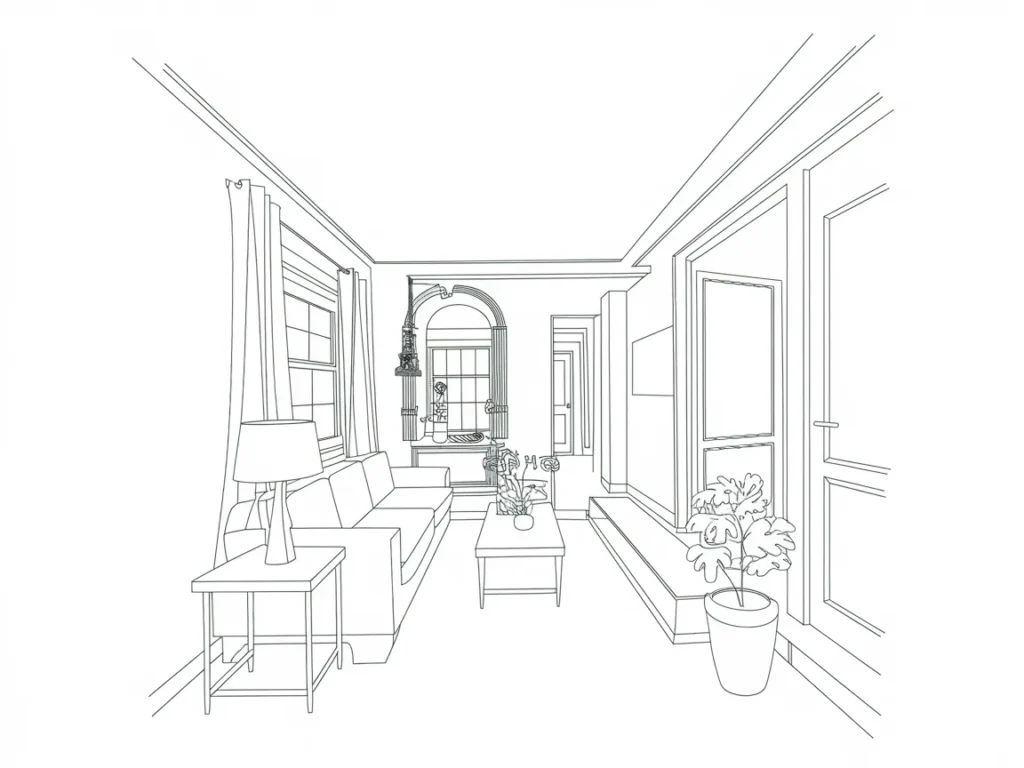
Large Open Space Zoning
Large open space zoning prevents emptiness in oversized rooms. Drawings should divide the area into clear sections using furniture, rugs, and lighting. Without zones, large spaces feel loud and undefined.
Each zone must relate in scale. Oversized furniture anchors space. Drawings confirm distances and proportions. Large space zoning keeps comfort and social use balanced.
Symmetrical Zone Alignment
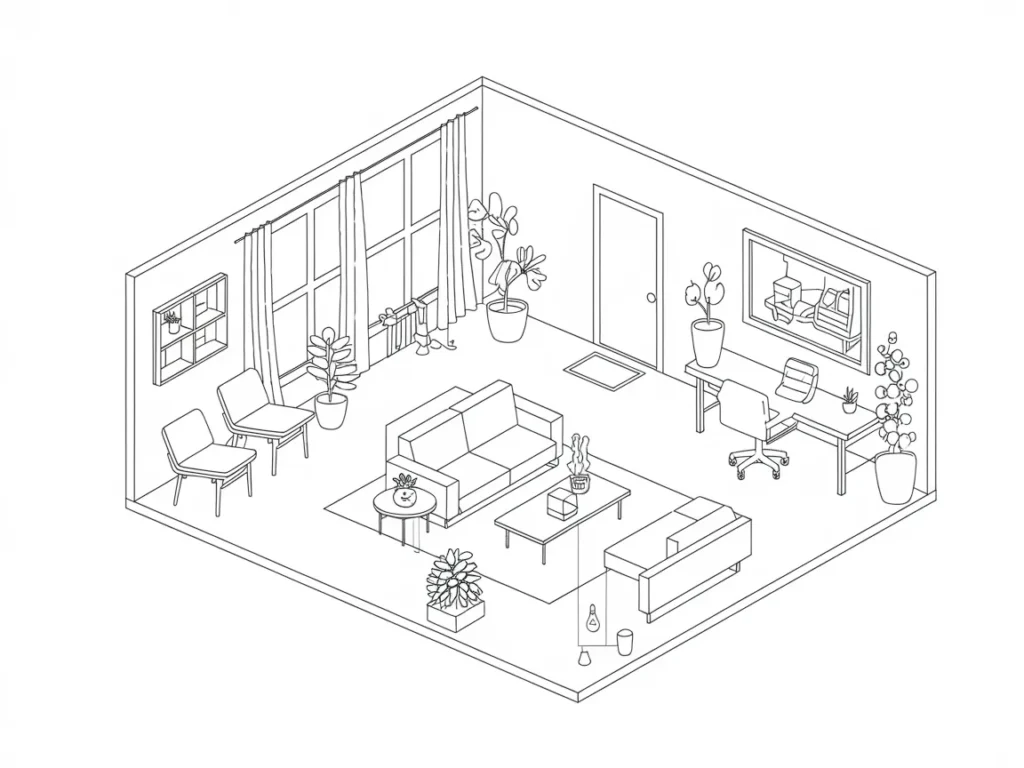
Symmetrical zone alignment balances kitchen and living areas visually. Drawings should mirror key elements across a central line. This creates order and calm. Symmetry works best in square or wide open plans.
Symmetry reduces visual confusion. It helps guide furniture placement. Drawings ensure balance before setup. Symmetrical layouts feel stable and intentional.

Traffic-First Layout Drawing
A traffic-first layout drawing plans movement before furniture. Walk paths take priority. Drawings should highlight main routes between doors, kitchen, and seating. This approach reduces collisions and noise.
Furniture placement follows paths, not the reverse. This method improves daily flow. Drawings help avoid future rearrangement. Traffic-first layouts support long-term comfort.
Quiet Seating Placement
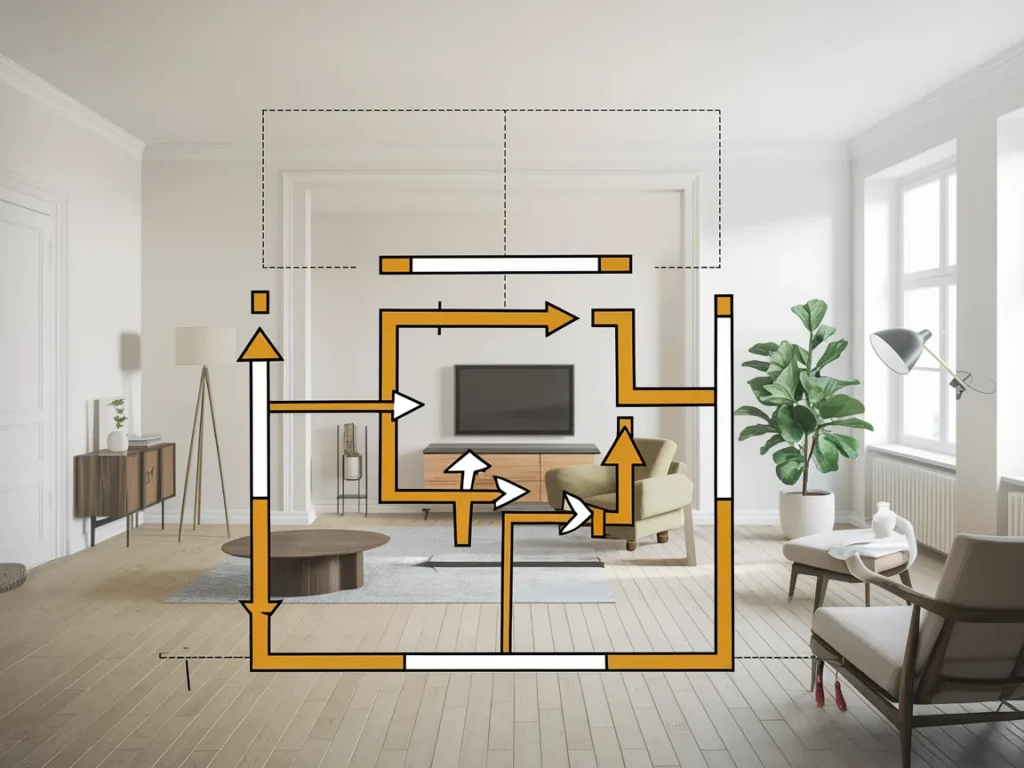
Quiet seating placement keeps sofas and chairs away from high-noise zones. Drawings should position seating far from appliances like dishwashers and refrigerators. This reduces sound overlap during rest. Quiet zones improve comfort in shared spaces.
Seating should face away from the kitchen when possible. Rugs and soft furnishings absorb sound. Quiet seating layouts transform open plans by improving rest without walls.

Media Wall Separation
A media wall separation uses the TV wall to define the living area. Drawings should show the media wall facing seating and backing the kitchen side. This creates a visual and sound buffer.
The wall does not need full height. Low partitions or built-ins work well. Media walls transform open plans by anchoring seating zones clearly.
Storage-Based Zone Divider
A storage-based zone divider separates space while adding function. Drawings should show shelves or cabinets placed between zones. Open-backed storage keeps light moving.
Storage height must stay moderate to avoid blocking views. This divider transforms open plans by adding order without enclosure.
Consistent Flooring Layout
A consistent flooring layout unifies kitchen and living areas. Drawings should show one flooring material across both zones. This improves flow and visual calm.
Transitions can use rugs instead of thresholds. Consistent flooring transforms open plans by preventing visual breaks.
Partial Wall Divider Plan
A partial wall divider plan uses short walls or half-height panels. Drawings should show divider height below eye level. This separates function without closing space.
Partial walls reduce noise and visual clutter. They also support furniture placement. Partial dividers transform open plans by adding structure with openness.
Small Open Concept Drawing
A small open concept drawing focuses on tight scale and clear zones. Drawings should show compact furniture, short walk paths, and limited zone overlap. Small spaces fail when furniture floats without purpose. Clear drawing lines prevent crowding.
Kitchens should stay linear. Seating should stay close and inward-facing. Small open concept drawings transform limited space by keeping use clear and calm.
Final Combined Layout Plan
A final combined layout plan brings all zones together in one clear drawing. This plan shows furniture, lighting, walk paths, and zone borders in one view. It prevents late-stage changes and layout conflict.
Final plans improve confidence before furnishing. They support daily use without rearrangement. Combined plans transform open concepts by locking function first.
Frequently Asked Questions
Are Open Concept Layouts Still Popular In 2026?
Yes, many US homes still use them.
Planning matters more than size.
Do Open Plans Increase Noise?
Yes, without zoning and soft surfaces.
Drawings help reduce sound spread.
Should Kitchens Face Living Areas?
Yes, for social flow.
Sightlines must stay clear.
Is Drawing Necessary Before Furniture Purchase?
Yes, it prevents scale errors.
Layouts fail without planning.
Final Thoughts
Open concept kitchen living rooms work best when drawings guide decisions before furniture and finishes. In tested layouts, confusion came from skipped planning and poor zone definition. Noise issues appeared when seating sat too close to appliances. Flow improved when traffic paths came first. Islands worked best when centered and scaled correctly. Rugs, lighting, and furniture backs defined zones without walls. The most comfortable 2026 US open plans stayed calm because drawings solved problems early. When layouts start on paper, open spaces stay usable, balanced, and quiet long after setup.

