

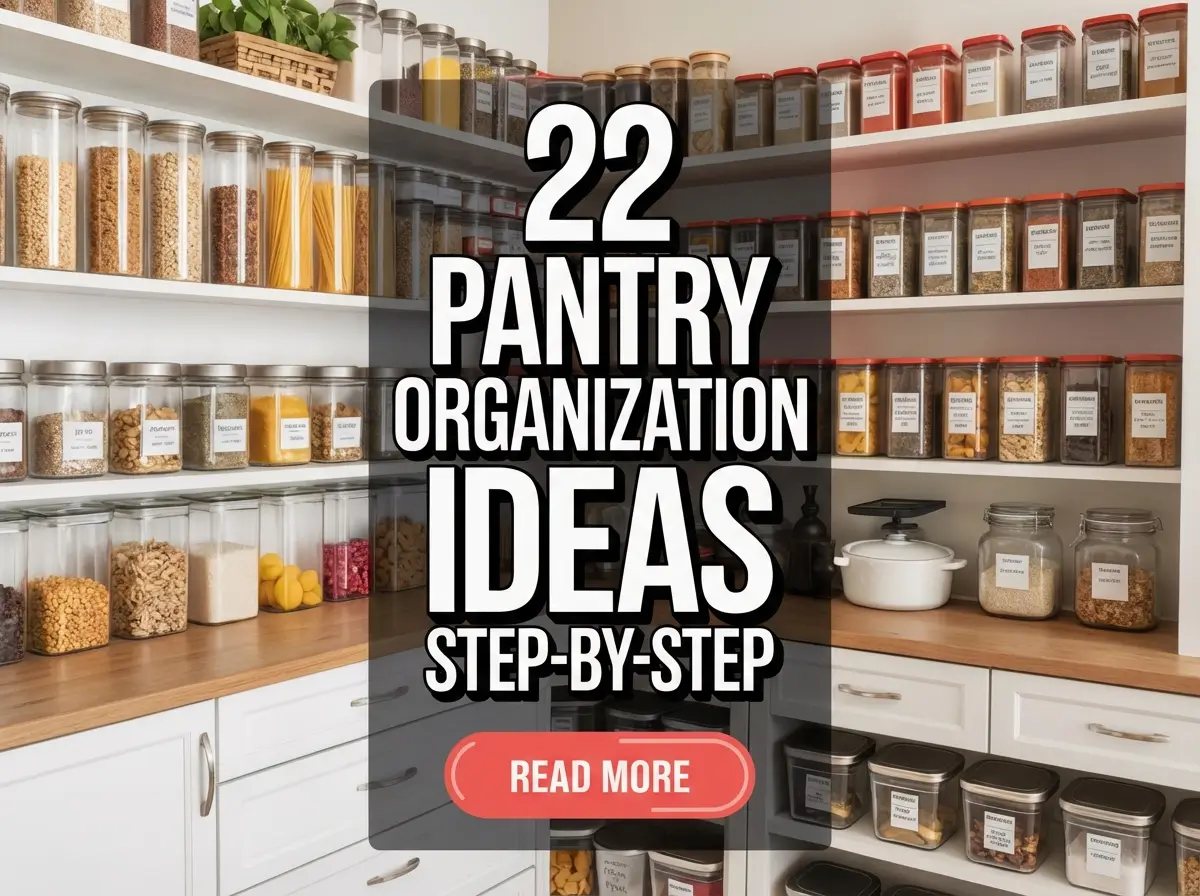
22 pantry organization ideas step-by-step focus on creating order through sorting, zoning, and smart storage. These steps guide you from emptying and cleaning to grouping items and labeling containers. Each idea helps improve visibility, access, and daily use. The goal is a functional, easy-to-maintain pantry system.
22 Pantry Organization Ideas
- Empty the pantry and sort items
- Clean shelves and corners
- Measure shelf width and height
- Group items by type
- Create a daily-use zone
- Use clear storage bins
- Add labels for every bin
- Use airtight containers for staples
- Store heavy items on lower shelves
- Use a tiered shelf riser
- Add a lazy Susan for small jars
- Use a door rack for light items
- Store snacks in one grab zone
- Create a baking zone
- Create a breakfast zone
- Use shelf liners for grip
- Use baskets for packets
- Set a “backstock” shelf
- Use date labels for open items
- Keep an inventory list
- Set a weekly reset routine
- Final pantry layout rule
Empty The Pantry And Sort Items
Emptying the pantry and sorting items creates a clear starting point. Remove every item from shelves so you can see what you own and what you no longer need. Sort food into groups like canned goods, grains, snacks, oils, and baking items. Place expired or damaged items in a discard pile right away.
Sorting also helps reduce duplicates. Put items with the same type together and check quantity. This step prevents clutter from returning after reloading shelves. A full reset works better than small changes because it removes hidden mess.
Clean Shelves And Corners
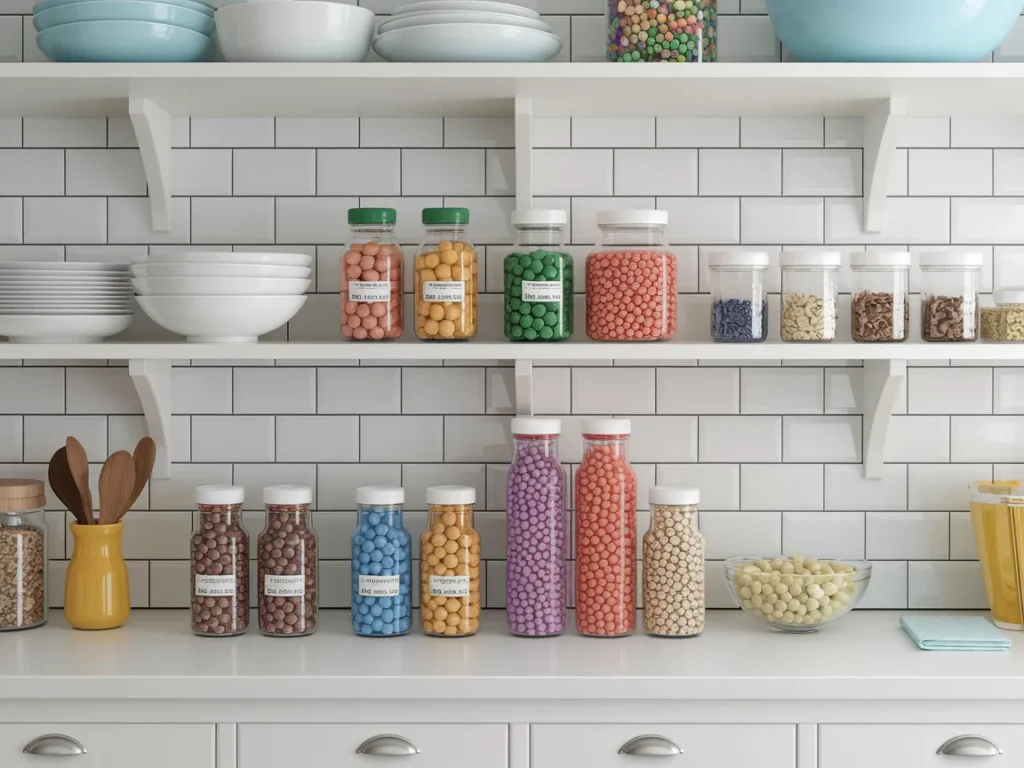
Cleaning shelves and corners removes dust, crumbs, and spills that attract pests and cause odor. Wipe every shelf surface, wall edge, and corner before placing items back. Pay attention to shelf supports and back corners where residue often collects.
Use a mild cleaner and dry all surfaces fully. Clean shelves make labels stick better and containers sit flat. This step also helps you notice damaged shelves or loose brackets early, which prevents future problems.

Measure Shelf Width And Height
Measuring shelf width and height prevents wasted space. Use a tape measure to record usable shelf dimensions. Include height between shelves, not just shelf length. This step helps you choose containers that fit without stacking or crowding.
Correct measurements prevent buying bins that block items behind them. When containers fit the shelf exactly, the pantry feels ordered and easy to scan. Measuring once saves time later.

Group Items By Type
Grouping items by type creates logic in the pantry. Place similar items together, such as grains with grains, canned goods with canned goods, and snacks with snacks. This reduces search time and prevents overbuying.
Each group should stay in one area only. Avoid splitting the same category across shelves. Grouping by type helps every user understand where items belong and makes restocking simple.

Create A Daily-Use Zone
Creating a daily-use zone places the most used pantry items at eye level. Items like cooking oils, spices, grains, and snacks should stay within easy reach. This reduces bending, searching, and shelf shuffling during daily cooking.
The daily-use zone should stay uncluttered. Avoid storing backup items here. When frequently used products stay visible and accessible, the pantry feels faster and easier to use every day.
Use Clear Storage Bins
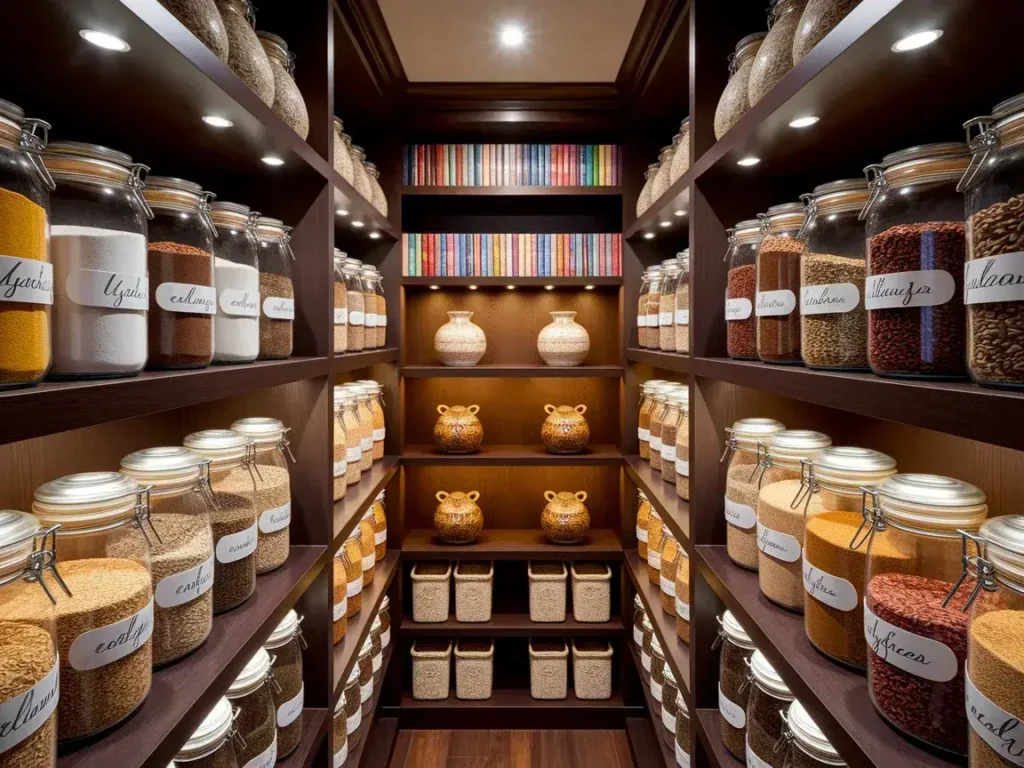
Clear storage bins improve visibility and keep loose items contained. Transparent bins allow you to see contents without pulling them out. This works well for snacks, packets, and small items that tip over easily.
Bins should stay sized to the shelf width. Overfilled bins become heavy and hard to move. When bins remain clear and organized, the pantry stays visually calm and easy to reset.
Add Labels For Every Bin
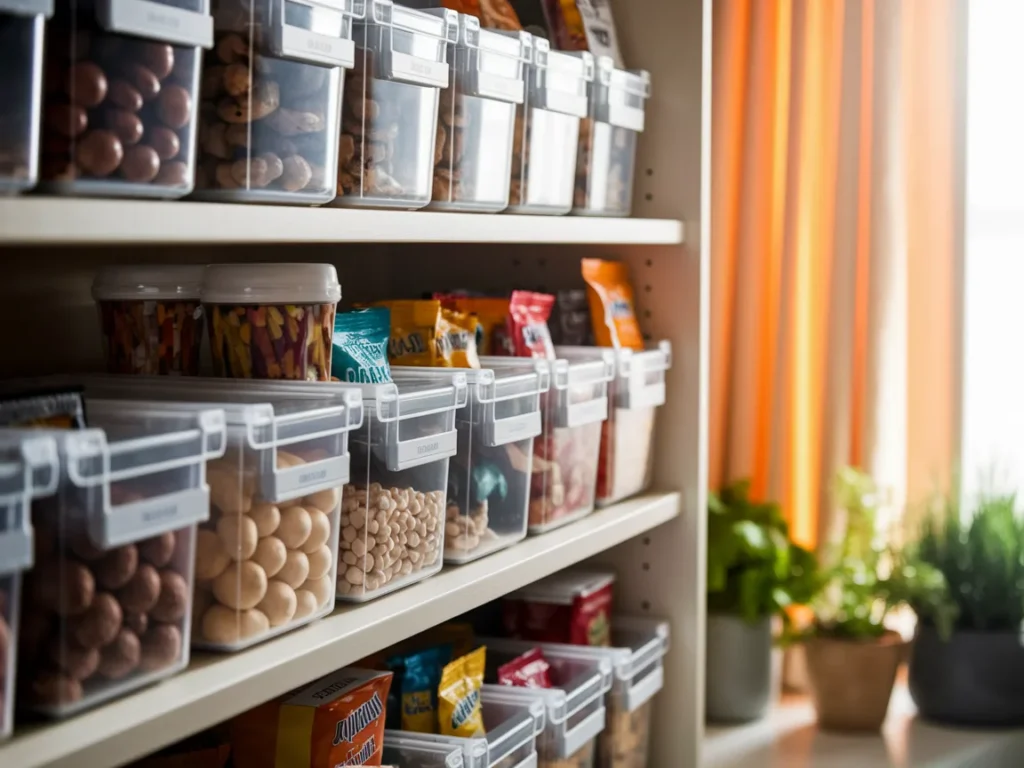
Adding labels for every bin creates consistency and prevents guesswork. Labels tell users exactly where items belong, which helps maintain order over time. Simple text labels work better than decorative ones.
Labels should sit at the front and remain easy to read. Consistent font and size improve clarity. When every container has a label, pantry organization stays stable even with multiple users.
Use Airtight Containers For Staples
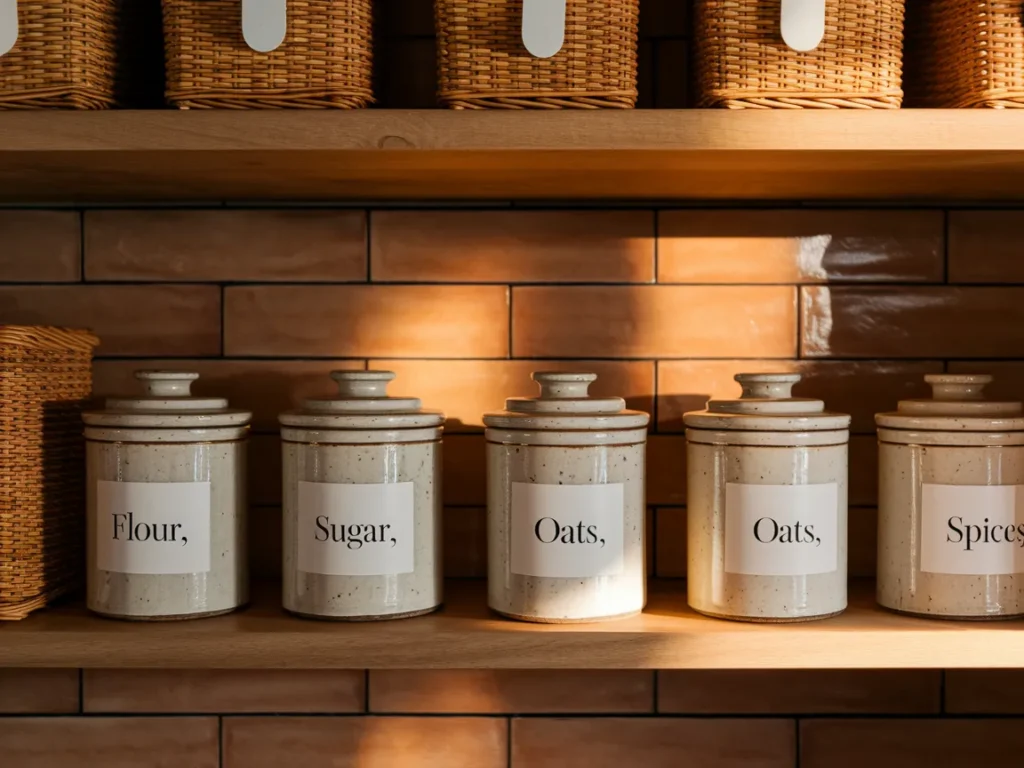
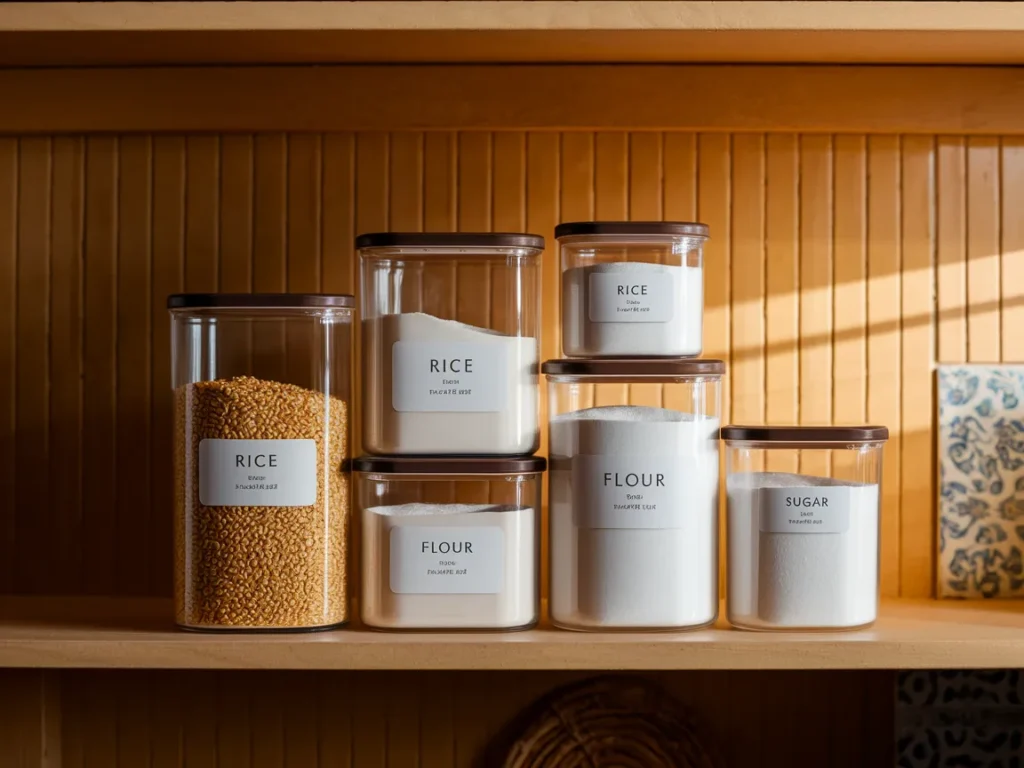
Using airtight containers for staples keeps food fresh and easy to manage. Items like rice, pasta, flour, sugar, and cereal store better when sealed. Airtight containers protect against moisture, pests, and spills while keeping shelves clean.
Containers should stay uniform in shape to stack neatly. Transparent containers help track quantity at a glance. When staples stay sealed and visible, restocking becomes simple and waste reduces.
Store Heavy Items On Lower Shelves
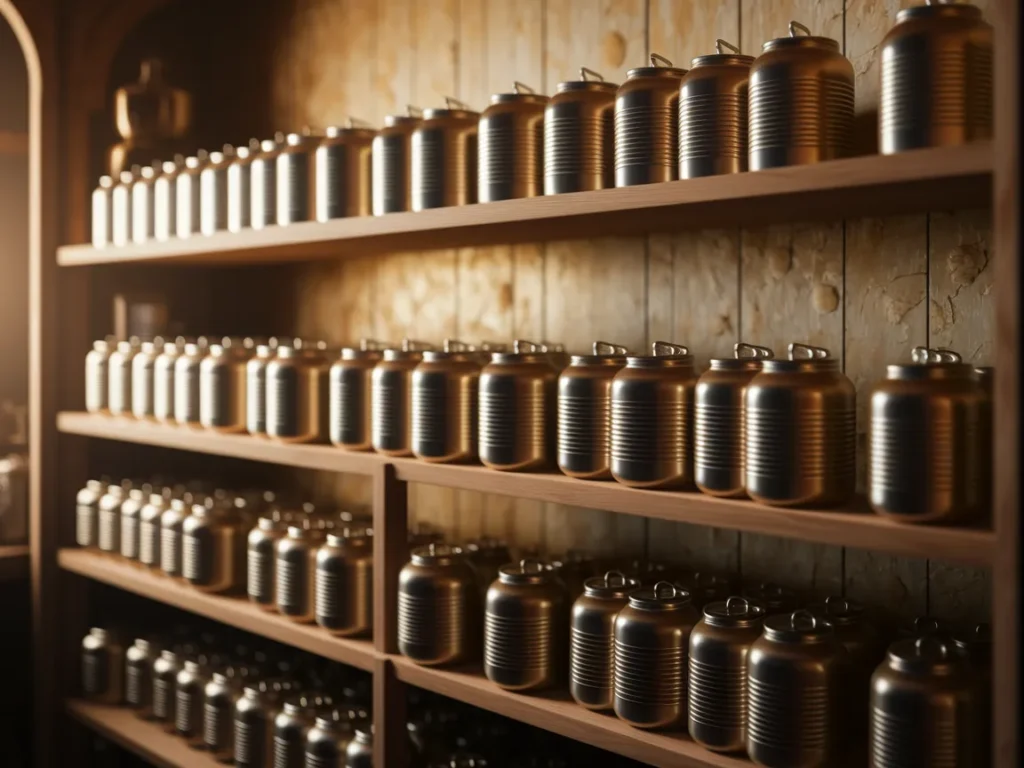
Storing heavy items on lower shelves improves safety and stability. Large cans, bulk containers, and bottles should sit close to the floor. This reduces strain during lifting and prevents items from falling.
Lower shelves also handle weight better than upper ones. Keeping heavy items low balances the pantry layout and keeps upper shelves free for lighter goods.
Use A Tiered Shelf Riser
Using a tiered shelf riser improves visibility for cans and jars. Risers lift items in the back so labels stay visible. This prevents forgotten food and duplicate buying.
Tiered risers work best for items with similar height. Avoid mixing tall and short containers on the same riser. When shelves show everything clearly, the pantry feels easier to manage.
Add A Lazy Susan For Small Jars
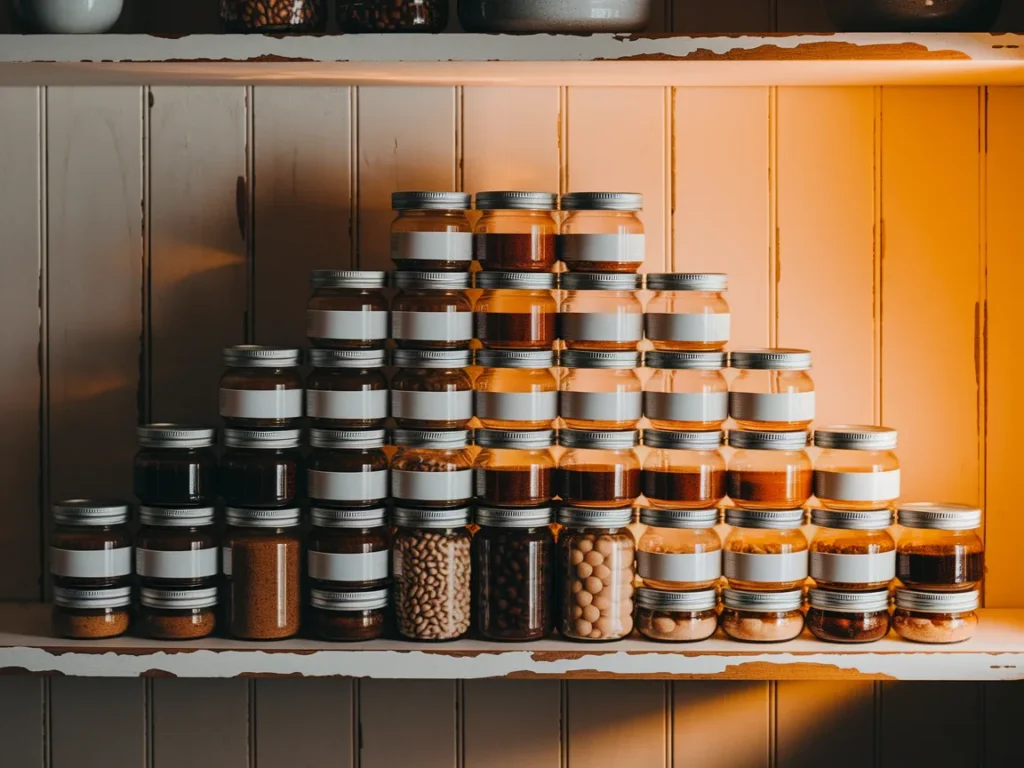
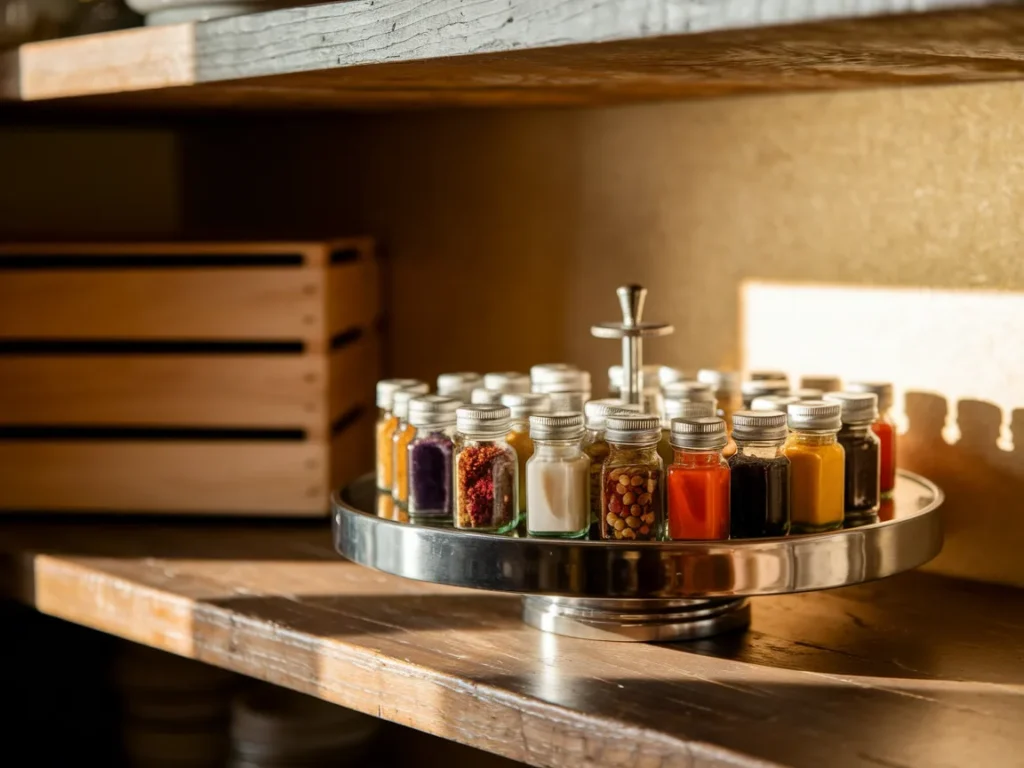
Adding a lazy Susan keeps small jars and bottles easy to reach. Spices, sauces, and condiments often hide behind other items. A rotating tray brings everything forward with one turn.
Lazy Susans work best on deep shelves. Choose a size that spins freely without hitting the shelf edges. When small items stay visible and reachable, the pantry feels faster and more organized.
Use A Door Rack For Light Items
Using a door rack adds storage without using shelf space. Door racks work well for packets, wraps, or small containers. Items stay visible and separated instead of piled on shelves.
Door racks must stay lightweight to avoid stress on hinges. Keep similar items together to prevent clutter. When used correctly, door storage expands capacity without crowding.

Store Snacks In One Grab Zone
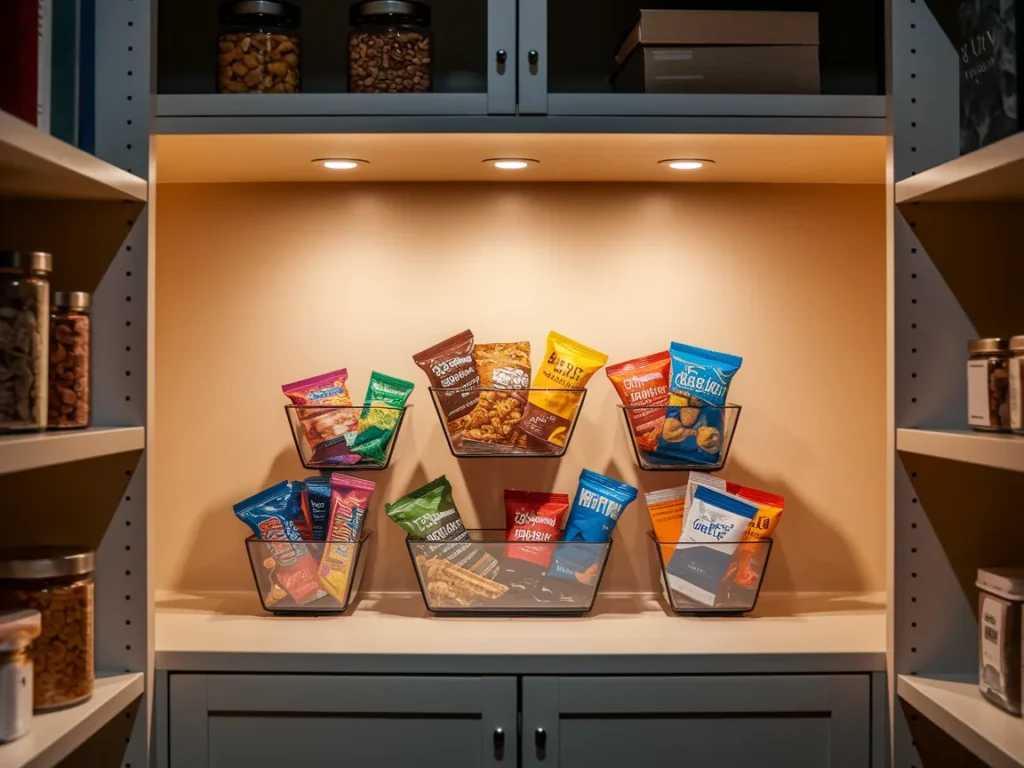
Storing snacks in one grab zone reduces mess and saves time. Grouping snacks together prevents them from spreading across shelves. This works well for families and shared kitchens.
The snack zone should sit at an easy reach height. Clear bins help control portions and visibility. When snacks stay in one place, restocking and cleanup become easier.
Create A Baking Zone
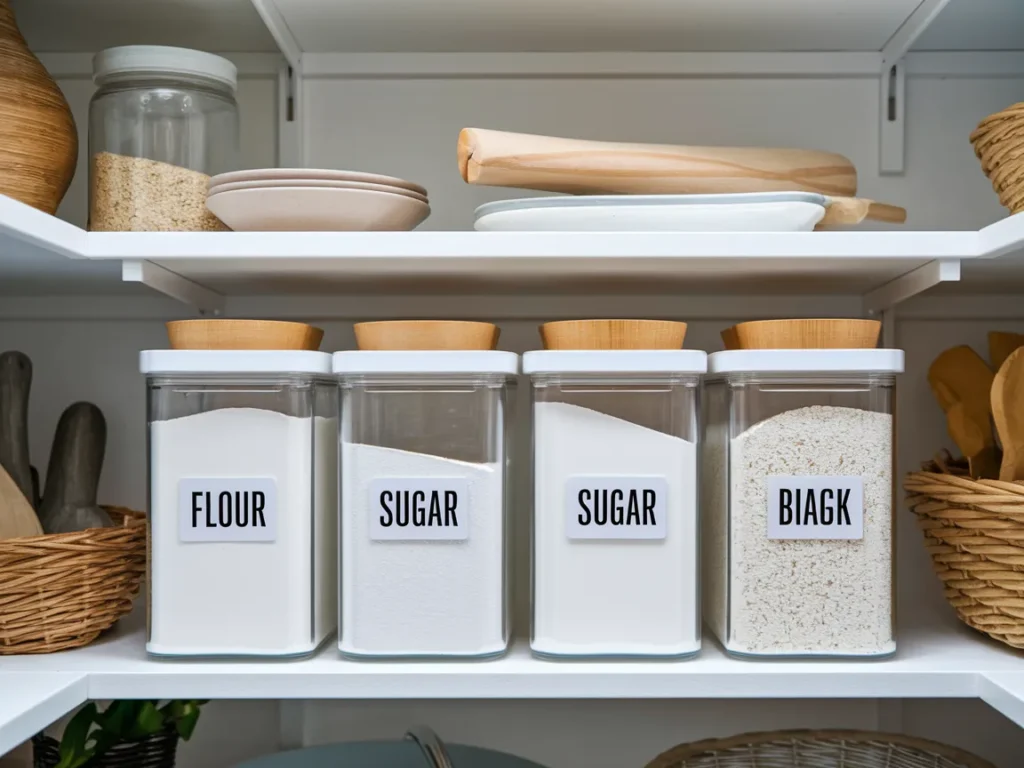
Creating a baking zone keeps all baking items in one clear area. Ingredients like flour, sugar, baking powder, and cocoa should sit together with tools such as measuring cups or liners. This prevents searching across shelves while baking.
The baking zone works best at mid-level shelves for easy access. Containers should stay airtight and labeled. When baking items stay grouped, preparation becomes faster and cleaner.
Create A Breakfast Zone
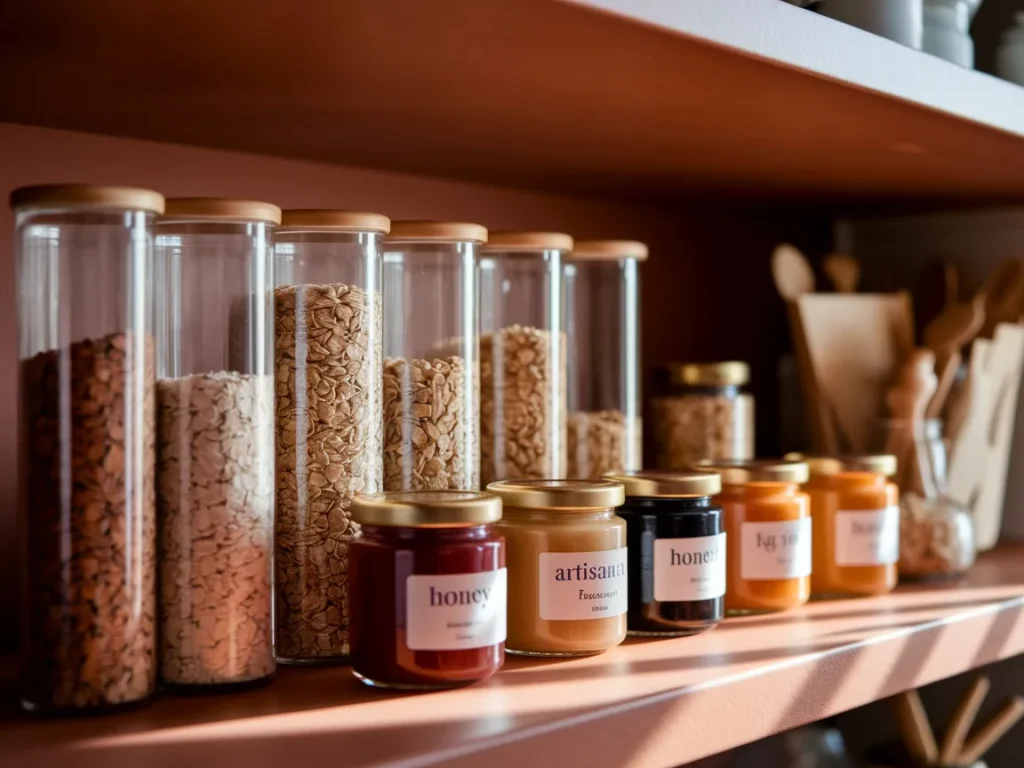
Creating a breakfast zone simplifies morning routines. Items like cereal, oats, spreads, and drink mixes should stay together. This reduces congestion during busy hours.
Breakfast zones should stay visible and easy to reach. Clear containers help track stock levels. When breakfast items live in one place, the pantry supports smoother daily flow.
Use Shelf Liners For Grip
Using shelf liners prevents containers from sliding and protects shelves from spills. Liners add grip and make cleanup easier. This small step helps maintain order over time.
Choose liners that stay flat and cut them to shelf size. Avoid thick or patterned liners that reduce stability. When shelves stay protected, the pantry remains clean and safe.

Use Baskets For Packets
Using baskets for packets keeps small loose items contained. Items like seasoning packets, snack bars, and small sachets often fall or scatter. Baskets group them into one visible place and prevent mess.
Baskets should stay lightweight and sized to the shelf. Labels help identify contents quickly. When packets stay grouped, shelves look cleaner and restocking becomes easier.

Set A Backstock Shelf
Setting a backstock shelf separates extra supplies from daily-use items. Bulk purchases and duplicates should stay on one designated shelf. This prevents overfilling active zones.
Backstock shelves work best on higher or lower levels. Clear labels help track quantities. When backup items stay separate, the pantry feels less crowded and easier to maintain.
Use Date Labels For Open Items
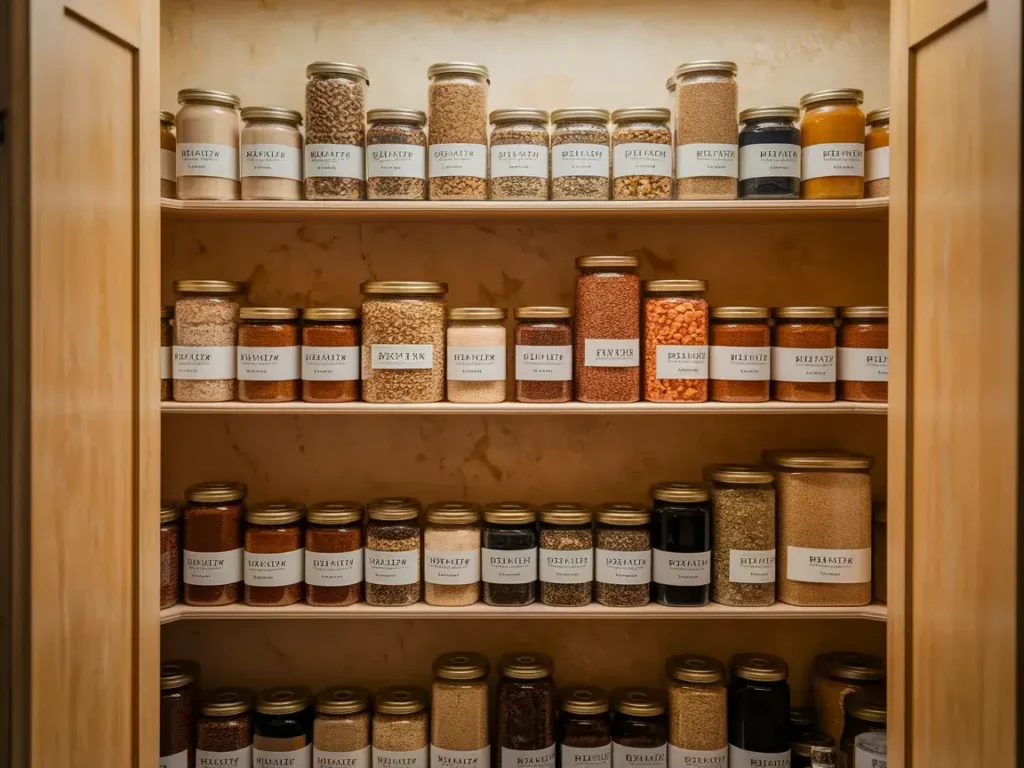
Using date labels for open items helps track freshness. Writing the opening date on containers reduces waste and improves food safety. This works well for grains, snacks, and baking supplies.
Date labels should stay clear and simple. Place them where they remain visible. When dates stay easy to read, pantry rotation becomes a habit instead of a chore.

Keep An Inventory List
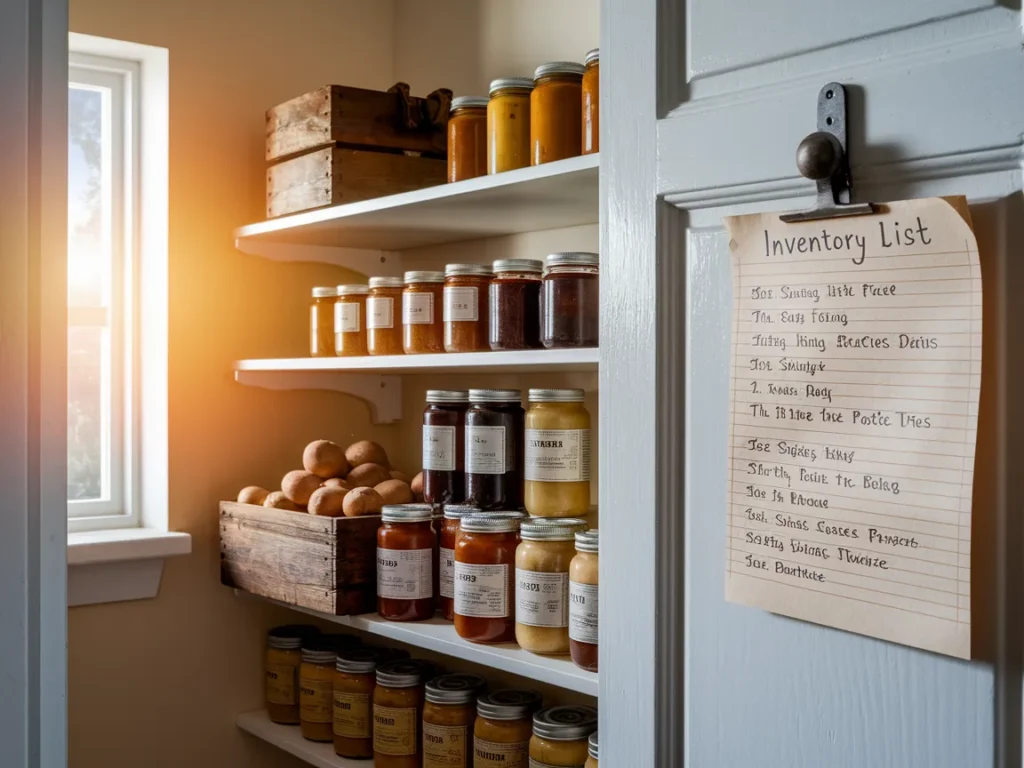
Keeping an inventory list helps track what stays in the pantry at all times. A simple list on paper or a note inside the pantry door works well. This list should include staples, bulk items, and backstock quantities.
Update the list when items run low or get replaced. This step reduces duplicate buying and forgotten food. When inventory stays visible, pantry management feels controlled instead of reactive.
Set A Weekly Reset Routine
Setting a weekly reset routine keeps the pantry organized long term. A short reset includes returning items to their zones, checking labels, and wiping small spills. This prevents buildup before it becomes overwhelming.
Weekly resets take only a few minutes. They work best when tied to a regular habit like meal planning. When resets stay consistent, the pantry stays usable without major reorganization.
Final Pantry Layout Rule
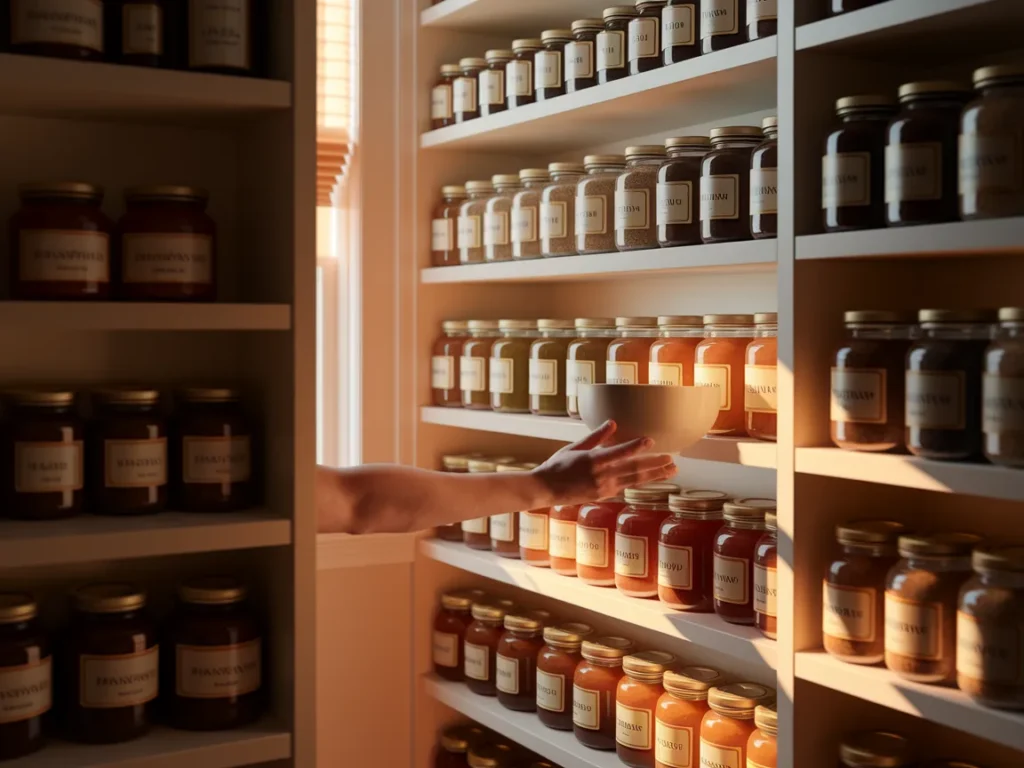
The final pantry layout rule places function before appearance. Every item should have a clear home, clear label, and easy access. If something does not fit the layout, it does not belong on the shelf.
A good pantry feels easy to scan and easy to reset. When layout rules stay simple and consistent, organization lasts without constant effort.
Frequently Asked Questions
How Long Does Pantry Organization Usually Take?
Pantry organization time depends on size and clutter level. A full reset often takes one to two hours, including cleaning and sorting. Smaller pantries take less time, especially when storage containers already exist. The biggest time saver comes from grouping items first and measuring shelves before buying organizers. Once the system is in place, weekly resets take only a few minutes and prevent future deep clean sessions.
Do All Pantry Items Need Containers?
Not all pantry items require containers, but staples benefit the most. Items like rice, flour, cereal, and sugar stay fresher in airtight containers. Packaged goods can remain in original packaging if grouped inside bins or baskets. Containers work best when used consistently for one category rather than mixing styles across shelves.
How Often Should A Pantry Be Reorganized?
A full reorganization works well once or twice a year. Smaller maintenance tasks should happen weekly or monthly. Regular resets prevent clutter from returning and help identify expired or unused items early. When pantry zones stay consistent, reorganization becomes lighter and faster over time.
What Causes Pantry Systems To Fail?
Pantry systems fail when zones lack clarity or labels. Overfilled shelves, mixed categories, and missing reset routines also cause breakdowns. Systems succeed when they stay simple and match daily habits. If a setup feels hard to maintain, it usually needs fewer rules, not more containers.
Final Thoughts
Pantry organization works best when built step by step with clear purpose. The most successful pantries focus on visibility, access, and consistency rather than decoration. In real use, problems appeared when shelves mixed categories or lacked labels. Organization improved when daily-use items stayed separate from backstock and when containers matched shelf size. Weekly resets prevented clutter from returning. A pantry does not need to look perfect to work well. When every item has a place and the layout supports daily habits, the pantry stays clean, efficient, and easy to manage over time.

