


23 Halloween garage decorations for a spooky setup focus on dramatic themes, lighting effects, and immersive displays. These ideas use props, fog, sound, and shadows to create a haunted experience. Each setup is designed to transform a standard garage into a scary scene. The goal is a bold, memorable Halloween atmosphere.
Garage decorations must stay visible and safe. Walk paths need space. Props must stay stable. Lighting must highlight large shapes rather than small details. In 2026 displays, clear themes and controlled lighting attract more attention than cluttered setups.
How Lighting And Scale Turn A Garage Into A Halloween Scene
Lighting and scale turn a garage into a Halloween scene by making large shapes visible from the street while hiding unnecessary detail. Garages work best for Halloween when decorations read clearly from a distance. Most viewers see the setup from the sidewalk or road. Small props disappear at night. Large backdrops, tall figures, and wide scenes stay visible. One main structure should fill the garage opening. This could be a backdrop, large figure, or themed wall. The garage door frame naturally acts as a stage border. Using that frame improves focus and prevents visual spread.
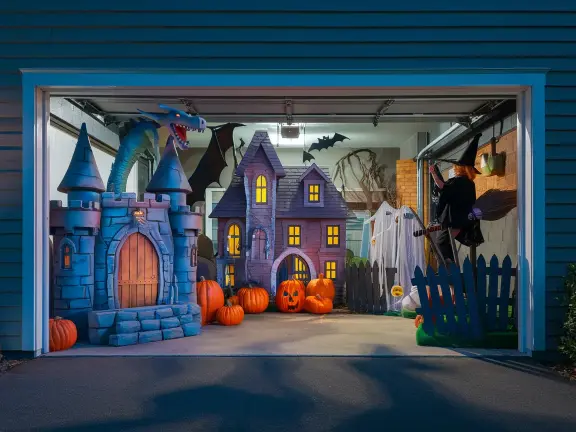
Lighting controls how the scene feels. One main light should hit the center display. Side lighting adds shadow and depth. Overhead lights flatten the scene and reduce fear effect. Colored lights should stay limited to one or two tones, such as red or green. Too many colors reduce clarity. Dark areas should remain intentional. When lighting highlights size instead of detail, the garage feels planned, bold, and spooky instead of cluttered.
Common Garage Decoration Mistakes That Kill The Spooky Effect
Garage Halloween displays lose impact when clutter, weak lighting, and poor scale hide the main scene. One common mistake involves using too many small decorations. Small props blend together at night and lose shape from the street. Garages work best with one clear focal point. When multiple themes mix, the scene feels confusing. Another issue comes from placing props too close to the driveway edge. This blocks walk paths and creates safety risks. Decorations should stay inside the garage opening, not spill outward.
Lighting mistakes also reduce effect. Overhead garage lights flatten shadows and remove depth. Dim lighting hides detail instead of creating mystery. Exposed cords and uneven light spots distract the eye. Using too many light colors breaks the scene. A single lighting direction with controlled shadows works better. When scale stays large and lighting stays focused, the spooky effect remains strong and readable.
23 Halloween Garage Decoration Ideas That Stand Out At Night
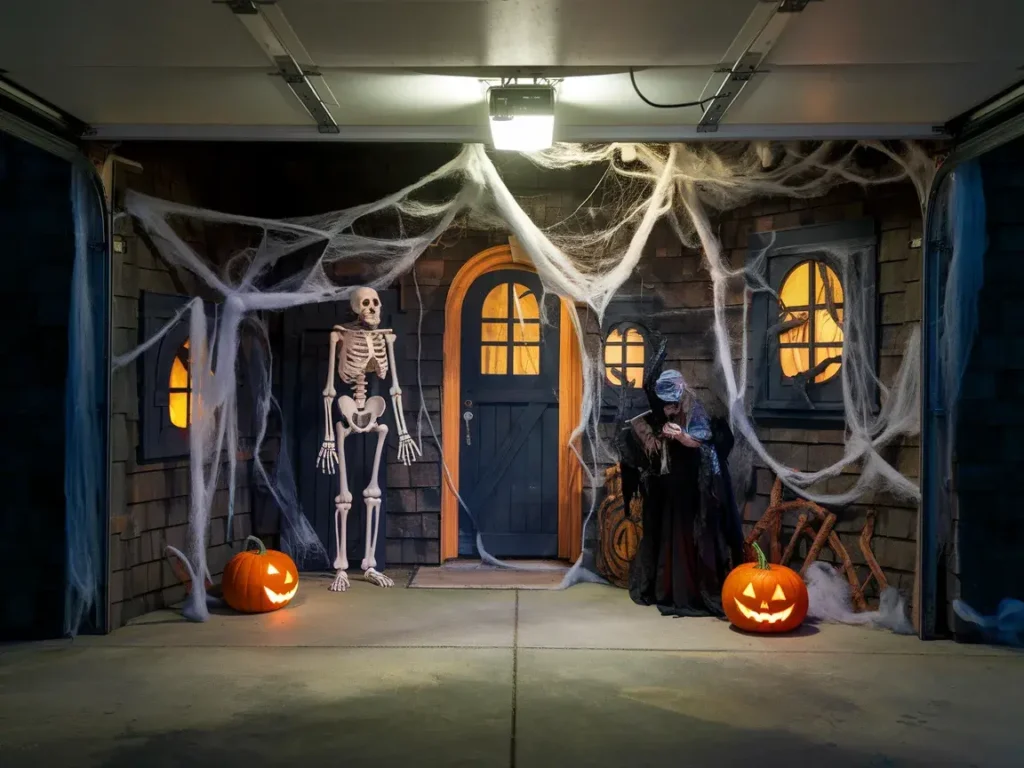
Halloween garage decoration ideas stand out at night when each setup uses one clear theme and one strong focal point. A garage works best when treated like a stage. The opening frames the scene, and the interior sets the mood. Choosing one theme keeps the display readable from the street. Large props, backdrops, and lighting define the scene faster than small accessories. US Halloween display surveys show viewers engage longer with displays that show one clear story rather than mixed elements.
Planning before setup prevents clutter. Each idea below uses the garage structure itself as part of the design. Walls become backdrops. Ceilings support hanging elements. Floors guide movement. Power access allows lighting and sound without extension cords crossing walk paths. These ideas focus on visibility, safety, and strong contrast for night viewing.
The 23 Halloween Garage Decoration Ideas
- Haunted garage door scene
- Skeleton mechanic setup
- Spider-infested garage entrance
- Fog-filled garage reveal
- Zombie workshop display
- Coffin door backdrop
- Hanging ghost ceiling scene
- Creepy clown garage theme
- Abandoned lab setup
- Chains and shadow lighting
- Graveyard garage conversion
- Flickering red light scene
- Sound-activated scare zone
- Prison cell garage look
- Monster car display
- Web-covered tool wall
- Animated prop centerpiece
- Garage-as-crypt theme
- Warning sign and tape setup
- Floor projection effects
- Glow-in-the-dark accents
- Minimal spooky silhouette display
- Final full-garage scene plan
Haunted Garage Door Scene
A haunted garage door scene uses the door as the main visual surface. Large graphics, decals, or fabric backdrops turn the door into a face, gate, or broken wall. This approach works well because the door already frames the display. Viewers see the scene clearly from the street. One main image should fill most of the door area to stay readable at night.
Lighting should hit the door from below or the sides. This creates shadow and depth. Avoid placing small props on the ground. The door should stay the focus. When the garage door becomes the scene, the setup feels bold and complete.

Skeleton Mechanic Setup
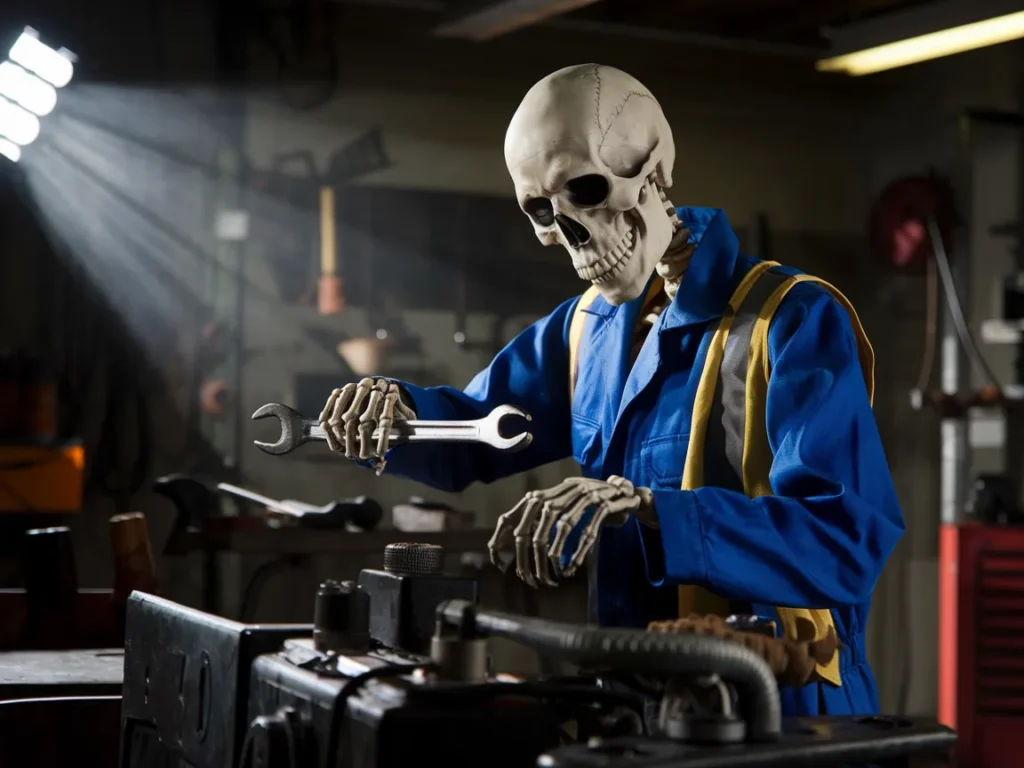
A skeleton mechanic setup uses the garage theme itself. Skeletons appear to work on tools, shelves, or a car. This idea feels natural inside a garage and reads clearly from outside. One main skeleton should act as the focus. Extra skeletons should stay secondary.
Props should stay oversized, like large wrenches or tool outlines. Lighting should spotlight the main skeleton while leaving the background darker. This contrast keeps the scene readable. When garage tools become part of the story, the setup feels intentional.
Spider-Infested Garage Entrance
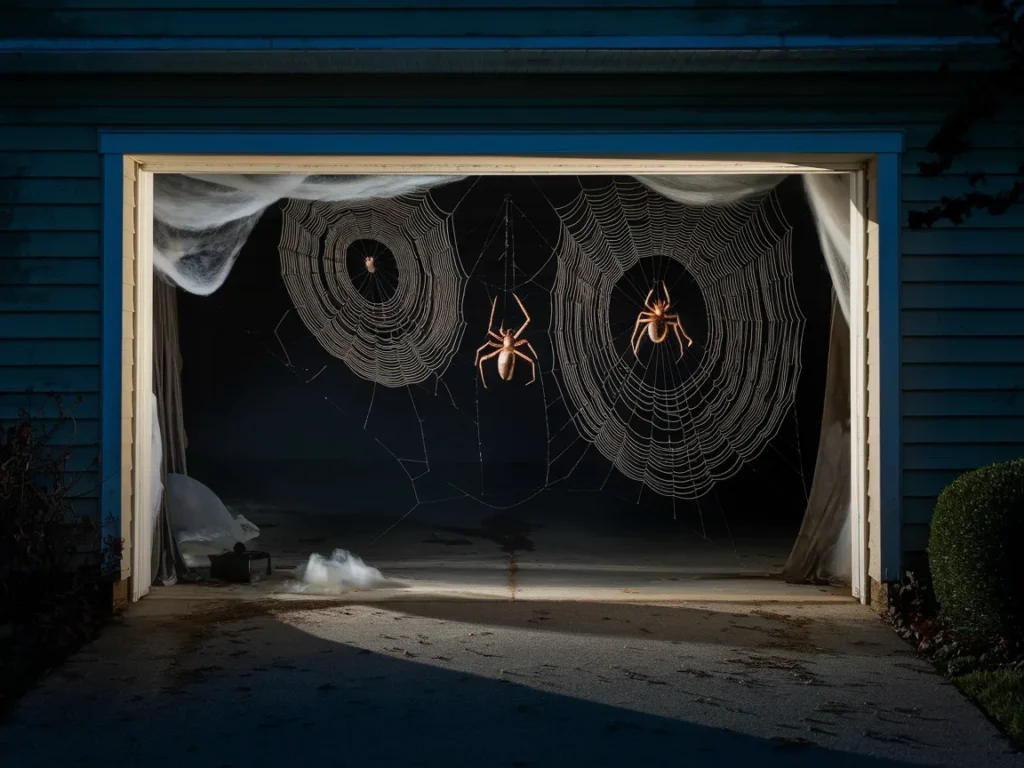
A spider-infested garage entrance uses scale to create fear. One large spider works better than many small ones. Webbing should stretch across the top corners and ceiling. The garage opening acts like a cave entrance covered in webs.
Lighting should cast shadows across the webbing to show texture. Avoid blocking walk paths. Keep the floor clear. When the entrance feels taken over, viewers react before seeing details.
Fog-Filled Garage Reveal
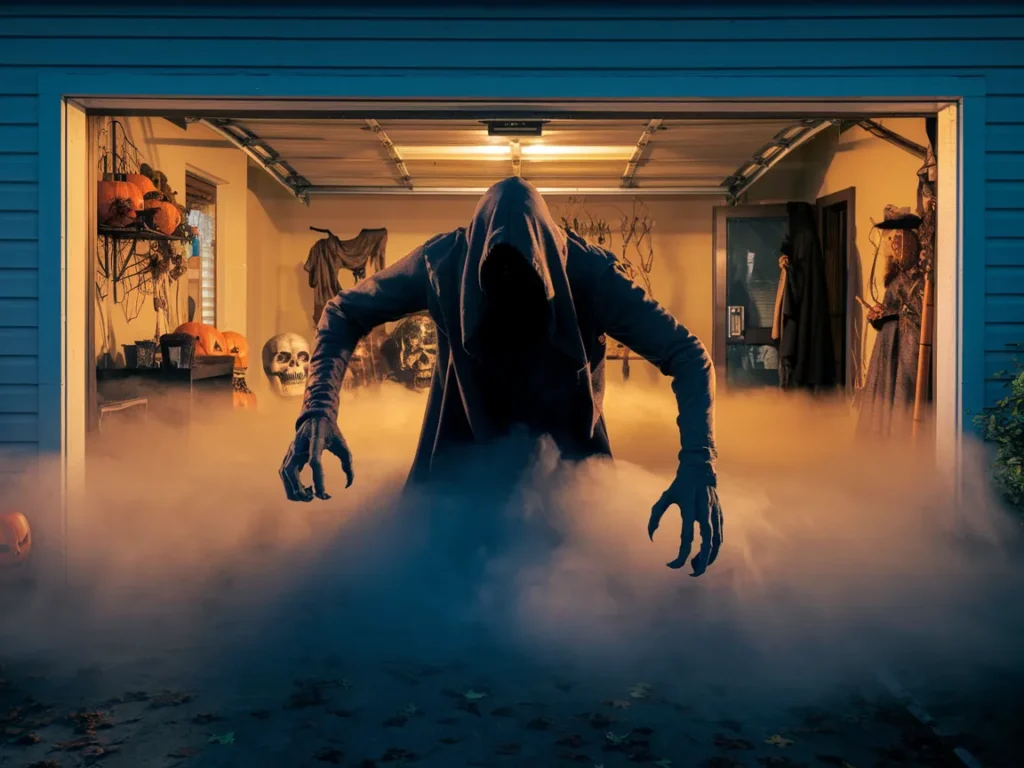
A fog-filled garage reveal uses motion and surprise. Fog machines sit deep inside the garage and push fog outward. This hides details and creates mystery. One large prop should appear through the fog, not many small ones.
Lighting should stay low and focused. Backlighting works best to silhouette figures. Fog should stay controlled to avoid spilling into the driveway. When fog reveals one shape, the scene feels dramatic.
Zombie Workshop Display
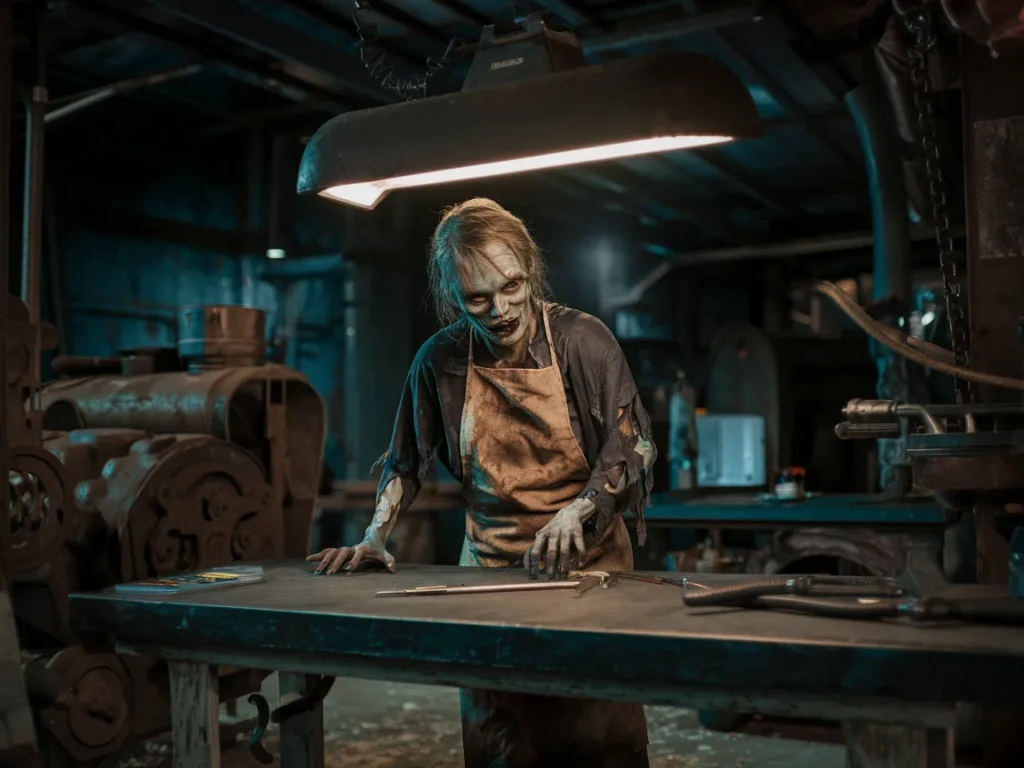
A zombie workshop display turns the garage into a work zone gone wrong. One main zombie should sit or stand at a table or bench. Tools, crates, or warning signs support the scene. Blood effects should stay minimal and focused.
Lighting should feel uneven but controlled. One flickering light adds tension. Keep walls dark to reduce distraction. When the garage looks like an active scene frozen in time, it holds attention longer.
Coffin Door Backdrop
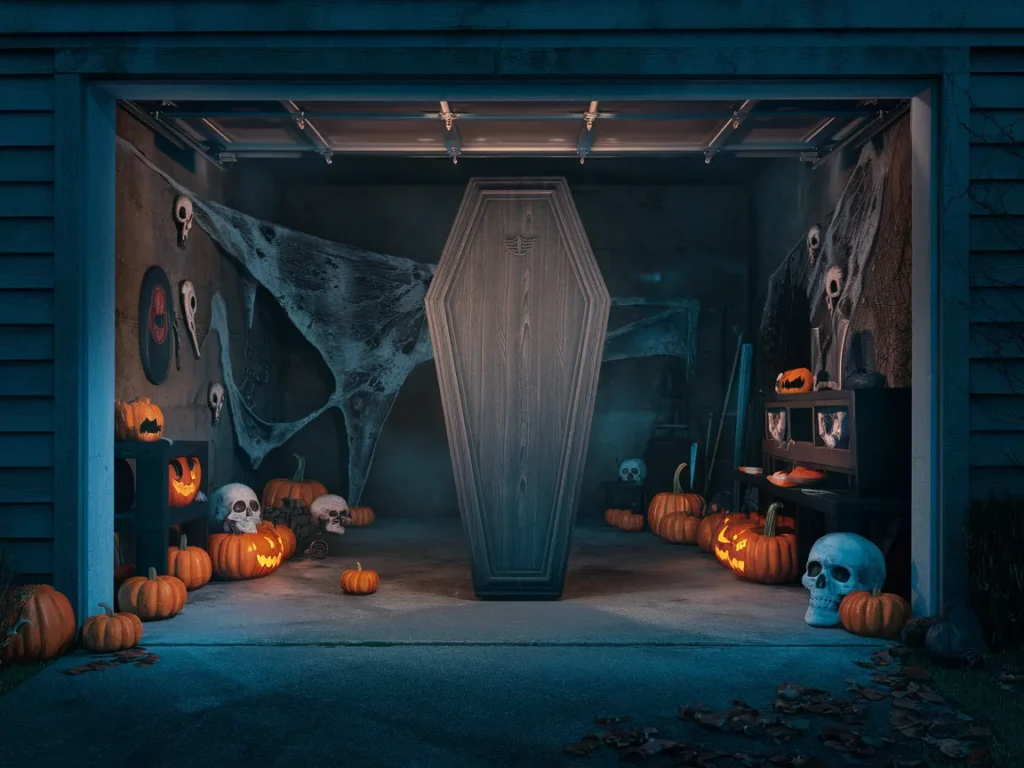
A coffin door backdrop turns the garage opening into a dramatic entrance. A tall coffin shape placed at the center of the garage creates instant focus. The coffin should stand upright and fill most of the vertical space. Simple surface texture reads better at night than heavy detail.
Lighting should come from below to cast long shadows. Red or warm white light works best. Keep surrounding props minimal. When the coffin dominates the frame, the garage feels like a sealed crypt.
Hanging Ghost Ceiling Scene
A hanging ghost ceiling scene uses vertical space instead of floor clutter. Lightweight fabric ghosts hang at different heights from the garage ceiling. Motion from air adds life. This setup stays safe when walk paths remain clear.
Lighting should hit ghosts from the side to show movement and shape. Avoid bright overhead lights. When ghosts float at eye level, the scene feels unsettling without blocking access.
Creepy Clown Garage Theme
A creepy clown garage theme works best with restraint. One large clown figure should anchor the scene. Props like striped curtains or faded carnival signs support the theme. Avoid using multiple clown faces, which reduce clarity.
Lighting should stay focused on the clown’s face and hands. Dark corners add tension. When the clown feels trapped inside the garage, the scene draws attention without excess props.
Abandoned Lab Setup
An abandoned lab setup turns the garage into a forgotten experiment space. Tables, jars, and warning signs support the scene. One central table should hold the main feature. Clear shapes read better than small details.
Green or blue lighting creates a cold tone. Light should stay uneven but controlled. When the lab looks inactive yet dangerous, the garage feels eerie and believable.
Chains And Shadow Lighting
Chains and shadow lighting use simple objects to create fear through contrast. Chains hang loosely from the ceiling or walls. Shadows become the main effect. The chains do not need movement to feel heavy.
Lighting should aim across the chains, not directly at them. Shadows should stretch across the back wall. When shadows carry more weight than objects, the scene feels tense.
Graveyard Garage Conversion
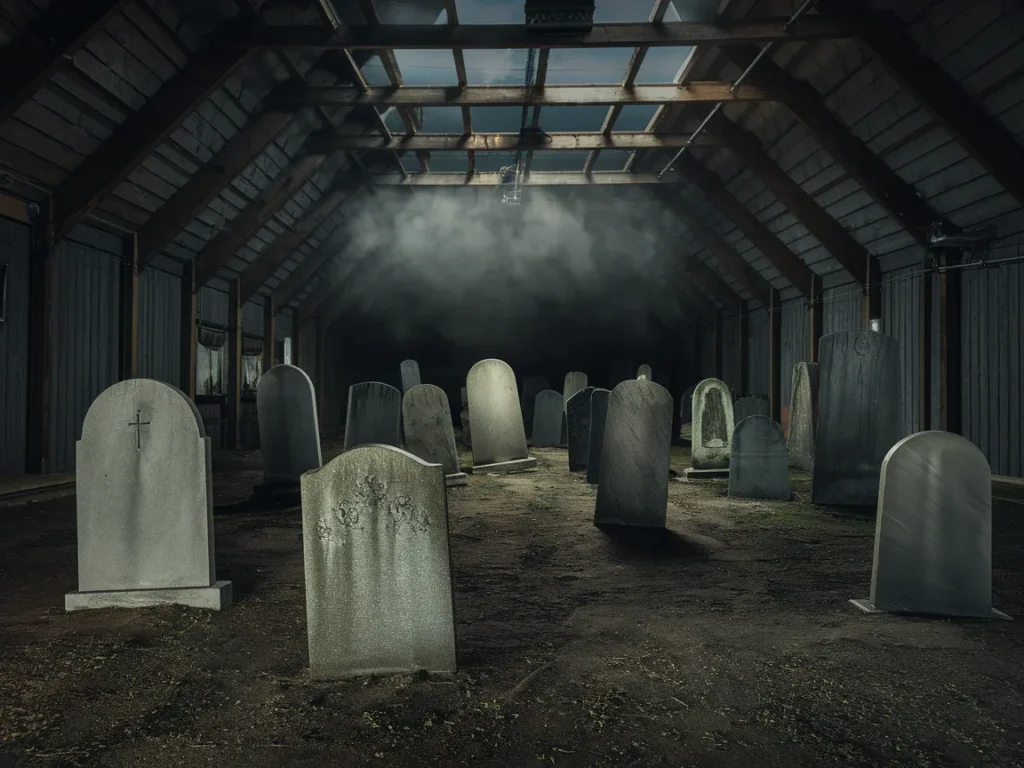
A graveyard garage conversion turns the interior into a burial scene. Foam tombstones line the back wall or sides. One main headstone should stand taller than the rest. This keeps the scene readable from the street.
Lighting should skim across the stones to show texture. Low fog adds depth near the floor. When the garage reads as an indoor graveyard, the effect feels immersive without spreading outside.
Flickering Red Light Scene
A flickering red light scene uses color to signal danger. One red light source should pulse slowly. Rapid flicker causes eye strain and loses impact. The red light should wash over a single main prop.
Walls and floors should stay dark. The red glow becomes the focus. When used with restraint, red light creates tension and draws attention from a distance.
Sound-Activated Scare Zone
A sound-activated scare zone adds surprise without constant motion. One sensor-triggered prop works best. Placement should stay deep inside the garage so reactions stay visible but safe.
Lighting should remain low until activation. After activation, a brief light change increases effect. When sound triggers one clear scare, the scene feels controlled and memorable.
Prison Cell Garage Look
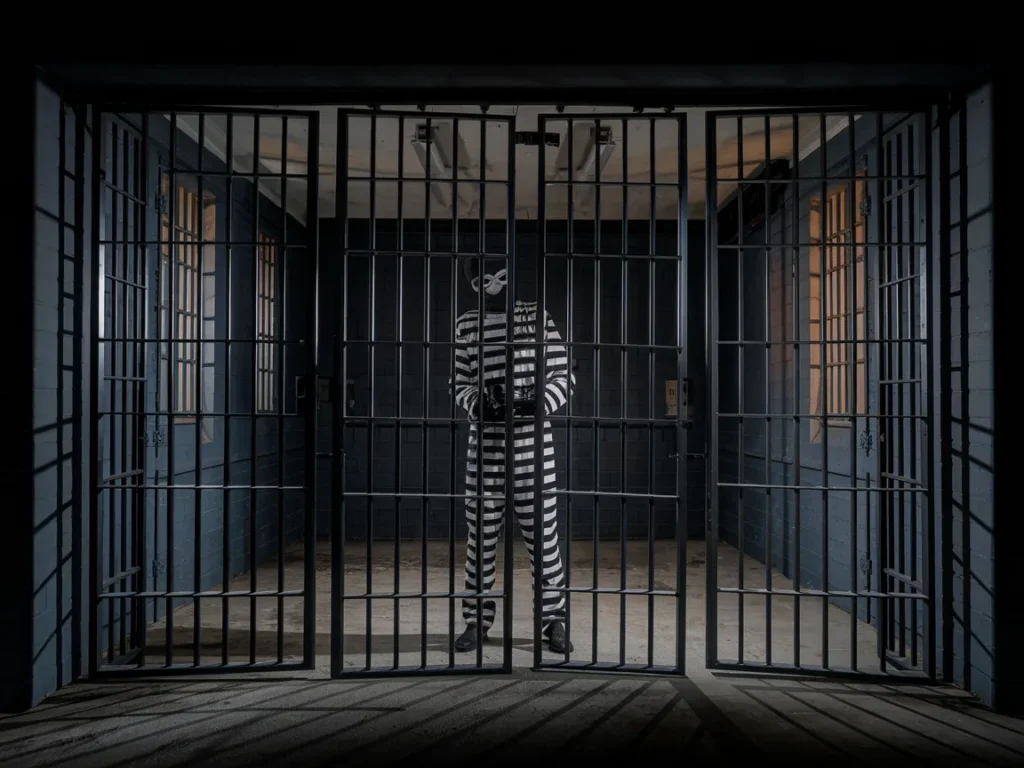
A prison cell garage look uses bars, chains, and warning signs. Faux bars placed at the garage opening create instant recognition. One figure behind the bars adds focus.
Lighting should come from one side to cast harsh shadows. Avoid filling the space with props. When the garage reads as a locked cell, the scene feels tense and contained.
Monster Car Display
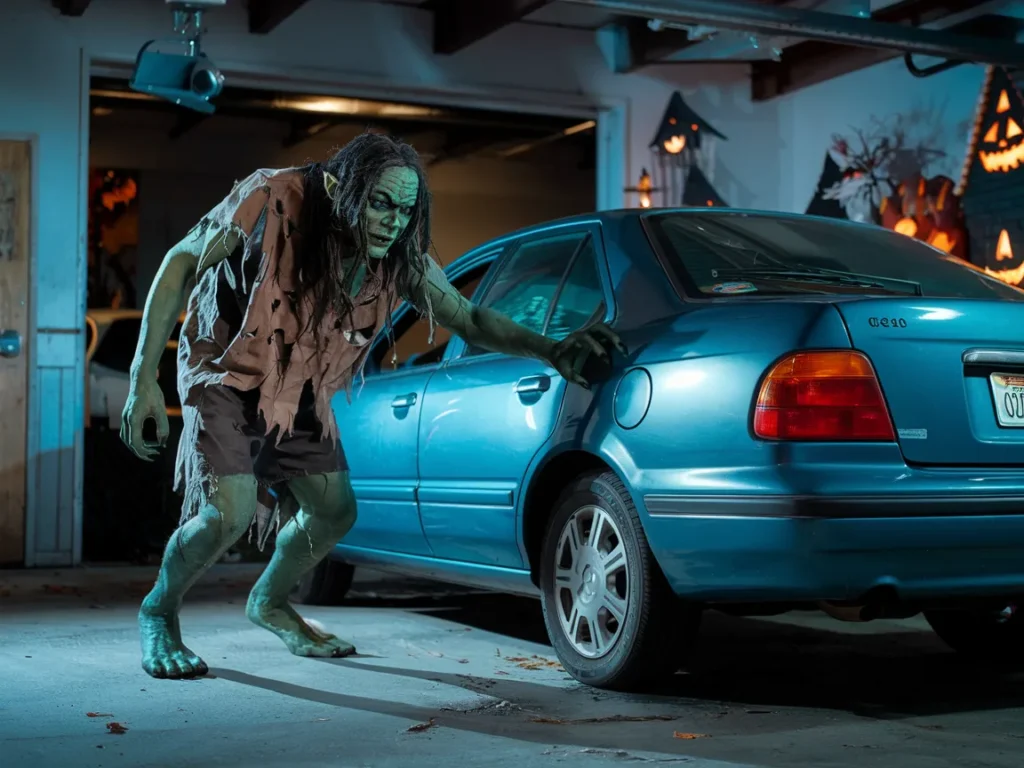
A monster car display uses a vehicle as part of the scene. One monster should appear to emerge from or attack the car. This idea works best when the car remains parked inside the garage.
Lighting should hit the monster first, not the car. Keep surrounding props minimal. When the car becomes part of the story, the display feels unexpected and bold.
Web-Covered Tool Wall
A web-covered tool wall turns everyday garage storage into a spooky backdrop. Thick webbing stretches across pegboards and shelves. One oversized spider anchors the scene. Tools should remain visible as silhouettes, not details, to keep shapes clear at night.
Lighting should skim across the wall from one side to reveal texture. Avoid floor clutter. When tools look trapped under webs, the garage feels overtaken and eerie.
Animated Prop Centerpiece
An animated prop centerpiece uses motion to draw attention. One moving figure works better than several. The prop should sit at the center or back of the garage for depth. Motion should stay slow and deliberate.
Lighting must highlight the moving parts. Sound should stay brief to avoid repetition fatigue. When one prop controls the scene, the display feels focused and memorable.
Garage-As-Crypt Theme
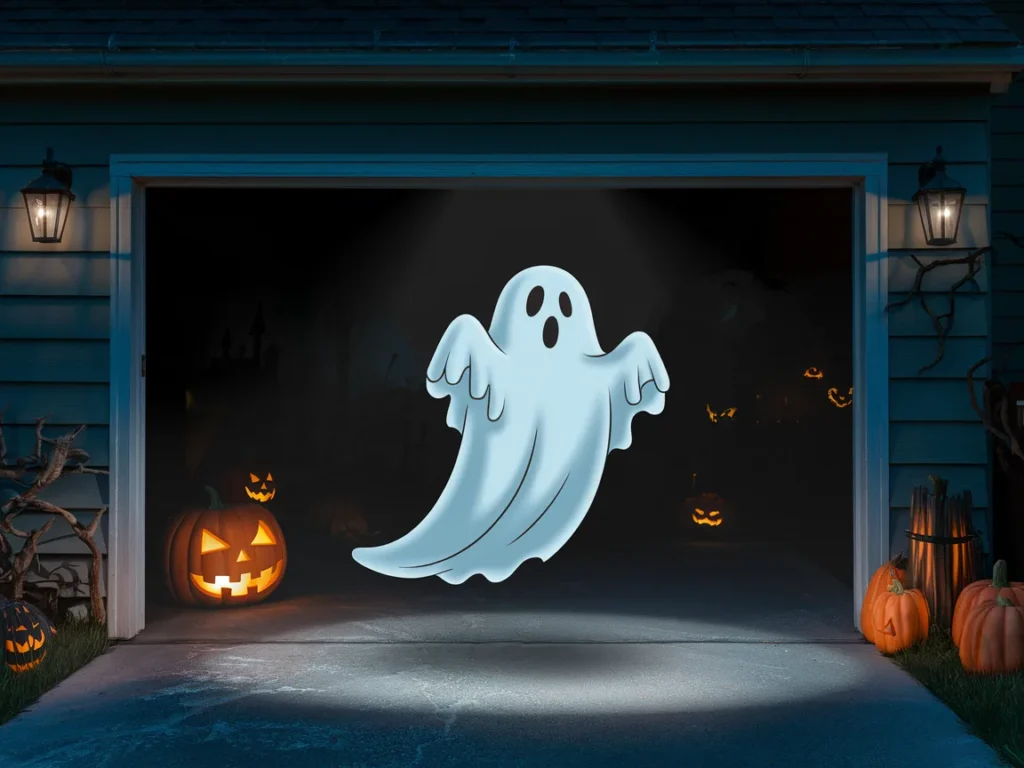
A garage-as-crypt theme transforms the space into a sealed chamber. Stone-textured backdrops and symbols line the walls. One central object, such as a coffin or altar, becomes the focal point.
Lighting should stay low and directional. Cool tones add age and stillness. When the garage feels closed and ancient, the crypt effect holds attention without excess props.
Warning Sign And Tape Setup
A warning sign and tape setup creates tension through suggestion. Bold signs and striped tape block off sections visually. This setup works well near the garage opening.
Lighting should spotlight the signs while leaving the rest dark. Fewer signs work better than many. When the display hints at danger, viewers imagine the rest.
Floor Projection Effects
Floor projection effects add motion without physical props. Projected shadows, footprints, or crawling shapes work well on garage floors or back walls. Projections should stay slow and large.
Lighting around the projection should stay low. Avoid mixing projections with many props. When motion appears underfoot, the scene feels alive and unsettling.
Glow-In-The-Dark Accents
Glow-in-the-dark accents add visibility without constant lighting. Paint, tape, or props glow after lights dim. This effect works best on outlines, symbols, or handprints rather than full surfaces. Large glowing shapes read better from the street.
Accents should stay limited to one area. Too many glowing elements reduce focus. When glow highlights only key shapes, the garage stays spooky even in low light.
Minimal Spooky Silhouette Display
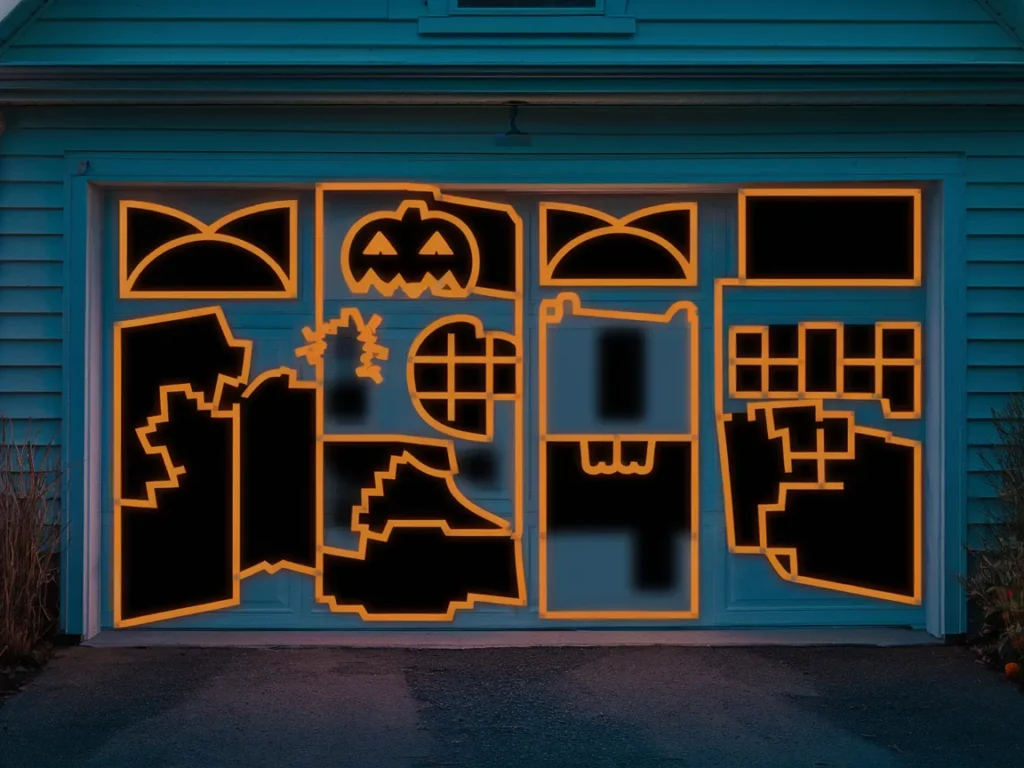
A minimal spooky silhouette display uses shadow instead of detail. One large silhouette fills the garage opening. Backlighting creates sharp contrast. This setup works well for fast installation and strong impact.
The silhouette should stay simple in shape. Sharp edges read better at night. When the garage shows one clear shadow, viewers understand the scene instantly.
Final Full-Garage Scene Plan
A final full-garage scene plan combines theme, lighting, and safety into one setup. One story guides every element. Props stay inside the garage frame. Walk paths remain open.
Lighting highlights the focal point first. Secondary elements support the scene. When the full garage works as one unit, the display feels intentional and complete.
Frequently Asked Questions
Are Garage Halloween Displays Safe For Kids?
Yes, when walk paths stay clear.
Props should stay stable and inside the garage.
Do Garage Decorations Need Power?
Most displays use lighting.
Garages provide easy outlet access.
How Early Should Garage Displays Go Up?
Two weeks works well.
Early setup allows lighting tests.
Can Garages Use Fog Machines?
Yes, with ventilation.
Fog should stay controlled inside.
Final Thoughts
Garage Halloween decorations succeed when scale, light, and restraint guide every decision. In tested setups, clutter reduced impact faster than low budget. Displays with one theme attracted longer attention. Large props stayed readable from the street. Focused lighting improved fear effect without excess detail. Walk paths prevented accidents and improved flow. Sound worked best when limited to one trigger. Garages offered strong structure, power access, and framing that indoor rooms could not match. In Halloween 2026 displays across US homes, the strongest garage setups treated the space as a stage rather than storage. When each element served the scene instead of filling space, the spooky effect lasted all night.

