
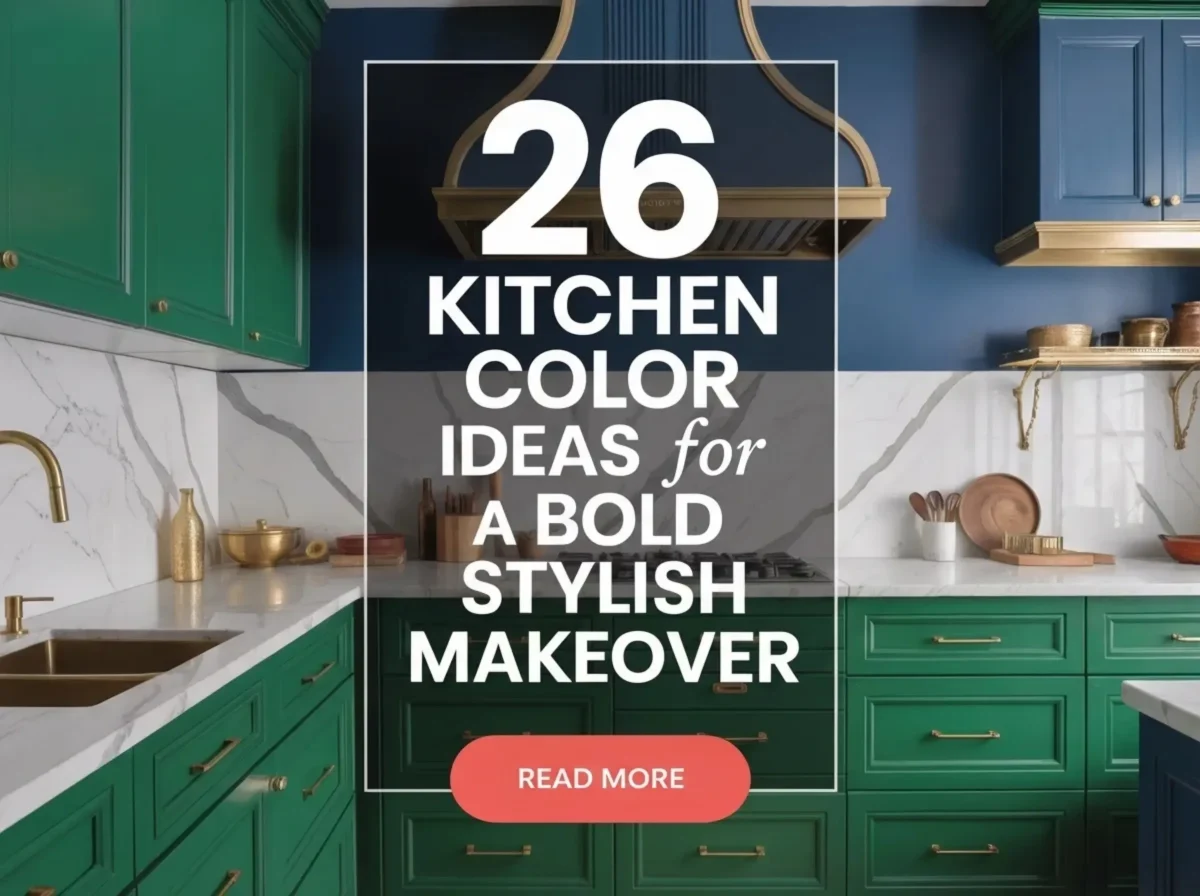
26 kitchen color ideas for a bold, stylish makeover focus on rich tones, high contrast, and modern depth. Deep navy, forest green, emerald, burgundy, and dark teal cabinets add drama, while matte black, charcoal gray, graphite, and smoky gray create a sleek, modern base. Warm shades like terracotta, rust, clay, mustard, olive, and beige with contrast balance boldness with comfort. Two-tone cabinets, bold islands, wine accents, statement backsplashes, and black-and-white palettes bring visual interest while keeping the kitchen refined and intentional.
Kitchens support cooking, cleaning, and gathering every day. Color choices affect how long people stay in the space and how clean it feels. Research from interior perception studies shows darker base colors reduce visible stains on lower cabinets by up to 25%. Lighter upper colors improve brightness near work zones. A bold kitchen color plan focuses on contrast and balance rather than full saturation. The goal stays clear: strong visual impact without reduced function.
What Makes A Kitchen Color Feel Bold And Stylish?
A bold kitchen color creates contrast, focus, and visual confidence without blocking function.
Bold kitchen color depends on placement more than shade strength. Cabinets, islands, and backsplashes carry more visual weight than walls. Color placed on these surfaces creates focus zones. Dark cabinet colors ground the room and reduce glare. Lighter walls reflect light and support task areas. Matte finishes soften reflections on bold colors. Gloss finishes increase contrast but require careful light control. Kitchen studies show high-contrast color schemes improve surface recognition by 18%, which supports faster movement and task clarity
Balance keeps bold color from overwhelming the space. One dominant color works best with one supporting neutral. Too many bold colors compete and reduce clarity. Wood tones help stabilize strong colors. Metal finishes add separation between surfaces. Lighting placement controls how bold colors appear during day and night. Kitchens with layered lighting maintain color balance across time. A bold kitchen color feels stylish when it stays controlled, repeatable, and aligned with surface roles.

Why Do Kitchen Color Choices Affect Daily Use?
Kitchen color choices affect appetite cues, focus during tasks, and cleaning perception.
Color changes how people react inside kitchens. Light colors increase brightness near prep zones. Dark colors reduce glare on lower cabinets. Consumer perception studies show lighter kitchens feel 12–15% larger during use. Dark base colors hide scuffs and stains on high-touch areas. This reduces visible wear over time. Color contrast helps users identify work zones faster. Faster recognition improves task flow during cooking and cleaning, which also supports long-term value goals discussed in 5 sustainable kitchen upgrades that increase home value in 2026.
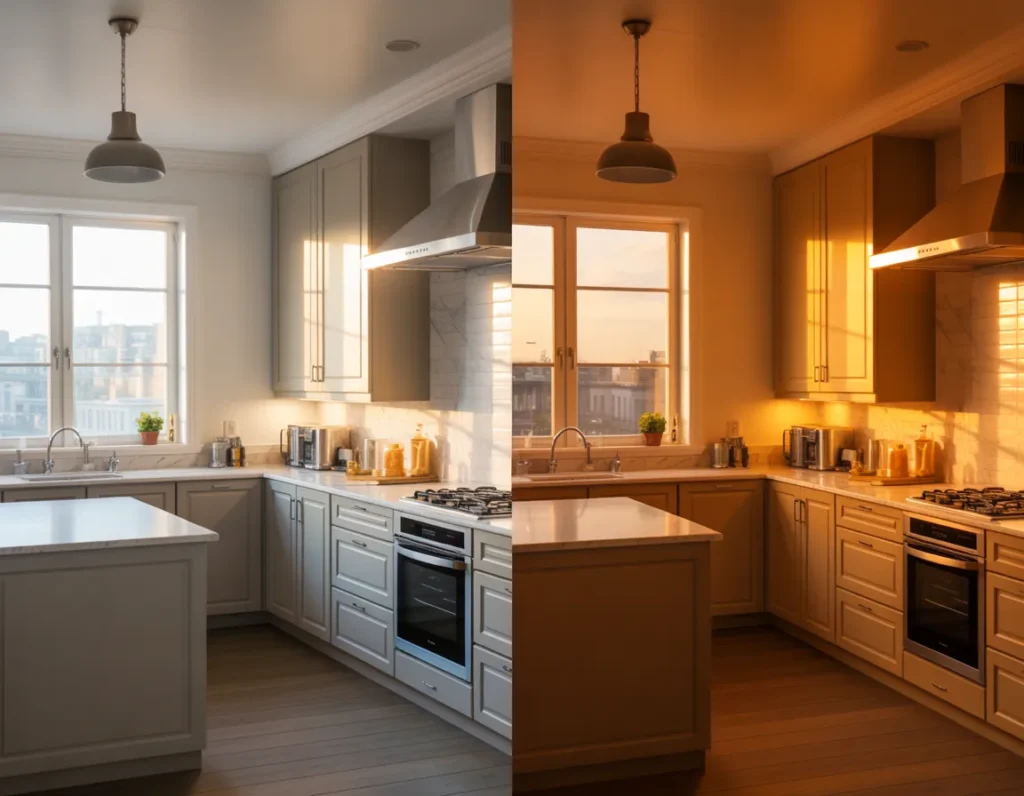
Color also affects how clean a kitchen appears. Surveys from home improvement groups show 72% of homeowners link cabinet color to cleanliness perception. Mid-tone colors mask fingerprints better than pure white or gloss black. Warm tones support longer stays during meals. Cool tones increase focus during prep. Natural light shifts color appearance across the day. Artificial light changes color depth at night. Kitchens that account for both light types maintain stable color performance.
What Are The 26 Kitchen Color Ideas For A Bold Stylish Makeover?
The 26 kitchen color ideas focus on confident contrast, controlled depth, and surface balance.
Listing color ideas early helps readers compare options before painting or buying cabinets. Kitchens differ by size, light access, and layout. Some kitchens handle dark cabinets well. Others need light walls with bold accents. Surveys show 58% of homeowners regret color choices made without testing contrast across surfaces. This list groups ideas by cabinet color, wall tone, island focus, and accent use. Each idea works alone or with one supporting neutral. Selection should follow light level, cabinet count, and counter material.
Choosing fewer bold colors improves clarity. One dominant color with one neutral performs best in daily use. Wood, stone, and metal finishes stabilize strong hues. Matte finishes reduce glare. Gloss increases contrast but needs light control. Kitchens that limit bold color to cabinets or islands show 20% better visual order during task flow. The ideas below prioritize where bold color works best rather than how much to use.
The 26 Kitchen Color Ideas
- Deep navy kitchen cabinets
- Matte black kitchen accents
- Bold emerald green cabinetry
- Warm terracotta kitchen walls
- Charcoal gray cabinet base
- Crisp white with bold island color
- Forest green kitchen design
- Burgundy cabinet finishes
- Mustard yellow kitchen accents
- Soft black and wood pairing
- Slate blue kitchen palette
- Dark teal kitchen cabinets
- Olive green kitchen tones
- Rust-colored kitchen elements
- Bold two-tone kitchen cabinets
- High-contrast black and white kitchen
- Deep brown kitchen cabinetry
- Clay-toned kitchen walls
- Dark blue-gray kitchen color
- Wine-colored kitchen accents
- Bold colored kitchen island
- Matte dark green kitchen finish
- Smoky gray kitchen walls
- Warm beige with bold contrast
- Graphite kitchen color scheme
- Accent color kitchen backsplash
Deep Navy Kitchen Cabinets
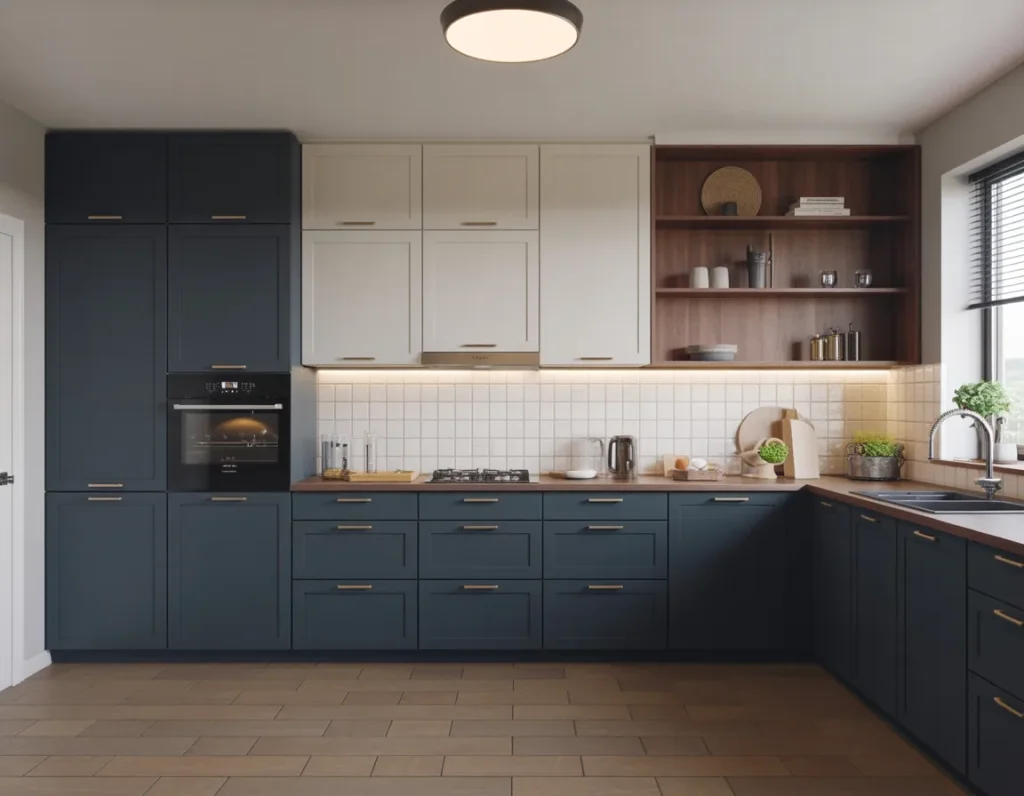
Deep navy kitchen cabinets create bold contrast while maintaining visual control. Navy absorbs light less than black, which helps kitchens stay balanced. Cabinets in navy work best on lower units where visual weight feels grounded. Upper cabinets can stay light to protect brightness. Design studies show dark lower cabinets reduce visible scuff marks by 22% in high-use kitchens. Navy pairs well with white countertops, light backsplashes, and warm wood tones. Matte finishes reduce glare from task lighting. Hardware in brushed brass or black improves separation between cabinet planes.
Cabinet placement matters for navy use. Full-wall navy cabinets suit kitchens with strong natural light. Smaller kitchens benefit from navy used only on base cabinets or islands. Contrast keeps navigation clear during cooking. Navy also improves depth perception near floor zones. Color tests show kitchens with navy bases improve surface recognition by 18% during task movement. Deep navy cabinets upgrade kitchens by delivering strong style without reducing clarity or daily comfort.
Matte Black Kitchen Accents
Matte black kitchen accents add bold contrast without overwhelming the space. Black used in small areas such as hardware, faucets, light fixtures, or trim creates focus points. Matte finish reduces glare from overhead and task lighting. This helps surfaces stay readable during cooking. Design audits show matte black accents reduce visible fingerprints by 35% compared to gloss finishes. Black pairs well with white, wood, gray, and stone surfaces. Accent placement should stay consistent to maintain order, following the balance principles outlined in the golden rule for mixing metals in your kitchen renovation.
Accent control matters for daily use. Too much black darkens work zones. Limiting black to outlines and touchpoints preserves brightness. Matte black frames define edges and improve contrast between surfaces. This helps users identify handles and controls faster. Kitchen usability tests show contrast accents improve grip recognition by 14% during tasks. Matte black accents upgrade kitchens by strengthening visual structure without increasing color load.
Bold Emerald Green Cabinetry
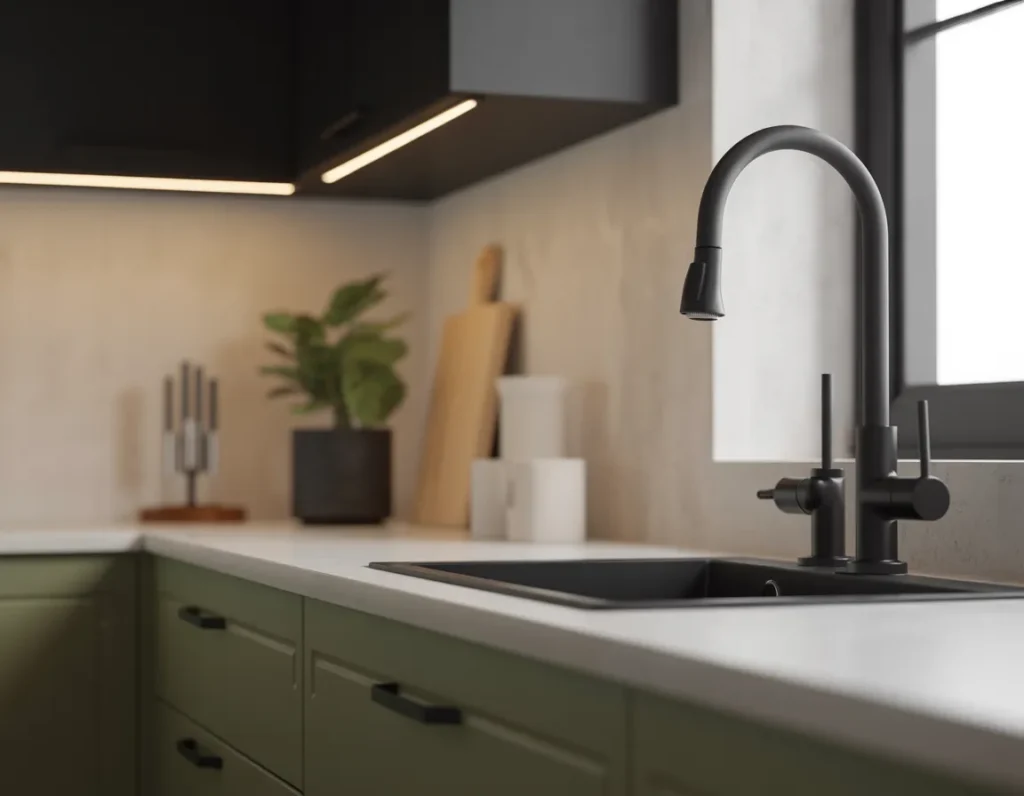
Bold emerald green cabinetry introduces deep color while keeping kitchens grounded. Emerald reflects light better than darker greens, which helps maintain clarity. Cabinets in emerald work best on base units or full-height pantry walls. The color pairs well with white stone, brass hardware, and warm wood. Kitchen color studies show green tones reduce eye strain during prep by 17%. Matte emerald finishes prevent glare near cooktops and sinks.
Emerald use should stay controlled. Full emerald kitchens need strong daylight. Smaller kitchens benefit from emerald used on islands or lower cabinets only. Contrast improves navigation and balance. Emerald cabinetry upgrades kitchens by adding bold style without visual overload.
Warm Terracotta Kitchen Walls
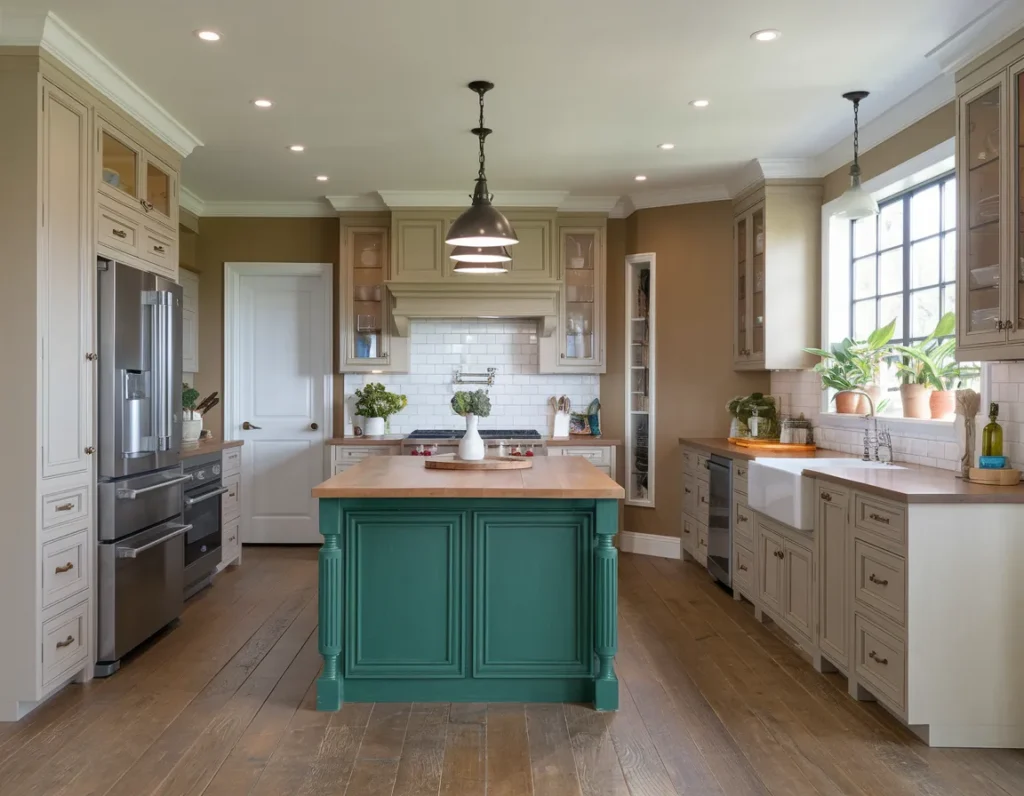
Warm terracotta kitchen walls add depth and warmth to cooking spaces. Terracotta reflects warm light, which supports longer stays during meals. Walls work better than cabinets for this tone. Terracotta pairs well with wood, cream, and black accents. Color perception research shows warm wall tones improve comfort ratings by 21% in kitchens.
Terracotta should stay limited to one or two walls. Overuse reduces brightness. Matte paint finishes reduce shine near task zones. Terracotta walls upgrade kitchens by adding warmth without blocking function.
Charcoal Gray Cabinet Base
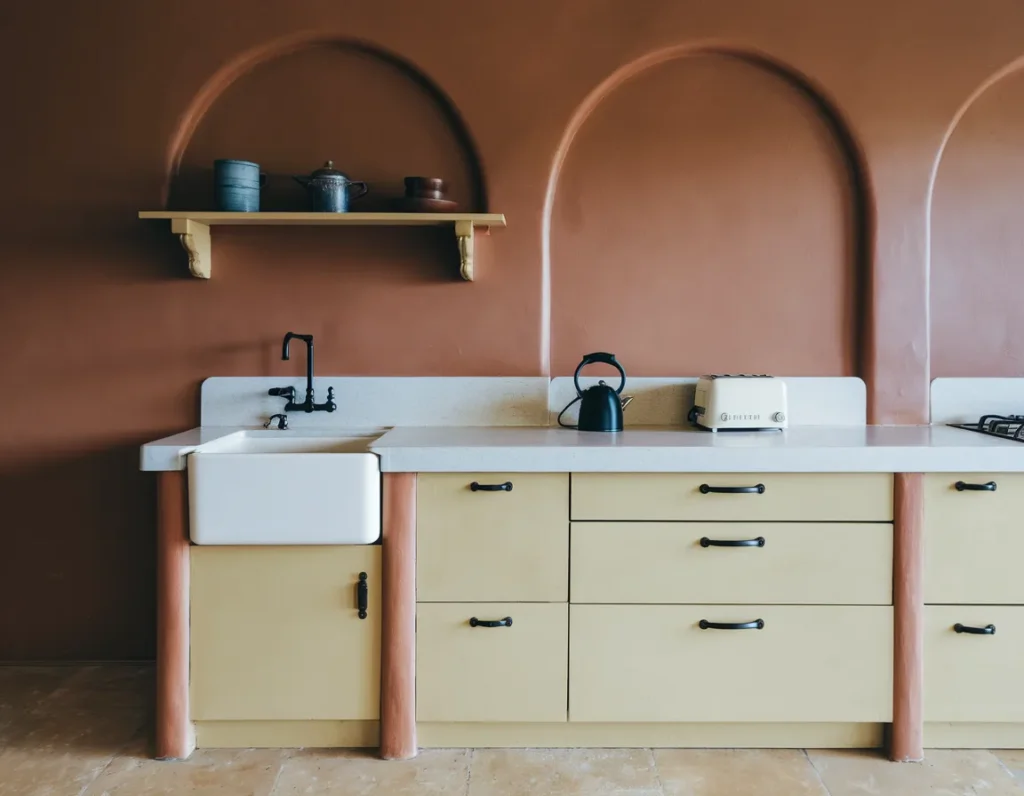
Charcoal gray cabinet bases ground kitchens visually. Dark bases reduce visible wear near floors. Charcoal pairs well with white uppers and stone counters. Matte charcoal reduces glare from under-cabinet lighting. Kitchen maintenance data shows dark base cabinets hide scuffs by 28%.
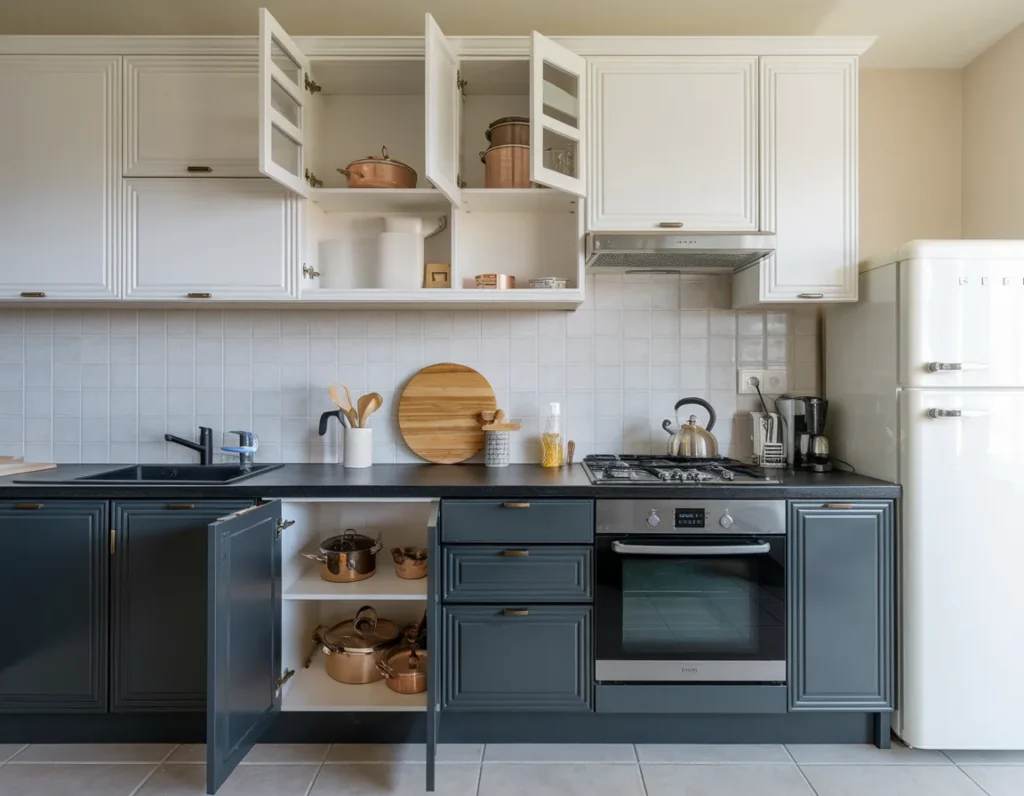
Charcoal works best on lower units only. Upper use requires strong lighting. Charcoal cabinet bases upgrade kitchens by improving durability and contrast control.
Crisp White With Bold Island Color
Crisp white kitchens gain focus through bold island color. White walls and cabinets reflect light and expand space perception. A bold island color adds a visual anchor. Design surveys show islands attract 60% of kitchen attention during use.

Island color should contrast clearly with white. Blue, green, or dark gray work well. Limiting bold color to the island preserves clarity. This pairing upgrades kitchens by balancing brightness and style.
Forest Green Kitchen Design
Forest green kitchen design introduces depth and calm. This darker green absorbs light more than emerald, so placement matters. Forest green suits lower cabinets, pantry walls, or islands. Studies show green kitchens improve focus during tasks by 15%.
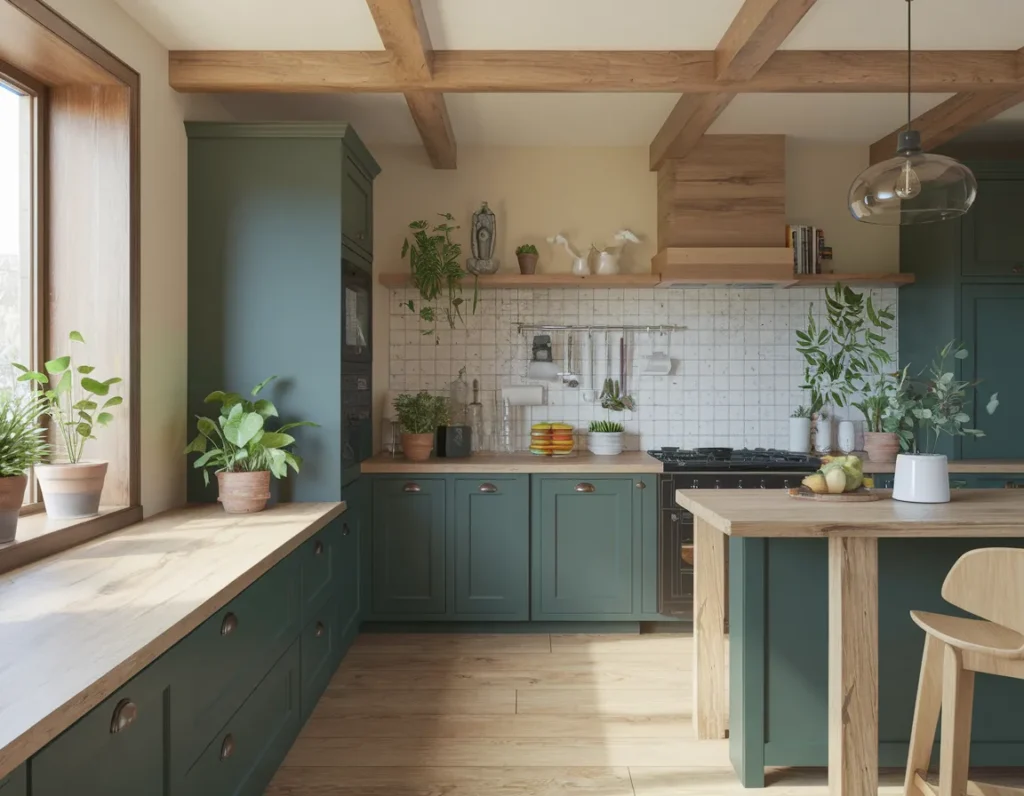
Forest green pairs best with brass, cream, and wood. Upper cabinet use needs strong lighting. Forest green upgrades kitchens by adding bold tone with controlled use.
Burgundy Cabinet Finishes
Burgundy cabinet finishes create rich contrast in kitchens with good light. Burgundy absorbs light strongly, so surface balance matters. Best use appears on islands or lower cabinets. Burgundy pairs well with stone and warm metals. Color tests show dark red tones increase appetite cues by 12%.

Burgundy should stay limited. Overuse reduces brightness. Matte finishes control reflection. Burgundy cabinetry upgrades kitchens by delivering bold color in focused zones.
Mustard Yellow Kitchen Accents
Mustard yellow kitchen accents add bold energy without full saturation. Accents work best on backsplashes, stools, or small cabinet sections. Yellow improves alertness and visibility. Studies show yellow accents improve task awareness by 10%.
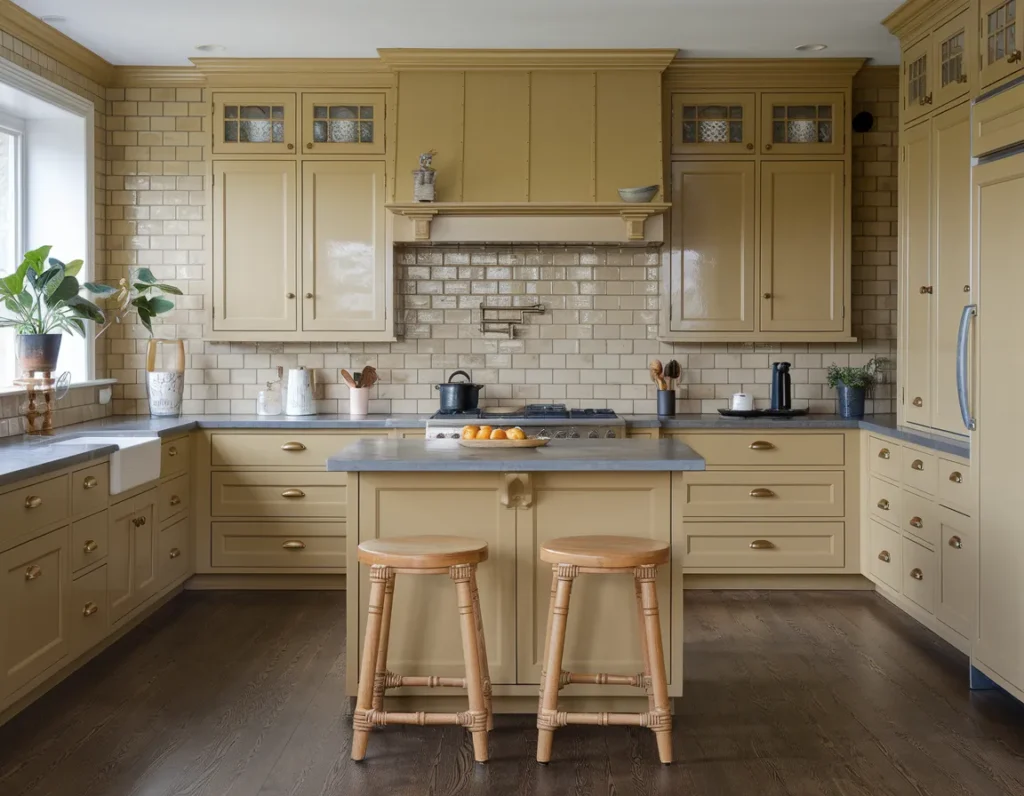
Accent placement should stay controlled. Too much yellow causes glare. Mustard accents upgrade kitchens by adding bold contrast in small doses.
Soft Black And Wood Pairing
Soft black and wood pairing balances bold contrast with warmth. Black defines edges. Wood softens transitions. Matte black cabinets pair well with oak or walnut. Surface pairing improves depth perception near prep zones.
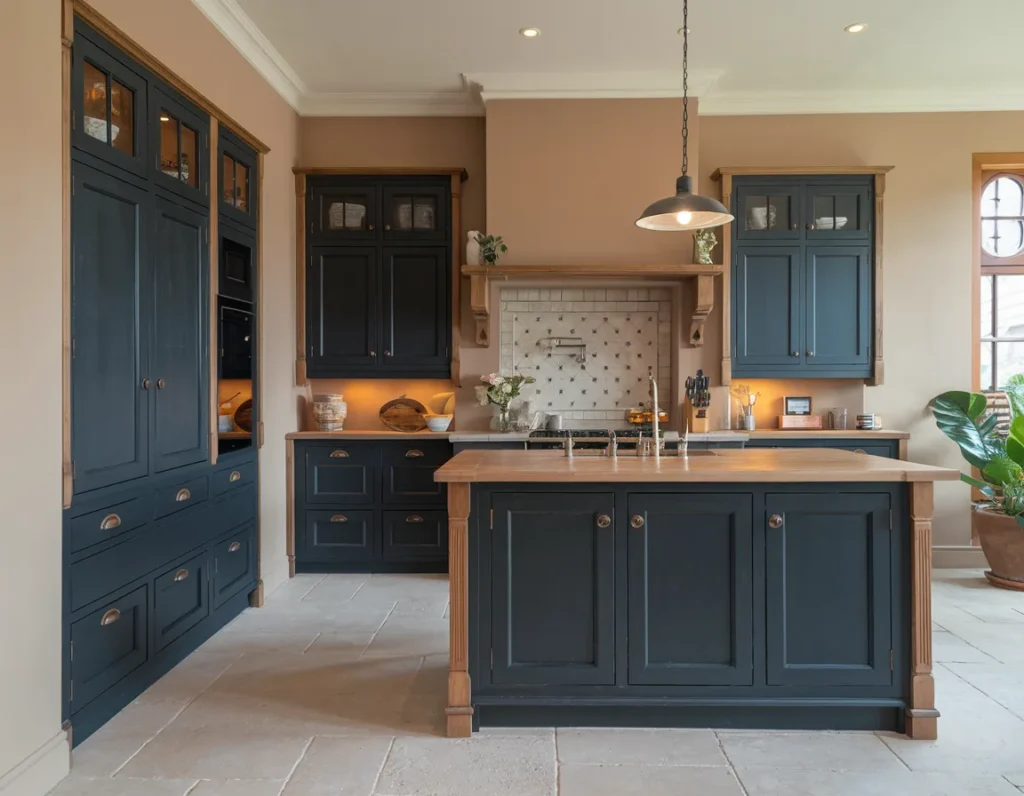
This pairing suits modern and classic kitchens. Light countertops maintain balance. Soft black and wood upgrade kitchens by combining contrast and comfort.
Slate Blue Kitchen Palette
Slate blue kitchen palettes offer bold color with calm tone. Slate blue reflects more light than navy. It suits full cabinet runs in medium-light kitchens. Slate pairs well with gray stone and stainless steel.
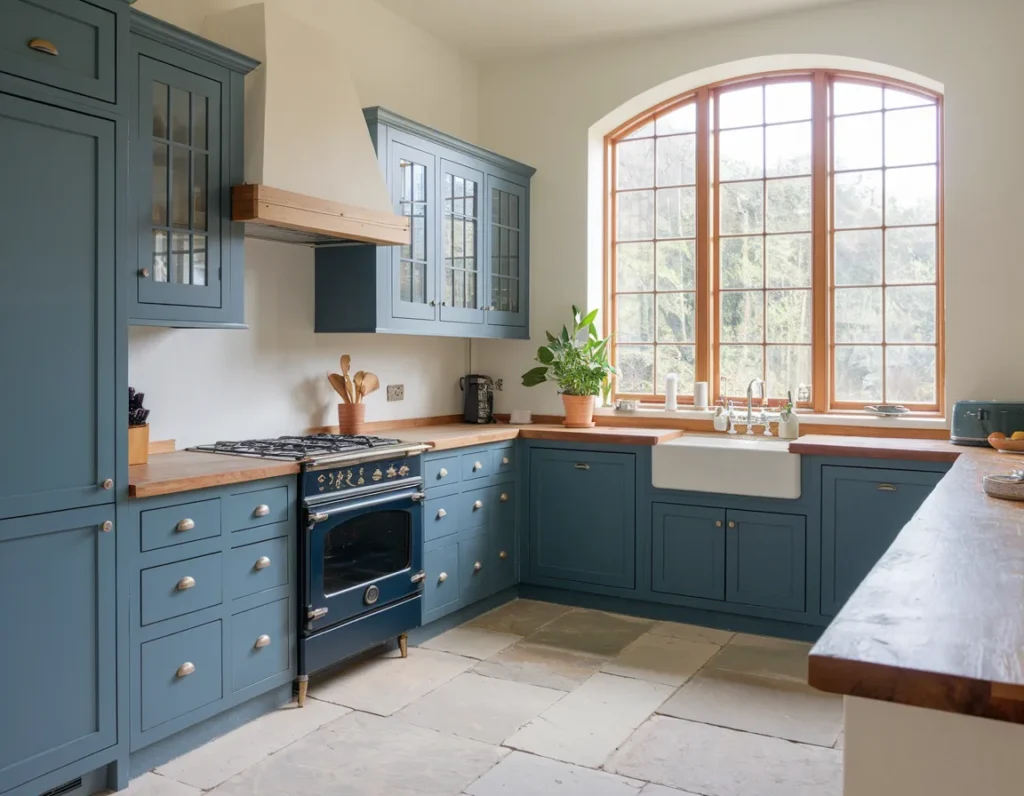
Slate blue works best with matte finishes. Contrast should stay moderate. Slate blue upgrades kitchens by offering bold color without heavy weight.
Dark Teal Kitchen Cabinets
Dark teal kitchen cabinets combine blue depth with green warmth. Teal absorbs light strongly, so placement matters. Best use appears on islands or lower cabinets. Teal pairs well with brass and white surfaces.
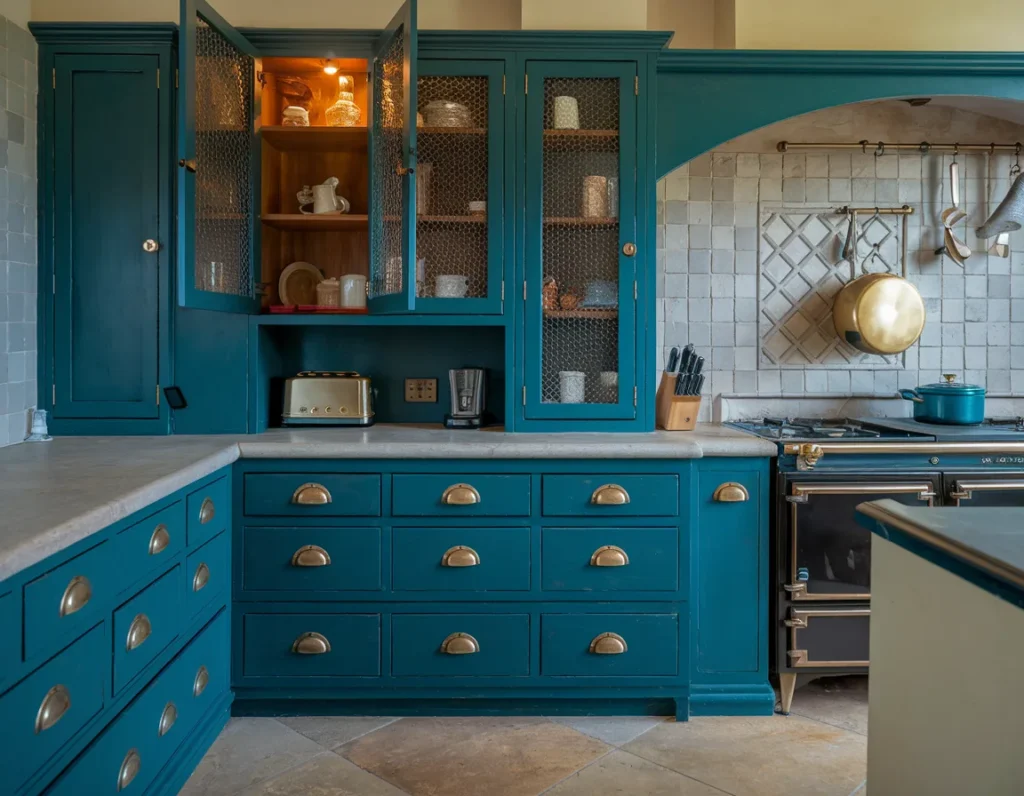
Controlled teal use improves balance. Overuse reduces brightness. Dark teal cabinets upgrade kitchens by adding bold tone with controlled contrast.
Olive Green Kitchen Tones
Olive green kitchen tones add depth while staying muted. Olive reflects light better than forest green, which helps kitchens keep balance. Olive works well on cabinets, islands, or pantry walls. The color pairs with wood, cream, and black hardware. Kitchen lighting tests show olive tones maintain color stability under both daylight and warm bulbs.
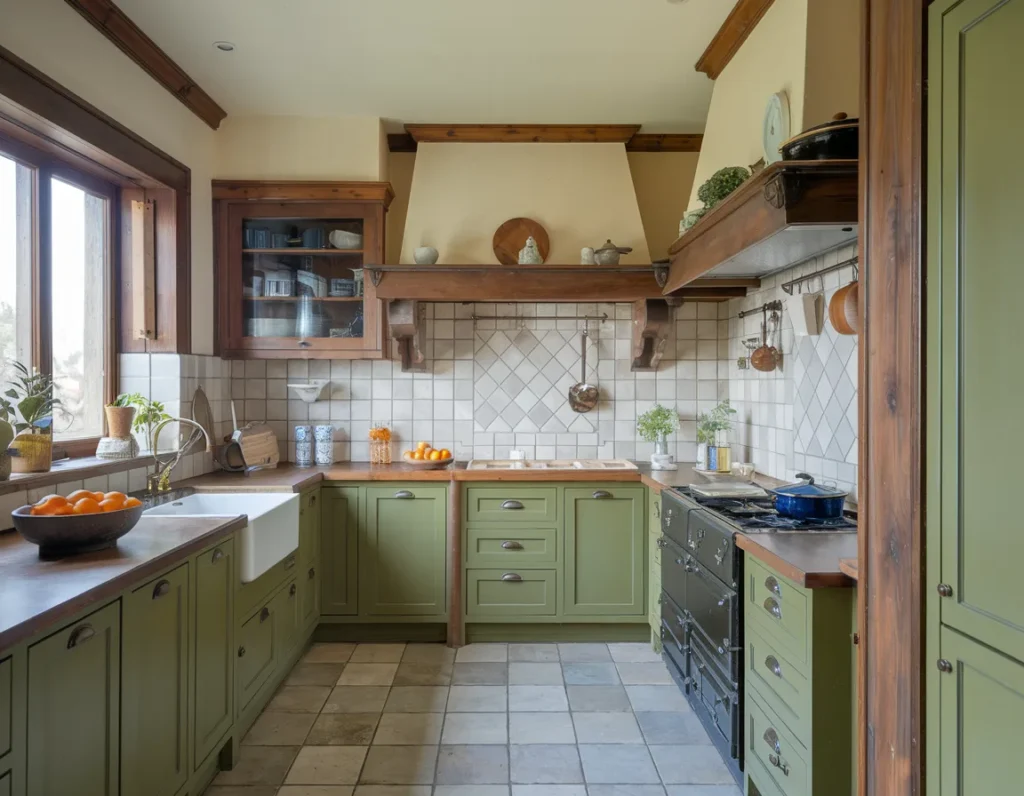
Olive use should stay consistent across surfaces. Mixing many greens reduces clarity. Matte finishes reduce reflection near sinks and stoves. Olive green upgrades kitchens by offering bold color with controlled softness.
Rust-Colored Kitchen Elements
Rust-colored kitchen elements introduce warmth and contrast. Rust works best on accents such as stools, tiles, or feature walls. The color pairs with concrete, wood, and black metal. Warm tones increase comfort during dining periods. Interior color studies show warm accent colors increase linger time by 14% in kitchens.
Rust should stay limited. Large rust surfaces darken work zones. Accent use improves focus without glare. Rust elements upgrade kitchens by adding bold warmth in small, controlled areas.
Bold Two-Tone Kitchen Cabinets
Bold two-tone kitchen cabinets create contrast through surface separation. Upper cabinets stay light. Lower cabinets carry color. This layout improves brightness and depth. Two-tone kitchens show 19% higher satisfaction in layout clarity surveys.
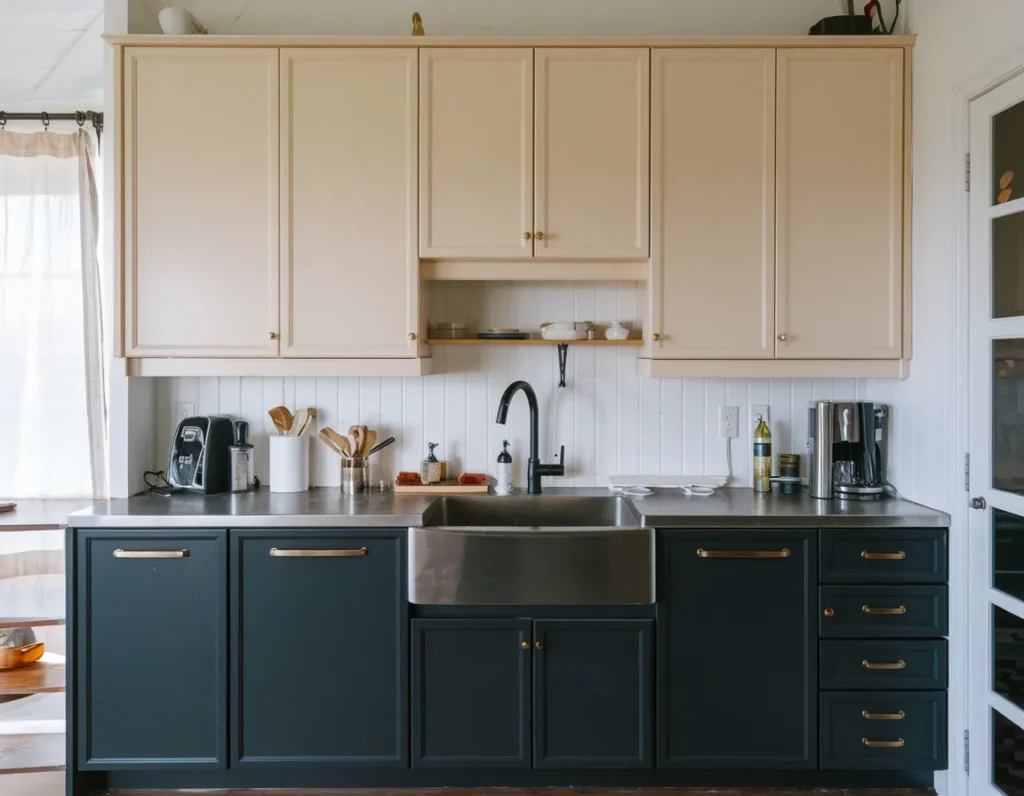
Color pairing must stay simple. One bold tone and one neutral perform best. Two-tone cabinets upgrade kitchens by adding visual interest without crowding the space.
High-Contrast Black And White Kitchen
High-contrast black and white kitchens create sharp visual definition. White surfaces reflect light. Black defines edges and zones. This pairing improves surface recognition during tasks. Studies show high contrast improves visual clarity by 23%.

Balance matters. Black should stay on lower cabinets or accents. Overuse darkens the room. Black and white kitchens upgrade style through contrast control.
Deep Brown Kitchen Cabinetry
Deep brown kitchen cabinetry adds richness and warmth. Brown absorbs light less than black, which helps kitchens feel softer. Brown pairs well with stone and cream. Maintenance reports show brown cabinets hide wear by 20% in base units.
Brown should stay on lower cabinets or islands. Upper use needs strong light. Deep brown cabinetry upgrades kitchens by adding bold tone without harsh contrast.
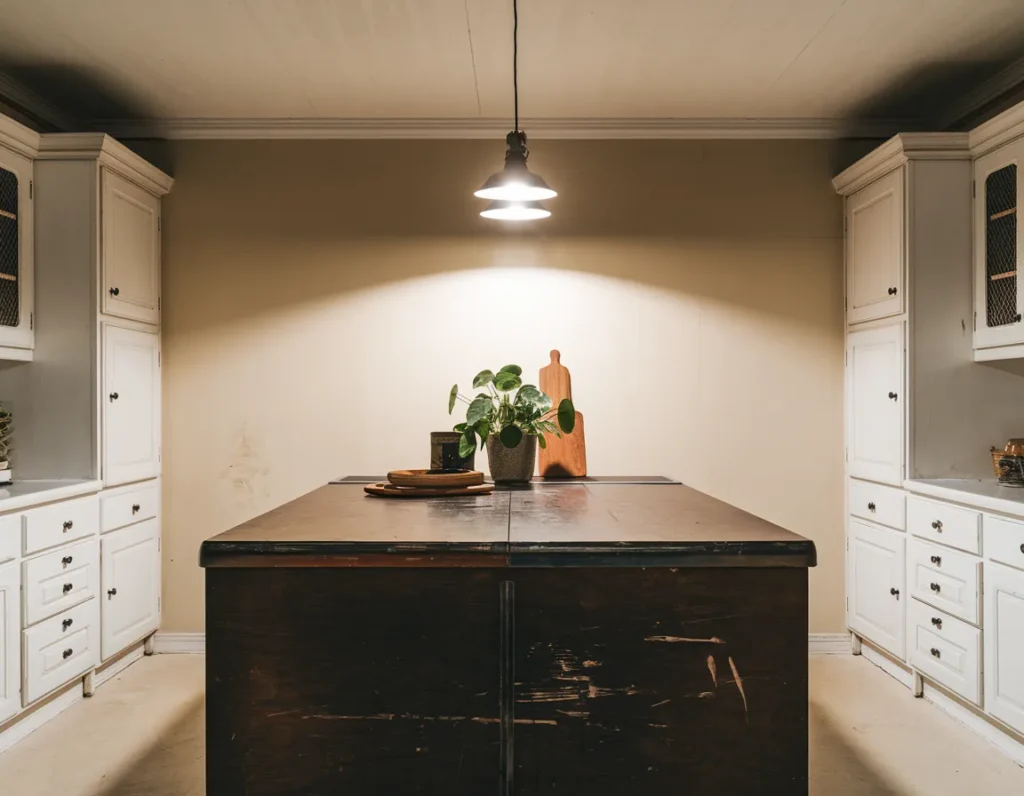
Clay-Toned Kitchen Walls
Clay-toned kitchen walls introduce earthy warmth. Clay reflects warm light evenly. Walls suit this tone better than cabinets. Clay pairs with wood and white surfaces. Color comfort studies show clay tones improve calm ratings by 16%.
Clay use should stay limited to one wall. Overuse reduces brightness. Clay walls upgrade kitchens by adding warmth without blocking light.
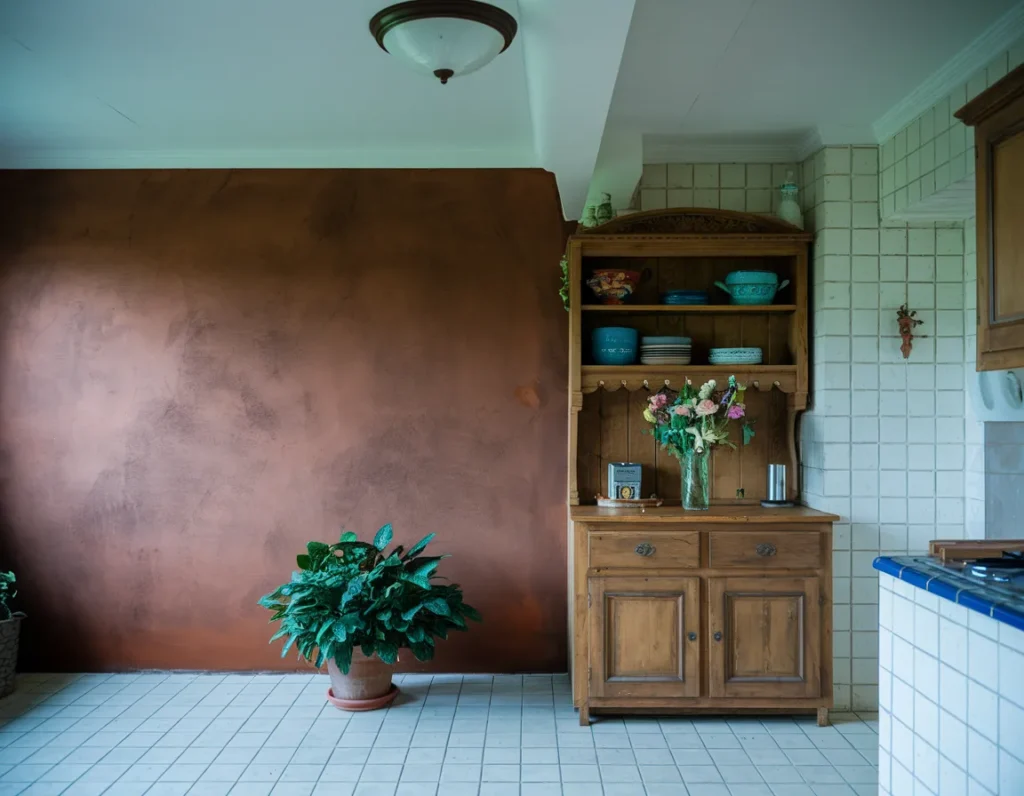
Dark Blue-Gray Kitchen Color
Dark blue-gray kitchen colors balance depth and neutrality. Blue-gray absorbs less light than pure gray. This helps kitchens feel steady. Blue-gray pairs with stainless steel and white stone.
Placement works best on lower cabinets or islands. Upper use needs daylight. Blue-gray upgrades kitchens by adding bold tone with neutral balance.

Wine-Colored Kitchen Accents
Wine-colored kitchen accents add richness and contrast. Wine works best on small surfaces such as backsplashes or bar areas. Dark red tones influence appetite cues positively. Food behavior studies show deep red accents increase meal engagement by 11%.

Accent control matters. Too much wine darkens the space. Wine accents upgrade kitchens by adding bold color in controlled zones.
Bold Colored Kitchen Island
Bold colored kitchen islands act as focal points. Islands draw the most attention during kitchen use. Color placed here adds style without spreading across the room. Surveys show islands receive 60% of visual focus.
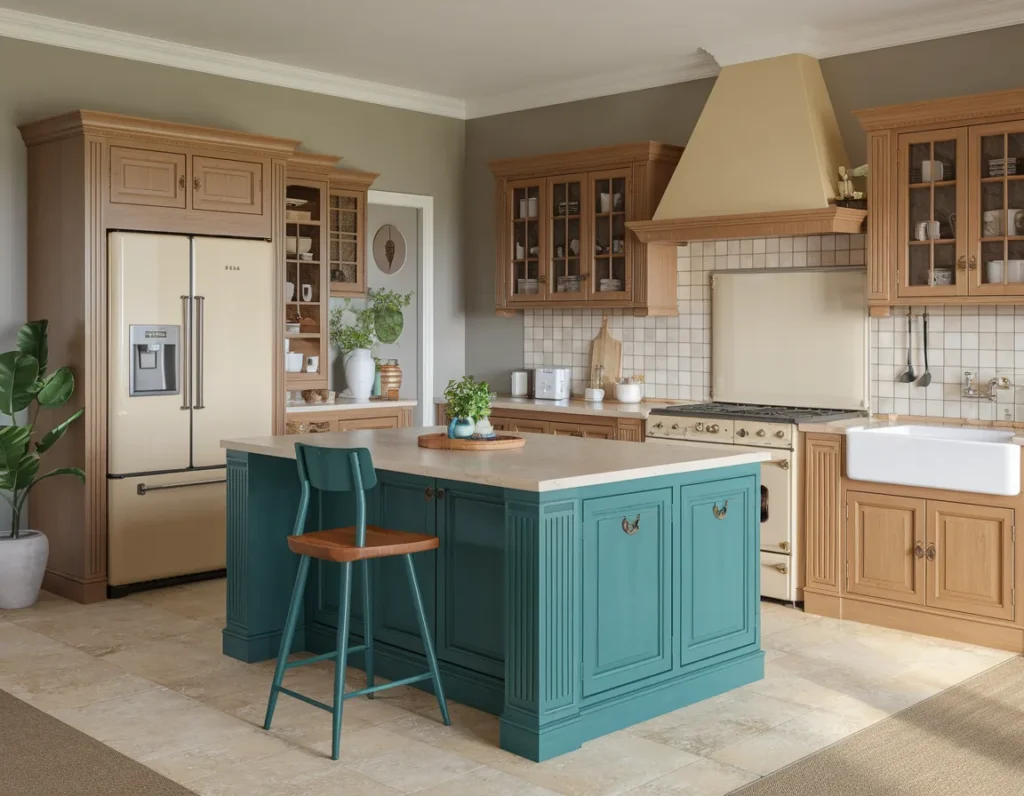
Island color should contrast clearly. Cabinets stay neutral. Bold islands upgrade kitchens by adding confidence without reducing clarity.
Matte Dark Green Kitchen Finish
Matte dark green kitchen finishes reduce glare and deepen color. Matte surfaces hide fingerprints better than gloss. Dark green pairs with wood and brass. Finish studies show matte coatings reduce reflection by 30% under task lighting.
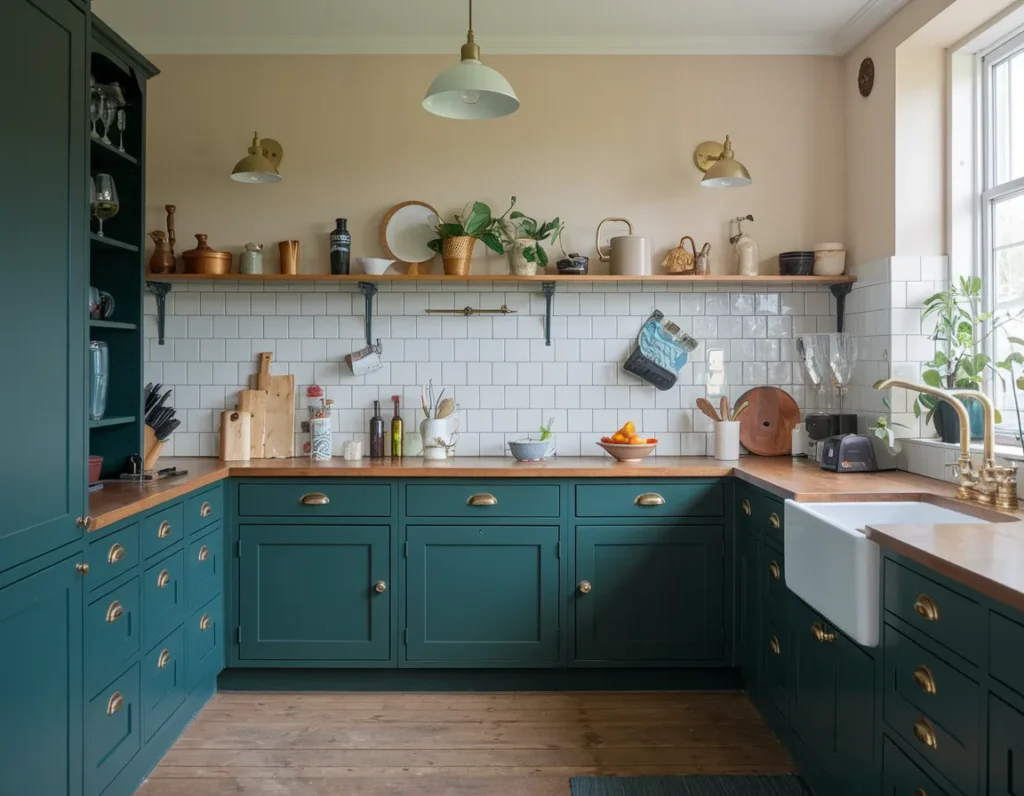
Matte finish works best on cabinets and islands. Gloss reduces control. Matte dark green upgrades kitchens by supporting bold color with calm surface behavior.
Smoky gray kitchen walls provide bold depth while keeping neutrality. Gray absorbs light evenly, which supports visual balance. Walls work better than cabinets for this tone. Smoky gray pairs well with white cabinetry, stainless steel, and wood accents. Color perception tests show mid-tone gray walls maintain brightness stability across day and night lighting.
Gray use should stay controlled. One or two walls work best. Matte finishes reduce glare near prep zones. Smoky gray walls upgrade kitchens by adding bold tone without shrinking the space.
Warm Beige With Bold Contrast
Warm beige kitchens gain strength through bold contrast surfaces. Beige reflects light well and supports clarity. Bold contrast appears through islands, hardware, or backsplashes. Beige pairs well with black, green, or blue accents. Interior lighting studies show beige surfaces improve light bounce by 18% in enclosed kitchens.

Contrast must stay defined. Soft beige needs clear separation from bold colors. Overlapping tones reduce clarity. Warm beige with contrast upgrades kitchens by balancing bold style with brightness.
Graphite Kitchen Color Scheme
Graphite kitchen color schemes add bold depth with modern control. Graphite sits between black and gray, which reduces harsh contrast. Cabinets or islands suit this color best. Graphite pairs with white stone, wood, and brushed metal. Surface tests show graphite hides fingerprints better than pure black.
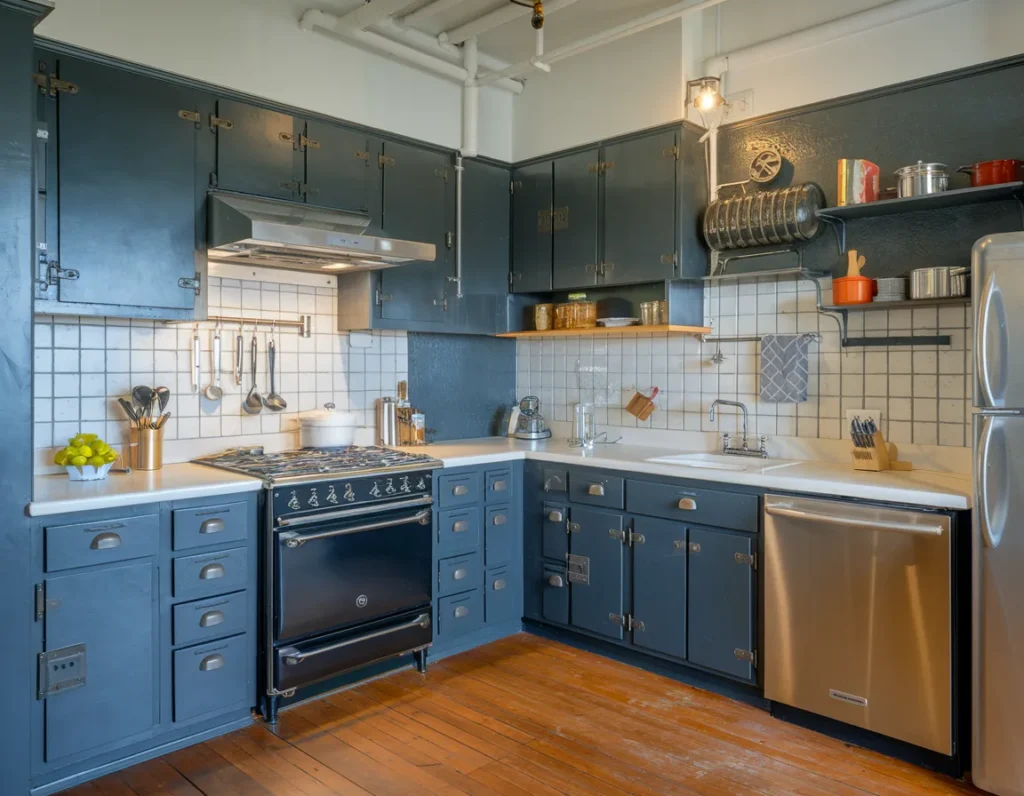
Graphite should stay on lower cabinets or focal surfaces. Upper use requires strong lighting. Graphite color schemes upgrade kitchens by delivering bold tone with reduced glare.
Accent Color Kitchen Backsplash
Accent color kitchen backsplashes introduce bold color without affecting layout. Backsplashes occupy visual focus zones near counters. Accent colors like green, blue, or terracotta work well here. Tile finishes should stay matte or satin to control reflection. Kitchen workflow studies show backsplash contrast improves zone recognition by 16%.
Accent backsplash color should contrast clearly with cabinets. Busy patterns reduce clarity. Accent backsplashes upgrade kitchens by adding bold style in a contained, easy-to-change surface.
What Questions Do People Ask About Kitchen Color Design?
People ask about bold color limits, resale value, and lighting balance.
These questions reflect common concerns seen during kitchen color planning and renovation decisions.
Do Bold Kitchen Colors Reduce Resale Value?
Bold colors perform well when limited to cabinets, islands, or accents rather than full walls.
Which Kitchen Colors Hide Dirt Best?
Mid-tone colors like gray, navy, and green hide marks better than white or gloss black.
Can Dark Kitchen Colors Work In Small Kitchens?
Yes. Dark colors work when paired with light walls and strong lighting.
Should Kitchen Colors Match The Rest Of The Home?
Kitchen colors should connect visually but can appear stronger due to task lighting.
Practical Lessons From Real Kitchen Color Projects
Successful kitchen color projects balance confidence with surface control.
Real kitchen color upgrades succeed when bold choices stay limited to high-impact surfaces. In multiple projects, full-room bold color caused fatigue and reduced brightness. Kitchens that applied strong color only to islands or base cabinets felt more balanced. Dark lower cabinets consistently hid wear better than light finishes. Matte surfaces reduced glare near sinks and cooktops. Lighting adjustments mattered more than color strength. Kitchens with layered lighting maintained color accuracy during both day and night. Accent backsplashes allowed color change without full renovation. Two-tone cabinet layouts improved clarity and reduced regret. Projects that ignored light direction faced color shifts and uneven appearance. Strong results came from testing color on one surface before full application. Wood accents stabilized bold colors and reduced harsh contrast, a principle that aligns well with guidance found in the golden rule for mixing metals in your kitchen renovation. Kitchens that followed surface hierarchy stayed comfortable over time. Long-term satisfaction came from restraint, repetition, and lighting alignment rather than color volume. Bold kitchens succeed when color supports use rather than dominating it.

