

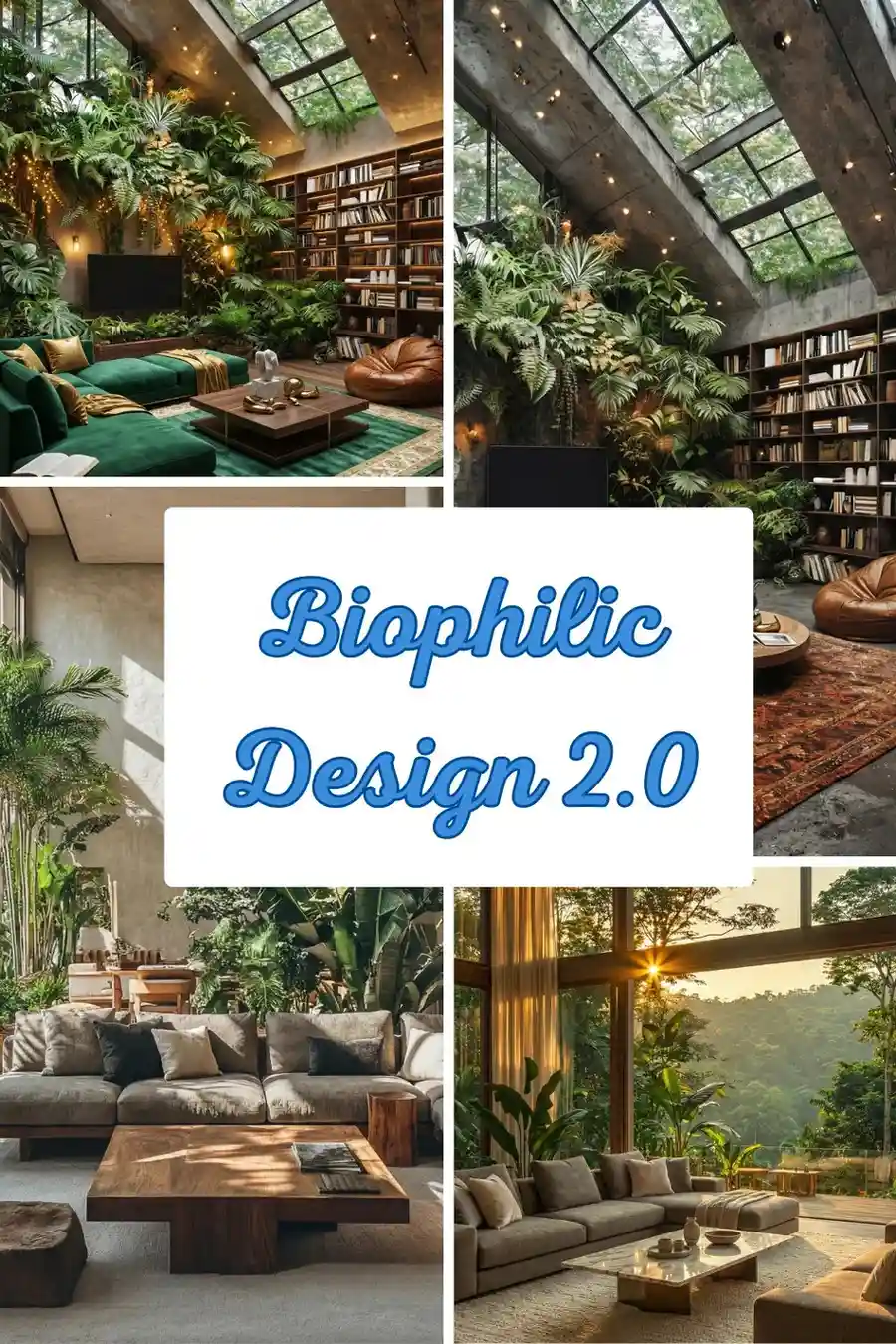
Biophilic Design 2.0 focuses on deeper integration of nature into indoor spaces using technology, sustainability, and sensory design. It goes beyond plants by incorporating natural light optimization, organic materials, air quality systems, water elements, and nature-inspired patterns. This updated approach improves well-being, productivity, and environmental performance while creating healthier, more adaptive living and work environments.
You’ll learn practical ways to add it to your home, discover the science behind why it works, and explore real examples of spaces that nail this style. Whether you’re planning a small room update or a full home makeover, you’ll find clear steps to create a healthier, happier living space.
What Makes Biophilic Design 2.0 Different From Traditional Biophilic Design
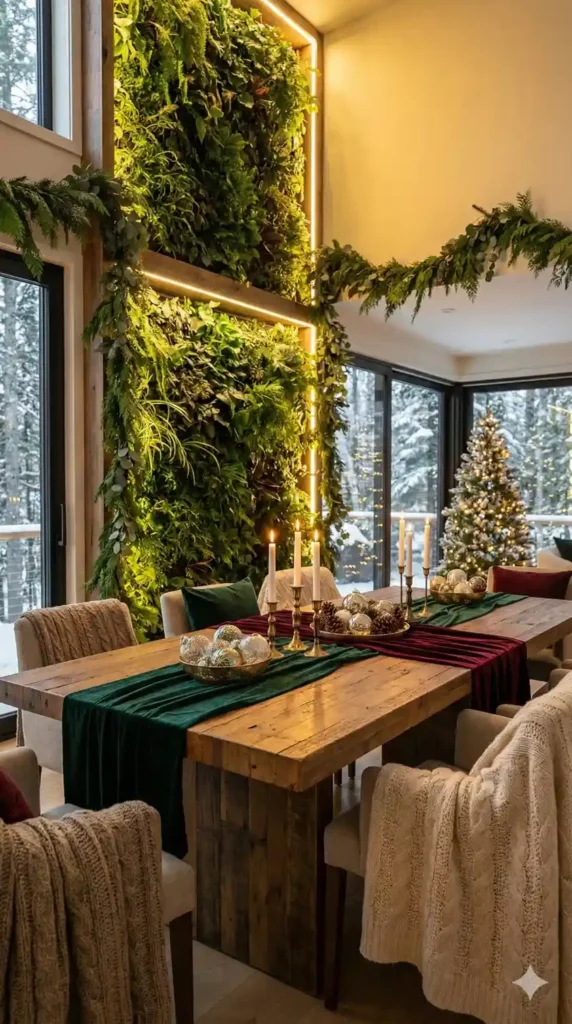
Traditional biophilic design focused mainly on adding plants, wooden furniture, and natural light to spaces. It was a good start, but it often felt like decoration rather than real connection with nature. You’d see offices with a few potted ferns or homes with stone accent walls, but these touches didn’t always change how the space actually felt or functioned.
Biophilic Design 2.0 takes a smarter, deeper approach. It uses technology to track air quality, adjusts lighting based on natural sun patterns, and picks materials that actually clean the air while looking beautiful. This new version thinks about how nature behaves and tries to copy those patterns in your home.
Technology Meets Natural Elements

Smart home systems now work with biophilic features. Imagine lights that slowly brighten like sunrise to wake you up gently. Or air purifiers that look like living walls and actually grow real plants while filtering toxins. These aren’t just gadgets they’re tools that make your home respond to your body’s natural rhythms.
Sensors can track how much natural light enters each room throughout the day. The system then adjusts artificial lighting to match outdoor conditions, keeping your internal clock happy. Some homes even use sound systems that play gentle rain sounds or forest ambience based on the time of day or your stress levels.
Dynamic Living Spaces That Change

Old biophilic design was static. You set it up once and that was that. Biophilic Design 2.0 creates spaces that shift and adapt. Living walls that grow fuller in summer and rest in winter. Water features that adjust their flow based on room humidity. Furniture arrangements that follow seasonal light patterns.
This approach respects how nature never stays the same. Your home becomes a living thing that grows with you and responds to seasons, weather, and your changing needs throughout the year.
The Science Behind Why Biophilic Design 2.0 Actually Works
Your brain is wired to respond to nature. Millions of years of evolution taught your ancestors to feel calm near water, alert in open spaces, and safe under tree cover. These instincts don’t disappear just because you live in an apartment building. Biophilic Design 2.0 taps into these deep biological responses.
Research shows that even viewing natural patterns can lower your heart rate within minutes. When you see fractals – the repeating patterns found in tree branches, waves, or clouds – your brain releases feel-good chemicals. This isn’t just feel-good talk. Medical studies prove it with brain scans and stress hormone measurements.
How Natural Elements Affect Your Body
Natural light does more than help you see. It controls melatonin production, which manages your sleep cycle. When you get the right kind of light at the right time, you sleep better, wake easier, and feel more energized. Biophilic Design 2.0 maximizes natural light through smart window placement and reflective surfaces that bounce sunshine deeper into rooms.
Plants aren’t just pretty either. They pull carbon dioxide from air and pump out oxygen. Some species grab harmful chemicals from furniture and carpets. A room with good plant coverage can have noticeably cleaner air than one without. Your lungs work easier, and your body spends less energy fighting off toxins.
Mental Health Benefits You Can Measure
Studies at hospitals show patients heal faster when they can see trees from their windows. Office workers take fewer sick days when their workspace includes natural views. Students score higher on tests in classrooms with plants and natural materials. The pattern is clear across different settings.
Stress drops when you’re around nature-inspired spaces. Your blood pressure goes down. Your focus improves. Even creativity gets a boost. These aren’t small changes – some studies show productivity increases of twenty to thirty percent just from better biophilic design.
Core Elements That Define Biophilic Design 2.0
Several key features separate this modern approach from older styles. Understanding these elements helps you spot true Biophilic Design 2.0 and apply it correctly in your own space.
Living Materials That Grow And Change

Gone are the days of fake plants and plastic wood grain. Biophilic Design 2.0 uses actual living materials whenever possible. Moss walls that stay green year-round without soil. Cork flooring that grows back after harvest. Mycelium panels made from mushroom roots that naturally resist mold.
These materials bring real benefits. Living moss regulates humidity naturally and absorbs sound. Cork provides natural insulation and feels warm underfoot. Mycelium products are stronger than many synthetic options and break down safely at the end of their life.
Water Features With Purpose

Water isn’t just for looks anymore. Modern biophilic design uses water to improve air quality through natural humidification. Small indoor streams can flow through living walls, feeding plants while adding moisture to dry indoor air. The sound of moving water masks harsh urban noise and creates natural white noise that helps concentration.
Some designs include water walls where thin sheets of water flow down stone or glass surfaces. These features cool nearby air through evaporation, reducing air conditioning needs in warm months. The visual effect is calming, and the practical benefits save energy and money.
Natural Light Layering Systems

Natural light changes throughout the day, and your home should change with it. Biophilic Design 2.0 uses multiple light sources at different levels. Skylights bring in overhead sun during peak hours. Large windows capture morning and evening light at lower angles. Light tubes and reflective surfaces bounce natural light into darker corners.
When natural light isn’t enough, artificial lighting should copy natural patterns. Lights that shift color temperature from cool blue-white in morning to warm amber at night support your body’s circadian rhythm. Dimmer switches let you adjust intensity based on activity and time of day.
Practical Ways To Add Biophilic Design 2.0 To Your Home
You don’t need to gut your entire house to embrace this style. Small changes in the right places can make a big difference. Start with areas where you spend the most time, then expand as you see results.
Start With Your Bedroom
Your bedroom affects your sleep quality more than any other room. Replace heavy curtains with lighter ones that let morning sun wake you naturally. Add plants that release oxygen at night, like snake plants or aloe vera. These species actually clean air while you sleep.
Consider a small water fountain on a nightstand or dresser. The gentle sound helps many people fall asleep faster and stay asleep longer. Choose natural fiber bedding like organic cotton or linen. These materials breathe better than synthetics and feel nicer against skin.
Paint colors matter too. Soft greens, blues, and earth tones work better than bright whites or dark colors. These shades copy colors found in nature and create a calm atmosphere. If painting isn’t an option, add natural wood furniture or stone accessories to bring in earthy tones.
Transform Your Living Areas
Living rooms benefit from layered natural elements. Start with a living wall if you have the budget and space. These vertical gardens can cover entire walls or exist as smaller standalone pieces. They improve air quality while creating a stunning focal point.
If living walls aren’t practical, group plants at different heights throughout the room. Tall floor plants in corners, medium plants on tables, small succulents on shelves. This variety copies how plants grow in nature at multiple levels.
Replace synthetic furniture gradually with natural materials. Wood, bamboo, rattan, and stone all work well. These materials age beautifully instead of looking worn out. They also regulate temperature better than plastic or metal, staying cooler in summer and less cold in winter.
Kitchen And Dining Spaces
Kitchens already connect to nature through food, so enhancing that connection makes sense. Install an herb garden near a sunny window. Fresh herbs for cooking plus natural beauty and wonderful scents. Window sills can hold small pots of basil, mint, rosemary, and thyme.
Choose stone or wood countertops if you’re updating surfaces. These materials last longer than laminate and improve with age. Under-cabinet lighting that mimics natural color temperatures makes food look more appealing and reduces eye strain during meal prep.
Dining areas work well with natural centerpieces. Fresh flowers, branches, or even just a bowl of fruit creates connection to growing things. Wooden tables, whether reclaimed or new, provide warmth and texture that plastic or glass can’t match.
Bathrooms As Nature Retreats
Bathrooms offer unique opportunities for biophilic design. The humidity from showers creates perfect conditions for moisture-loving plants like ferns, orchids, and peace lilies. These plants thrive in bathroom environments and improve air quality.
Natural stone tiles on floors or walls bring outdoor textures inside. River rocks for shower floors provide a massage-like feel underfoot while preventing slips. Wooden bath mats made from bamboo or teak resist water damage while adding warmth.
Open your bathroom to natural light if privacy allows. Frosted glass or high windows let in sunshine without exposing you to neighbors. Good natural light in the morning helps wake you up and sets a positive tone for the day.
Technology That Powers Biophilic Design 2.0
Smart technology makes modern biophilic design work better than ever. These tools help natural elements thrive and adapt to your needs automatically.
Automated Plant Care Systems
Keeping plants alive can be hard, especially if you travel or work long hours. Automated watering systems solve this problem. Sensors check soil moisture and deliver water only when plants need it. Some systems even adjust based on weather, watering less when humidity is high.
Smart planters with built-in lights help plants grow in low-light areas. These systems use LED lights tuned to wavelengths plants need most. The lights turn on and off automatically based on time of day, so you never have to think about it.
Air Quality Monitors And Response Systems

Modern air quality sensors track multiple pollutants in real time. They measure dust, volatile organic compounds, carbon dioxide, and humidity. When levels get too high, the system can trigger air purifiers, open windows automatically, or alert you to take action.
Some advanced systems integrate with living walls. When air quality drops, water flow to the plants increases, boosting their air-cleaning ability. The system learns your home’s patterns and optimizes plant care for maximum air purification.
Circadian Lighting Controls

Your body runs on a twenty-four-hour cycle controlled largely by light exposure. Circadian lighting systems copy natural light patterns throughout the day. Bright, blue-tinted light in the morning signals your body to wake up and stay alert. Warmer, dimmer light in the evening helps you wind down.
These systems can be programmed or learned through AI. After a few weeks, smart systems figure out your schedule and adjust automatically. Some even factor in weather – brightening lights on cloudy days to compensate for less natural light.
Common Mistakes People Make With Biophilic Design 2.0
Even with good intentions, it’s easy to get biophilic design wrong. Knowing these common errors helps you avoid them.
Overloading Spaces With Too Many Plants
More isn’t always better. Cramming every surface with plants creates clutter instead of calm. Plants need space to grow and breathe. Crowded plants compete for light and air, often leading to disease and pest problems.
Choose plants based on available light and space. One large, healthy plant makes more impact than five struggling small ones. Group plants thoughtfully rather than scattering them randomly. Think about how forests have clearings and dense areas, then copy that natural variation.
Ignoring Maintenance Requirements
Living elements need care. Plants die without water. Stone surfaces need sealing. Wood requires conditioning. If you can’t commit to maintenance, choose low-maintenance options or scale back your plans.
Be honest about your lifestyle. Travel frequently? Pick drought-tolerant plants or install automated care systems. Hate cleaning? Avoid water features that collect dust. Match your biophilic elements to your actual habits, not your ideal self.
Forgetting About Light Requirements
Different plants need different amounts of light. Putting shade-loving ferns in bright south-facing windows stresses them. Placing sun-hungry succulents in dark corners makes them weak and leggy. Research each plant’s needs before buying.
The same goes for rooms. Dark basement rooms need different biophilic approaches than bright top-floor spaces. Use artificial grow lights if natural light is limited. Or focus on non-plant biophilic elements like natural materials and water features instead.
Real Examples Of Biophilic Design 2.0 In Action
Seeing how others implement these ideas helps spark your own creativity. These examples show different approaches to the same core principles.
Small Apartment Transformation
A tiny city apartment used vertical space brilliantly. The owner installed narrow shelving units that held plants at staggered heights, creating a green wall effect without the cost of a real living wall. Small herbs grew in the kitchen window. A desktop fountain added water sounds without taking up floor space.
Smart bulbs throughout the apartment adjusted color temperature automatically. Morning light came in cool and bright. Evening light shifted warm and dim. The occupant reported better sleep and more energy within two weeks.
Natural materials came in through details. Bamboo cutting boards doubled as decor. A jute rug added texture. Cotton curtains replaced polyester. Stone coasters and wooden utensils completed the look. Total cost stayed under five hundred dollars, proving biophilic design works on any budget.
Family Home Renovation
A suburban family renovated their home with biophilic principles at the core. They removed a section of roof to install a large skylight over the main living area. Natural light flooded the space, reducing electricity use and lifting everyone’s mood.
The backyard connected to interior spaces through large sliding glass doors. When open, the boundary between inside and outside disappeared. Kids played more outside because accessing the yard felt natural and easy.
Inside, they created a living wall in the dining room using a modular system. The wall included edible plants – lettuce, strawberries, and herbs – that the family harvested for meals. This feature became a conversation starter and teaching tool for the children about where food comes from.
Office Space Redesign
A small business redesigned their office using biophilic principles. They replaced fluorescent lights with LED panels that mimicked natural daylight. A large aquarium served as a room divider, providing moving natural patterns and soothing sounds.
Each desk got a personal plant that employees chose based on their light levels and maintenance preferences. The company hired a plant care service to maintain them, removing the burden from busy workers. Productivity increased by fifteen percent in the first quarter after the redesign.
Break rooms featured comfortable seating near windows with views of trees. Employees actually took breaks instead of eating at their desks. Sick days dropped and employee satisfaction surveys improved. The redesign paid for itself within a year through reduced turnover and increased output.
Budgeting For Biophilic Design 2.0
You can implement biophilic design at almost any price point. The key is prioritizing elements that give you the most benefit for your specific space and needs.
Low-Budget Options Under Five Hundred Dollars
Start with plants. A collection of common houseplants costs very little but provides real air quality improvements. Add natural textiles like cotton throws or linen pillows. Replace synthetic items gradually with natural alternatives as old ones wear out.
Paint creates huge impact for minimal cost. Earth tones on walls immediately change a room’s feel. If you can’t paint, removable wallpaper with natural patterns works too. Nature photography or botanical prints add visual connection to outdoors.
Simple water features like tabletop fountains start around twenty dollars. Natural materials like driftwood, stones, or shells collected from nature walks cost nothing. Arrange them on shelves or tables as sculptural elements.
Mid-Range Investments Between Five Hundred And Five Thousand Dollars
This budget allows for quality furniture pieces made from real wood or stone. A solid wood dining table or stone coffee table becomes a room’s anchor. Invest in one or two statement pieces rather than many cheap items.
You can afford a proper living wall system or multiple high-quality large plants. Professional installation ensures success and saves time. Smart lighting systems fall into this range, giving you circadian rhythm support throughout your home.
Consider replacing flooring in one room with natural materials. Cork, bamboo, or reclaimed wood floors make a big difference in how a space feels. These materials last for decades, making them smart long-term investments.
High-End Implementations Above Five Thousand Dollars
Larger budgets allow for structural changes. Adding skylights, expanding windows, or creating indoor-outdoor transition spaces through large glass doors. These changes affect your home’s core structure and provide benefits for years.
Custom living walls designed and maintained by professionals ensure success. Built-in water features like interior streams or pools add drama and function. Whole-home smart systems that integrate lighting, air quality, and plant care offer convenience and optimization.
Natural stone features like fireplaces, accent walls, or bathroom finishes bring lasting beauty. High-quality natural furniture that will last generations makes sense at this level. You’re building a home that grows more valuable over time rather than just decorating.

Biophilic Design 2.0 For Different Room Types
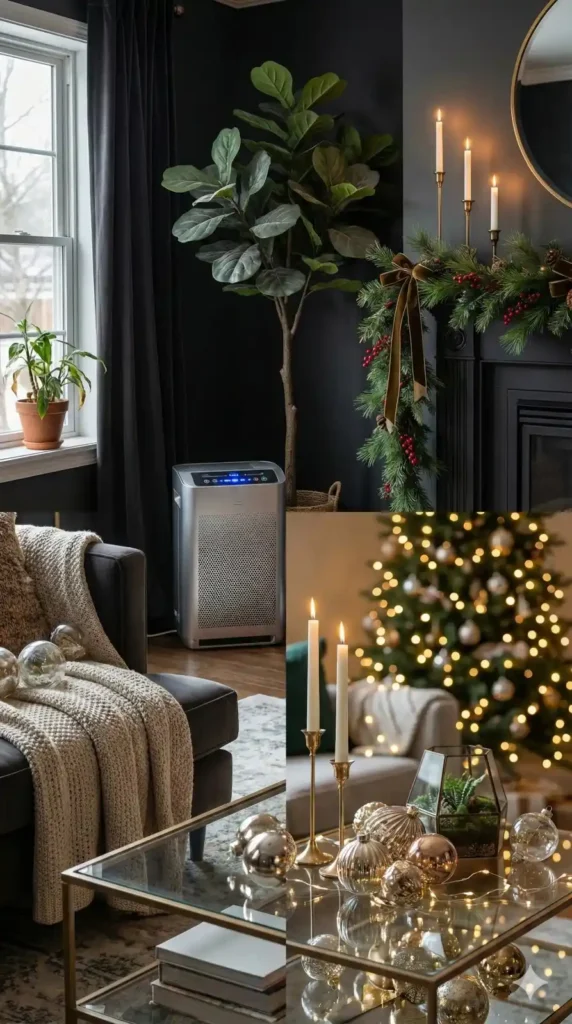
Each room in your home serves different purposes and needs different biophilic approaches.
Home Offices And Work Spaces
Focus on elements that boost concentration and reduce stress. Plants with interesting but not distracting leaves work well. Snake plants, pothos, or ZZ plants require little care and clean air effectively.
Natural light is critical for work spaces. Position your desk near windows if possible. If not, invest in quality LED lighting that mimics daylight. Avoid harsh overhead lighting that causes eye strain and headaches.
Natural materials for your desk and storage reduce the clinical feel of typical offices. Wood filing cabinets, stone pen holders, and bamboo desk organizers add warmth. A small desktop fountain provides white noise that masks distracting sounds.
Children’s Rooms And Play Areas
Kids benefit enormously from biophilic design. Their developing brains respond strongly to natural elements. Choose hardy plants that won’t harm curious children if touched or tasted. Spider plants and Boston ferns are safe and tough.
Nature-themed decor works well in kids’ spaces. Tree decals on walls, cloud-shaped lights, or animal-themed storage make rooms fun while maintaining natural connections. Use natural materials for toys when possible – wooden blocks instead of plastic.
Make nature accessible. Low windows let kids watch weather and wildlife. Small gardens or terrariums teach responsibility and provide hands-on nature experience. Even apartment kids can grow seeds in cups on windowsills.
Elderly And Accessibility-Focused Spaces
Older adults and people with mobility challenges gain special benefits from biophilic design. Natural elements reduce anxiety and depression common in these groups. Easy-care plants that don’t require climbing or bending work best.
Raised planters bring plants to comfortable heights. Vertical gardens at eye level let people enjoy greenery without strain. Automated watering systems remove maintenance burden while keeping plants healthy.
Natural light helps regulate sleep patterns that often become disrupted with age. Good windows and circadian lighting systems support better rest. Natural materials with good grip – like unpolished stone or wood – help prevent falls while looking beautiful.
Seasonal Adaptations In Biophilic Design 2.0
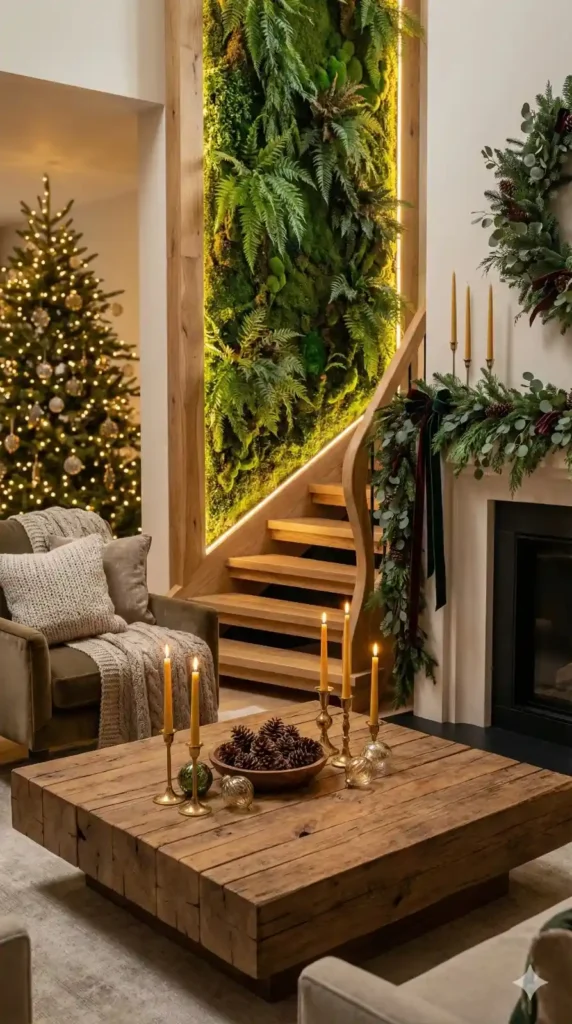
Your biophilic home should change with seasons, just like nature does. This keeps your space feeling fresh and maintains your connection to natural cycles.
Spring And Summer Adjustments
Longer days mean more natural light. You can reduce artificial lighting use significantly. Open windows when weather permits to improve air circulation and bring in fresh outdoor air. The sounds of birds and breeze become part of your home’s atmosphere.
Flowering plants and bright foliage come indoors during warm months. Rotate plant selections to match outdoor growing seasons. This creates visual interest and reinforces seasonal awareness. Fresh cut flowers from gardens or markets add color and scent.
Water features can increase flow rates in summer. Extra evaporation helps cool spaces naturally and adds humidity to air-conditioned rooms. Outdoor connections become more important – keep doors to patios and gardens open when comfortable.
Fall And Winter Modifications
Shorter days require more thoughtful artificial lighting. Circadian systems become especially important when natural light is limited. Increase brightness during the day to compensate for cloudy weather and early darkness.
Bring focus to evergreen plants and natural materials as outdoor plants go dormant. Pine branches, winterberry stems, and other seasonal natural items make beautiful displays. These remind you that nature continues even when less visible.
Reduce water feature flow in winter when indoor air is already humid from heating systems. Focus on warmth through natural materials – wool throws, wooden furniture, and warm-toned stones. Create cozy gathering spots near windows where you can watch winter weather in comfort.
Combining Biophilic Design 2.0 With Other Interior Styles

Biophilic principles work with almost any design aesthetic. The key is finding the right natural elements for your preferred style.
Modern And Minimalist Approaches
Clean lines and simple forms still allow for biophilic elements. Choose plants with architectural shapes like snake plants or bird of paradise. Use natural materials in pure, unadorned forms – smooth stone, plain wood, simple cotton.
Limit the variety of materials and plants to maintain minimalist aesthetic. Three types of plants used repeatedly creates more impact than many different species scattered around. Quality over quantity applies to both furniture and natural elements.
Color palettes stay neutral with natural materials providing subtle variation. White walls with wood accents and green plants create classic minimalist spaces with strong biophilic connection. Stone surfaces add texture without clutter.
Traditional And Classic Styles
Traditional design already incorporates many natural materials. Enhance these with living elements and improved natural light. Antique wood furniture pairs beautifully with healthy plants and natural fiber textiles.
Classical spaces can handle more ornate biophilic features. Elaborate water fountains, formal garden-style plant arrangements, and decorative stone work all fit traditional aesthetics. Think English conservatories or French garden rooms for inspiration.
Rich natural colors work in traditional spaces. Deep greens, warm browns, and stone grays complement classic furniture and create sophisticated nature-inspired rooms. Add natural patterns through wallpaper, fabric, and area rugs.
Industrial And Urban Styles
Raw, unfinished spaces benefit from biophilic softening. Plants against exposed brick or concrete create striking contrast. The juxtaposition highlights both the plants’ organic beauty and the architecture’s bold structure.
Reclaimed and weathered natural materials fit industrial aesthetic perfectly. Salvaged wood, rusted metal planters, and rough stone surfaces maintain edgy feel while adding natural elements. Choose hardy plants that look tough succulents, cacti, and snake plants work well.
Large-scale biophilic features make sense in industrial spaces that tend toward high ceilings and open plans. Tall trees in large pots, extensive living walls, or substantial water features fill space dramatically while maintaining the style’s bold character.
Final Thoughts
Biophilic Design 2.0 represents more than just a trend in home decor. It acknowledges the deep human need for connection with nature and provides practical ways to satisfy that need in modern life. By combining living elements, natural materials, smart technology, and thoughtful design, you create spaces that actively support your health and happiness.
Start small if the whole concept feels overwhelming. Add a few plants to your bedroom. Replace synthetic curtains with natural fabric. Install a smart bulb that adjusts color temperature. Notice how these small changes affect your mood and energy. Then expand from there based on what works for you.
The beauty of Biophilic Design 2.0 is its flexibility. Your implementation will be unique to your space, budget, and lifestyle. What matters most is creating genuine connection between your indoor life and the natural world. When you succeed, your home becomes more than just shelter – it becomes a place that nurtures and renews you every single day.

