


An Afrohemian bedroom makeover blends Afrocentric patterns with bohemian textures for a warm, expressive space. Rich colors, woven fabrics, carved wood, and natural materials create depth and cultural character. Layered textiles, statement art, and greenery complete the look while keeping the room relaxed, personal, and inviting.
An Afrohemian bedroom blends the warmth of African heritage with the free-spirited vibe of bohemian design. Think bold patterns, layered textiles, plants everywhere, and handmade touches that tell your story. This guide walks you through every step of creating this soulful sanctuary, from planning your space to adding those final personal touches. You’ll discover smart shopping strategies, DIY projects that actually work, and design principles that bring the whole look together without emptying your wallet.
Understanding the Afrohemian Aesthetic
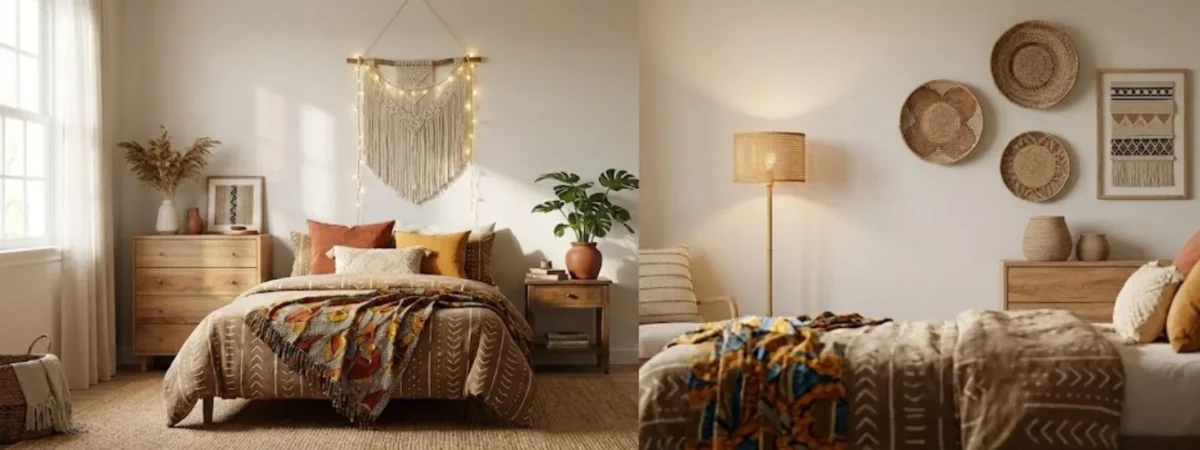
The Afrohemian style isn’t just about throwing together some patterns and calling it a day. It’s a thoughtful blend of two rich design traditions that share common ground in their love of texture, color, and meaningful objects.
At its core, Afrohemian design celebrates African diaspora culture while embracing bohemian freedom. You’ll see mud cloth prints sitting next to macrame wall hangings. Kente cloth patterns might drape over vintage furniture. The magic happens when these elements feel intentional rather than random.
The Cultural Roots That Matter
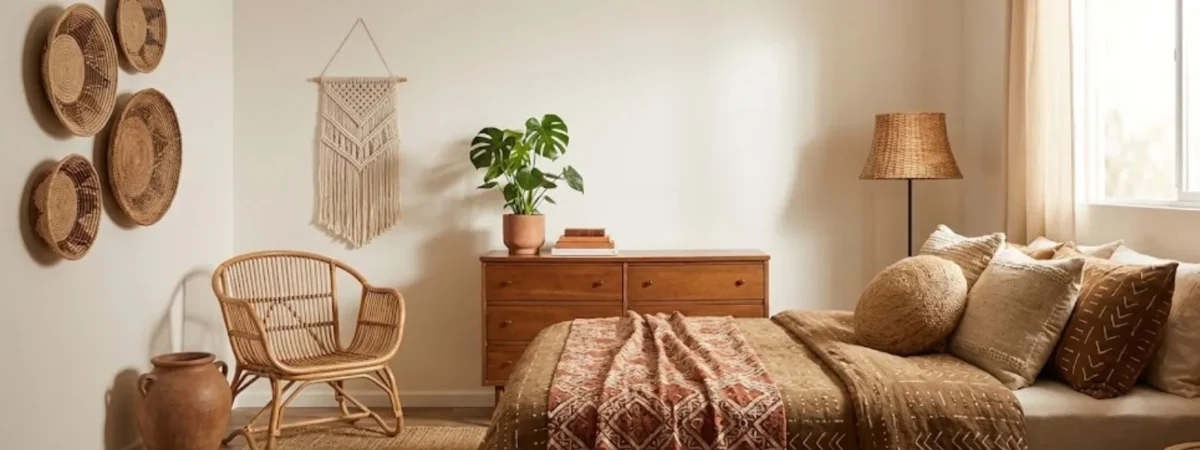
African design brings bold geometric patterns, earthy terracotta tones, and deep connection to nature. Traditional African textiles like Ankara, Kente, and Bogolan carry stories and symbolism. These aren’t just pretty fabrics. They represent communities, traditions, and craftsmanship passed down through generations.
Bohemian design emerged from artistic movements that valued creativity over convention. It champions individuality, collected treasures from travels, and a “more is more” approach to layering. When you combine these philosophies, you get a bedroom that feels both grounded and free.
The beauty of this style is its flexibility. Your Afrohemian bedroom reflects your personal journey. Maybe you have family textiles from Nigeria. Perhaps you picked up a basket in Morocco. These authentic pieces anchor your design and make it truly yours.
Key Design Elements to Know
Color plays a huge role in Afrohemian spaces. Earth tones form your foundation. Think warm terracotta, burnt orange, deep ochre, and rich clay. These colors feel like African soil and sunsets. Layer in forest greens, warm browns, and creamy off-whites for balance.
Don’t shy away from bold accents either. Mustard yellow, brick red, and teal bring energy to neutral bases. Black and white geometric patterns add graphic punch. The trick is keeping your color story cohesive rather than chaotic.
Texture matters just as much as color. Mix rough natural fibers with smooth cotton. Combine woven baskets with soft throw pillows. Stack different fabric weights and weaves. This layering creates visual interest and makes your space feel collected over time rather than bought all at once.
Natural materials anchor the entire aesthetic. Wood furniture, rattan accents, jute rugs, and clay pottery all work together. These materials age beautifully and feel timeless. They also happen to be budget-friendly when you know where to look.
Planning Your Bedroom Transformation
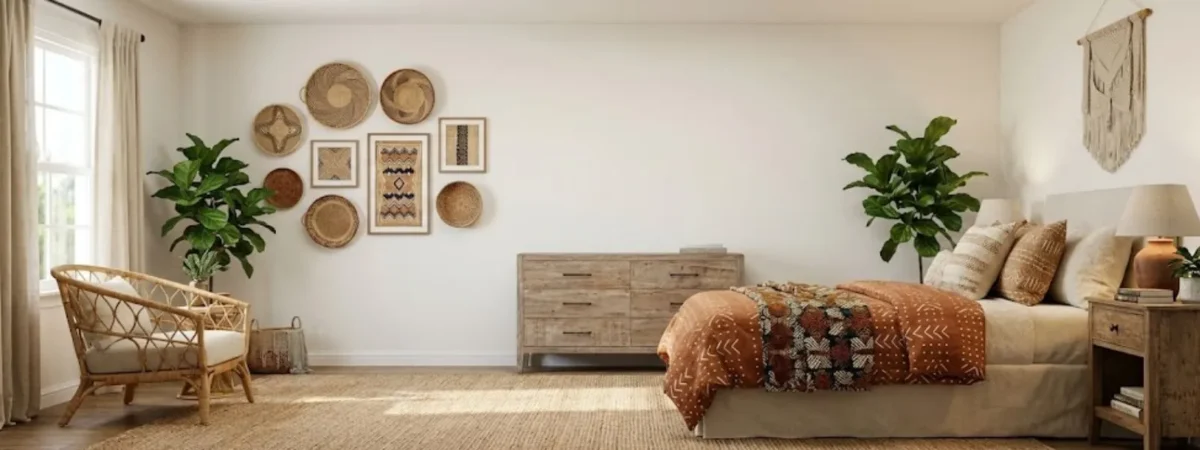
Before you start shopping or moving furniture, take time to plan. A good plan saves money and prevents those expensive mistakes where you buy something that doesn’t quite work.
Start by really looking at your current bedroom. What do you already have that fits the Afrohemian vibe? That wooden dresser might just need new hardware. Those plain walls are blank canvases for art. Your existing bed frame could work with the right textiles draped over it.
Setting a Realistic Budget
Most people can create a beautiful Afrohemian bedroom for between $300 and $800. This assumes you already have major furniture pieces like a bed and dresser. If you’re starting from scratch, add another $400 to $600 for thrifted furniture.
Break your budget into categories. Textiles usually eat up the biggest chunk, maybe 30% of your total. Furniture and larger pieces take another 30%. Wall decor and art might be 20%. The remaining 20% covers smaller accents, plants, and lighting.
Write down your actual number before you start shopping. It’s easy to overspend when you see something beautiful at a flea market or online store. Having a firm budget keeps you focused and creative. Sometimes limits force the best solutions.
Creating Your Mood Board
Gather inspiration before buying anything. Scroll through image sites and save rooms that speak to you. Don’t just look for perfectly styled spaces. Notice individual elements. A color combination here. A textile arrangement there. The way plants frame a window.
Make a physical or digital mood board with your favorite finds. Group images by color, texture, or mood. Patterns will emerge. You might notice you’re drawn to certain shades of orange or specific types of patterns. These consistent elements guide your shopping decisions.
Pay attention to what makes you feel something. The Afrohemian style is deeply personal. If a space doesn’t stir emotion or feel authentic to you, skip it. Your bedroom should reflect your story, not someone else’s Instagram feed.
Shopping Smart on a Budget
The biggest secret to affordable Afrohemian style? Never pay full retail price. Almost everything in your bedroom makeover can come from budget sources if you’re patient and creative.
Thrift stores are absolute goldmines for this aesthetic. African and bohemian pieces naturally end up in secondhand shops because they’re often handmade, vintage, or from estate sales. You’ll find woven baskets, wooden bowls, ceramic vases, and interesting textiles for pennies.
Where to Find Affordable Treasures
Estate sales and garage sales offer incredible deals, especially in diverse neighborhoods. Get there early for the best selection. Bring cash and measurements of your space. People often price items to sell quickly, especially furniture they don’t want to move.
Facebook Marketplace and Craigslist work well for larger pieces. Search terms like “rattan,” “wicker,” “wood dresser,” or “vintage chair” turn up great options. Most sellers accept reasonable offers. Be ready to pick up items yourself since delivery adds cost.
Ethnic markets and import stores carry authentic African textiles and decor at fair prices. These shops support artisans and communities directly. You’ll find mud cloth, Ankara fabric, woven baskets, and carved wood pieces. The quality usually beats mass-market versions.
Online marketplaces like Etsy connect you with individual sellers and small shops. Filter by price and look for sellers offering remnant fabric or slight imperfections. Many ship internationally, bringing authentic African goods straight to your door at reasonable costs.
Don’t overlook big box stores completely. Target, IKEA, and HomeGoods occasionally carry bohemian-style items. Jute rugs, rattan baskets, and simple wood furniture from these stores work perfectly as neutral bases. Just add character with authentic textiles and handmade pieces.
Timing Your Purchases Right
Shop seasonally when possible. Outdoor furniture goes on clearance at summer’s end. Rattan and wicker pieces meant for patios work beautifully indoors. You’ll pay 50-70% less than spring prices for identical items.
Holiday sales help stretch your budget further. Memorial Day, Fourth of July, and Labor Day bring deep discounts on home goods. Black Friday deals work for larger items like rugs or lighting. Just make sure you actually need the item and it fits your aesthetic.
Give yourself time to find pieces. Rushing leads to settling for things that don’t quite work. Set up alerts for specific items you want. Check your favorite sources weekly. The perfect vintage rattan chair might appear next month for half what you’d pay today.
Transforming Your Walls
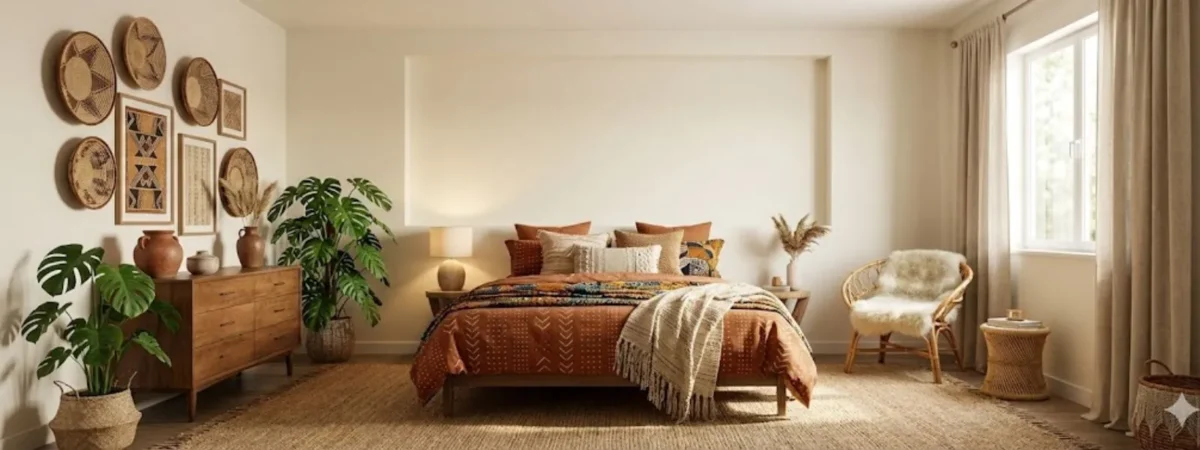
Walls set the tone for your entire bedroom. In Afrohemian design, they’re not just backgrounds. They’re opportunities to showcase culture, art, and personality.
Most people default to painting all walls one color. That’s fine, but consider other options. An accent wall in terracotta or burnt orange creates instant warmth. Warm white or cream keeps spaces feeling airy while providing a canvas for colorful textiles and art.
Paint Colors That Work
Earthy tones transform spaces dramatically. Terracotta brings sunset warmth. Clay colors feel grounded and natural. Ochre adds golden richness. These colors look beautiful in natural light and cozy in lamplight.
If full wall color feels too bold, try paint just above your headboard area. This creates a built-in accent zone without overwhelming the room. Use painter’s tape for clean edges. The project takes one afternoon and costs under $40.
Neutral walls work perfectly too. Warm white, cream, or soft gray let your textiles and art shine. This approach offers more flexibility as your style evolves. You can completely change your room’s mood just by swapping fabrics and wall hangings.
Budget-Friendly Wall Art Ideas
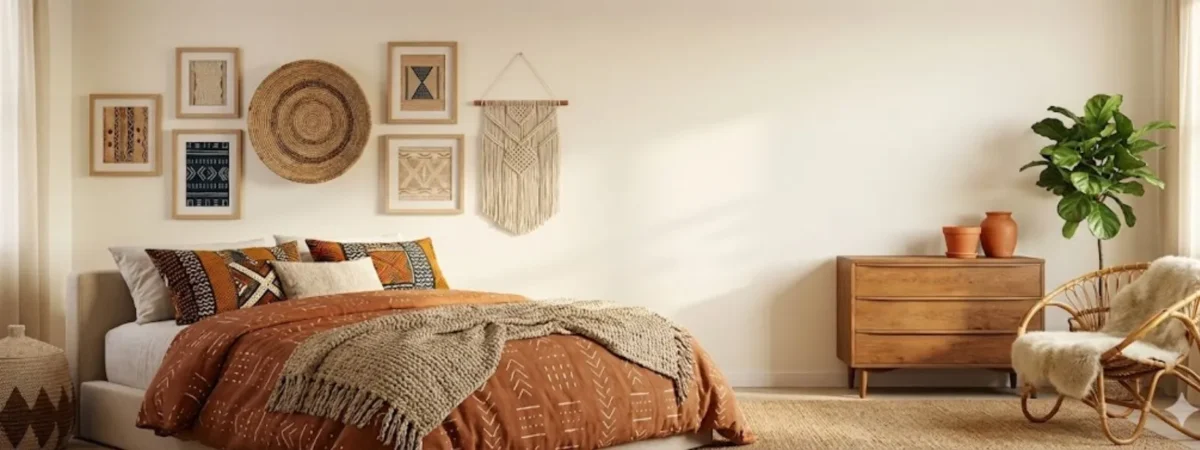
African-inspired art doesn’t require spending hundreds on original pieces. Print high-resolution images of African art, textiles, or photography. Frame them simply in thrifted or discounted frames. A gallery wall of mixed prints creates major visual impact for minimal money.
Textiles make stunning wall art. Mud cloth, Ankara fabric, or kente cloth remnants can be stretched over canvas frames. You can make these yourself for $20-30 per piece. The texture and pattern read as sophisticated art without the art gallery price tag.
Woven baskets arranged on walls bring three-dimensional interest. Look for flat or shallow baskets in varying sizes. Arrange them asymmetrically. This classic Afrohemian look costs $30-60 for a striking display that fills a large wall area.
Macrame wall hangings add bohemian texture. You can learn basic macrame in an afternoon using YouTube tutorials. Cord costs $15-25, and you’ll have material for multiple projects. The handmade quality fits perfectly with the Afrohemian aesthetic.
Selecting and Layering Textiles
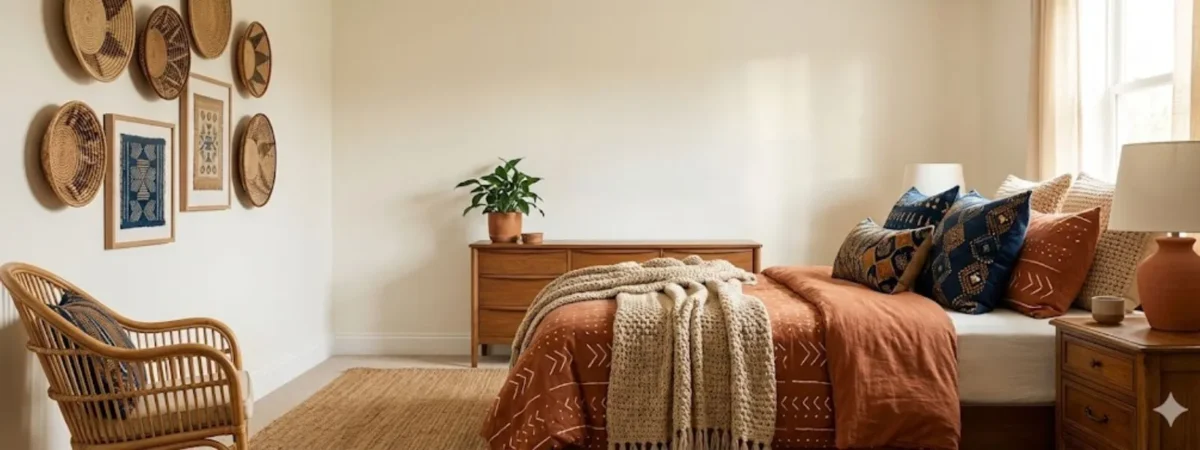
Textiles are the heart and soul of Afrohemian bedrooms. They bring color, pattern, warmth, and cultural connection all at once. This is where you should invest the most attention, even on a budget.
The layering technique creates that collected, well-traveled look. Start with your bed since it’s the room’s focal point. Build layers of different textiles, patterns, and textures that somehow work together.
Building Your Bedding Layers
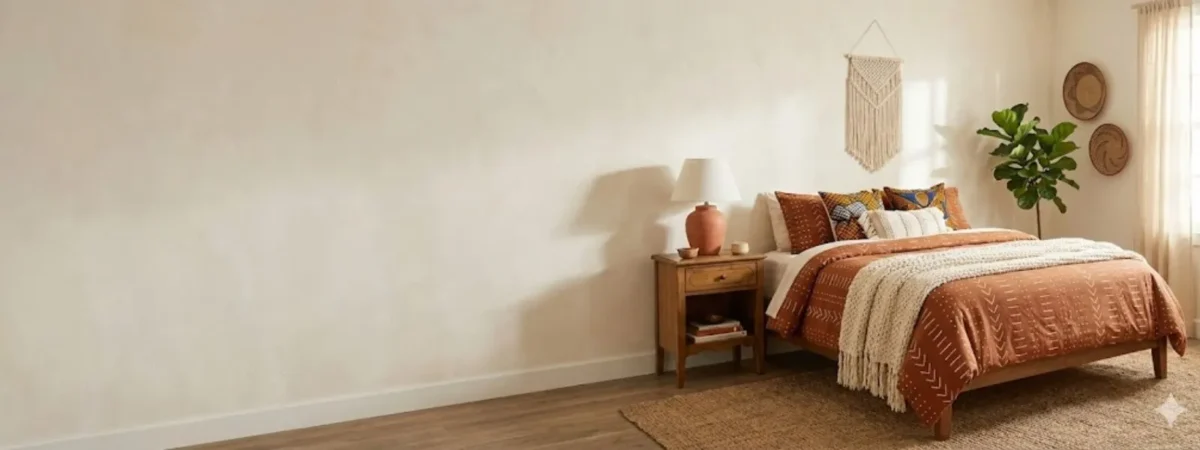
Begin with solid-colored sheets in natural tones. White, cream, or light gray work as your base. These don’t need to be expensive. The top layers will be your statement pieces.
Add a coverlet or blanket in an African-inspired print. Mud cloth designs in cream and black create graphic interest. Kente-inspired patterns bring color. Baoule cloth offers geometric beauty. These pieces range from $50-150 depending on size and source.
Layer a textured throw at the foot of your bed. Chunky knit, woven cotton, or even a Moroccan wedding blanket adds dimension. This layer invites touch and makes the bed look inviting. Thrift stores often have unique throws for $10-30.
Pile on throw pillows in varying sizes and patterns. Mix solid pillows with patterned ones. Combine different shapes like square, lumbar, and round. The mix should feel abundant but not overwhelming. Start with 4-6 pillows and adjust from there.
Choosing Complementary Patterns
Pattern mixing intimidates many people, but it’s easier than you think. Follow one simple rule. Keep your color palette consistent even when patterns vary. If you’re working with terracotta, cream, and black, every pattern should pull from those colors.
Mix pattern scales for visual interest. Pair large-scale prints with smaller geometric patterns. Combine organic shapes with straight lines. The variety keeps things interesting without clashing.
African textiles naturally work well together since they often share color families and geometric roots. Mud cloth’s bold graphics balance nicely with the intricate patterns of Ankara fabric. Kente strips complement woven textures beautifully.
Don’t forget solid colors as pattern breaks. A solid terracotta pillow between two patterned ones gives the eye a place to rest. Solids in your bedding layers create balance and prevent pattern overload.
Window Treatments on a Budget
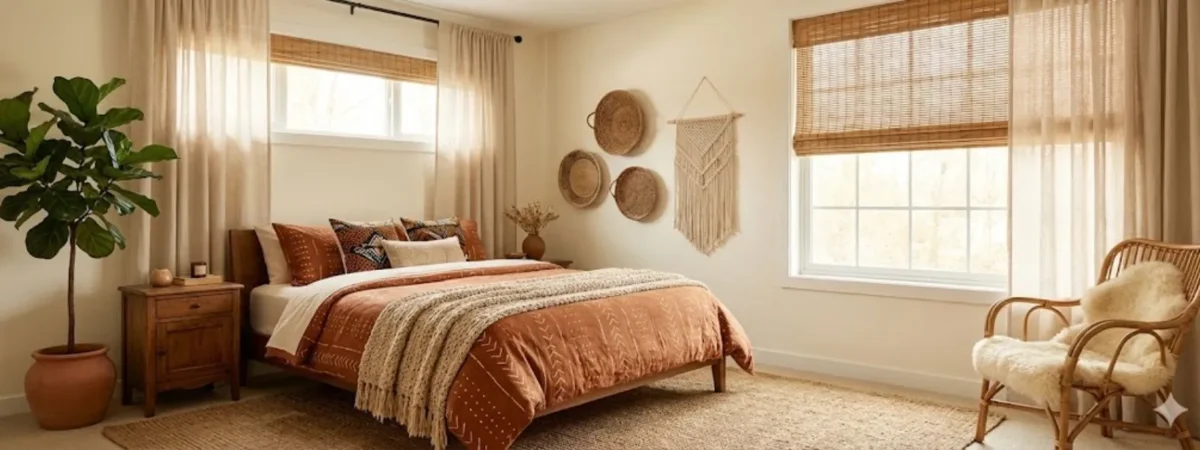
Curtains frame your room and control light. For Afrohemian style, choose natural materials when possible. Linen curtains in cream or white provide texture without competing with other patterns. They filter light beautifully and age well.
Canvas drop cloths from hardware stores make excellent curtain material. They cost $15-30 for enough fabric to cover large windows. Hem them yourself or use fabric tape. Add clip rings for easy hanging. The raw natural texture fits perfectly with this aesthetic.
If you want pattern, consider using African print fabric as curtain panels. Ankara fabric sold by the yard costs $10-15 per yard. You’ll need about 4-6 yards per window depending on size. Simple rod pocket hems make this a beginner-friendly project.
Bamboo or rattan shades add natural texture when layered with fabric curtains. Discounted versions cost $20-40 per window. They provide privacy and light control while reinforcing the natural material theme.
Furniture Selection and Arrangement
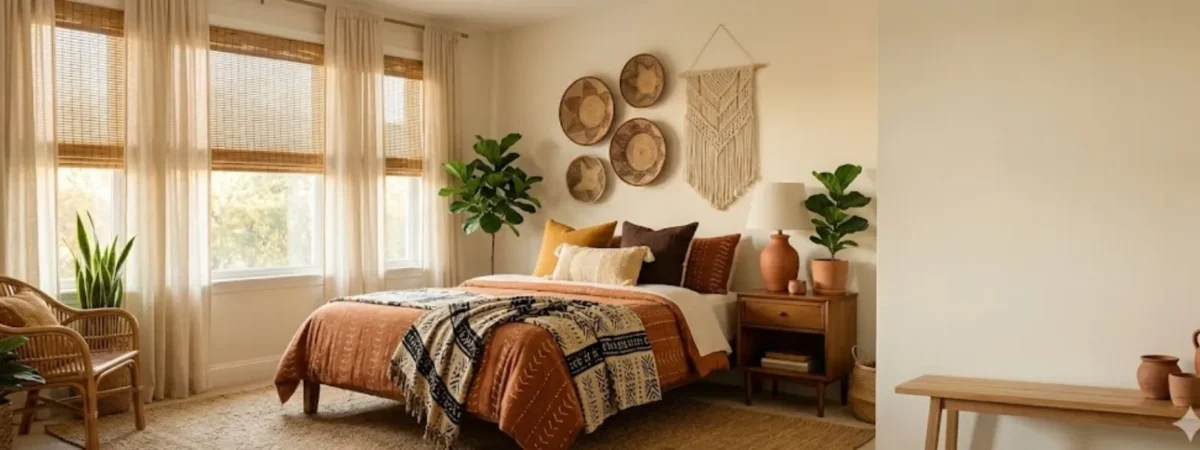
Afrohemian furniture feels lived-in and collected rather than matched and new. This works perfectly for budget decorating since you can mix pieces from different sources.
The style favors natural wood tones and organic shapes. Look for pieces with interesting grain, carved details, or woven elements. Avoid overly modern furniture with straight edges and cool metals. Those don’t fit the warm, natural vibe you’re creating.
Finding Affordable Statement Pieces
Thrifted wood dressers and nightstands form your foundation. Look for solid wood pieces with good bones. Surface scratches and worn finishes actually add character. You can refresh them with light sanding and natural oil or wax.
Rattan and wicker furniture perfectly captures Afrohemian style. Chairs, side tables, and storage pieces in these materials add texture and warmth. Check outdoor furniture sections during clearance season. Many outdoor pieces work beautifully indoors.
Low-profile seating like floor cushions, poufs, or a daybed creates the relaxed vibe this style needs. Look for poufs in natural materials or make your own by stuffing fabric with old blankets or pillows. This flexible seating costs little but makes the space feel intentional.
Wooden stools serve multiple purposes. They work as nightstands, plant stands, or extra seating. Traditional African stools bring authentic cultural elements. Even simple wooden stools from import stores for $20-40 add the right natural material feel.
Arranging for Flow and Function
Keep your bed as the clear focal point. Position it where you see it first when entering the room. If possible, center it on the largest wall. This creates symmetry and makes the space feel intentional.
Create small vignettes around the room. Group a chair with a side table and plant. Arrange baskets of different heights in a corner. These curated spots make the room feel designed rather than randomly decorated.
Leave breathing room between furniture pieces. Afrohemian style needs space to breathe. Overcrowding kills the relaxed vibe. You want enough room to move comfortably and see each piece as its own element.
Layer rugs to define spaces in larger bedrooms. A jute or sisal rug provides neutral base. Layer a smaller patterned rug on top near the bed or seating area. This technique adds warmth and visual interest while protecting your budget.
Adding Plants and Natural Elements

Plants are non-negotiable in Afrohemian design. They bring life, purify air, and connect your indoor space to nature. The good news is plants are incredibly affordable and grow more valuable over time.
Start with easy-care varieties if you’re new to plant keeping. Snake plants, pothos, and ZZ plants tolerate neglect and various light conditions. They cost $10-25 each at most garden centers and keep growing.
Choosing the Right Plants
Large leafy plants create dramatic focal points. A fiddle leaf fig or monstera in a corner makes a statement. These cost more initially, around $40-80, but one large plant has more impact than several small ones.
Hanging plants add vertical interest. Pothos, string of pearls, or spider plants work beautifully. Hang them near windows or from ceiling hooks. The trailing vines soften hard edges and make rooms feel lush. Basic hanging planters cost $10-15.
Grouping small plants creates the jungle vibe this aesthetic loves. Collect plants in varying heights using books, stools, or plant stands to create levels. This arrangement feels abundant without requiring tons of plants.
Don’t forget about dried plants and grasses. Pampas grass, bunny tails, and dried palm leaves last indefinitely. Arrange them in baskets or large vases. They add texture and height for one-time costs under $30.
Natural Containers and Displays
Skip expensive ceramic pots in favor of natural containers. Woven baskets work perfectly as pot covers. They’re affordable, fit the aesthetic, and hide plain plastic nursery pots. Thrift stores sell large baskets for $5-15.
Clay pots in terracotta embrace the earthy color palette. Buy them unpainted for the lowest prices. The raw clay develops character as it ages. Group several on a tray or shelf for cohesive display.
Wooden crates and boxes make excellent plant stands. Stack them to create different heights. This adds architectural interest while keeping your plants at eye level where they’re noticed and enjoyed.
Macrame plant hangers continue the bohemian thread throughout your room. Make them yourself with simple knot patterns. The repetition of handmade fiber throughout your space creates visual unity.
Lighting Your Sanctuary
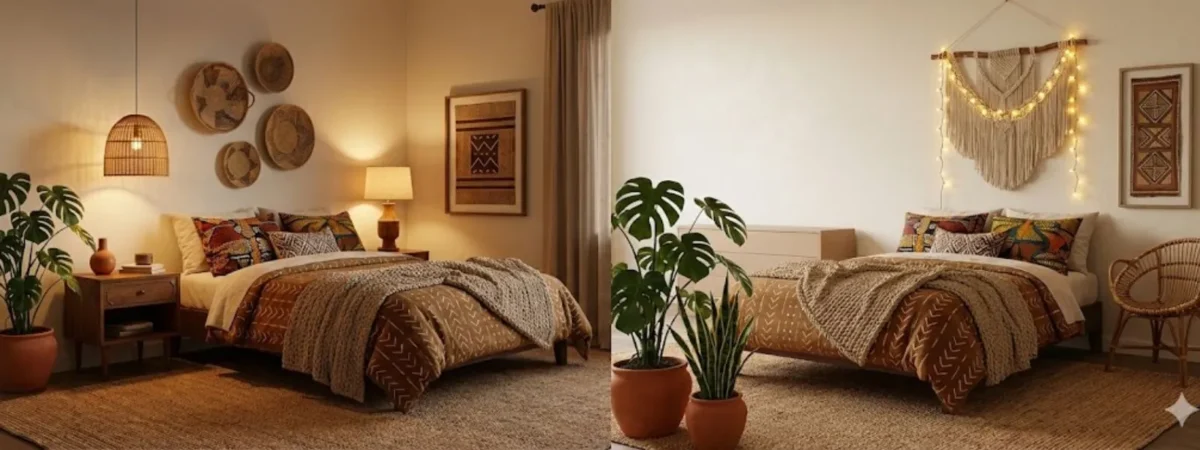
Lighting transforms how your entire space feels. Harsh overhead lighting kills the cozy atmosphere you’re building. Afrohemian spaces glow with warm, layered light from multiple sources.
Replace cold-toned bulbs with warm white versions. The golden glow enhances earth tones and makes the space feel immediately cozier. This simple switch costs under $20 and makes a huge difference.
Creating Ambient Warmth
Table lamps on nightstands provide necessary task lighting for reading. Look for lamps with natural materials like wood, rattan, or ceramic bases. Thrift stores always have lamp bases for $5-15. Buy new shades in cream or natural linen to freshen them up.
Floor lamps in corners wash walls with soft light. Arc lamps or tripod styles with natural wood legs fit the aesthetic perfectly. These range from $40-80 at discount stores. Position them to highlight wall art or create cozy reading nooks.
String lights add magical ambiance without trying too hard. Drape them around your headboard, along shelves, or around windows. Choose warm white bulbs rather than colored ones. The gentle glow at night creates a sanctuary feeling.
Candles in varying heights bring flickering warmth. Group them on trays with mirrors behind them to multiply the light. Use natural soy or beeswax candles when possible. The natural materials and warm scent enhance the overall experience.
Statement Lighting Options
Woven pendant lights make beautiful statements. Rattan or bamboo shades cast intricate shadows and bring natural texture overhead. These range from $60-120 but transform your entire room’s character.
Moroccan-style lanterns bridge African and bohemian influences. Metal work with colorful glass creates beautiful light patterns. Place them on dressers or shelves as decorative elements that provide accent lighting.
Salt lamps emit warm orange glows that perfectly complement terracotta tones. They cost $20-40 depending on size. Beyond aesthetics, many people find their soft light calming at night.
Remember that lighting flexibility matters. Use dimmers if possible. Multiple light sources let you adjust the mood throughout the day. Bright and energizing in the morning. Soft and peaceful in the evening.
DIY Projects That Add Character
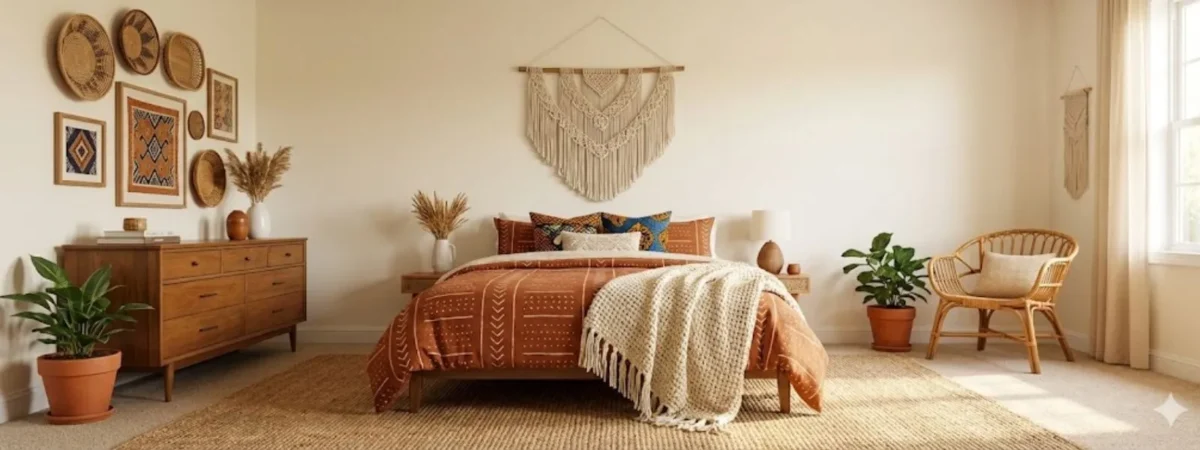
Handmade elements make Afrohemian spaces feel authentic. The style celebrates craftsmanship and personal creation. You don’t need advanced skills for projects that seriously elevate your room.
DIY also stretches your budget significantly. Materials cost a fraction of finished items. The time investment pays off in unique pieces nobody else owns.
Easy Textile Projects
Make your own throw pillow covers from African print fabric. Basic envelope-style covers require no zippers. Cut two rectangles, sew three sides, and overlap the back opening. Each cover costs $5-10 in fabric and takes about 30 minutes.
Create a headboard using African textiles. Stretch mud cloth or Kente fabric over a large canvas or plywood cut to size. Staple the fabric to the back. Mount it on the wall behind your bed. This dramatic focal point costs $40-60.
Sew simple curtain panels from canvas drop cloths or discount fabric. Hem the edges and add clip rings. No complicated rod pockets needed. The natural texture of canvas fits perfectly, and you’ll spend half what ready-made curtains cost.
Make table runners or dresser scarves from fabric remnants. These small textile touches tie rooms together visually. Buy quarter yards of African print fabric on sale. Hem the edges by hand or machine. Total cost is under $10 per piece.
Creative Wall Art
Print high-resolution African art or photography at office supply stores. Large prints cost $3-8 each. Mat them yourself using inexpensive frames and mat board. A gallery wall of 6-9 prints costs under $60 total.
Create your own abstract art using earth-toned acrylics. Paint organic shapes, layered colors, or geometric patterns on canvas. The imperfect handmade quality adds to Afrohemian authenticity. Canvas and paints cost $20-30 for several pieces.
Frame fabric swatches as mini art pieces. Buy fat quarters of beautiful African prints. Mount them on foam board or cardboard. Frame in simple black or wood frames. Each piece costs about $8 and creates cohesive color story throughout your room.
Make wall hangings using natural materials. Attach driftwood, dried flowers, feathers, or grasses to canvas or directly to walls. These organic pieces bring nature indoors and cost almost nothing if you collect materials yourself.
Adding Personal and Cultural Touches
The most meaningful Afrohemian spaces reflect personal history and cultural connection. These elements can’t be bought. They’re collected, inherited, made, or discovered.
If you have African heritage, incorporate family textiles, artifacts, or art. These authentic pieces anchor your design and make it deeply personal. Even one meaningful item influences your entire space.
Meaningful Decor Elements
Display family photos in natural wood or woven frames. Create a photo wall that tells your story. Mix old family pictures with recent ones. The visual timeline connects past and present.
Incorporate travel souvenirs and found objects. That basket from a market. Pottery from a trip. Shells from a beach walk. These items carry memories and stories that make your space uniquely yours.
Books become both decor and personal reflection. Stack them on nightstands and shelves. Let titles show your interests. Well-loved books with worn spines fit the collected aesthetic perfectly.
Handwritten quotes or prayers in frames add spiritual depth. Choose words that ground you or bring peace. Frame them simply. These personal affirmations make your bedroom truly a sanctuary.
Cultural Authenticity
Support African artisans when possible. Buying directly from craftspeople ensures authentic work and fair compensation. Many artisans sell through social media or ethical marketplaces. Your purchase supports traditional skills and communities.
Learn the meanings behind patterns and symbols you display. Adinkra symbols carry specific messages. Kente patterns have histories. Understanding these meanings deepens your connection to the aesthetic.
Mix African diaspora influences if that reflects your heritage. Caribbean, South American, and African American artistic traditions all contribute to this style. Your bedroom can honor multiple cultural threads.
Remember that cultural appreciation requires respect. Use these design elements because they resonate with you personally, not just because they look trendy. The difference shows in how thoughtfully you curate your space.
Maintaining Your Sanctuary
Creating your Afrohemian bedroom is just the beginning. Maintaining it keeps the space functioning as your peaceful retreat.
Natural materials need specific care to age beautifully. Dust rattan and wicker regularly to prevent buildup in crevices. Wipe wood furniture with appropriate oils to prevent drying. These simple habits protect your investment.
Caring for Textiles
Rotate throw pillows and blankets seasonally. This prevents uneven fading and wear. Store extras in breathable bags or baskets. Switching textiles also refreshes your space without buying new items.
Wash African print fabrics carefully. Hand wash or use gentle cycles with cold water. Many traditional dyes need special care. Air drying prevents shrinkage and preserves colors. Following care instructions makes your textiles last years.
Vacuum rugs weekly to prevent dirt from grinding into fibers. Rotate rugs periodically so they wear evenly. Address spills immediately. Natural fiber rugs like jute and sisal last decades with proper care.
Keep pillows fluffy by fluffing them daily. Air them out in sunshine occasionally to refresh. Replace pillow inserts when they become permanently flat. New inserts cost less than new pillows and keep covers looking fresh.
Evolving Your Space
Your room should grow with you. Add pieces gradually as you find them. This creates the collected-over-time feeling that makes Afrohemian style authentic.
Swap smaller items seasonally. Change throw pillow covers. Rotate art pieces. Switch out plants or their containers. These minor changes keep your space feeling fresh without requiring major overhauls.
Document your space with photos. Looking back shows how far you’ve come. It also helps you see what’s working and what needs adjustment. Sometimes we need distance to evaluate our spaces clearly.
Stay open to rearranging furniture. Moving pieces around costs nothing but creates an entirely new feeling. Try different configurations until you find what works best for how you actually use your room.
Final Thoughts
Creating an Afrohemian bedroom sanctuary on a budget is absolutely achievable. This style rewards patience, creativity, and personal connection more than it requires money. Your space becomes more authentic when built gradually with intentional choices.
Start with what you have. Add layers slowly. Hunt for treasures at thrift stores and estate sales. Make things yourself when possible. Support artisans when you can. Every piece you bring home should spark some feeling, whether that’s joy, peace, or connection to your heritage.
Your bedroom should feel like a soft place to land at the end of every day. It should reflect who you are and where you’ve been. The Afrohemian aesthetic embraces this perfectly by celebrating cultural richness, natural beauty, and personal expression all at once.
Take your time with this transformation. Enjoy the process of discovering pieces that speak to you. The best rooms aren’t decorated in a weekend. They’re cultivated over months and years. Each addition tells part of your story.
Now grab your measuring tape, set your budget, and start creating your soulful sanctuary. Your Afrohemian bedroom awaits.

