

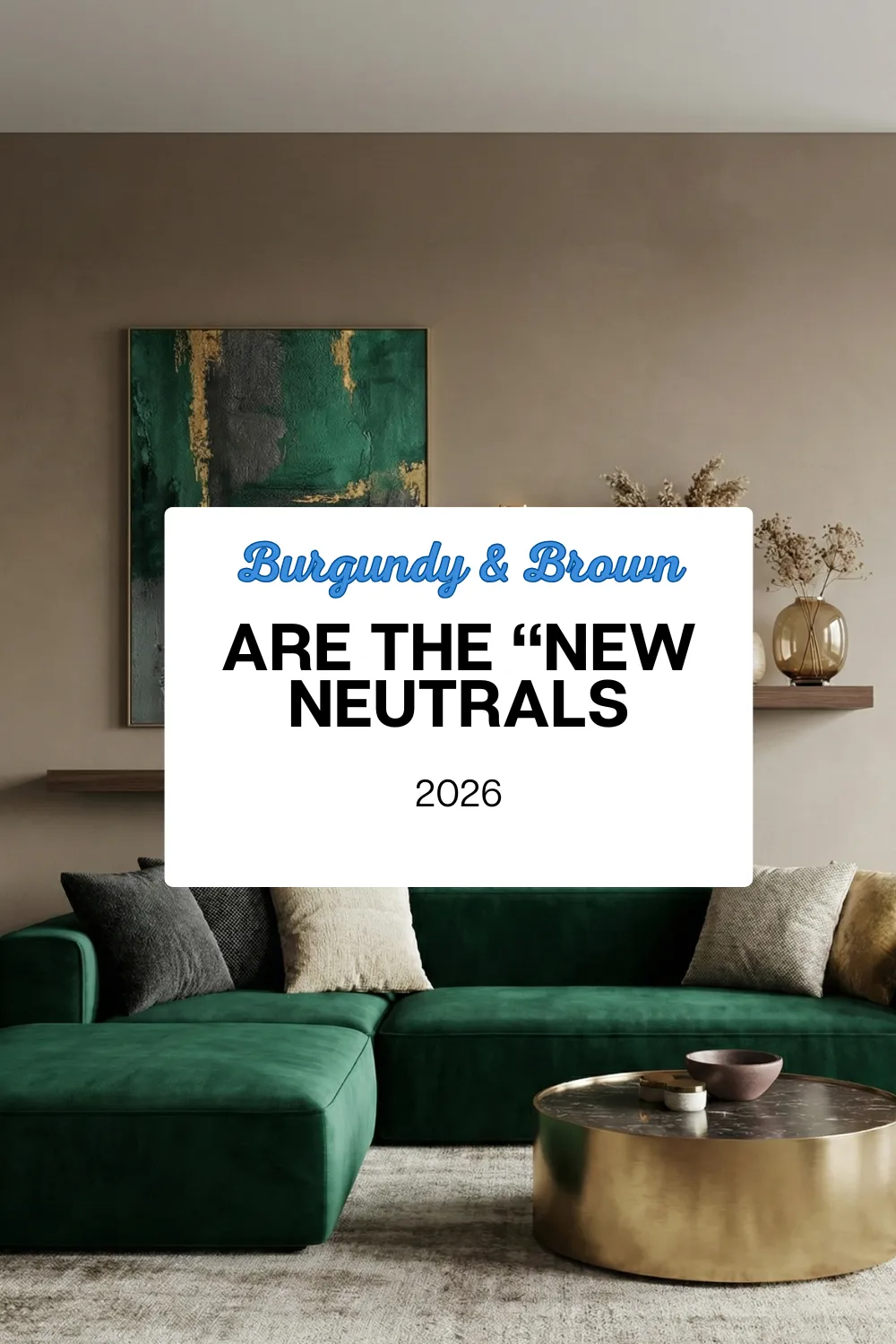
Burgundy and brown are the “new neutrals” for 2026 is because designers are shifting toward warmer, richer tones that still pair easily with many styles. Burgundy adds depth and sophistication without feeling bold, while brown provides a grounded, versatile base that complements both modern and traditional palettes. These colors work well with natural materials, textured fabrics, and layered lighting to create cozy, timeless spaces.
The Fall of Traditional Neutrals
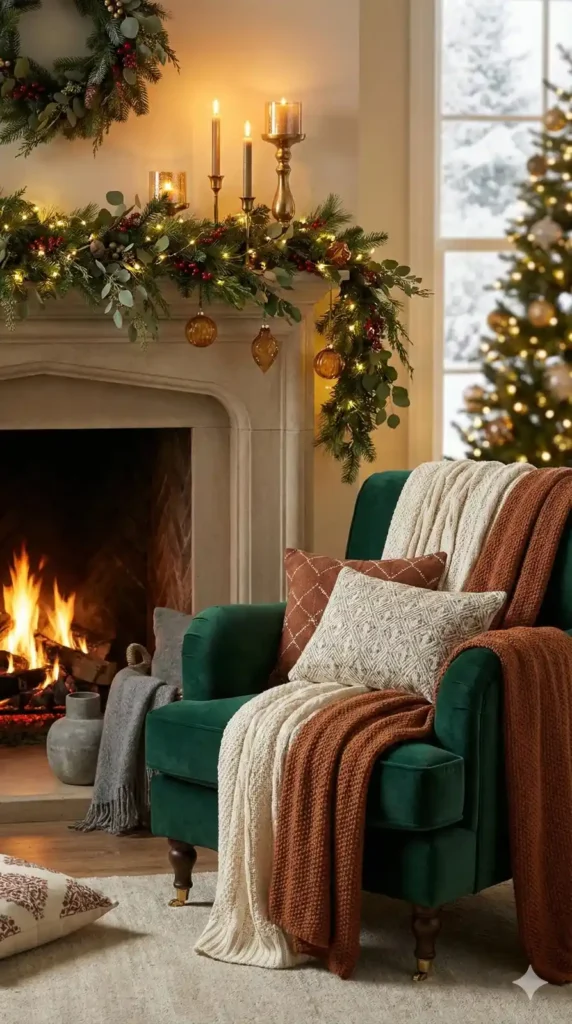
For many years, beige and gray ruled the design world. These colors felt safe and easy. But after seeing them everywhere, people started wanting something new. Gray walls became boring. Beige couches lost their charm. Homeowners wanted colors that made their spaces feel alive again.
The problem with old neutrals is that they can make a room feel cold or empty. Gray can seem sad on cloudy days. Beige sometimes looks dirty even when it’s clean. These colors don’t add personality or warmth. They just sit there. As people spent more time at home, they realized they wanted spaces that felt more like them.
Why Gray Lost Its Sparkle
Gray took over homes in the 2010s. It seemed modern and clean. But too much of anything gets old fast. Gray became the new boring. It didn’t help that many people picked the wrong shade of gray. Some looked purple in certain light. Others felt cold like a hospital. The color that once felt fresh now felt tired and overdone.
Beige’s Boring Reputation

Beige has been around forever as a safe choice. Landlords loved it. Builders used it in every new home. But safe can mean boring. Beige doesn’t make anyone excited. It’s the color you pick when you can’t decide. Young homeowners especially wanted to break away from their parents’ beige living rooms. They wanted something bolder but still easy to live with.
What Makes a Color a Neutral
Before we talk about why burgundy and brown work as neutrals, let’s understand what makes any color neutral. A neutral color is one that goes with many other colors. It doesn’t fight for attention. It makes other colors look better. Think of neutrals as the friend who gets along with everyone at the party.
Traditional neutrals include white, black, gray, and beige. They don’t have much color in them. But the idea of neutrals is changing. Now we think about how a color acts, not just how it looks. If a color can work in many rooms with many styles, it can be a neutral.
The New Definition of Neutral
Colors don’t have to be pale or boring to work as neutrals anymore. They just need to be flexible and grounding. Burgundy and brown fit this perfectly. They’re rich but not loud. They feel fancy but not fussy. You can build a whole room around them or use them as support colors. That’s what makes them the new neutrals.
Why Burgundy Works as a Neutral

Burgundy is a deep red with purple and brown tones mixed in. It sounds bold, but it’s actually very grounding. Unlike bright red that screams for attention, burgundy sits back and adds depth. It makes a space feel expensive and cozy at the same time.
This color has history on its side. Rich burgundy tones appeared in fancy homes for hundreds of years. Velvet curtains, leather chairs, and wine-colored rugs all used shades of burgundy. The color feels classic, not trendy. That’s important for a neutral. You want something that won’t feel dated next year.
Burgundy in Different Lighting
One reason burgundy works so well is how it changes with light. In bright daylight, it looks warm and welcoming. At night with lamps on, it feels rich and cozy. This color doesn’t look flat like gray can. It has depth that makes a room feel more interesting. The way burgundy shifts throughout the day keeps spaces from feeling boring.
Pairing Burgundy with Other Colors
Burgundy plays nice with so many colors. It looks great with cream and white for a soft, elegant feel. Pair it with navy blue for something dramatic. Put it next to gold or brass metals, and it shines. Even pink and burgundy work together for a romantic look. This flexibility is exactly what a neutral needs.
Why Brown Is Back and Better

Brown got a bad reputation for a while. People connected it with outdated wood paneling from the 1970s. But the brown we’re talking about for 2026 is different. These are rich chocolate browns, warm taupes, and soft caramel shades. They feel modern and fresh, not old and dusty.
Brown connects us to nature. Think of tree bark, leather, and coffee. These are comforting things. In a world that feels rushed and digital, brown brings us back to earth. It makes spaces feel calm and real. That’s exactly what people want now.
The Range of Browns
Brown isn’t just one color. It’s a whole family. Light tans work in bright, airy spaces. Medium browns feel comfortable and lived-in. Deep chocolate browns add drama and sophistication. You can use different browns in the same room, and they’ll all work together. Try that with bright colors and you’ll have a mess.
Brown’s Natural Warmth
Unlike gray that can feel cold, brown always feels warm. It makes people want to stay in a room. It’s the color of wood floors and leather couches that get better with age. Brown doesn’t show dirt as much as light colors. It’s practical and pretty at the same time.
How These Colors Reflect 2026 Design Trends
Design trends don’t appear out of nowhere. They reflect what’s happening in the world. For 2026, people want comfort, connection, and realness. They’re tired of perfect Instagram homes that don’t feel livable. Burgundy and brown fit this mood perfectly.
These colors support the move toward natural materials. More homes now feature wood furniture, wool rugs, and leather accents. Burgundy and brown complement these textures beautifully. They don’t fight with natural materials. They make them look even better.
The Comfort Movement
After years of stress and change, people want their homes to feel like a hug. Burgundy and brown do that. They’re not trying to impress anyone. They just make you feel good. These colors work with the trend toward cozy, layered spaces where you actually want to spend time.
Moving Away from Minimalism
The all-white, nothing-on-the-counters look is fading. People want personality and warmth now. Burgundy and brown let you add richness without going wild with pattern and color. You get interest and depth while keeping things calm. It’s the perfect middle ground between boring minimalism and overwhelming maximalism.
Using Burgundy in Your Home

Ready to try burgundy? Start small if you’re nervous. A burgundy throw pillow or blanket is an easy first step. You can also try burgundy towels in the bathroom. These small touches let you test the color without commitment.
For bolder moves, consider a burgundy accent wall. This works especially well in dining rooms and bedrooms. The color makes these spaces feel intimate and special. Just pick one wall, not all four. That keeps it from feeling too dark or heavy.
Burgundy Furniture Pieces
A burgundy velvet chair is having a moment. It adds instant elegance to any room. Burgundy leather sofas also work beautifully in living rooms or home offices. These pieces become the star of the room without being loud. They ground the space and give other colors something to play off.
Burgundy in Bedrooms
Burgundy bedding creates a rich, romantic feel. It works for all seasons, not just fall and winter. Pair burgundy sheets with white or cream duvets for contrast. Add some brass lamps, and you’ve got a space that feels like a fancy hotel. The color helps bedrooms feel more restful and private.
Bringing Brown into Every Room

Brown is easier to use than burgundy because it feels more familiar. Start with wood furniture if you don’t have it already. A brown leather couch is a classic that never goes out of style. Brown curtains add warmth without blocking light like dark gray does.
In kitchens, brown works through wood cutting boards, woven baskets, and natural fiber rugs. You don’t need to paint walls brown. Just layer in brown accents through accessories and furniture. The color builds warmth naturally.
Brown in Living Spaces
Living rooms love brown. A chocolate brown sectional gives everyone a comfy place to sit. Add some caramel-colored pillows and a woven throw. Bring in wood side tables and maybe a brown leather ottoman. Layer different shades of brown with cream or white walls. The room will feel pulled together without looking too matchy.
Brown in Bathrooms
Brown in bathrooms feels spa-like. Use brown towels and a woven bath mat. Add some wood elements through a mirror frame or shelving. Brown makes bathrooms feel warmer and less clinical than all-white bathrooms. It also hides stains better than white towels, which is practical for families.
Combining Burgundy and Brown
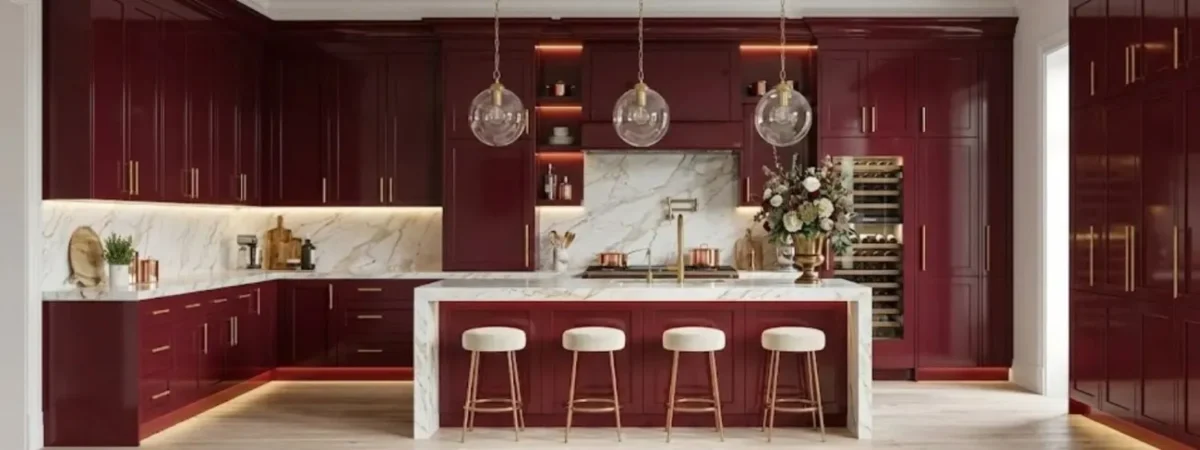
Here’s where things get really good. Burgundy and brown work beautifully together. They’re both warm and rich. They have similar undertones. Use them in the same room for a layered, sophisticated look that still feels comfortable.
Try a brown leather couch with burgundy pillows. Or burgundy curtains with brown wood floors. Put a burgundy rug under brown furniture. These combinations feel intentional and pulled together. They create depth that single-color rooms can’t match.
Creating Contrast Without Chaos
Even though these colors are similar, they create nice contrast. Burgundy adds a bit of color punch while brown keeps things grounded. This balance means your room won’t feel boring or overwhelming. You get visual interest without working too hard for it.
Layering Textures
When you use burgundy and brown together, play with different textures. Mix smooth leather with nubby wool. Pair velvet with linen. Put shiny silk next to rough jute. The textures make these similar colors feel distinct and interesting. Your room will have depth that flat, single-texture spaces lack.
Colors That Complement the New Neutrals
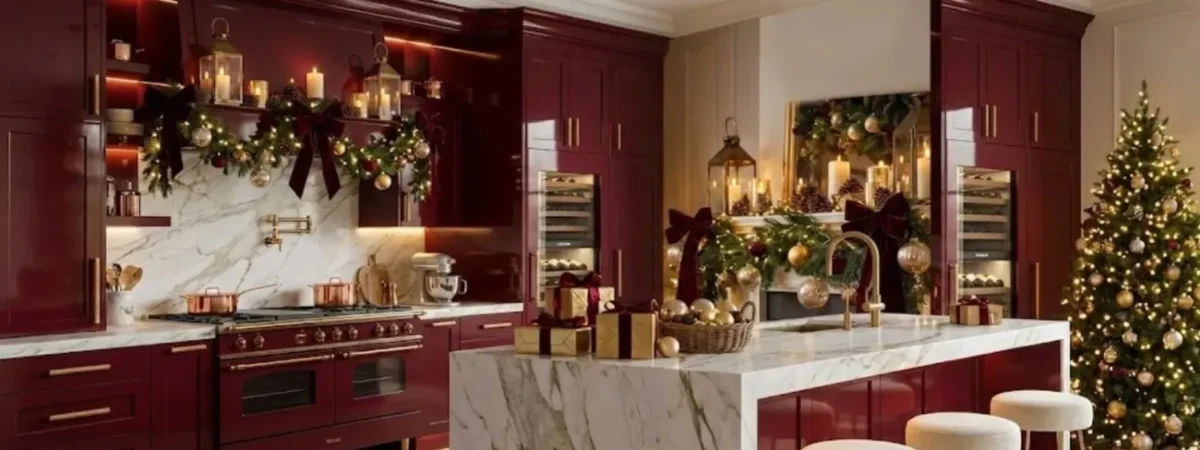
Burgundy and brown don’t work alone. They need supporting colors to really shine. The good news is they play well with many options. Your choices depend on the mood you want.
For a soft, romantic feel, add cream, blush pink, and soft gold. These light colors make burgundy and brown feel elegant without being heavy. For something bolder, try navy blue, emerald green, or burnt orange. These rich colors create drama while still feeling cohesive.
Metallic Accents
Gold and brass metals look amazing with burgundy and brown. They add shine without feeling cold like silver can. Use gold picture frames, brass drawer pulls, or copper planters. These warm metals pick up the warm tones in burgundy and brown. They make the whole room glow.
White as a Partner
White keeps burgundy and brown from feeling too dark. Use white walls to let these colors shine in furniture and accessories. White trim around windows and doors creates clean lines. White or cream bedding balances out burgundy pillows. Think of white as the breathing room these rich colors need.
Avoiding Common Mistakes
Even though burgundy and brown are forgiving colors, you can still mess them up. The biggest mistake is using too much at once. If everything is burgundy and brown, the room feels like a cave. You need lighter colors to break things up.
Another mistake is picking the wrong shade. Not all burgundies are the same. Some lean too purple and feel dated. Some browns look orange in certain light. Test paint samples on your wall and look at them throughout the day. Make sure you like the color in morning light and evening light.
Balance Is Everything
Remember that these are neutrals, but they’re deep neutrals. They need balance. If you have a burgundy couch, don’t add burgundy walls and burgundy curtains. Pick one or two places for these colors and let other neutrals fill in. Cream, white, and even light gray work as balancing colors.
Consider Your Lighting
Dark colors act differently in dark rooms. If you have a room with small windows and not much natural light, be careful with burgundy and brown. They can make the space feel smaller and darker. In these rooms, use these colors in smaller doses through pillows, art, or one piece of furniture. Save the bigger burgundy and brown moments for rooms with good light.
Shopping for Burgundy and Brown
Finding these colors in stores is easier now than it was a few years ago. Most home stores carry burgundy and brown options. Look in bedding sections for burgundy sheets and duvet covers. Check furniture showrooms for brown leather and burgundy velvet pieces.
Online shopping gives you even more choices. Search for “burgundy accent chair” or “chocolate brown curtains” and you’ll find hundreds of options. Read reviews carefully, though. Colors can look different on screens than in real life. Some stores offer free swatches or samples, which helps you see the real color before buying big pieces.
Thrift and Vintage Options
Burgundy and brown were popular in past decades, which means thrift stores often have great pieces. Look for leather chairs, wood furniture, and burgundy rugs. These vintage pieces often have better quality than new fast-furniture options. Plus, using secondhand items is better for the planet and your wallet.
Making These Colors Work Long-Term
One worry people have about trendy colors is whether they’ll still like them in five years. The beauty of burgundy and brown is their staying power. These aren’t neon colors that scream “2026.” They’re rich, classic shades that have worked in homes for decades.
If you’re still nervous about commitment, focus on items you can easily change later. Pillows, throws, curtains, and art are all simple to swap out. Save permanent choices like wall paint and big furniture for more traditional neutrals if you want flexibility.
Adapting as Trends Shift
Even if you go all-in on burgundy and brown now, you can shift the look later without starting over. Add different accent colors to change the mood. Bring in more white for a lighter feel. Add black for more drama. These base colors are flexible enough to adapt as your taste changes.
Final Thoughts
Burgundy and brown earned their place as the new neutrals for 2026. They bring warmth, depth, and sophistication that tired grays and beiges can’t match. These colors make homes feel personal and comfortable without being loud or trendy. They work with natural materials, support current design movements, and have enough history to feel timeless.
Start small with accessories if you’re new to these colors. Test them in your space and see how they make you feel. Pay attention to lighting and balance. Don’t be afraid to mix these colors together or pair them with metals and lighter neutrals. Most importantly, trust your instincts. If burgundy and brown make you happy when you walk into a room, you’re doing it right. Your home should reflect your personality, not just follow trends. These new neutrals give you a perfect foundation to build a space that feels both current and completely yours.

