

Living in a studio apartment? Good news small spaces can feel cozy, stylish, and totally yours. The average studio in the U.S. measures around 457 to 500 square feet. That’s about the size of a standard hotel room. But with the right ideas, you can turn that one room into a place that feels open, organized, and inviting.
This guide shares 12 studio apartment ideas that actually work. You’ll learn how to create separate zones without walls, pick furniture that does double duty, and make every inch count. Whether you’re a student, young professional, or just love simple living, these tips will help you design a space that fits your life.
Ready to transform your small space? Let’s dive in.
1. Create Zones Without Building Walls
The biggest challenge in a studio? Everything lives in one room. Your bed, couch, and kitchen all share the same open space. That’s where zoning comes in.
Zoning means using smart tricks to make one room feel like several. You don’t need construction or permanent changes. Instead, you can use rugs, furniture placement, and lighting to define each area.
Use Rugs to Define Each Space
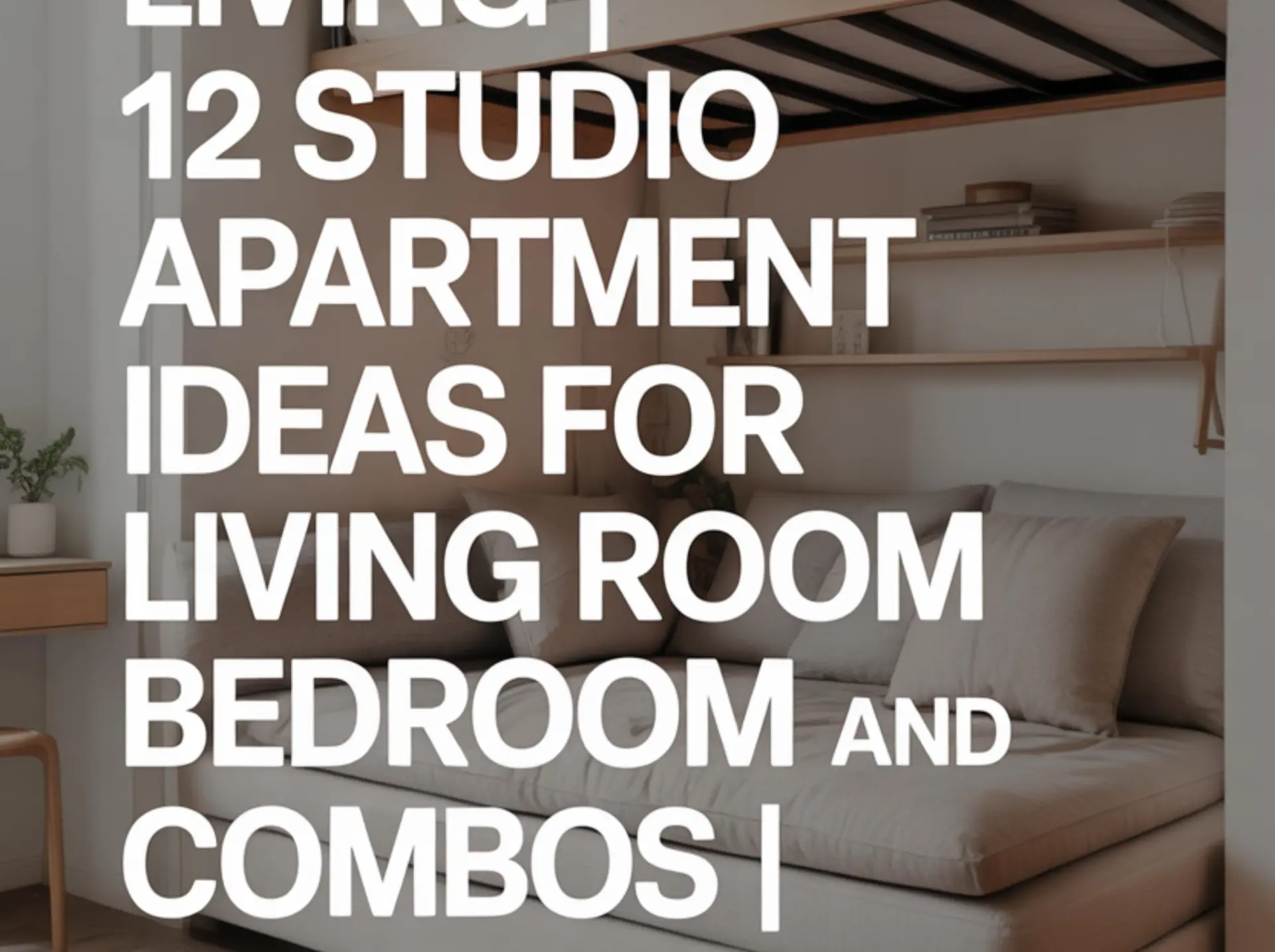
Place a rug under your bed to mark your sleeping zone. Put another under your couch to create a living room feel. The visual break helps your brain see two “rooms” instead of one big box.
A patterned rug under your seating area and a softer one under the bed gives you two clear spaces. This simple trick adds warmth and makes your layout feel intentional.
Float Your Furniture
Here’s a tip many people miss: don’t push all your furniture against the walls. Try floating your sofa at the foot of your bed. The sofa’s back creates a natural divider between sleeping and living areas.
This approach keeps the room open while giving you separation. Plus, it often creates better traffic flow through your space.
2. Choose Multi-Use Furniture
When space is tight, your furniture needs to work overtime. Multi-use pieces save floor space and keep your studio from feeling cramped.
Daybeds and Sofa Beds
A daybed looks like a stylish couch during the day. At night, it becomes your bed. This single piece replaces two big items and frees up valuable square footage.
Sofa beds work the same way. Look for ones with easy fold-down systems and comfy mattresses. Your guests won’t believe they’re sleeping on a couch.
Storage Ottomans and Lift-Top Coffee Tables
Storage ottomans are heroes in small spaces. Use them as footrests, extra seating, or coffee tables. Inside, you can stash blankets, books, or anything you want out of sight.
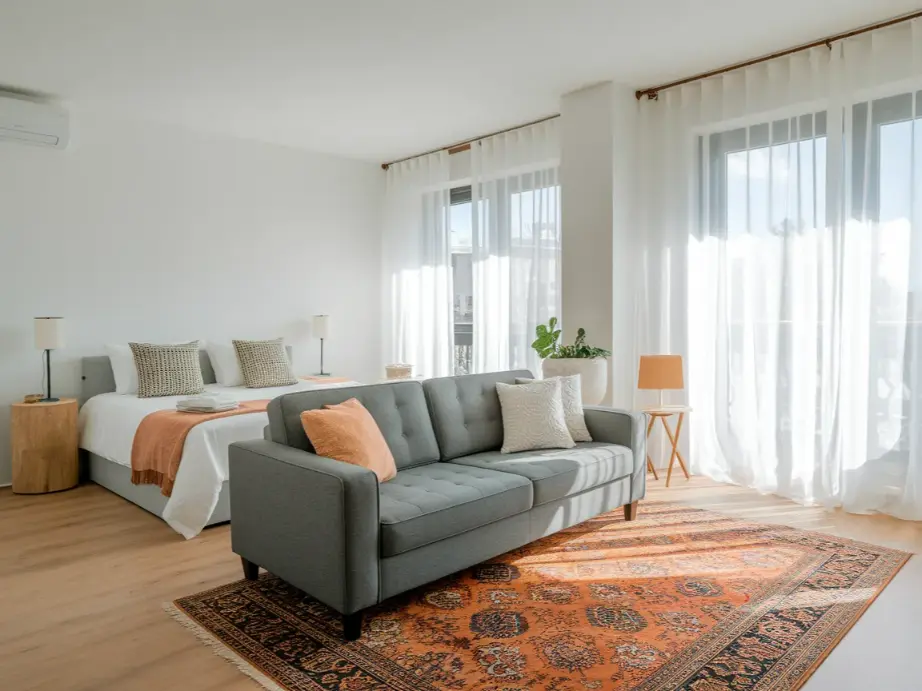
Lift-top coffee tables are another smart pick. The top rises to desk height for working or eating. Below, you get hidden storage for remotes, magazines, and more. It’s a coffee table, desk, and storage unit all in one.
If you love vintage home decor ideas, look for antique trunks that can double as coffee tables with built-in storage.
3. Go Vertical With Storage
When floor space runs out, it’s time to look up. Vertical storage uses your walls and ceiling height—areas that often get ignored.
Install Floating Shelves
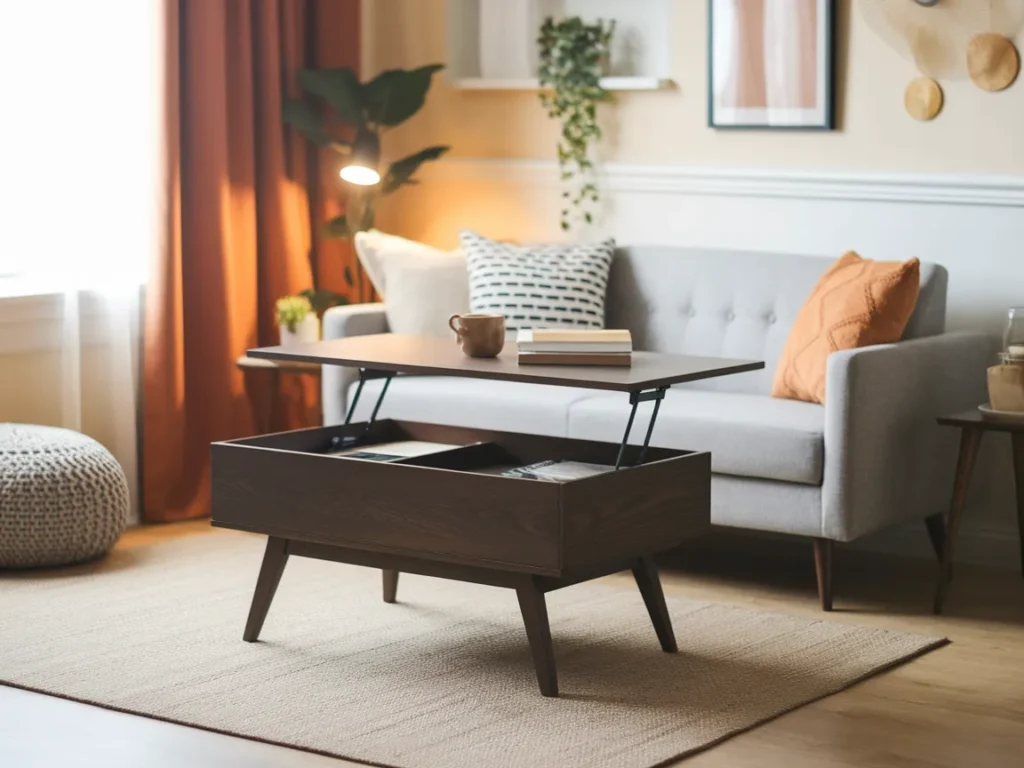
Floating shelves work wonders in studios. Mount them above your desk, bed, or kitchen counter. They keep surfaces clear while giving you spots for books, plants, and decor.
Keep shelf depths around 6 to 10 inches so they don’t stick out too far. You want storage that helps, not blocks your path.
Try Tall Bookcases
A tall, slim bookcase adds tons of storage without eating up floor space. Place it against a wall or use it as a room divider between zones.
For small kitchen remodels, add floating shelves above the counter for dishes and spices. This trick keeps cabinets clear and makes the space feel open.
Use Space Above Doors
The area above your door is prime real estate. Install a narrow shelf there for items you don’t need every day—like seasonal decor or extra towels.

4. Let Light Flow Freely
Light makes small spaces feel bigger. The more natural light you let in, the more open your studio will feel.
Choose the Right Window Treatments
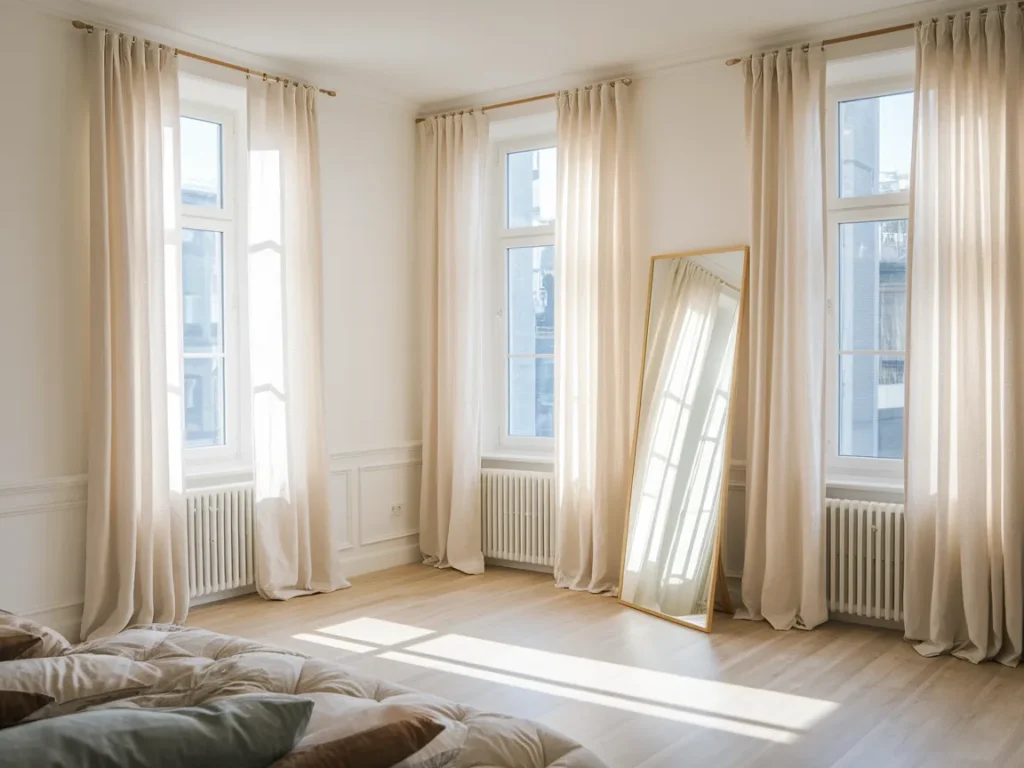
Skip heavy, dark curtains. Instead, go for sheer panels or light-filtering blinds. They give you privacy without blocking sunshine.
If you need total darkness for sleep, layer a sheer curtain with a roller shade. You get the best of both worlds.
Don’t Block Your Windows
Keep bulky furniture away from windows. A clear path for light makes your entire studio feel brighter and more spacious.
If you must place furniture near a window, choose pieces with legs that let light pass underneath.
Add Mirrors for Extra Brightness
Mirrors reflect light and create the illusion of more space. A floor-length mirror leaning against a wall or placed across from a window can make your studio feel twice as big.
This trick works especially well in studios with limited windows. The mirror bounces light into dark corners and adds depth to the room. For more ways to use mirrors, check out these home decor mirror ideas.
5. Use Light and Neutral Colors
Color has a huge impact on how big or small your studio feels. The right palette can make a tiny space seem much larger.
Stick to Whites and Soft Neutrals
White walls reflect light and make rooms feel open. Pair them with light wood floors or soft beige furniture for a warm, inviting look.
This doesn’t mean your space has to be boring. Add personality through colorful pillows, artwork, or a statement chair. The neutral base keeps things feeling spacious while accents add character.
Create Color Cohesion
When everything happens in one room, too many colors can feel chaotic. Pick a simple palette of 2-3 main colors and use them throughout your studio.
For example, if your bedding is cream and navy, echo those colors in your throw pillows, rugs, and wall art. This creates a cohesive look that makes your small space feel put together.
For more color inspiration, check out these bedroom decor ideas that work great in studios too.

6. Try a Murphy Bed or Loft Bed
If you want to reclaim major floor space, consider a bed that disappears or rises up.
Murphy Beds Save Daytime Space
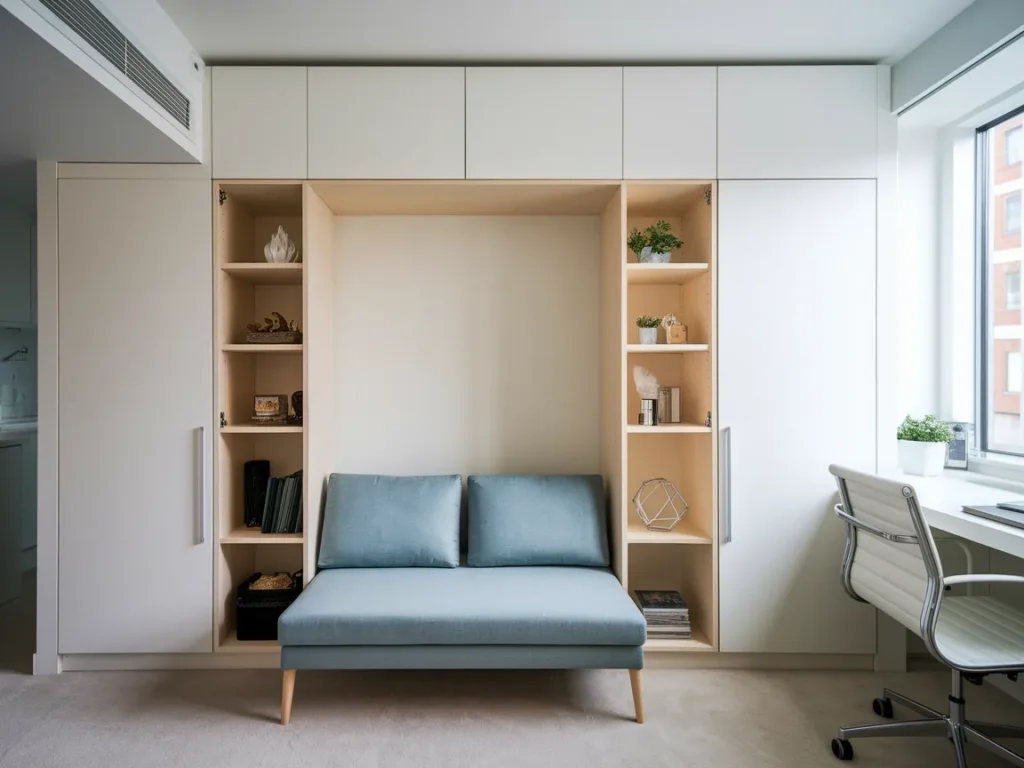
A Murphy bed folds up into the wall when you’re not using it. During the day, your bedroom becomes a living room, home office, or workout space.
Modern Murphy beds come in sleek designs with built-in shelving and lighting. Some even have a couch attached to the front panel, so you get seating when the bed is folded up.
Yes, they cost more upfront. But the floor space you gain can be worth every penny in a tiny studio.
Loft Beds Create Two Levels
Got high ceilings? A loft bed lifts your sleeping area up, leaving space below for a desk, couch, or storage.
Loft beds work especially well for students or anyone who needs both work and sleep space. The area under the bed becomes like a mini room of its own.
This approach works great for dorm room storage ideas and translates perfectly to studio living.
7. Use Room Dividers Wisely
Sometimes you want a little privacy or visual separation. Room dividers let you create “rooms” without permanent walls.
Bookcases as Dividers
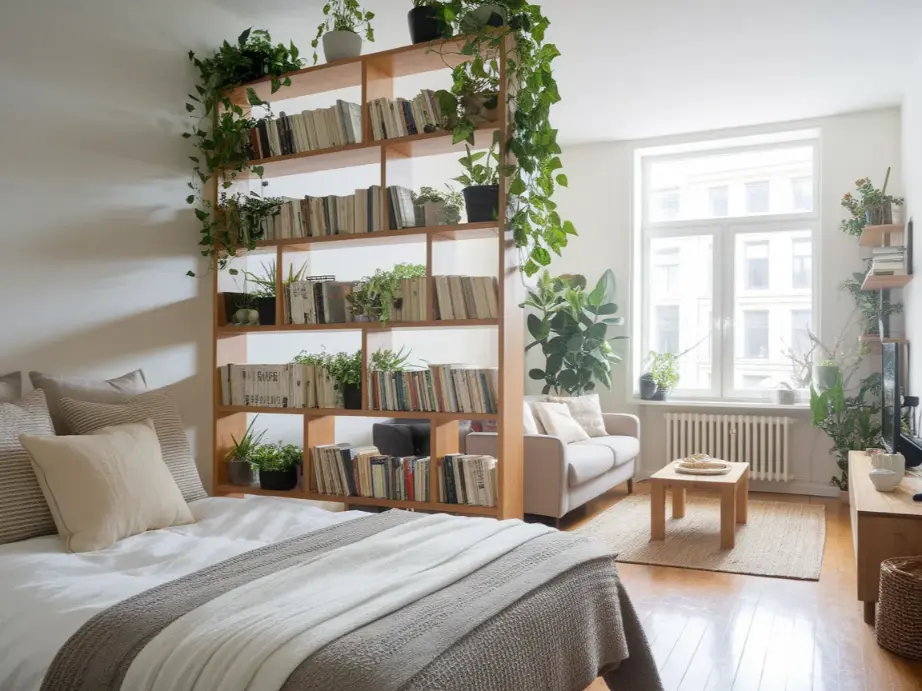
A tall, open bookcase makes an excellent room divider. It separates spaces while still letting light pass through. Plus, you get extra storage on both sides.
Place one between your bed and living area. Style it with books, plants, and decorative objects. The bookcase creates a bedroom nook without making your studio feel cramped.
Curtains for Soft Separation
Ceiling-mounted curtains offer flexible privacy. Pull them closed when you want your bed hidden. Open them up to make the room feel larger.
Curtains work well for renters since they don’t require major installation. Choose lightweight fabrics that let some light through.
Folding Screens for Quick Changes
A folding screen can hide a messy corner or create a changing area. Move it around based on your needs. When guests come over, tuck it away entirely.
8. Maximize Your Kitchen Space
Studio kitchens are usually small. They might just be a wall of appliances with limited counter space. But smart choices can make them work well.
Skip the Dining Table
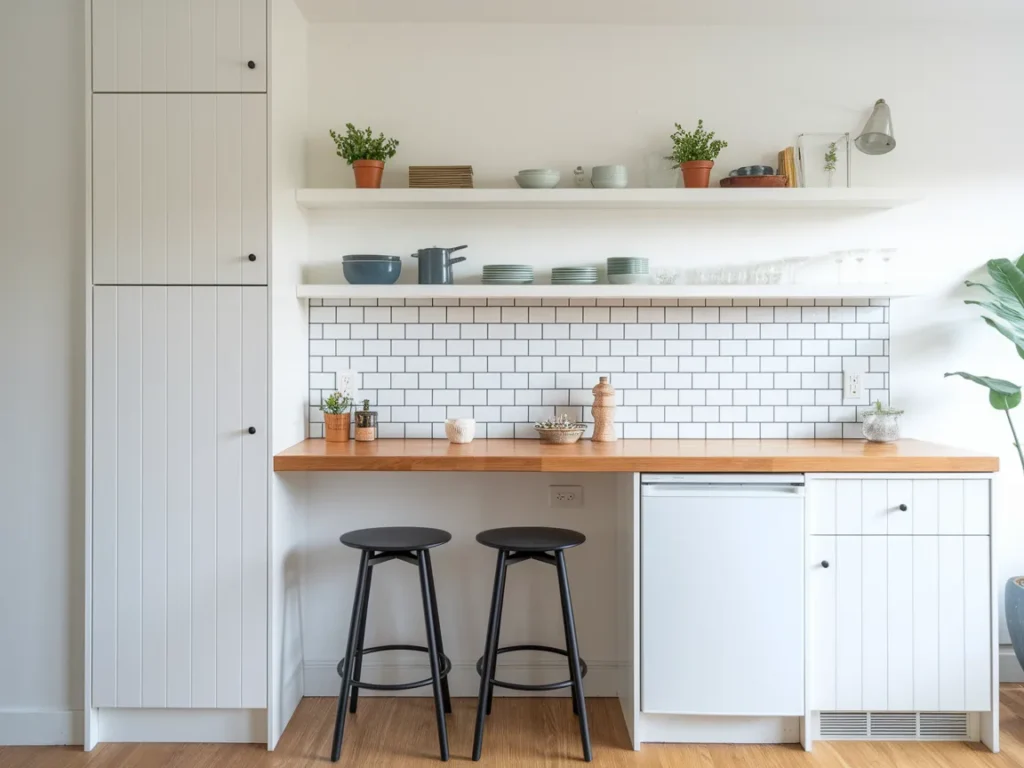
A full dining table takes up too much room in most studios. Instead, use a kitchen island with bar stools or a slim counter against the wall.
Bar stools slide neatly under the counter when not in use. This keeps your floor space open for daily activities.
Use Wall-Mounted and Foldable Options
A wall-mounted fold-down table gives you dining and workspace when needed. When you’re done, it folds flat against the wall.
Install hooks for pots and pans, floating shelves for dishes, and magnetic strips for knives. Getting things off the counter makes your kitchen feel larger.
Renter-Friendly Upgrades
Can’t make permanent changes? Try peel-and-stick backsplash tiles and contact paper for counters. These easy updates add style without risking your security deposit.
For more ideas, explore these small kitchen remodel tips that work in rental spaces.
9. Create an Entryway Drop Zone
Even if your front door opens right into your living space, you can create the feeling of an entryway.
Set Up a Landing Spot
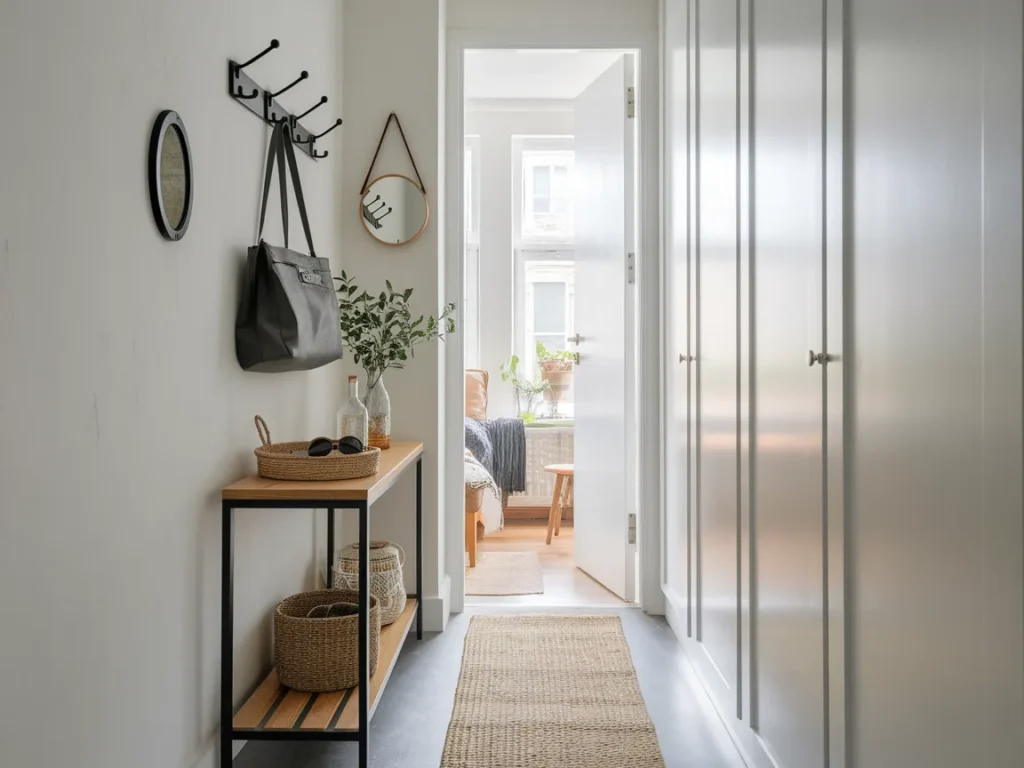
Place a small bench or console table near the door. Add hooks above it for keys, bags, and coats. A small basket or tray keeps items like sunglasses and wallets organized.
This simple setup stops clutter from spreading into your studio. When you walk in, you have a spot for everything.
Make It Welcoming
Your entryway sets the tone for your whole space. Add a small mirror to check your look before heading out. A narrow rug can define the zone.
For more entryway inspiration, see these entryway table decor ideas that work in tight spaces. You might also love these home decor entrance ideas for making a great first impression.
10. Choose Low-Profile Furniture
The style of furniture you pick matters as much as the size. Low-profile pieces make your studio feel more open.
Look for Legs and Clean Lines
Furniture with visible legs lets light and air pass underneath. This creates the illusion of more floor space. A couch with slim legs looks lighter than one with a solid base.
Mid-century modern styles work great in studios. They’re often lower to the ground with simple lines that don’t overwhelm small rooms.
Scale Matters
Don’t squeeze a giant sectional into a tiny studio. Instead, choose a loveseat or apartment-size sofa. Pick a small round dining table instead of a large rectangular one.
The goal is balance. Your furniture should fit the room without making you squeeze past every piece.
See-Through Options
Acrylic or glass furniture adds function without visual weight. A clear coffee table or acrylic chairs let you see right through them, making your studio feel less crowded.

11. Add Plants and Personal Touches
A studio becomes home when it reflects your personality. Plants and thoughtful decor make the space feel alive.
Use Plants as Natural Dividers
Tall plants can create soft separation between zones. A fiddle-leaf fig or snake plant adds life while marking the edge of your living area.
Smaller plants work great on windowsills, floating shelves, or hanging from the ceiling. They add freshness without taking up floor space.
Display What You Love
Choose a few meaningful items instead of lots of clutter. A gallery wall of photos, a collection of books, or treasured objects make your studio feel uniquely yours.
For home decor vase ideas, choose one statement vase with fresh flowers or greenery as a focal point.
Keep It Simple
In a small space, less is more. Too many decorations can feel overwhelming. Pick a few things you really love and let them shine.

12. Stay Organized With Hidden Storage
The secret to a clutter-free studio? Hide your stuff. The less visible clutter you have, the larger your space feels.
Under-Bed Storage
The space under your bed is prime storage real estate. Use rolling drawers or storage bins for clothes, shoes, or seasonal items.
If your bed sits too low, add risers to create more room underneath. You can also choose a bed frame with built-in drawers.
Furniture With Secret Compartments
Look for furniture that hides storage. Ottomans that open up, benches with lids, and coffee tables with drawers all keep items out of sight.
Even your nightstand can do double duty. Choose one with drawers or shelves to hold books, chargers, and bedside essentials.
Closet Organization Systems
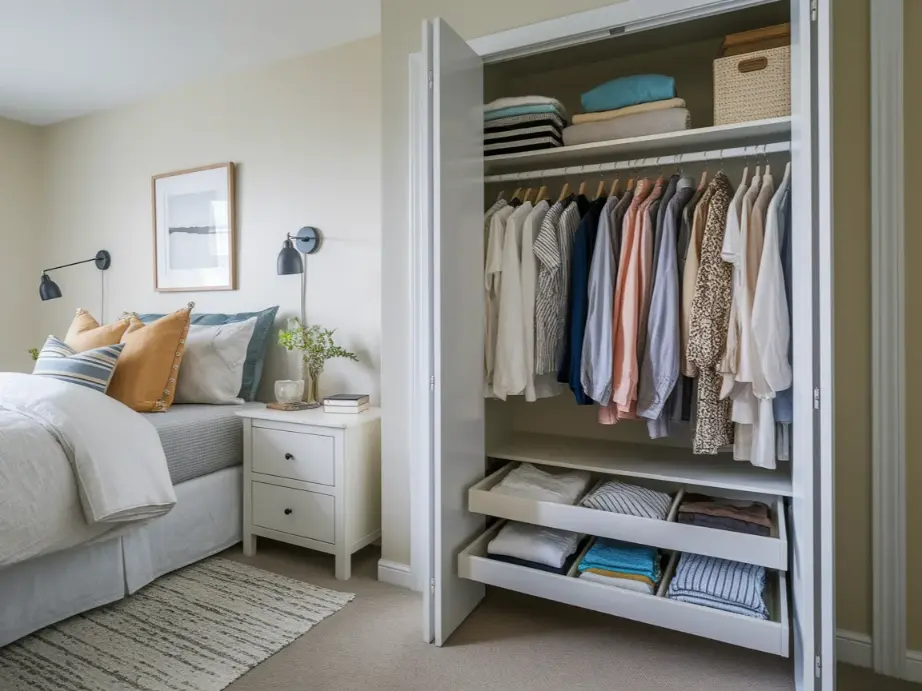
If your studio has a closet, make every inch count. Add double-hang rods to fit more clothes. Use shelf dividers, stackable bins, and over-the-door organizers.
No closet? Create one with a freestanding wardrobe or a stylish garment rack. Add a curtain in front for a cleaner look.
Adopt the One-In-One-Out Rule
The easiest way to stay organized long-term? For every new item you bring in, let go of an old one. This simple habit keeps clutter from building up over time.
Studio Apartment Ideas: Quick Reference Table
| Idea | Best For | Budget Level |
|---|---|---|
| Zone with rugs | Creating separate areas | Low |
| Multi-use furniture | Saving floor space | Medium |
| Vertical storage | Maximizing wall space | Low-Medium |
| Light colors | Making space feel bigger | Low |
| Murphy bed | Reclaiming daytime space | High |
| Room dividers | Adding privacy | Low-Medium |
| Kitchen bar stools | Small dining areas | Low-Medium |
| Entryway drop zone | Staying organized | Low |
| Low-profile furniture | Opening up the room | Medium |
| Plants | Adding life and warmth | Low |
| Hidden storage | Reducing visual clutter | Low-High |
| Mirrors | Reflecting light | Low-Medium |
People Also Ask
How Do You Make a Studio Apartment Feel Bigger?
The best ways to make a studio feel bigger include using light colors on walls, adding mirrors to reflect light, choosing furniture with visible legs, and keeping clutter hidden. Letting natural light flow freely also makes a huge difference.
Where Should I Put My Bed in a Studio?
Most people place the bed in a corner or against a wall to free up the center of the room. You can also tuck it behind a sofa, bookshelf, or room divider to create the feel of a separate bedroom. If you have an alcove or nook, that’s the perfect spot.
What Size Furniture Works Best in a Studio?
Look for apartment-size or small-scale furniture. Loveseats work better than full sofas. Small round tables take up less visual space than large rectangular ones. Always measure your space before buying anything.
How Do I Create Privacy in a Studio?
Use room dividers like bookcases, curtains, or folding screens. You can also arrange furniture to create separate zones. Tall plants offer soft separation without blocking light.
Is It Worth Getting a Murphy Bed?
If floor space is your biggest challenge, a Murphy bed can be a game-changer. You gain a whole room’s worth of space during the day. Modern options look stylish and include extras like shelving and lighting.
Final Thoughts
Living in a studio apartment doesn’t mean settling for cramped or boring. With these 12 ideas, you can create a space that feels open, organized, and totally you.
Start with the basics: define your zones, choose multi-use furniture, and let light flow freely. Then add personal touches that make the space feel like home. Remember, every inch matters in a studio—but that’s also what makes decorating so rewarding.
The best studio apartments aren’t the biggest ones. They’re the ones designed with care and intention. Take these ideas, make them your own, and enjoy your small-but-mighty home.
Looking for more small space inspiration? Check out our guide to small living room design ideas for even more tips on making compact spaces shine.

