

Dorm room storage works best when it hides clutter, uses vertical space, and keeps daily items easy to reach. I set up dorm rooms where the biggest problem was “stuff everywhere” even when the room was small. The right storage fixes that fast and also makes the room look better for photos.
I have helped set up five dorm rooms now, for siblings, cousins, and friends, and every single one had the same problem on move-in day: a mountain of stuff and nowhere for it to go. Dorm rooms are small, the furniture is fixed, and the closet is a joke. But here is what I learned: dorm storage is not about buying more containers. It is about assigning every category of stuff a specific home before the clutter starts. The rooms that stay organized all semester are the ones where this decision was made on day one.
Before you buy anything, take inventory. Dump everything on the bed, sort into categories (clothes, school supplies, toiletries, snacks, tech, misc), and count what you actually have. Most students overbuy storage and end up with empty organizers taking up space. I also recommend measuring three things: the clearance under the bed, the closet interior dimensions, and the back of the door. Those three measurements determine which products actually fit, and guessing wrong means a return trip to the store during the busiest week of the semester. For the full packing picture, my dorm room checklist covers what to bring in the first place.
15 Dorm Room Storage List
- Under-bed storage bins for bulk items
- Bed risers to unlock hidden space
- Rolling drawer cart for daily essentials
- Closet hanging organizer for folded clothes
- Slim over-the-door organizer for small items
- Storage ottoman for seating + hidden space
- Stackable clear bins for snacks and extras
- Shelf risers to double closet space
- Desk drawer dividers for school supplies
- Storage baskets for clean shelf styling
- Command hook wall zone for bags and keys
- Laundry sorting hamper setup
- Mini fridge top shelf tray system
- Labels for fast item finding
- Final dorm storage rule
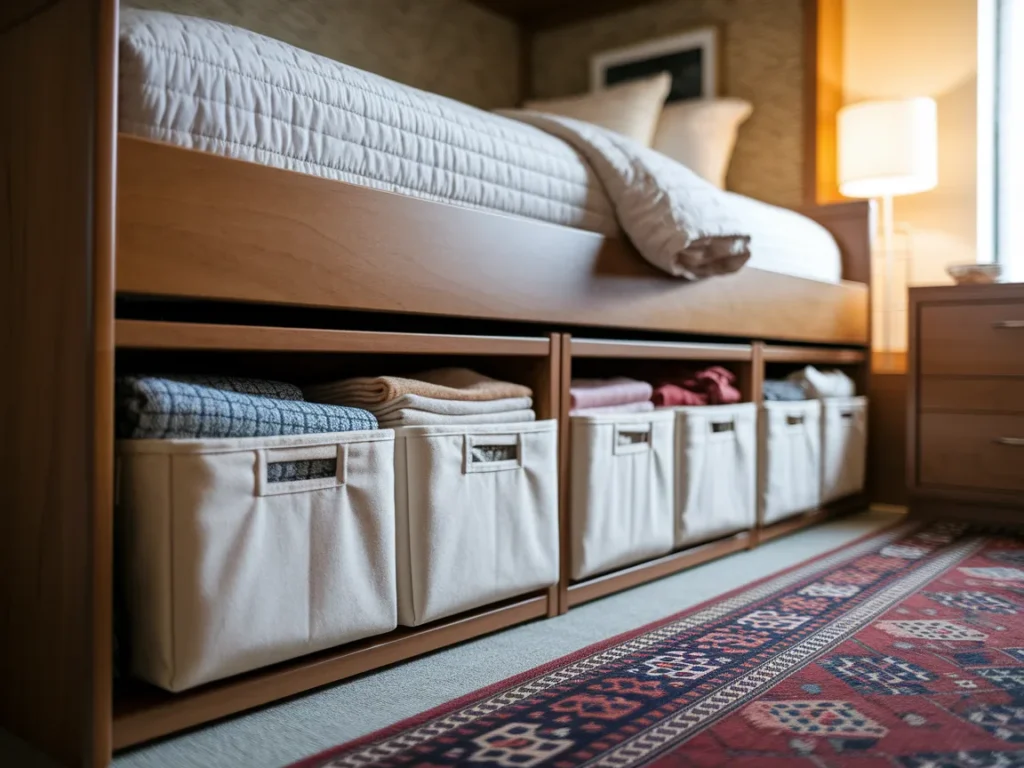
Under-Bed Storage Bins For Bulk Items
Under-bed storage bins hold the items that make dorm rooms feel messy, like shoes, extra towels, snacks, and spare bedding. I used clear bins so I could spot items quickly without pulling everything out. This kept the floor clean and made the room feel bigger. Under-bed bins work best when each bin has one category, so you don’t mix random items together.
The space under the bed is the biggest storage zone in a dorm room, so treat it like prime real estate. I use low, wide bins with lids: lids keep dust out and let you stack if needed. Clear bins win over opaque because you can see contents without pulling everything out, which means you actually use what you stored. Reserve under-bed space for bulk and off-season items: extra bedding, winter coats, luggage, bulk snacks. Daily items do not belong here; if you have to kneel and drag a bin out every morning, you will stop putting things back. Label the end of each bin facing out so you can grab the right one without a treasure hunt.
Bed Risers To Unlock Hidden Space
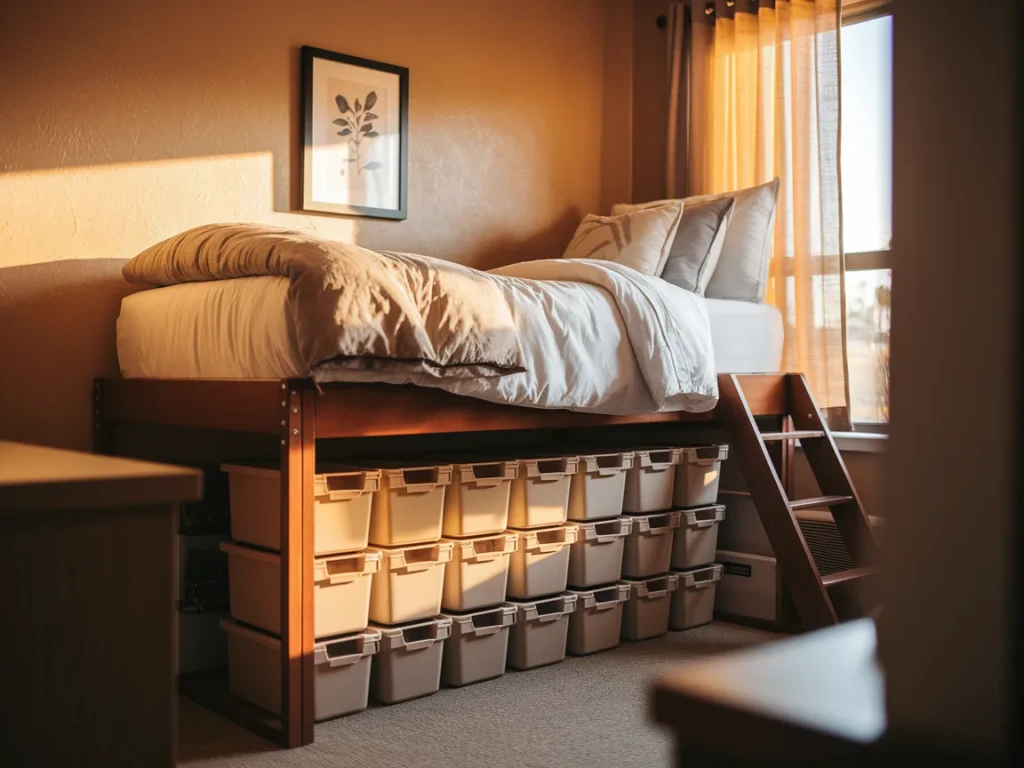
Bed risers increase storage space without adding more furniture. I used risers to lift the bed high enough for large bins and boxes. This helped remove clutter from corners and made the room feel more open. Bed risers work best when they stay sturdy and the bed feels stable.
Bed risers are the cheapest square footage you will ever buy. A standard 7-inch riser set turns the dead space under a dorm bed into a usable storage zone. But check two things first: many dorms have beds that already adjust to multiple heights, in which case risers are unnecessary, and some schools ban risers over a certain height for safety. I prefer the heavy-duty plastic risers with a recessed cup on top that grips the bed leg; the cheap flat ones let the bed walk off during the semester. Never stack risers to go higher. If you need more clearance, ask housing about lofting the bed instead, which is safer and usually free.
Rolling Drawer Cart For Daily Essentials
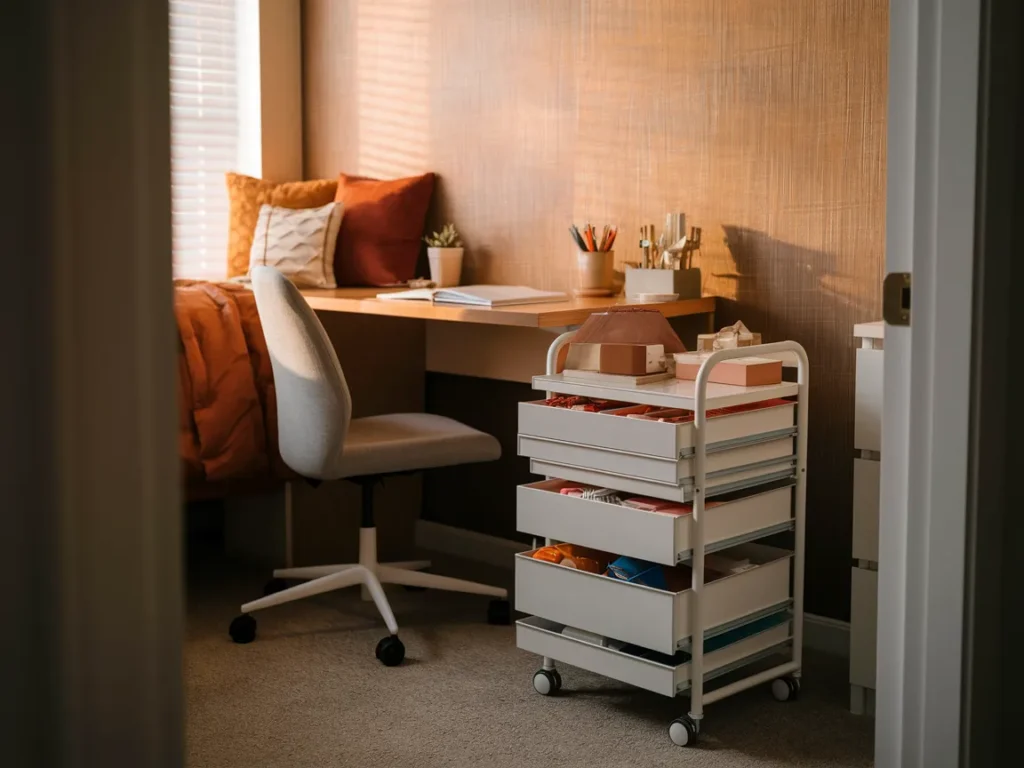
A rolling drawer cart keeps daily essentials organized in one place. I used it for skincare, hair tools, notebooks, and chargers. This made the desk area cleaner because small items stayed inside drawers. A cart also works well because it moves easily, so you can shift it between the bed and desk when needed.
A three-tier rolling cart is the dorm MVP because it goes where you need it: beside the bed as a nightstand, beside the desk during study sessions, into the closet when guests come. I organize by frequency: top tier for daily items (meds, glasses, phone charger), middle for weekly (notebooks, snacks), bottom for backup supplies. The cart should have a lip or rail on each tier, or everything slides off when you roll it. Locking casters matter more than you think; a cart that drifts across the room every time you bump it gets old fast. This one piece replaces a nightstand, a supply caddy, and a snack station.
Closet Hanging Organizer For Folded Clothes
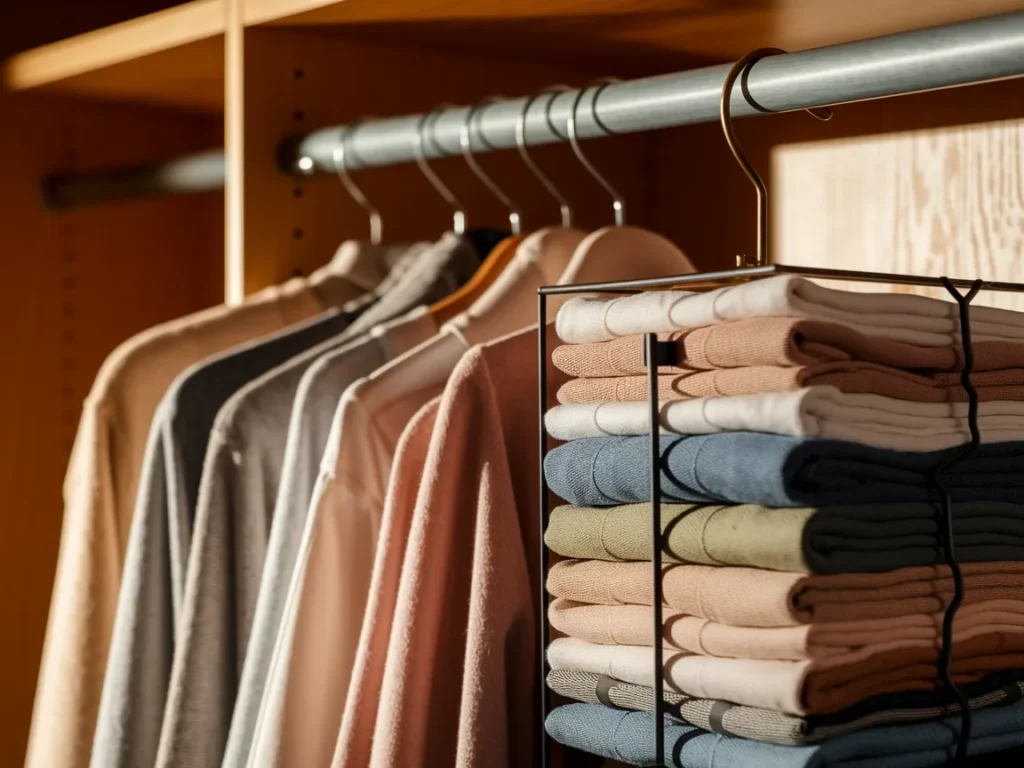
A closet hanging organizer makes dorm closets feel bigger because it adds vertical shelves. I used it for folded shirts, gym clothes, towels, and small bags. This kept clothes off chairs and made mornings faster because everything stayed visible. A hanging organizer works best when each shelf has one clothing type, so items stay sorted.
Dorm closets are tall, narrow, and shelf-less, which wastes most of their volume. A hanging fabric organizer with 6 to 8 cubbies converts that vertical dead space into folded-clothes storage. I sort by outfit logic, not clothing type: one cubby per day’s outfit beats separate shirt and pants cubbies, because getting dressed becomes grab-and-go. Reinforce the top hooks with the closet rod; cheap organizers rip at the Velcro within a month under real weight. And leave the bottom two cubbies for shoes or bags, since the lowest cubbies are awkward for clothes anyway. If your closet is shared, one organizer per person keeps the peace.
Slim Over-The-Door Organizer For Small Items
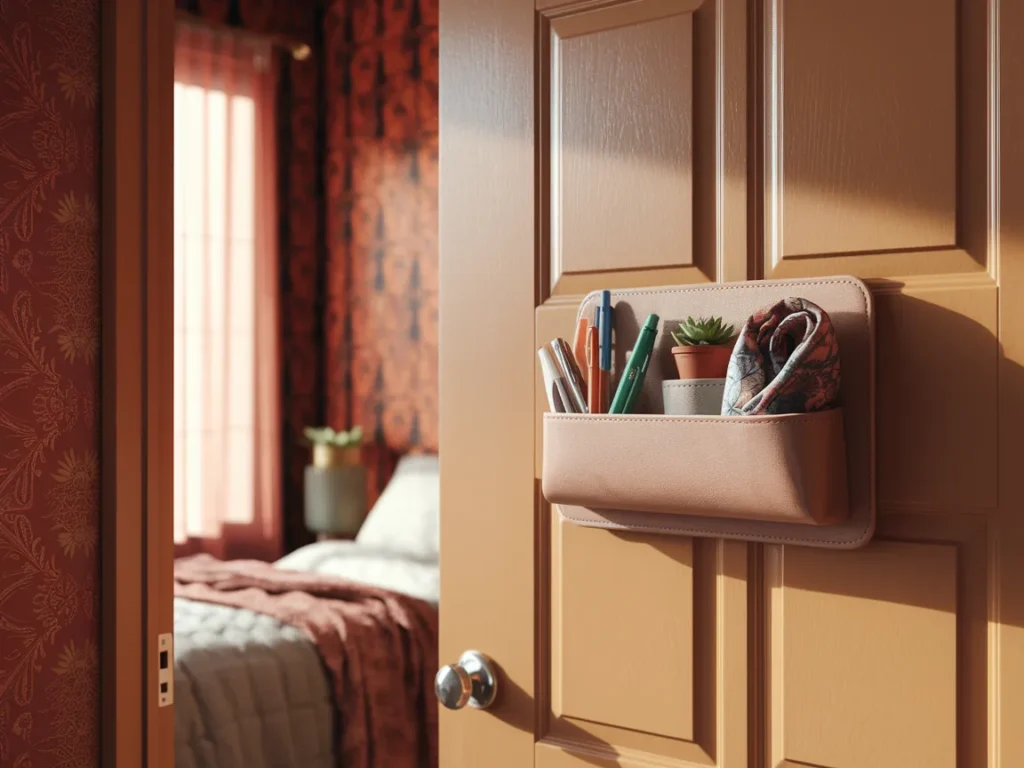
A slim over-the-door organizer stores small items that usually create clutter. I used it for hair tools, toiletries, snacks, and cleaning items. This saved drawer space and kept the floor clear. Clear pocket organizers work best because you can see items quickly.
The back of the door is free storage most students ignore. A slim over-the-door organizer with clear pockets holds the small stuff that otherwise colonizes every surface: chargers, toiletries, first aid, stationery, snacks. I choose fabric over plastic pockets; plastic cracks and the clear vinyl yellows by midterms. Before buying, check your door: some dorm doors are metal or have closers that prevent over-door hooks. In that case, adhesive hooks rated for the weight work, but test one hook for 48 hours before loading all of them. Assign each pocket a category and label it. Unlabeled pockets become junk drawers within three weeks, I guarantee it. Renters dealing with the same door constraints will like my over-the-door storage ideas for rentals.
Storage Ottoman For Seating + Hidden Space
A storage ottoman gives both seating and hidden storage in one item. I used it to store blankets, extra shoes, and random daily items that needed a quick home. This reduced mess fast and made the dorm feel more comfortable for guests. A storage ottoman works best when it stays small enough to fit under a desk or beside the bed.
Dorm rooms never have enough seating, and a storage ottoman solves seating and storage in one footprint. I use it as a desk chair alternative, a footrest, and guest seating, with blankets and off-season clothes inside. Choose one with a sturdy lid that supports sitting weight (check the weight rating; decorative ottomans collapse). The lid should stay open on its own or have a hinge that holds, because a lid that slams on your fingers while you are digging for a sweater is miserable. Size it to tuck under the desk or at the foot of the bed when not in use. One ottoman is enough; two starts eating the floor space you were trying to save.

Stackable Clear Bins For Snacks And Extras
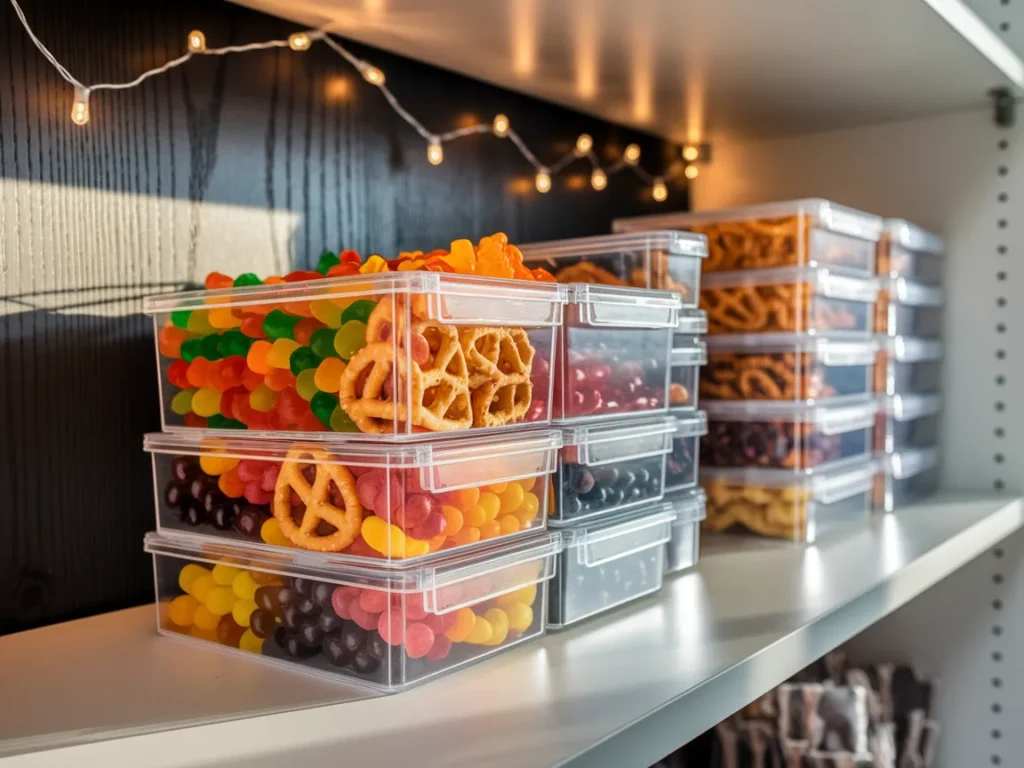
Stackable clear bins keep snacks and extra supplies organized without taking much space. I used them for packaged snacks, instant meals, and drinks. The clear look made the dorm feel more aesthetic because items stayed uniform instead of scattered. Stackable bins work best when labels stay simple and categories stay separated.
Snacks are the number one source of dorm clutter, because they arrive in random bags and boxes with no system. I decant everything into stackable clear bins by category: one for sweet, one for salty, one for breakfast. Clear matters because you eat what you see; opaque bins become archaeology sites. The bins should be sized to the shelf or cart they live on, not the snack quantity. Oversized bins invite overbuying and waste the footprint. I keep one small bin for the current week’s snacks and a larger backup bin in the closet for restocking. When the weekly bin empties, you know it is grocery time without thinking about it.
Shelf Risers To Double Closet Space
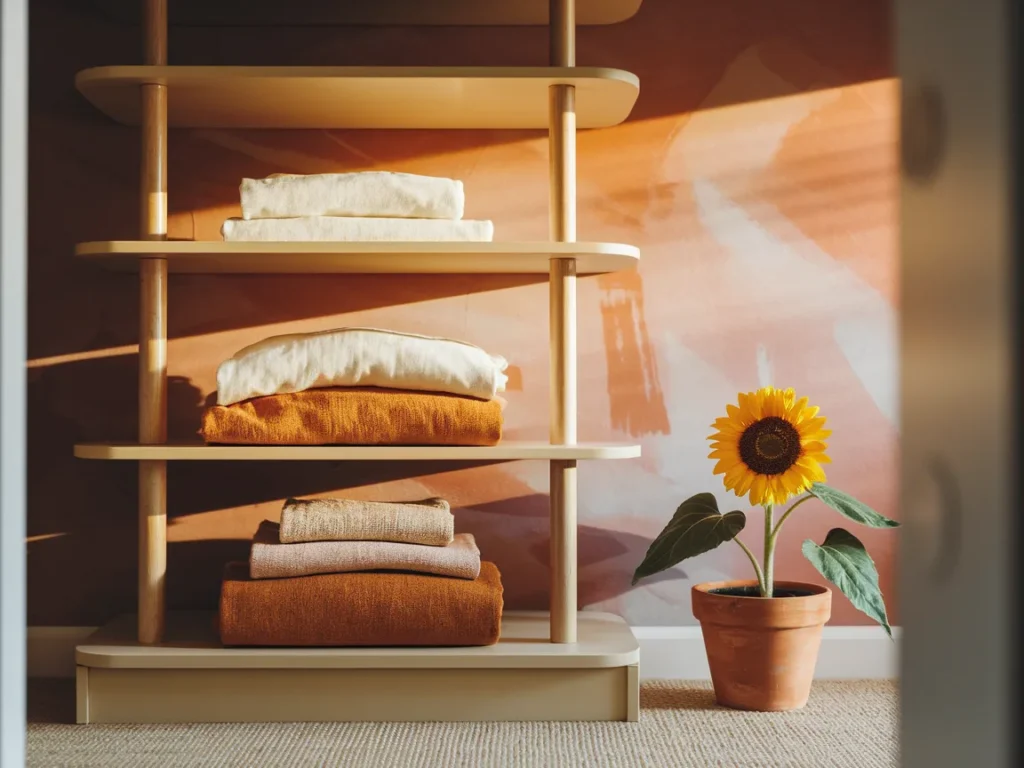
Shelf risers double storage space by adding a second level inside a closet or cabinet. I used risers for shoes, folded clothes, and storage baskets. This helped prevent messy piles because each layer stayed flat and easy to reach. Shelf risers work best for small dorm closets with one long shelf.
Closet shelves in dorms are always too tall for what sits on them, wasting half the height. A wire or bamboo shelf riser splits one tall shelf into two usable levels: folded clothes below, accessories or bins above. I measure the shelf height first and buy risers that leave at least an inch of clearance above the tallest item. The freestanding kind (no screws) is the only option in dorms, and they work fine as long as you do not overload them. Keep heavy items on the original shelf and light items on the riser. A riser loaded with textbooks will bow and eventually collapse; it is for t-shirts and hats, not textbooks.
Desk Drawer Dividers For School Supplies
Desk drawer dividers keep small school supplies from turning into a messy pile. I used dividers for pens, chargers, sticky notes, and scissors. This made the desk feel cleaner because I could grab what I needed fast. Drawer dividers work best when sections stay simple, so items do not mix.
Dorm desk drawers are deep, dark junk magnets without dividers. I use adjustable bamboo or plastic dividers to create zones: pens and pencils, chargers and USB drives, sticky notes and paper clips, personal items. The rule is one category per zone, no exceptions. When a zone starts holding random stuff, that is the signal to declutter, not to buy a bigger organizer. I also keep a small tray on the desk surface for the three items I use constantly (pen, highlighter, phone), so the drawer stays for storage rather than becoming a rummage bin. A divided drawer saves five minutes of digging every single day, which adds up fast during finals.

Storage Baskets For Clean Shelf Styling
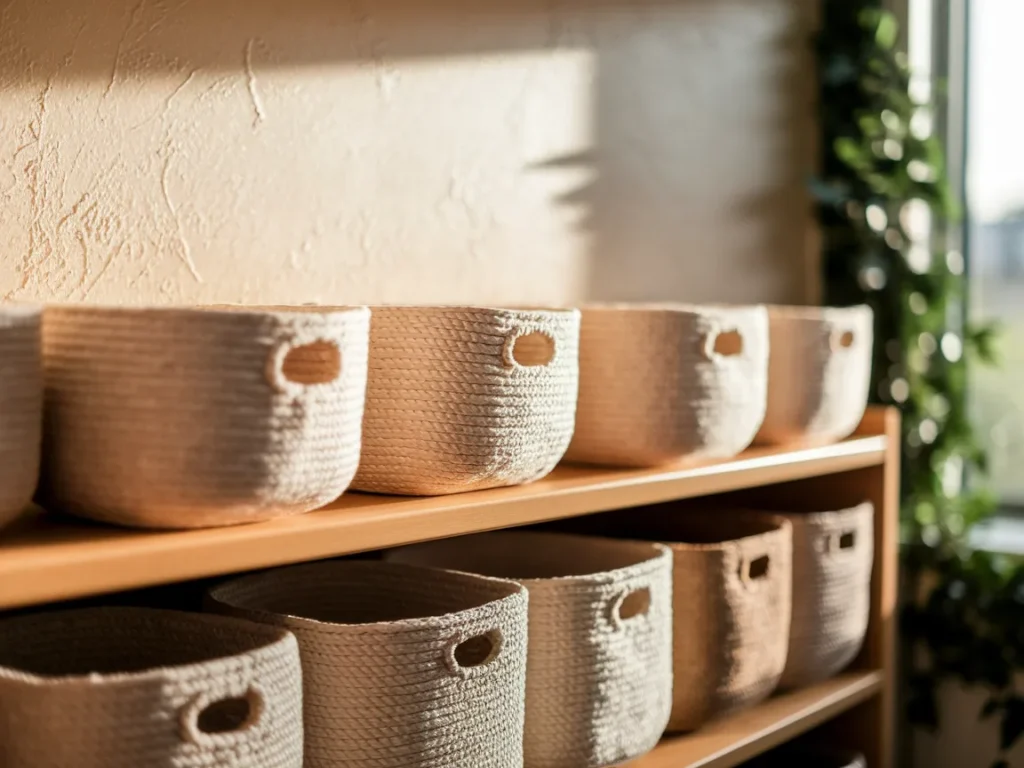
Storage baskets make shelves look organized while hiding clutter. I used baskets for skincare, snacks, cords, and notebooks. This helped the dorm feel more aesthetic because random packaging stayed out of sight. Neutral baskets work best because they match most dorm decor styles.
Baskets make open shelves look intentional instead of cluttered, which matters because dorm shelving is always visible. I use matching baskets in a natural material (seagrass, cotton rope) for anything on display, and save the plastic bins for hidden spots like under the bed. The visual trick is consistency: three matching baskets look styled, three different baskets look like leftovers. Size the basket to the shelf with an inch of clearance on each side so they slide in and out easily. Label the front edge discreetly. And be honest about what goes in display baskets: pretty categories (skincare, notebooks) on display, ugly necessities (cleaning supplies, meds) hidden.
Command Hook Wall Zone For Bags And Keys
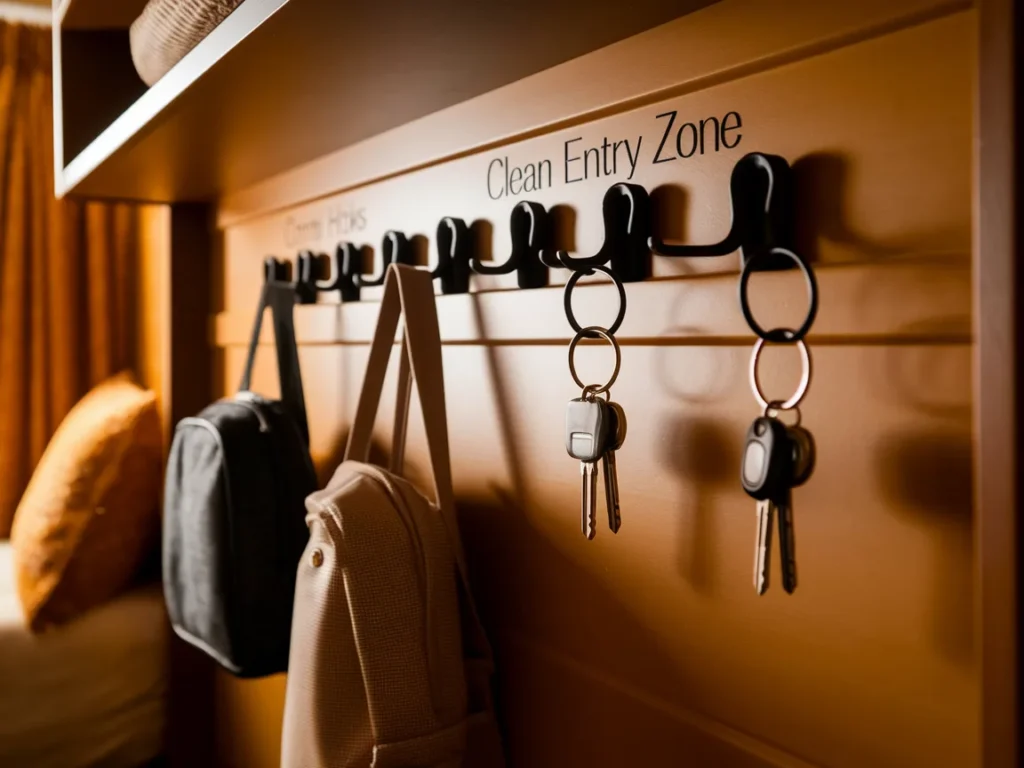
Command hooks create a wall zone for bags, keys, and daily items without using floor space. I used hooks near the door so essentials stayed easy to grab. This reduced clutter on chairs and desks. Hooks work best when each hook has one purpose, like “bag,” “jacket,” or “lanyard.”
A dedicated hook zone by the door ends the lost-keys panic and the backpack-on-the-floor habit in one move. I mount three to five large Command hooks in a row at 60 inches high: backpack, jacket, keys, tote. The large size matters; medium hooks pop off under a loaded backpack within days. Follow the instructions exactly: clean the wall with alcohol, press for 30 seconds, wait an hour before hanging. Skipping the wait time is why most Command hooks fail. On move-out, pull the tab slowly straight down, never toward you. Done right, they remove cleanly and your deposit survives. I also keep one hook inside the closet for the laundry bag, so it is never on the floor.
Laundry Sorting Hamper Setup
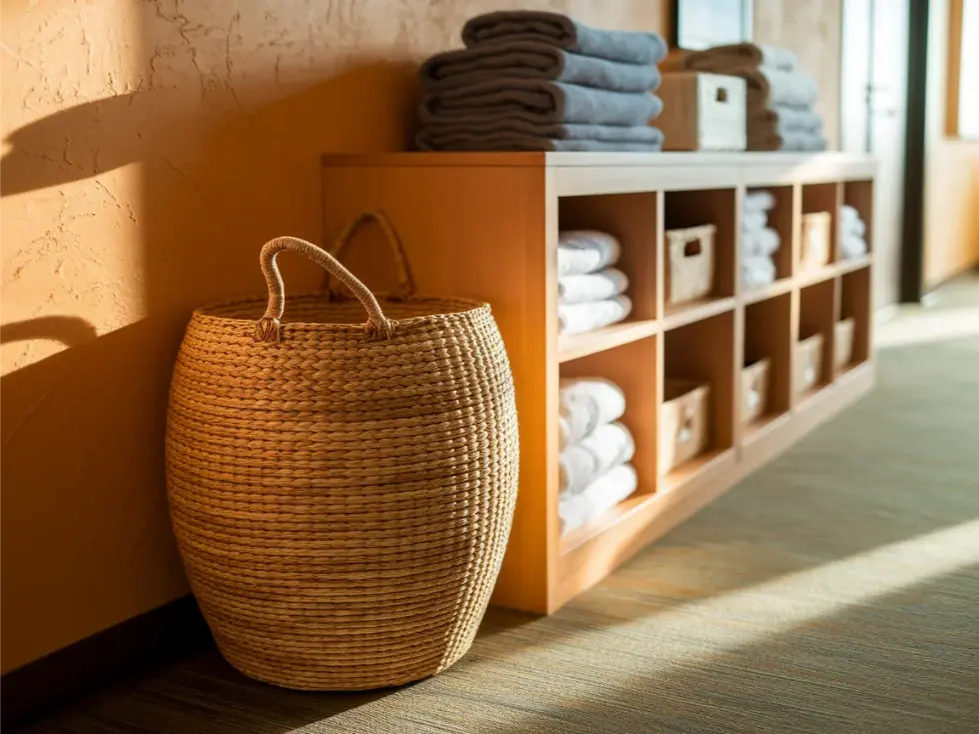
A laundry sorting hamper setup keeps dirty clothes from spreading across the room. I used a two-section hamper so lights and darks stayed separated. This made laundry days faster and kept the dorm cleaner. A slim hamper works best in small spaces near the closet or door.
Laundry is where dorm organization goes to die, so I build the system around laziness. A divided hamper with two or three sections (lights, darks, delicates) means sorting happens at toss-in time, not on laundry day. The hamper should have handles or be a backpack style, because you will carry it to the laundry room and a rigid hamper is awkward on stairs. I keep detergent pods and dryer sheets in a small caddy clipped to the hamper handle, so the whole laundry kit travels as one unit. Set a schedule (I like Sunday and Wednesday) and stick to it. The system only works if the hamper never overflows, because an overflowing hamper means clothes migrate to the floor and then to the chair.
Mini Fridge Top Shelf Tray System
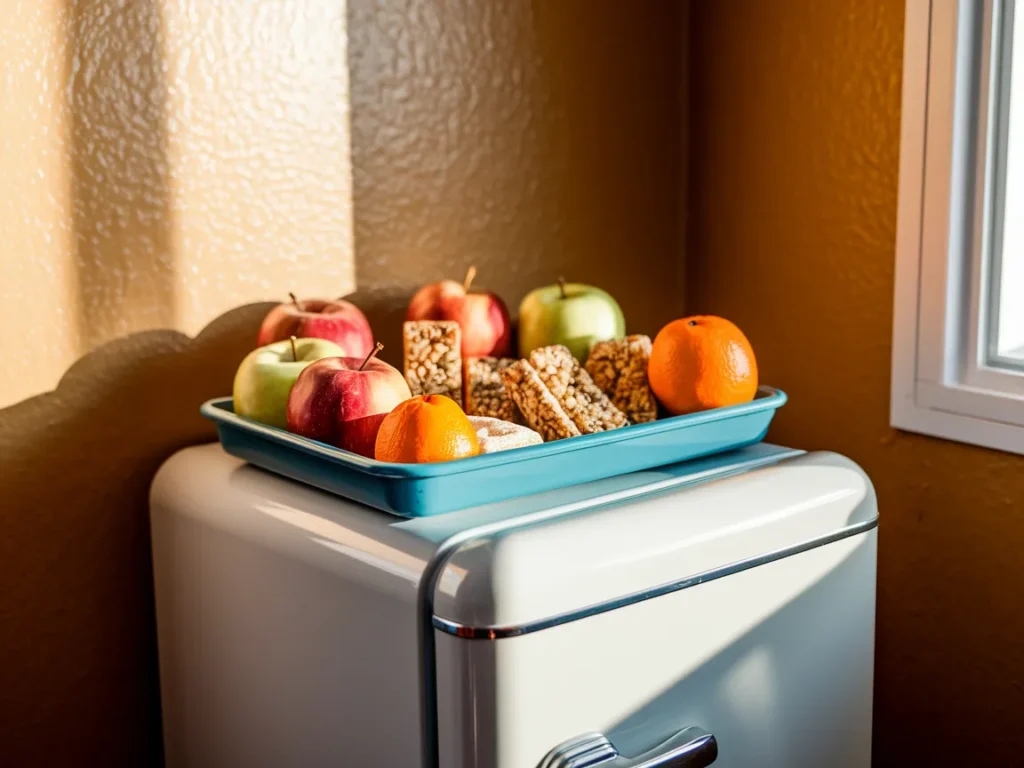
A mini fridge top tray system keeps snacks and daily items organized on top of the fridge. I used a tray for protein bars, cups, and small kitchen tools. This made the fridge area look clean instead of cluttered. A tray also makes it easier to wipe the surface fast.
The top of the mini fridge is wasted space in most dorms, but it is prime real estate at exactly the right height. I put a small tray or low basket on top to corral the items that otherwise slide off: Brita pitcher, fruit bowl, vitamins, a small plant. The tray keeps everything contained and makes wiping crumbs a one-lift job. Do not block the fridge’s ventilation: leave the back and sides clear, and never put anything heat-generating (like a coffee maker) directly on top without checking the manual. Keep the total weight light. A mini fridge top is not a shelf; it is a tray zone. Heavy textbooks up there will dent the top and stress the hinges over time.
Labels For Fast Item Finding
Labels help dorm storage stay organized long-term. I used simple labels like “snacks,” “cleaning,” and “tech.” This helped me find items fast and also helped roommates follow the system. Labels work best when they stay short and consistent.
Labels are the difference between a storage system and a pile of bins. I label everything that is not transparent: bin ends, basket fronts, drawer zones, shelf edges. A basic label maker beats handwriting for consistency, and consistent labels look intentional rather than chaotic. Keep label text short: category names, not sentences. ‘Snacks’ beats ‘Snacks and candy and granola bars.’ Review labels monthly, because categories drift: the bin labeled ‘school supplies’ slowly becomes ‘random stuff’ unless you correct it. This sounds obsessive, but labeled systems are the ones roommates actually maintain, because nobody has to guess where things go.
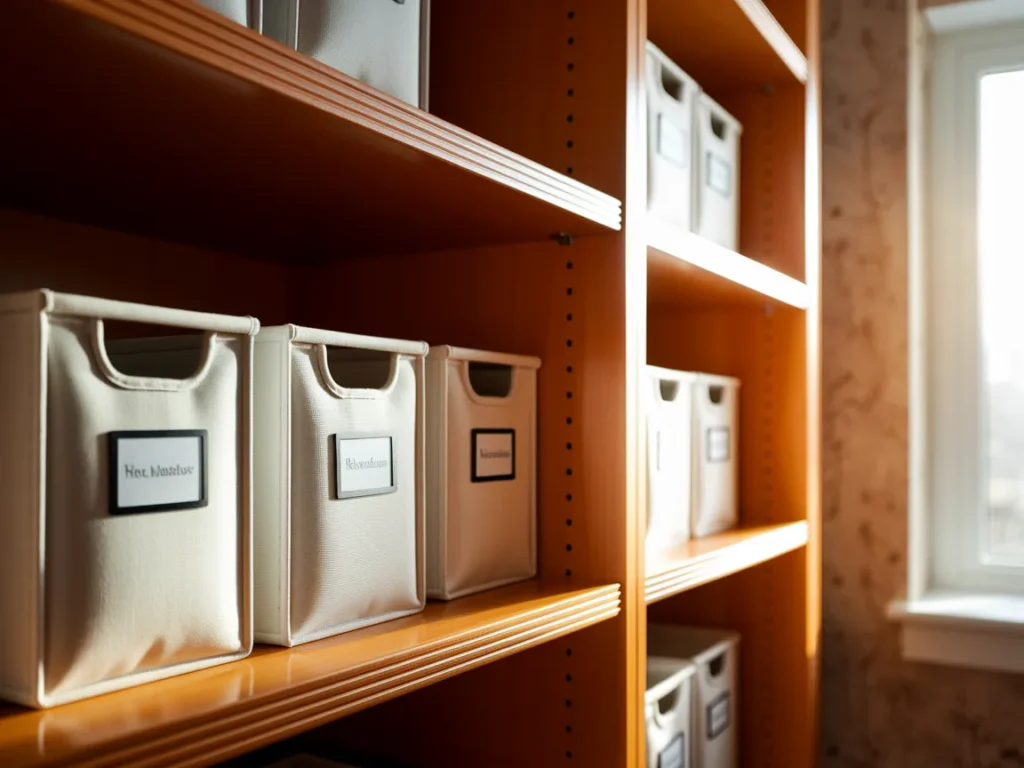
Final Dorm Storage Rule
The final dorm storage rule is to store items based on daily use. I kept daily items within reach, weekly items in drawers or bins, and rarely used items under the bed. This stopped clutter from building up on surfaces. When storage matched routine, the dorm stayed clean with less effort.
Here is the rule that makes all fourteen ideas work: everything you own needs a named home, and anything without a home leaves the room. Every semester I do a move-in audit with this question for each item: where does this live? If I cannot answer in three seconds, the item is a clutter candidate. This rule also stops overbuying. Before purchasing any new storage product, I identify the specific homeless category it will house. No category, no purchase. Dorm rooms stay organized through decisions, not containers. The containers just make the decisions visible. For keeping the whole room (not just storage) in shape, my dorm room essentials list pairs well with this system.
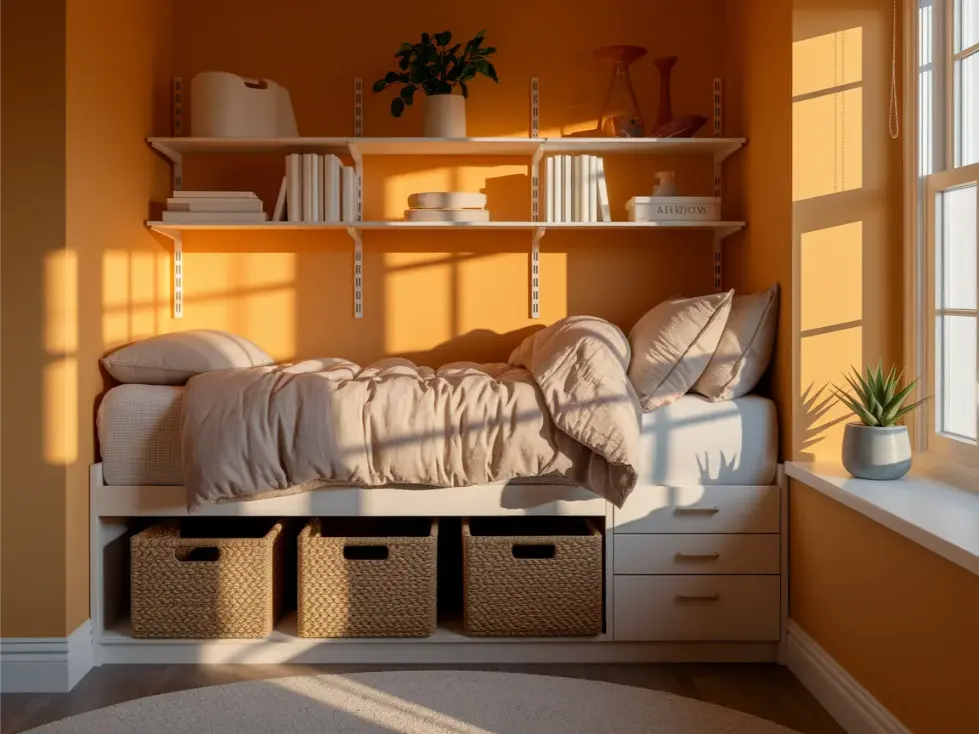
Frequently Asked Questions
What Is The Best Storage For Small Dorm Rooms?
Under-bed bins, hanging organizers, and over-the-door pockets work best. These items use hidden and vertical space instead of taking floor space. They also keep clutter out of sight.
How Do I Keep A Dorm Room Organized All Semester?
Use simple storage categories and reset weekly. Baskets, labels, and one hamper system prevent clutter from spreading. Keeping surfaces clear also makes the room easier to maintain.
What Storage Items Help Most With Dorm Room Aesthetic?
Clear bins, neutral baskets, and matching containers help most. They reduce visual mess and make shelves look cleaner. Minimal labels also improve the look.
How Do I Create More Storage Without Buying Furniture?
Use bed risers, shelf risers, and hooks. These tools create extra space using the room’s existing structure. They also keep the dorm layout open and functional.
How Do I Share Storage Fairly With A Roommate?
Divide by zone, not by item. Each person gets their own under-bed area, closet side, and desk drawers, plus one shared zone (like a snack shelf) with clear halves. Label whose is whose on day one. The fights start when zones blur, so I also recommend a quick Sunday reset where each person tidies only their own zones. Shared rooms stay peaceful when boundaries are physical and visible.
What Storage Should I Buy Before Move-In Day?
Buy the universal stuff early: bed risers (if allowed), under-bed bins, a shower caddy, and Command hooks. Wait on everything else until you see the actual room, because closet sizes and bed heights vary wildly between dorms. I have seen students arrive with a car full of organizers that fit nothing. Measure first, buy second, and keep receipts for the first two weeks.
Final Thoughts
Dorm room storage works best when it uses hidden space, vertical space, and clear categories. I got the best results with under-bed bins, hanging organizers, baskets, and a rolling cart for daily items. Simple labels helped the system stay organized all semester. When storage matches daily routine, the dorm stays clean, calm, and easy to manage every week.
Do not buy all fifteen solutions before you move in. Start with the big three: under-bed bins, a door organizer, and drawer dividers. Live in the room for two weeks, notice where clutter actually accumulates, then buy specifically for those problems. The best dorm storage system is the one built around your real habits, not a Pinterest-perfect ideal. And when the room itself needs a style upgrade to match the organization, my DIY dorm decor ideas on a budget will make it look as good as it functions.