


I have built home gyms in a garage, a spare bedroom, and a corner of my living room, and I can tell you the equipment matters less than the order you buy it in. Most people blow their budget on a flashy machine first and then have no money left for the basics they will actually touch daily. I made that mistake with a cable machine that became a very expensive coat rack. The fifteen essentials below are the pieces I reach for week after week, in the order I would buy them if I were starting from zero today. Everything here fits in a small space, covers real training needs, and earns its floor space.
15 Home Gym Equipment List
- Adjustable dumbbells
- Resistance bands set
- Adjustable workout bench
- Yoga mat or exercise mat
- Kettlebell
- Pull-up bar
- Jump rope
- Door anchor for bands
- Foam roller
- Stability ball
- Core sliders
- Push-up handles
- Weighted vest
- Gym timer or interval app setup
- Final equipment rule
Adjustable Dumbbells
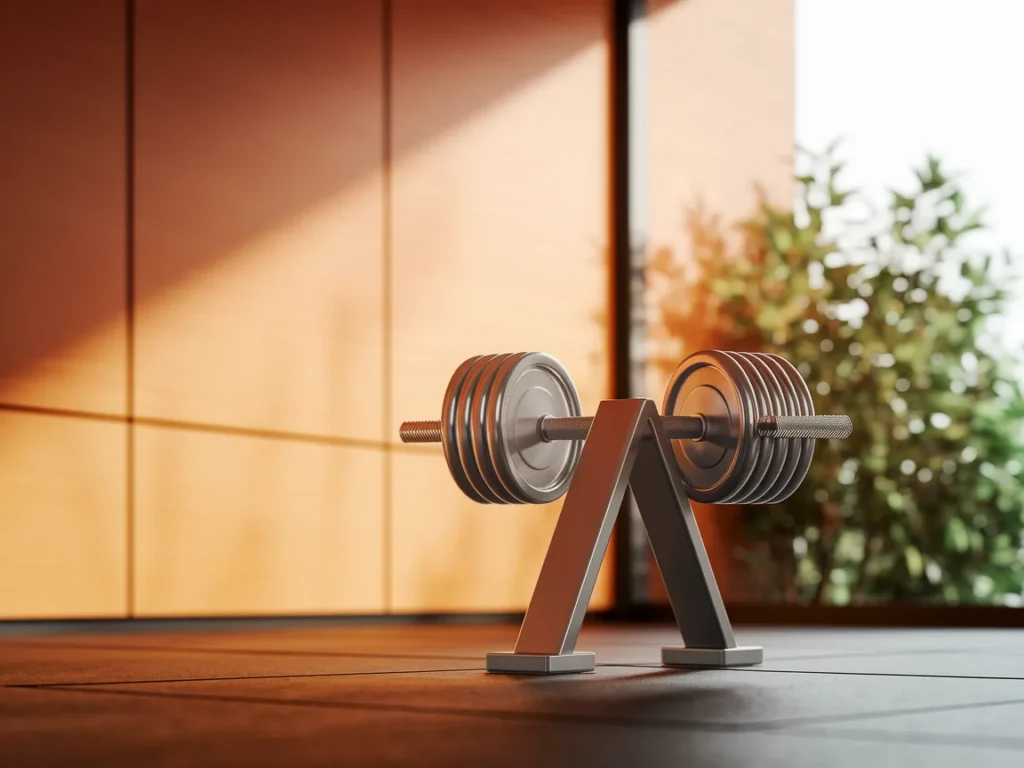
If you buy one thing for a home gym, make it adjustable dumbbells. A single pair replaces an entire rack of fixed dumbbells, going from 5 to 52 pounds with a dial twist, which means they cover everything from warm-ups to heavy presses in four square feet of floor. I wasted a year with a cheap fixed set that topped out too light before switching, and my training changed overnight. Look for a dial-adjust mechanism rather than spin-lock collars: changing weight in three seconds keeps your workout flowing, while spin locks kill momentum between sets. The good ones cost 300 to 500 dollars for the pair, which stings once and then saves you buying five separate sets. Check the handle grip diameter too, because fat handles fatigue small hands fast. These are the backbone of any home gym setup, and everything below builds on them.
Resistance Bands Set
Resistance bands are the most underrated twenty dollars in fitness. I keep a full set, light through extra-heavy, and use them for warm-ups, assisted pull-ups, mobility work, and travel workouts. The flat loop bands are best for lower body and the tube bands with handles work better for pressing and rowing movements. Buy layered latex bands rather than molded single-layer ones: they resist snapping far longer and the resistance curve feels smoother. Inspect them monthly for nicks and small tears, because a snapped band mid-rep is genuinely dangerous, and replace any band showing wear. Store them out of direct sunlight, which degrades latex fast. For apartment dwellers these are gold, since they deliver a real workout with zero noise for downstairs neighbors.

Adjustable Workout Bench
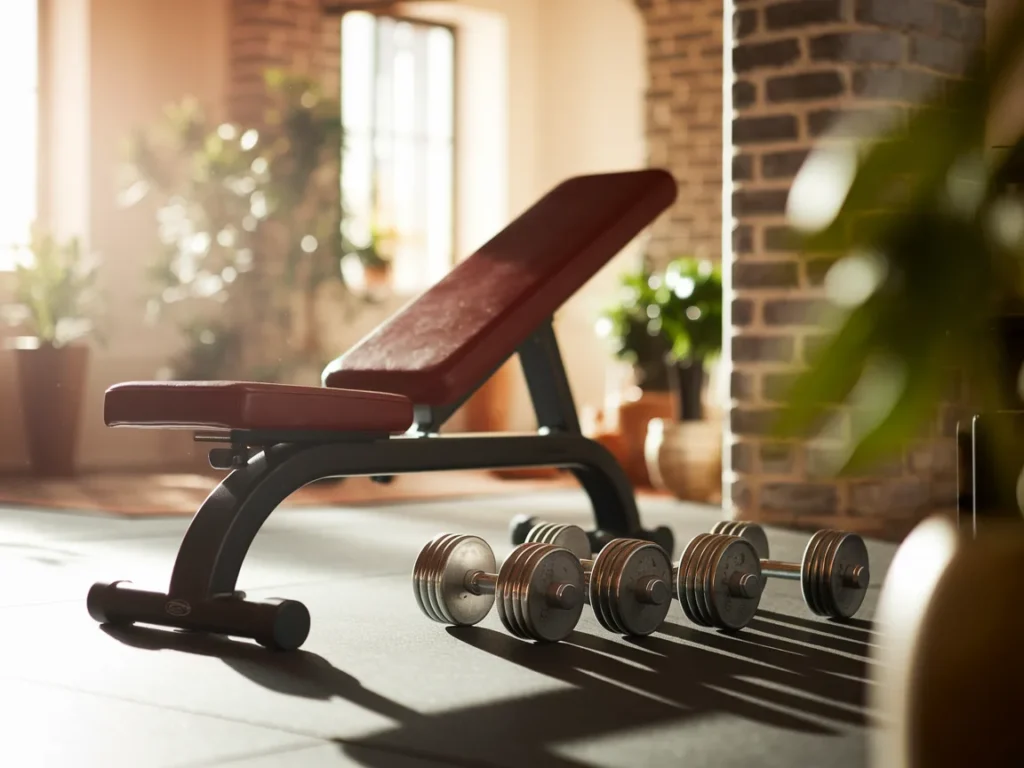
A good adjustable bench multiplies what your dumbbells can do. Flat, incline, and decline positions open up chest, shoulder, and row variations that flat-only benches cannot touch. I bought a cheap wobbly bench first and it scared me on every heavy set, then upgraded to a 600-pound-rated bench with a ladder-style adjustment and never thought about it again. The pad should be at least 4 inches wide with firm dense foam: too soft and your shoulders sink, too narrow and you feel unstable. Check that the bench is stable in the incline position with weight on it, not just flat. It folds or stands upright for storage in most models, taking about 2 by 4 feet in use. Budget 150 to 250 dollars: this is not the piece to cheap out on, because a failing bench fails underneath you.
Yoga Mat Or Exercise Mat
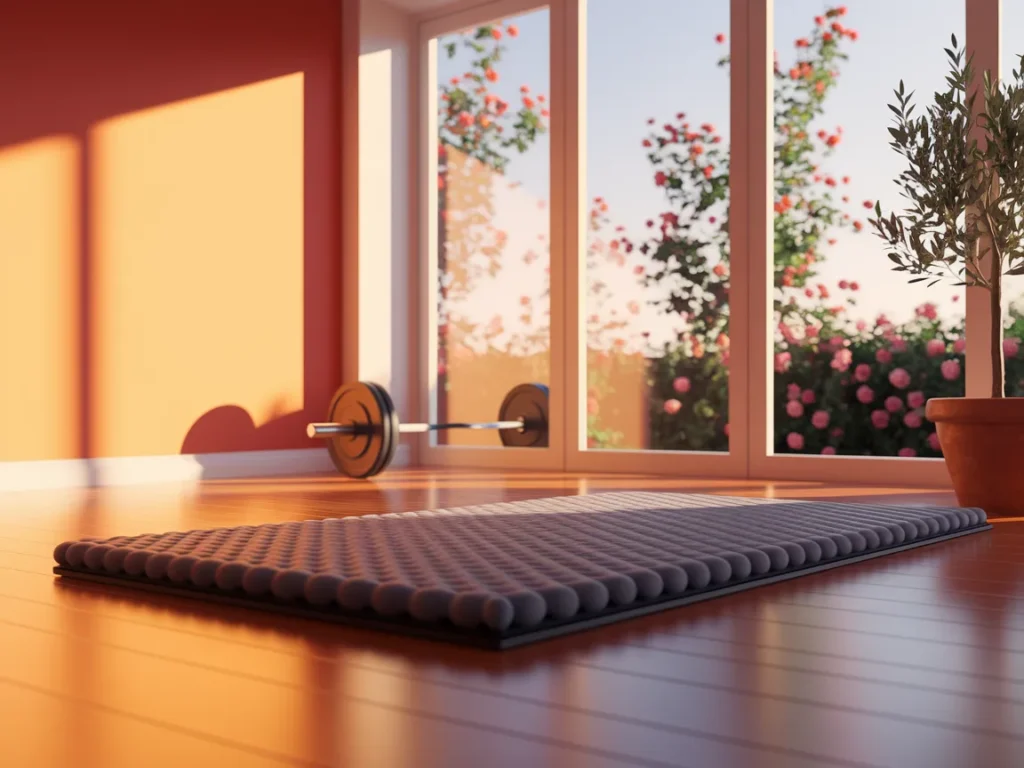
You will spend more time on your mat than on any other surface, so do not use a five-dollar yoga mat for daily training. I use a 6mm high-density exercise mat, thick enough to protect knees during floor work but firm enough that you do not wobble on standing moves. For heavy lifting areas, interlocking foam tiles or a dedicated lifting platform beat a mat entirely. The mat’s job is comfort and hygiene: it defines your workout zone and keeps you off cold concrete. Look for closed-cell material that wipes clean, because open-cell foam absorbs sweat and starts smelling within weeks. If your gym is in a garage, the mat also insulates against the cold floor in winter. Roll it, do not fold it, and it will last years. For the flooring underneath, my home gym flooring ideas cover what works under heavy gear.
Kettlebell
One kettlebell does the work of three machines for conditioning and posterior chain training. I started with a single 35-pound bell and it covered swings, goblet squats, rows, and carries for my first year. Buy cast iron with a powder-coated finish, not vinyl-coated: the coating chips and the handle gets slippery with sweat. The handle should be wide enough for two hands on swings but not so wide it bangs your wrists on cleans. Start lighter than your ego suggests, because kettlebell technique matters more than load and bad form with a heavy bell hurts backs. One bell is enough to begin; add a second heavier one only when swings get easy. At 50 to 100 dollars depending on weight, it is the best conditioning value in this whole list.

Pull-Up Bar
A doorway pull-up bar is the cheapest upper-body builder you can own. Mine cost 35 dollars, installs with leverage and no screws, and has survived three years of daily use. It works the back, biceps, and grip in ways dumbbells cannot fully replicate. Before buying, measure your door frame: most bars fit 24 to 36 inch frames and need solid wood trim, not hollow metal. Test it with a dead hang before doing full reps, and check the foam grips monthly for compression. If you cannot do a full pull-up yet, the bar still earns its place: loop a resistance band over it for assisted reps, or just do dead hangs for grip strength. The most common mistake is mounting it too low, you want full arm extension without your knees hitting the floor.
Jump Rope
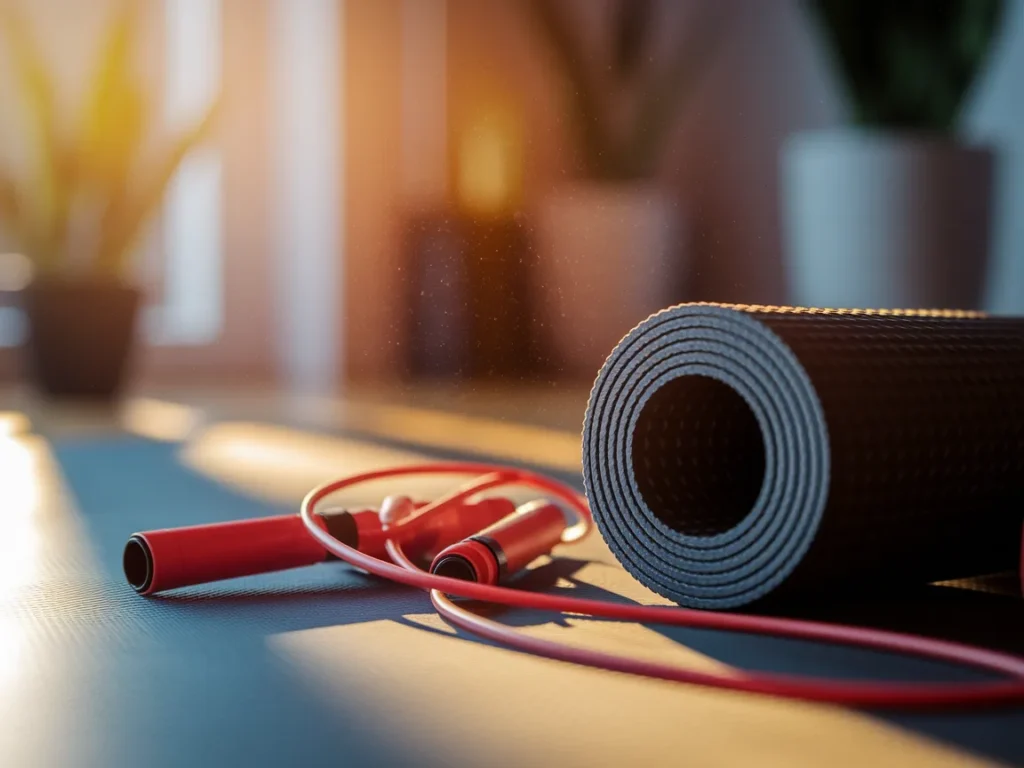
A jump rope is ten dollars, fits in a drawer, and delivers the best cardio per minute of anything here. I use mine for warm-ups and conditioning finishers, and three minutes of intervals will humble anyone. For indoor home gyms, get a rope with adjustable length and ball-bearing handles: the smooth spin matters more than the rope material. Size it by standing on the center: the handles should reach your armpits. If you have low ceilings, do your jumping outside or in the garage, because whipping a ceiling fan is a rite of passage nobody needs. Weighted ropes add intensity once the basics are easy. This is also the perfect travel piece: it turns any hotel room or park into a cardio session with zero setup.
Door Anchor For Bands
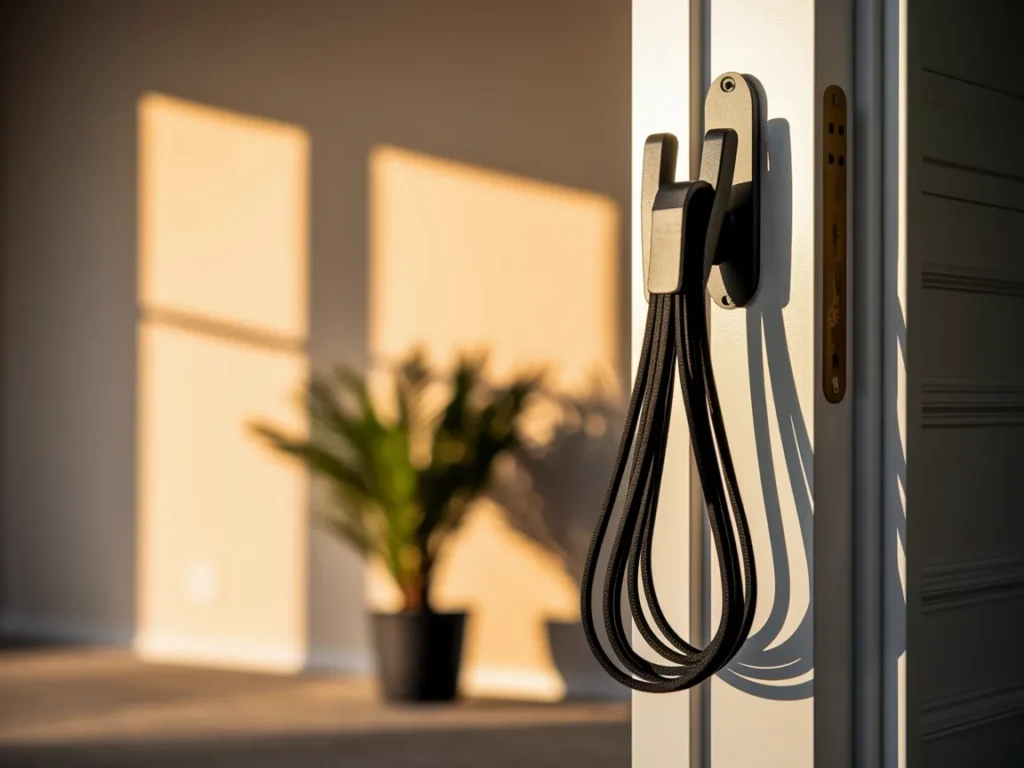
A door anchor turns your resistance bands into a cable machine. It is a small reinforced strap that wedges into any door frame, giving you a high, middle, and low anchor point for rows, presses, and rotations. I anchor mine in the bedroom door and get a full pulling workout that balances all the pushing from dumbbell presses. The safety rules are simple but absolute: always anchor on the hinge side of the door, never the handle side, and only use it on doors that close and latch firmly. Test with a hard pull before every session. At under 15 dollars it is almost free, and it is the piece that makes bands genuinely sufficient for back training. Pair it with the band set from item two and you have covered every plane of motion.
Foam Roller
Foam rolling is the unglamorous habit that keeps you training consistently. I roll for five minutes after every session, focusing on quads, glutes, and upper back, and it has cut my next-day soreness noticeably. Get a standard 18-inch high-density roller: the knobby textured ones look serious but are miserable for beginners and gather dust. Density matters more than texture. Roll slowly, about an inch per second, and park on tender spots for twenty seconds rather than racing over them. Avoid rolling directly on joints, the lower back, or anywhere with sharp pain, those need a professional, not a roller. At 20 to 30 dollars it is cheap insurance for training longevity, and it doubles as a core training tool for dead bugs and bridges.

Stability Ball
A stability ball looks like a toy and works like a serious training tool. I use mine for hamstring curls, stir-the-pot core work, and as a bench substitute for dumbbell presses, which adds an instability challenge that lights up stabilizers. Size it to your height: when you sit on it, your knees should be at roughly 90 degrees, which usually means 65cm for most adults. Buy burst-resistant rated to at least 500 pounds and inflate it fully, because an under-inflated ball is unstable in the wrong way. Keep it away from the dumbbell area, because one dropped weight ends the ball. At 20 to 35 dollars it is also the cheapest way to add genuine core variety beyond crunches, which your spine will appreciate.

Core Sliders
Core sliders are two small discs that turn bodyweight into a serious core and conditioning workout. I use them for mountain climbers, body saws, and hamstring curls, and they deliver the kind of deep core burn that crunches never reach. Get the dual-sided kind: smooth plastic for hard floors, fabric for carpet. They cost about 15 dollars and store in a drawer. The key technique point is bracing: if your lower back sags during slider moves, shorten the range until you can hold form. These also double as furniture movers, which is a handy bonus when rearranging the gym. For anyone short on space, sliders plus the mat from item four create a complete core station in zero dedicated square footage.

Push-Up Handles
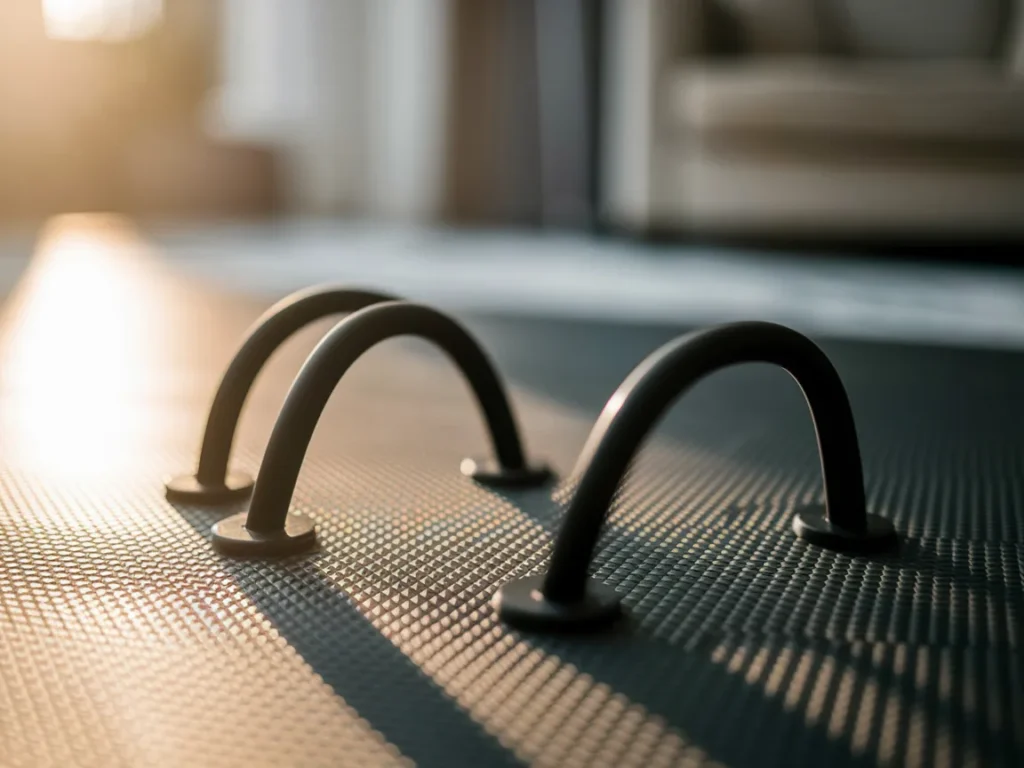
Push-up handles seem minor until your wrists thank you. They let your wrists stay neutral instead of bent back at 90 degrees, which matters enormously once you are doing real volume. I switched after developing wrist soreness from high-rep push-up challenges, and the discomfort vanished within two weeks. Look for handles with a wide stable base and foam or rubber grips: narrow wobbly handles are worse than the floor. They also increase range of motion slightly, giving your chest a deeper stretch at the bottom. Rotating handles exist and feel great, but fixed ones are sturdier and cheaper at 15 to 25 dollars. Small piece, outsized joint-health payoff, which is exactly the kind of essential that belongs on this list.
Weighted Vest
A weighted vest turns every bodyweight move into a loaded one: walks, push-ups, squats, and carries all get harder without any new technique to learn. I use a 20-pound vest for daily walks and it transformed a casual stroll into genuine training. Buy one with adjustable weight in small increments, because jumping straight to 40 pounds wrecks joints and form. The vest should sit high on the torso and strap snugly: a bouncing vest chafes and throws off balance. Start with 10 percent of bodyweight and add slowly. One caution: skip running in a vest until you have months of walking base, because the impact multiplies fast. At 50 to 100 dollars, it is the simplest progressive overload tool for anyone who prefers bodyweight training.

Gym Timer Or Interval App Setup
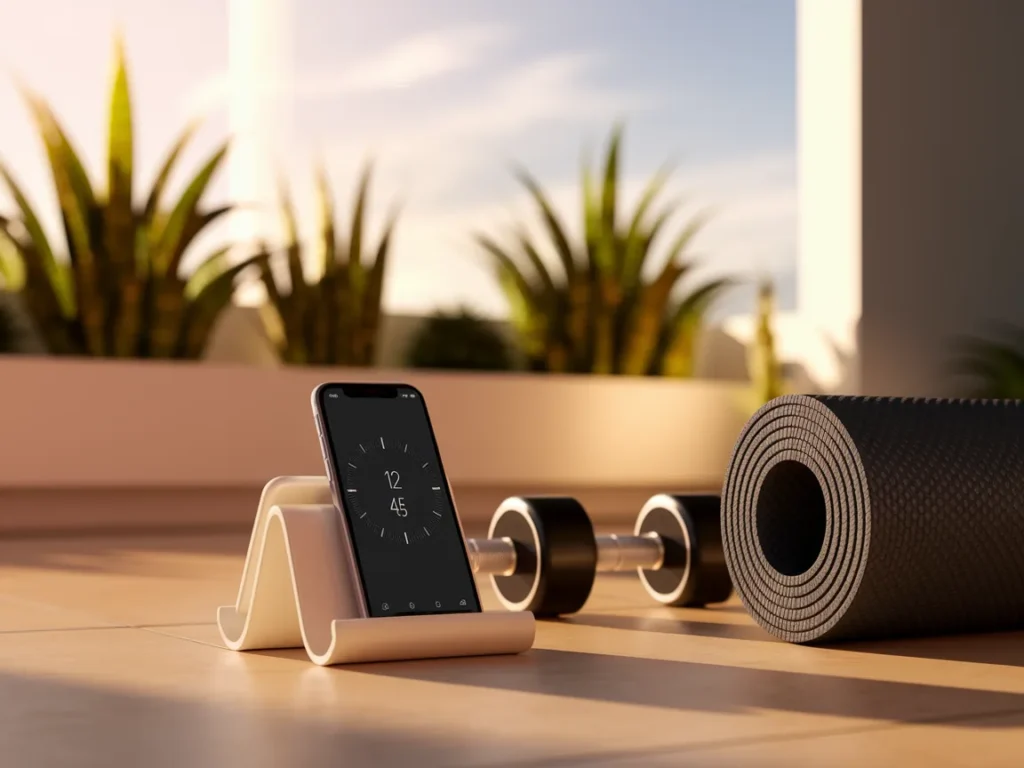
A gym timer sounds optional until you try interval training with a phone stopwatch. I mounted a simple interval timer app setup on an old tablet in my gym, and it runs my EMOMs, Tabatas, and rest periods without me touching anything mid-workout. The key features are loud beeps, big visible numbers, and programmable work-rest rounds: free apps like Seconds or Tabata Timer cover all of it. A dedicated gym clock costs 30 to 100 dollars and is nice, but a wall-mounted old tablet does the same job for free. Position it where you can see it from the floor during core work, not just standing. This is the piece that turns random exercising into structured training, because what gets timed gets done. If your gym is in the garage, my garage home gym ideas include smart layout tips for the timer and everything else.
Final Equipment Rule
Here is the rule that ties this whole list together: buy in order, master each piece, and stop when you stop using something. I have watched too many people buy all fifteen items at once, get overwhelmed, and use none of them. Start with the dumbbells, bands, and mat. Add the bench when pressing gets serious. Add the rest only as your training demands it. Every item on this list earned its place in my gyms over years, but your gym should grow with your habits, not ahead of them. Fifteen essentials sounds like a lot until you realize they all fit in a parking space and cost less than two years of a commercial gym membership. Start with three, and let the results pull you forward.
Frequently Asked Questions
What Home Gym Equipment Should I Buy First?
Start with adjustable dumbbells, resistance bands, and an exercise mat. Those three cover strength, assistance work, mobility, and conditioning for under 400 dollars total and fit in a closet. Add an adjustable bench next when your pressing outgrows the floor. Everything after that, the kettlebell, pull-up bar, and beyond, should be bought in response to your training, not in anticipation of it. The mistake is buying the full list on day one: master the basics for two months first, and you will know exactly what you need next because your workouts will tell you.
Do I Need A Bench For A Home Gym?
Not at first, but you will want one within a few months. Floor pressing works fine while you are learning, but a bench unlocks incline and decline angles plus proper dumbbell rows, which together cover far more muscle. I trained three months without one and plateaued on chest development until the bench arrived. When you buy, get a 600-pound-rated adjustable bench with firm padding, not the cheapest flat bench, because a wobbly bench limits how heavy you can safely go. It is the fourth purchase in my recommended order for a reason: dumbbells, bands, mat, then bench.
What Is The Best Cardio Equipment For Small Spaces?
A jump rope, which costs ten dollars and makes zero noise complaints beyond your own ceiling. For small spaces it is unbeatable: three minutes of intervals delivers serious conditioning in the footprint of a doormat. Kettlebell swings are the runner-up for small spaces, giving you strength and cardio in one move with minimal floor area. If you have downstairs neighbors, stick with the rope on a mat plus band work, which is nearly silent. Avoid treadmills and bikes for small spaces until you are sure of the commitment: they dominate the room and become coat racks at an alarming rate.
How Do I Keep A Home Gym Clean And Organized?
Three habits keep it clean: wipe down the bench and mat after every session with a simple spray, keep a small trash bin and towel hook in the gym zone, and return every piece to its spot before you leave. I store bands on hooks, dumbbells on a small rack, and the mat rolled in the corner, which keeps the whole gym to a tidy 6 by 8 foot zone. Vacuum or sweep weekly, because garage and spare-room gyms collect dust that ends up on everything. For rubber flooring areas, a damp mop monthly prevents the grime buildup that makes home gyms feel dingy. A clean gym gets used more: that part is psychological but it is real.
Final Thoughts
Fifteen pieces of equipment sounds like a lot until you remember they replace a commercial gym membership, a commute, and every excuse you ever had. Start with the dumbbells, bands, and mat, add the bench when you are ready, and let your training tell you what comes next. Buy quality on the pieces that hold your bodyweight and go budget on the accessories. Keep it clean, keep it simple, and train consistently: the best home gym is not the biggest one, it is the one you actually walk into five days a week. Mine started in a living room corner, and it changed how I train forever.