


Home gym flooring protects your joints, reduces noise, and helps keep equipment stable. I tested different flooring setups at home, and the best results came from using the right flooring for the workout type, not just the look. A good floor also makes the gym feel more “real,” which helped me stay consistent.
15 Home Gym Flooring List
- Rubber interlocking tiles for full coverage
- Thick rubber rolls for heavy lifting
- EVA foam tiles for light workouts
- Yoga mat zone for stretching
- Extra-thick mat under squat rack area
- Flooring for dumbbell drop protection
- Waterproof flooring for garage gyms
- Carpet cover layer for noise control
- Vinyl floor with rubber top layer
- Cork flooring for quiet comfort
- Turf strip for sled and sprint drills
- Floor marking tape for workout zones
- Wall-to-wall flooring for small rooms
- Easy-clean flooring setup rule
- Final flooring safety rule
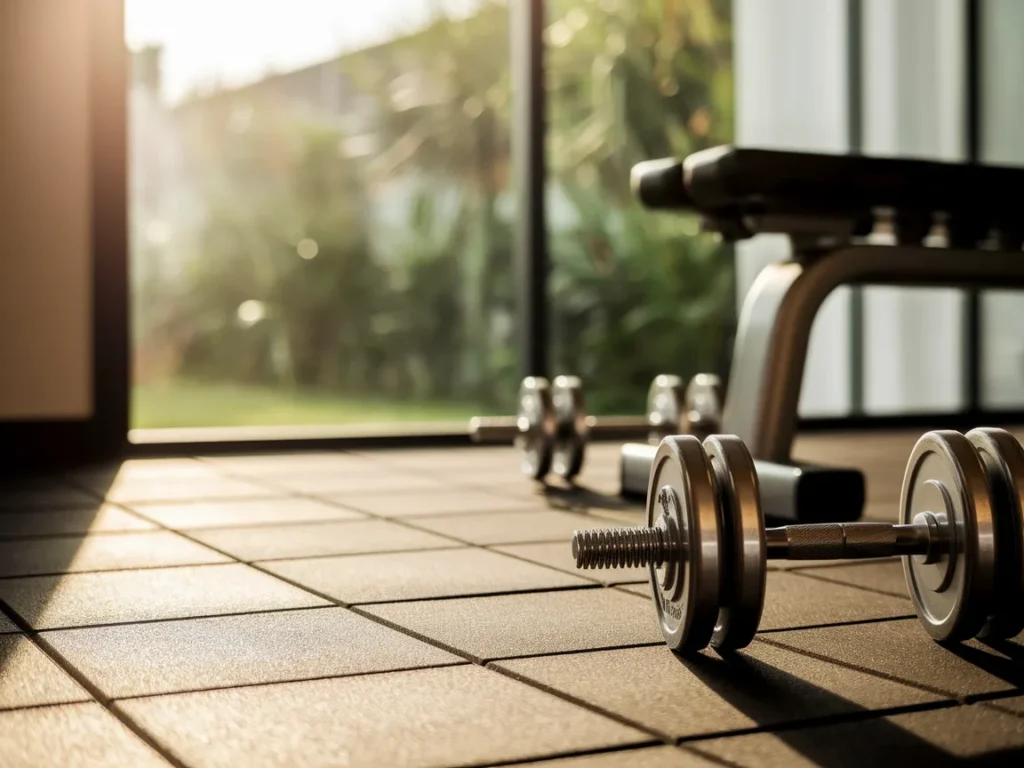
Rubber Interlocking Tiles For Full Coverage
Rubber interlocking tiles are one of the best home gym flooring options because they balance grip, protection, and easy setup. I used these tiles first because they snapped together fast and covered the full gym area without tools. Rubber also reduced noise from walking and shifting weights. The surface felt stable during squats and lunges, and it stayed safe for quick cardio moves. Interlocking tiles worked best when I used a thicker style, so the floor stayed firm and did not slide. This flooring option also makes the gym look clean and organized because seams stay straight.
Thick Rubber Rolls For Heavy Lifting
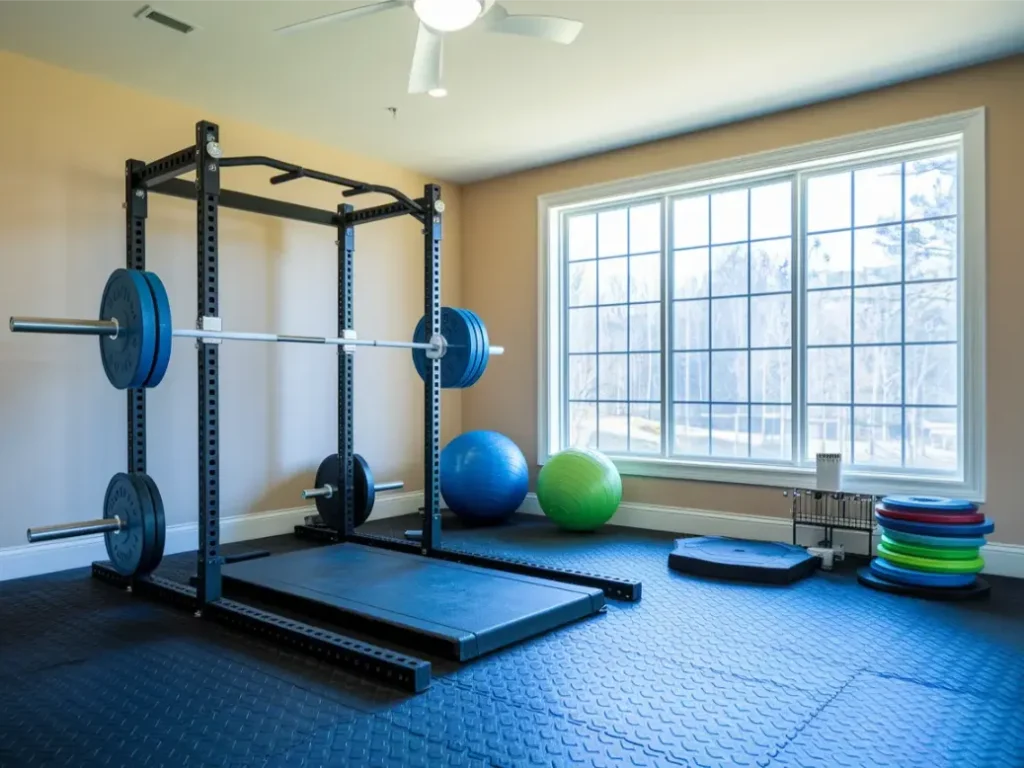
Thick rubber rolls work best for heavy lifting zones because they add strong impact protection. I used rubber rolls under my main lifting area since they stayed flat and did not shift like small tiles. This helped keep the floor stable for deadlifts and heavy dumbbell work. Rubber rolls also reduce sound better because the surface stays continuous without gaps. This option looks clean when installed edge-to-edge and it feels more professional. Rubber rolls are a strong choice when the home gym has a dedicated lifting zone.
EVA Foam Tiles For Light Workouts
EVA foam tiles work well for light workouts like stretching, core work, and beginner training. I tested foam tiles in a small workout corner because they felt softer under knees and hands. This made planks and floor exercises more comfortable. Foam tiles also work well for low-impact workouts like Pilates and bodyweight circuits. The main limit is heavy weights because foam compresses under pressure. For a light home gym setup, EVA foam flooring gives comfort and basic protection with easy install.
Yoga Mat Zone For Stretching
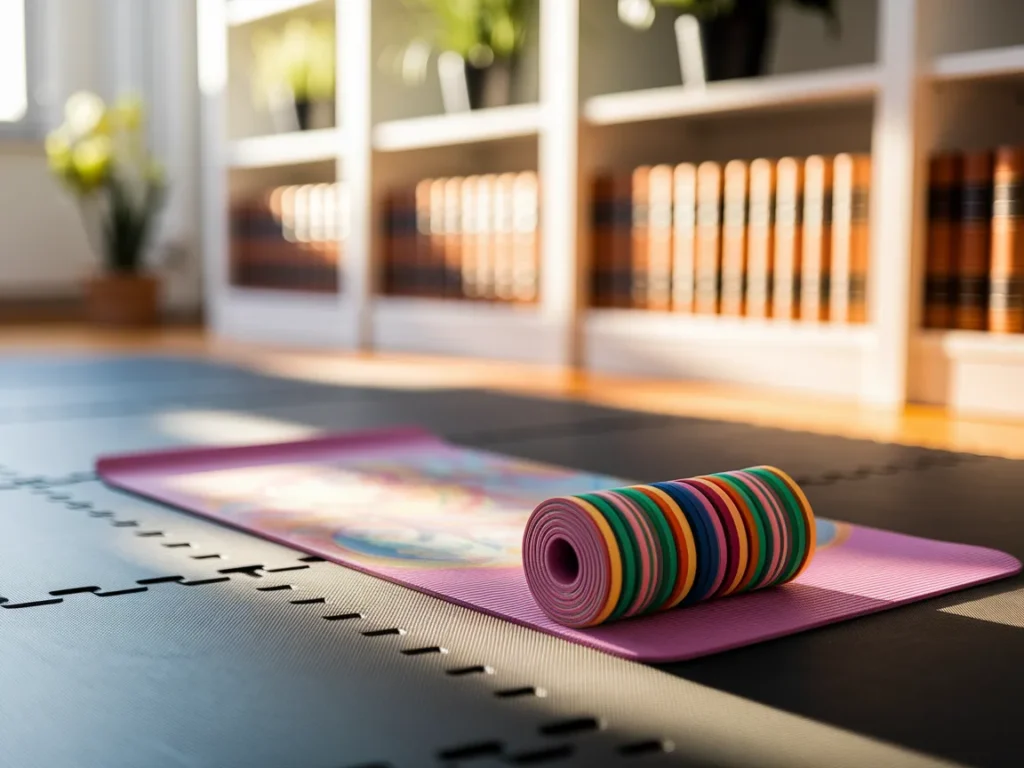
A yoga mat zone creates a clean space for stretching and mobility work. I used one dedicated corner with a mat because it kept the floor comfortable for joints and made warm-ups easier. This also helped keep the gym organized because the mat area stayed clear of weights. A thicker mat worked best for knees and elbows during floor moves. This simple flooring setup adds comfort without changing the whole room floor.
Extra-Thick Mat Under Squat Rack Area
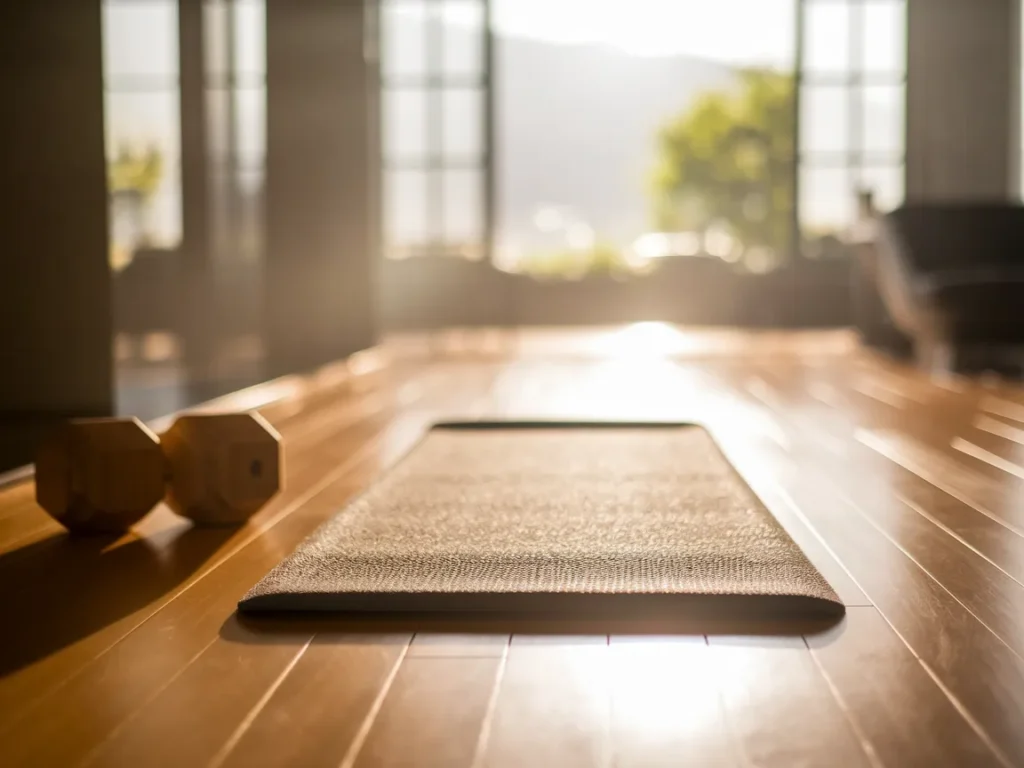
An extra-thick mat under a squat rack area protects the floor from heavy impact. I used thick rubber mats under my lifting spot because they reduced vibration and helped stabilize the rack. This also protected the base floor from dents and scratches. Extra thickness matters most for barbell training and heavy dumbbells. This option works best when the mat edges sit flat and do not curl.

Flooring For Dumbbell Drop Protection
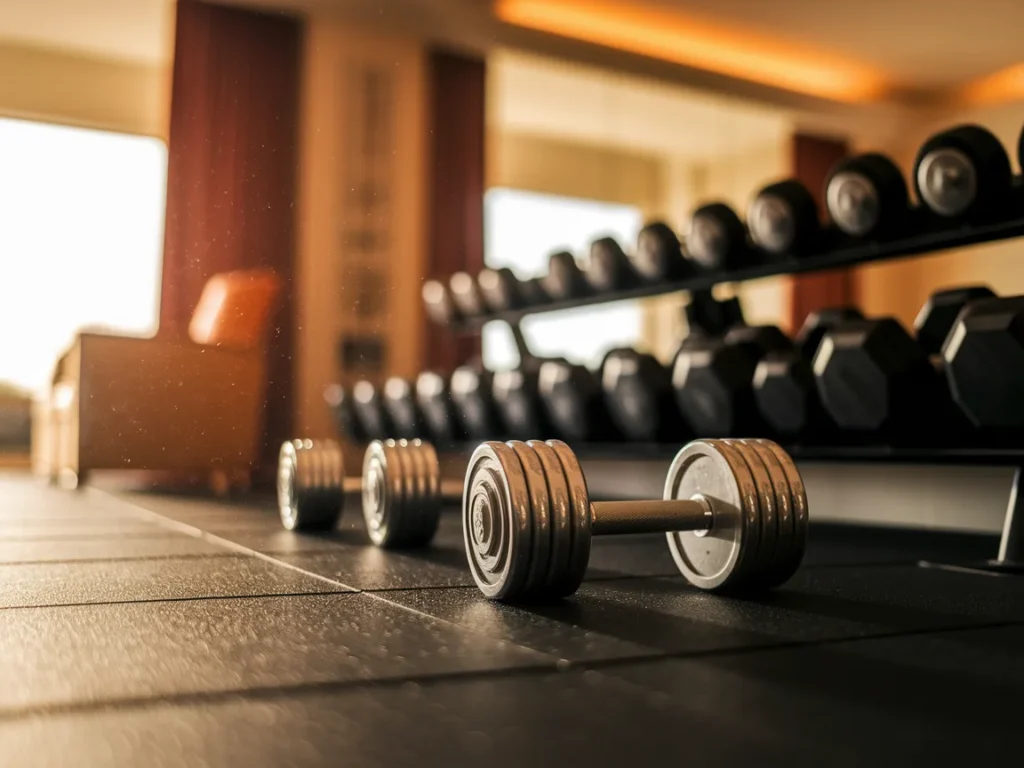
Drop protection flooring prevents damage when dumbbells slip or fall. I used thick rubber tiles or mats under the dumbbell area because even small drops can crack tile or dent wood. This also reduced noise, which helped during early workouts. A protected dumbbell zone makes the gym safer because the weights stay more stable underfoot. This is a strong setup for strength-focused home gyms.
Waterproof Flooring For Garage Gyms
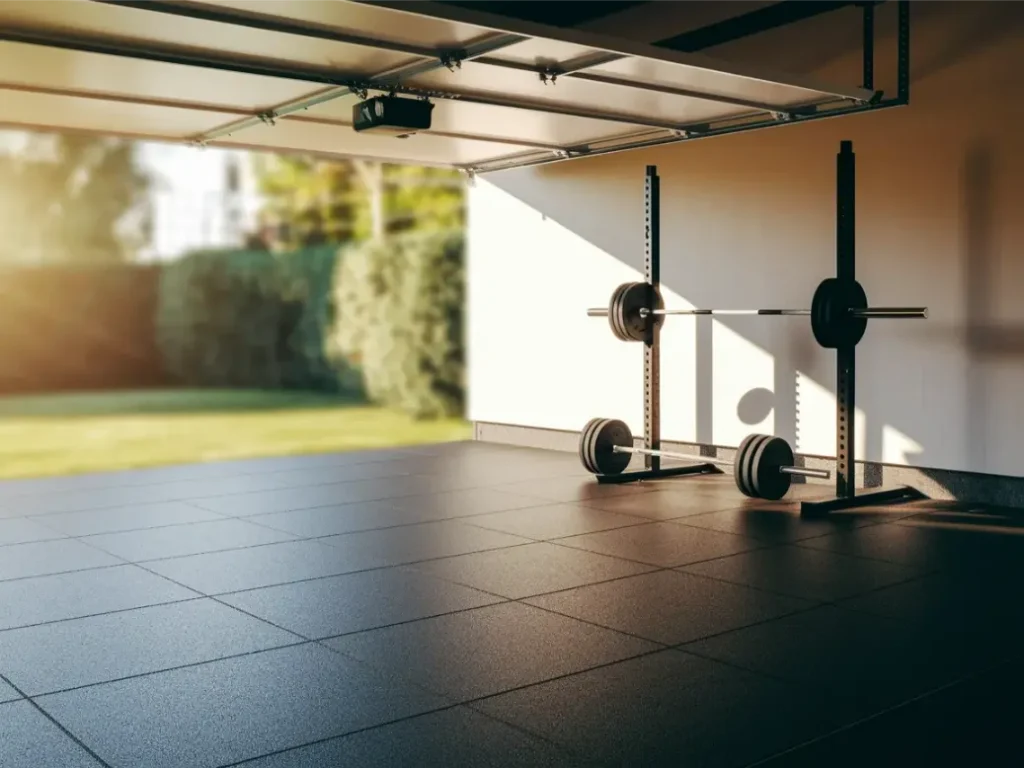
Waterproof flooring works best for garage gyms because garages face moisture, dust, and temperature changes. I used rubber flooring in a garage-style setup since it handled spills and tracked-in dirt better than foam. Waterproof floors also clean faster with quick wipes or mopping. This flooring choice helped the gym feel more controlled, even in a rougher space. It also reduced sliding risk when the floor got damp.
Carpet Cover Layer For Noise Control
A carpet cover layer reduces noise in apartments and shared homes. I used a heavy-duty carpet layer under a workout mat to reduce sound from jumps and walking. This helped protect floors and lowered vibration. Carpet also made the room feel warmer, but I kept it paired with a rubber top layer for better grip. This setup works best when the carpet stays flat and the top surface stays stable.
Vinyl Floor With Rubber Top Layer
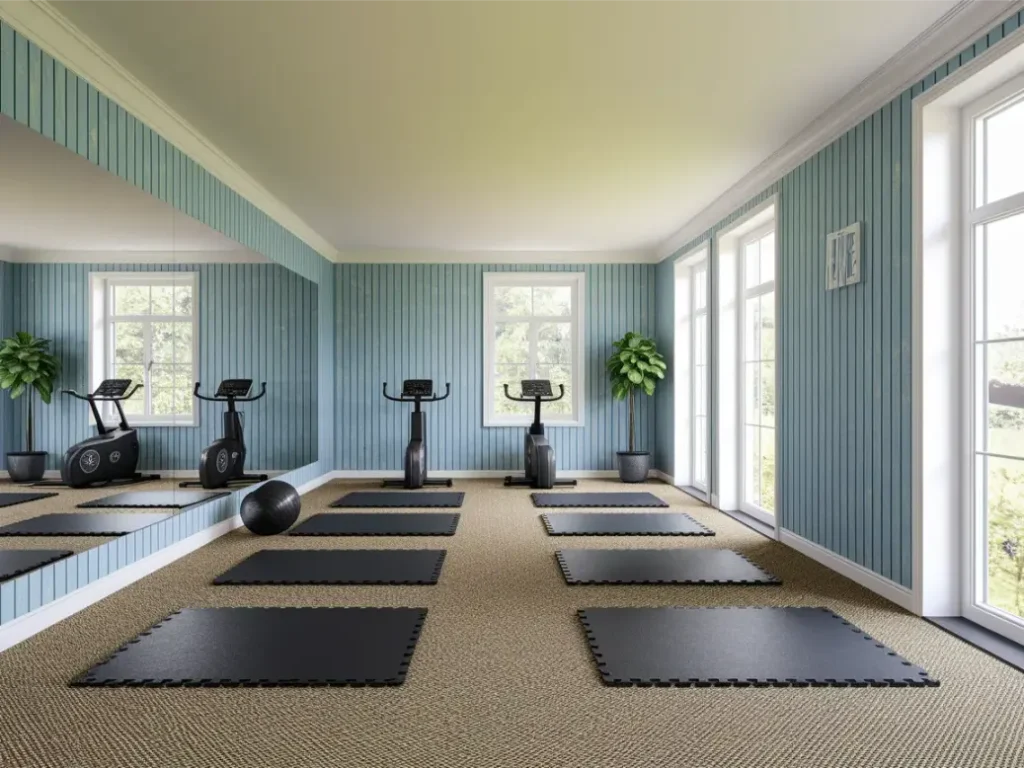
Vinyl floor with a rubber top layer works well when you want easy cleaning plus real workout grip. I used vinyl as the base in a multi-use room because it handled dust and quick wipes better than carpet. Then I added rubber tiles on top in the workout zone for impact protection. This setup kept the space looking clean while still feeling safe for strength training. It also helped reduce noise from moving equipment. This idea works best when the rubber layer stays locked in place with clean edges.
Cork Flooring For Quiet Comfort
Cork flooring feels softer and quieter underfoot, which helps for home workouts in shared spaces. I tested cork in a light workout room because it reduced sound better than hard floors. Cork also feels warmer than tile and helps with comfort during bodyweight sessions. The main goal is low-impact training like stretching, yoga, and core work. Cork works best with a mat on top for sweat protection. This flooring choice fits calm, clean home gym spaces.

Turf Strip For Sled And Sprint Drills
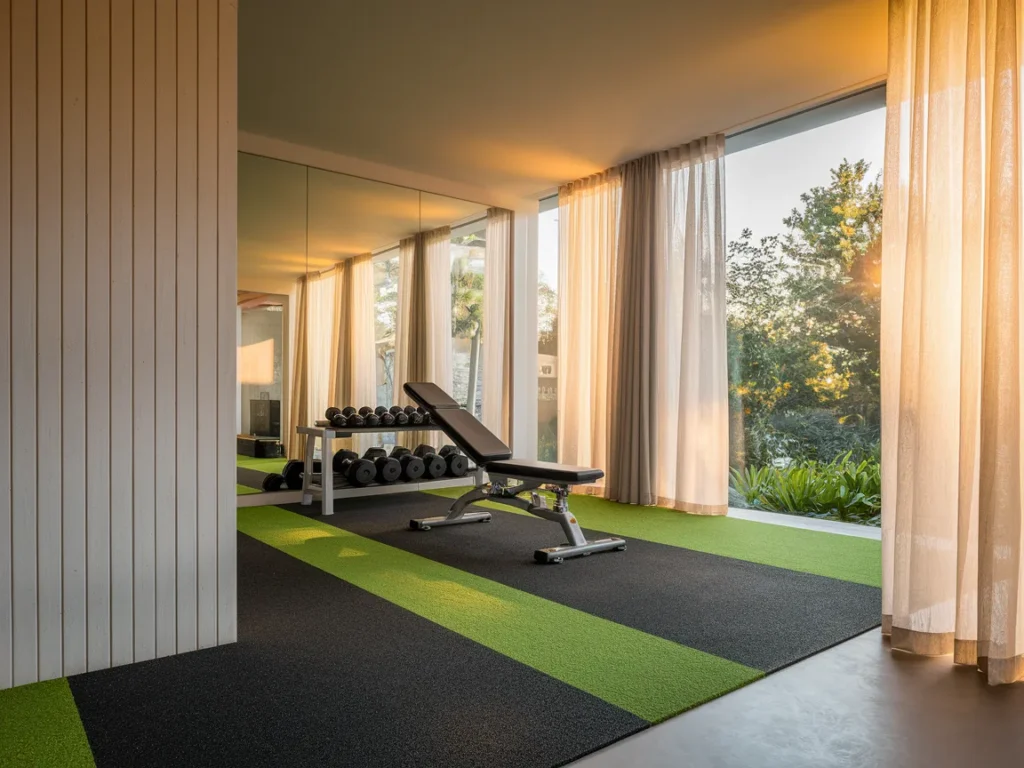
A turf strip creates a training lane for sled pushes, agility drills, and quick movement work. I used a turf strip along one side of the room to keep the rest of the gym floor clean. Turf also gives strong grip for footwork and warm-up drills. This idea works best in longer spaces like basements or garages. Turf looks very modern and adds a “gym feel” fast. A turf strip also helps define zones and improve layout order.

Floor Marking Tape For Workout Zones
Floor marking tape helps organize home gyms by creating clear workout zones. I used tape to mark a lifting square, a stretching area, and a walking lane. This made the gym feel structured and reduced clutter because equipment stayed inside zones. Tape also helps with form drills by giving straight lines to follow. This is a simple upgrade that adds strong function without changing flooring materials.

Wall-To-Wall Flooring For Small Rooms
Wall-to-wall flooring makes a small home gym feel finished and easier to use. I covered the full floor in rubber tiles in a compact room so every area stayed safe. This helped when workouts shifted between lifting and mobility moves. Full coverage also reduced noise across the whole room. A wall-to-wall floor setup looks clean in photos and feels more professional. This works best when tile seams stay aligned and tight.
Easy-Clean Flooring Setup Rule
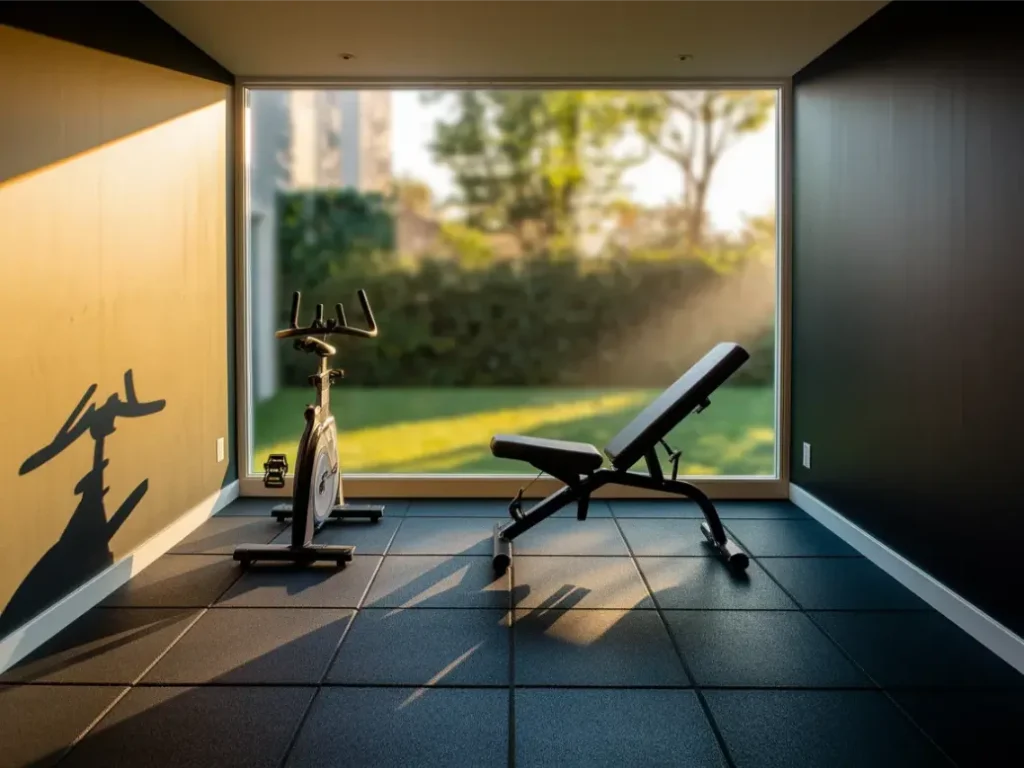
An easy-clean flooring rule keeps home gyms looking better week to week. I used a simple system: smooth base floor plus removable rubber mats in sweat zones. This made cleaning fast because I could wipe spills and lift mats if needed. Floors stay cleaner when shoes stay limited and equipment stays off bare flooring. Easy-clean flooring matters most in small gyms where mess shows fast.
Final Flooring Safety Rule
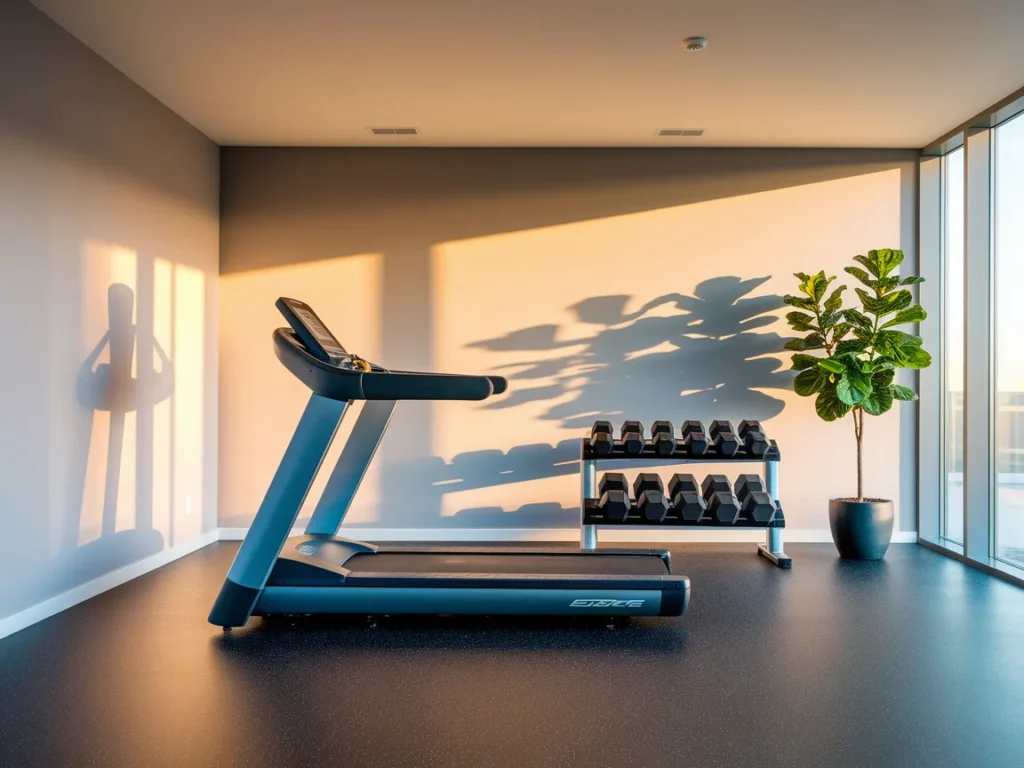
The final flooring safety rule is to match thickness to impact. I used thicker rubber under heavy weights and lighter foam only for bodyweight work. This reduced slip risk and helped protect the base floor. Safety improved when edges stayed flat and mats did not move. The floor matters because it supports every lift, step, and landing. When flooring feels stable, workouts feel safer and more confident.

Frequently Asked Questions
What Is The Best Home Gym Flooring For Weight Training?
Rubber flooring works best for weight training because it protects floors and reduces noise. Thick rubber tiles or rubber rolls handle heavy impact better than foam. This option also provides grip for stable lifting.
Can I Use Foam Tiles For A Home Gym?
Foam tiles work best for light workouts like stretching, yoga, and core work. Foam can compress under heavy weights and may tear over time. For strength training, rubber works better.
How Thick Should Home Gym Flooring Be?
Thickness depends on use. Light workouts can use thinner mats, while heavy lifting zones need thicker rubber. More thickness helps with dumbbell drops and barbell training.
How Do I Stop Home Gym Mats From Sliding?
Mats slide less when the base floor stays clean and dry. Interlocking tiles help because they lock together. Using wall-to-wall coverage also reduces movement across seams.
Final Thoughts
Home gym flooring helps protect your body, your equipment, and your home floors. I got the best results with rubber tiles for full coverage and thick rubber mats for heavy lifting zones. Foam worked best only for light workouts and comfort areas. When flooring matched workout style and stayed easy to clean, the home gym felt safer, quieter, and more motivating to use every week.

