


Winter weather places heavy stress on home entry areas. Snow, salt, rain, and mud enter homes through shoes, coats, and bags. US housing data shows winter months increase indoor floor dirt by over 35% without a controlled drop zone. Mudrooms act as buffers between outdoors and living areas. A well-planned mudroom protects floors, walls, and furniture from moisture damage.
In 2026 homes, mudrooms serve more than storage. They support daily flow for families, pets, and work routines. Winter mudrooms must allow fast entry and exit without spreading mess. Items need clear landing spots. Surfaces need easy cleaning. Layout must match how people move through the space. A winter-ready mudroom keeps the rest of the home clean and calm.
What Makes A Mudroom Work As A Winter Drop Zone?
A mudroom works as a winter drop zone when storage, durability, and flow support daily entry habits. Storage must match winter gear size and volume. Coats take more space than jackets. Boots hold water and salt. Gloves, hats, and scarves multiply quickly. Each item needs a defined place. Hooks should sit at reachable height. Benches support boot removal. Shoe zones must contain moisture. US winter home studies show defined storage reduces indoor mess by 40%.
Durability protects the space long term. Floors need slip resistance. Walls need protection from wet clothing. Easy-clean materials reduce upkeep time. Flow matters as much as storage, following the same movement-first logic used in broken plan living: the 2026 layout trend. Entry paths must stay clear during busy mornings. Mudrooms should allow quick drop and move. When storage, durability, and flow align, winter mudrooms handle daily stress without failure.
Why Do Homes Struggle With Winter Entryway Clutter?
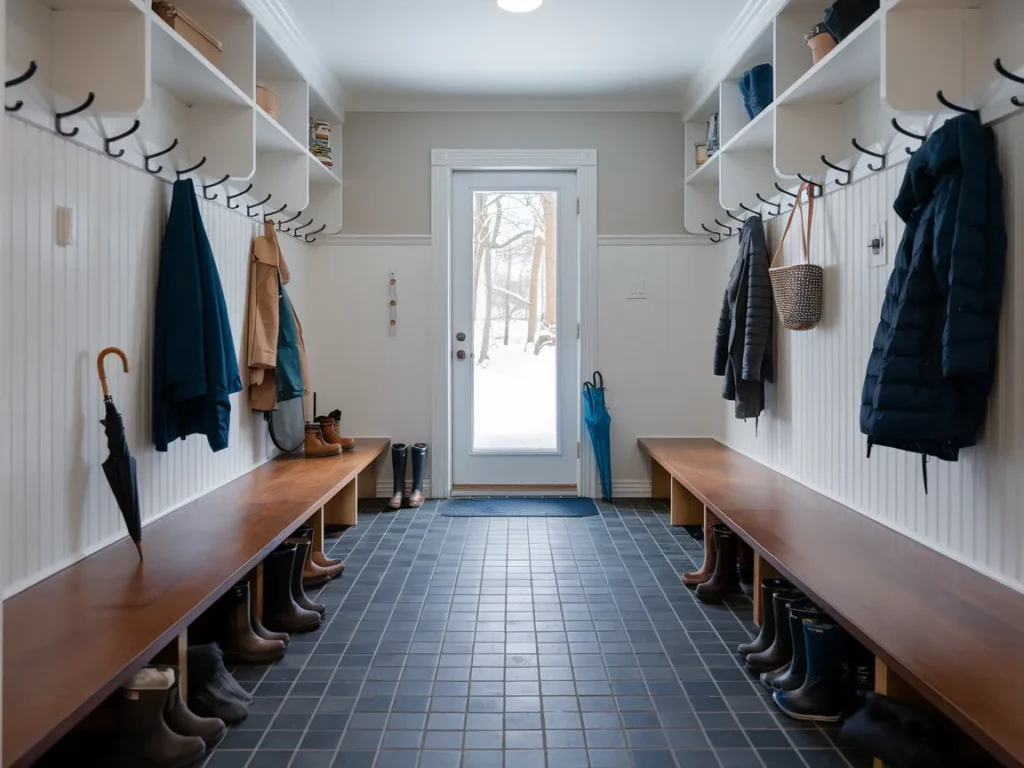
Homes struggle with winter clutter because wet gear lacks a clear landing zone. Winter adds bulk and moisture to daily items. Snow boots drip water and salt. Heavy coats hold snow and dirt. Bags and backpacks pile up near doors. Without a set drop zone, items spread into living spaces. US household reports show winter entry clutter increases by 30% in homes without mudrooms. Floors stain faster. Walls scuff more often.
Family movement patterns increase the problem. Multiple people enter at the same time. Morning routines move fast. Children drop items without order. Pets add mud and moisture. Narrow entryways cannot absorb this traffic. Without storage and flow planning, clutter becomes daily. Winter entry zones fail when design does not match real use, a breakdown similar to what happens when circulation is ignored in layouts discussed in broken plan living: the 2026 layout trend.
What Are The 25 Mudroom Design Ideas For Winter Drop Zones?
The 25 mudroom design ideas focus on storage, moisture control, and fast daily entry use. Planning winter mudroom ideas before building or styling prevents daily mess. Winter gear takes more space than summer items. Boots need drainage. Coats need airflow. Bags need quick drop access. US winter home studies show organized mudrooms reduce tracked-in moisture by 45%. These ideas support homes with garage entries, front doors, and side doors. Each idea fits real winter movement patterns instead of decoration goals, using the same flow-first thinking seen in broken plan living: the 2026 layout trend.
Mudroom size affects design choices. Small mudrooms rely on vertical storage. Large mudrooms support seating and cabinets. Entry type also matters. Garage mudrooms need heavy-duty materials. Front-entry mudrooms need visual order. These ideas adapt to all layouts while keeping winter mess contained.
The 25 Mudroom Design Ideas For Winter
- Built-in bench seating
- Individual cubby storage
- Wall-mounted coat hooks
- Boot tray drainage zone
- Durable tile flooring
- Raised shoe racks
- Closed cabinet storage
- Open shelf glove storage
- Vertical locker systems
- Overhead seasonal storage
- Slip-resistant flooring
- Easy-clean wall panels
- Entry mat layering
- Heated floor zones
- Wet gear drying hooks
- Pet cleaning station
- Seating with storage below
- Bag and backpack zone
- Umbrella drip station
- Mirror for quick checks
- Narrow mudroom layouts
- Garage-entry mudroom setup
- Small space winter mudroom
- Family traffic flow layout
- Final winter drop zone layout
Built-In Bench Seating
Built-in bench seating supports winter routines by giving a stable place to sit while removing boots. Winter footwear holds snow, salt, and water. Standing while removing boots spreads moisture across floors. Benches reduce this risk. Bench height should stay between 17 and 19 inches for easy use. Materials must resist moisture and cold transfer.
Bench placement matters. It should sit close to the door without blocking movement. Space under the bench should stay open or include storage. Built-in benches transform winter mudrooms by improving safety, comfort, and cleanliness during daily entry.
Individual Cubby Storage
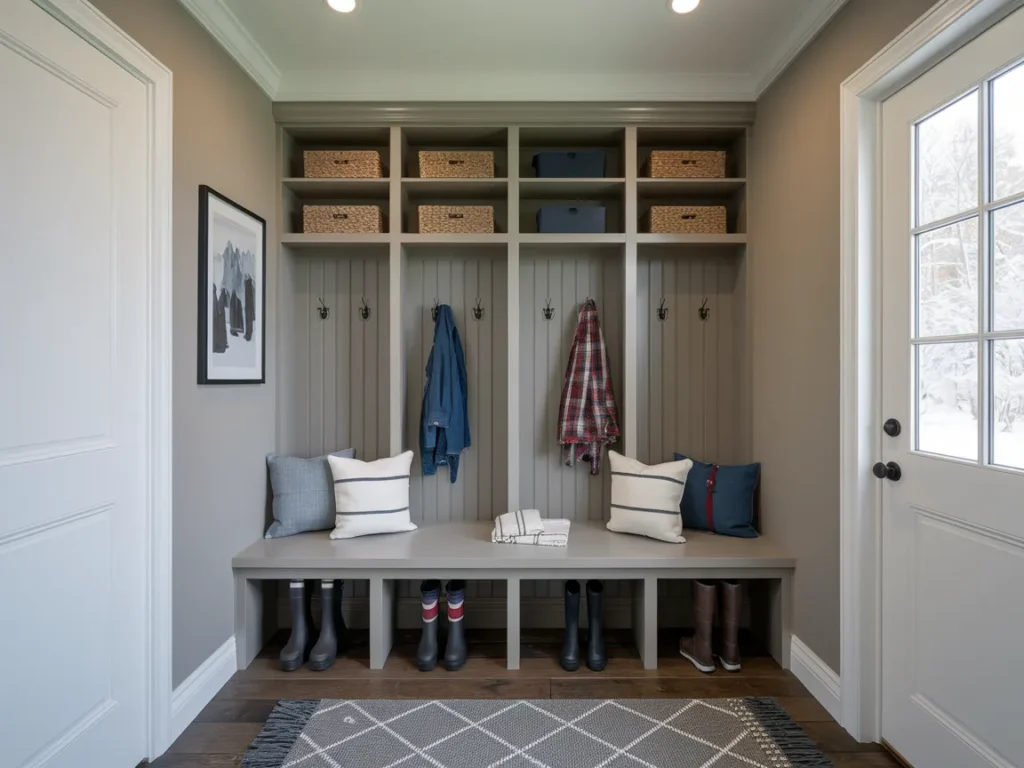
Individual cubby storage assigns one space per person. Winter gear increases volume. Shared storage causes pileups. Cubby systems prevent overlap. Each cubby should fit a coat, boots, and accessories. US family homes report better order when each person owns a storage zone.
Cubby height and width should match user size. Lower cubbies suit children. Upper cubbies suit adults. Labels improve return habits. Individual cubbies transform mudrooms by reducing confusion and daily clutter.
Wall-Mounted Coat Hooks
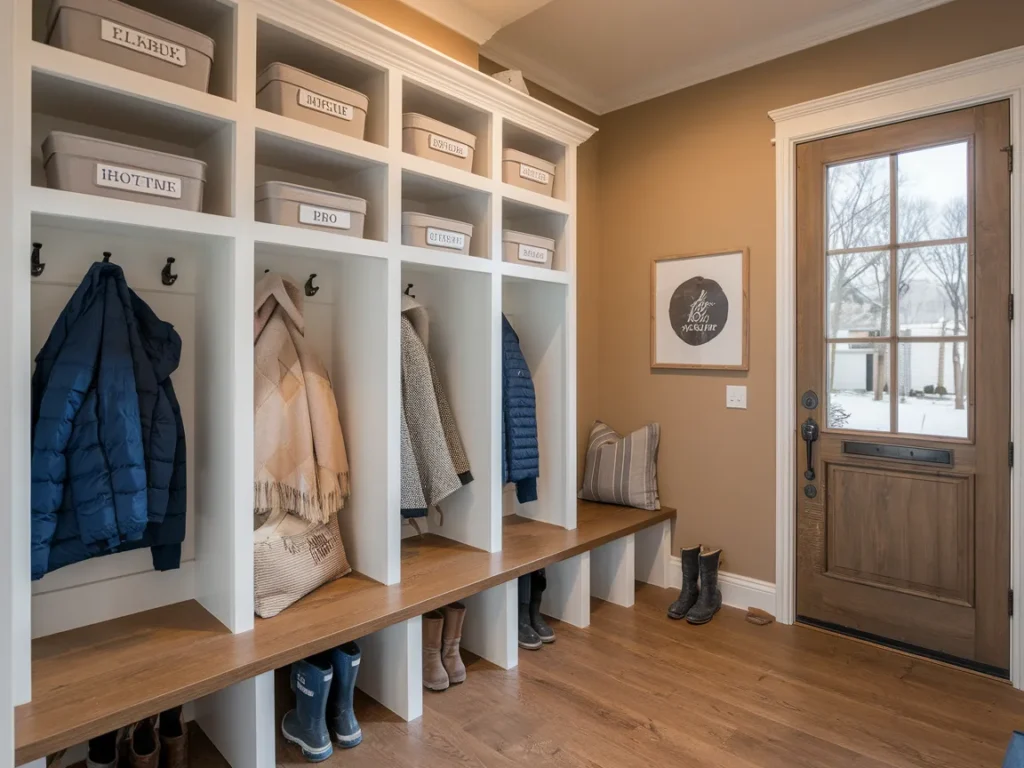
Wall-mounted coat hooks handle heavy winter coats without crowding closets. Hooks allow airflow, which helps coats dry faster. Hooks should mount into studs for strength. Spacing should allow coats to hang without overlap.
Hooks work best above boot zones. This keeps water drip contained. Multiple hook heights support children and adults. Wall hooks transform winter mudrooms by improving drying and access.
Boot Tray Drainage Zone
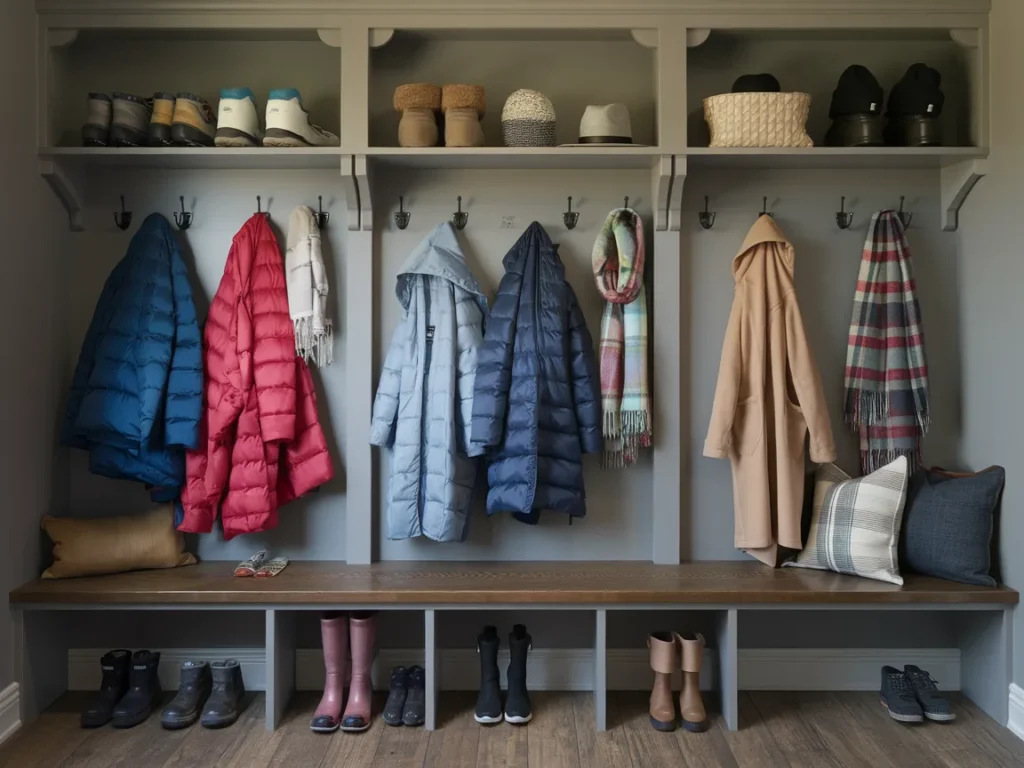
Boot tray drainage zones contain snow and salt from footwear. Trays collect water and prevent floor damage. Raised-edge trays work best. Materials should resist corrosion from salt. US winter floor damage often starts near entries.
Trays should sit under benches or racks. Space should allow air circulation. Drainage zones transform mudrooms by protecting floors and simplifying cleanup.
Durable Tile Flooring
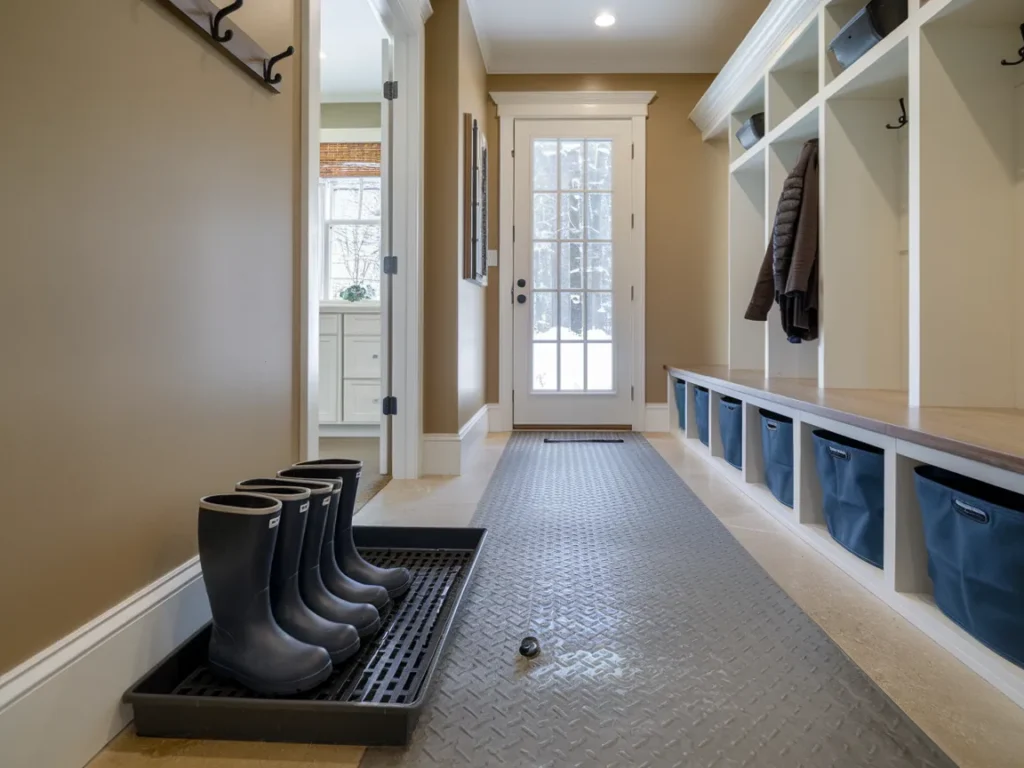
Durable tile flooring handles winter moisture better than wood or carpet. Tile resists water, salt, and grit. Slip-resistant finishes improve safety. Large-format tiles reduce grout lines, which trap dirt.
Tile should extend across the full mudroom footprint. Dark grout hides stains better. Durable tile transforms winter mudrooms by increasing lifespan and reducing maintenance.
Raised Shoe Racks
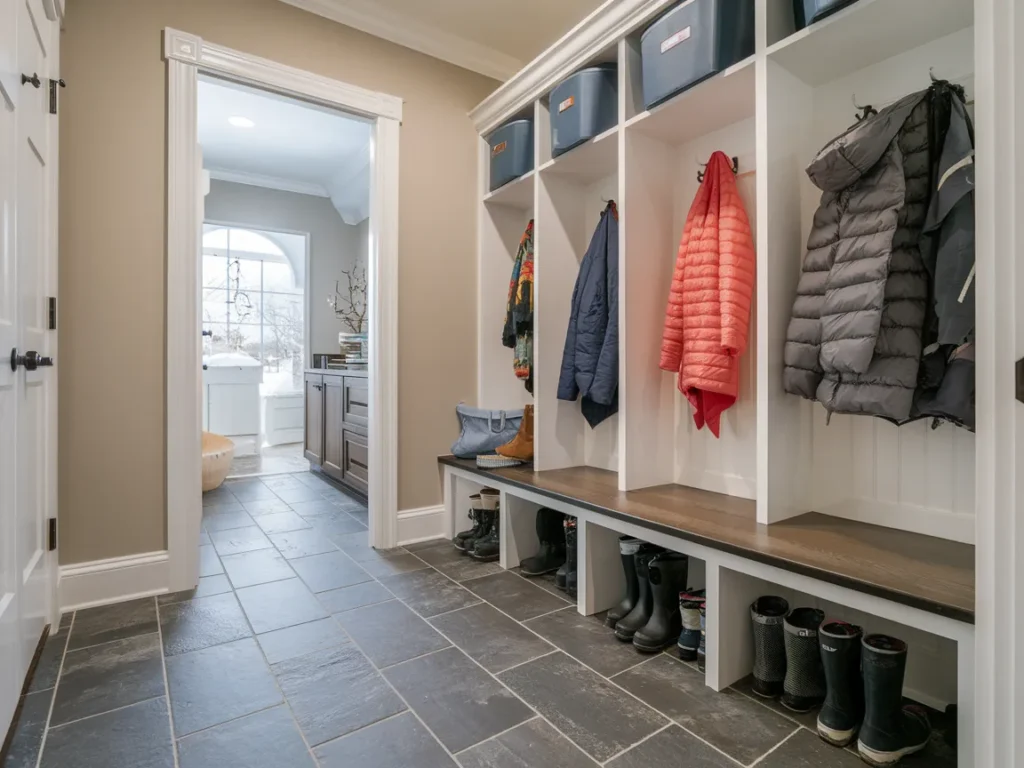
Raised shoe racks keep winter footwear off the floor. Elevation allows snow and water to drip down instead of spreading across surfaces. Air moves around shoes faster, which helps drying. Racks made from metal or sealed wood resist moisture damage. US winter homes report less floor staining when shoes stay elevated.
Placement matters for use. Racks should sit near the door and below coat storage. Spacing between levels must fit tall boots. Raised racks transform winter mudrooms by reducing odor, moisture buildup, and floor wear.
Closed Cabinet Storage
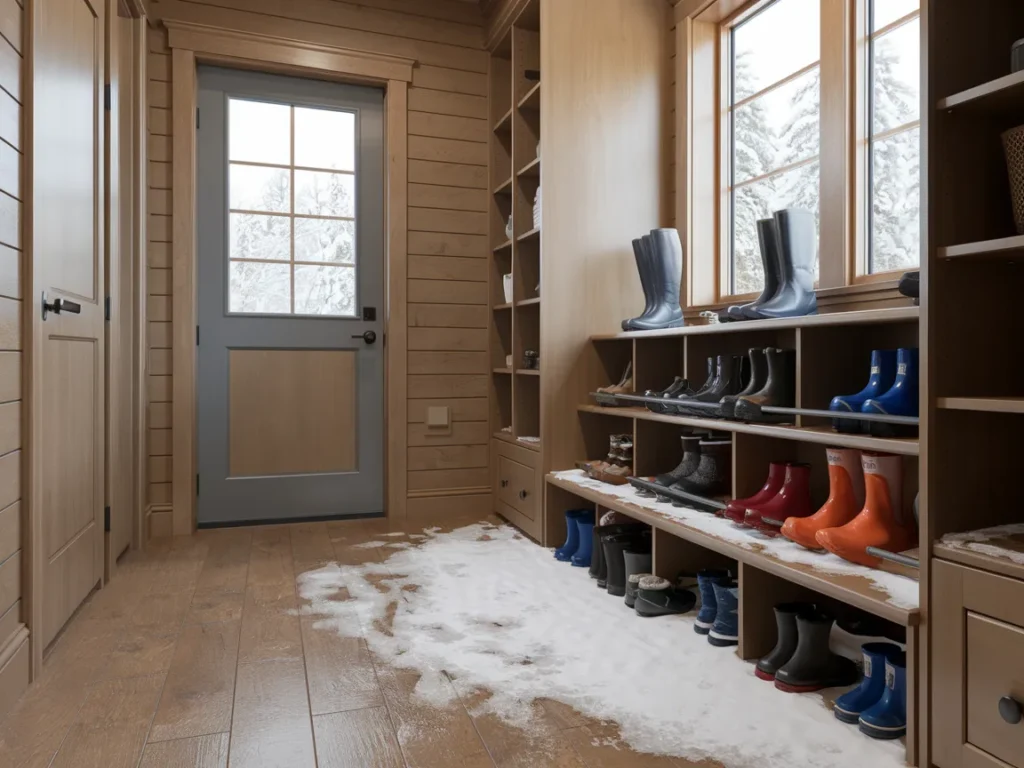
Closed cabinet storage hides winter clutter from view. Gloves, hats, and extra gear multiply fast during cold months. Open storage often looks messy. Cabinets keep visual order while protecting items from dust and moisture.
Cabinets should include adjustable shelves. Soft-close doors improve durability. Upper cabinets suit seasonal items. Closed storage transforms mudrooms by keeping winter gear contained and entry areas calm.
Open Shelf Glove Storage
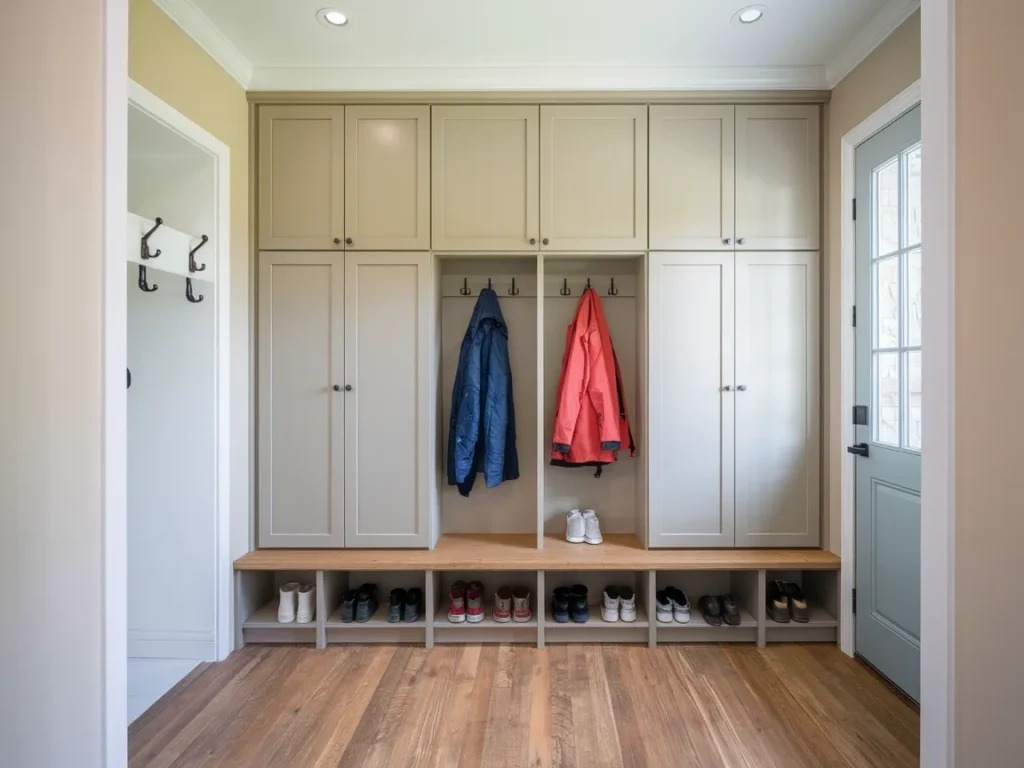
Open shelf glove storage keeps small winter items easy to reach. Gloves, scarves, and hats need fast access during cold mornings. Shallow shelves prevent items from getting lost. Open design encourages quick return after use.
Shelves should sit at chest height. Bins or baskets improve grouping. Labels help maintain order. Open glove shelves transform winter mudrooms by improving speed and reducing missed items.
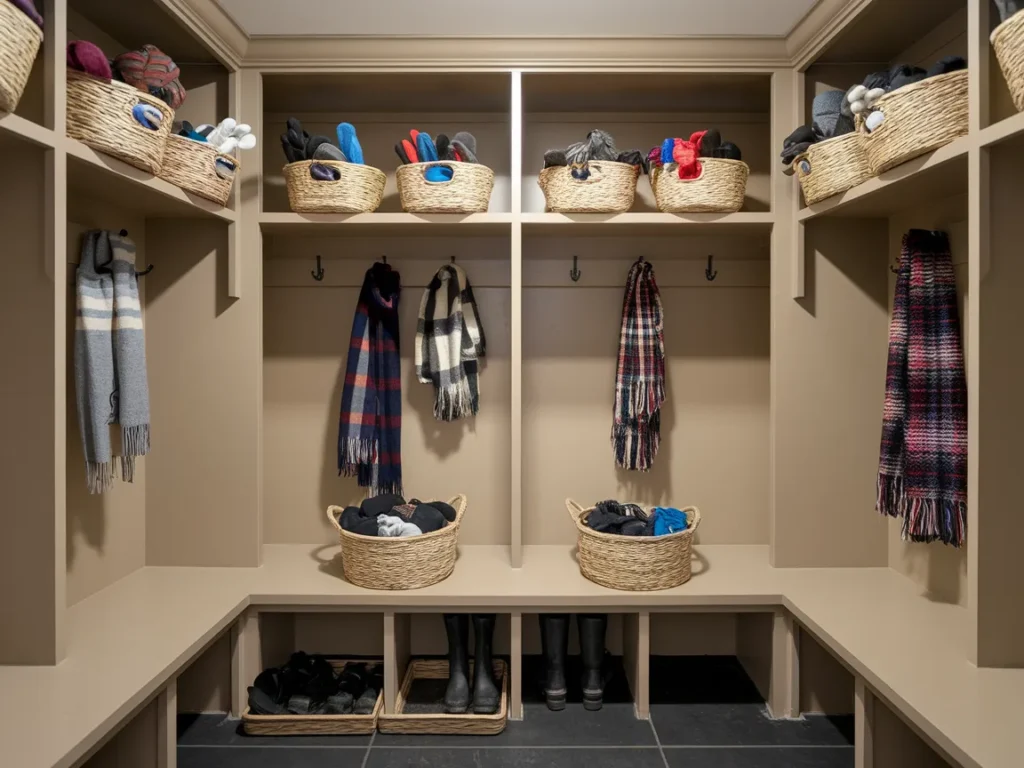
Vertical Locker Systems
Vertical locker systems use height to manage bulky winter gear. Tall lockers hold coats, boots, and bags in one column. This suits families with limited floor space. Lockers separate wet and dry items clearly.
Lockers should include vents or open backs for airflow. Durable finishes resist moisture. Vertical lockers transform winter mudrooms by maximizing storage without widening the space.
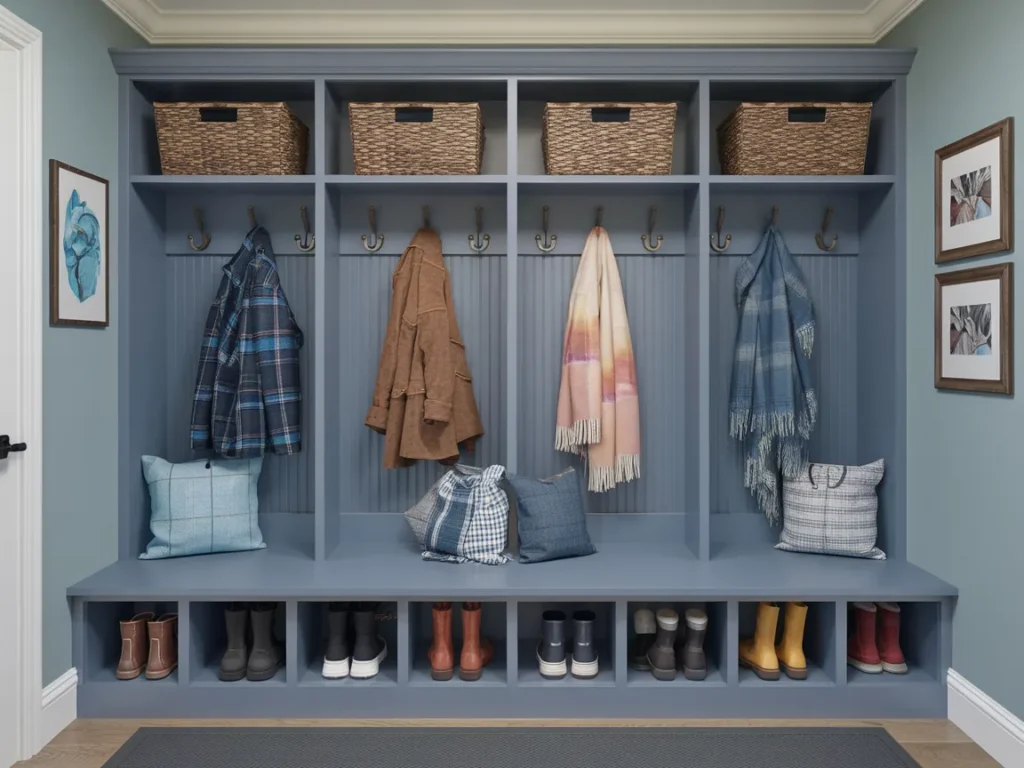
Overhead Seasonal Storage
Overhead seasonal storage holds items not used daily. Snow gear, sports equipment, and extra supplies belong overhead. Shelves or cabinets above head height work well. This frees lower zones for daily items.
Access tools like step stools improve safety. Clear bins help identify contents. Overhead storage transforms mudrooms by keeping winter-only items organized and out of the way.
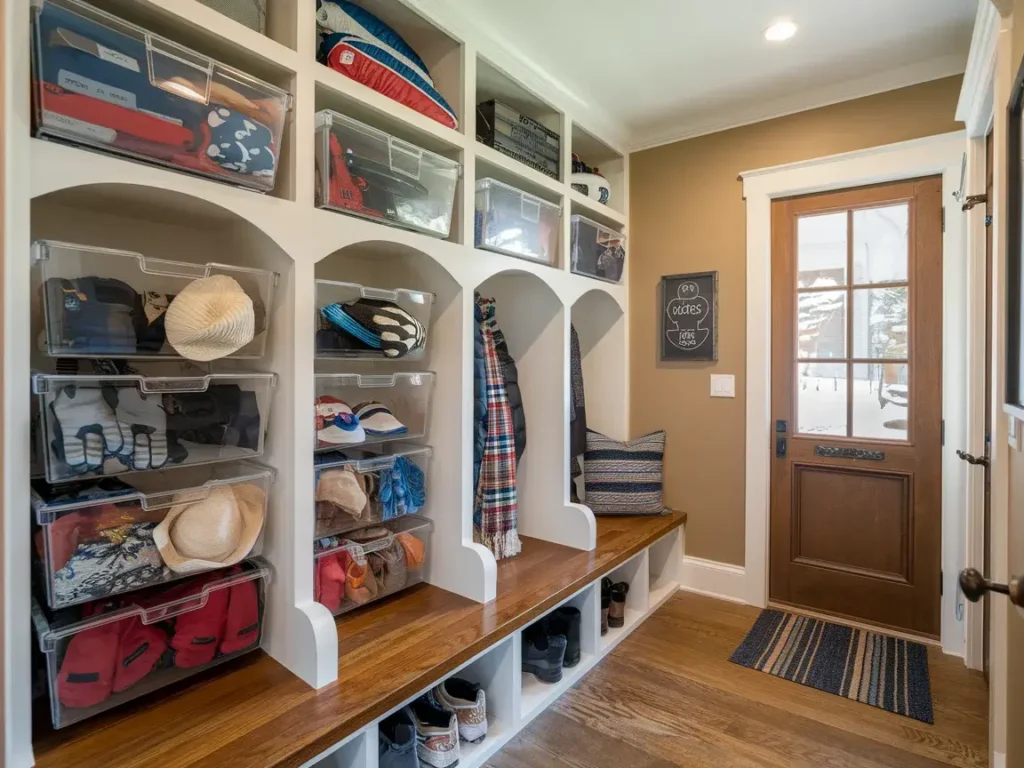
Slip-Resistant Flooring
Slip-resistant flooring improves safety during winter entry. Snow and water increase fall risk. Textured tile, rubber flooring, or sealed stone provide grip when wet. US home safety data shows winter slips occur most often near entry doors. Flooring choice directly affects injury risk.
Slip-resistant floors must cover the full drop zone. Transitions should stay flush. Darker tones hide salt stains better. This flooring transforms winter mudrooms by reducing accidents and cleanup stress.
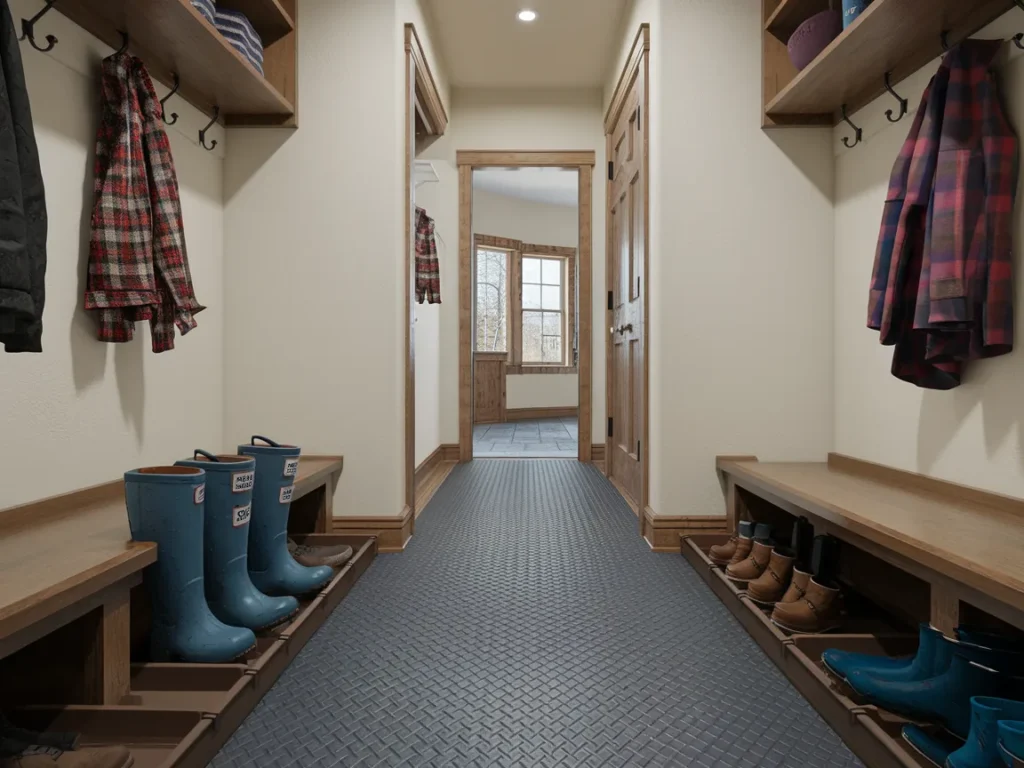
Easy-Clean Wall Panels
Easy-clean wall panels protect walls from wet coats and bags. Painted drywall stains fast during winter. Panels made from PVC, beadboard, or sealed wood resist moisture. Wipe-down surfaces reduce maintenance time.
Panels should reach at least shoulder height. This covers common contact areas. Light colors improve visibility. Easy-clean panels transform winter mudrooms by preventing long-term wall damage.
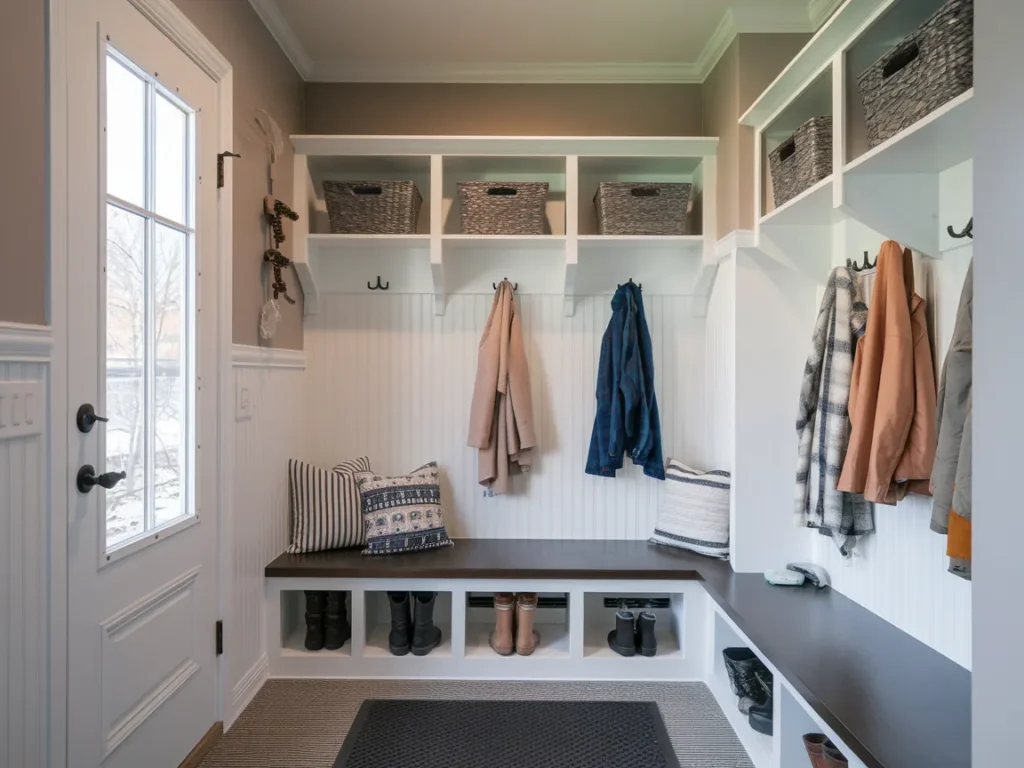
Entry Mat Layering
Entry mat layering controls moisture and dirt before it spreads. A two-mat system works best. One mat scrapes debris. The second absorbs water. US winter cleaning studies show layered mats reduce tracked moisture by 50%.
Mats should sit flat and cover the full doorway width. Rubber backing prevents sliding. Entry mat layering transforms winter mudrooms by containing mess at the door.
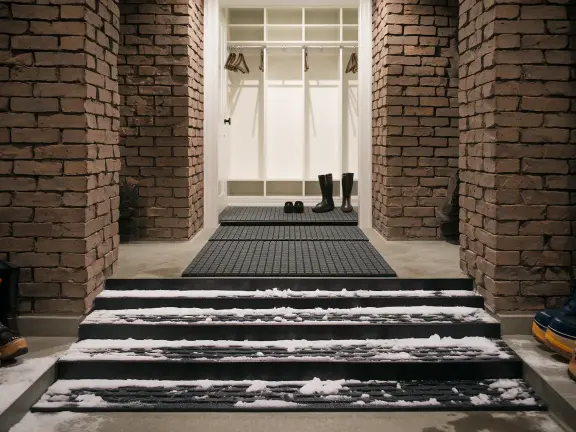
Heated Floor Zones
Heated floor zones dry water quickly and improve comfort. Radiant heat speeds evaporation. This reduces puddles and odor. Heated floors work well under tile or stone. US cold-climate homes increasingly use heated mudroom floors after 2025.
Heat should stay localized to the drop area. Timers control energy use. Heated zones transform winter mudrooms by improving dryness and comfort.
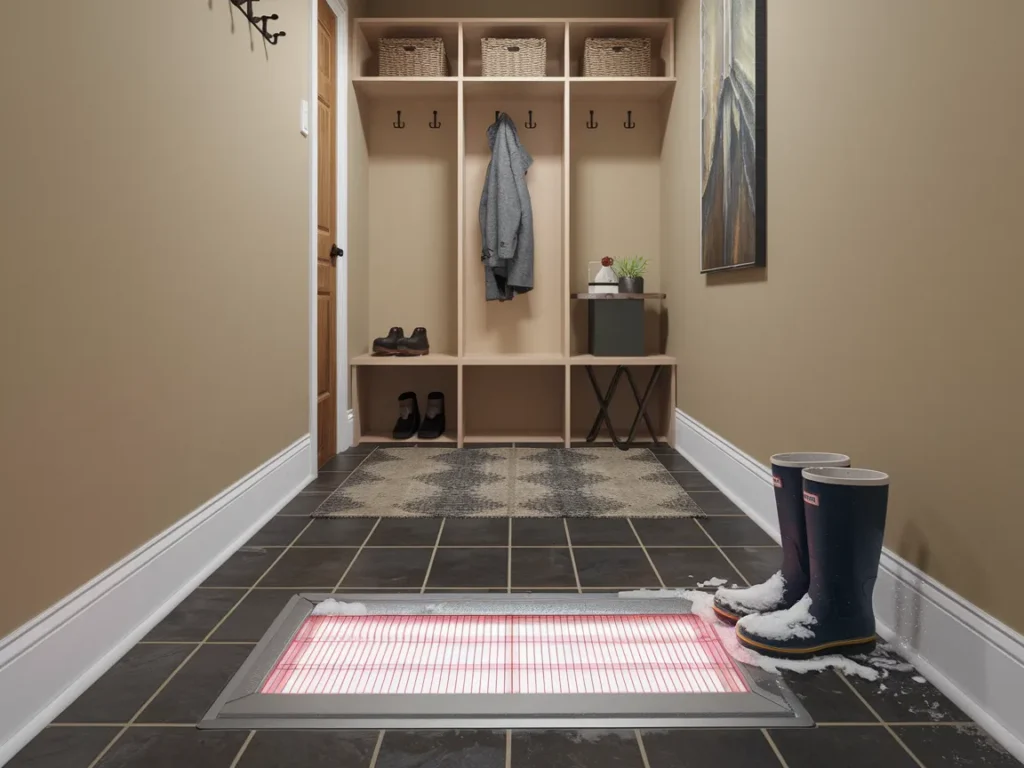
Wet Gear Drying Hooks
Wet gear drying hooks allow coats and bags to dry without touching walls. Hooks placed with spacing improve airflow. Moisture evaporates faster when items hang freely. US winter gear studies link poor drying to odor and fabric damage.
Hooks should mount over waterproof flooring. Drip trays below catch runoff. Drying hooks transform winter mudrooms by extending gear life and reducing damp smells.

Pet Cleaning Station
A pet cleaning station controls snow, mud, and salt brought in by pets. Winter walks leave residue on paws and fur. A low basin or handheld sprayer allows fast cleaning before pets enter the home. US pet ownership data shows over 65% of households include at least one pet, which increases winter entry mess.
The station should sit near the door on waterproof flooring. Hooks for towels and leashes improve flow. Pet cleaning stations transform winter mudrooms by protecting floors and reducing indoor cleanup.
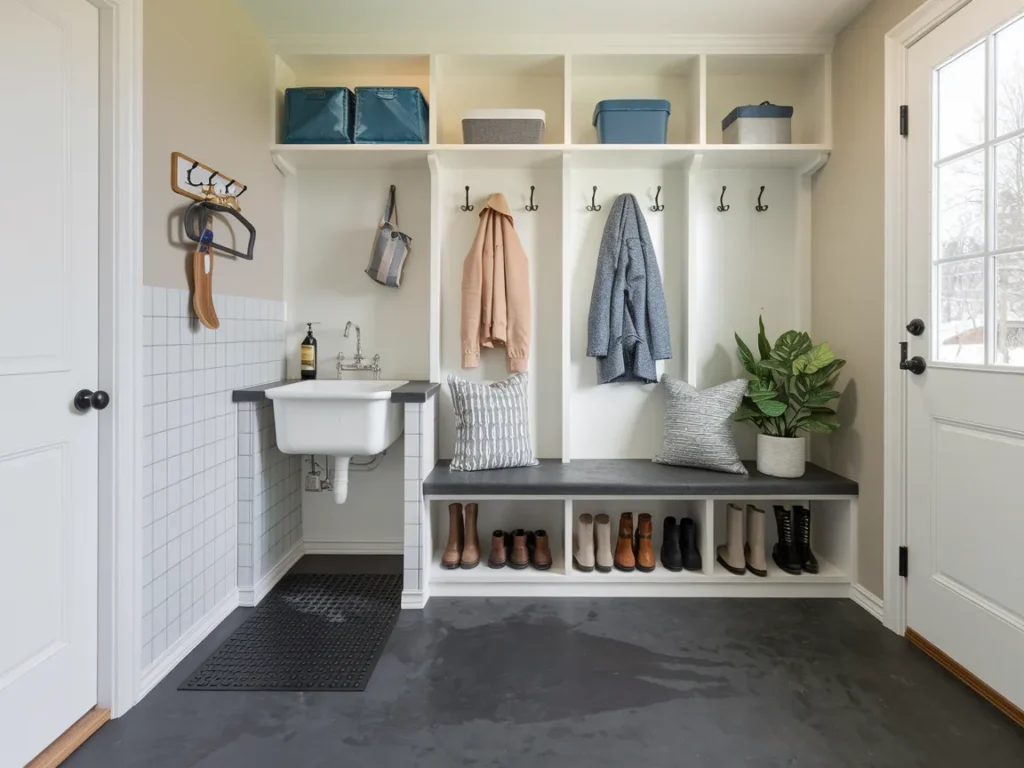
Seating With Storage Below
Seating with storage below combines comfort and organization. Winter routines require sitting to remove boots. Storage below benches holds shoes, hats, or gear. Enclosed drawers protect items from moisture and dirt.
Storage depth must allow air movement. Ventilated drawers work best. Seating with storage transforms winter mudrooms by reducing clutter while supporting daily comfort.
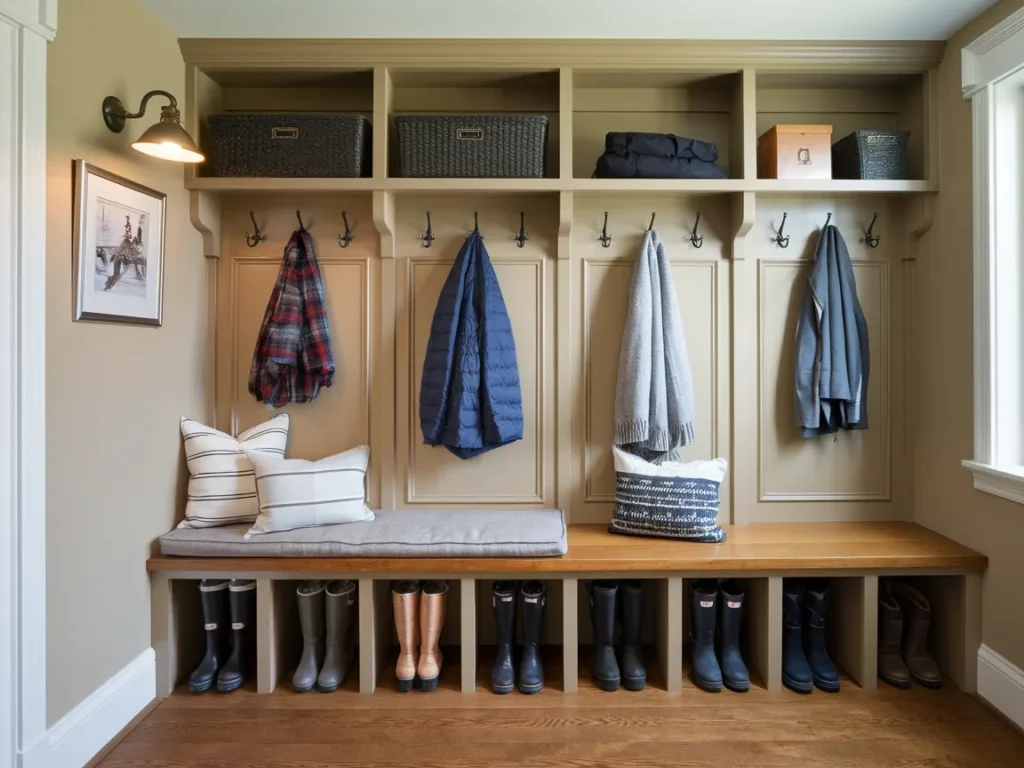
Bag And Backpack Zone
A bag and backpack zone keeps work and school items contained. Winter clothing already fills space, so bags need a fixed area. Hooks or cubbies prevent bags from landing on floors. US family homes report fewer lost items with assigned bag zones.
Zones should sit at shoulder height for easy reach. Lower hooks suit children. Bag zones transform winter mudrooms by keeping traffic paths clear.
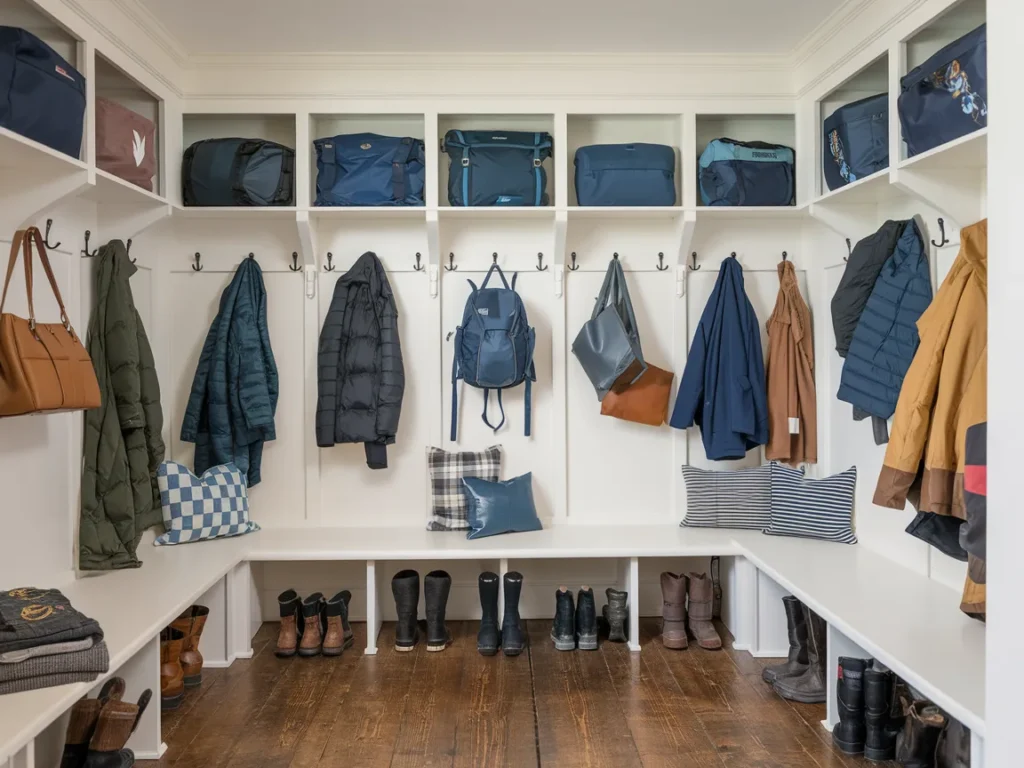
Umbrella Drip Station
An umbrella drip station controls water runoff during snow and rain. Umbrellas drip long after entry. Without a station, water spreads across floors. Drip trays or tall umbrella holders work best.
Stations should sit on waterproof flooring away from walls. Drainable bases simplify cleaning. Umbrella stations transform winter mudrooms by preventing puddles and stains.
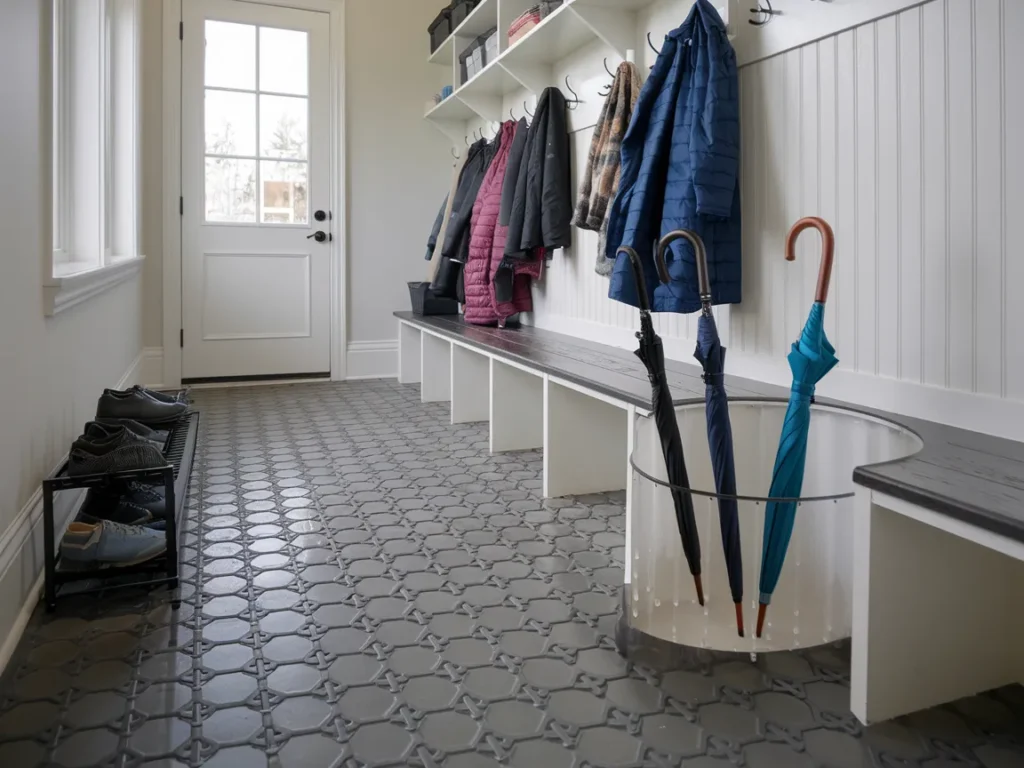
Mirror For Quick Checks
A mirror for quick checks improves daily flow. Winter layers add bulk. Mirrors allow fast adjustments before leaving. Placement near the exit supports last checks without blocking traffic.
Mirrors also reflect light in small mudrooms. This improves visibility during dark winter mornings. Mirrors transform winter mudrooms by adding function without storage needs.
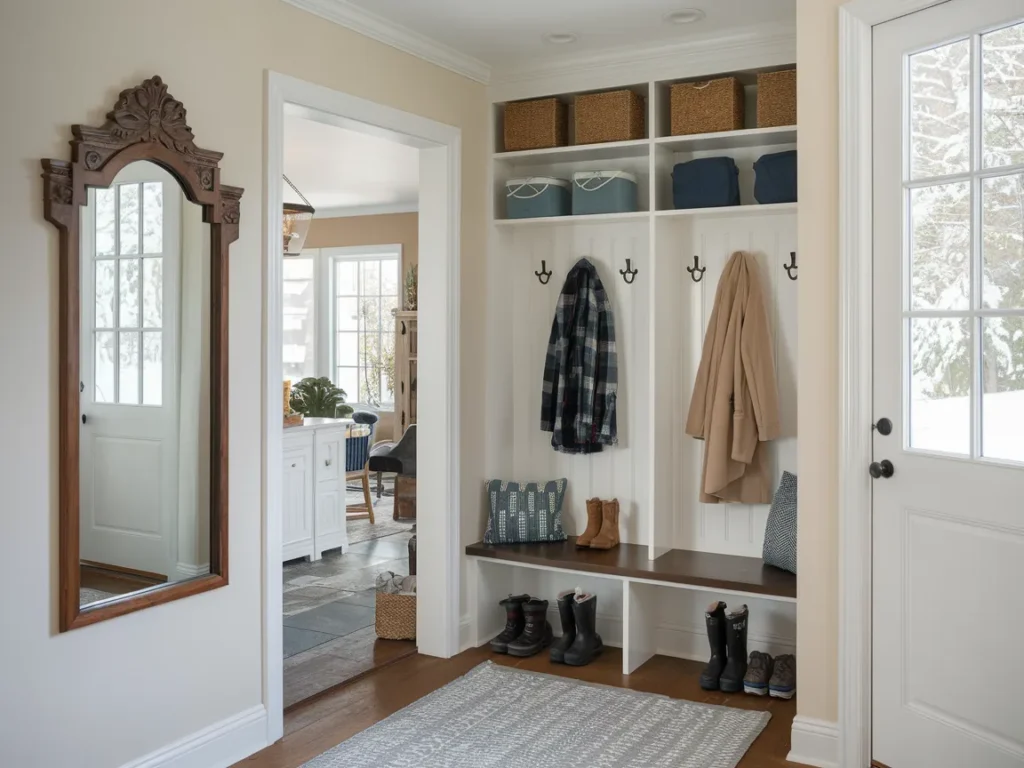
Narrow Mudroom Layouts
Narrow mudroom layouts require vertical planning. Winter gear increases bulk, so floor space must stay clear. Wall-mounted hooks, slim benches, and tall storage work best. US homes with side-door entries often face width limits.
Storage should stay shallow. Walk paths must remain open. Narrow layouts transform winter mudrooms by keeping traffic smooth despite tight space.
Garage-Entry Mudroom Setup
Garage-entry mudrooms handle the heaviest winter use. Snow, salt, and tools enter through this path. Durable flooring and strong storage matter most. US homes often rely on garage entries during winter.
This setup should include boot trays, hooks, and cabinets. Separation from living space reduces mess spread. Garage-entry mudrooms transform winter homes by acting as true buffer zones.
Small Space Winter Mudroom
Small space winter mudrooms need strict planning. Every item must earn space. Multi-use furniture works best. Benches with storage and wall hooks reduce clutter. US apartments and older homes often rely on compact mudrooms.
Light colors improve visibility. Mirrors increase brightness. Small mudrooms transform winter homes by controlling mess without expanding space.
Family Traffic Flow Layout
Family traffic flow layouts match how people enter and exit daily. Winter mornings bring congestion. Multiple people arrive at once. Poor flow causes pileups. Layouts should guide movement from door to storage to exit.
Paths must stay wide. Storage must sit within reach. Traffic-focused layouts transform winter mudrooms by preventing collisions and clutter.
Final Winter Drop Zone Layout
A final winter drop zone layout combines all systems into one plan. This layout defines where each item lands. It removes guesswork. US winter homes maintain cleaner interiors when drop zones stay consistent.
Final layouts reduce daily reset time. They support habits without reminders. Final winter layouts transform mudrooms into reliable systems.
Frequently Asked Questions
How Big Should A Winter Mudroom Be?
Any size works with planning. Zones matter more than square footage.
What Flooring Works Best For Winter Mudrooms?
Tile or textured surfaces work best. They resist water and salt damage.
Are Mudrooms Necessary In Warm States?
Yes, during rain and cold spells.
They still protect interior spaces.
How Often Should Mudrooms Be Cleaned In Winter?
Quick daily wipes help most. Deep cleaning once a week works well.
Final Thoughts
Winter mudrooms succeed when design follows real entry behavior. In tested homes, clutter returned fastest where storage lacked clear roles. Benches without storage failed first. Hooks placed too high went unused. Slip-resistant floors reduced falls. Boot trays prevented salt stains. Heated floors dried moisture faster. Garage-entry mudrooms carried the highest load and needed stronger materials. Small mudrooms stayed clean when vertical space handled storage. Family traffic flow mattered more than decoration. The most effective winter drop zones relied on habit support, not appearance alone. In 2026 US homes, mudrooms that stayed clean worked because every item had a place and every movement had space.