

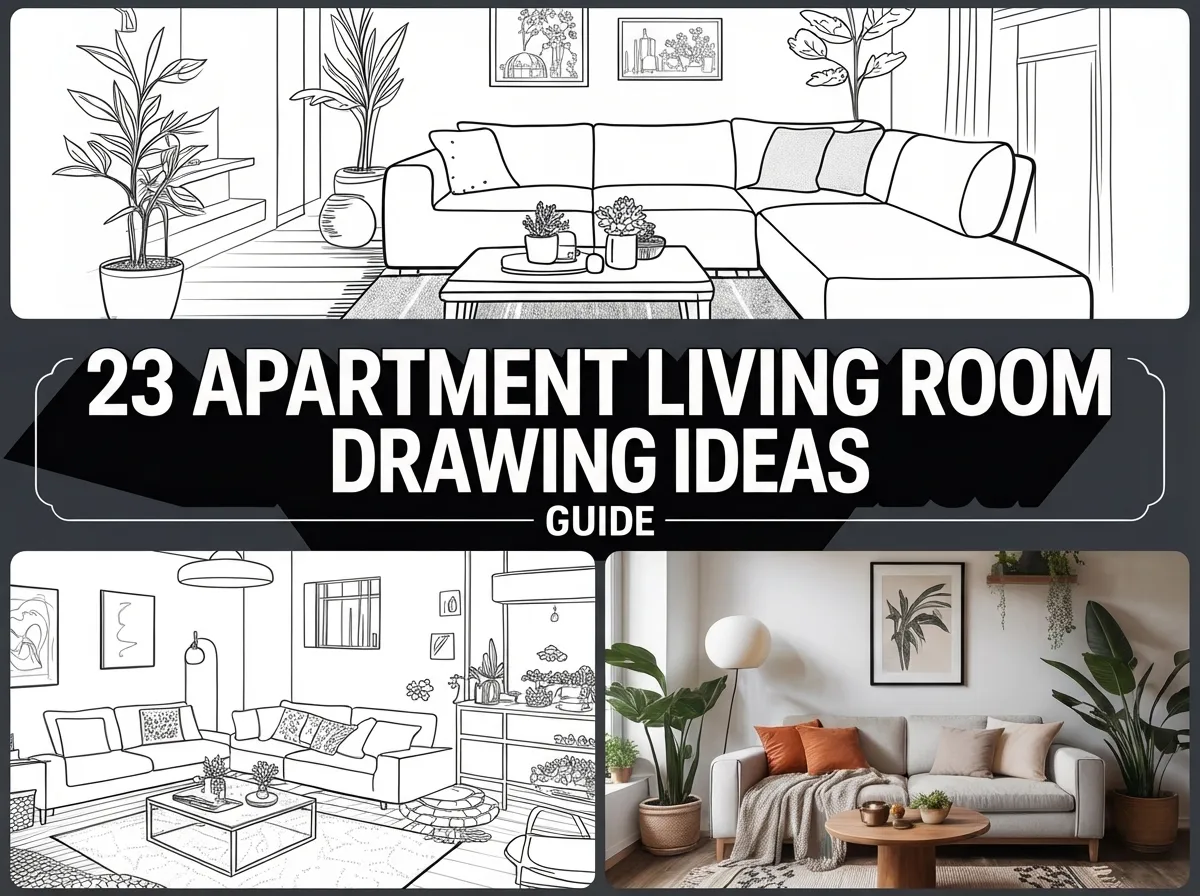
Apartment living room drawings help plan space before furniture purchase or setup. Apartments often have fixed walls, shared boundaries, and limited square footage. Urban housing reports show apartments make up over 40% of city homes. Small errors in layout waste usable space fast. Drawing allows scale control and clear placement. Sketching walls, windows, and doors improves accuracy. A drawing-first approach prevents layout mistakes that appear after furniture arrives.
Living room drawings focus on layout, not decoration. The goal stays clear placement of seating, storage, and walkways. Drawing helps test furniture size and movement paths. Many apartments lack flexible walls. This increases the need for accurate planning. A clear drawing shows how light enters and how people move. Good drawings reduce trial-and-error during setup.
What Makes Apartment Living Room Drawing Different From House Layouts?
Apartment living room drawings require tighter scale control and clearer flow.
Apartments usually have smaller living rooms than houses. Common sizes range between 120 and 250 square feet. This limits furniture options. Drawings must reflect exact measurements. A few inches matter in tight spaces. Entry doors often open into the living room. This affects flow and seating direction. Windows may appear on one wall only. Drawings must respect light direction. Shared walls prevent layout changes. Drawing helps accept these limits early.
Houses allow room expansion and wall movement. Apartments do not. This changes drawing priorities. Clear walkways need planning before furniture placement. Minimum walking clearance stays near 30–36 inches. Drawings show whether this clearance exists. Sightlines also matter more in apartments. A blocked view makes rooms feel smaller. Drawing furniture outlines helps test balance and openness. Apartment living room drawings succeed when flow, scale, and sightlines stay accurate.
Why Should You Draw An Apartment Living Room Before Decorating?
Drawing an apartment living room prevents layout mistakes and wasted space.
Apartment furniture errors happen when scale feels right online but fails in real space. Drawings expose these errors early. A sofa that looks compact may block walkways once placed. Tables may crowd seating zones. Interior planning studies show layout testing reduces rework by 25–30%. Drawing exact wall lengths, door swings, and window spans helps avoid blocked paths. A plan shows where power outlets and vents sit. This protects access. Drawing also reveals dead zones that waste floor area.
Decorating without a drawing often causes imbalance. One side may feel heavy. Another side may stay empty. Drawings help balance furniture weight and spacing. They test rug size, seating distance, and TV height before purchase. Clear sketches support decisions on sectional vs loveseat use. Designers note that drawings improve confidence and reduce returns by 20%. Drawing first saves time, money, and effort in small apartments.

What Are The 23 Apartment Living Room Drawing Ideas?
The 23 apartment living room drawing ideas focus on layout clarity, furniture scale, and sightlines.
Listing drawing ideas early helps plan before buying furniture or moving items. Apartment living rooms differ in width, length, and light access. Some rooms suit centered seating. Others need corner or wall-based layouts. Drawing ideas act as tested patterns. Interior layout research shows people understand space 35% better through sketches than verbal planning. These ideas guide placement of sofas, chairs, rugs, and media units with clear spacing.
Each drawing idea works as a base plan. Adjustments follow room shape and lifestyle. The ideas focus on furniture outlines, not decor details. This keeps planning fast and accurate. Drawings help test flow from entry to seating zones. They also show how light reaches seating areas. When drawings stay simple, decisions improve. The ideas below prioritize function and scale rather than style trends.

The 23 Apartment Living Room Drawing Ideas
- Basic rectangular layout sketch
- Open-plan apartment living room drawing
- Sofa-centered layout drawing
- TV wall focus sketch
- Window-first layout drawing
- Corner seating plan
- Floating furniture layout sketch
- Rug-defined living zone drawing
- Compact sectional placement sketch
- Loveseat-based layout drawing
- Chair-and-sofa balance sketch
- Minimal furniture layout plan
- Storage wall drawing
- Media unit proportion sketch
- Entry-to-living flow drawing
- Narrow apartment living room plan
- Square living room layout sketch
- Small apartment lighting plan drawing
- Apartment living room perspective sketch
- One-wall living room layout
- Multi-use living room drawing
- Minimalist apartment layout sketch
- Final clean layout draft
Basic Rectangular Layout Sketch
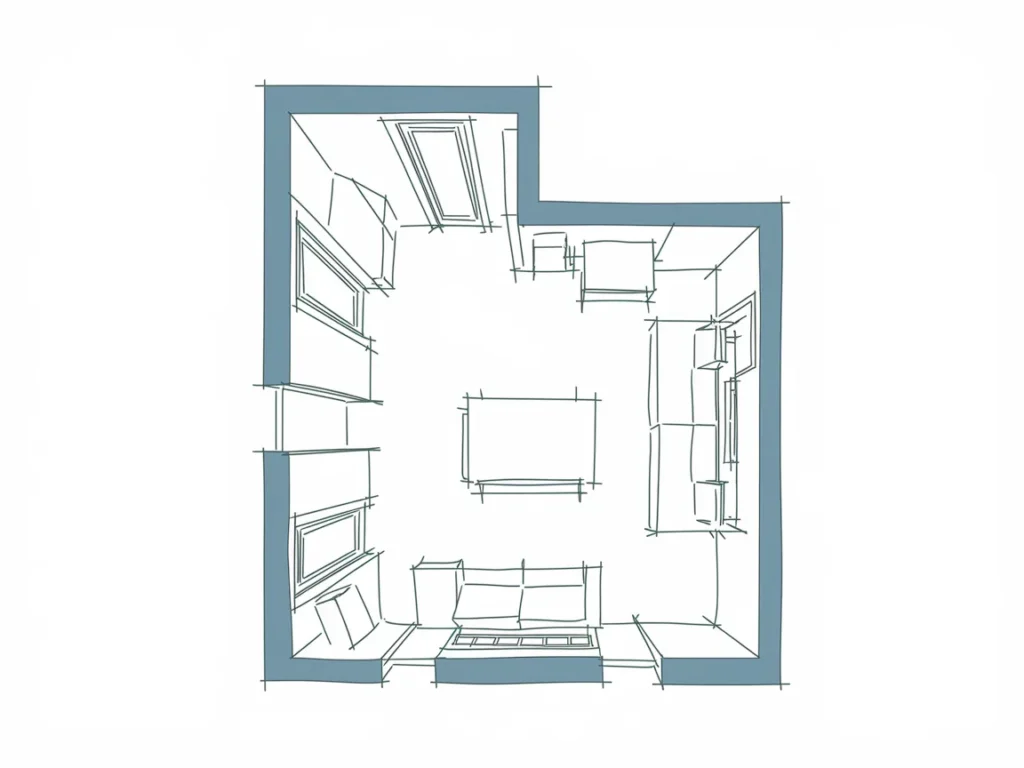
A basic rectangular layout sketch starts with drawing the room outline using real measurements. Most apartment living rooms follow a rectangle shape. Drawing the outer walls first sets scale accuracy. Doors, windows, and openings come next. These elements control furniture limits. A rectangle sketch helps identify usable wall lengths. It also shows how much space stays available for seating. Clear edges support clean planning. This drawing style works well for beginners because it reduces guesswork.
Rectangular sketches help test furniture size fast. Sofas, chairs, and tables appear as simple blocks. These blocks show whether items fit without blocking paths. Walkways should remain near 30–36 inches. This sketch reveals tight points early. A basic rectangular layout forms the base for all other drawing ideas.
Open-Plan Apartment Living Room Drawing
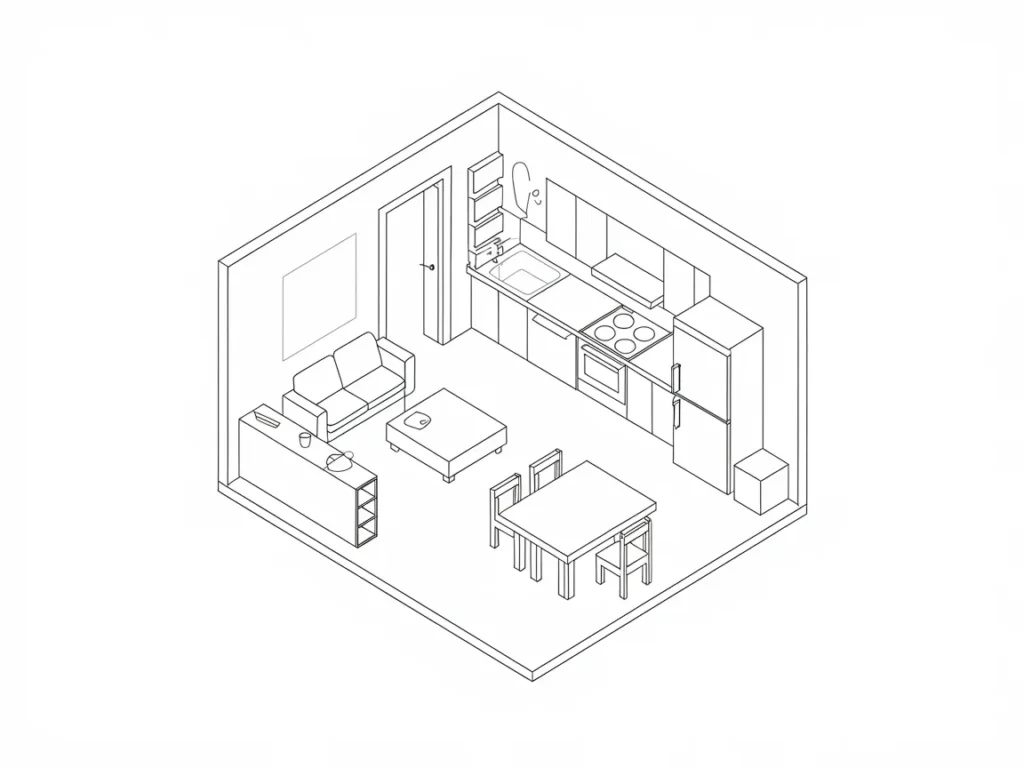
An open-plan apartment living room drawing shows how the living area connects to dining or kitchen zones. Apartments often lack full walls. This makes zone planning critical. The drawing outlines living room boundaries using furniture, rugs, or spacing. Drawing open plans helps prevent overlap between functions. It also shows how people move across shared areas.
Open-plan drawings focus on flow direction. Entry paths should stay clear. Seating should face inward without blocking transitions. Drawing reveals whether a sofa divides space well or blocks movement. Open-plan sketches help balance shared use without visual clutter.
Sofa-Centered Layout Drawing
A sofa-centered layout drawing places the main sofa first. The sofa becomes the anchor of the living room. Drawing starts by placing the sofa against a wall or floating slightly inward. Other furniture aligns around it. This method suits apartments where seating matters most. The drawing shows how far chairs and tables should sit from the sofa.
Sofa-centered sketches help control scale. Oversized sofas quickly appear problematic on paper. The drawing reveals blocked walkways or tight corners. This layout works well for TV-focused rooms. A sofa-centered drawing improves balance and seating comfort before setup.
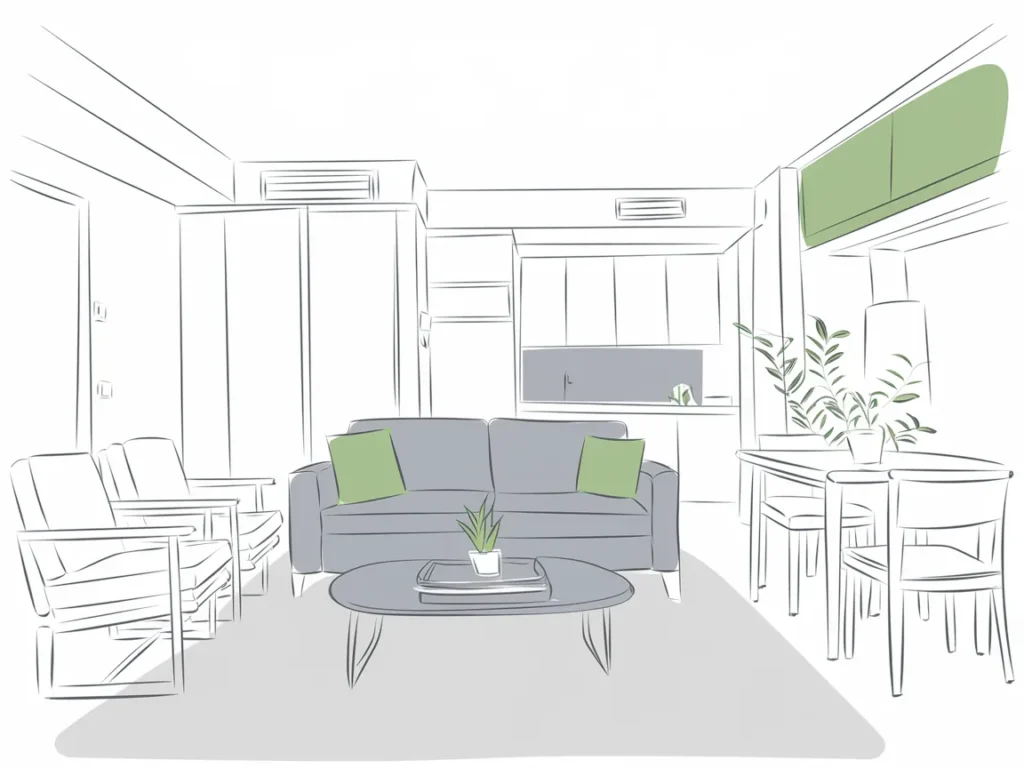
TV Wall Focus Sketch
A TV wall focus sketch plans seating around a single media wall. Drawing starts with the TV position and wall width. Seating distance follows screen size. This avoids neck strain and crowding. The sketch shows whether the TV wall can support cabinets or shelves without overload.
TV focus drawings reveal sightline issues early. Seating must face the screen without blocking windows or paths. The sketch helps test media unit depth and cable access. This drawing style suits apartments where the living room doubles as entertainment space.
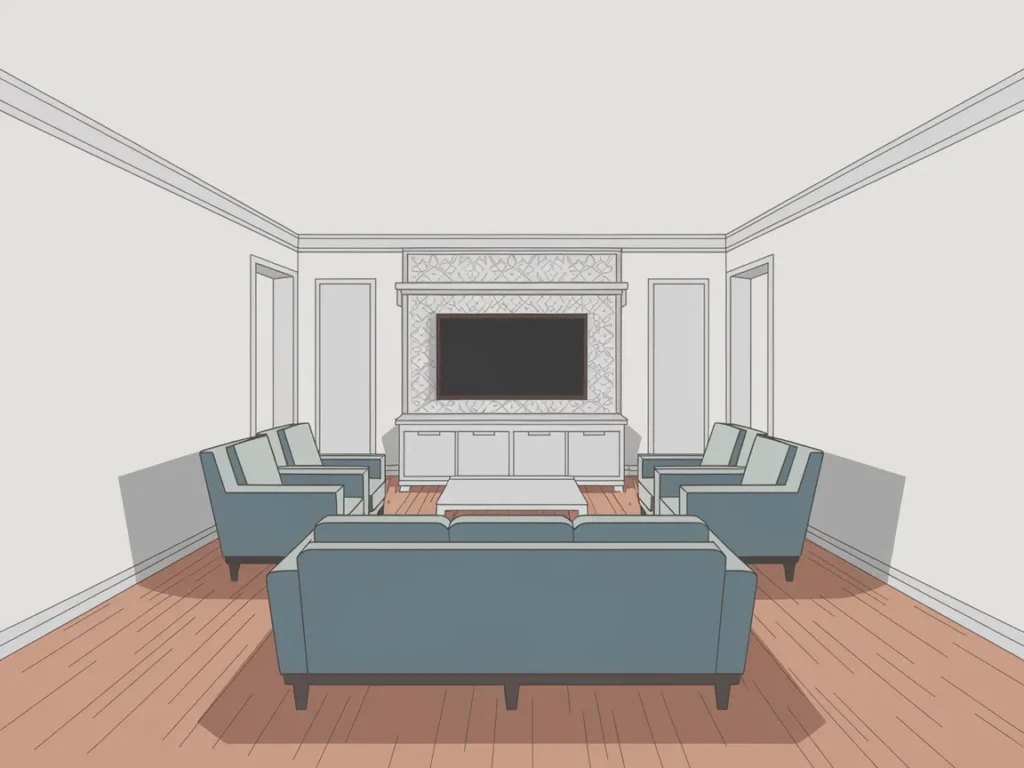
Window-First Layout Drawing
A window-first layout drawing begins by marking window size and location. Natural light affects seating comfort and screen glare. Drawing windows first helps place sofas away from direct glare. It also shows where plants or chairs can sit without blocking light.
Window-first sketches protect brightness. They help avoid tall furniture near glass. The drawing also reveals curtain swing and clearance needs. This layout suits apartments with one main window wall. Window-first planning improves comfort and light use.
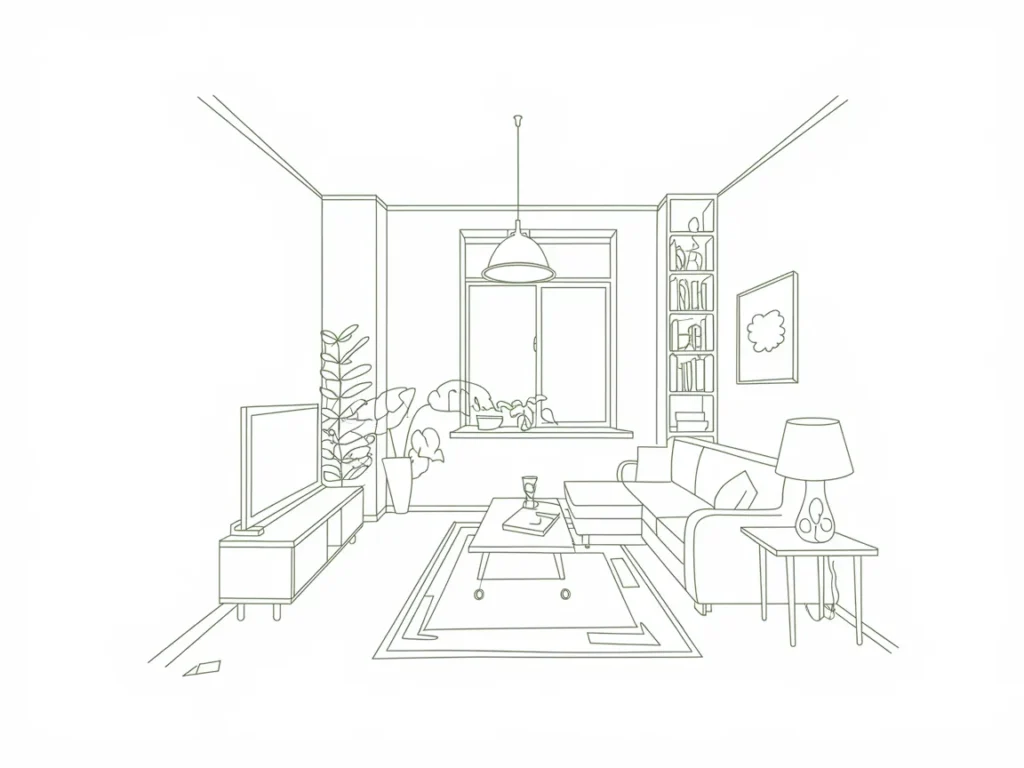
Corner Seating Plan
A corner seating plan drawing places seating along two connecting walls. This plan suits apartments with tight widths. Drawing begins with the corner angle and wall lengths. A sofa or sectional fits best here. The sketch shows how corner placement frees central floor space. Clear center space improves movement and openness. This plan also highlights unused corners that often waste space.
Corner seating drawings help test scale and reach. Side tables must fit without blocking paths. The drawing shows whether corner seating blocks doors or windows. This plan supports conversation zones while keeping walkways clear. Corner seating sketches improve space use in compact apartments.

Floating Furniture Layout Sketch
A floating furniture layout sketch places seating away from walls. This approach works in wider apartments. Drawing starts with the room center. Furniture blocks float inward while keeping clear paths behind. This layout defines zones without walls. The sketch shows how floating sofas affect flow and sightlines.
Floating layout drawings test balance. Too much inward placement crowds the center. Too little feels empty. The drawing helps set correct spacing from walls, usually 12–24 inches. Floating layouts support open-plan apartments where walls stay limited. This sketch improves zoning clarity.
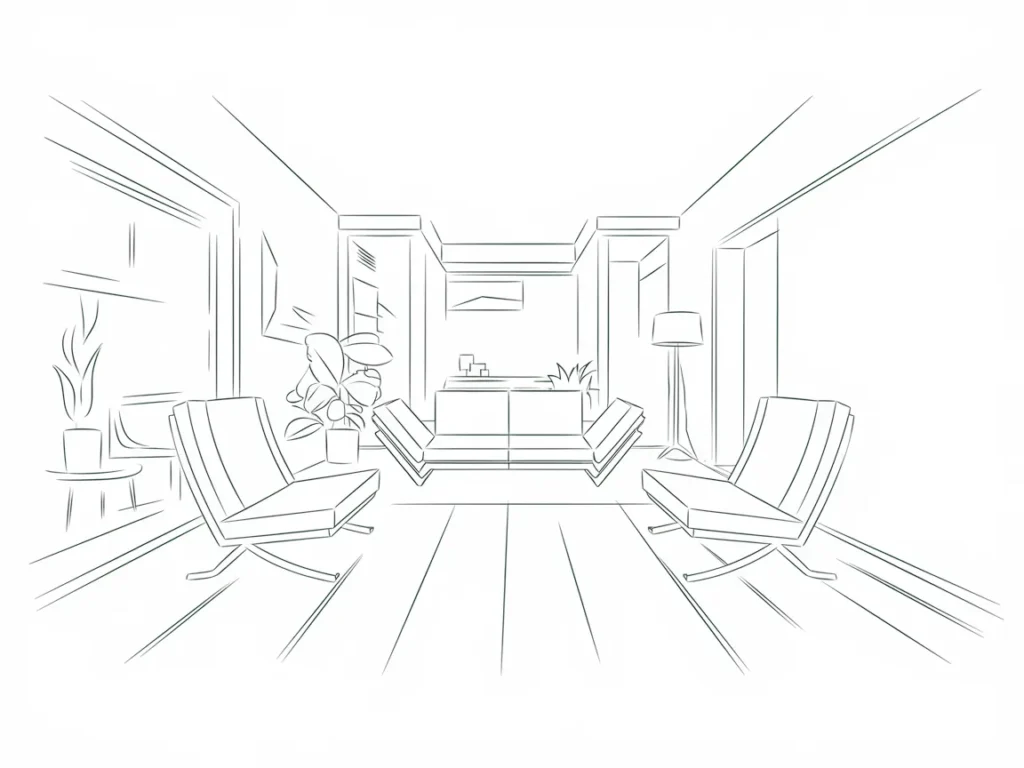
Rug-Defined Living Zone Drawing
A rug-defined living zone drawing uses a rug outline to set boundaries. The rug acts as a frame for seating. Drawing the rug first helps scale furniture correctly. All seating should touch or align with the rug edge. This creates cohesion.
Rug-based drawings prevent common size errors. Small rugs appear wrong on paper fast. The sketch shows whether the rug anchors the space or floats awkwardly. This plan suits apartments with open layouts. Rug-defined drawings improve zone clarity without walls.
Compact Sectional Placement Sketch
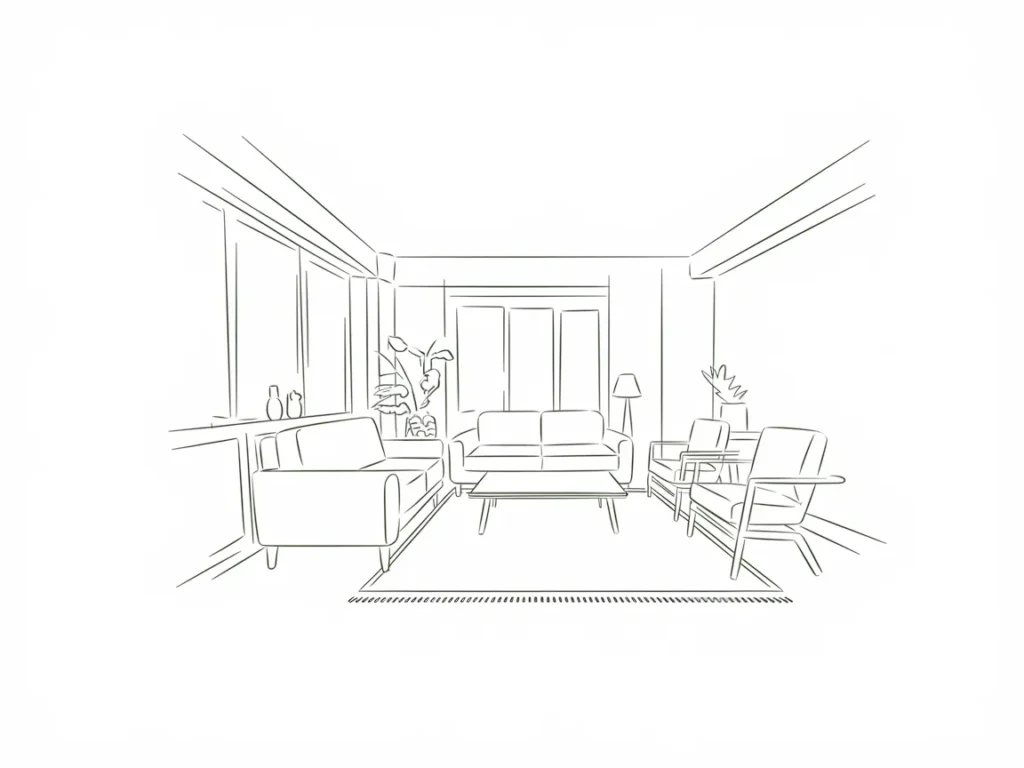
A compact sectional placement sketch tests whether a sectional fits without crowding. Sectionals suit apartments when size stays controlled. Drawing starts with sectional dimensions. The sketch shows corner reach and chaise depth. This prevents blocked walkways.
Sectional sketches reveal entry conflicts early. Door swings and traffic paths appear clearly. The drawing helps decide between left- or right-facing layouts. Compact sectional planning improves comfort without sacrificing movement.
Loveseat-Based Layout Drawing
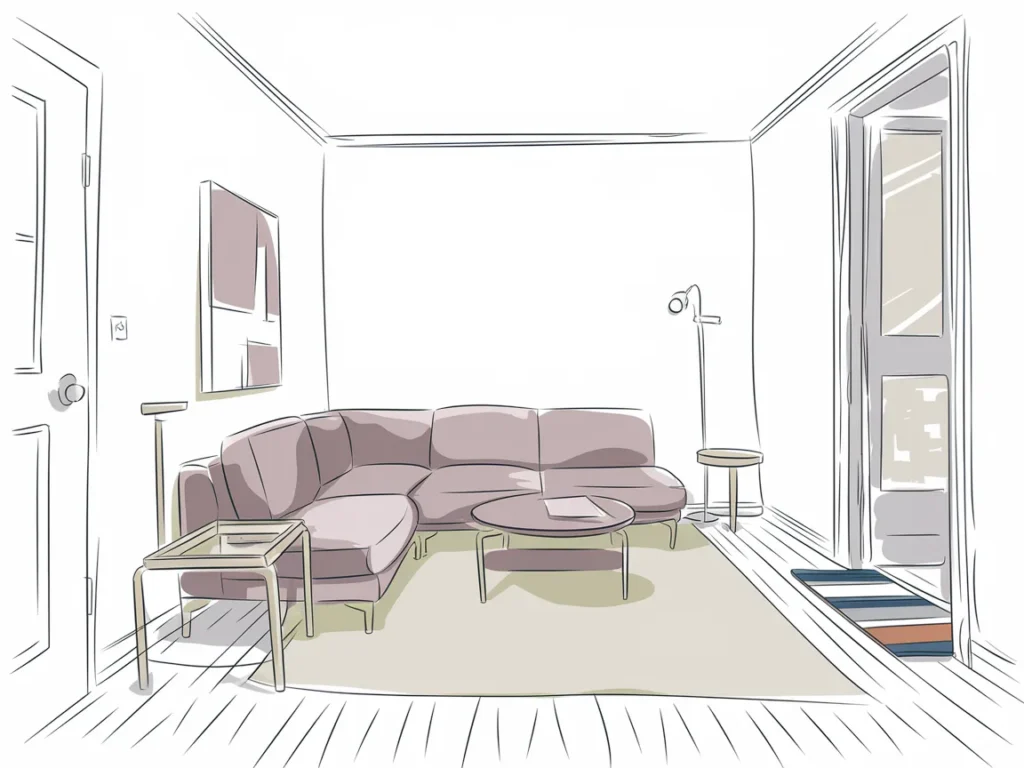
A loveseat-based layout drawing uses a smaller sofa to gain flexibility. Loveseats suit narrow apartments. Drawing begins with loveseat placement, then adds chairs. This shows how smaller seating opens space.
Loveseat sketches highlight balance. Extra chairs must fit without clutter. The drawing shows whether tables and lamps fit well. Loveseat layouts improve openness and adaptability in small apartments.
Chair-And-Sofa Balance Sketch
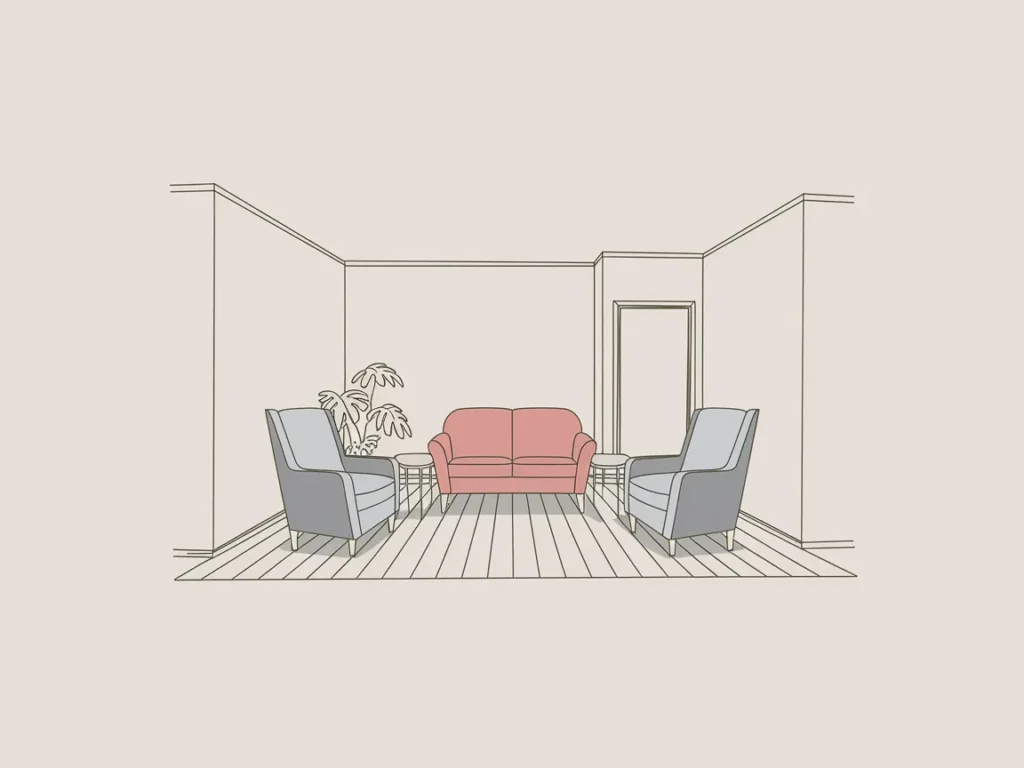
A chair-and-sofa balance sketch plans seating using one sofa and one or two chairs. This approach suits apartments where flexibility matters. Drawing starts with the sofa as the anchor. Chairs appear next, placed at equal distance for conversation flow. The sketch helps control spacing between seats. Balanced spacing improves comfort and movement. This drawing also reveals whether chairs block paths or doors.
Balance sketches help test visual weight. Chairs can feel heavy if placed unevenly. The drawing shows symmetry and alignment clearly. This layout works well in apartments with square or near-square living rooms. Chair-and-sofa balance sketches improve seating comfort and openness.

Minimal Furniture Layout Plan
A minimal furniture layout plan reduces items to core needs only. Drawing begins with seating and one surface. Extra pieces remain excluded. This plan suits small apartments with limited space. The sketch shows how much floor remains open. Open floor space improves movement and visual calm.
Minimal plans expose unnecessary items early. The drawing shows whether storage or tables add value. This approach helps avoid crowding. Minimal layout sketches support simple, efficient living room setups.

Storage Wall Drawing
A storage wall drawing plans shelving or cabinets along one wall. This approach keeps storage vertical. Drawing starts with wall height and width. Shelves appear as shallow blocks. This shows how storage affects sightlines.
Storage wall sketches help avoid overbuilding. Deep units quickly block space. The drawing shows safe depth limits. This layout suits apartments needing storage without floor loss. Storage wall planning improves organization and openness.

Media Unit Proportion Sketch
A media unit proportion sketch tests TV and cabinet size against wall space. Drawing begins with wall width. The TV outline appears next. Cabinets follow below. This prevents oversized units.
Proportion sketches show height balance. Units that climb too high block light and feel heavy. The drawing helps set correct scale. Media proportion planning improves comfort and viewing balance.
Entry-To-Living Flow Drawing
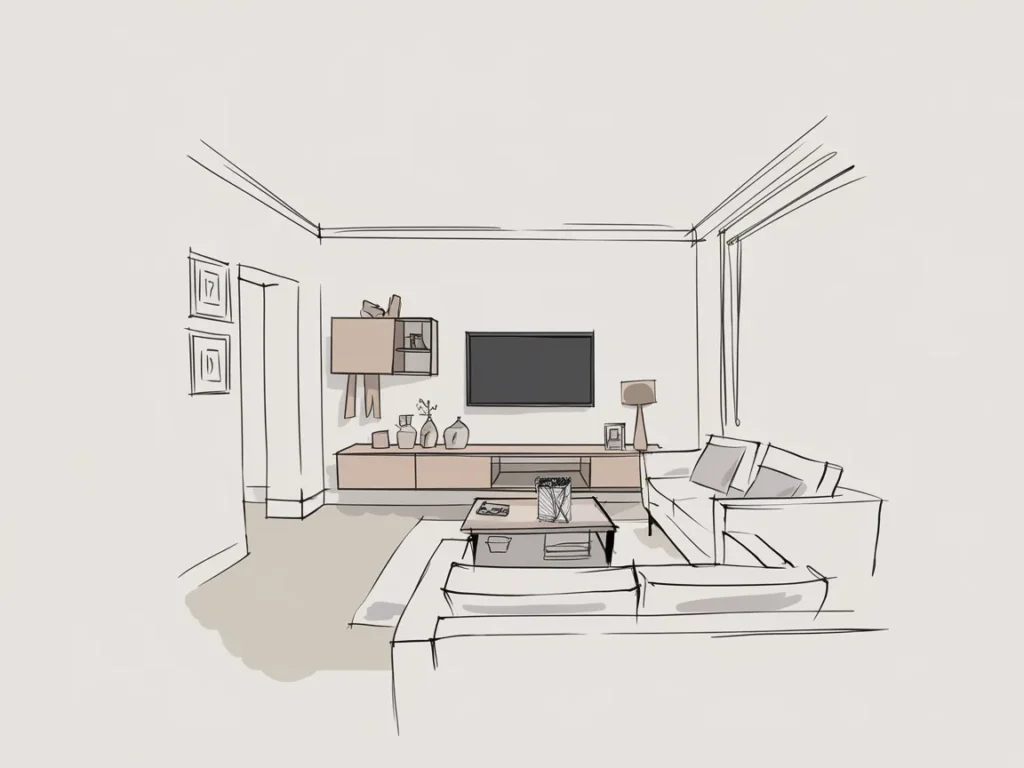
An entry-to-living flow drawing maps movement from the door into seating areas. Drawing starts with the entry point and door swing. Paths appear as arrows. This reveals bottlenecks.
Flow drawings help protect walkways. Furniture must not block entry paths. This plan suits apartments where doors open directly into the living room. Flow sketches improve ease and safety.

Narrow Apartment Living Room Plan
A narrow apartment living room plan drawing focuses on width limits first. Many apartments measure under 10 feet wide, which restricts furniture depth. Drawing begins by marking the narrowest points. Furniture blocks stay shallow and aligned to one side. This keeps a clear walking strip along the opposite wall. The sketch shows how narrow rooms need linear layouts rather than clusters.
Narrow room drawings expose common errors early. Deep sofas and wide tables appear oversized on paper. The plan helps choose slim seating and wall-mounted storage. This drawing improves flow and prevents tight passageways.

Square Living Room Layout Sketch
A square living room layout sketch handles equal wall lengths. Square rooms often feel harder to plan due to symmetry. Drawing starts from the center point. Seating then radiates evenly around it. This prevents one side from feeling heavier.
Square layout sketches reveal balance issues quickly. Furniture spacing must stay equal on all sides. The drawing helps place rugs and tables correctly. This plan suits apartments with compact but balanced room shapes. Square layout drawings improve symmetry and comfort.
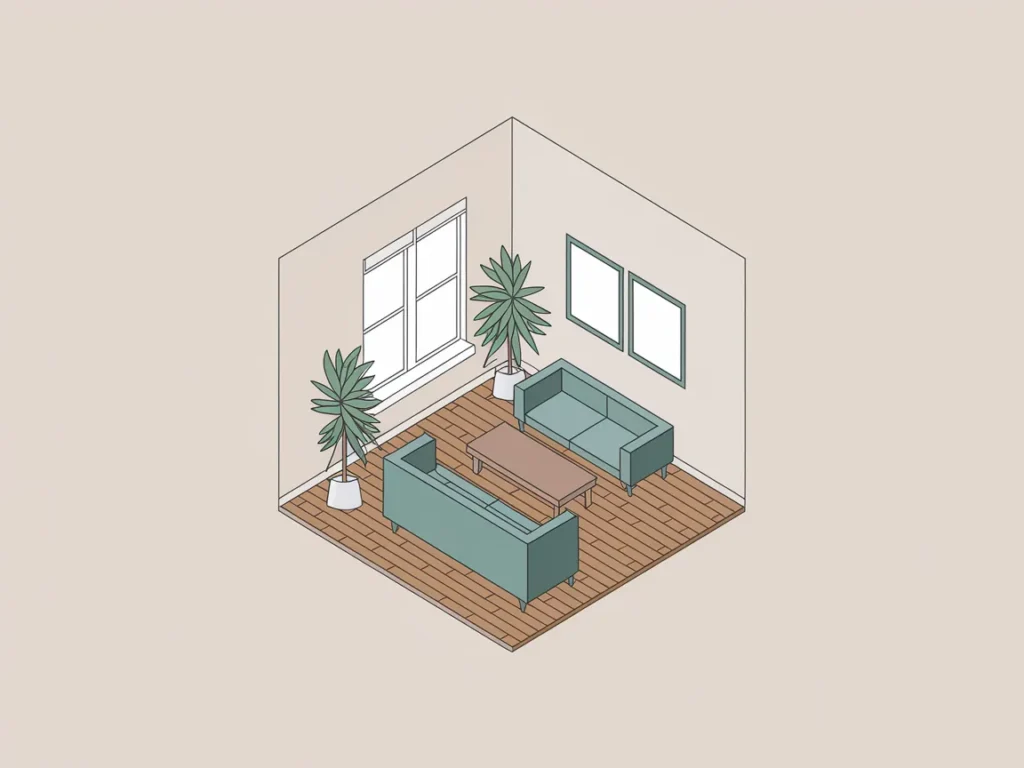
Small Apartment Lighting Plan Drawing
A small apartment lighting plan drawing maps light sources along with furniture. Drawing starts with window placement. Lamps and ceiling lights appear next. This shows shadow zones early. Poor lighting placement becomes clear on paper.
Lighting plan sketches help avoid dark seating areas. The drawing shows where floor lamps fit without blocking paths. This plan suits apartments with limited overhead lighting. Lighting drawings improve comfort and usability.
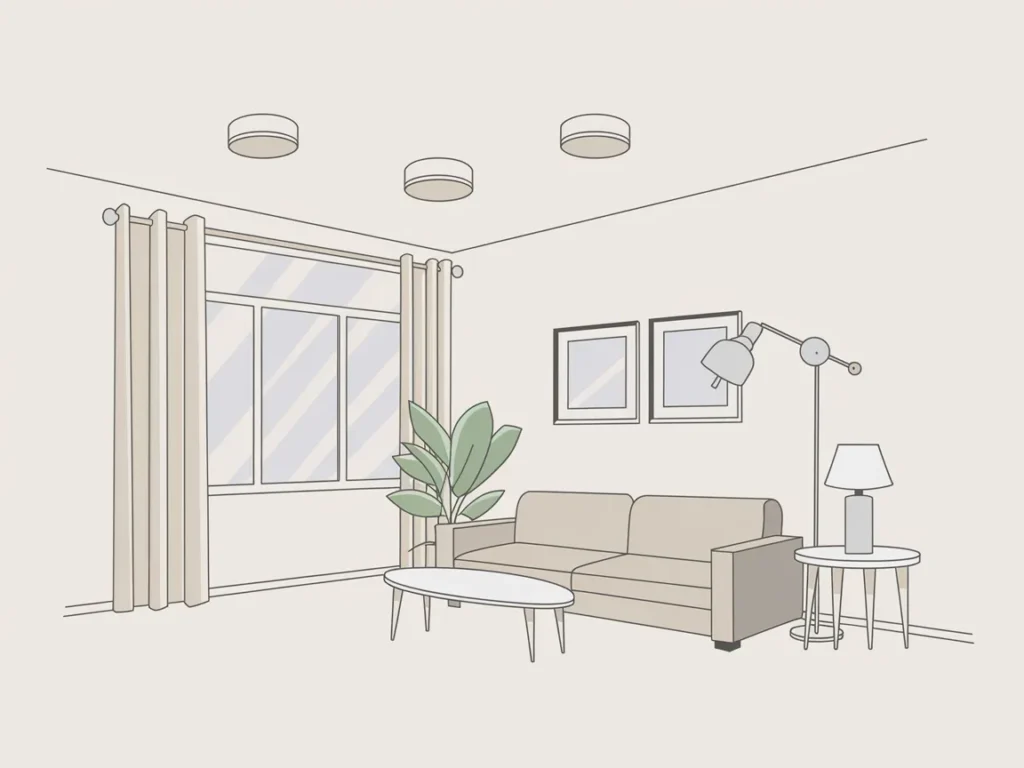
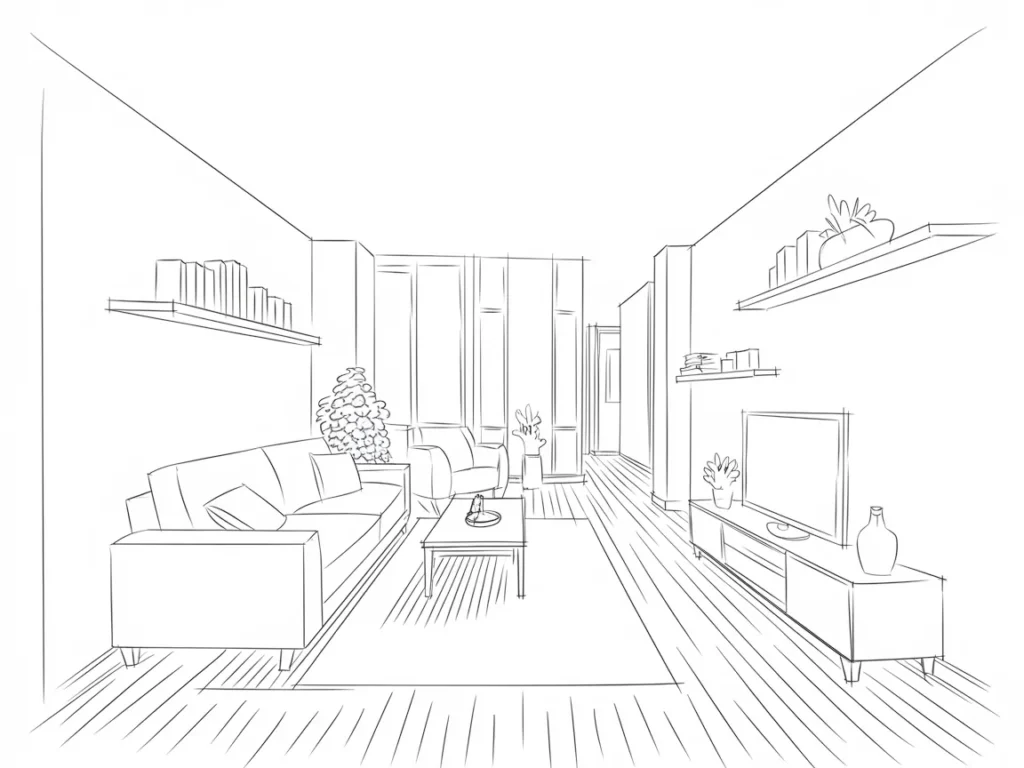
Apartment Living Room Perspective Sketch
An apartment living room perspective sketch shows depth and height. This drawing uses a single-point or two-point view. It helps visualize ceiling height, furniture height, and spacing. Perspective sketches reveal visual crowding.
Perspective drawings help test how furniture blocks sightlines. Tall units appear heavier in perspective than plan view. This sketch improves understanding of scale beyond flat layouts. Perspective planning supports better decisions.
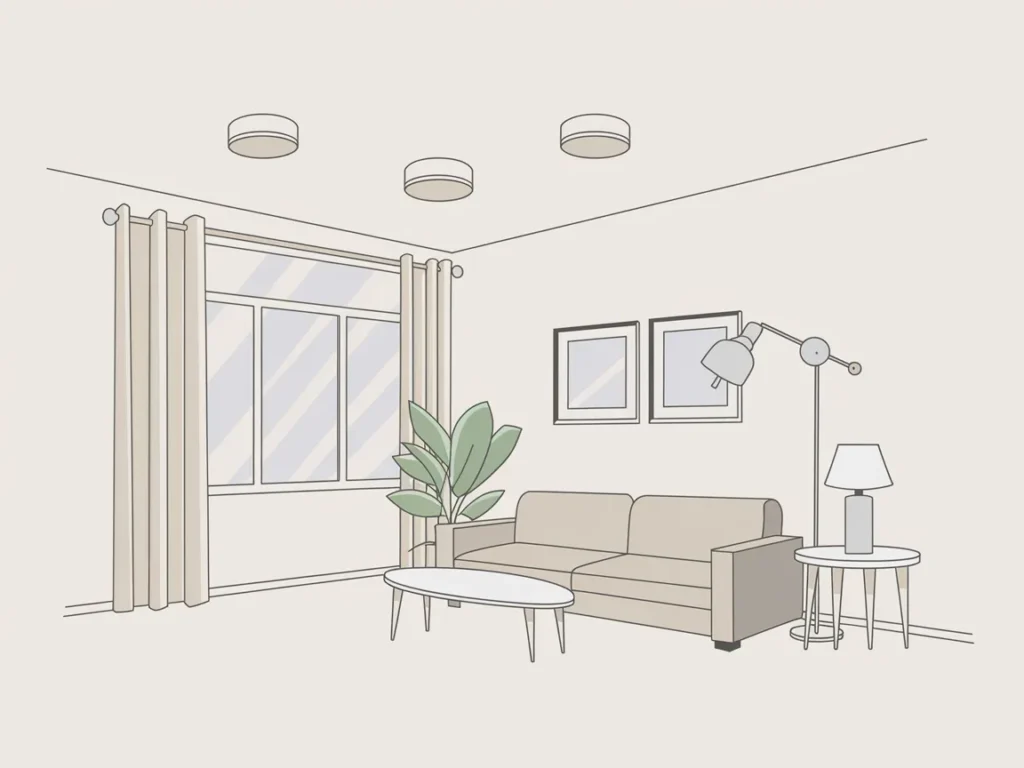
One-Wall Living Room Layout
A one-wall living room layout drawing places all major furniture along one wall. This suits studios and small apartments. Drawing starts with the longest wall. Sofa, storage, and TV align in sequence.
One-wall layouts free central space. The drawing shows how this improves movement. It also reveals whether the wall can support all functions. One-wall sketches improve clarity in very small rooms.
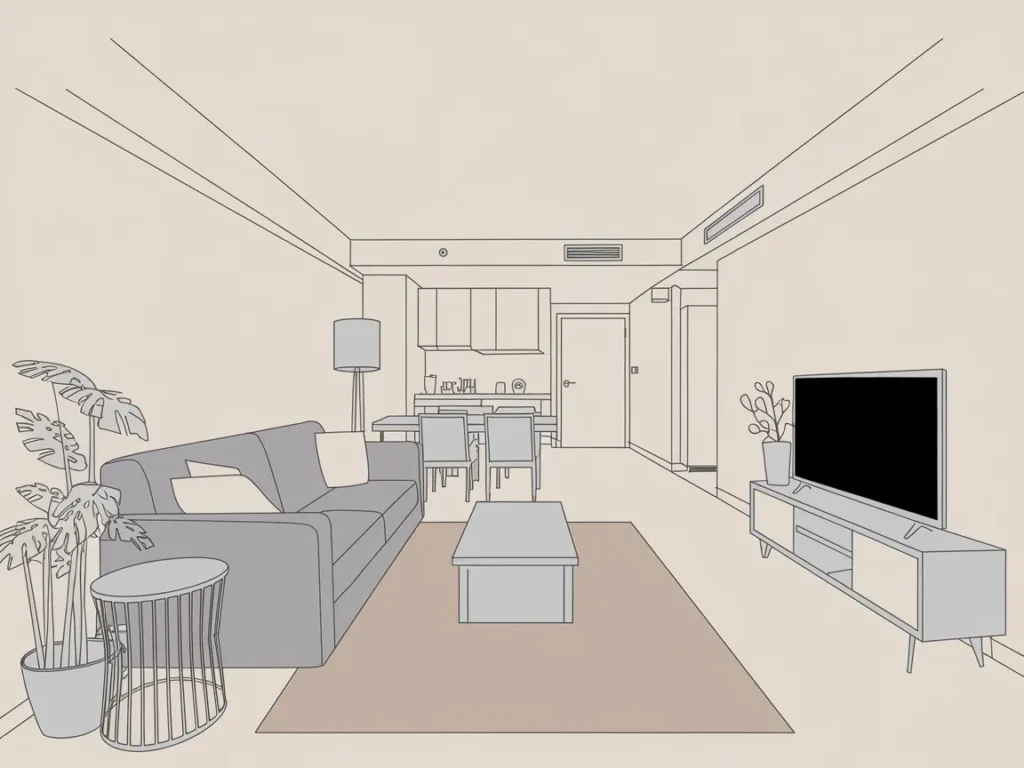
Multi-Use Living Room Drawing
A multi-use living room drawing plans more than one function in the same space. Apartments often combine seating, work, and dining inside one room. Drawing starts by marking each function as a zone. Furniture blocks define use areas without walls. This prevents overlap and confusion. Clear zoning improves daily use.
Multi-use drawings reveal conflicts early. A desk may block seating. A table may crowd walkways. The sketch helps test flexible furniture placement. This plan suits apartments with limited rooms. Multi-use drawings improve efficiency and comfort.
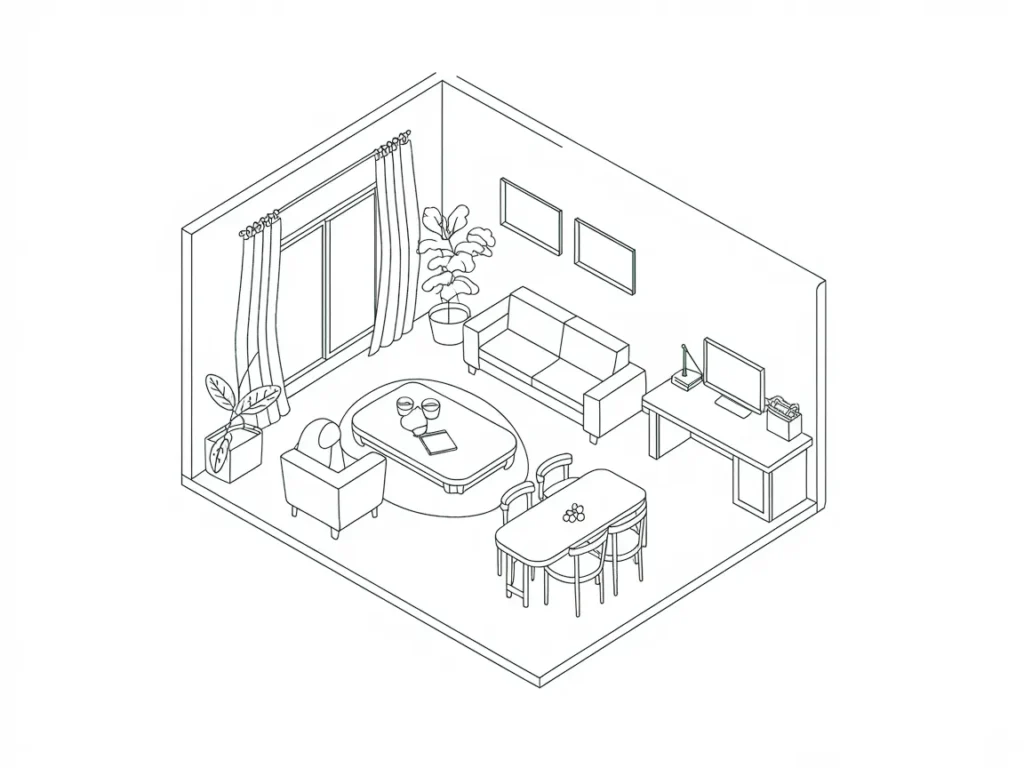
Minimalist Apartment Layout Sketch
A minimalist apartment layout sketch reduces elements to core needs. Drawing begins with walls and main seating only. Extra furniture stays excluded. This exposes how much space remains open. Open space improves movement and calm.
Minimalist sketches show what items truly matter. The drawing helps remove clutter before setup. This approach suits small apartments and studios. Minimalist layout drawings improve clarity and long-term comfort.
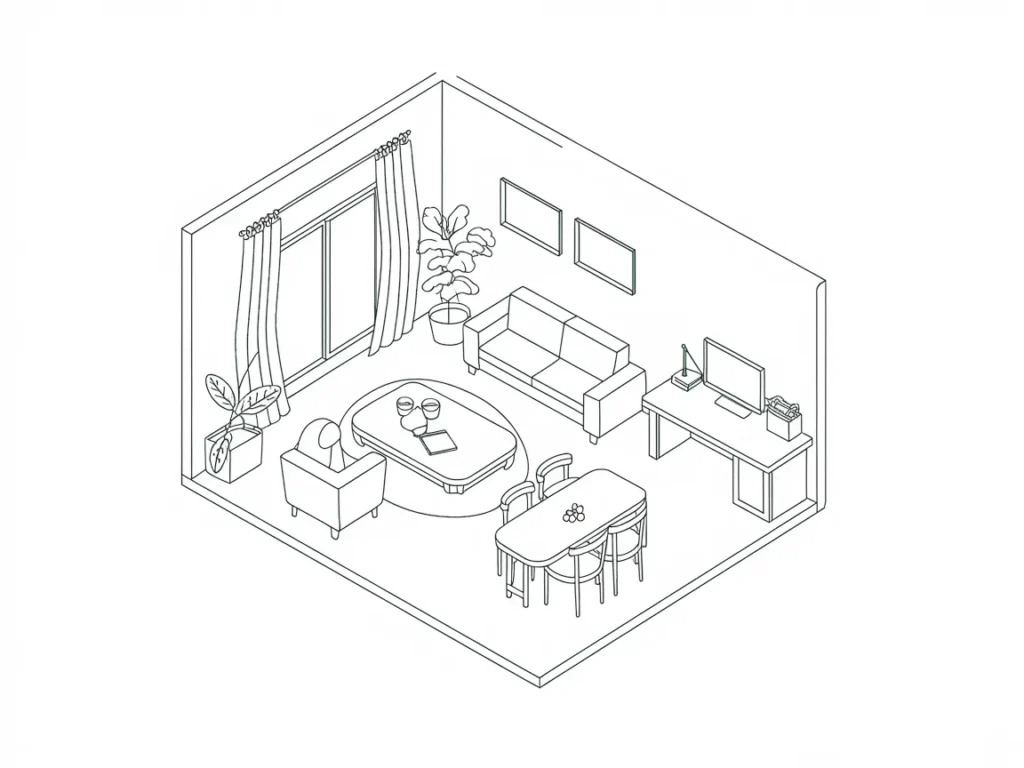
Final Clean Layout Draft
A final clean layout draft combines lessons from all previous sketches. Drawing removes trial lines and keeps only the chosen layout. This draft shows exact furniture placement and spacing. It becomes the reference during setup.
Clean drafts reduce mistakes during moving and buying. The drawing shows confidence and balance. This final step ensures the living room works as planned. Final drafts improve execution and satisfaction.
Frequently Asked Questions
People ask about scale, furniture size, and drawing accuracy.
These questions reflect common planning issues in small apartments.
Do I Need Exact Measurements For A Drawing?
Yes. Accurate measurements prevent furniture fit errors.
Can I Draw Without Design Software?
Yes. Paper sketches work when drawn to scale.
How Detailed Should A Living Room Drawing Be?
Details should include walls, furniture size, and walkways.
Does Drawing Really Save Money?
Yes. Drawings reduce wrong purchases and returns.
Conclusion
Apartment living room drawings work best when based on real measurements. In real apartment planning, most problems came from skipped measurement steps. Furniture that looked compact online often blocked walkways once delivered. Drawings exposed these issues early. The most effective drawings stayed simple. Walls, doors, windows, and furniture outlines mattered more than decor details. Flow drawings reduced entry congestion. Rug outlines prevented size mistakes. Perspective sketches revealed height and crowding issues missed in flat plans. Final clean drafts improved execution during setup day. People who drew first moved furniture fewer times. Long-term comfort improved when layouts respected clearance and light. Drawing before decorating proved faster and cheaper than trial placement.

