

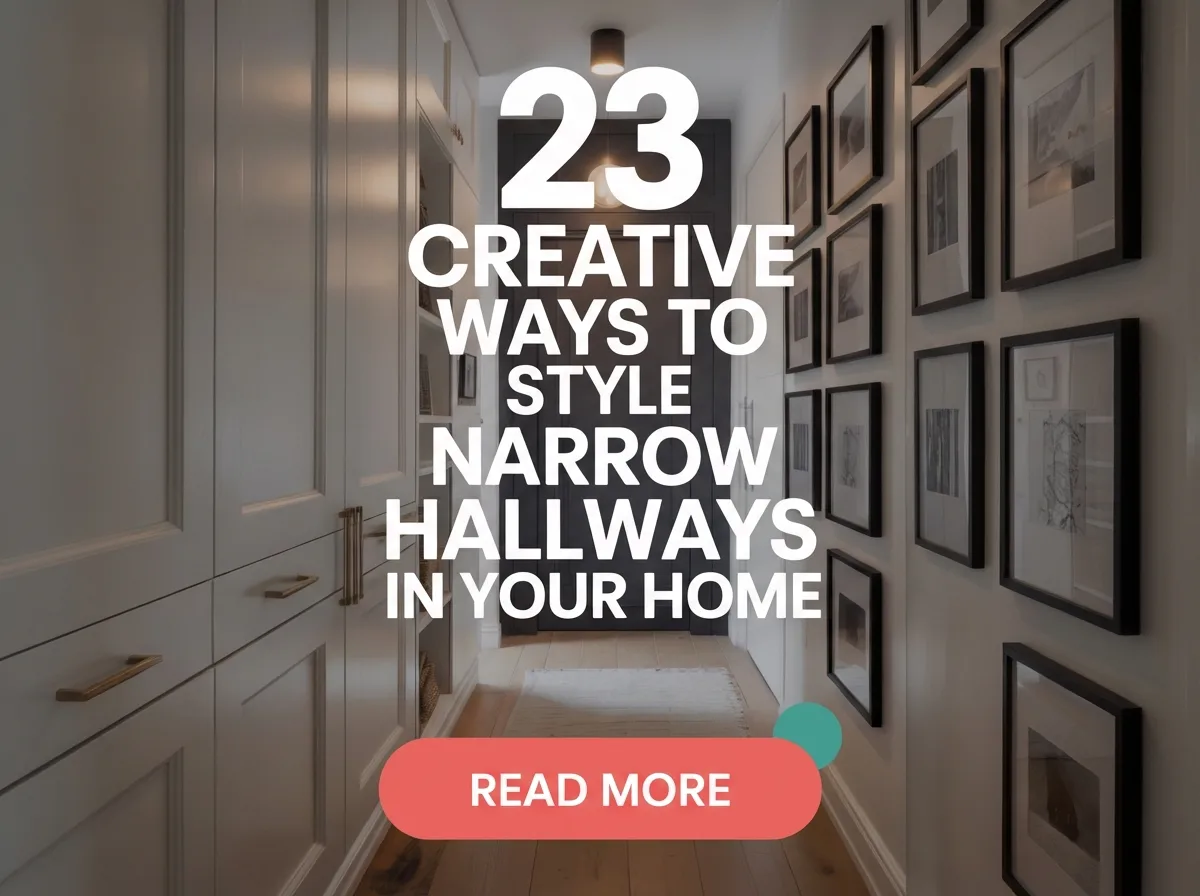
23 creative ways to style narrow hallways in your home focus on space-saving design, light control, and visual flow. These ideas use reflective colors, slim decor, and wall-mounted elements to prevent crowding. Each approach helps narrow hallways feel wider and more open. The goal is a clean, functional, and balanced hallway design.
A styled narrow hallway should support movement first. Walls, lights, and floors must stay clear of depth. Visual tricks help the space feel wider without construction. In 2026 homes, hallway styling focuses on safety, brightness, and long-term comfort rather than decoration volume.
How Narrow Hallways Can Feel Wider Without Structural Changes
Narrow hallways feel wider when light, surface finish, and wall use stay controlled. Light reflection changes how width gets perceived. Pale wall colors bounce light across the hallway instead of absorbing it. Matte finishes reduce glare while still spreading brightness. Ceiling and trim should stay close in tone to walls to avoid visual breaks. US interior studies show light continuity improves perceived hallway width during movement.
Wall use must stay flat. Items that project outward reduce shoulder clearance and create tension while walking. Styling should sit flush to the wall plane. Mirrors, slim frames, and wall-mounted lighting improve width perception without depth. When surfaces stay smooth and light stays even, narrow hallways feel open without changing structure.
Design Choices That Make Narrow Hallways Feel Smaller
Narrow hallways feel smaller when design choices block light, add depth, or interrupt movement. Dark wall colors absorb light and reduce edge visibility. This makes walls feel closer during movement. Strong contrast between walls, trim, and doors creates visual breaks that shorten the space. Glossy finishes reflect light unevenly and cause glare, which increases discomfort. US interior lighting studies show dark, high-contrast hallways raise visual strain during walking.
Furniture depth creates another problem. Console tables, benches, or coat racks that extend into the walkway reduce shoulder clearance. Even small protrusions force body adjustment while passing. Overloaded gallery walls add visual clutter and pull attention sideways. Poor lighting placement worsens these issues by casting shadows at floor level. When depth, contrast, and clutter combine, narrow hallways feel tight and stressful.
23 Creative Ways To Style Narrow Hallways
These 23 styling ideas improve width perception, light flow, and safe movement in narrow hallways. Styling narrow hallways differs from decorating larger spaces. Every choice must respect walking clearance. Walls should carry most of the visual weight. Floors and ceilings should stay simple to avoid visual breaks. In US homes, narrow hallways often sit between bedrooms and bathrooms, which increases traffic. These ideas focus on keeping paths clear while improving comfort and balance.
Each idea below avoids deep furniture and heavy decor. The goal stays consistent across all layouts: improve brightness, reduce visual pressure, and guide movement forward. These methods work in apartments, townhomes, and older houses without remodeling.
The 23 Creative Ways To Style Narrow Hallways
- Light-reflective wall colors
- Wall-mounted lighting only
- Full-length mirrors
- Slim picture ledges
- Vertical wall paneling
- Flush wall art frames
- Minimal gallery spacing
- Runner rugs with side gaps
- Continuous flooring
- Door color blending
- Recessed wall niches
- Ceiling-height paint tricks
- Simple ceiling fixtures
- Warm light temperature
- Narrow hallway accent wall
- Texture without depth
- Door swing planning
- Clear sightline styling
- Monochrome palette
- Wall-mounted hooks only
- Long hallway rhythm styling
- Narrow entry transition plan
- Final narrow hallway layout rule
Light-Reflective Wall Colors
Light-reflective wall colors help narrow hallways feel wider by spreading available light across the space. Soft whites, warm off-whites, and pale neutrals reflect light evenly and reduce edge shadow. In US homes, narrow halls often lack windows, so wall color becomes the main light carrier. Flat or eggshell finishes work better than gloss because they avoid glare while still brightening the path.
Color consistency matters. Using one wall color from end to end prevents visual stops. Trim and doors should stay close in tone to walls. This keeps the hallway reading as one continuous space instead of segments. Light-reflective colors reduce visual pressure during movement and improve comfort throughout the day.
Wall-Mounted Lighting Only
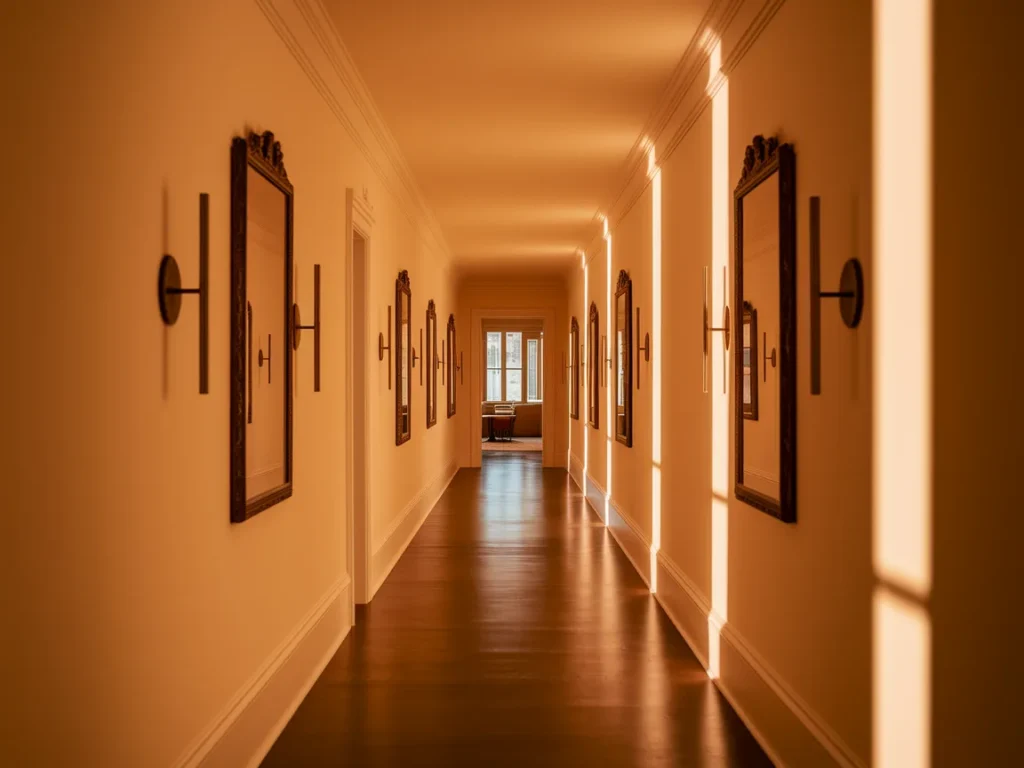
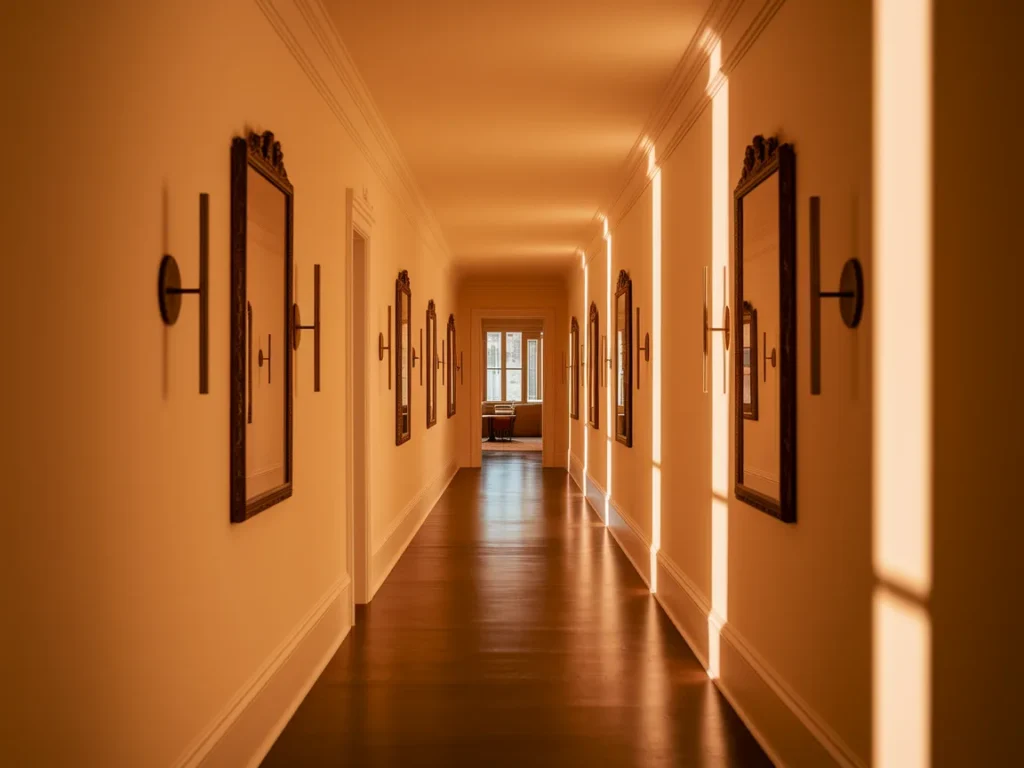
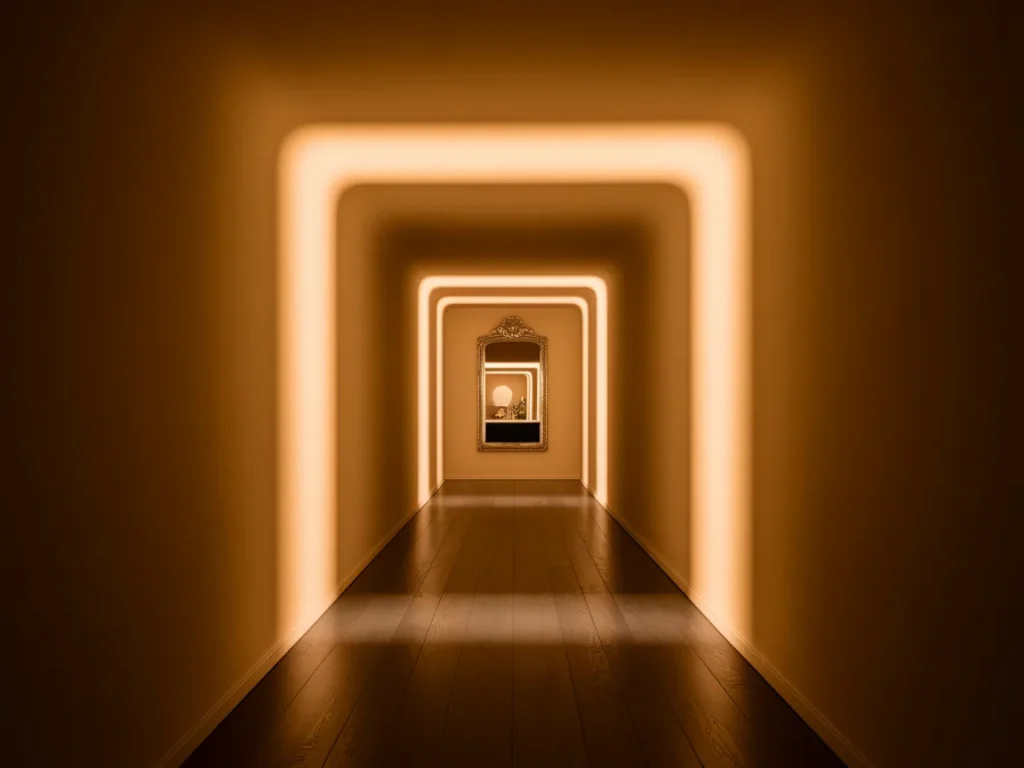
Wall-mounted lighting keeps narrow hallways clear by removing floor and table fixtures. Sconces and flush wall lights provide light without reducing walking width. Placement should stay above shoulder height to avoid contact. In long narrow halls, evenly spaced wall lights improve rhythm and brightness.
Light direction should aim outward or upward to wash walls gently. Harsh downward beams create dark floor edges and reduce comfort. Warm light supports calm movement during night hours. Wall-mounted lighting improves safety while keeping the hallway visually open.
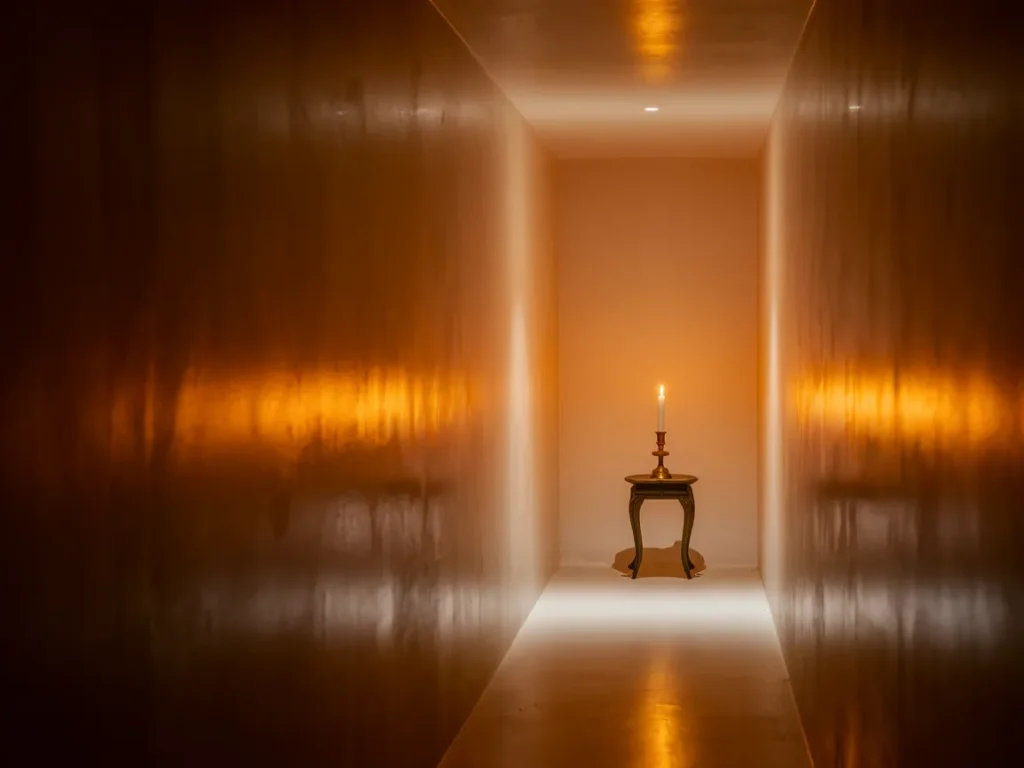
Full-Length Mirrors
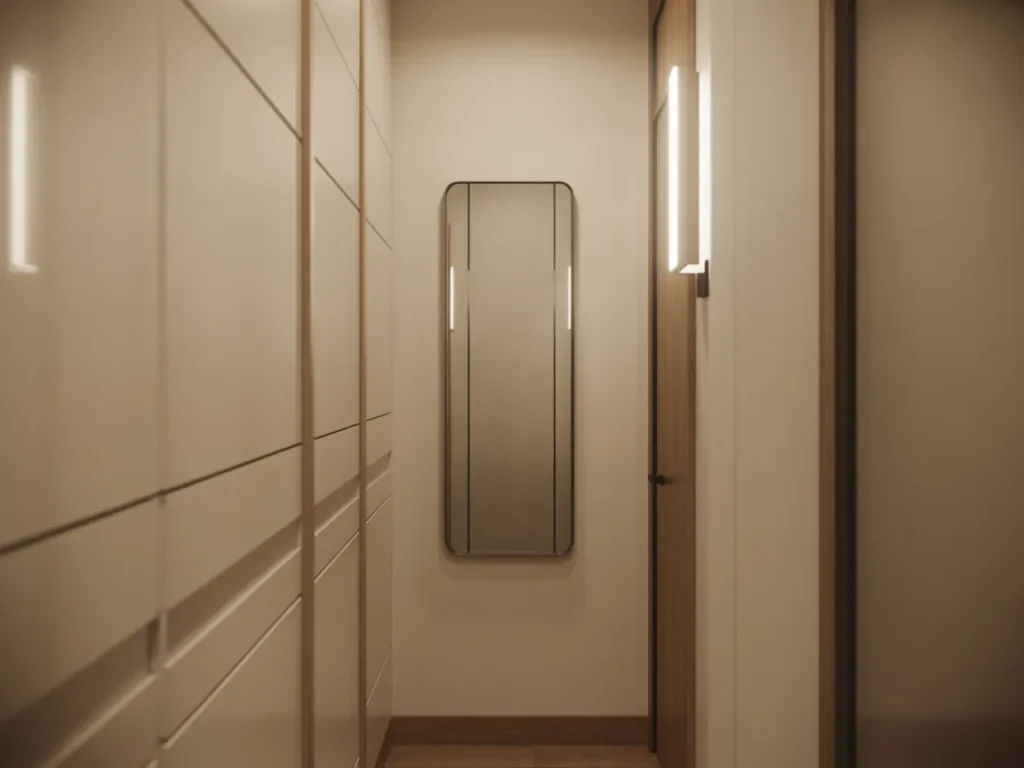
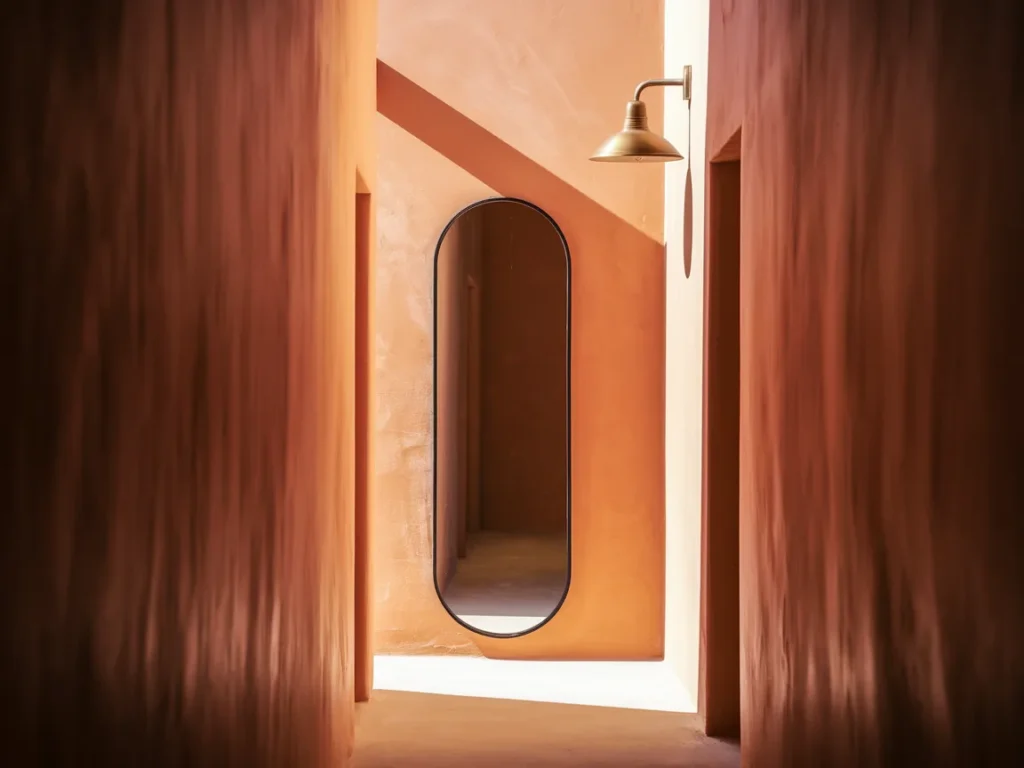
Full-length mirrors increase perceived width by reflecting light and space. Mirrors work best when placed on one long wall rather than at the end. This reflection doubles visual depth and reduces the tunnel effect common in narrow halls.
Frames should stay thin and flush to the wall. Heavy frames add depth and reduce benefit. Mirrors should avoid facing each other to prevent visual confusion. When used correctly, mirrors make narrow hallways feel brighter and less confined.
Slim Picture Ledges
Slim picture ledges add decor without blocking movement. Ledges should stay shallow, under two inches deep. This allows artwork display while keeping shoulders clear. Ledges work best when mounted at eye level and used sparingly.
Only a few frames should sit on each ledge. Overcrowding creates clutter. Neutral frames reduce distraction. Slim ledges give flexibility for change while keeping the hallway flat and usable.
Vertical Wall Paneling
Vertical wall paneling draws the eye upward and improves proportion in narrow hallways. Slim vertical lines make ceilings feel taller, which reduces the sense of tightness. Paneling should stay shallow and painted in light tones.
Avoid heavy textures or dark colors. Panels should blend with wall color for continuity. Vertical paneling works best on one or both long walls to maintain balance. This approach improves scale without adding objects.
Flush Wall Art Frames
Flush wall art frames keep narrow hallways clear by staying flat against the wall. Frames with slim profiles reduce depth and prevent shoulder contact. Art should stay medium to large in size to avoid clutter from many small pieces. This approach works well in long corridors common in US homes.
Spacing between frames matters. Even gaps maintain order and calm. Neutral frames blend with wall color and reduce distraction. Flush wall art improves visual interest without narrowing the walkway.
Minimal Gallery Spacing
Minimal gallery spacing reduces visual noise in tight spaces. Fewer pieces with wider spacing help walls feel longer and cleaner. Overfilled gallery walls shorten perception and pull attention sideways during movement.
Gallery layouts should follow a straight horizontal or vertical line. Avoid staggered patterns. When spacing stays controlled, artwork supports flow instead of interrupting it.
Runner Rugs With Side Gaps
Runner rugs guide movement while keeping floors visible on both sides. Side gaps prevent the floor from feeling closed in. Runners should stay centered and narrow enough to show flooring edges.
Patterns must stay subtle. Bold designs distract in tight paths. Non-slip backing improves safety. Runner rugs add warmth while reinforcing direction without reducing width.
Continuous Flooring
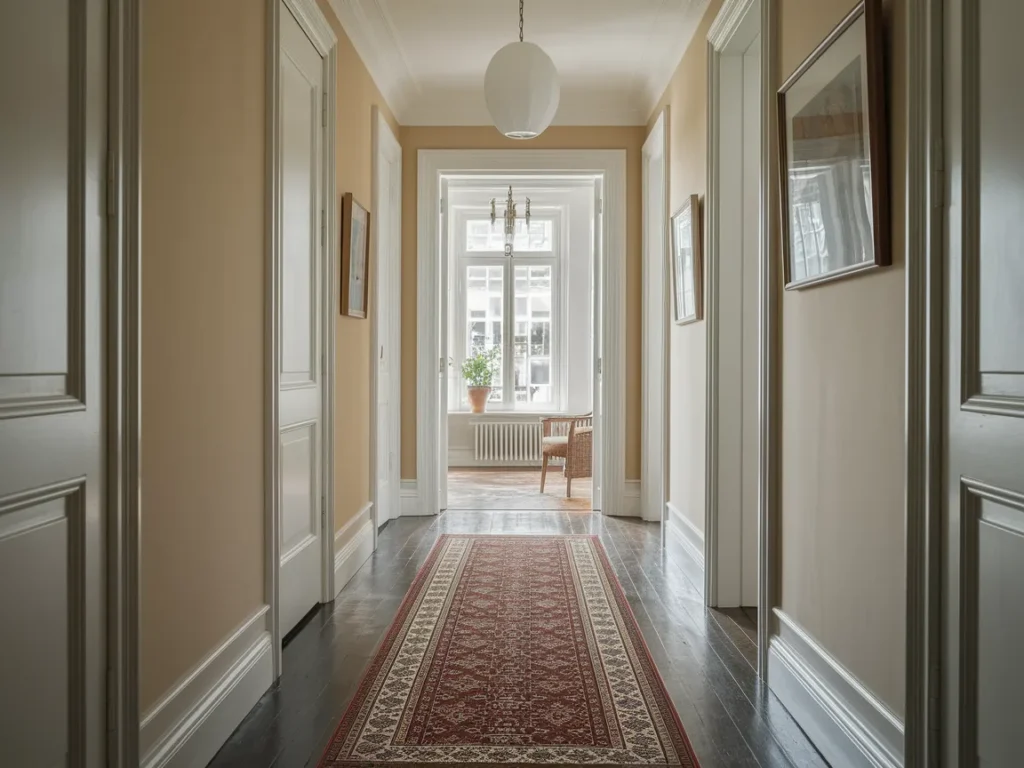
Continuous flooring improves flow by removing visual breaks. When flooring changes between rooms or sections, narrow hallways feel shorter. Using one material from room to room increases length perception.
Light or medium tones work best. Strong patterns reduce calm. Continuous flooring supports smooth movement and visual continuity across the home.
Door Color Blending
Door color blending reduces visual stops along narrow halls. Doors painted close to wall color blend into the background. This removes repeated breaks that shorten space.
Trim should also stay subtle. High contrast doors draw attention and reduce width perception. Blended doors help walls read longer and smoother.
Recessed Wall Niches
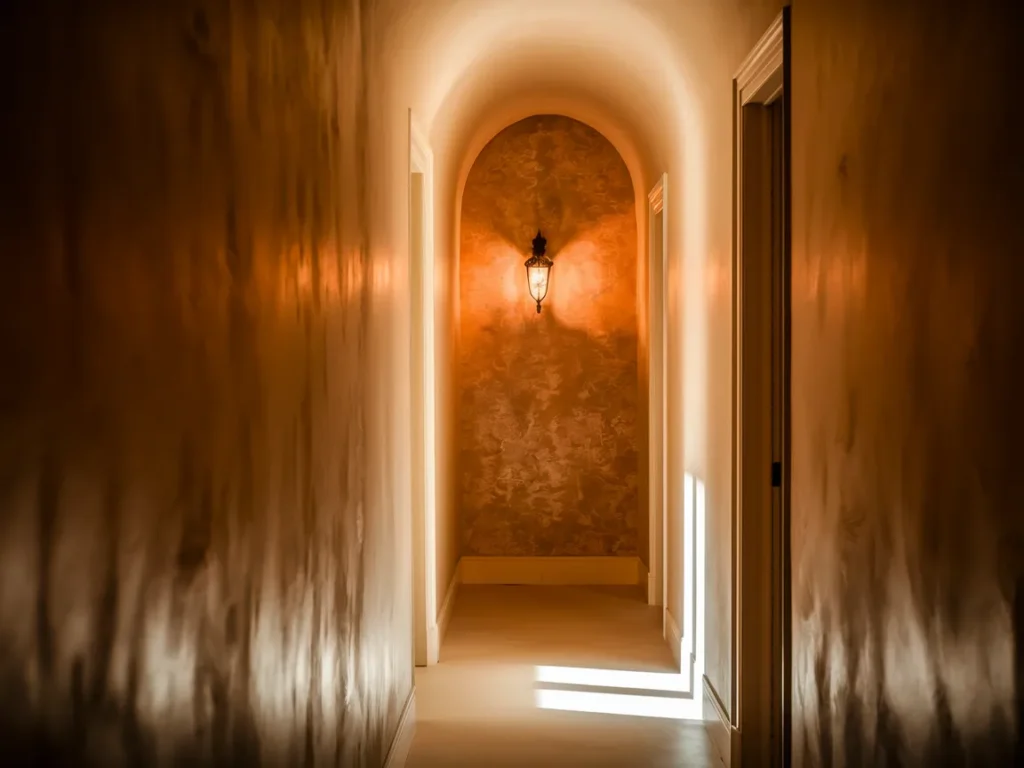
Recessed wall niches add function without reducing hallway width. Niches sit inside the wall plane, so shoulders and arms stay clear while walking. Niches work well for keys, small art, or soft lighting. In US homes, niches often fit between studs, which keeps structure intact.
Lighting inside niches should stay soft and indirect. Overfilling removes benefit. When used with restraint, recessed niches add interest while keeping the hallway flat and safe.
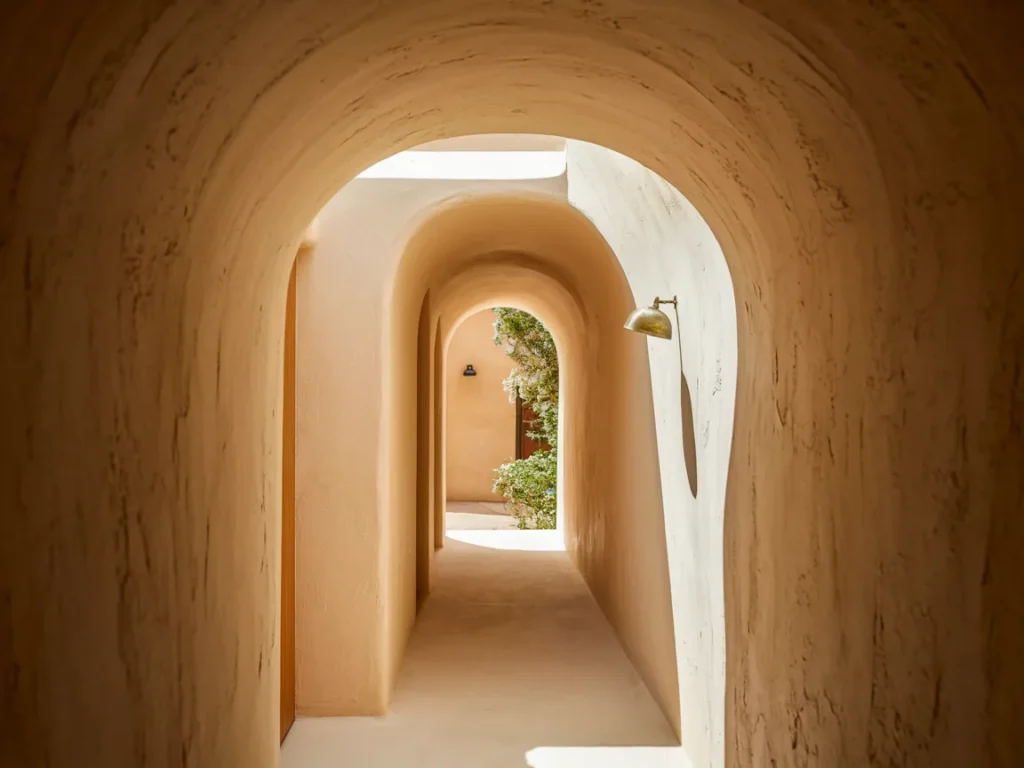
Ceiling-Height Paint Tricks
Ceiling-height paint tricks increase perceived height in narrow hallways. Painting walls and ceilings in similar light tones removes sharp boundaries. This makes the space feel taller and more open.
Vertical color continuation pulls the eye upward. Avoid dark ceiling paint, which lowers perception. When walls and ceilings blend softly, narrow hallways feel less boxed in.
Simple Ceiling Fixtures
Simple ceiling fixtures keep head clearance open. Flush or semi-flush lights work best in narrow spaces. Large hanging fixtures reduce comfort and cause visual clutter.
Fixtures should spread light evenly rather than focus downward. Clean shapes reduce distraction. Simple ceiling lighting supports safety while keeping the hallway visually calm.
Warm Light Temperature
Warm light temperature improves comfort during movement. Warm bulbs reduce harsh contrast on walls and floors. This matters in hallways used early morning or late night.
All fixtures should use the same temperature. Mixed tones create visual breaks. Warm lighting helps narrow hallways feel welcoming instead of sharp.
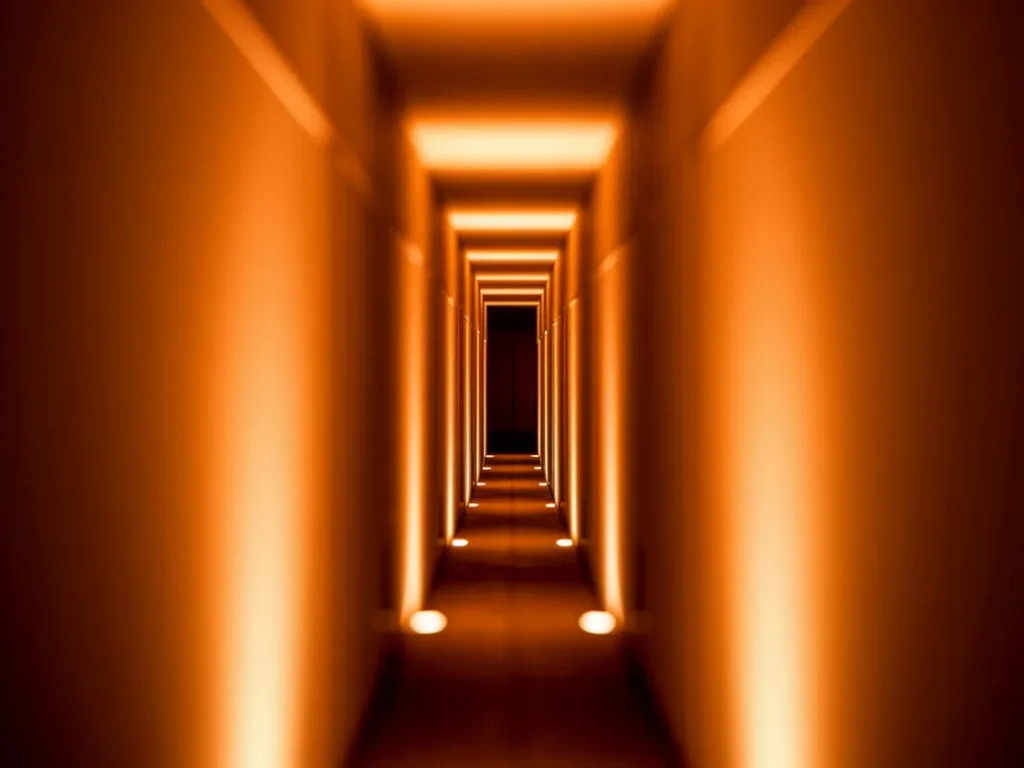
Narrow Hallway Accent Wall
A narrow hallway accent wall adds focus when used correctly. One short wall or end wall works best. Accent color should stay muted and light.
Avoid accent walls along long narrow stretches. This narrows perception. When placed carefully, accent walls add depth without closing space.
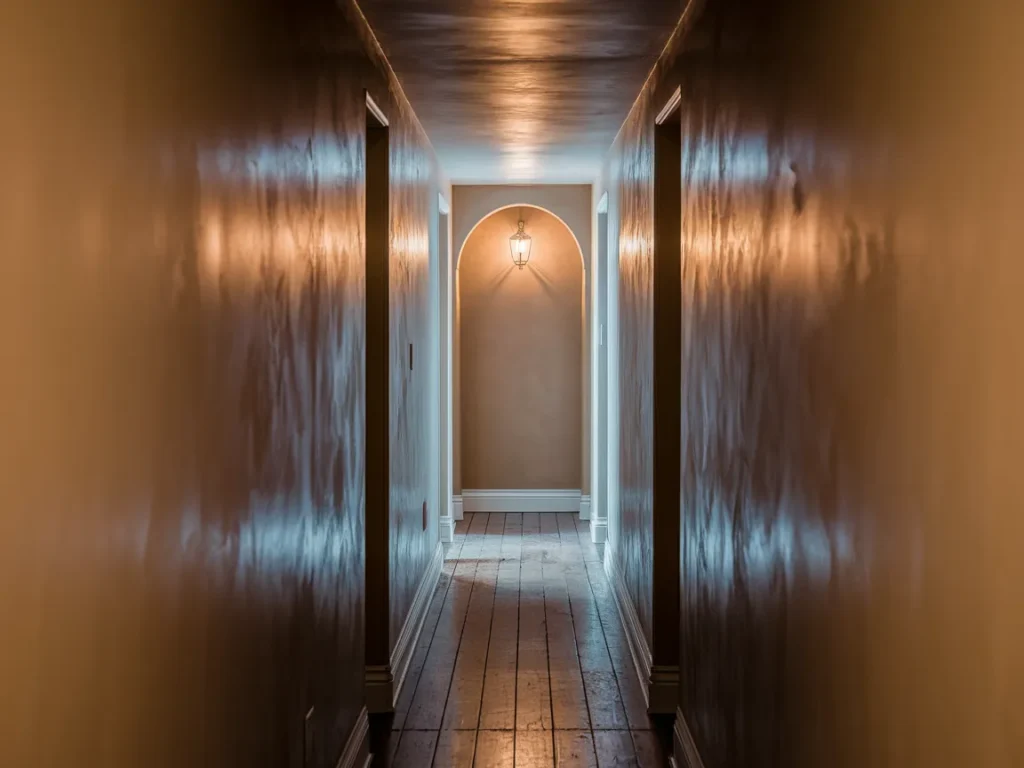
Texture Without Depth
Texture without depth adds interest while keeping walls flat. Limewash, subtle plaster, or textured paint finishes change light reflection without adding thickness. This keeps shoulder space clear and reduces visual pressure in tight paths.
Textures should stay soft and consistent. Avoid heavy relief or layered panels. When texture stays shallow, narrow hallways gain character without losing width.
Door Swing Planning
Door swing planning prevents doors from blocking walk paths. In narrow halls, doors that open into the hallway reduce usable width. Planning inward or pocket door swings improves flow.
Clear swing zones reduce collisions during daily use. When doors move away from the hall, movement feels easier and safer.
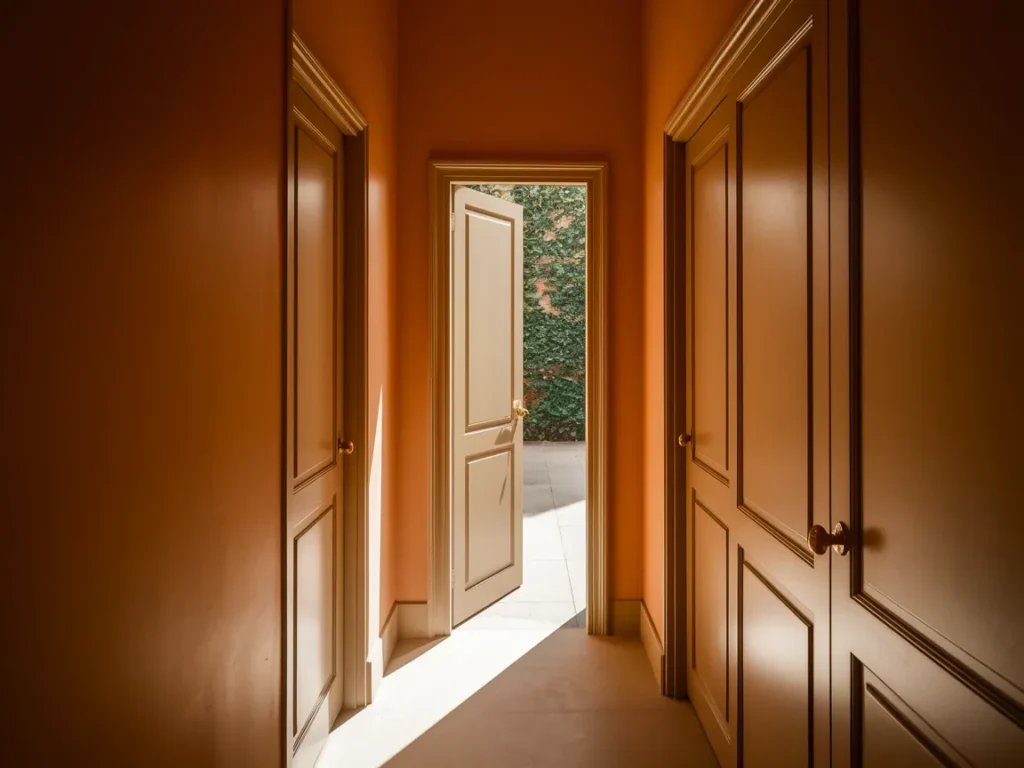
Clear Sightline Styling
Clear sightline styling keeps the hallway readable from end to end. Removing tall objects and visual blocks allows the eye to travel forward. This reduces the tunnel effect.
Wall decor should align along one visual axis. Lighting should guide the eye ahead. When sightlines stay open, narrow halls feel longer and calmer.
Monochrome Palette
A monochrome palette uses one color family across walls, trim, and doors. Shade variation adds interest without contrast breaks. This keeps the hallway visually unified.
Textures and materials provide depth instead of color change. Monochrome styling reduces visual stops and improves width perception.
Wall-Mounted Hooks Only
Wall-mounted hooks add function without floor clutter. Hooks should stay slim and spaced evenly. Placement above shoulder height prevents contact while walking.
Heavy coat racks should stay outside narrow halls. Wall hooks keep items accessible while preserving clearance.
Long Hallway Rhythm Styling
Long narrow hallways benefit from visual rhythm. Repeating elements like evenly spaced lights or art create pacing during movement. This reduces the tunnel effect and improves comfort. Rhythm should feel steady, not busy.
Elements must stay shallow and aligned. Consistent spacing guides the eye forward. When rhythm replaces clutter, long narrow halls feel intentional instead of endless.
Narrow Entry Transition Plan
A narrow entry transition plan controls the shift from door to hallway. Entry zones should stay simple and open. One wall element or mirror works better than furniture.
Floor mats should stay flush. Lighting should turn on automatically. When the transition stays clear, the hallway feels wider from the first step.
Final Narrow Hallway Layout Rule
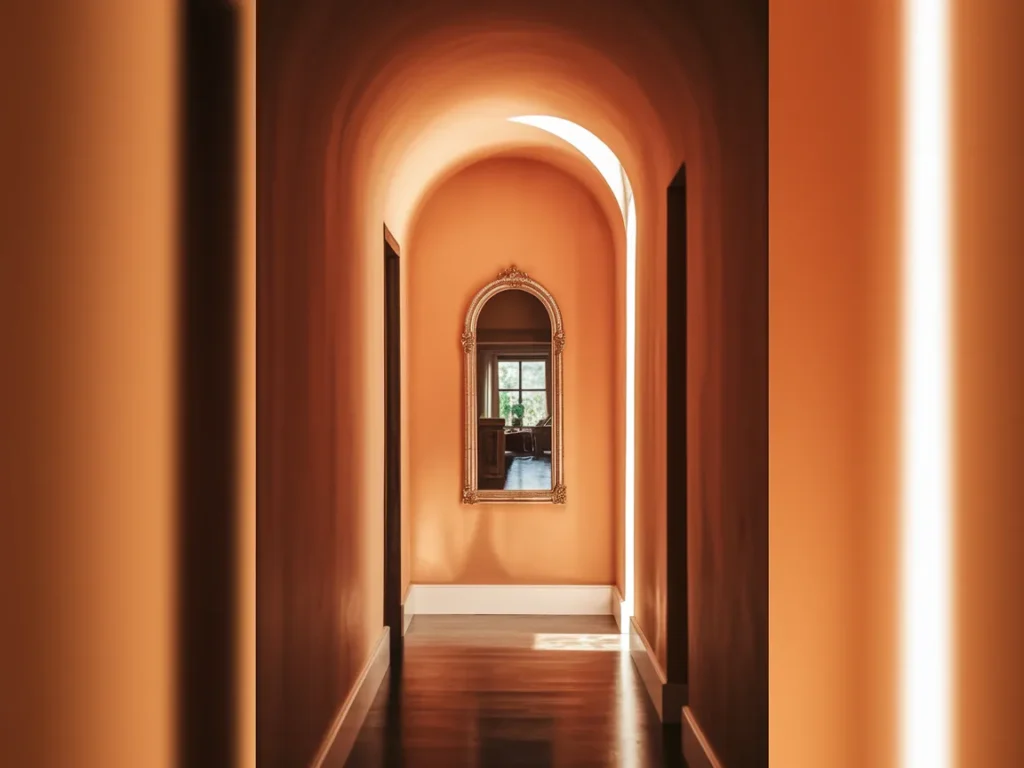
The final narrow hallway layout rule prioritizes movement over decor. Every item must stay flush or overhead. Walk width should never shrink due to styling.
Layouts should support daily traffic without adjustment. When styling follows layout first, narrow halls remain usable and calm.
Frequently Asked Questions
How Wide Should A Narrow Hallway Be?
Most narrow halls range from 36 to 42 inches. Clear paths matter more than width.
Can Narrow Hallways Use Dark Colors?
Dark colors reduce width perception. Light tones work better in tight spaces.
Should Furniture Be Used In Narrow Hallways?
Furniture should stay wall-mounted only. Floor pieces block movement.
Do Mirrors Really Make Hallways Feel Wider?
Yes, when placed on long walls. They reflect light and space.
Conclusion
Styling narrow hallways requires restraint, planning, and respect for movement. In tested US homes, discomfort appeared fastest when decor added depth or blocked sightlines. Light-reflective surfaces improved width perception without paint changes. Wall-mounted lighting and flush decor preserved clearance. Monochrome palettes reduced visual breaks. Continuous flooring extended length perception. Door swing planning prevented daily frustration. The most successful narrow hallways felt calm because every element served flow first. In 2026 homes, narrow hallway styling works best when it supports movement quietly rather than demanding attention.