

An upstairs hallway connects private spaces like bedrooms, bathrooms, and study rooms. This area needs good lighting, clear walking space, and calm styling. A well-designed upstairs hallway feels open, safe, and visually connected to the rest of the home. The ideas below focus on layout, walls, lighting, and simple decor that works for long-term daily use.
21 Inspiring Upstairs Hallway
- Bright neutral hallway color scheme
- Slim runner rug for safe walking
- Gallery wall with simple frames
- Built-in storage cabinets
- Wall sconces for soft lighting
- Large mirror to reflect light
- Minimal console table styling
- Stair rail and hallway continuity
- Accent wall with soft texture
- Ceiling light with warm tone
- Family photo display zone
- Plant styling for corners
- Clean door alignment design
- Wall paneling for depth
- Reading nook at hallway end
- Art ledge for rotating decor
- Statement light fixture
- Open railing with light flow
- Quiet seating bench
- Simple hallway color accent
- Final upstairs hallway balance rule
Bright Neutral Hallway Color Scheme
A bright neutral hallway color scheme helps the space feel open and calm. Upstairs hallways often lack natural light, so light wall colors reflect available light better. Soft white, beige, and light gray reduce shadows and make the hallway feel wider.
Neutral colors also help connect rooms visually. When bedroom doors open, the hallway does not clash with interior colors. A bright neutral base keeps the hallway timeless and easy to update later.
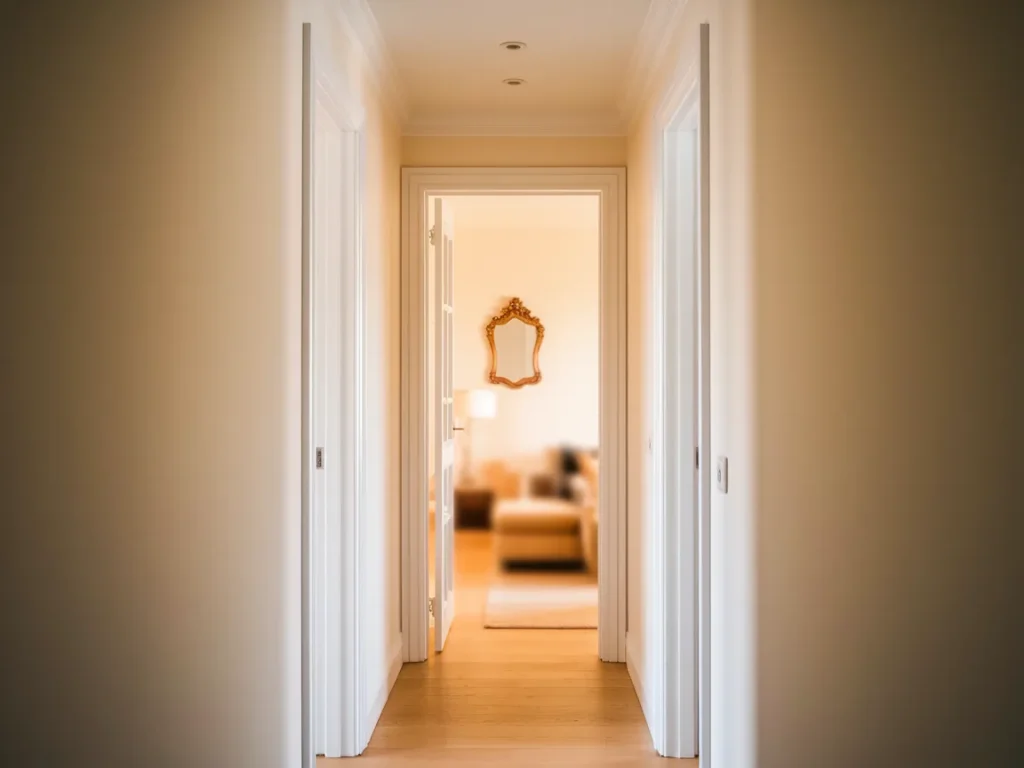
Slim Runner Rug For Safe Walking
A slim runner rug adds comfort and safety to an upstairs hallway. Runners reduce noise from footsteps and lower slip risk on hard floors. A slim rug keeps walking space open while defining the hallway path.
Choose a low-pile runner with a simple pattern. Avoid thick rugs that create tripping hazards. Neutral or soft-pattern runners work best because they support calm movement between rooms.
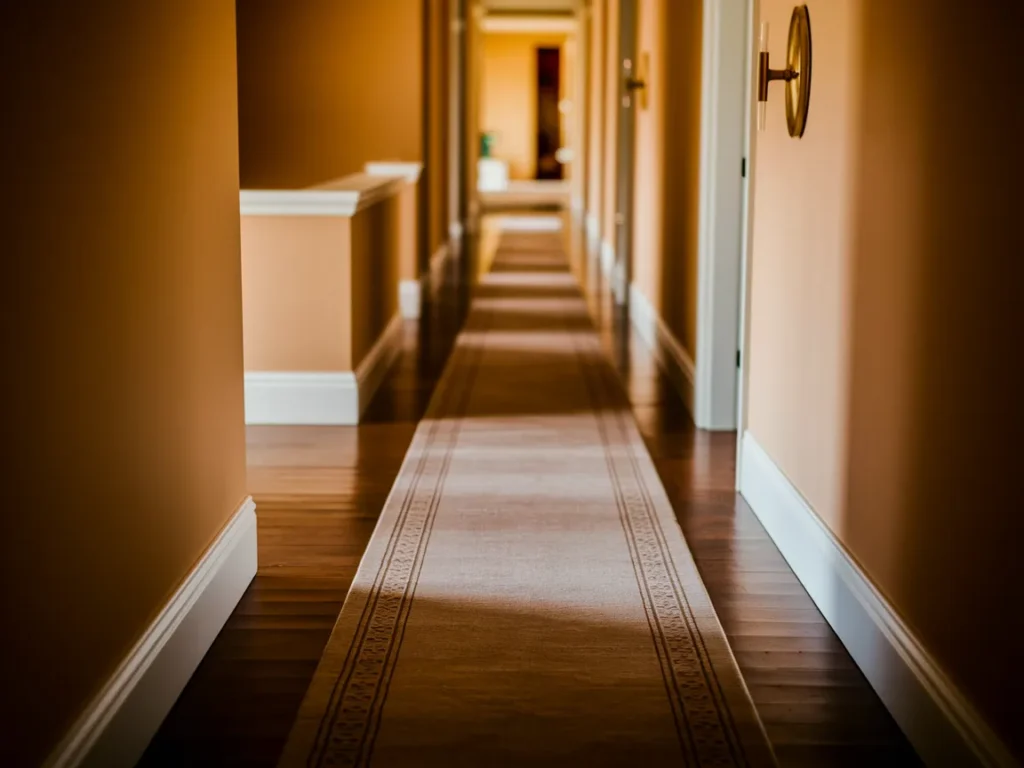
Gallery Wall With Simple Frames
A gallery wall adds interest without using floor space. Simple frames keep the hallway calm and organized. A gallery wall works best on one side of the hallway to avoid visual overload.
Use frames in matching colors and sizes for balance. Space frames evenly and align them at eye level. A clean gallery wall makes the hallway feel personal while staying neat.
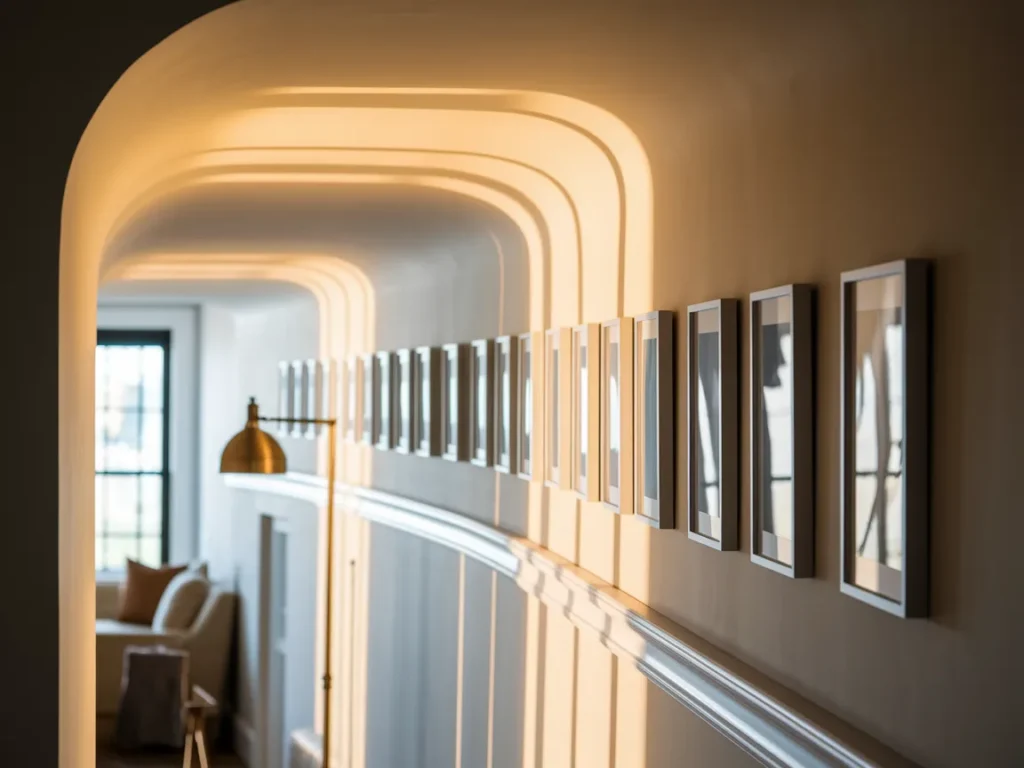
Built-In Storage Cabinets
Built-in storage cabinets add function without reducing walking space. Upstairs hallways often collect items like linens, seasonal decor, or extra supplies. Built-ins keep these items hidden and organized.
Cabinets should stay flush with the wall to avoid narrowing the hallway. Flat-panel doors work best because they keep the look clean. Built-in storage helps the hallway feel tidy and purposeful.
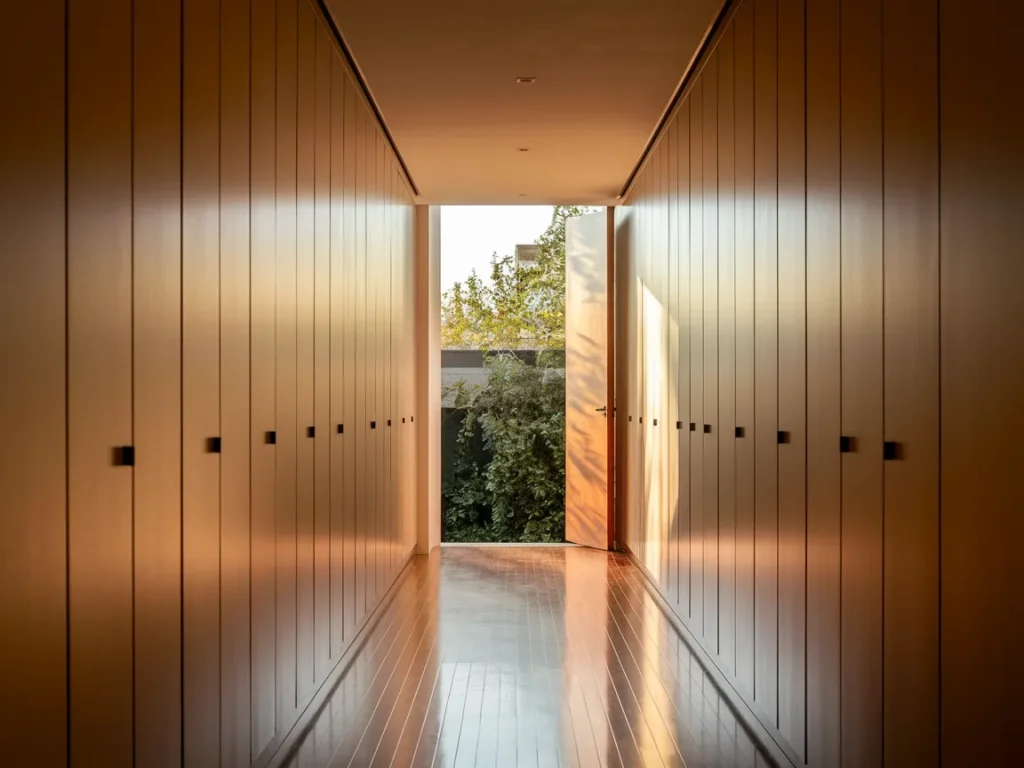
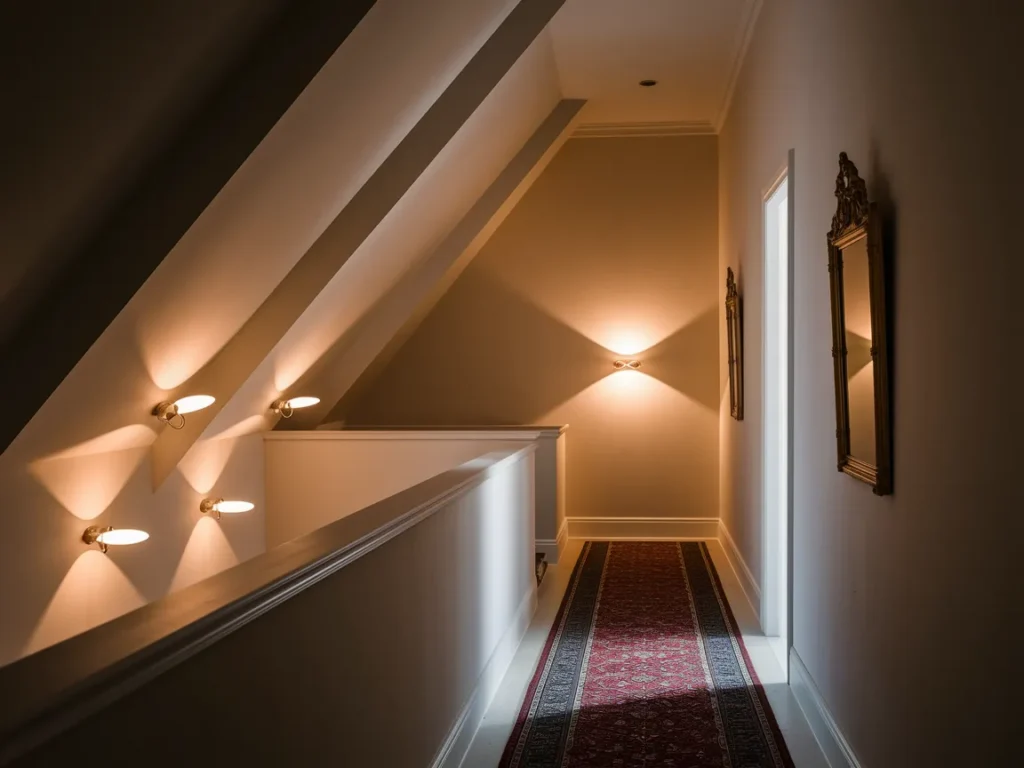
Wall Sconces For Soft Lighting
Wall sconces provide soft, even lighting along an upstairs hallway. Overhead lights alone can create harsh shadows. Sconces spread light across walls and improve safety during night use.
Place sconces at equal distances along the hallway for balance. Use warm bulbs to keep the space calm. Wall sconces add style while improving visibility.
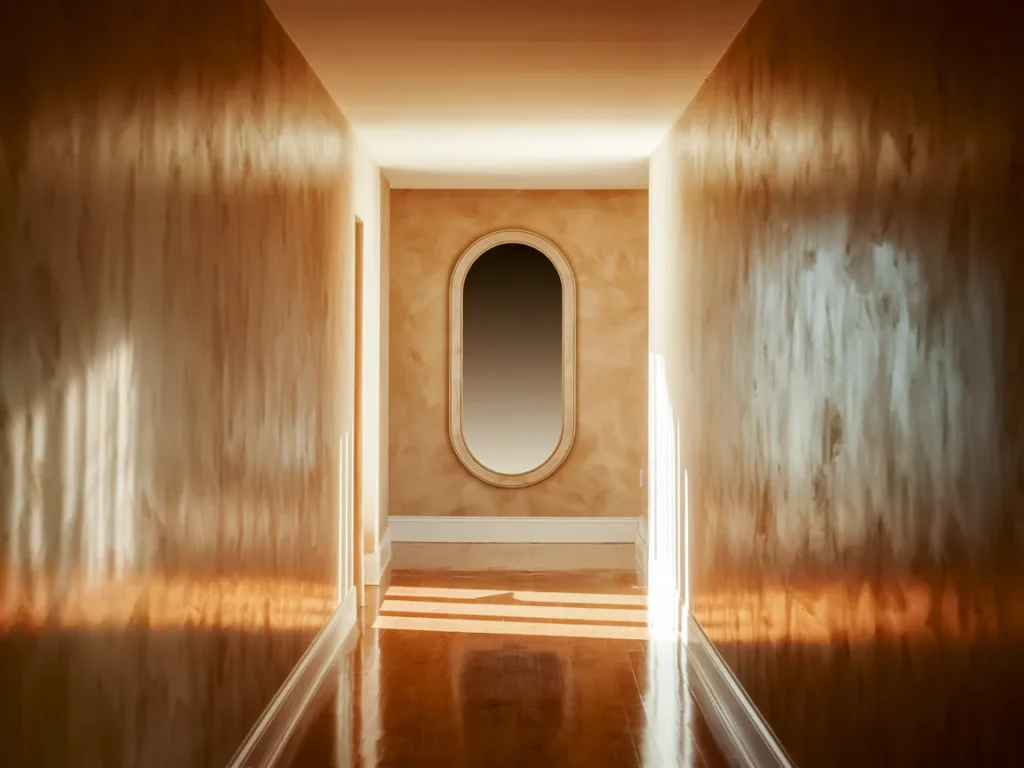
Large Mirror To Reflect Light
A large mirror helps brighten an upstairs hallway by reflecting available light. Mirrors also make narrow spaces feel wider. This works well in hallways with few windows.
Place the mirror where it reflects light from nearby rooms. Use a simple frame to keep the look clean. A large mirror adds openness without clutter.
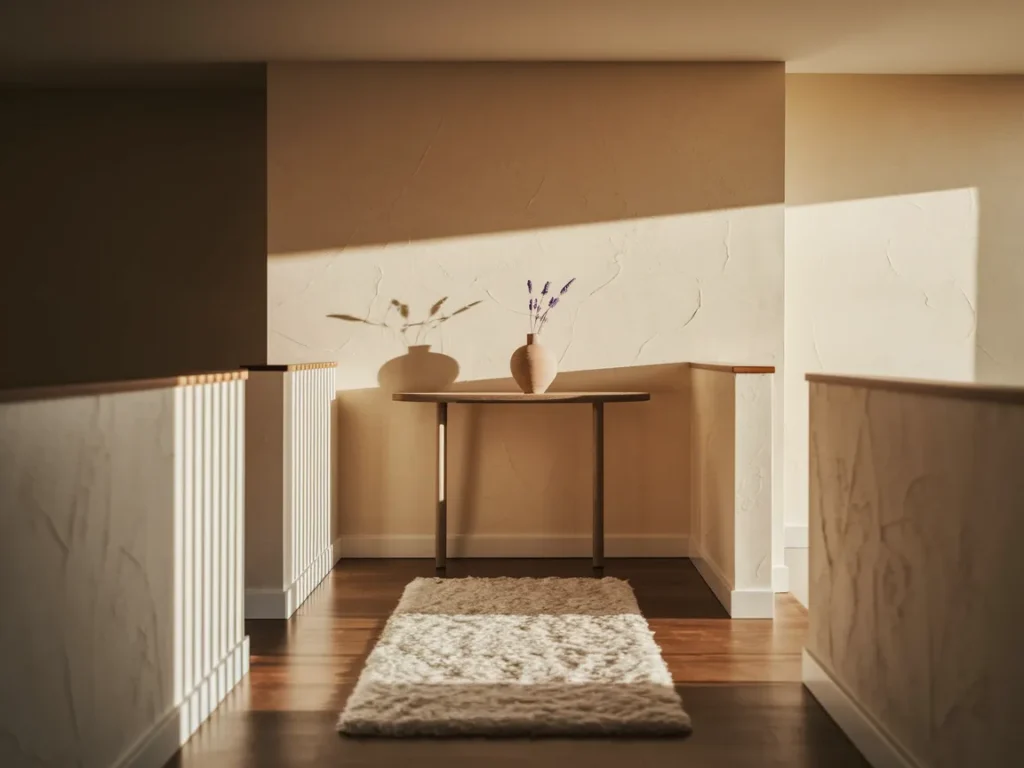
Minimal Console Table Styling
A minimal console table adds function without crowding the hallway. Console tables work best in wider hallways where space allows. They provide a surface for keys, small decor, or lighting.
Choose a slim table with clean lines. Keep decor limited to one lamp or small object. Minimal styling keeps the hallway clear and calm.
Stair Rail And Hallway Continuity
Stair rail and hallway continuity create visual flow between levels. Matching rail finishes and hallway materials make the space feel connected. This improves overall design consistency.
Use the same wood tone, metal finish, or color across both areas. Avoid mixing too many styles. Continuity helps the hallway feel intentional and well planned.
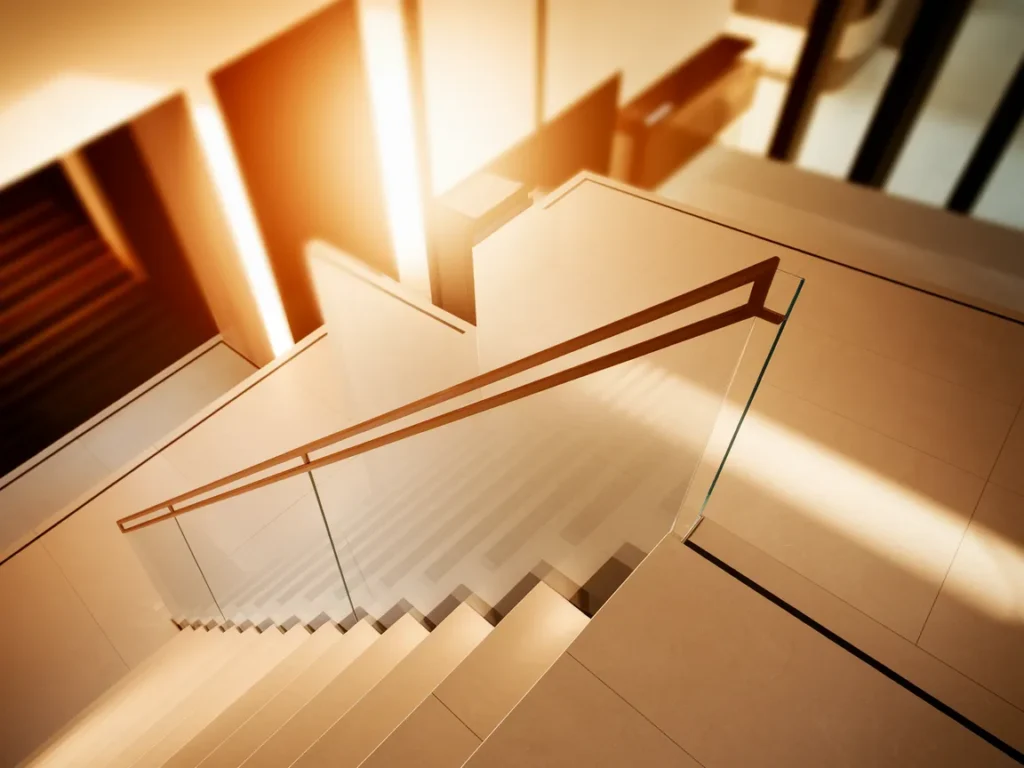
Built-In Storage Cabinets
Built-in storage cabinets add function without reducing walking space. Upstairs hallways often collect items like linens, seasonal decor, or extra supplies. Built-ins keep these items hidden and organized.
Cabinets should stay flush with the wall to avoid narrowing the hallway. Flat-panel doors work best because they keep the look clean. Built-in storage helps the hallway feel tidy and purposeful.
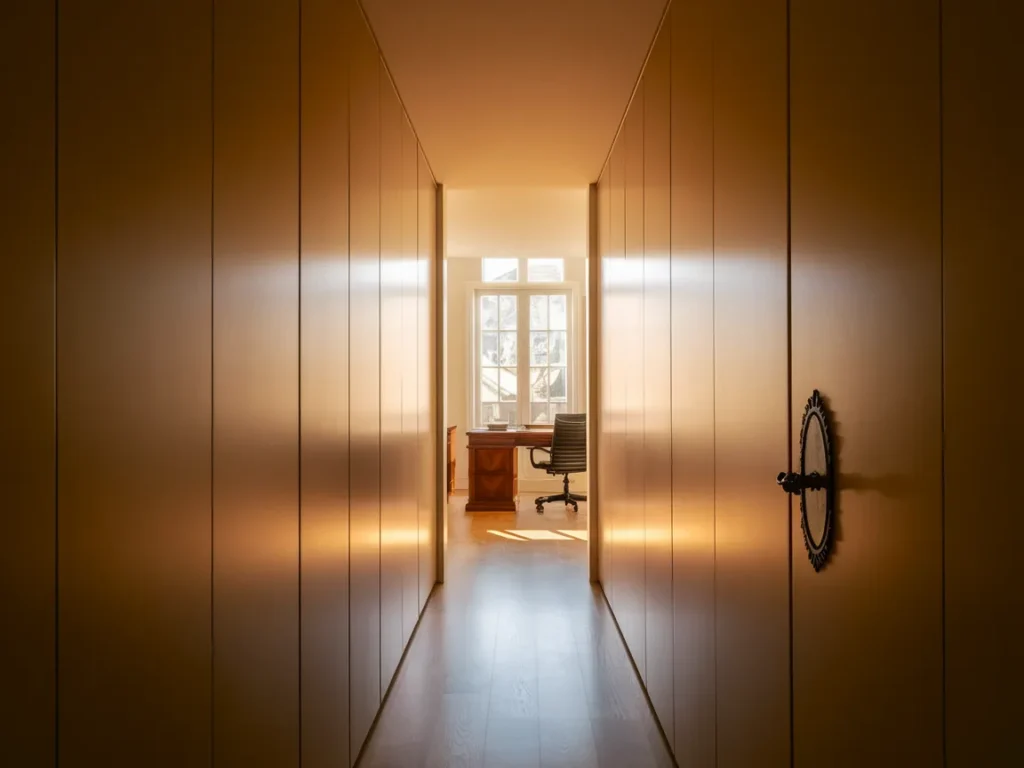
Wall Sconces For Soft Lighting
Wall sconces provide soft, even lighting along an upstairs hallway. Overhead lights alone can create harsh shadows. Sconces spread light across walls and improve safety during night use.
Place sconces at equal distances along the hallway for balance. Use warm bulbs to keep the space calm. Wall sconces add style while improving visibility.
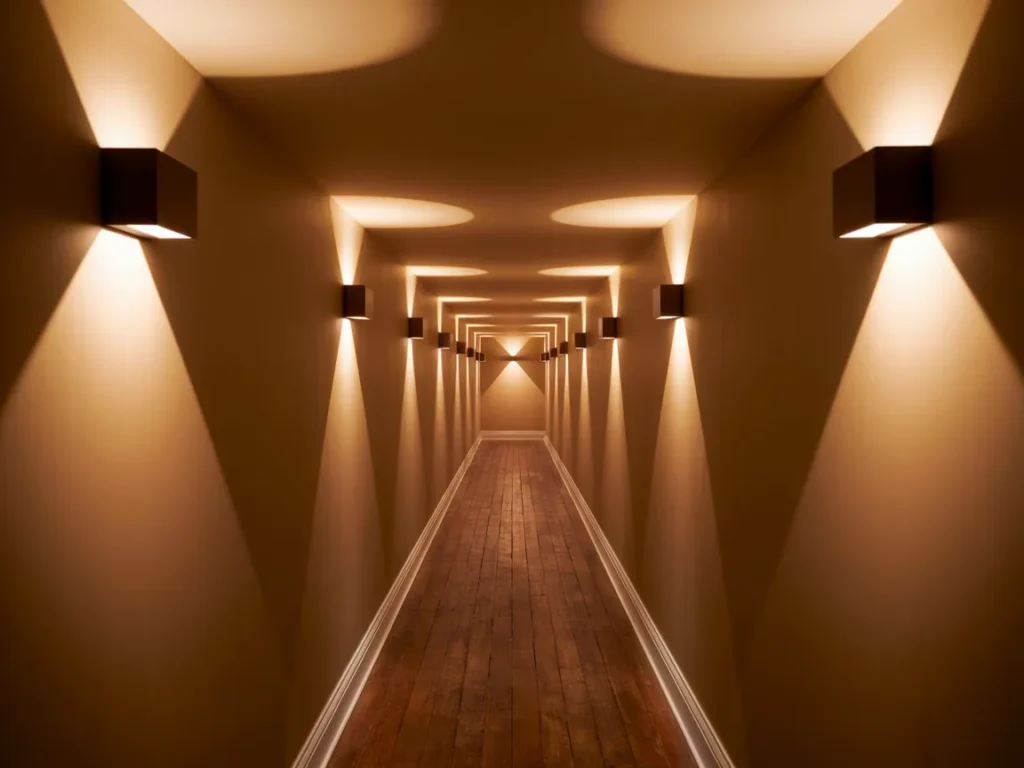
Large Mirror To Reflect Light
A large mirror helps brighten an upstairs hallway by reflecting available light. Mirrors also make narrow spaces feel wider. This works well in hallways with few windows.
Place the mirror where it reflects light from nearby rooms. Use a simple frame to keep the look clean. A large mirror adds openness without clutter.
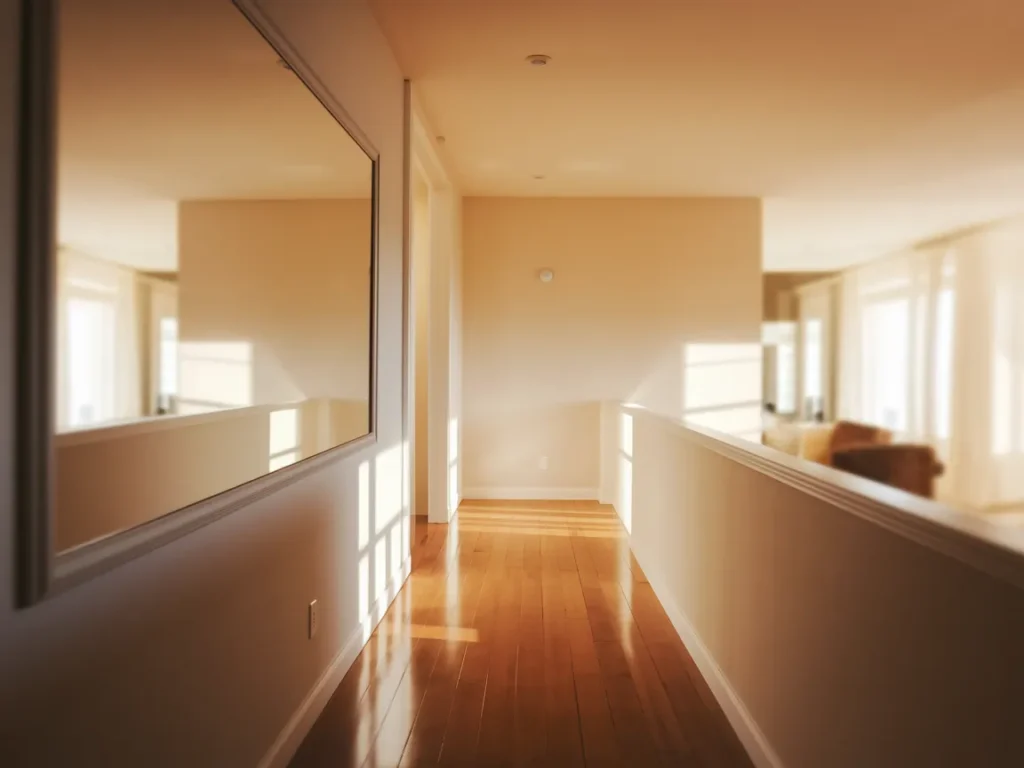
Minimal Console Table Styling
A minimal console table adds function without crowding the hallway. Console tables work best in wider hallways where space allows. They provide a surface for keys, small decor, or lighting.
Choose a slim table with clean lines. Keep decor limited to one lamp or small object. Minimal styling keeps the hallway clear and calm.
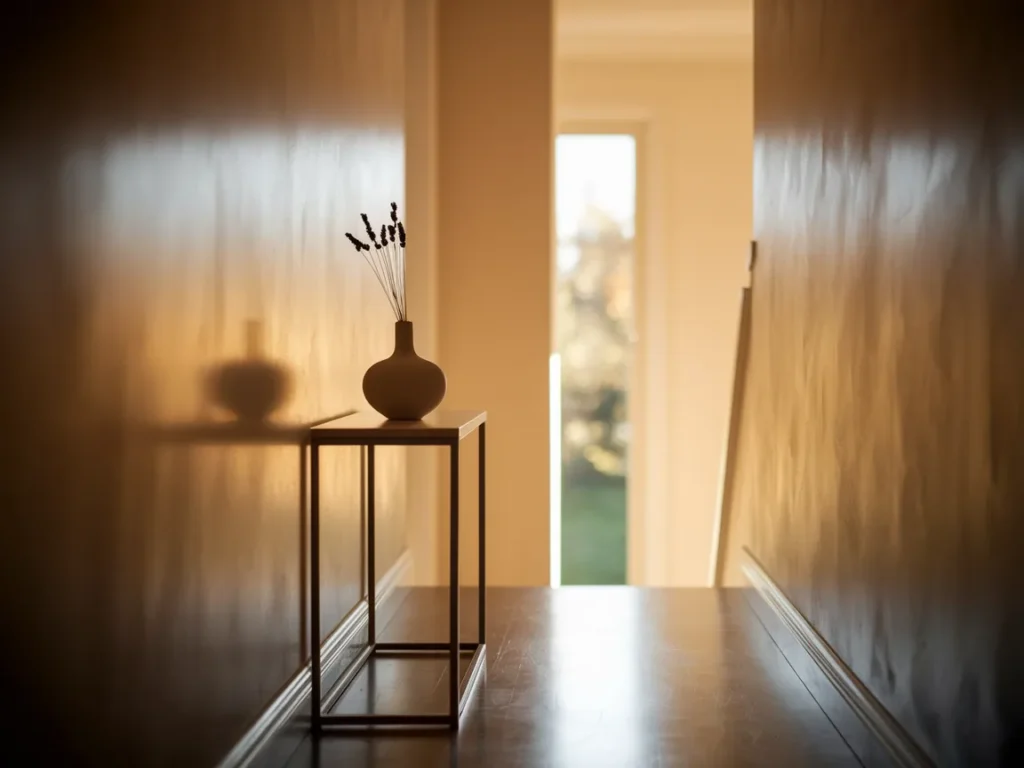
Stair Rail And Hallway Continuity
Stair rail and hallway continuity create visual flow between levels. Matching rail finishes and hallway materials make the space feel connected. This improves overall design consistency.
Use the same wood tone, metal finish, or color across both areas. Avoid mixing too many styles. Continuity helps the hallway feel intentional and well planned.
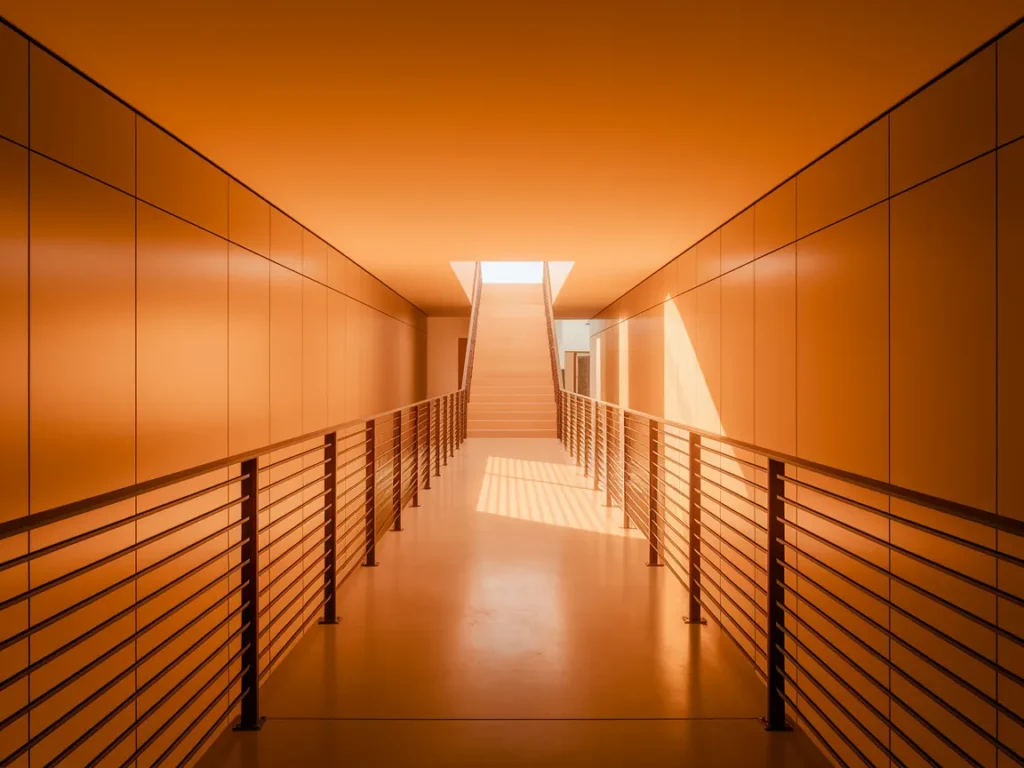
Wall Paneling For Depth
Wall paneling adds depth and structure to an upstairs hallway without taking up floor space. Panels create visual rhythm and help long hallways feel more finished. Simple panel styles work best because they keep the space calm.
Use light or neutral panel colors to avoid darkening the hallway. Keep trim lines clean and evenly spaced. Wall paneling improves detail while keeping the hallway bright.
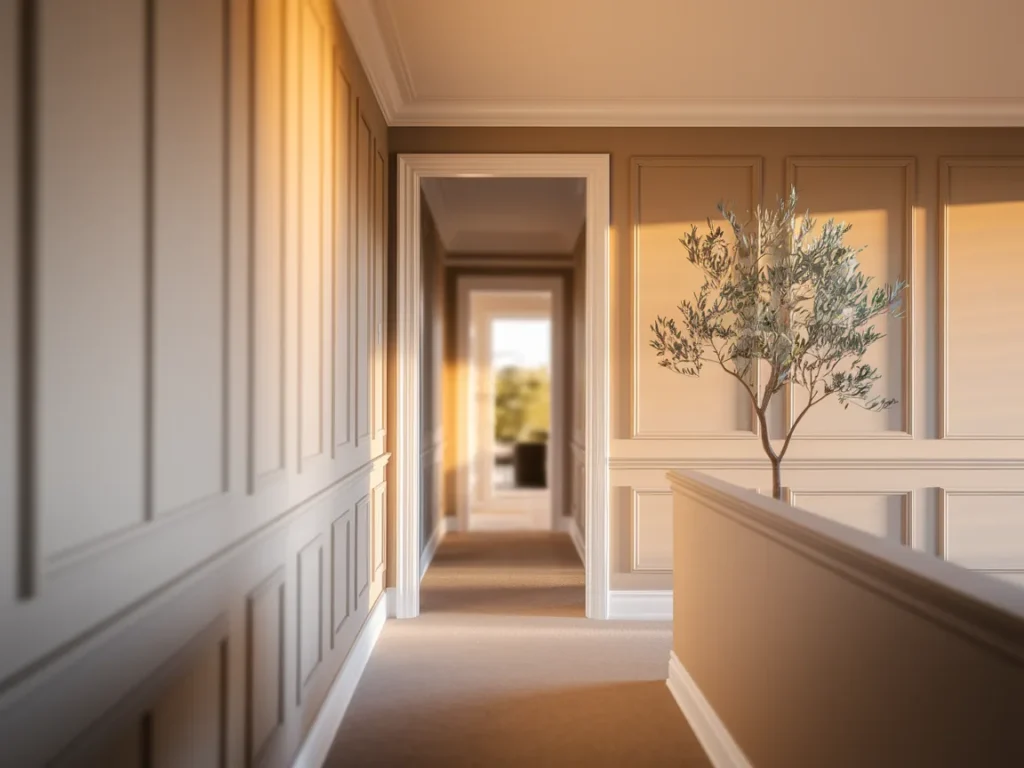
Reading Nook At Hallway End
A reading nook at the hallway end uses space that often feels empty. This idea works well in wider hallways or open landing areas. A nook adds function without changing the hallway flow.
Use one comfortable chair and a small side table. Add a wall lamp or floor lamp for light. Keep the nook simple so it feels calm and inviting.
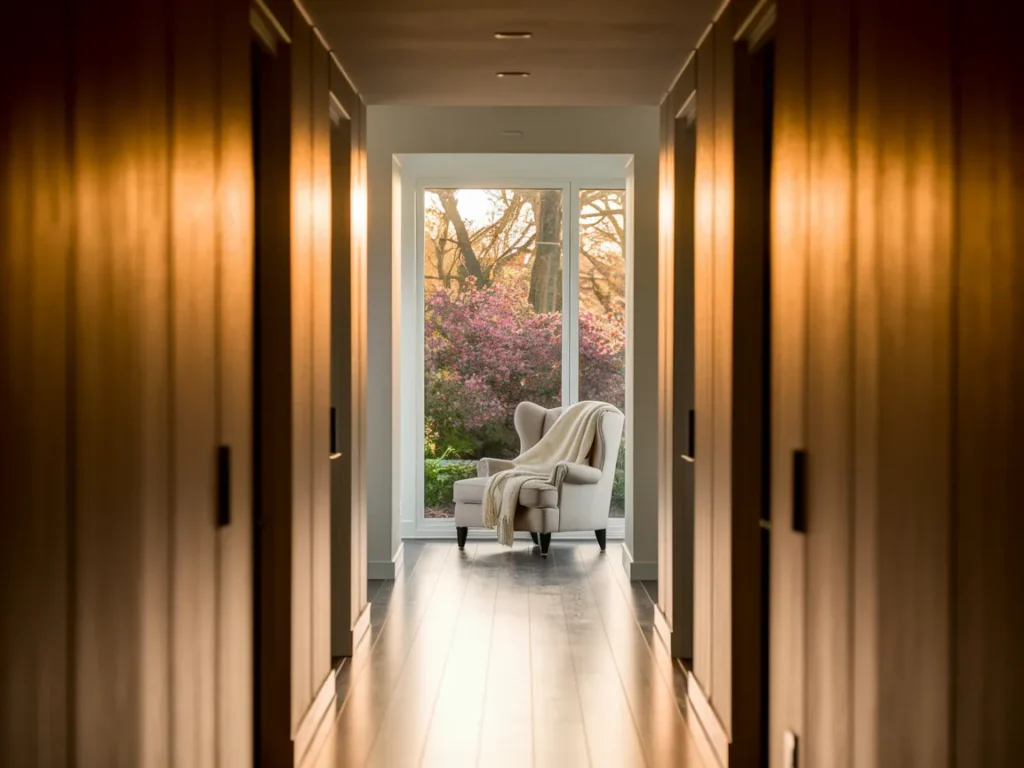
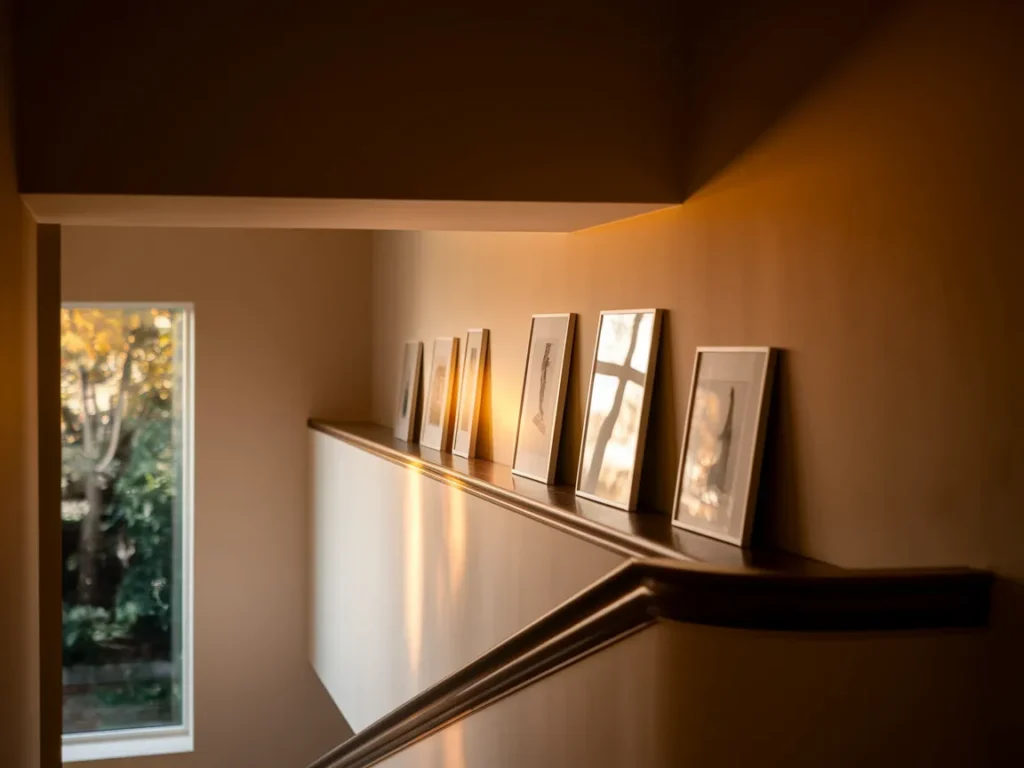
Art Ledge For Rotating Decor
An art ledge allows decor changes without wall damage. Ledges hold frames, small art, or objects and make updates easy. This works well in hallways because decor can rotate over time.
Keep items spaced and limit the number of pieces. Use frames in similar tones for balance. An art ledge adds interest while keeping walls clean.
Statement Light Fixture
A statement light fixture adds style to an upstairs hallway. This works best in areas with higher ceilings or open landings. One strong fixture can replace multiple small decor items.
Choose a fixture with clean lines and soft light. Avoid oversized designs that block movement. A statement light adds personality while keeping the hallway uncluttered.
Open Railing With Light Flow
Open railing designs allow light to pass through the hallway. This improves brightness and makes the space feel less enclosed. Open railings also improve visual connection between floors.
Use slim vertical or horizontal rails for safety and style. Keep finishes consistent with the rest of the hallway. Open railing designs support a lighter, more open feel.
Quiet Seating Bench
A quiet seating bench adds function without blocking the hallway. Benches work well near bedroom zones or at hallway ends where space feels unused. A bench supports short sitting moments like putting on shoes or resting items.
Choose a slim bench with clean lines. Upholstered benches add comfort, while wood benches add structure. Keep the area around the bench clear so movement stays easy.
Simple Hallway Color Accent
A simple hallway color accent adds interest without overwhelming the space. Accent color works best in small amounts, such as trim, one wall section, or decor pieces. Soft tones maintain a calm feeling.
Choose one accent color and repeat it lightly. Avoid bold contrast that breaks visual flow. A controlled accent helps the hallway feel styled while staying relaxing.
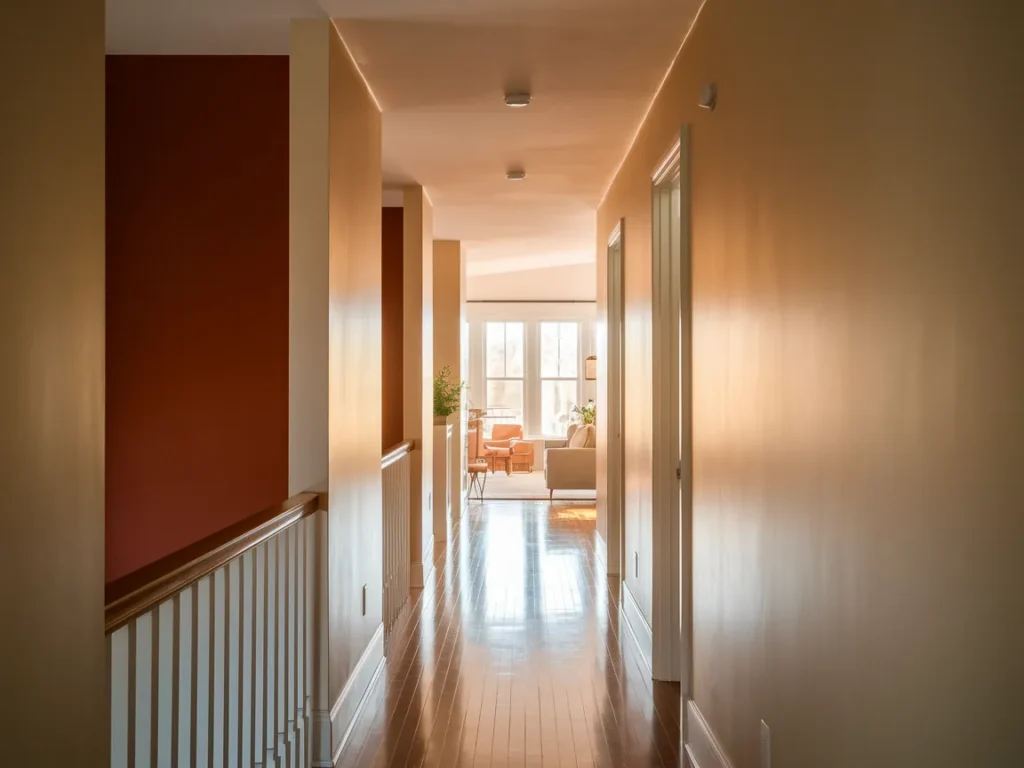
Final Upstairs Hallway Balance Rule
The final upstairs hallway balance rule focuses on clarity and calm. The hallway should stay open, well-lit, and easy to walk through. Decor should never block paths or reduce light.
Use fewer objects with better placement. Repeat colors and materials to keep unity. When the hallway stays simple and functional, it supports daily movement and long-term comfort.
Image Prompt: Upstairs hallway showing perfect balance, open walk path, soft lighting, minimal decor, modern calm home interior, realistic photography
Frequently Asked Questions
How Do I Make An Upstairs Hallway Feel Brighter?
An upstairs hallway feels brighter when light colors and reflective surfaces work together. Neutral wall paint reflects available light better than dark tones. Mirrors help bounce light into darker areas. Warm lighting placed evenly along the hallway also improves visibility. Keeping decor minimal prevents shadows and helps the space feel open.
What Decor Works Best In Narrow Upstairs Hallways?
Narrow hallways work best with wall-based decor instead of floor items. Gallery walls, sconces, mirrors, and paneling add interest without blocking movement. Slim runner rugs improve comfort without reducing walking space. Avoid bulky furniture that narrows the path.
How Can I Add Style Without Making The Hallway Feel Crowded?
Style stays clean when decor stays controlled. Use one main feature like a gallery wall or accent texture instead of many small items. Keep spacing even and surfaces clear. When objects stay limited and well-placed, the hallway feels styled and calm.
Should Upstairs Hallways Match Bedroom Styles?
Upstairs hallways should connect visually with nearby rooms but do not need exact matching styles. Neutral hallways work well because they adapt to different bedroom designs. Repeating materials like wood tone or trim color helps create flow without forcing uniform decor.
Final Thoughts
An inspiring upstairs hallway combines light, safety, and simple design. Neutral colors, soft lighting, and clear walk paths create a calm transition between rooms. Wall-based decor adds interest without blocking movement. Storage and seating work best when kept slim and purposeful. When styling stays controlled and consistent, the upstairs hallway becomes a functional and welcoming part of the home rather than a forgotten space.