

A good backyard fence changes everything. It turns your yard from an open lot into a private retreat. It gives your kids and pets a safe place to play. It blocks the neighbor’s view, reduces street noise, and makes your outdoor space feel like an extension of your home.
The best backyard fence doesn’t just do its job. It looks good doing it. Whether you want a tall cedar privacy wall, a modern horizontal slat design, a budget-friendly option that still impresses, or a creative mix of materials, this guide covers it all. You’ll learn which fence styles are trending in 2026, what each material costs, and how to pick the right fence for your yard.
Let’s build your backyard into the space you’ve always wanted.
Why Your Backyard Fence Matters
Your backyard fence is one of the largest single features on your property. It affects how your yard looks, how it feels, and how you use it every single day. Here’s why it deserves serious thought.
Privacy That Actually Works
This is the number one reason people install backyard fences. Nobody wants to eat dinner on the patio while the neighbor watches from their kitchen window. A solid 6-foot fence creates real privacy. You can relax, host friends, sunbathe, or let the kids run around without feeling like you’re on display.
Board-on-board and tongue-and-groove designs are the best options for full privacy because they have no gaps between boards. Even a fence with small spaces between slats can block most sightlines while still letting a breeze pass through.
Safety for the Whole Family
With over 62 percent of American households owning pets, a fenced backyard is one of the most sought-after features for home buyers. Dogs need a safe space to run. Kids need boundaries. And a pool without a fence around it is both a safety hazard and, in most areas, a code violation. Most jurisdictions require pool fences to be at least 4 feet tall with self-closing, self-latching gates.
Real Value Added to Your Home
Real estate professionals estimate that homeowners can recoup 30 to 70 percent of their fence installation cost at resale. A fenced backyard is often a non-negotiable requirement for buyers with children or pets. According to the National Association of Realtors, landscaping features including fences can add up to 20 percent to a home’s perceived value.
Cedar Privacy Fence
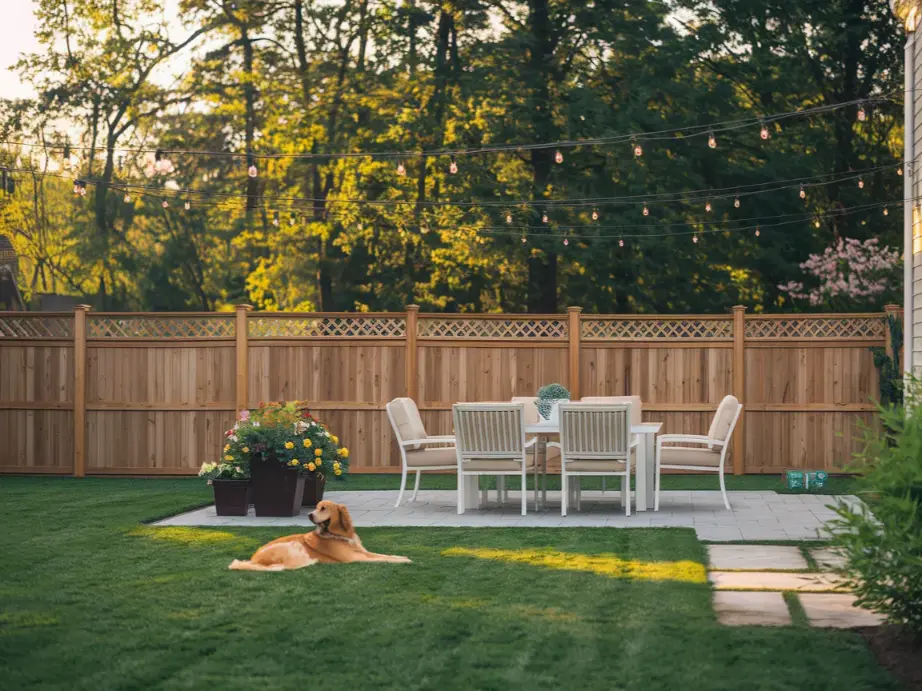
Cedar is the gold standard for backyard privacy fences, and it has been for decades. There’s a warmth to natural cedar that no other material can replicate. The wood has a rich reddish-brown tone that weathers over time into a soft, silvery gray if left unstained.
Why Cedar Wins
Cedar naturally resists rot, decay, and insect damage. It doesn’t need chemical treatment to last, which makes it a healthier choice for yards where children and pets play. A well-built cedar fence lasts 15 to 25 years, and with proper staining every two to three years, it can last even longer.
Cedar also absorbs stain beautifully. You can keep the natural warm tone with a clear sealer, go darker with a walnut or ebony stain, or even paint it a bold color like black, navy, or sage green.
Popular Cedar Styles
Board-on-board is the most popular style. It uses overlapping boards on alternating sides of the rails, which means both sides of the fence look finished. There are no gaps, so privacy is complete. Tongue-and-groove cedar panels create an even tighter fit. And for a more relaxed look, a shadowbox design alternates boards with small gaps, allowing light and airflow while still providing solid privacy.
Cost
A cedar privacy fence costs $22 to $50 per linear foot installed. For a standard 150-foot backyard perimeter, that works out to roughly $3,300 to $7,500.
Horizontal Slat Fence
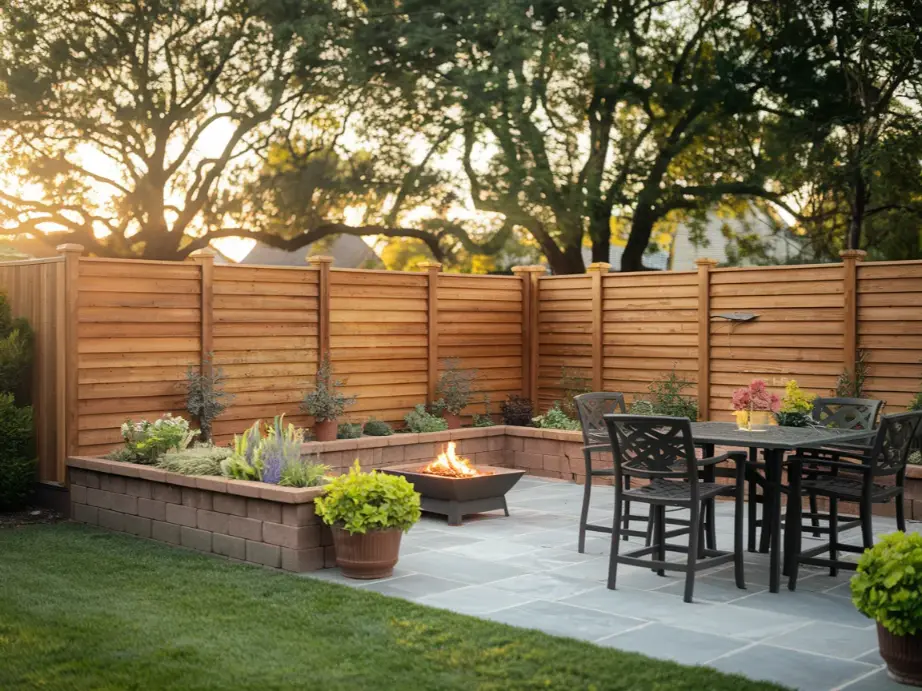
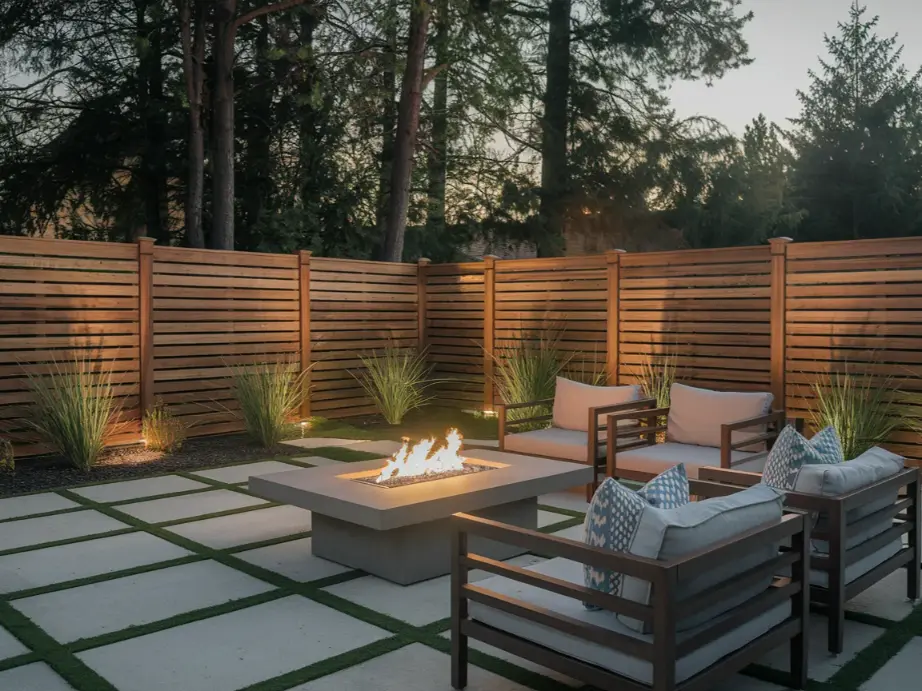
If your home has a modern, mid-century, or contemporary design, a horizontal slat fence is the natural match. Instead of traditional vertical boards, the slats run side to side. This simple change in direction creates a completely different visual effect. The yard looks wider, the lines feel cleaner, and the whole space takes on a more architectural quality.
Materials That Work
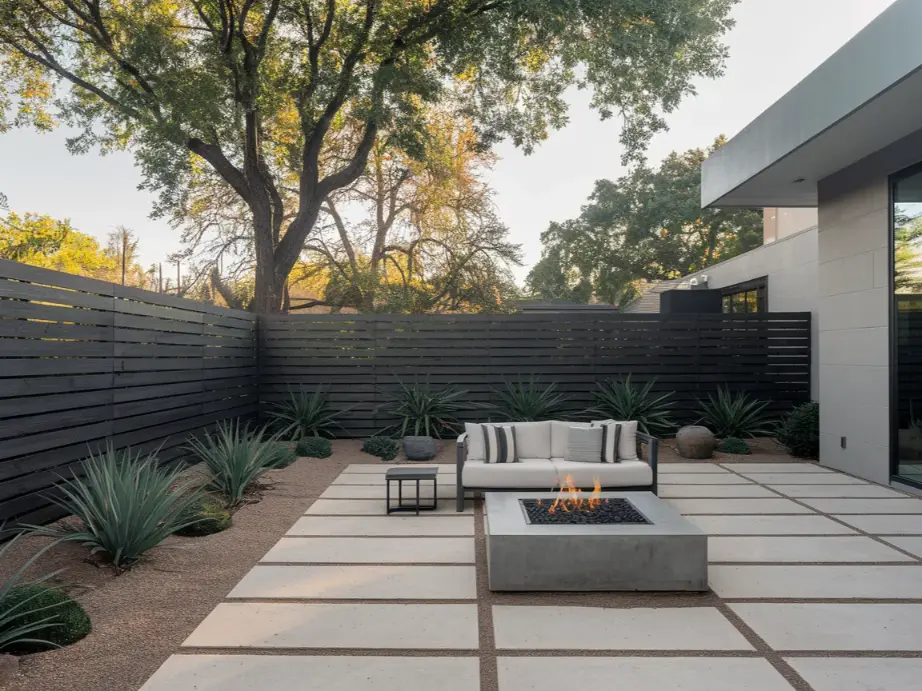
Cedar and redwood are the most popular wood choices. Both resist rot naturally and age gracefully. Composite slats are growing fast in popularity because they look like real wood but never need staining, sealing, or replacing due to rot. Metal slats in aluminum or steel create a sleek, industrial look that pairs well with concrete, gravel, and modern outdoor spaces.
Spacing Matters
The gap between slats determines how much privacy you get. Tight spacing with half-inch gaps gives near-complete privacy. Wider spacing of one to two inches allows more light and airflow but lets some visibility through. Many homeowners choose a middle ground that blocks most sightlines while still feeling open.
Cost
Horizontal wood slat fences run $25 to $55 per linear foot installed. Composite versions cost $30 to $85 per linear foot. Metal horizontal fences range from $40 to $110 per linear foot depending on material and finish.
Vinyl Privacy Fence
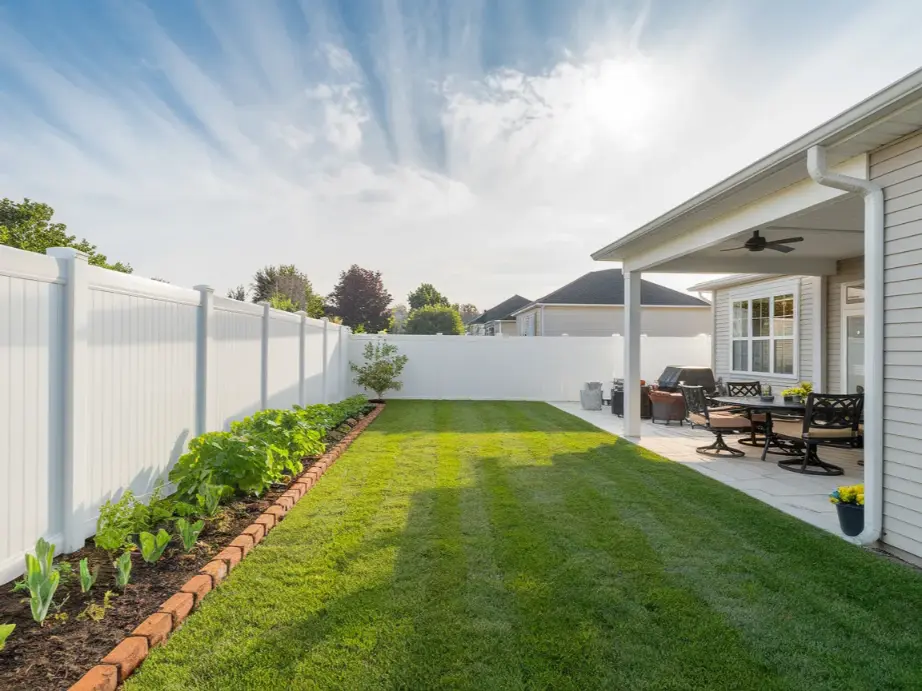
Vinyl is the “set it and forget it” material. It never needs painting, staining, or sealing. It won’t rot, crack, warp, or attract termites. You clean it with a garden hose once or twice a year, and it looks the same as the day it was installed for 20 to 30 years.
Style Options
Vinyl comes in solid privacy panels, semi-privacy designs with small gaps, and classic picket styles. Colors include white, tan, gray, and wood-grain textures that mimic the look of real cedar or walnut. White vinyl is the most popular choice for backyards because it looks clean and bright, though gray and tan are gaining ground for a more modern feel.
Some vinyl fence systems include decorative additions like lattice toppers, post caps with solar lights, and scalloped tops that add visual interest without any extra maintenance.
Best For
Vinyl is ideal for homeowners who want full privacy with absolutely no upkeep. It works especially well in humid climates where wood tends to warp and rot faster. It’s also a smart choice around pools, since it handles moisture without any damage.
Cost
A vinyl privacy fence costs $30 to $60 per linear foot installed. For a 150-foot backyard, expect to spend between $4,500 and $9,000. While the upfront cost is higher than basic wood, the zero-maintenance factor makes vinyl cheaper over the full life of the fence.
Composite Fence
Composite fencing is the newest player in the backyard fence game, and it’s winning fans fast. Made from a blend of recycled wood fibers and recycled plastic, composite looks like real wood but behaves like vinyl. It won’t rot, warp, split, or attract insects.
Why It’s Growing in Popularity
Composite checks every box. It has the warm, natural look of wood. It has the durability of vinyl. And it’s eco-friendly because it’s made from recycled materials. The boards come in realistic wood-grain textures and earthy colors like walnut, driftwood, gray, and dark brown.
This material is especially popular for horizontal slat fences because the boards stay perfectly straight over time. No warping, no sagging, no bowing. That clean, linear look stays crisp for decades.
Cost
Composite fences cost $30 to $85 per linear foot installed. The price depends on the brand, style, and height. While it’s more expensive than basic wood, the 25 to 30 year lifespan with virtually no maintenance makes it a strong long-term value.
Board-on-Board Fence
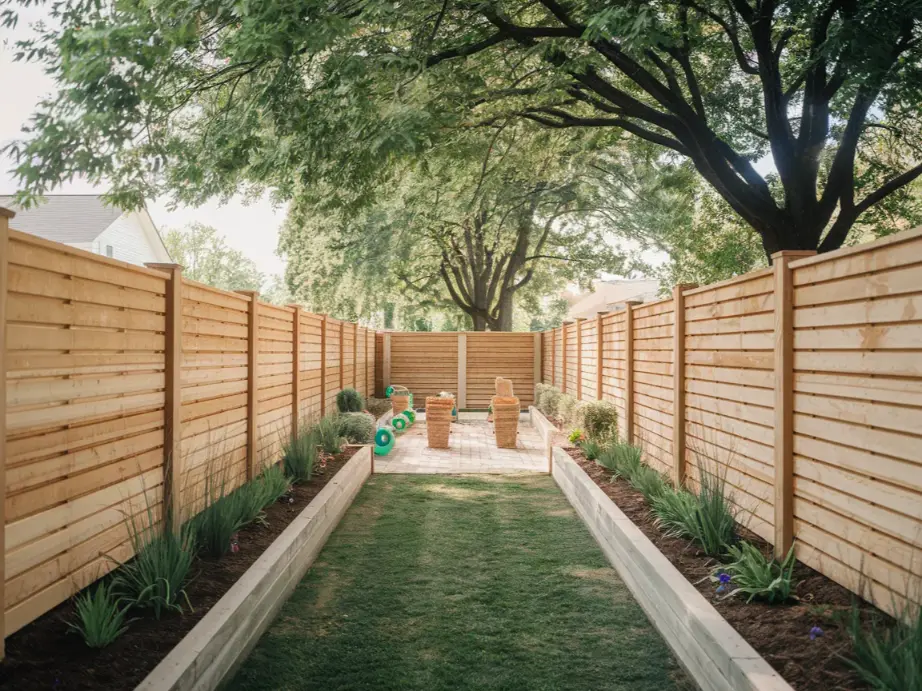
The board-on-board design is one of the most popular backyard fence styles in America, and for good reason. Overlapping vertical boards are attached to alternating sides of horizontal rails. This creates a fence with no gaps and a finished look on both sides. You and your neighbor both get the “good side.”
Why It Works So Well
Privacy is complete. There are zero sightlines through a properly built board-on-board fence. But because the boards overlap rather than sit flush, a small amount of air can still flow between them. This reduces wind pressure on the fence, which means it’s more likely to survive storms than a fully solid panel.
The overlapping boards also create a subtle shadow effect that adds depth and visual texture. From a distance, the fence looks much more interesting than a flat, solid wall.
Material Choices
Most board-on-board fences are built from pressure-treated pine or cedar. Pine is the budget-friendly option and lasts 15 to 20 years with regular staining. Cedar costs more but naturally resists rot and insects without chemical treatment.
Cost
A board-on-board fence costs $25 to $50 per linear foot installed in wood. It’s one of the best values in backyard fencing because it delivers full privacy, good looks, and solid durability at a mid-range price.
Metal Panel Fence
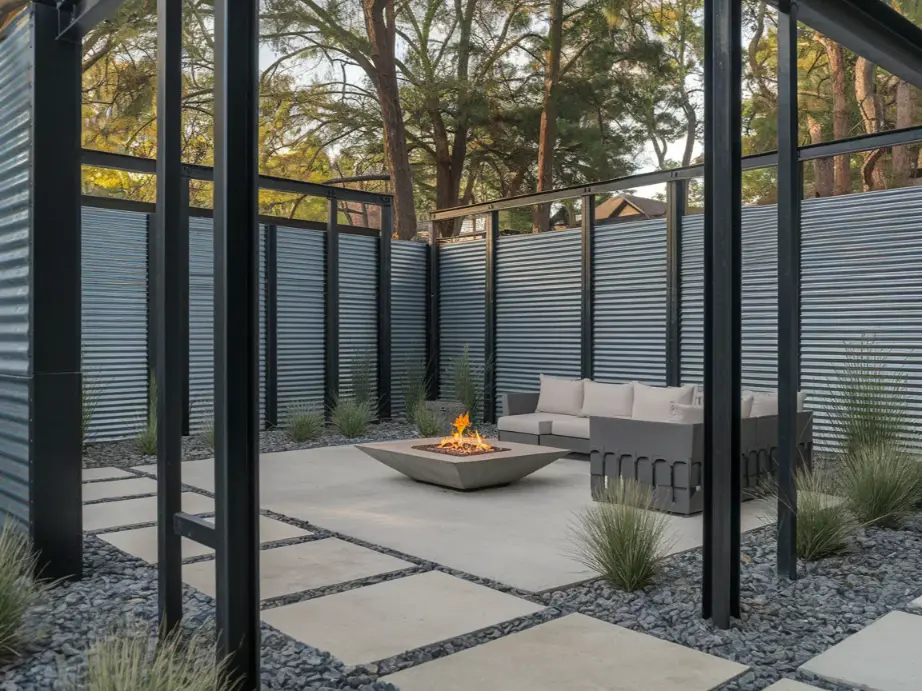
Metal fences are no longer just chain link and wrought iron. In 2026, corrugated metal, steel slat panels, and Corten (weathering) steel are some of the hottest materials in backyard design.
Corrugated Metal
Corrugated steel panels framed by wood or metal posts create an industrial-modern look that stands out. You can leave the metal in its natural galvanized finish for a rustic vibe or paint it matte black for a sleek contemporary feel. This style works especially well in desert landscapes and urban backyards.
Corten Steel
Corten steel develops a beautiful rusty orange patina over time that actually protects the metal underneath from further corrosion. It looks like a living piece of modern art in your backyard. Corten is popular in 2026 because it blends the industrial with the natural, and the color evolves with each passing season.
Aluminum Privacy Panels
Aluminum privacy screens and panels come in laser-cut decorative patterns, solid panels, and louvered designs. They’re lightweight, rust-proof, and last 30 or more years with almost no maintenance. Modern aluminum panels can create patterns that cast beautiful shadows across your yard.
Cost
Corrugated metal fences cost $20 to $55 per linear foot installed. Corten steel runs $50 to $100 per linear foot. Aluminum privacy panels cost $75 to $130 per linear foot, making them a premium choice.
Living Fence and Green Screens
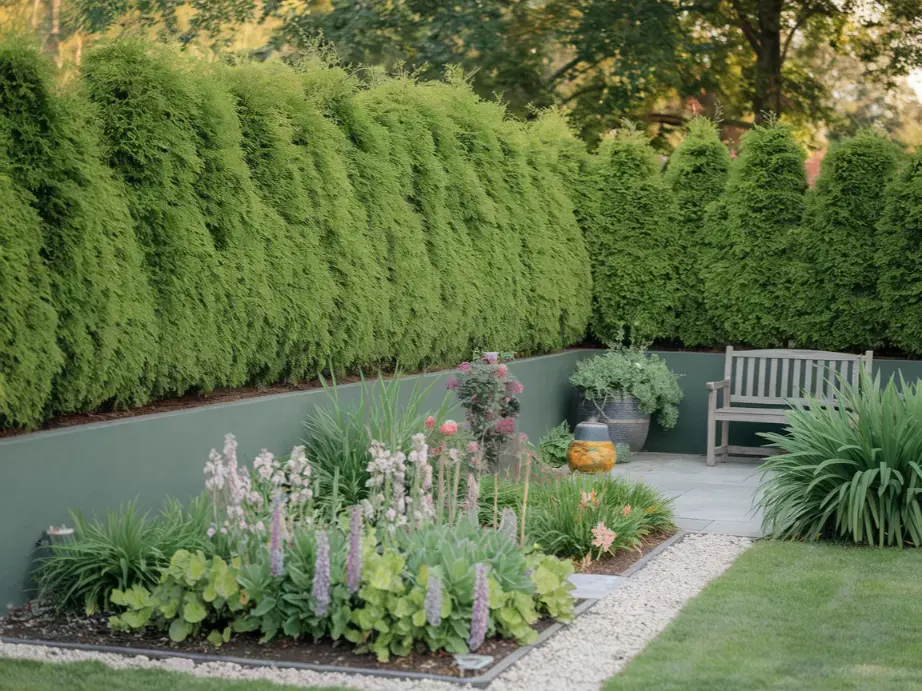
For homeowners who want privacy that grows, a living fence is one of the most beautiful options. Tall hedges, bamboo screens, and climbing vines trained on trellises all create green walls that provide privacy, absorb noise, and produce oxygen.
Best Plants for a Living Fence
Arborvitae grows tall and dense, making it one of the best privacy hedge plants. Privet hedges fill in quickly and tolerate heavy trimming. For a fast-growing option, Leyland cypress can add three to four feet of height per year. Climbing plants like jasmine, clematis, and honeysuckle create a living wall when grown on a trellis or wire support attached to an existing fence.
The Trade-Off
Living fences take time. A new hedge needs two to five years to fill in completely. They also need regular trimming, usually two to three times per year. But for homeowners who love gardening, the payoff is a privacy screen that gets more beautiful with each passing season and supports birds, butterflies, and pollinators.
Cost
Hedging plants cost $20 to $50 per plant, spaced 2 to 4 feet apart. A 150-foot living fence may cost $1,500 to $4,000 in plants and soil preparation. Over time, a living fence is one of the most affordable privacy solutions because the “material” keeps growing on its own.
Backyard Fence Costs: A Complete Comparison
| Fence Type | Cost Per Linear Foot (Installed) | Lifespan | Maintenance |
|---|---|---|---|
| Pressure-treated pine | $18 – $28 | 15–20 years | Stain/paint every 2–3 years |
| Cedar privacy | $22 – $50 | 15–25 years | Stain every 2–3 years |
| Vinyl privacy | $30 – $60 | 20–30 years | Hose off occasionally |
| Composite | $30 – $85 | 25–30+ years | Almost none |
| Horizontal wood slat | $25 – $55 | 15–25 years | Stain every 2–3 years |
| Board-on-board wood | $25 – $50 | 15–20 years | Stain/paint every 2–3 years |
| Aluminum privacy | $75 – $130 | 30–50 years | Almost none |
| Corrugated metal | $20 – $55 | 20–30 years | Low |
| Corten steel | $50 – $100 | 50+ years | None (ages naturally) |
| Chain link | $10 – $40 | 15–20 years | Very low |
| Living hedge | $20 – $50 per plant | Indefinite | Trim 2–3x per year |
Labor typically makes up 40 to 60 percent of total fence costs. Prices vary by region. Spring and summer are peak seasons when contractors are busiest, so scheduling your project in fall can sometimes save 5 to 10 percent.
Creative Backyard Fence Upgrades
A fence doesn’t have to be just a wall. These additions turn a simple fence into a feature that enhances your entire outdoor living experience.
Built-In Lighting
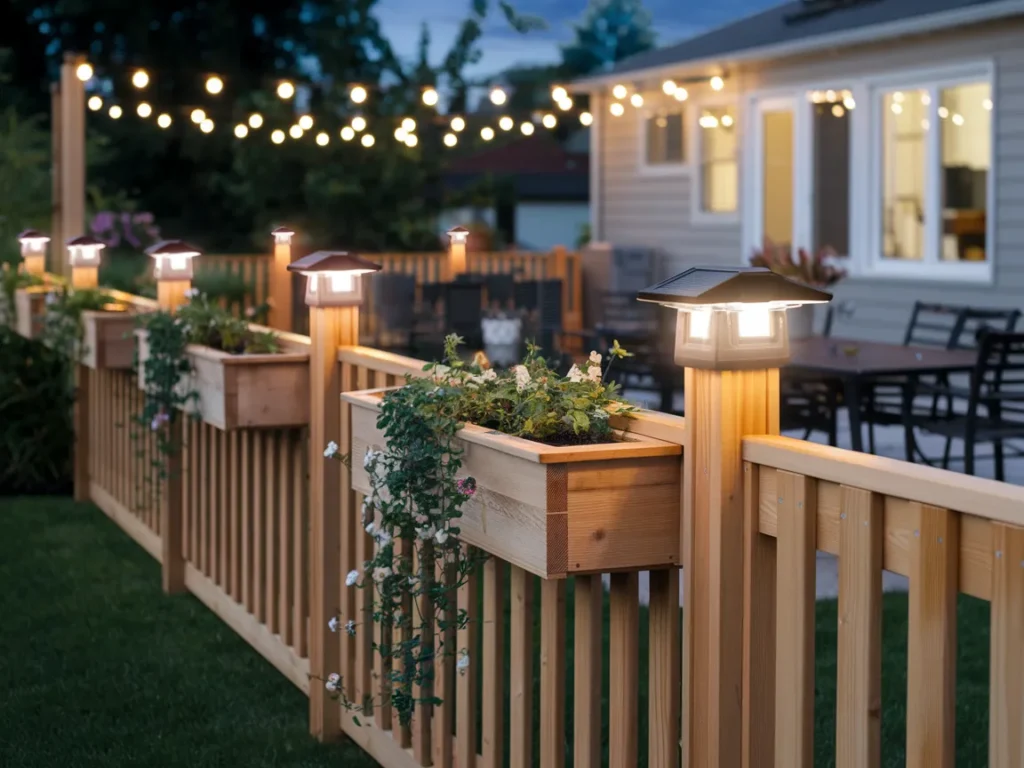
Low-voltage LED lights mounted on fence posts or along the top rail add ambiance and safety after dark. Solar-powered post cap lights are the easiest to install since they don’t require any wiring. Recessed lights between fence boards create a dramatic glow effect that makes your patio feel like a resort.
Fence lighting also extends how late you can use your backyard. A well-lit fence makes evening dinners, late-night conversations, and nighttime games possible all summer long.
Planter Boxes on the Fence
Attach planter boxes to the inside of your fence to create a vertical garden. Herbs, trailing flowers, and small succulents all thrive in fence-mounted planters. This is a fantastic way to add color and greenery to a small backyard without taking up any floor space. It pairs beautifully with spring mantel decor vibes brought outdoors.
Privacy Screens and Lattice Toppers
If your existing fence is 4 or 5 feet tall and you want more height, adding a lattice topper or a decorative privacy screen on top can give you an extra foot or two of coverage without replacing the entire fence. Lattice also serves as a trellis for climbing plants.
Statement Gates
Your backyard gate is the entry point, and it deserves attention. An arched gate, a gate with a built-in pergola, or a gate in a contrasting material like metal against a wood fence creates a focal point that elevates the entire look. Decorative hardware, like iron handles and hinges, adds character.
Budget-Friendly Backyard Fence Ideas
Not every fence needs a five-figure budget. These options deliver real privacy and style without breaking the bank.
Pallet Fence
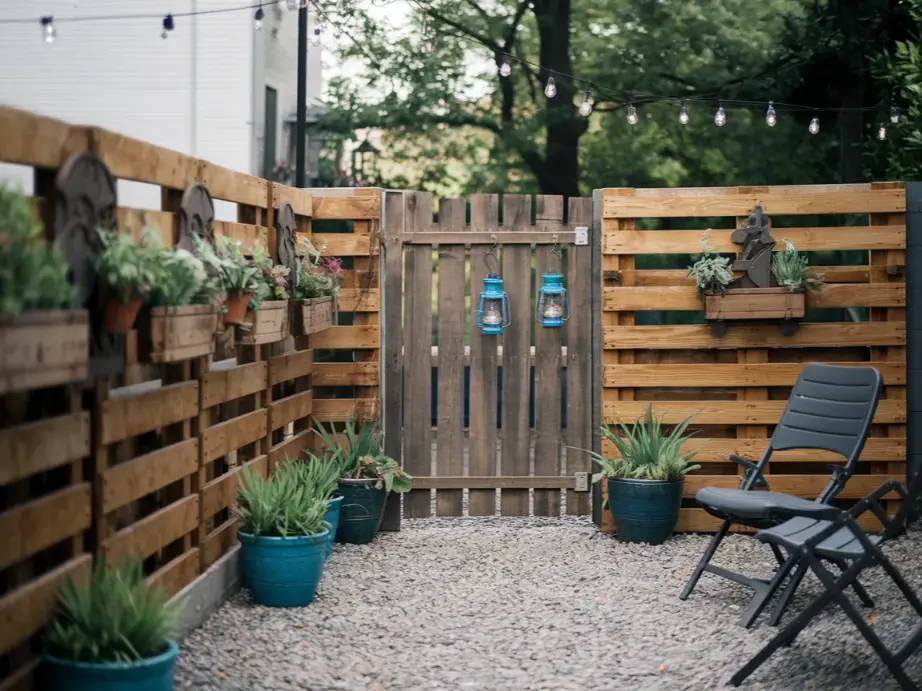
Reclaimed wood pallets can be transformed into a surprisingly attractive rustic privacy fence. Sand them, stain or paint them, and install between posts. Total cost runs as low as $2 to $12 per linear foot. The look won’t be as polished as cedar or vinyl, but for a first home, a rental property, or a temporary solution, it works.
Chain Link With Privacy Slats or Vines
Basic chain link starts at $10 to $15 per linear foot. Weave vinyl privacy slats through the mesh for instant screening, or plant climbing vines like jasmine, honeysuckle, or Virginia creeper along the base. Within one to two growing seasons, the metal disappears behind a lush green wall.
Bamboo Roll Fence
Pre-assembled bamboo rolls cost about $6 to $30 per linear foot and attach to existing posts or a simple wood frame. The result is a tropical, zen-garden feel that provides solid privacy. Bamboo works especially well as a decorative overlay on an existing chain link fence.
Reed and Willow Screens
Natural reed or willow fencing rolls create an instant privacy screen at very low cost. They don’t last as long as wood or vinyl, typically three to five years, but they cost so little that replacing them is easy and affordable.
How to Choose the Right Backyard Fence
With so many options, how do you narrow it down? Ask yourself these questions.
What’s Your Main Goal?
If privacy is the priority, go with a solid panel design at 6 feet or taller. Cedar, vinyl, and composite all deliver excellent privacy. If you want a visual boundary that doesn’t feel like a wall, consider a semi-privacy style like shadowbox or horizontal slats with gaps. If security is the concern, especially around a pool, choose a material and height that meets your local code requirements.
What’s Your Budget?
For a 150-foot backyard perimeter, basic pine or chain link keeps you under $4,000. Mid-range options like cedar or vinyl run $4,000 to $9,000. Premium materials like composite, aluminum, or Corten steel can push the total above $10,000. Factor in gates, which add $300 to $1,500 each depending on size and material.
How Much Maintenance Are You Willing to Do?
If you want zero maintenance, vinyl and aluminum are your best friends. If you don’t mind staining every few years, cedar gives you the best look-to-maintenance ratio. Composite splits the difference with a wood-like look and almost no upkeep.
What Fits Your Home’s Style?
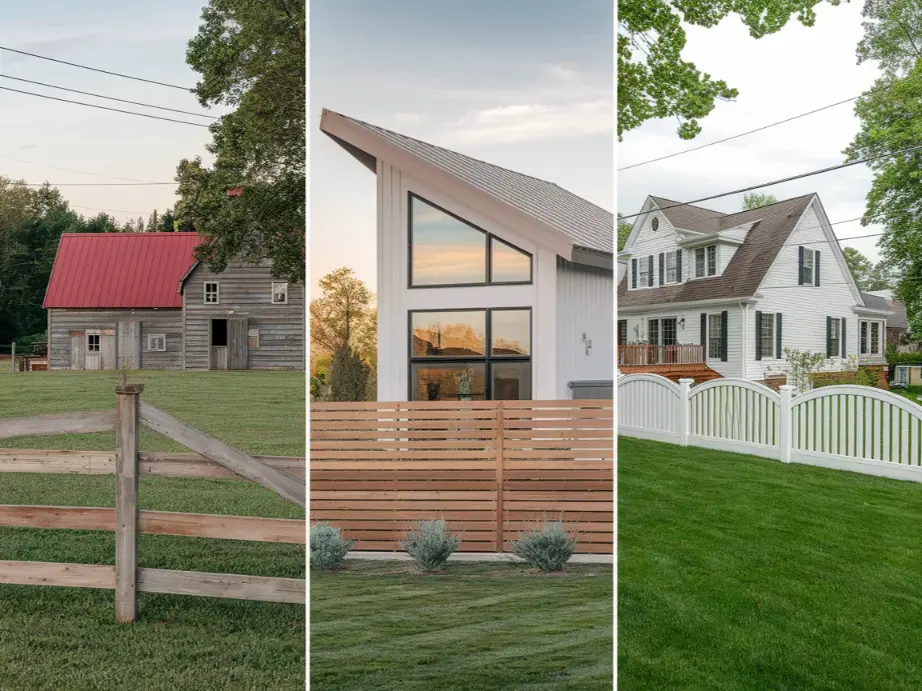
Match the fence to your house. A rustic cedar fence looks right at home behind a farmhouse-style living room. A sleek horizontal composite fence belongs behind a modern or mid-century home. A classic vinyl privacy fence works well with traditional suburban architecture. When the fence feels like it belongs, the whole property looks more cohesive and intentional.
Frequently Asked Questions
How Tall Should a Backyard Fence Be?
For privacy, 6 feet is the standard. Most local codes allow backyard fences up to 6 feet without a special permit, though some areas permit 8 feet. For pet containment, 4 to 6 feet works for most dogs, though large or athletic breeds may need taller fencing. Pool fences typically require a minimum of 4 feet with self-closing gates. Always check your local zoning regulations before building.
What Is the Best Material for a Backyard Privacy Fence?
Cedar and vinyl are the two most popular choices, and both are excellent. Cedar offers natural beauty and a warm, organic feel. Vinyl offers zero maintenance and a 20 to 30 year lifespan. Composite is a strong third option that combines the look of wood with the durability of vinyl. The best choice depends on your budget, your style preferences, and how much maintenance you’re willing to do.
How Much Does a Backyard Fence Cost?
A typical backyard fence costs between $3,000 and $12,000 for a standard residential lot, or $20 to $60 per linear foot installed. Wood and chain link are the most affordable. Vinyl, composite, and aluminum are mid-range to premium. Labor makes up 40 to 60 percent of the total cost in most projects.
Can I Install a Backyard Fence Myself?
Yes, for simpler designs like wood picket, basic privacy panels, and chain link. DIY installation can save 30 to 50 percent on labor costs. You’ll need to dig post holes, set posts in concrete, and attach rails and panels. For complex designs, mixed materials, or sloped terrain, professional installation is worth the investment to avoid costly mistakes.
Does a Fence Add Value to My Home?
In most markets, yes. Homeowners typically recoup 30 to 70 percent of fence installation costs at resale. The return is highest in family-oriented neighborhoods where fenced yards are expected. A quality fence also helps a home sell faster by making it more attractive to buyers with kids and pets.
How Long Does a Backyard Fence Last?
Lifespan depends on material and maintenance. Pressure-treated pine lasts 15 to 20 years with regular staining. Cedar lasts 15 to 25 years. Vinyl and composite last 20 to 30 or more years with minimal care. Aluminum and wrought iron can last 30 to 50 or more years. Regular maintenance like staining, sealing, and replacing damaged boards extends the life of any wood fence significantly.
Final Thoughts
Your backyard should be your favorite room. Not the living room. Not the kitchen. The backyard. Because that’s where the best moments happen. The cookouts. The lazy Sunday mornings with coffee. The kids running through the sprinkler. The dog chasing a ball until he can’t chase anymore.
A great backyard fence makes all of that feel private, safe, and complete. It’s the frame around your outdoor life. And when you choose the right material, the right style, and the right height, it disappears into the background while everything inside it becomes the focus.
Pick the fence that fits your home. Pick the one that fits your life. And then go enjoy the backyard you built it for.

