

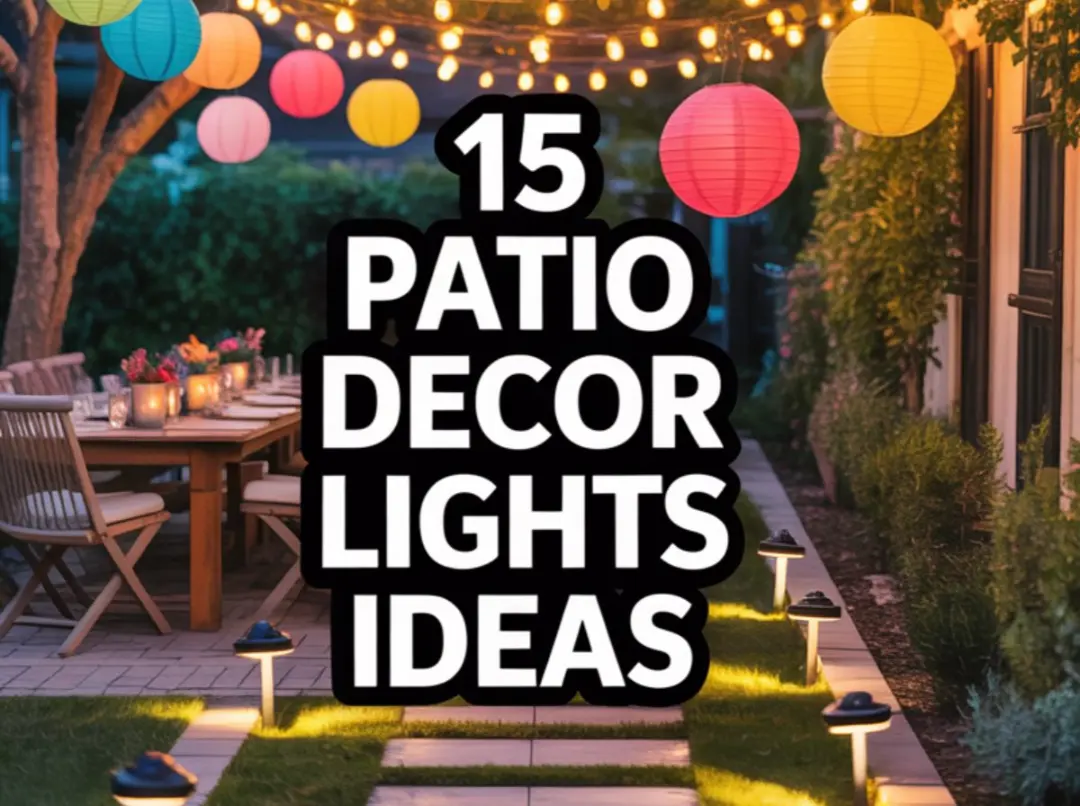
Patio decor lights help an outdoor space feel warm, safe, and usable at night. I use patio lighting to improve mood, brighten walk paths, and make seating areas look clean in photos. The best patio lights stay weather-safe and match the patio size.
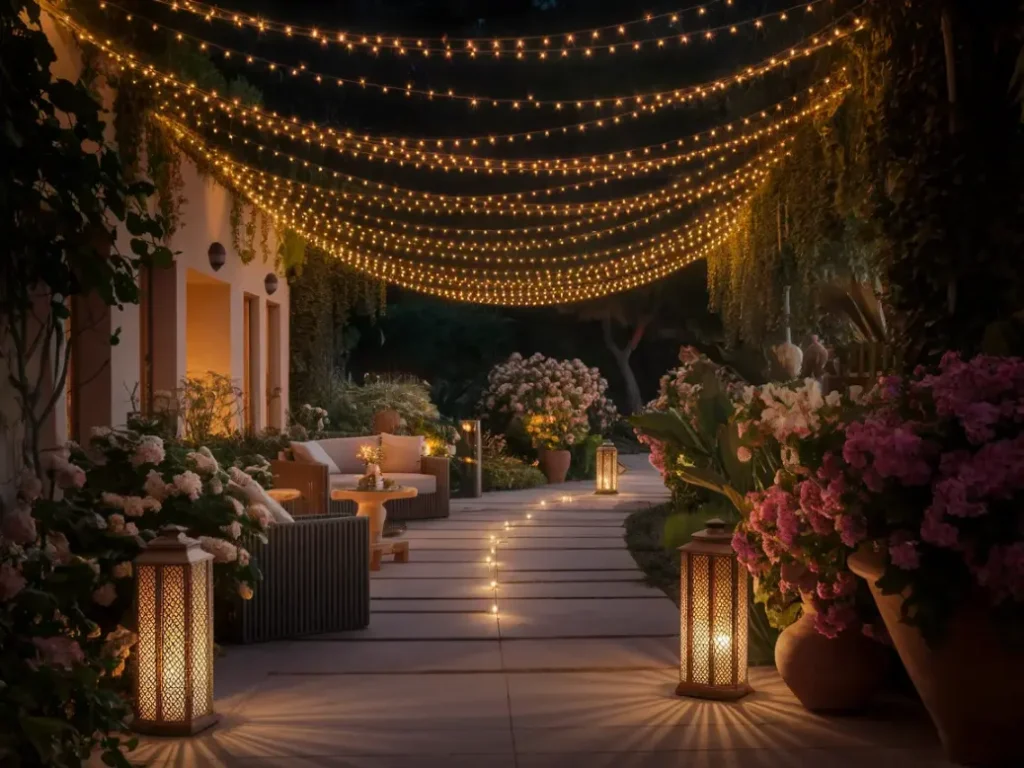
I have lit patios for evening dinners, late-night conversations, and once for a proposal, and every project taught me the same thing: good patio lighting is about layers, not brightness. Beginners buy the brightest floodlight they can find and end up with a patio that feels like a gas station. The patios people actually linger on use three soft layers: overhead glow, mid-level lantern light, and tiny accents near the ground. None of them is bright alone. Together they make the space feel warm and intentional.
Before you buy a single bulb, walk your patio at night with the house lights off. Notice where it is truly dark (trip hazards, steps, the path from the door) versus where it just feels empty (seating areas, plant beds). Safety lighting and mood lighting are two different jobs, and mixing them up is the most common mistake I see. Plan the safety lights first, then add the pretty layers. And check your power situation: many patios have one outlet or none, which decides whether you shop solar, battery, or plug-in. For overall patio styling beyond lighting, my outdoor patio ideas cover the full picture.
15 Patio Decor Lights Ideas
- String lights across the patio ceiling
- Lantern lights near seating area
- Solar path lights for walkways
- Wall sconces for patio walls
- Outdoor floor lamp for soft glow
- LED candles on table trays
- Fairy lights on railing lines
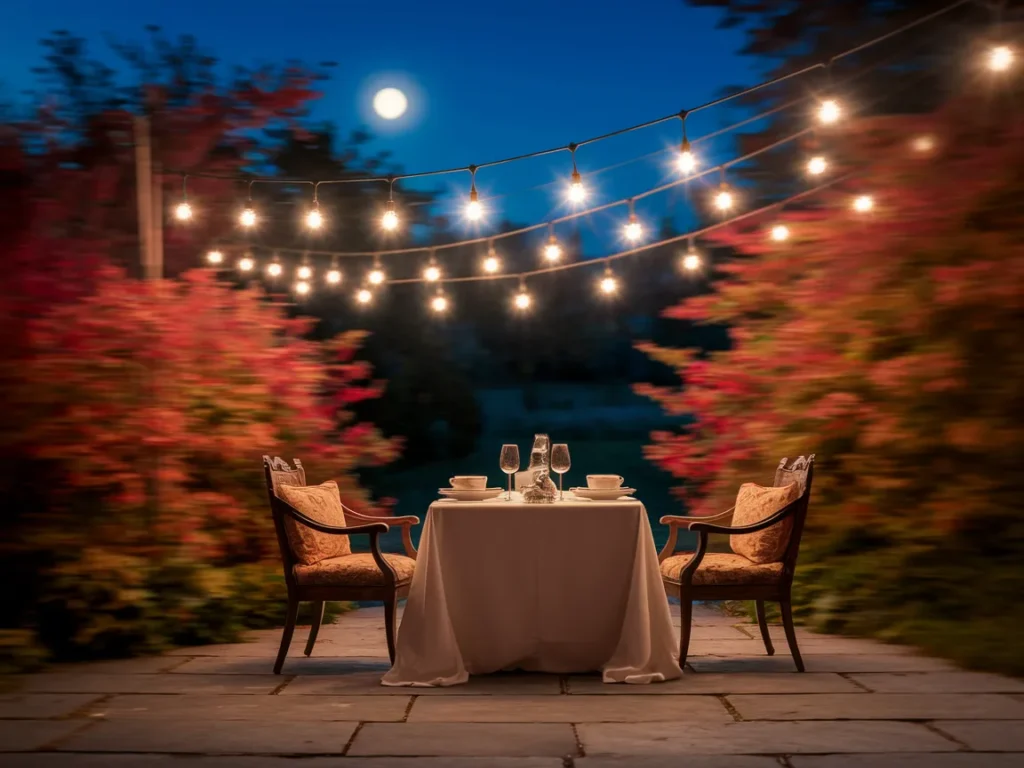
- Bistro lights above dining set
- Spotlights for plants and trees
- Step lights for stairs safety
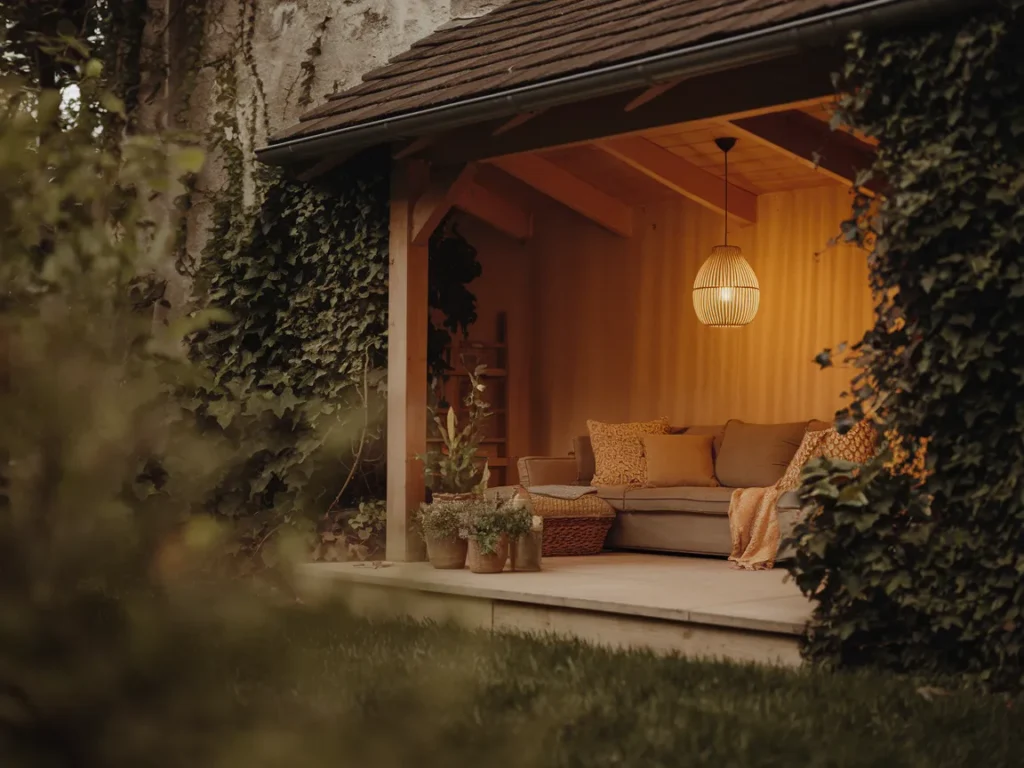
- Hanging pendant light for covered patio
- Fire pit glow lighting zone
- Umbrella lights for table seating
- Battery lights for small balconies
- Patio light layering rule
String Lights Across The Patio Ceiling
String lights make patios feel cozy because the glow spreads evenly across the space. I hung warm white string lights above the seating area to create soft light without harsh brightness. This also made the patio look better in photos at night. String lights work best when they hang in straight lines and stay high enough for walking space.
For a covered patio, I run string lights in long parallel lines or a zigzag across the ceiling joists, keeping each run under the manufacturer’s max connectable length (usually 3 to 5 strands). Exceed that and the far end dims noticeably. I secure the wire to joists with insulated staples or screw-in hooks every 24 inches so wind cannot make the strands slap the ceiling. Bulb spacing matters: 12-inch spacing gives a classic bistro look, while tighter spacing looks more modern and throws more light. Always buy one spare strand. When a bulb section fails two years from now, matching the exact style will be impossible, and a spare strand saves the whole installation.

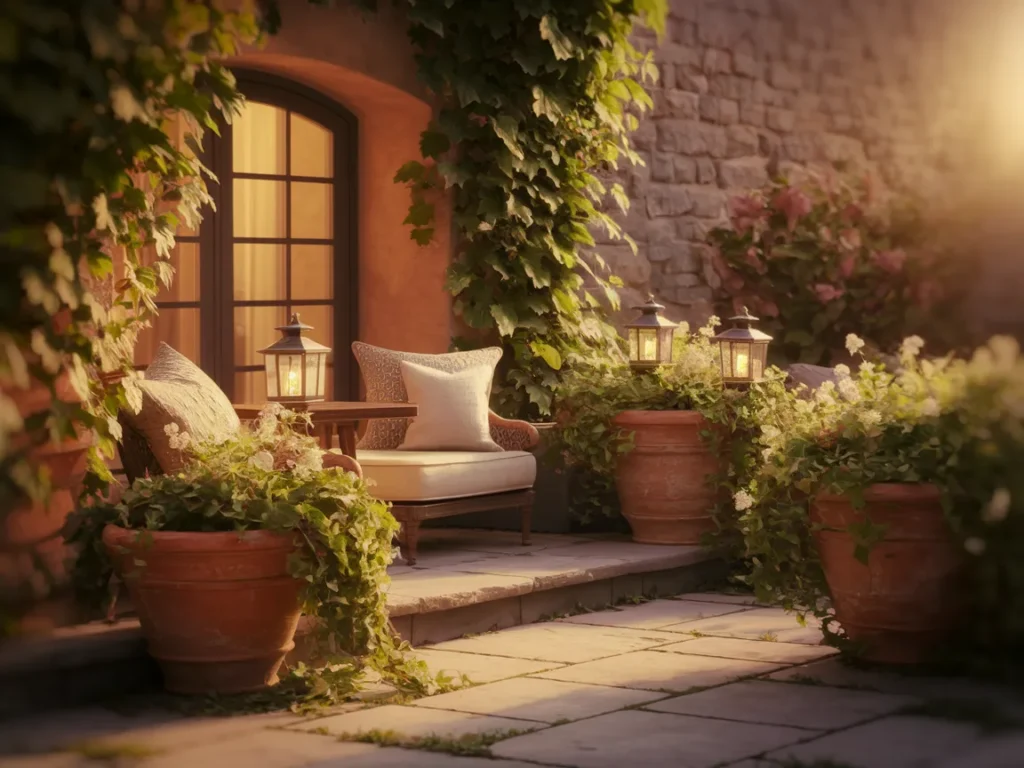
Lantern Lights Near Seating Area
Lantern lights add soft light near seating without needing hard wiring. I placed lanterns on the floor beside chairs and near the table for a warm glow. Lanterns also help patios look styled because they add shape and height. LED lanterns work best because they stay safe in windy weather.
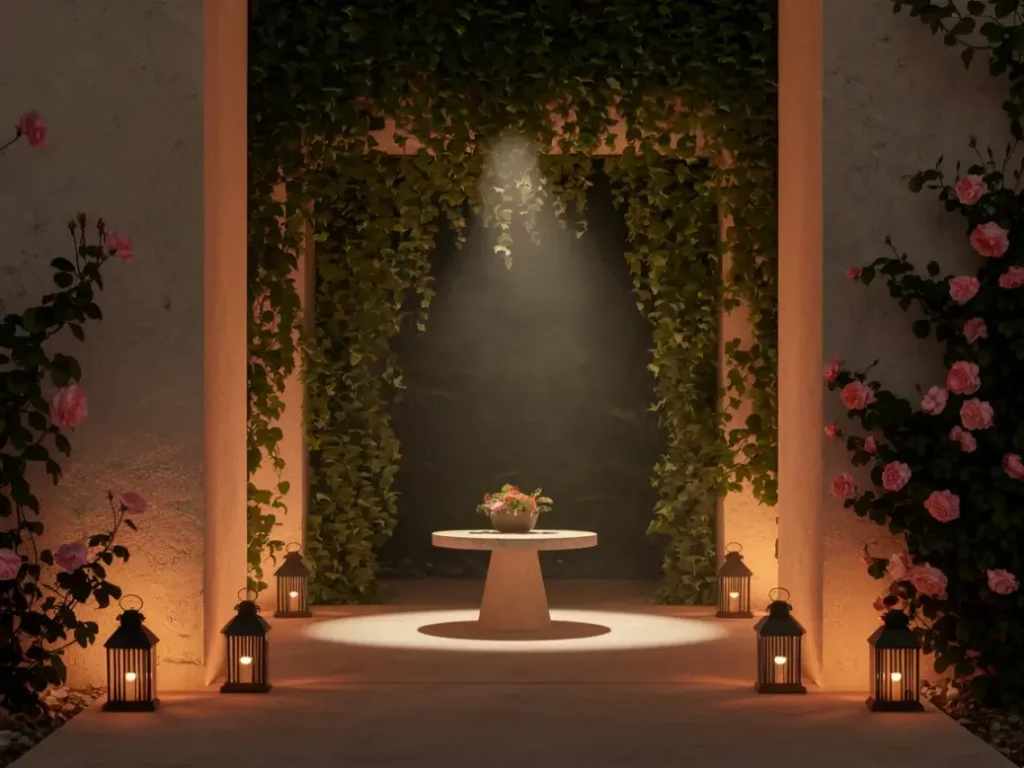
Lanterns work best as the middle layer: lower than string lights, higher than candles. I place them on side tables, the patio floor beside chairs, or hanging from shepherd’s hooks near the seating zone. Real flame lanterns are beautiful but I only use them on calm nights and never leave them unattended; LED lanterns with a flicker mode give 90 percent of the effect with none of the worry. Size them to the furniture: a lantern should be about one third the height of the table it sits on. Too tall and it blocks conversation sightlines. Group in threes at staggered heights for the most natural look.
Solar Path Lights For Walkways
Solar path lights improve patio safety because they brighten walk zones. I used small solar stakes along the edge of the patio and garden path. This made the yard feel more secure and also looked clean at night. Solar lights work best when spaced evenly in straight lines.
Solar path lights fail for one reason above all others: shade. I test the spot first by leaving my phone there for a day and checking the light exposure, because a path under a tree or eave will never charge enough. Good solar lights need 6 to 8 hours of direct sun. Space them 6 to 8 feet apart and stagger them left-right rather than lining both sides; alternating sides guides the eye forward and uses half the lights. Push the stake fully into soil, not mulch, or they tilt within weeks. And clean the solar panel monthly with a damp cloth. A dusty panel cuts charging by half, which is why most people’s solar lights mysteriously dim by midsummer.

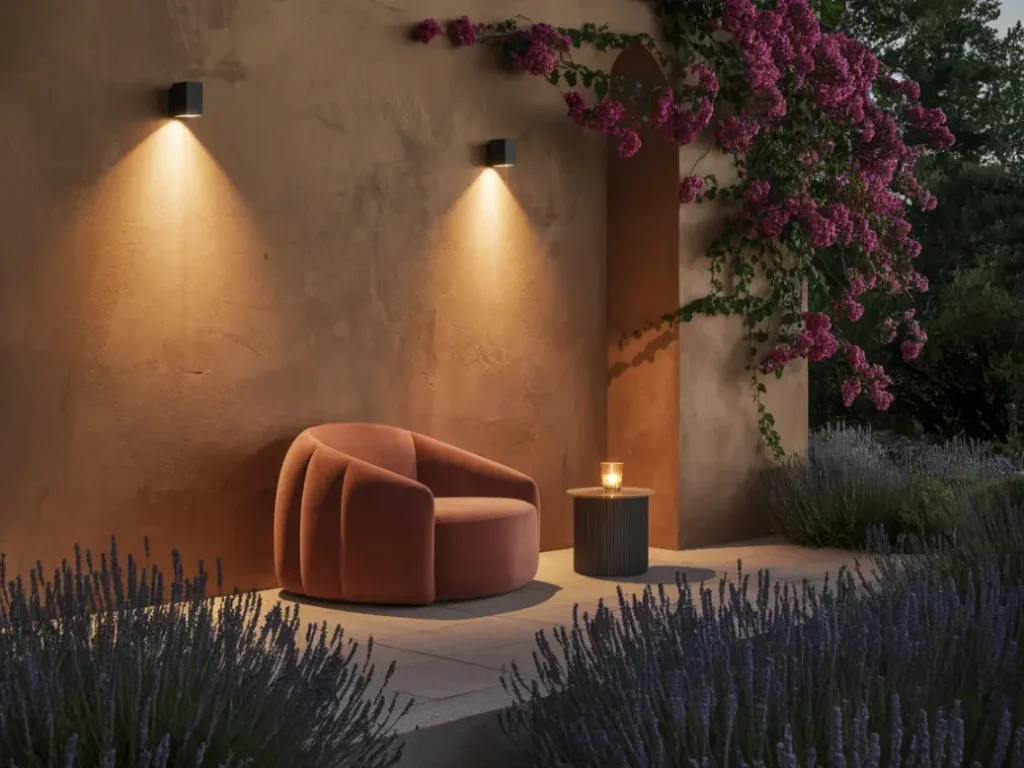
Wall Sconces For Patio Walls
Wall sconces upgrade patio lighting because they brighten the space without using floor room. I used warm wall lights near the door and seating zone so the patio felt safe and welcoming. Sconces also make patios look more finished because the light comes from the wall, not just the ground. This idea works best with simple fixture shapes and warm bulbs.
Wall sconces are the most permanent-looking upgrade on this list, and renters can fake them with battery-operated sconces mounted on adhesive brackets. For wired sconces, I mount them 60 to 66 inches from the floor to the center of the fixture, flanking doors or spaced 8 to 10 feet apart along a long wall. Downward-facing sconces wash the wall with light and reduce glare; upward-facing ones highlight architecture but can blind seated guests. I prefer downlights near seating for that reason. Match the sconce finish to your door hardware (black with black, bronze with bronze) and the whole exterior looks designed rather than added-on.
Outdoor Floor Lamp For Soft Glow
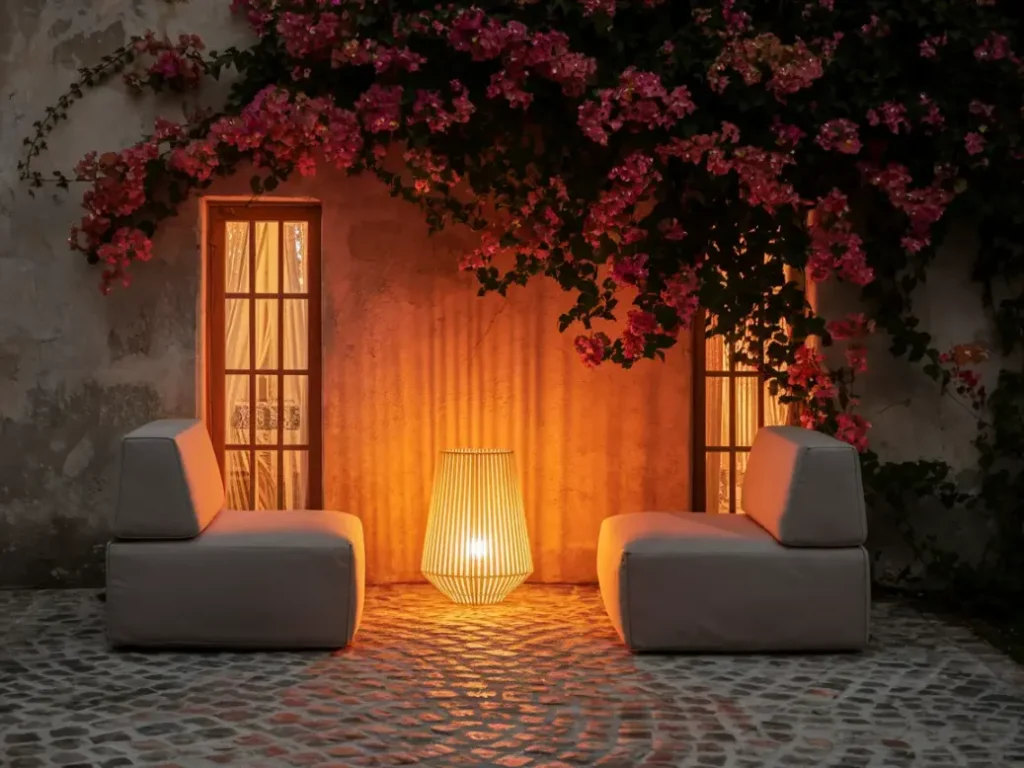
An outdoor floor lamp adds soft light in one corner and makes the patio feel like an outdoor living room. I placed a floor lamp near the sofa area to create a calm reading glow. This also helped when overhead lighting felt too bright. A weather-safe lamp works best with a stable base and warm bulb tone.
An outdoor floor lamp sounds odd until you try reading on a patio at night. Table lanterns light the table, string lights light the air, but neither lights your book. I use a weather-rated floor lamp (IP44 or higher) tucked behind an armchair, with the shade at seated eye level. The key spec is the shade: opaque or lined shades direct light down instead of glaring outward. Run the cord along the wall edge and secure it with cord covers so nobody trips. I plug mine into a smart plug, so the lamp joins the evening scene with one tap instead of me fumbling behind furniture every night.
LED Candles On Table Trays
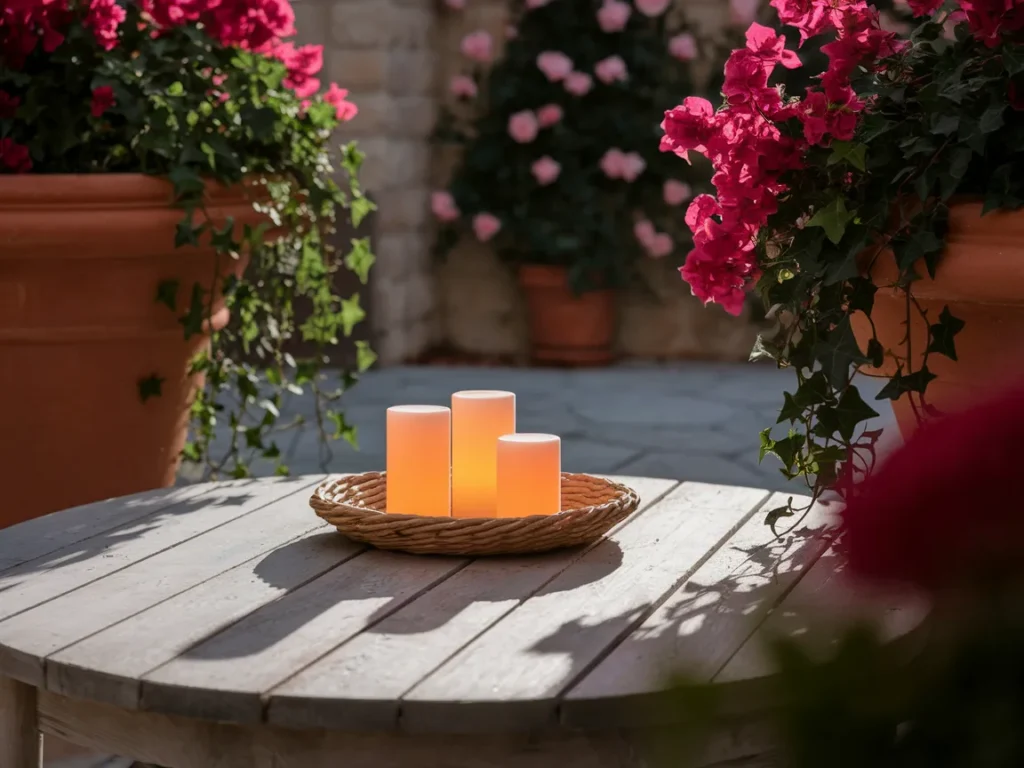
LED candles on a tray make patio tables look cozy without open flame risk. I used a small tray and placed 3 LED candles inside for a clean centerpiece. This gave warm light and also made the table feel styled for photos. LED candles work best in different heights for balance.
LED candles have gotten so good that I no longer bother with real ones on dining tables: no wax on the tablecloth, no flame near sleeves, and they stay lit in breeze that kills real candles instantly. I use the flickering warm-white kind and cluster three heights on a tray. The tray matters as much as the candles: it contains them visually and catches the remote you will inevitably lose. Set the candles on a timer (most have a built-in 5-hour timer) so they light themselves at dusk. One honest note: cheap LED candles have a visible plastic flame tip up close. Spend a little more for the wax-coated ones; they look real even at arm’s length.
Fairy Lights On Railing Lines
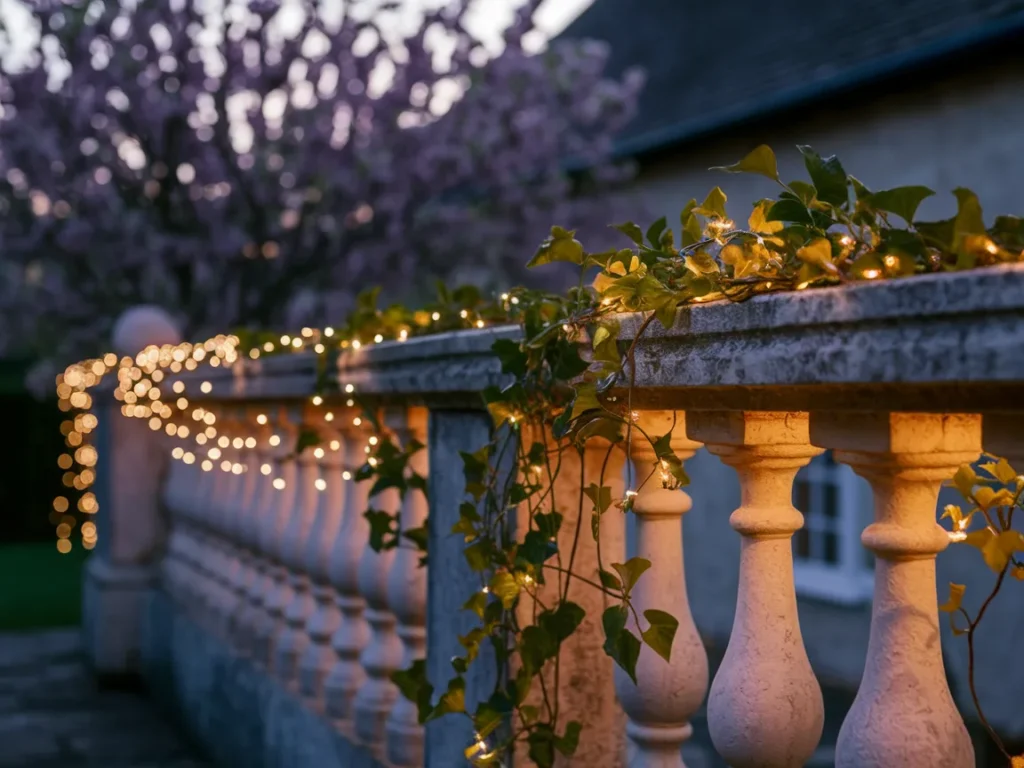
Fairy lights on the railing add soft detail and make patios look brighter at night. I wrapped warm fairy lights along rail edges to outline the space. This created a gentle glow without harsh brightness. Fairy lights work best when wrapped neatly and secured so they do not sag.
Fairy lights on railings outline the patio’s edge, which makes the space feel bigger and safer after dark. I wrap them loosely around the top rail or weave through balusters, keeping the wire on the inside face so it does not snag passersby. Battery packs tuck into a small waterproof box or behind a planter at the rail end. The most common mistake is wrapping too tightly: tight wraps look sparse and stress the wire. Loose, generous loops with the lights facing outward read as lush. Use copper-wire fairy lights rather than the thick green-wire kind; the thin wire nearly disappears in daylight, so the railing looks clean during the day too.
Bistro Lights Above Dining Set
Bistro lights above a dining set create a clear dining zone and make outdoor meals feel more inviting. I placed bistro lights directly over the table so the light stayed focused where people sit. This also improved photos because the dining area looked framed by light. Warm bulbs work best for a cozy look.
Bistro lights over a dining set should hang 7 to 8 feet above the table surface: low enough to light faces warmly, high enough that nobody stands up into them. I run them from the house wall out to a pole or tree, tensioning the wire so the lowest swoop clears head height. If you have no tall anchor point, two 10-foot poles in weighted umbrella bases work and need no digging. Use shatterproof plastic bulbs over dining areas, not glass. Glass bulbs over food are a bad idea, and one hailstorm turns a glass set into a hazard. Dimmer-compatible bistro lights are worth seeking out: full brightness for setup and cooking, dimmed low for the actual dinner.

Spotlights For Plants And Trees
Spotlights add drama and depth because they highlight plants and trees near the patio. I used small outdoor spotlights aimed at greenery to create soft background light. This made the patio look layered instead of flat and dark. Spotlights work best when kept low and angled upward.
Uplighting a tree or large plant turns it into nighttime sculpture, and it is the easiest dramatic effect on this list. I place the spotlight 12 to 18 inches from the trunk, angled up into the canopy, never pointing at seating or the house. One light per feature is enough; two lights on one tree looks like a car dealership. Solar spotlights work for this if the spot gets day sun, but plug-in low-voltage spots are brighter and more reliable. I use warm white only. Cool white uplighting makes a garden look like a commercial parking lot. Stake-mount beats surface-mount for flexibility: you can reposition as plants grow.
Step Lights For Stairs Safety
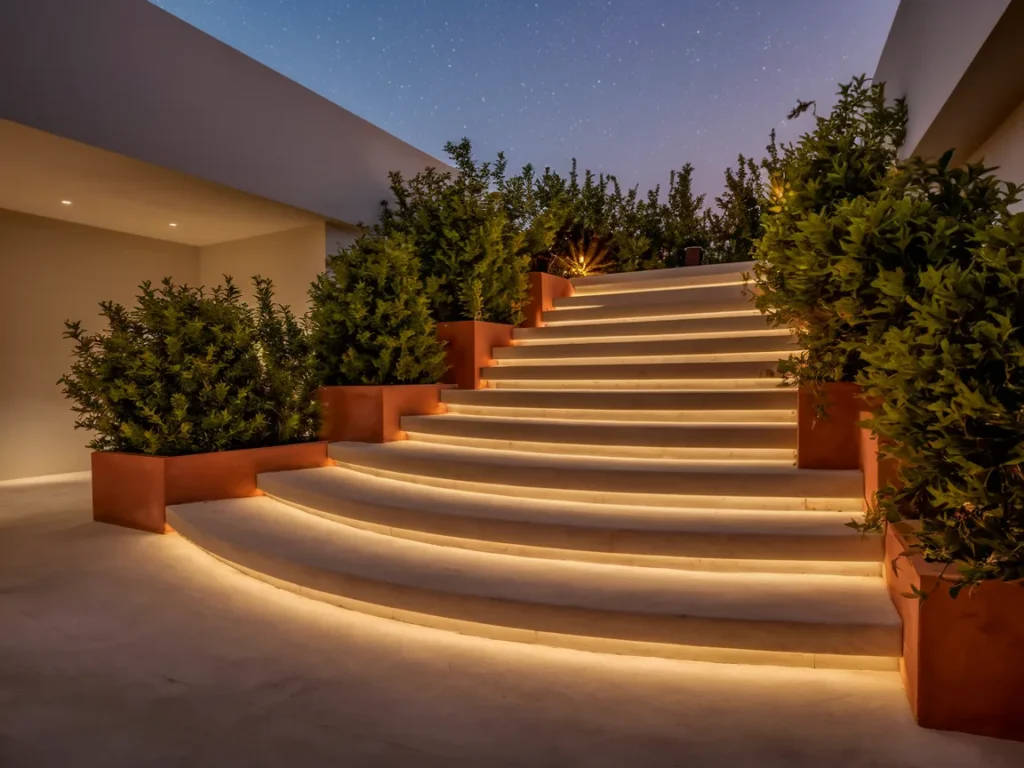
Step lights make patios safer because stairs and edges stay visible at night. I added small lights along each step so walking felt easier and more secure. This also made the patio look more polished because the lighting felt planned. Warm step lights work best because they feel calm but still clear.
Step lights are safety equipment first and decor second, so I treat them that way: every step gets light, no gaps. I prefer recessed or surface-mount fixtures on the riser (the vertical face), which lights the tread below without shining in anyone’s eyes. Solar step lights exist but I find them unreliable for safety; hardwired low-voltage or battery lights with a dusk sensor are more consistent. Space them on every other step for wide stairs, every step for narrow ones. Match the fixture color to the stair material so they disappear by day. This is the one lighting project where I never cut corners, because a missed step in the dark is how injuries happen.
Hanging Pendant Light For Covered Patio
A hanging pendant light adds strong light for covered patios without needing many extra fixtures. I used one pendant above the seating or dining zone so the patio had a clear center light. A simple shade style kept the space looking clean. Warm bulbs helped the patio feel cozy instead of bright and harsh.
A pendant over a covered patio dining table makes the space feel like an indoor room, which is exactly the effect you want. I hang it 30 to 36 inches above the tabletop, the same as indoors. Outdoor-rated is non-negotiable: indoor pendants corrode and the wiring is not sealed against humidity. If running new wiring is too much, plug-in pendant kits with a long cord and a ceiling hook give the same look with no electrician. Choose a shade that directs light downward onto the table rather than a bare bulb that glares. And put it on a dimmer or smart plug. A pendant at full brightness over dinner feels interrogative; dimmed, it feels like a restaurant.
Fire Pit Glow Lighting Zone
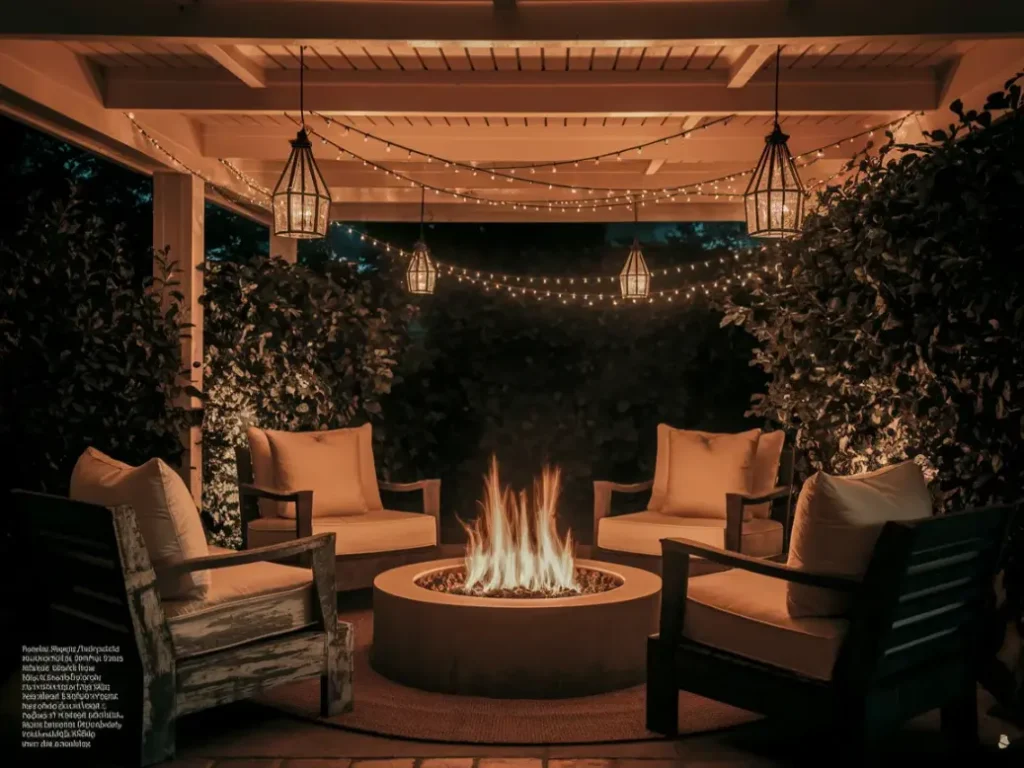
A fire pit glow zone makes patios feel warm because the light comes from the center. I placed chairs around the fire pit and used small lanterns nearby for extra glow. This created a cozy hangout area that felt safe and balanced. This idea works best when the fire pit area stays open and uncluttered.
A fire pit is already a light source, so the lighting around it should be minimal: just enough to see the seating edges and the path in. I use low lanterns or small solar stakes set back 6 to 8 feet from the pit, well outside the heat zone. Never hang string lights directly above a wood-burning pit: sparks and heat destroy them, and it is a genuine fire risk. Keep all fabric, cushions, and paper lanterns even farther back. The fire itself should be the star; surrounding lights are supporting actors. I also keep a small flashlight or phone light handy for the walk back, because fire-lit eyes need a minute to adjust to the dark path.
Umbrella Lights For Table Seating
Umbrella lights improve outdoor dining because the table gets light without overhead wiring. I used clip-on umbrella lights to brighten meals and card games at night. This made the patio more usable without adding wall fixtures. Umbrella lights work best with warm settings and simple placement at the center pole.
Umbrella lights solve the specific problem of a dark table under a dark umbrella. I use clip-on lights that attach to the umbrella pole: they throw light down onto the table exactly where you need it. Battery-powered is standard here, and I look for models with at least three brightness levels, because full blast is too much for conversation. Install the light at the top of the pole just under the canopy, angled down. The common mistake is mounting it too low, where it glares into seated eyes. When the umbrella closes for the night, most clip lights stay attached and fold with it, so there is nothing extra to store. Just remember to switch them off so the batteries last.
Battery Lights For Small Balconies
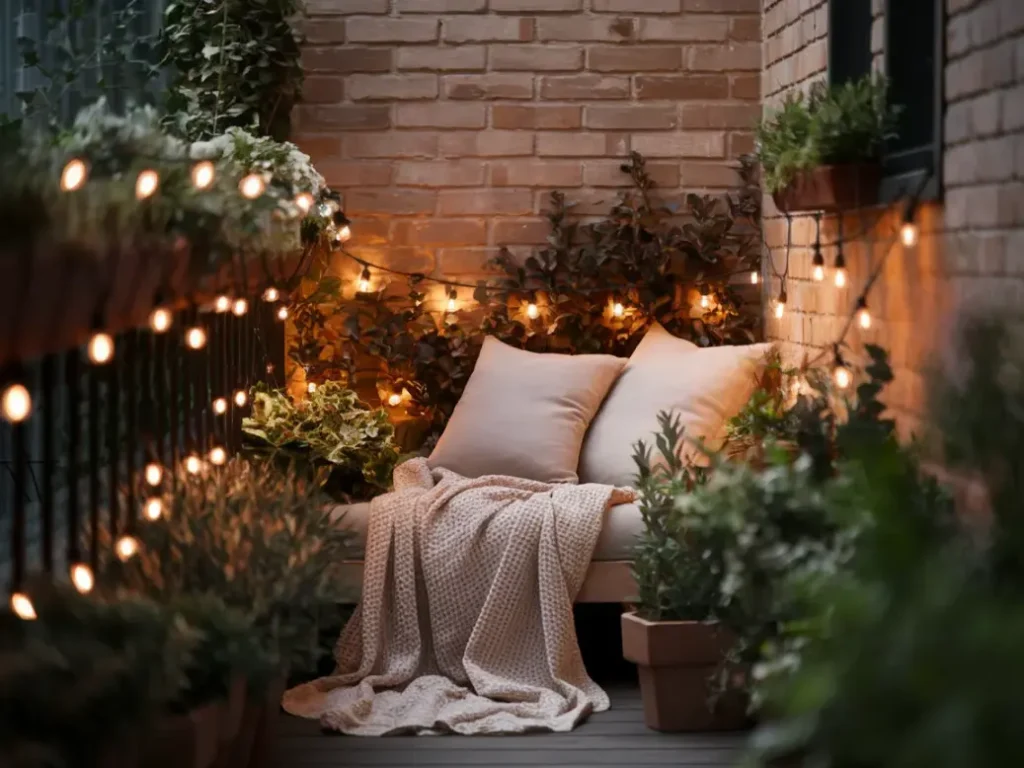
Battery lights work well for small patios and balconies because they install fast and need no wiring. I used battery puck lights and small LED strips in corners and shelves. This helped add glow without clutter. Battery lights also make rental-friendly outdoor spaces look styled.
Small balconies usually have no outlet and strict rules about cords, which makes battery lights the whole strategy. I combine two types: copper-wire fairy lights for sparkle along the railing, and one battery lantern for actual usable glow near the seat. Buy lights with built-in timers (6 hours on, 18 off is standard) so you never think about them. Keep spare batteries in a drawer by the door, because balcony lights always die right when guests arrive. One thing I learned: remove battery packs during long rainy stretches even if the lights are rated outdoor. Moisture creeps into battery compartments over time and corrodes the contacts, and then the whole strand is trash.
Patio Light Layering Rule
A patio light layering rule keeps outdoor spaces cozy and not too bright. I follow a simple method: one overhead light, one seating light, and one pathway or accent light. This creates balance and removes dark corners. Layered lighting also improves photos because the patio looks warm and clear.
Here is the rule that ties all of this together: every patio needs three layers, and no single layer should try to do everything. Layer one is overhead (string lights, pendants) for general glow. Layer two is mid-level (lanterns, sconces) for warmth around people. Layer three is low (path lights, step lights, fairy lights) for safety and sparkle. When a patio feels wrong at night, it is almost always because one layer is missing or one layer is doing all the work. Walk your patio tonight and count your layers. Adding the missing one, even cheaply, transforms the space more than upgrading the existing ones. For the science behind layering indoors too, my 3-layer lighting rule explains the same principle for living rooms.
Frequently Asked Questions
What Patio Lights Look Best For Cozy Decor?
String lights, lanterns, and warm wall sconces look best for cozy patios. These lights create soft glow and reduce harsh shadows. Warm light also makes outdoor photos look better.
How Do I Light A Patio Without Electricity Wiring?
Solar lights, battery lights, and LED lanterns work well without wiring. These options install fast and stay easy to move. They also work well for rentals.
What Light Color Works Best For Patio Decor?
Warm light works best because it feels calm and welcoming. Cool light can look harsh outdoors at night. Keeping all bulbs the same tone improves the overall look.
How Many Lights Should I Use On A Patio?
Use enough lights to cover seating, walk paths, and corners. A layered setup works best with 3 to 5 light sources. Too many lights can make the space feel bright and uncomfortable.
Should All My Patio Lights Be The Same Color Temperature?
Yes, match them. I use 2700K warm white for everything: string lights, lanterns, sconces, spots. Mixed temperatures (some warm, some cool white) make a patio feel chaotic even if you cannot name why. When buying, check the Kelvin number on the box, not just the word warm, because one brand’s warm is another brand’s daylight. Consistency is the cheapest upgrade in outdoor lighting.
How Do I Light A Patio Without An Outdoor Outlet?
Combine solar path and spot lights for the ground level, battery fairy lights and lanterns for the middle layer, and a battery bistro set overhead. Modern battery lights with timers run for weeks on a set of batteries. I have lit entire rental patios with zero outlets this way. The only thing batteries cannot do well is a bright pendant over a dining table, so plan the dining zone around lantern light instead.
Conclusion
Patio decor lights help outdoor spaces feel cozy, safe, and ready to use at night. I got the best results with string lights, lanterns, and solar path lights. Extra options like step lights and spotlights added comfort and depth. When patio lights stay warm and layered, the space looks styled and feels more relaxing.
Start tonight: turn off your house lights, walk the patio, and write down the three darkest spots. Fix those three first with whatever is easiest, even if it is just solar stakes from the hardware store. Then add one pretty layer, like string lights or lanterns, and stop. You will be amazed how little it takes. A patio does not need to be bright to be magical; it needs to be layered. For seasonal lighting inspiration, my outdoor Christmas decor ideas and outdoor fall decor ideas show these same principles dressed up for the holidays.