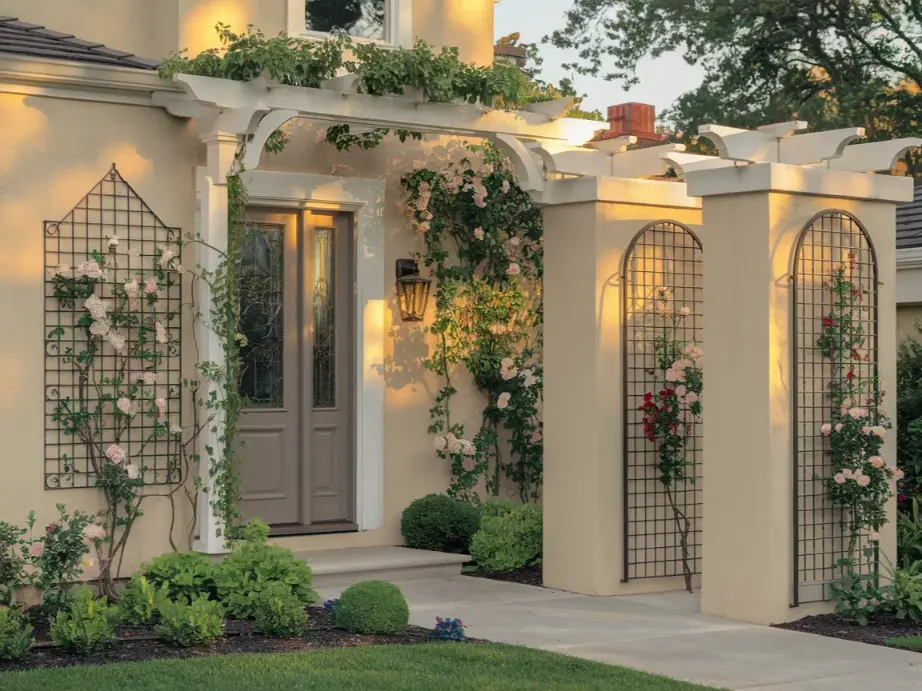

A trellis on the front of your house is one of the fastest, cheapest ways to boost curb appeal. It covers blank walls, frames your front door, and gives climbing plants a place to grow. The result? A home that looks polished, green, and full of character from the street.
According to research from Virginia Tech, a well-landscaped home can sell for 5.5 to 12.7 percent more than a home with no landscaping. A trellis is one of the easiest landscaping upgrades you can make because it works in small and large spaces, costs very little, and gets better with time as plants fill in.
In this article, you will find 13 trellis front of house ideas that work for every home style. You will also learn which climbing plants grow best, how to install a trellis without damaging your siding, and tips for keeping everything looking great year after year. Let’s get started.
Why A Trellis Belongs On The Front Of Your House
A trellis is not just for the backyard. When you place one on the front of your home, it does more than hold up a vine. It changes how your entire house looks and feels from the curb.
Instant Curb Appeal
Think about the last time you drove past a home covered in flowering vines. It probably caught your eye. A trellis gives your home that same “stop and stare” quality. Even a simple wooden trellis with star jasmine can turn a plain wall into a conversation starter. The American Society of Landscape Architects estimates that thoughtful landscaping can boost a home’s value by 15 to 20 percent.
Covers Blank Walls And Awkward Spaces
Every house has that one wall. You know the one. It has no windows, no shutters, and no character. It just sits there, blank and boring. A trellis gives that wall a purpose. Mount one or two trellises on the bare surface, plant a climbing vine at the base, and within a season or two, you have a living wall of greenery.
Adds Height And Dimension
A flat house front can feel one-dimensional from the street. A trellis adds depth. The structure itself creates shadow lines and texture. When vines grow on it, you get layers of foliage and flowers that make the whole front of the house feel richer and more designed.
Privacy And Shade
A trellis near your front porch or entryway can give you a bit of privacy from the street. Thick climbing vines act like a natural screen. They also provide light shade, which keeps your porch cooler in the summer.
13 Trellis Front Of House Ideas
Here are 13 ideas to help you pick the perfect trellis for your home’s front.
1. Wall-Mounted Lattice Trellis
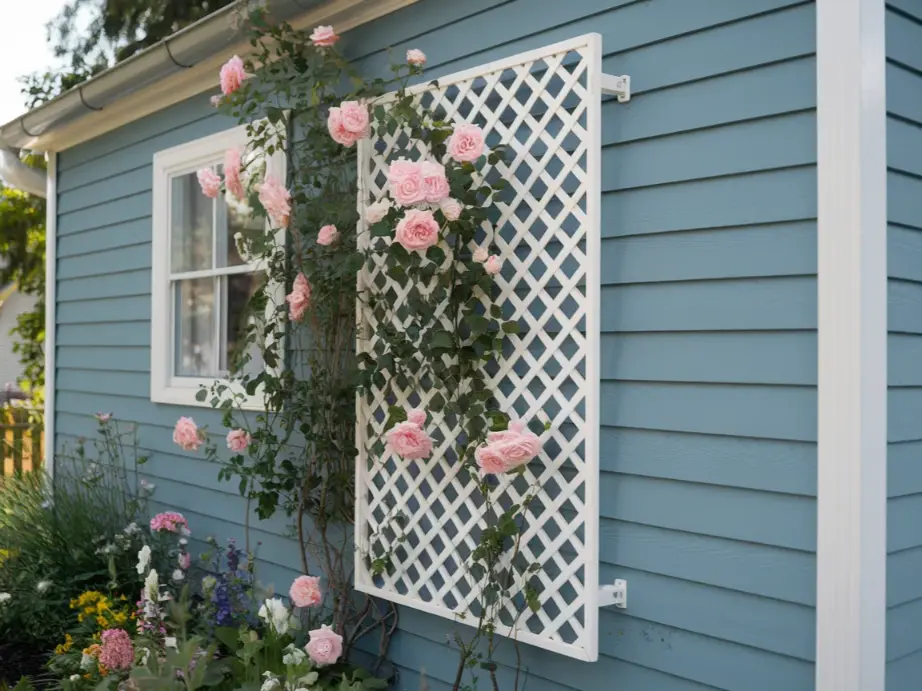
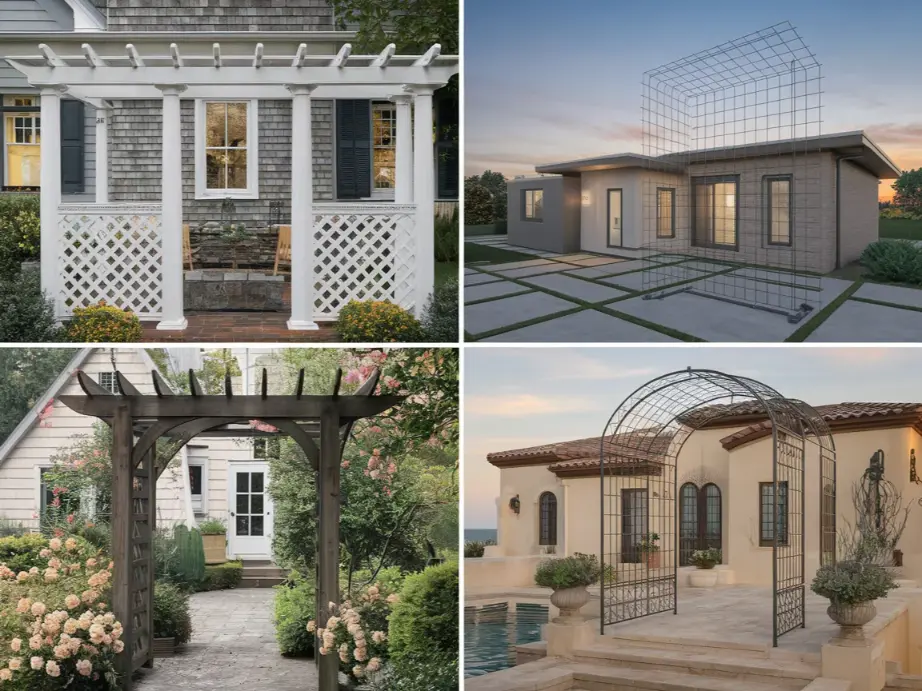
This is the most classic trellis style. A flat lattice panel mounts directly to the wall with brackets or spacers. The diamond or square pattern gives vines plenty of spots to grab. Paint it to match your trim for a seamless look, or go with a contrast color to make it pop.
Wall-mounted lattice works best on larger blank walls between or beside windows. Use spacers to keep the trellis 2 to 3 inches away from the siding. This gap lets air flow behind the plants and protects your wall from moisture damage.
This style is a great match for traditional, colonial, and farmhouse homes. Train climbing roses, clematis, or star jasmine on it for a dreamy cottage feel.
2. Diamond Wire Trellis
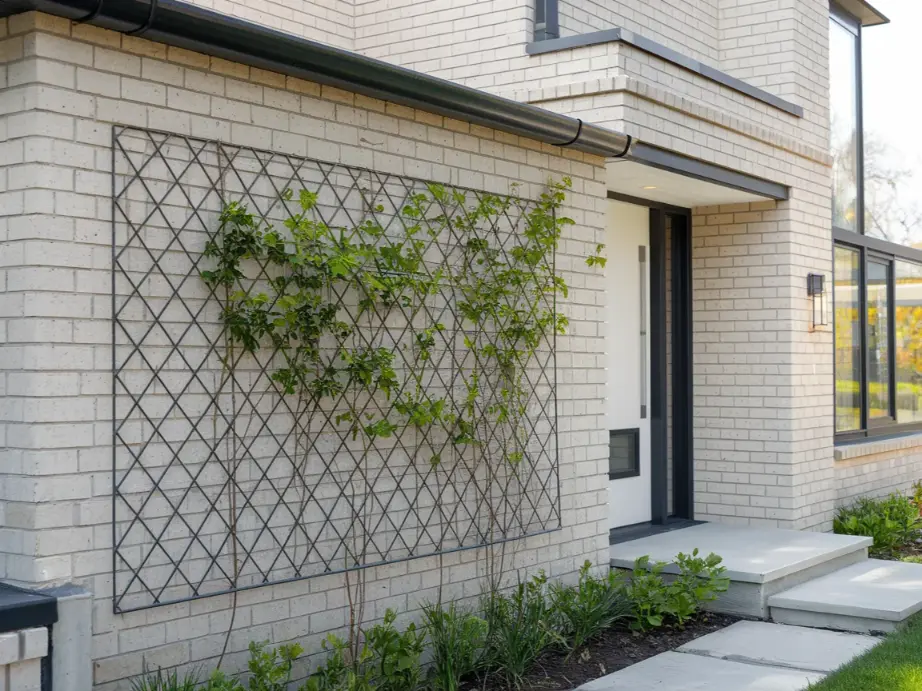
A diamond wire trellis is a modern, minimalist alternative to wood lattice. You make it by screwing eye hooks into the wall in a grid pattern and threading galvanized steel wire between them in a diamond pattern. The result is a sleek, almost invisible support system.
This style is a favorite for contemporary and modern homes because it looks clean and architectural. Star jasmine or Confederate jasmine are perfect partners for wire trellises. The vines fill in the diamond shapes and create a living geometric pattern on your wall.
A diamond wire trellis costs very little to build. You need eye hooks, steel wire, a drill, and pliers. You can cover a 6 by 8 foot wall for under 50 dollars.
3. Front Door Pergola Trellis
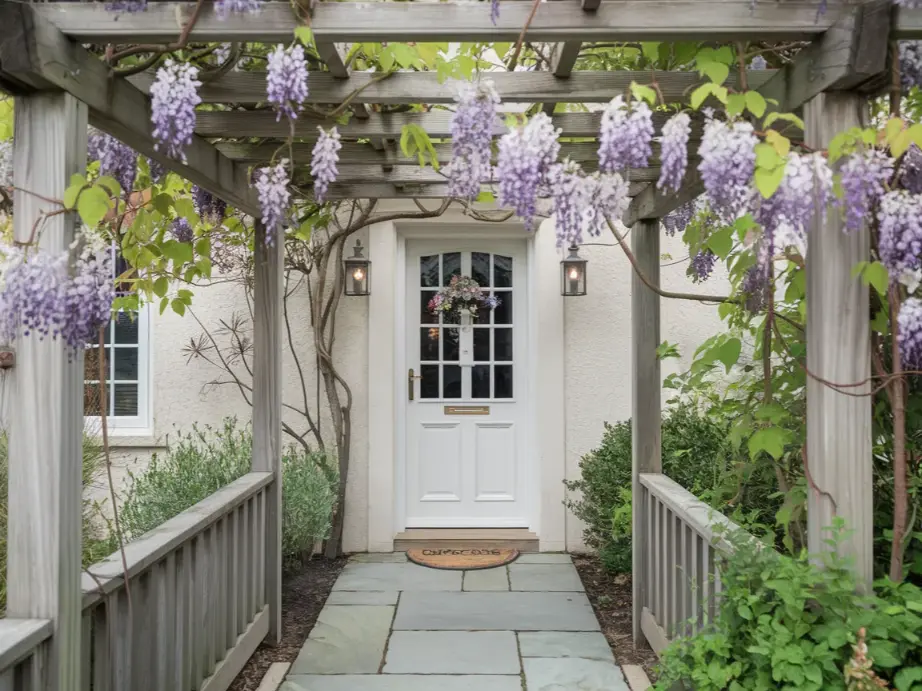
A small pergola or arbor trellis over your front door makes your entrance feel grand without a major remodel. Two posts frame the door, a beam crosses the top, and open rafters create a trellis-like roof where vines can grow.
When wisteria or climbing roses drape over the top, your front door looks like something out of a magazine. This idea works beautifully on Cape Cod, Craftsman, and cottage-style homes.
If you do not want to build from scratch, several companies sell pre-made entry pergola kits that mount over a standard door. It is one of the highest-impact upgrades you can make to your home’s entrance.
4. Black Metal Trellis
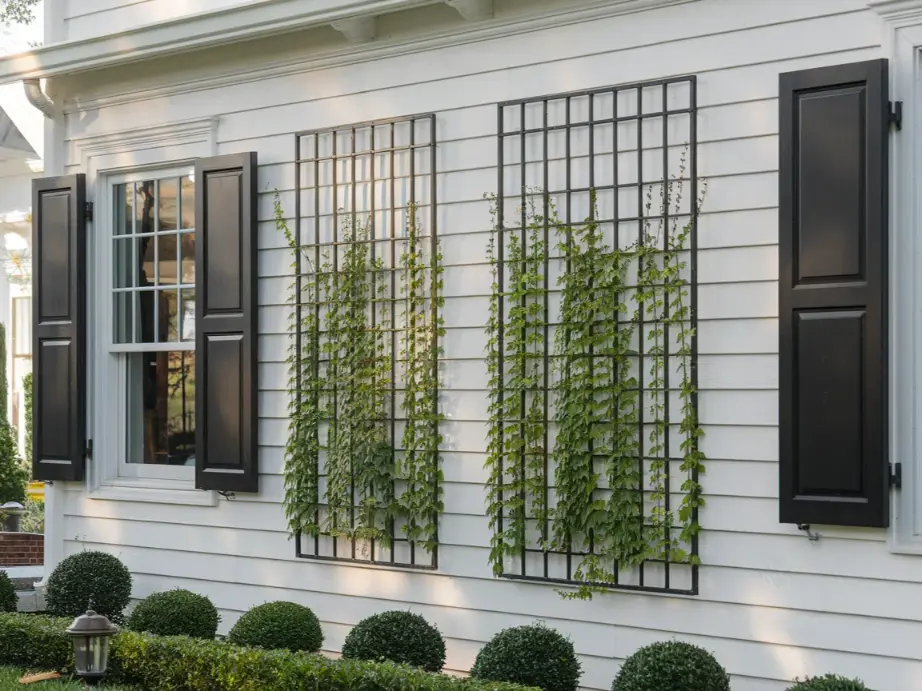
A black metal trellis is a designer’s secret weapon. It looks elegant, blends with shutters and window frames, and adds a touch of sophistication to any home style.
You can find pre-made black metal trellises at most garden centers. Place one between windows to balance the front of your home, or use a pair on either side of the garage to frame the driveway. Black metal pairs beautifully with white siding, gray stone, and even red brick.
The metal is strong enough for heavy vines like climbing hydrangea or trumpet vine. And unlike wood, metal will not rot or need repainting every few years.
5. Trellis With Planter Box
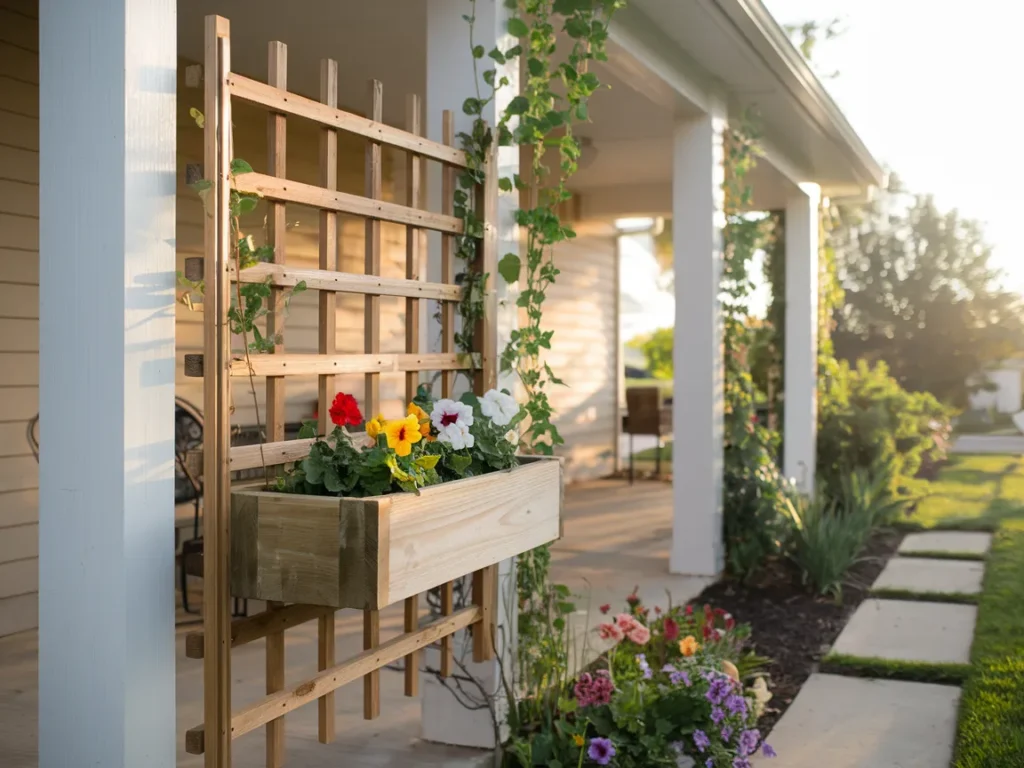
This two-in-one design combines a planter box at the base with a trellis panel rising above it. The planter gives you a spot for colorful annuals or herbs, while the trellis supports climbing vines behind them.
Trellis planter boxes work perfectly against the front of the house, along a porch railing, or beside the garage. They add height, color, and greenery all at once. You can buy them ready-made in wood, vinyl, or metal, or build your own from cedar boards.
This idea is especially nice for homes where you cannot plant directly in the ground near the foundation. The planter box lets you bring soil and plants wherever you need them.
6. Arched Trellis Over Walkway
An arched trellis at the entrance to your front walkway makes every guest feel like they are arriving somewhere special. The curved shape creates a natural frame for your home, and when covered in flowering vines, it becomes a showstopper.
Use climbing roses, honeysuckle, or Carolina jasmine for an arch that blooms and smells amazing. A white arched trellis over a brick or stone path is a timeless combination that never goes out of style.
Make sure the arch is tall and wide enough for comfortable walking. At least 7 feet tall and 4 feet wide is a good rule. Anchor it deep in the ground so it does not wobble in the wind.
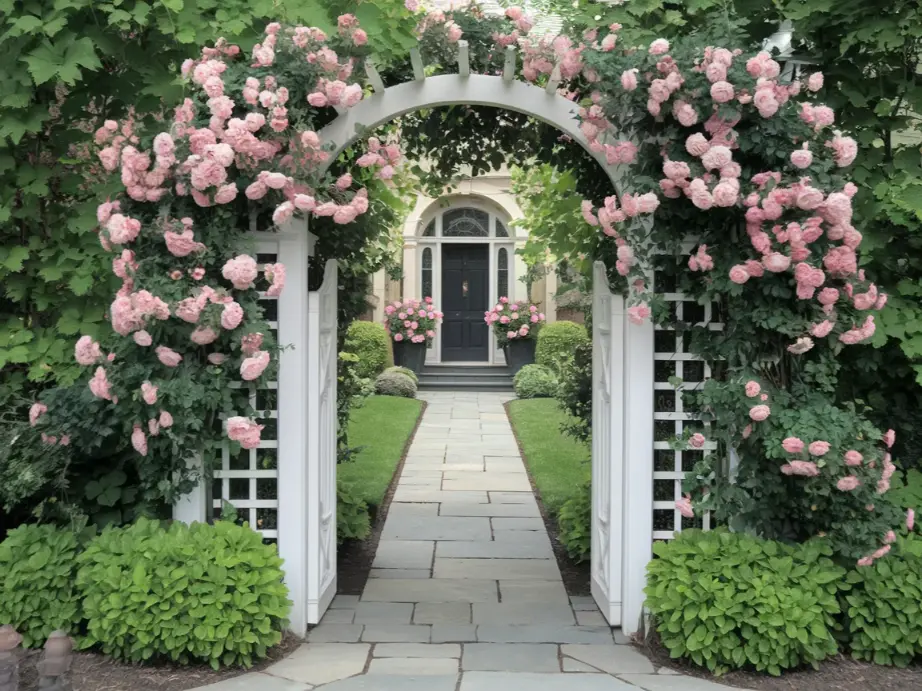
7. Garage Door Trellis
The garage door is often the largest feature on the front of a house, and it usually gets zero design attention. A trellis above or beside the garage door changes that instantly.
Mount a small eyebrow-style pergola trellis just above the garage opening. Or add vertical trellis panels on each side. When vines grow in, the garage blends into the rest of the house instead of sticking out like a big blank box.
Cedar or redwood are the best wood choices for garage trellises because they resist rot and weather well. For a low-maintenance option, vinyl trellises hold up without painting or staining.
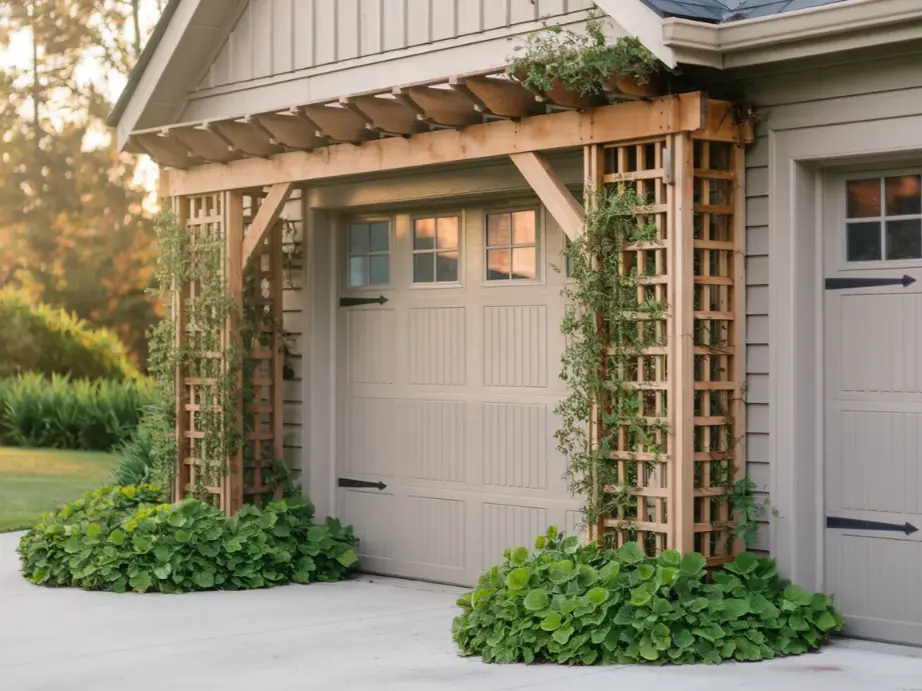
8. Cedar Horizontal Slat Trellis
Horizontal slat trellises have a modern, clean look that works on contemporary and mid-century homes. Instead of the traditional diamond lattice, thin cedar boards run horizontally with even spacing between them.
This design doubles as a privacy screen. Mount it near your front porch or along a side wall facing the street. The horizontal lines add a sleek architectural feel that complements modern home design.
Because the slats are horizontal, you may need to train vines a bit more at first. Use soft ties to guide the stems until tendrils take over. Evergreen vines like creeping fig or English ivy work well with horizontal trellises.
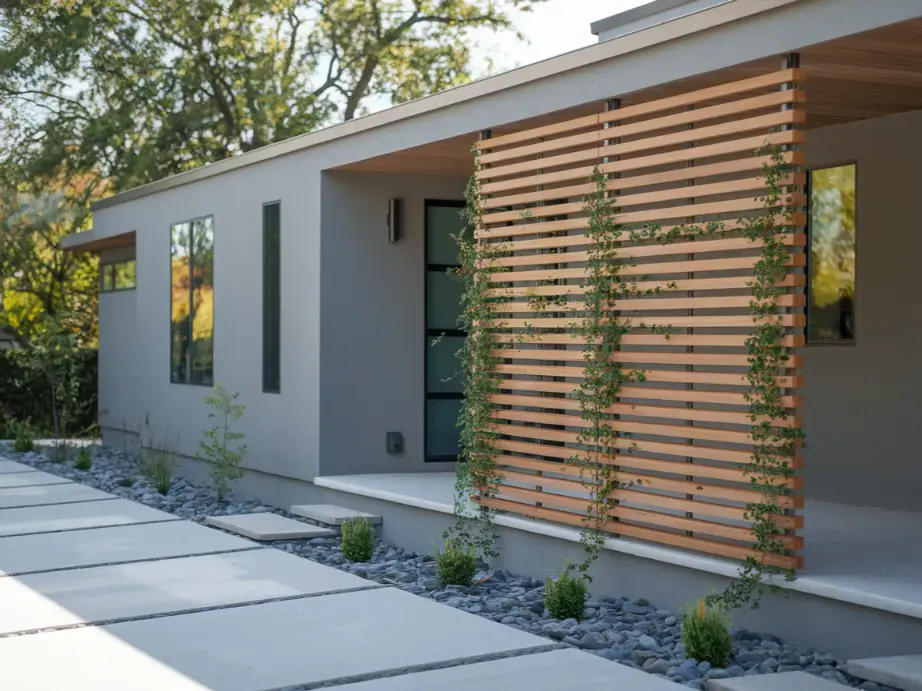
9. Trellis Fence Border
A trellis fence at the front of your property creates a soft boundary between your yard and the sidewalk. Unlike a solid fence, a trellis fence feels open and welcoming while still defining your space.
Keep it low, around 3 to 4 feet tall, so it does not block the view of your home. Plant climbing flowers like sweet pea, nasturtium, or morning glory at the base for a burst of seasonal color.
Trellis fencing also works great alongside a front walkway. A row of short trellis panels with climbing vines guides visitors to your door and makes the whole path feel like a garden journey.
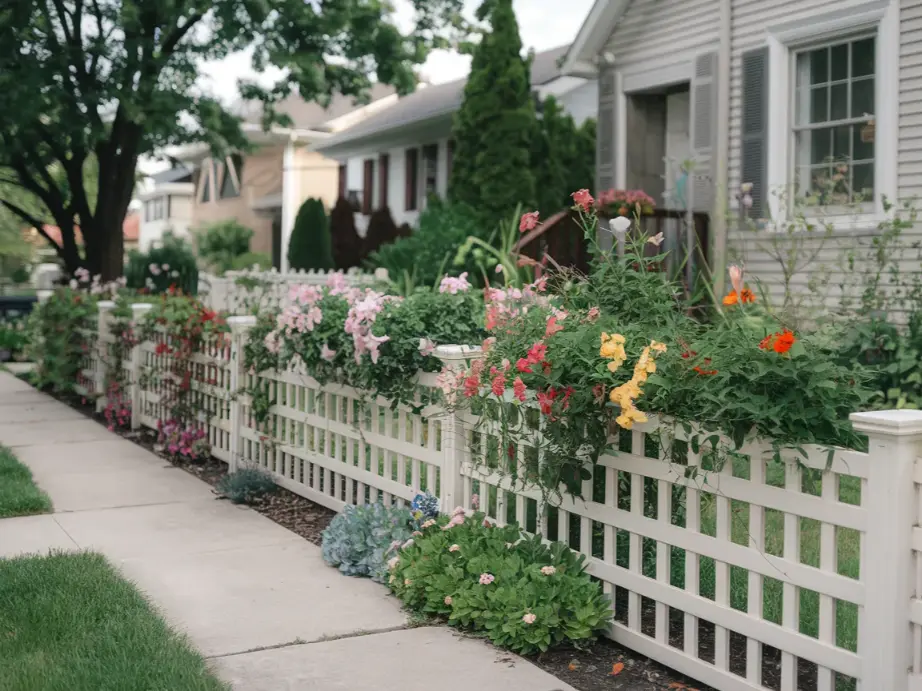
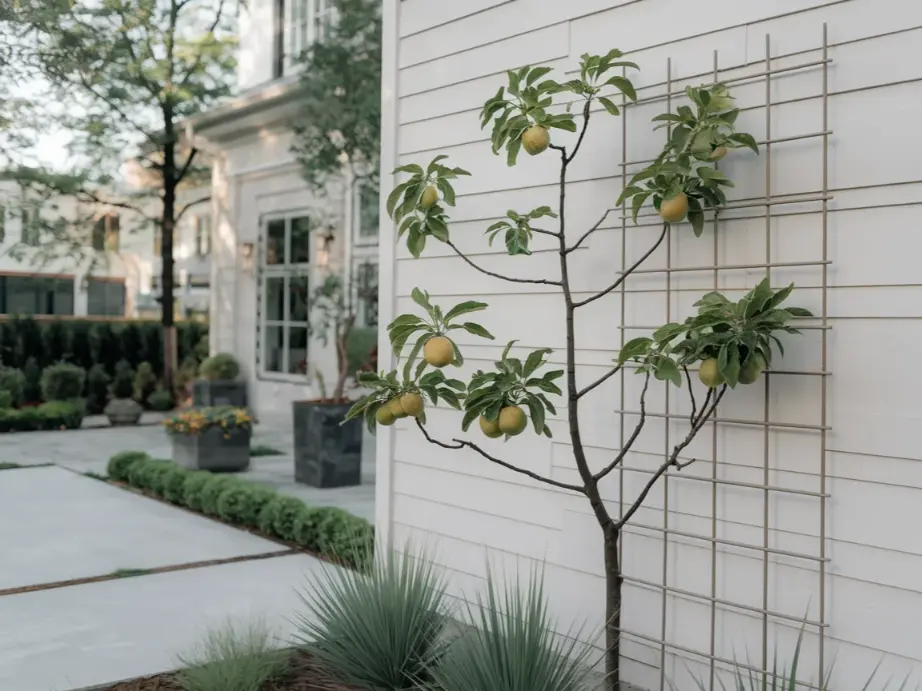
10. Espalier Trellis
Espalier is the art of training a tree or shrub to grow flat against a wall on a trellis. The branches spread out in a symmetrical pattern that looks like a living sculpture. It is one of the most dramatic trellis styles for the front of a house.
Fruit trees like apple, pear, and fig are popular choices for espalier. So are ornamental trees like magnolia and camellia. The trellis holds the branches in place while you prune and train them over time.
Espalier takes patience. It can take 2 to 3 years to fill in. But the payoff is a front wall that looks like a work of art, and you might even get fresh fruit from it.
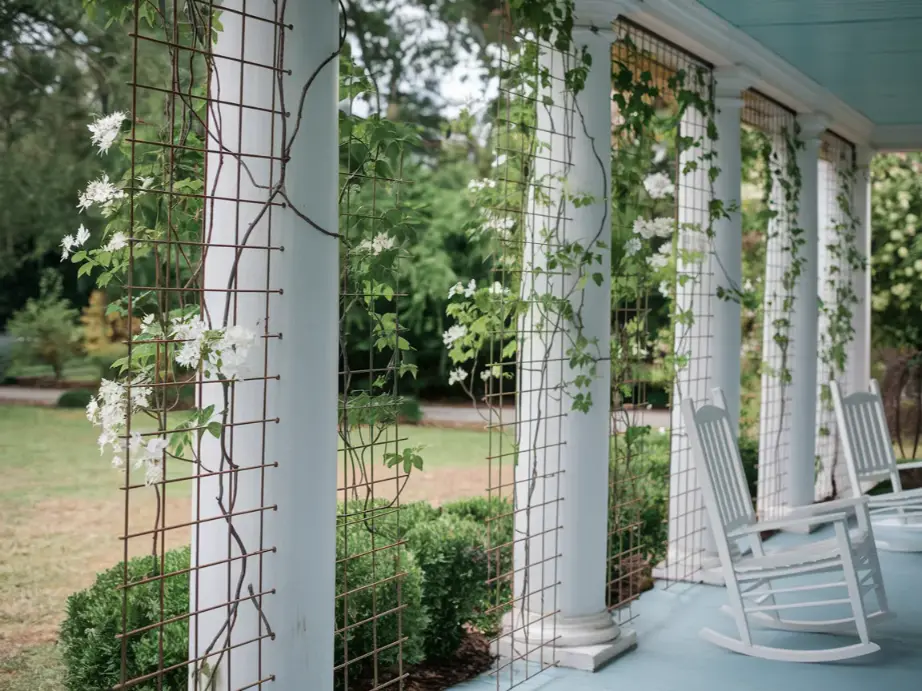
11. Porch Column Trellis
If your home has a front porch with columns, wrapping a trellis around or between those columns adds beauty without changing the structure. Attach narrow wire or string trellis panels between the posts and plant a lightweight vine at the base.
Star jasmine, clematis, or honeysuckle are great choices for porch columns because they stay manageable and smell wonderful when you sit outside. Imagine sipping your morning coffee surrounded by fragrant blooms.
This idea also provides light shade and a sense of enclosure on the porch, making it feel more like an outdoor living room.
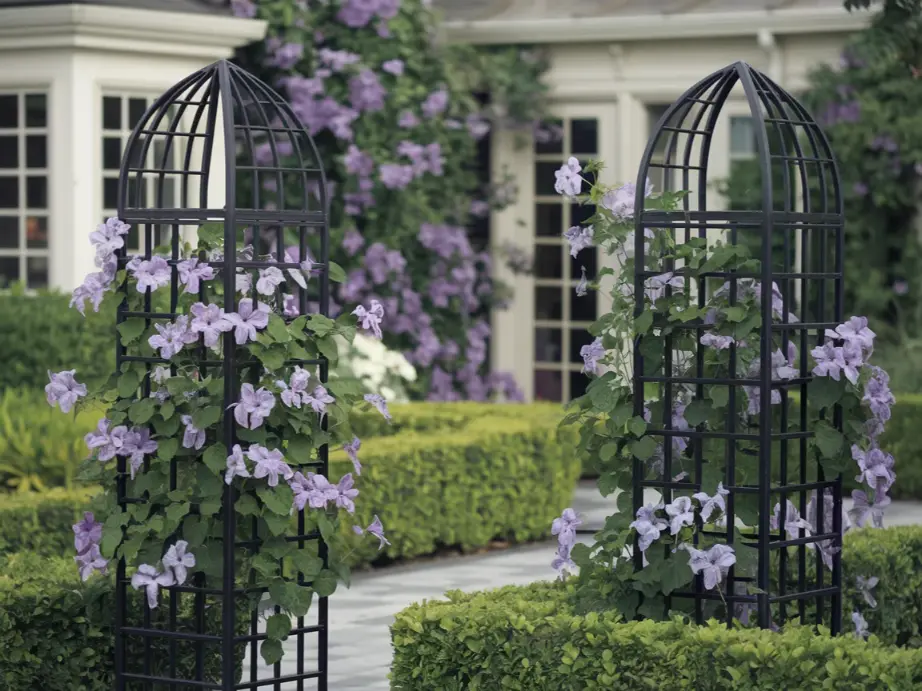
12. Freestanding Obelisk Trellis
Obelisk trellises are tall, pyramid-shaped structures that stand on their own. Place one or a pair in the garden beds along the front of your house for a classic, European garden look.
They add height and structure to your landscaping even before any plants grow on them. Once a vine like clematis covers the obelisk, you get a tower of color that draws the eye upward and makes the whole yard feel more polished.
Obelisk trellises come in metal, wood, and even ornate wrought iron designs. A pair flanking your front walkway creates a grand, symmetrical entrance that looks expensive but is surprisingly affordable.
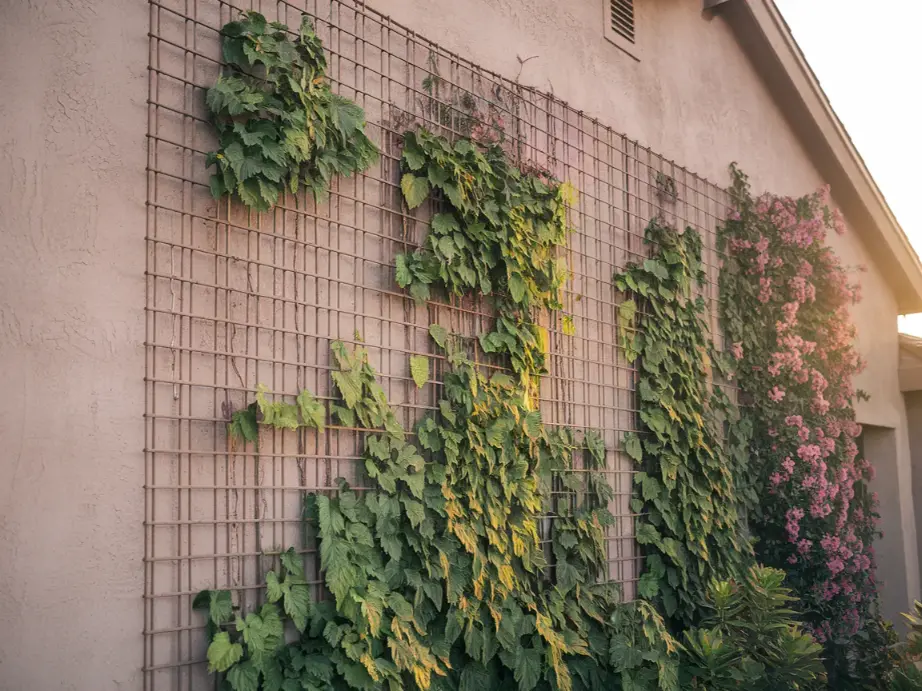
13. Living Wall Grid Trellis
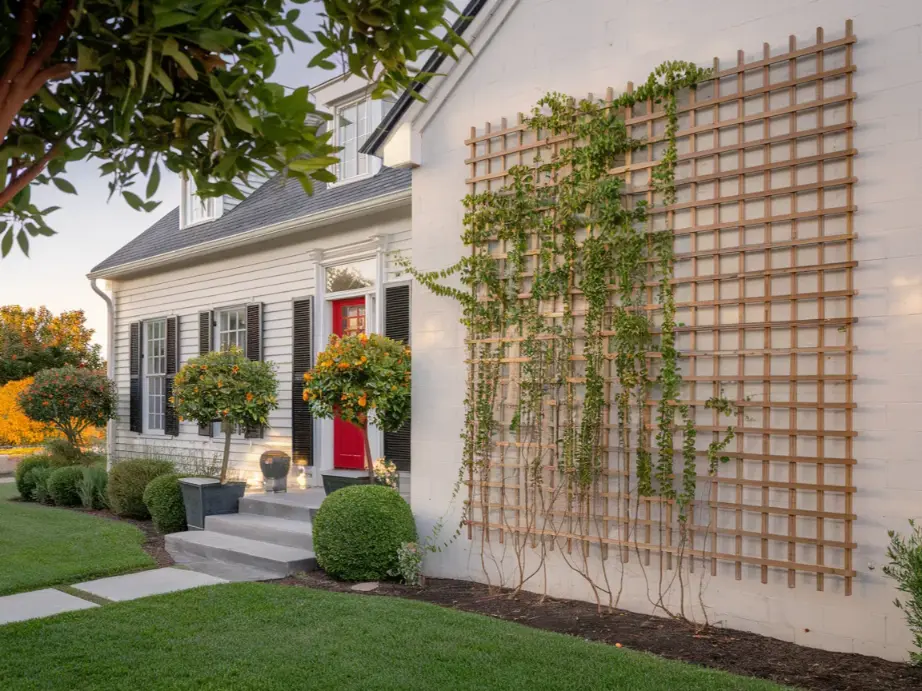
A grid trellis mounted on a large front wall creates the foundation for a full living wall. The grid pattern (usually made from wire or thin wood strips) holds many small plants, creating a dense, green tapestry.
This idea works best on stucco, brick, or concrete walls where there is plenty of surface area. Use multiple climbing plants in different shades of green for texture, or add flowering vines for pops of color.
A living wall trellis makes a bold statement. It turns an ordinary house into something neighbors walk past slowly to admire. For the strongest effect, pair it with outdoor lighting to show it off at night.
Best Climbing Plants For A Front-Of-House Trellis
The trellis is the skeleton. The plants are what bring it to life. Here are the best climbing plants for the front of your home, organized by what they offer.
For Fragrance
Star jasmine is the superstar here. It fills the air with a sweet, intoxicating scent during spring and summer. The white flowers are small but plentiful, and the evergreen leaves keep things green year-round. Honeysuckle is another fragrant choice. Its trumpet-shaped flowers attract hummingbirds and fill summer evenings with sweetness.
For Dramatic Blooms
Wisteria is the queen of drama. Those cascading purple or white flower clusters can turn a simple porch trellis into a fairy tale scene. But fair warning: wisteria is a strong, heavy vine. It needs a very sturdy trellis and regular pruning to keep it under control.
Clematis is another stunning bloomer with large, colorful flowers in shades of purple, pink, white, and red. It is much lighter than wisteria and easier to manage. It is a great choice for smaller trellises.
For Year-Round Green
English ivy and creeping fig are evergreen climbers that keep your trellis looking full even in winter. They grow fast and are very low maintenance. Just be aware that both can be aggressive growers. Plan for regular trimming.
For Fast Coverage
If you want your trellis covered quickly, morning glory and hyacinth bean vine are fast-growing annual options. They will cover a trellis in one growing season. You will need to replant each year, but the speed is impressive.
| Climbing Plant | Best For | Sun Needs | Growth Speed | Evergreen? |
|---|---|---|---|---|
| Star Jasmine | Fragrance, year-round green | Full to partial sun | Moderate | Yes |
| Clematis | Large colorful blooms | Full sun | Moderate | No |
| Wisteria | Dramatic cascading flowers | Full sun | Fast (heavy) | No |
| Climbing Roses | Classic romance | Full sun | Moderate | No |
| Honeysuckle | Fragrance, hummingbirds | Full to partial sun | Fast | Semi |
| English Ivy | Year-round coverage | Shade to partial sun | Fast | Yes |
| Morning Glory | Fast seasonal color | Full sun | Very Fast | No (annual) |
| Climbing Hydrangea | Shade-tolerant blooms | Partial to full shade | Slow at first | No |

How To Install A Trellis Without Damaging Your House
Many homeowners hesitate to mount a trellis on their home because they worry about wall damage. Here are some smart tips to protect your house.
Use Spacers
Always mount your trellis at least 2 to 3 inches away from the siding or wall surface. Use wooden blocks or plastic spacers as standoffs between the trellis and the wall. This gap allows air to circulate, prevents moisture from getting trapped, and lets you clean behind the trellis.
Add Hinges At The Bottom
Here is a clever trick from experienced gardeners. Attach the bottom of the trellis to the wall with hinges and the top with hooks. When you need to paint the house or do maintenance, just unhook the top and let the trellis fold down gently. The vines stay attached, and you can do your work without ripping anything apart.
Choose The Right Fasteners
Use stainless steel or coated screws to prevent rust streaks on your wall. For brick or stone, use masonry anchors. For wood siding, screw into the studs whenever possible.
Watch For Aggressive Climbers
Some plants, like English ivy and trumpet vine, have aerial roots that can damage siding and mortar over time. If you have these plants, the standoff gap becomes even more important. A freestanding trellis placed a few inches in front of the wall is the safest option for aggressive climbers.
Choosing The Right Trellis Style For Your Home
Not every trellis fits every house. Here is a quick guide to matching trellis styles with home architecture.
Colonial And Traditional Homes
White or black lattice trellises, arched trellises over walkways, and front door pergolas look right at home here. Stick with symmetrical placement and classic materials like painted wood or wrought iron.
Modern And Contemporary Homes
Go with horizontal slat trellises, diamond wire trellises, or minimal black metal panels. Clean lines and simple shapes match the modern aesthetic. Avoid ornate or overly traditional designs.
Craftsman And Cottage Homes
Wooden trellises with thick beams, arbor-style entries, and rustic pallet trellises fit the warm, handmade character of these homes. Natural wood finishes look better here than painted white.
Mediterranean And Stucco Homes
Iron trellises, espalier designs, and living wall grids are stunning against stucco and warm-toned exteriors. Climbing bougainvillea or jasmine completes the look.
Common Mistakes To Avoid
Mounting Too Close To The Wall
No gap between trellis and wall means trapped moisture. That leads to mold, mildew, and even wood rot on your siding. Always use spacers.
Picking A Vine That Is Too Heavy
Wisteria is gorgeous, but it can weigh hundreds of pounds when mature. Make sure your trellis can handle the plant you choose. Lightweight trellises work for lightweight vines like clematis and jasmine. Heavy vines need heavy-duty support.
Ignoring Maintenance
A trellis with climbing plants needs regular attention. Prune vines at least once a year to keep them tidy and prevent them from growing into gutters, under shingles, or into window frames. A few minutes of trimming each month saves hours of headache later.
Blocking Windows Or Vents
Plan your trellis placement carefully. Vines that grow over windows block light. Vines that cover vents create fire hazards and moisture problems. Leave at least 12 inches of clearance around windows, doors, and vents.
Frequently Asked Questions
Does A Trellis Increase Home Value?
It can. A trellis is part of your landscaping, and good landscaping can increase a home’s value by 5 to 20 percent according to multiple industry studies. A well-maintained trellis with healthy climbing plants adds curb appeal that buyers notice immediately.
What Is The Best Trellis Material For The Front Of A House?
It depends on your home style and budget. Cedar and redwood are great for a natural look and resist rot. Metal trellises (iron or steel) last the longest with minimal care. Vinyl is the lowest maintenance option but can look less natural. PVC works for budget builds.
Will A Trellis Damage My Siding?
Not if you install it correctly. Use spacers to keep it off the wall, avoid self-clinging plants like ivy directly on siding, and use proper fasteners. A hinged installation makes house maintenance easy.
How Long Does It Take For Vines To Cover A Trellis?
It depends on the plant. Fast growers like morning glory and star jasmine can fill a trellis in one to two growing seasons. Slower plants like climbing hydrangea may take 2 to 3 years. Wisteria grows fast but may not bloom heavily for 3 to 5 years.
Can I Put A Trellis On A Rental Home?
Yes. Use a freestanding trellis that leans against the wall without being attached. This way, you avoid drilling into the exterior and can take it with you when you move. Freestanding trellises in planter boxes are perfect for renters.
What Is The Difference Between A Trellis, A Pergola, And An Arbor?
A trellis is a flat or slightly angled panel that supports climbing plants. A pergola is a larger overhead structure with posts and open rafters that creates a shaded area. An arbor is an arch, usually placed over a walkway or gate, with trellis-like sides. All three support climbing plants, but they differ in size and shape.
How Do I Keep Vines From Growing Into My Gutters?
Prune regularly. Check your trellis every month during the growing season and trim any vines that reach toward the roofline, gutters, or windows. Some gardeners install a horizontal wire barrier at the top of the trellis to redirect vine growth downward.
Final Thoughts
A trellis on the front of your house is one of those rare home upgrades that is affordable, beautiful, and gets better with time. As your climbing plants grow and fill in, your home’s curb appeal improves season after season.
You do not need a big budget or a professional contractor. A simple lattice panel from the hardware store, a climbing rose from the garden center, and an afternoon of work can transform a plain wall into the best-looking feature on your block.
Start with one trellis in the spot that bugs you the most. Maybe it is that blank wall by the garage. Maybe it is the boring space beside your front door. Pick a style, choose a climbing plant that fits your climate, and let nature do the rest. Your home will look more welcoming and stylish than ever.