


An outdoor jacuzzi is one of those purchases that sounds like pure luxury until the first cold evening you sink in and wonder why you waited years. I put mine in three summers ago, and I can tell you the tub itself is only half the project. Where you place it, what surrounds it, and how you handle privacy and lighting decide whether it becomes a daily ritual or an expensive yard ornament. I have soaked in badly placed tubs that felt like sitting in a parking lot, and I have soaked in modest setups that felt like a spa. The difference is always the details below. These are the fifteen ideas I would steal if I were starting over, including the mistakes I made so you do not have to.
15 Outdoor Jacuzzi Ideas
- Jacuzzi on a wooden deck
- Covered Jacuzzi pergola setup
- Privacy screen around Jacuzzi
- Jacuzzi with outdoor lighting
- Small patio Jacuzzi layout
- Jacuzzi with surrounding plants
- Stone tile Jacuzzi base
- Jacuzzi seating zone nearby
- Jacuzzi with step access
- Minimal modern Jacuzzi design
- Jacuzzi for cold weather use
- Jacuzzi with towel storage
- Jacuzzi near outdoor fireplace
- Jacuzzi with sound control
- Simple outdoor Jacuzzi setup rule
Jacuzzi On A Wooden Deck
A wooden deck is the classic jacuzzi foundation for good reason: it looks warm, feels good underfoot, and handles the weight when built right. My tub sits on a reinforced cedar deck, and the wood stays comfortable to walk on even in summer heat, unlike concrete which can burn bare feet. The critical detail is structural: a filled jacuzzi weighs 3,000 to 5,000 pounds, so the deck needs doubled joists and concrete footings, not just a standard patio deck. I had a contractor sister the joists under the tub footprint before delivery, which cost a few hundred dollars and let me sleep at night. Leave a removable access panel in the decking near the equipment side, because technicians need to reach the pumps. Stain the deck a medium tone rather than dark, dark stain shows every water spot and gets hot.

Covered Jacuzzi Pergola Setup
A pergola over the jacuzzi gives you the best of both worlds: open sky when you want it, shelter when you do not. Mine has a simple cedar pergola with a retractable shade sail, which blocks harsh afternoon sun but rolls back for stargazing. The key measurements: the pergola needs at least 8 feet of clearance above the tub rim so steam does not collect, and the posts must sit outside the tub’s service access zone. I made the mistake of centering the posts too close the first time and the delivery crew could barely squeeze the tub in. If you want real rain protection, add clear polycarbonate panels to part of the roof, but leave at least half open or you lose the outdoor feeling entirely. String lights along the pergola beams (more on lighting below) turn the whole structure into the evening focal point of the yard.

Privacy Screen Around Jacuzzi
Nothing kills the spa mood faster than feeling watched. Privacy is the upgrade I recommend before any decorative spending. I use a combination: a 6-foot cedar slat fence on the neighbor side and tall ornamental grasses on the other two sides. The slats are spaced with small gaps so air moves but sight lines do not, which keeps the area from feeling boxed in. For renters or anyone avoiding construction, tall planters with bamboo or arborvitae work surprisingly well and move with you. Avoid cheap fabric privacy screens, they shred in the first real storm and look sad within a season. One placement trick: sit in the empty tub footprint before you build anything and look around at standing eye level from every angle. Fix what you can see from there and you will never feel exposed.

Jacuzzi With Outdoor Lighting
The right lighting turns a jacuzzi from a daytime feature into a nighttime destination. I use three layers: warm string lights overhead on the pergola, low path lights marking the walkway to the tub, and the tub’s own underwater light on its dimmest setting. Keep everything at 2700K warm white, because cool blue light makes water look clinical and attracts more bugs. The single biggest safety upgrade is step lighting: a small LED strip on each step into the tub prevents the most common jacuzzi injury, which is slipping on wet steps in the dark. Put the lights on a smart switch or timer so the whole scene turns on with one tap. Avoid floodlights pointed at the tub, they destroy the mood and annoy neighbors. For the walkway specifically, my patio lighting ideas cover fixtures that handle weather well.

Small Patio Jacuzzi Layout
Small patios can absolutely host a jacuzzi if you plan the layout ruthlessly. My neighbor fit a 4-person plug-and-play tub on a 10 by 12 foot patio and it works beautifully because everything else earns its spot. The formula: tub in the corner at a 45-degree angle (which actually saves space versus square placement), a narrow bench along one wall for towels, and nothing else on the patio floor. Choose a smaller 110-volt plug-and-play model rather than a full 220-volt tub, because you skip the electrician and the concrete pad. Keep a clear 3-foot service corridor on the equipment side, delivery and repair crews need it. The mistake is trying to also fit a dining set on the same patio. Give the tub the whole space and eat elsewhere, a cramped tub area gets used half as often.
Jacuzzi With Surrounding Plants
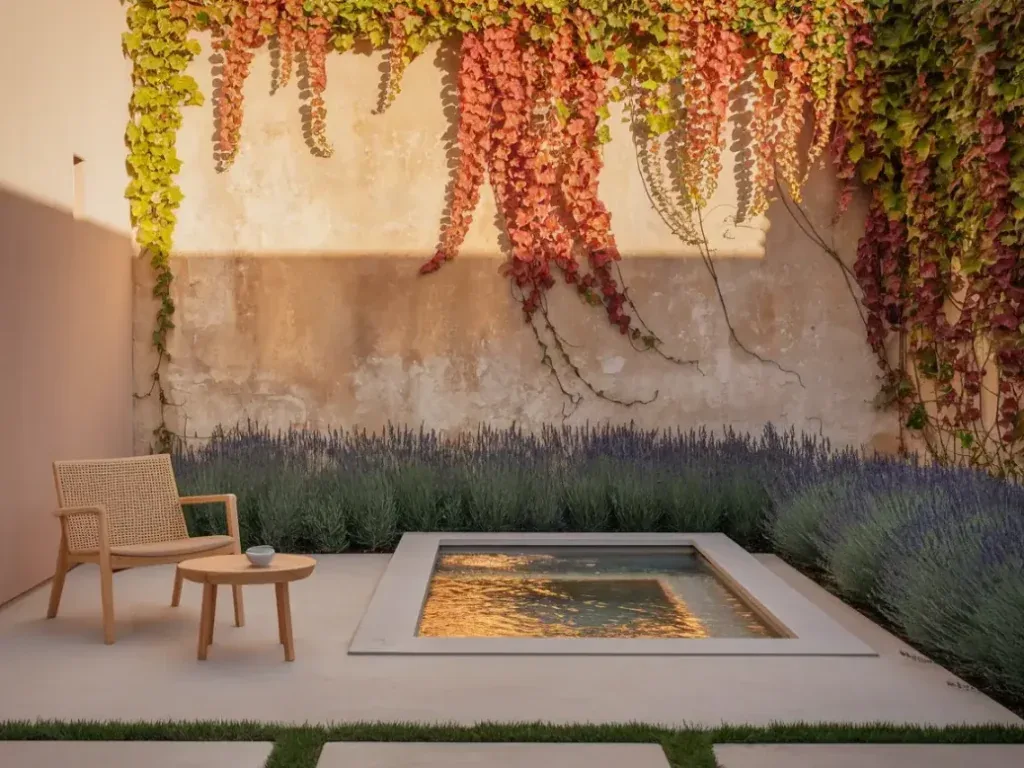
Plants are what separate a jacuzzi pad from a jacuzzi retreat. I ringed my tub with a mix of tall grasses for movement, broad-leaf tropicals in pots for lushness, and a few fragrant plants like jasmine near the seating. The practical rules I learned: keep all plants at least 2 feet from the tub edge so leaves do not blow into the water, and avoid anything with thorns, heavy pollen, or invasive roots near the plumbing. Pots beat in-ground planting around a tub because you can rearrange for seasons and pull them back for service access. Drip irrigation on a timer keeps everything alive without daily attention. One warning: flowering plants near the water mean bees near the water. Keep the fragrant bloomers by the seating area, not right at the tub edge.

Stone Tile Jacuzzi Base
A jacuzzi needs a base that is level, stable, and drains well, and stone tile over a concrete pad checks all three boxes while looking great. I poured a 4-inch reinforced concrete pad, then set large-format porcelain pavers that look like natural stone over the top. The pad must be perfectly level: even a half inch of slope makes the water line visibly uneven and strains the shell. Slope the surrounding area gently away from the tub so splash water drains instead of pooling. Choose pavers with some texture, because smooth stone plus wet feet is a slip hazard. The full base cost me around 800 dollars in materials for a weekend DIY, versus 2,500 quoted by a contractor. Do not skip the gravel base under the concrete, it prevents frost heave from cracking the pad in cold climates.

Jacuzzi Seating Zone Nearby
You will spend more time sitting near the jacuzzi than in it: waiting for it to heat, cooling off between soaks, keeping a non-soaking partner company. A small seating zone makes the area a destination instead of a single-purpose pad. I placed two weatherproof lounge chairs and a small side table about 6 feet from the tub, close enough for conversation but outside the splash zone. Choose furniture with quick-dry cushions or no cushions at all, because everything near a tub gets damp. A small outdoor rug under the chairs defines the zone and feels good on feet, just pick one labeled mold and mildew resistant. The layout mistake I see most is putting seating where it blocks the tub’s cover lifter swing. Mock up the cover’s full arc with the cover off before you place a single chair.

Jacuzzi With Step Access
Getting in and out of a jacuzzi safely matters more than any aesthetic choice, especially with kids or older family members using the tub. I installed two wide composite steps with a textured non-slip surface plus a sturdy handrail on the entry side, and it transformed the experience for my parents. The steps should be at least 30 inches wide with a depth that fits a full foot, narrow wobbly steps are worse than no steps. A handrail anchored into the deck or pad, not just the tub cabinet, gives real leverage. If your tub sits on a raised deck, check the railing height meets local code, usually 36 inches. This is also where lighting earns its keep: one small step light prevents nearly every nighttime stumble. Budget 150 to 300 dollars for quality steps and a rail, which is cheap insurance against the most common hot tub injury.

Minimal Modern Jacuzzi Design
Modern jacuzzi design is about restraint: clean lines, a limited palette, and the tub as a sculptural object rather than a cluttered corner. I leaned into this by choosing a tub with a straight modern cabinet in dark gray, then limited the surrounding materials to exactly three: wood decking, gray stone, and green plants. The discipline pays off because every extra material or color makes a small area feel busy. Hide the chemicals in a single weatherproof deck box, coil hoses out of sight, and skip the tiki torches and inflatable toys as permanent decor. One sculptural element, like a simple water bowl or a single large planter, gives the eye somewhere to land. The modern look also ages better: trendy themed decor looks dated in two seasons, while clean and simple looks right for a decade.

Jacuzzi For Cold Weather Use
A jacuzzi in cold weather is magical, but only if you set it up for the season. I use mine through winter, and the three things that make it work are wind protection, a good cover, and a clear path. A wind break on the prevailing-wind side, even just a temporary screen, cuts heat loss dramatically and makes the soak far more comfortable. Invest in a thick tapered insulated cover, the cheap flat ones lose heat all winter and cost you a fortune in electricity. Keep a dedicated snow shovel and a rubber mat path from the door to the tub, because the walk in bare feet is the worst part of winter soaking. Set the water a degree or two hotter than summer, around 102 to 103, since you cool faster getting out. Check your heater’s efficiency before winter: an aging heater working overtime is the hidden cost most owners miss.

Jacuzzi With Towel Storage
Wet towels have to go somewhere, and draping them over the tub edge or a nearby chair gets old fast. I mounted a weatherproof storage bench 4 feet from the tub that holds rolled towels, robes, and a dry bag for phones, and it keeps the whole area looking intentional instead of chaotic. The bench needs ventilation gaps or a slatted design so damp towels do not mildew inside. For daily use, a simple freestanding towel hook post right by the steps handles the in-use towels. Keep a small stack of cheap guest towels separate from your good ones, because guests will grab whatever is closest. In rainy climates, choose a bench with a sloped lid so water runs off. This is a 100 to 200 dollar upgrade that removes the single most annoying part of jacuzzi ownership: the towel situation.

Jacuzzi Near Outdoor Fireplace
Pairing a jacuzzi with a fire feature creates the ultimate contrast: hot water, cool air, flickering flames. I placed a small gas fire pit about 8 feet from the tub, far enough for safety and code but close enough to enjoy from the water. Gas beats wood here because there is no smoke drifting into the tub and no ash to clean. Check local codes for required distances between open flame and the tub, and never place a fire feature where wind blows smoke or heat toward bathers. A fire bowl on a stone patio with two chairs between it and the tub creates a natural gathering layout. The combination extends your season too: the fire warms the seating area on nights when the tub alone is not enough. Budget 300 to 800 dollars for a quality gas fire pit, and run the gas line professionally.

Jacuzzi With Sound Control
Traffic noise, barking dogs, and nearby roads can ruin an otherwise perfect soak. I cut the noise around my tub dramatically with a layered approach: a solid fence on the street side, dense evergreen planting inside the fence, and a small water feature whose burble masks the remaining background hum. The water feature is the secret weapon: moving water sound is processed by the brain as pleasant and it covers a surprising amount of ambient noise. A simple bubbling urn fountain costs under 150 dollars and needs only a power outlet. For the fence, mass matters more than height: a solid cedar fence blocks far more sound than a taller lattice one. If you are on a budget, start with the fountain, it delivers the most noticeable improvement per dollar of anything on this list.
Simple Outdoor Jacuzzi Setup Rule
If you remember nothing else, remember this: plan the space around the tub, not the tub around the space. Measure the tub’s full footprint including the open cover arc, the 3-foot service corridor, and your step access, then design everything else to fit what is left. I sketched mine on graph paper three times before committing, and each revision caught a problem: the cover hitting the fence, the steps blocking the path, the seating in the splash zone. Every expensive jacuzzi mistake I have seen comes from placing the tub first and squeezing everything else around it. Get the clearances right on paper and the beautiful part, the plants, the lights, the furniture, falls into place. For more layout inspiration, my outdoor patio ideas show how the tub zone can connect to the rest of the yard.
Frequently Asked Questions
Where Should An Outdoor Jacuzzi Be Placed?
The best spot is level, private, and close to the house. You want a solid base like a reinforced deck or concrete pad, screening from neighbors and the street, and a short dash from the back door for cold nights and towel runs. Keep it within reach of power for the heater and pumps, and leave 3 feet of clear space on the equipment side for service access. I always recommend sitting in the empty footprint at different times of day before committing: check sun, wind, noise, and sight lines. A spot that is perfect at noon can be miserable at 8 PM, so test it when you will actually use it.
Do Outdoor Jacuzzis Need Cover?
Yes, and it is the most important accessory you will buy. A quality insulated cover keeps heat in, which cuts your electric bill dramatically, keeps debris and leaves out of the water, and adds a critical safety layer for kids and pets. I use a tapered cover that is thicker in the middle so rain runs off instead of pooling. Replace it every 3 to 5 years: a waterlogged cover can weigh twice as much and insulates half as well. Budget 300 to 500 dollars for a good one. The cheap flat covers that come free with some tubs are worth upgrading immediately, they cost you more in heating within a single winter.
How Do I Make An Outdoor Jacuzzi Feel Private?
Layer three things: screening, planting, and layout. A solid fence or slatted screen on the most exposed side does the heavy lifting. Tall grasses and evergreens inside the fence soften the look and add a second visual barrier without feeling fortress-like. Then arrange the tub so the entry side faces away from neighbors and the street. I also recommend the sit test: place a chair where the tub will go, sit at tub height, and have someone walk the property line. Everything you can see needs screening. For renters, tall planters with bamboo give real privacy with zero construction and move with you.
What Lighting Works Best For Outdoor Jacuzzis?
Warm, low, and layered. I keep all my outdoor lighting at 2700K warm white: string lights overhead for ambiance, low path lights marking the walkway, and small step lights at the tub entry for safety. Underwater tub lights should stay on their dimmest setting, bright enough to see by but not so bright they kill the mood. Put everything on one smart switch or timer so the whole scene activates together. Avoid cool blue-white lights, which make water look clinical, and never aim floodlights at the tub. One well-placed step light prevents more accidents than any other single fixture, so start there if your budget is tight.
Conclusion
An outdoor jacuzzi earns its keep when comfort, privacy, and layout all work together. The tub is the easy part: it is the deck that holds it, the screening that shelters it, the lighting that invites you out at night, and the steps that keep everyone safe that decide whether you soak daily or rarely. Work through this list in order of impact, starting with placement and privacy before spending a dollar on decor. And do the sit test before you build anything. Three summers in, my tub is still the best money I have spent on my home, and it is the details above, not the tub itself, that made it so.