


A hot tub in the backyard sounds simple: buy tub, fill with water, relax. Then the delivery truck arrives and you realize nobody planned where the crane goes, the electrician needs a trench, and the neighbors have a perfect view of your new purchase. I have been through two hot tub installations, my own and my brother’s, and the tub is honestly the easy part. The setup around it decides everything. These fourteen ideas come from both installs, including the things we got wrong the first time. Follow them in order and your hot tub becomes the most-used spot in your yard instead of the most regretted.
15 Outdoor Jacuzzi Hot Tub Ideas
- Hot tub on a raised deck
- Covered hot tub pergola space
- Private hot tub corner design
- Hot tub with soft outdoor lighting
- Compact hot tub for small yards
- Hot tub with plant surround
- Stone or concrete hot tub base
- Seating area near hot tub
- Safe step and handrail access
- Modern outdoor hot tub look
- Cold-weather hot tub setup
- Towel and robe storage nearby
- Hot tub with fire feature
- Sound control for quiet soaking
Hot Tub On A Raised Deck
A raised deck gives your hot tub a defined home and solves drainage in one move. My brother built his tub into a raised cedar platform 18 inches off the ground, which put the tub rim at a comfortable sitting height for getting in and created dry storage underneath for chemicals and the cover lifter. The engineering matters most here: a filled hot tub plus people can exceed 5,000 pounds, so this is not a standard deck. You need doubled joists, extra footings directly under the tub footprint, and ideally an engineer’s nod on the plan. Build a removable hatch in the decking on the equipment side, because the day a pump needs service you will be grateful. Cost for the platform alone ran him about 1,200 dollars in materials, and it was worth every penny for how finished the whole area looks.

Covered Hot Tub Pergola Space
A pergola over the hot tub is about comfort, not just looks. Direct sun on 104-degree water is miserable by mid-afternoon, and a pergola with adjustable shade lets you dial in exactly how much sky you want. I used a simple pressure-treated pergola with a retractable canopy on one half: shade over the tub during the day, open sky over the seating area at night. Keep the structure at least 8 feet above the tub rim so steam vents instead of collecting under the roof. Anchor the posts in concrete footings, not just deck screws, because a pergola is a sail in high wind. One thing I would do differently: run power to the pergola posts during construction for lights and a small speaker. Retrofitting wiring afterward cost me triple. For the evening lighting itself, my patio lighting ideas cover weatherproof options that survive the steam.

Private Hot Tub Corner Design
Tucking the hot tub into a private corner changes how often you use it. My tub sits in the back corner of the yard, angled diagonally, and that one decision gave me privacy on two sides for free from the existing fences. A corner placement also concentrates your screening budget: instead of fencing the whole yard, you build one beautiful privacy wall and plant one lush bed. I used a horizontal slat cedar screen on the exposed side with climbing jasmine, which smells incredible on summer nights. Leave the corner open enough for airflow, because trapped steam and chemical smell in a tight corner gets unpleasant. The diagonal angle matters too: it makes the tub feel intentional rather than shoved aside, and it opens up the rest of the yard for everything else.

Hot Tub With Soft Outdoor Lighting
Hot tub lighting has two jobs, and mood is only the second one. The first is safety: you are climbing wet steps in the dark, so every change in level needs light. I have low LED step lights on the tub stairs, small path lights from the back door, and the tub’s underwater light on low. Everything is warm white at 2700K, because anything cooler makes the water look harsh and draws insects. The trick I love most is putting it all on a single smart switch by the back door: one tap and the whole path and tub area lights up before I step outside. Avoid string lights directly over the water, they reflect harshly off the surface. And skip color-changing party modes for everyday use, they are fun twice and then you never touch them again.

Compact Hot Tub For Small Yards
Small yards can absolutely handle a hot tub if you choose the right size and commit the space. A 2 to 3 person plug-and-play tub needs roughly a 7 by 7 foot footprint, which fits on most patios. The 110-volt models are the smart play here: no electrician, no trench, just a dedicated outdoor outlet, and you can realistically install one in a weekend. What you must not do is squeeze the tub plus a dining set plus a grill into the same small patio. Give the tub its own zone and move everything else. I have seen too many cramped setups where the cover cannot fully open because a chair is in the way. Measure the cover’s open arc, not just the tub, and keep that whole zone clear. A small tub you can actually use beats a big tub you cannot open.

Hot Tub With Plant Surround
Plants turn a hot tub pad into a retreat, but the wrong plants turn it into maintenance. I keep it simple: large pots of ornamental grass for screening and movement, a couple of broad-leaf tropicals for the lush look, and lavender near the seating for scent. Everything sits in pots, never in the ground near the tub, so I can pull them back for service access and swap them by season. The non-negotiable rules: nothing thorny within reach of bathers, nothing that drops heavy flowers or fruit into the water, and nothing with aggressive roots near the equipment pad. Drip irrigation on a timer handles watering. One caution from experience: keep flowering plants a few feet from the water’s edge, because blooms bring bees, and bees plus bare skin is a bad combination.

Stone Or Concrete Hot Tub Base
Your hot tub will sit in one place for a decade, so the base deserves real attention. I poured a 4-inch reinforced concrete pad over compacted gravel, then finished it with textured stone-look pavers. The pad must be dead level: I checked mine with a 6-foot level in every direction, because even a quarter inch of slope shows in the water line and stresses the shell unevenly. Extend the pad at least a foot beyond the tub on all sides for the steps and a dry standing area. Choose pavers with grip texture, since smooth stone and wet feet are a dangerous combination. Slope the surrounding grade away from the pad so rain does not pool against the tub. My pad cost about 900 dollars DIY versus 2,800 quoted, and the only special tool I rented was a plate compactor for the gravel base.

Seating Area Near Hot Tub
Plan for the people who are not in the tub, because there are always some. Kids waiting their turn, a partner who runs hot, friends between soaks: they all need somewhere comfortable within conversation distance. I set two adirondack chairs and a small table about 8 feet from the tub, outside the splash zone but close enough to talk. Quick-dry mesh chairs beat cushioned ones here, since everything near a hot tub gets damp and cushions mildew. A small side table holds drinks and towels so nobody balances things on the tub edge. The layout rule I follow: seating should never block the cover lifter’s swing or the service access panel. Tape out the cover’s full open arc on the ground before placing any furniture, it is bigger than you think.

Safe Step And Handrail Access
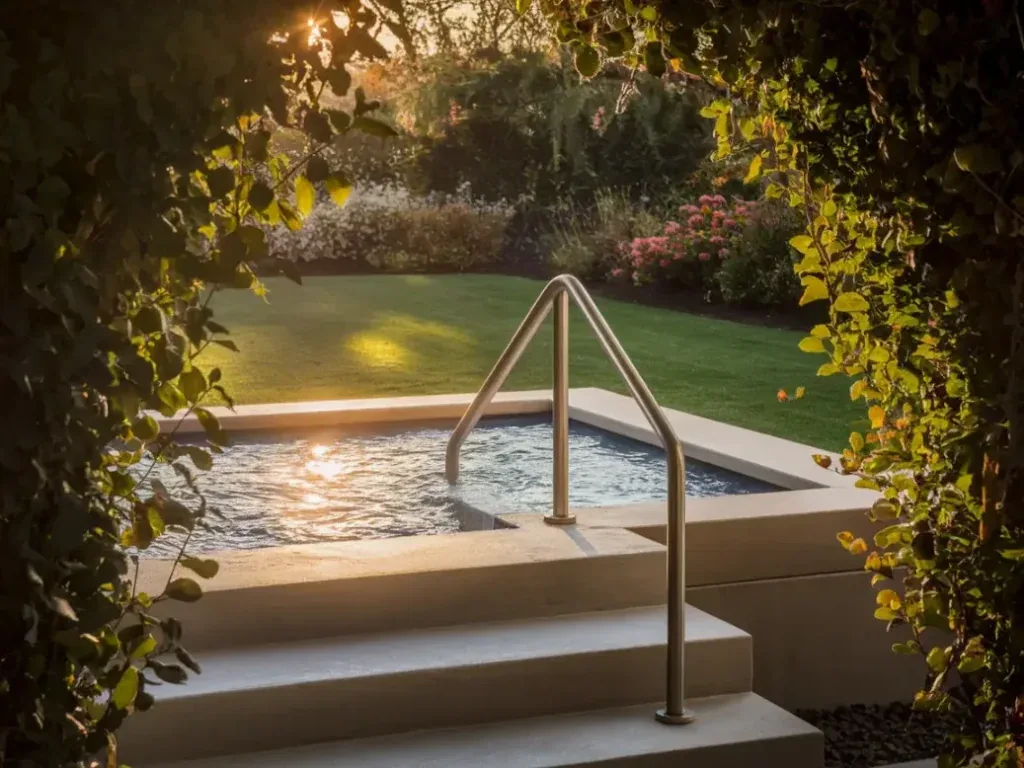
Safe entry is the least glamorous and most important part of a hot tub setup. I installed wide composite steps with gritty non-slip treads and a stainless handrail bolted through the deck into the framing, and my seventy-year-old father uses the tub confidently because of it. The steps need to be at least 30 inches wide with full-depth treads: narrow steps force sideways shuffling, which is where slips happen. The handrail must anchor into something structural, not just the tub’s plastic cabinet, or it will wobble exactly when someone leans on it. If local code requires railings at deck edges, factor that in early. Add one low step light and you have eliminated nearly all nighttime risk. Total cost was under 250 dollars, which is nothing compared to a fall on wet composite in the dark.
Modern Outdoor Hot Tub Look
A modern hot tub area follows one principle: fewer materials, cleaner lines, calmer feeling. I limited my whole setup to three finishes, gray composite decking, black metal railings, and green planting, and the restraint makes the space feel twice as designed as it actually is. Choose a tub with a clean rectangular cabinet in a dark neutral rather than fake wood grain, which dates fast. Hide every practical item: chemicals in a deck box, the hose coiled behind the screen, towels in a lidded bench. One strong focal piece is enough, mine is a simple corten steel planter with a grass that catches the evening light. Resist themed decor: the tiki phase ends, but clean modern lines still look right in ten years. If you want the tub to feel like a backyard retreat, restraint is the fastest way there.

Cold-Weather Hot Tub Setup
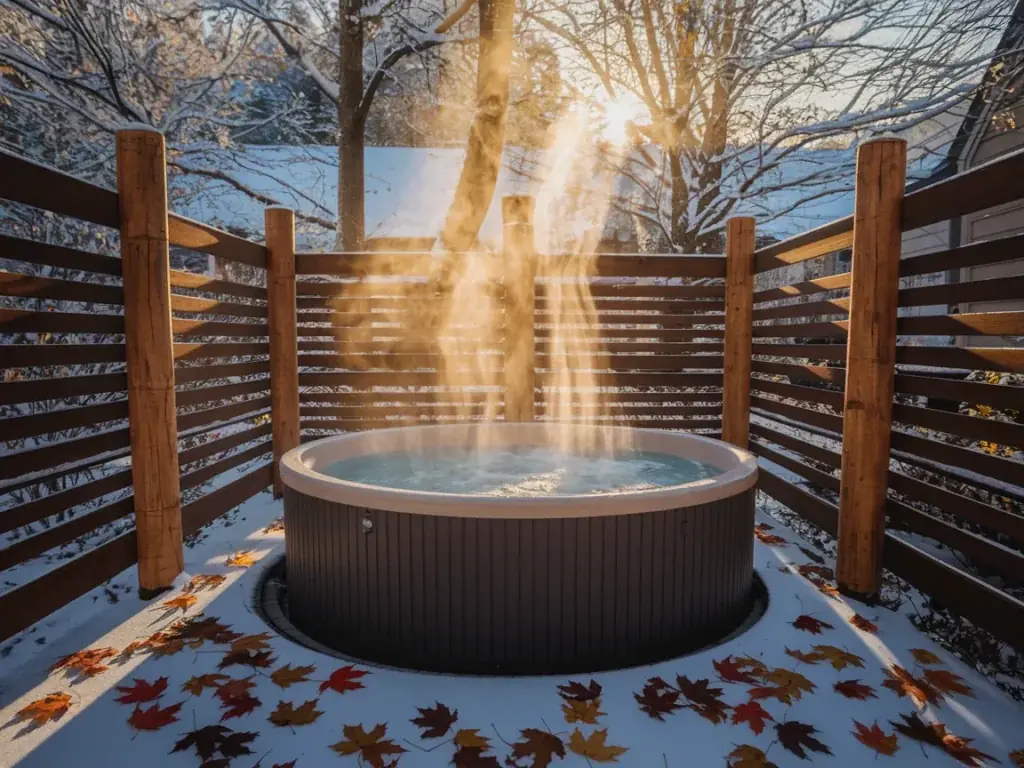
Winter is secretly the best hot tub season, but only with the right setup. I soak all winter, and three things make it work: a wind break, a serious cover, and a sane path from the door. Wind strips heat faster than cold air does, so a temporary screen on the windward side makes a bigger comfort difference than turning the water up. My insulated tapered cover is the real hero: it cut my winter electric bill nearly in half compared to the thin stock cover. Keep a dedicated path shoveled and lay down rubber mats, because the barefoot walk is the only bad part of winter soaking. Run the water at 102 to 103 degrees in winter, a touch hotter than summer, and check that your heater is healthy before the cold hits. A struggling heater in January is an expensive emergency.
Towel And Robe Storage Nearby
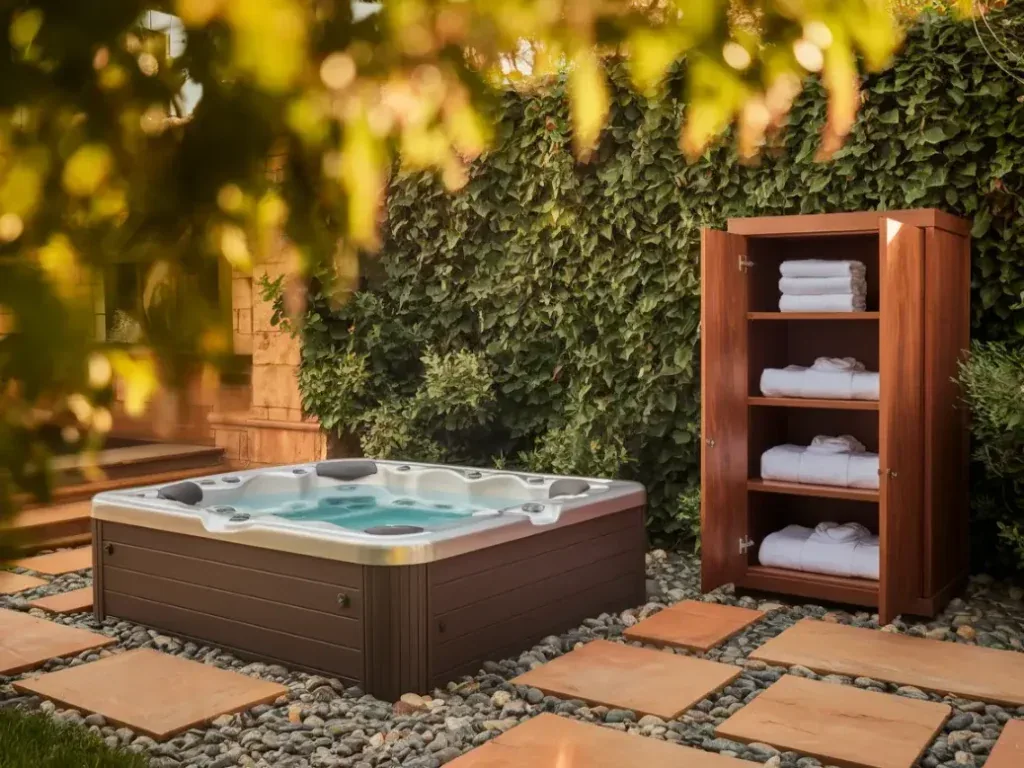
Towels, robes, and dry clothes need a home within arm’s reach of the tub, and a weatherproof storage bench is the cleanest answer. Mine sits 5 feet from the steps and holds rolled towels, two robes, a dry bag for phones, and the chemical test kit, which means nobody ever treks inside dripping. The bench must have ventilation: slatted sides or a small gap under the lid, or damp towels turn musty within days. I keep a separate small stack of inexpensive guest towels so visitors grab those instead of my good ones. For the towels in active use, a simple standing hook rack by the steps beats draping them over the tub edge. In wet climates, pick a bench with a slightly sloped lid so rain runs off instead of pooling around the seal.
Hot Tub With Fire Feature
A fire feature near the hot tub creates the kind of contrast people remember: hot water, cool night air, real flame. I run a small natural gas fire pit about 10 feet from the tub, which is outside any splash risk but close enough to feel connected. Gas is the right call near a tub: no smoke drifting over bathers, no ash, instant on and off. Verify your local code for minimum distances between flame features and the tub, and position it so prevailing winds carry heat toward the seating, not smoke toward the water. Between the fire and the tub I placed two chairs, which naturally became the social heart of the yard. Have the gas line run by a licensed pro, then enjoy the cheapest luxury upgrade on this list at 400 to 900 dollars installed.

Sound Control For Quiet Soaking
Yards are noisy, and noise is the enemy of relaxation. I attacked it in layers: a solid 6-foot cedar fence on the road side, a row of dense arborvitae inside it, and a small bubbling fountain near the seating area. The fountain is the highest value move here. Moving water produces the kind of sound the brain files as pleasant, and it masks traffic hum, distant mowers, and neighbor conversations surprisingly well. A simple bubbling urn needs only a power outlet and costs 100 to 200 dollars. For the fence, remember that mass blocks sound and height alone does not: a solid cedar fence outperforms a taller open lattice every time. Start with the fountain if the budget is tight, because it delivers the most noticeable quiet per dollar, then add planting as the long game.

Frequently Asked Questions
Where Is The Best Place For An Outdoor Hot Tub?
Look for three things: a level and solid base, genuine privacy, and a short path from the house. The base can be a reinforced deck or a concrete pad, but it must be perfectly level and rated for 4,000-plus pounds. Privacy matters more than view: a tub you feel watched in gets used half as often. And keep it close to a door, because the walk matters most on cold nights and when you forget a towel. I test every candidate spot by sitting in a chair at tub height at the time of day I will actually soak, checking sun, wind, noise, and sight lines. A spot that is perfect at noon can be unusable at 9 PM.
Do Outdoor Hot Tubs Need Covers?
Yes, without question. A thick insulated cover is the single most cost-effective hot tub accessory: it holds heat in, which slashes your electric bill, keeps leaves and debris out, and adds safety for children and pets. I upgraded from the thin stock cover to a tapered insulated one and the difference in winter heating cost paid for it within months. Get one that is thicker in the center so rain runs off, and plan to replace it every 3 to 5 years, because a waterlogged cover insulates poorly and gets dangerously heavy. Budget 300 to 500 dollars and consider it part of the tub’s price, not an accessory.
How Do I Make An Outdoor Hot Tub Feel Private?
Combine screening with planting for privacy that does not feel like a fortress. A slatted wood screen on the most exposed side blocks sight lines while letting air through, and tall grasses or evergreens in front of it add a soft second layer. Angle the tub so the entry faces away from neighbors. Before building, do the chair test: sit where the tub will go at tub height and have someone walk your property lines, then screen everything visible. For a no-construction option, large planters with clumping bamboo create real privacy and move with you. Whatever you choose, verify it at night too, because lit tubs are far more visible than daytime ones.
What Lighting Works Best For Hot Tubs?
Think safety first, mood second. I use warm 2700K lighting throughout: low step lights at the tub entry, small path lights from the house, and the tub’s underwater light on its dimmest setting. Every change in walking level gets a light, because wet steps in the dark cause the most common hot tub injuries. Put the whole scene on one smart switch by the back door so it activates before you step outside. Avoid cool white or blue light, which looks clinical on water, and never point floodlights at the tub. If you buy one thing, make it the step light: it prevents more accidents than all the decorative lighting combined.
Conclusion
A great hot tub setup is ninety percent planning and ten percent tub. Get the base level, the power run, the privacy sorted, and the path lit before you think about decor, and the beautiful part takes care of itself. Both of my installs taught me the same lesson: every regret came from rushing the layout, and every joy came from a detail I almost skipped. Sketch it on paper, sit-test the spot, measure the cover swing, then build it once and build it right. Do that and your hot tub will not be a purchase, it will be a habit.