

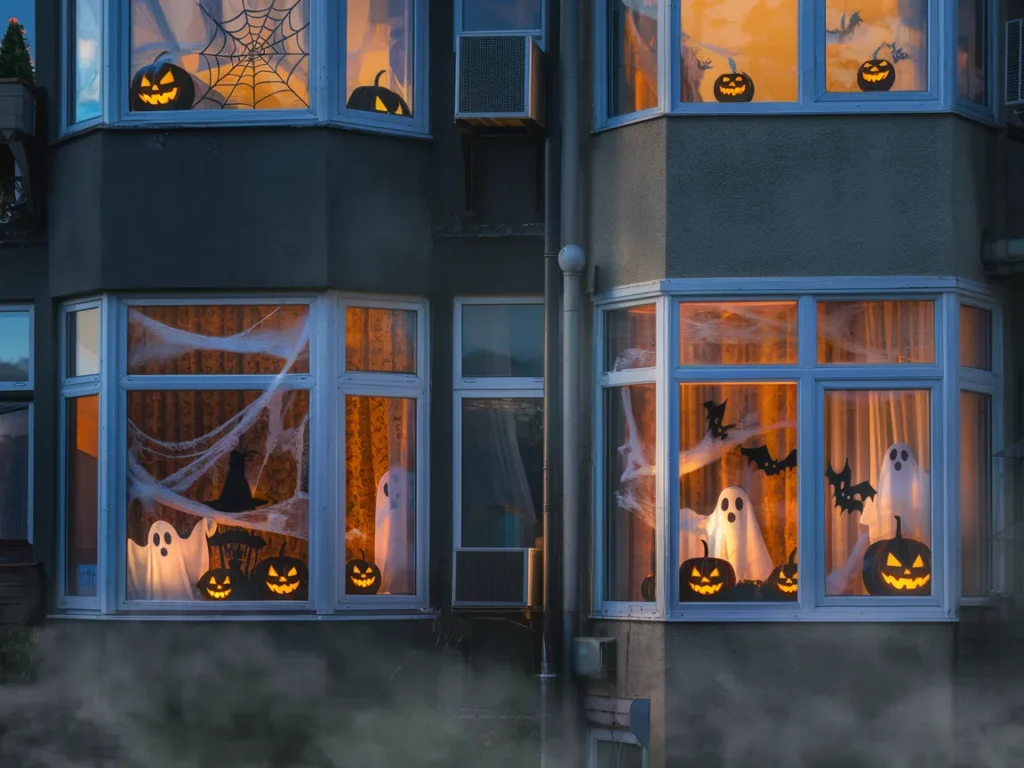
Halloween window decorations shape first reactions after sunset. Windows face streets, sidewalks, and shared spaces. US neighborhood behavior studies show lit windows attract longer visual attention than yard props at night. Window decor works for houses and apartments alike. It avoids walkway risks and keeps decor visible from a distance. Windows allow strong contrast using light and shadow.
Window decor also works well in tight spaces. Apartments and townhomes often lack yards. Windows become the main display surface. Indoor placement protects decor from weather. Lighting control improves mood without clutter. Halloween window displays succeed when planned for both day and night viewing.
What Makes Halloween Window Decorations Stand Out?
Halloween window decorations stand out when contrast, lighting, and scale work together. Contrast drives visibility. Dark shapes against light backgrounds read clearly at night. Light shapes against dark rooms also work. Windows act as frames, which boosts focus. Lighting placed behind decor creates silhouettes. US lighting studies show backlit displays gain 40% more attention after sunset than unlit decor. Scale matters. Small items disappear when viewed from the street. Large shapes stay readable.
Lighting must support the design. One light source works better than many small ones. Soft, even light avoids glare. Window size affects layout. Wide windows suit scenes. Narrow windows suit single figures. Indoor placement prevents weather damage and keeps decor stable. When contrast, lighting, and scale align, window decorations deliver strong visual impact.
Why Are Windows The Most Effective Halloween Decor Spot?
Windows attract attention because they glow at night and face public view. Windows sit at eye level for people walking or driving by. At night, interior light turns windows into bright frames. Visual behavior studies in US neighborhoods show glowing windows draw attention faster than yard props placed on the ground. Window decor stays visible from across the street without blocking paths or steps. This makes windows safer than many outdoor setups.
Windows also work in places with limited space. Apartments, condos, and townhomes often restrict yard decor. Windows allow full displays without violating property rules. Indoor placement protects decorations from wind and rain. Window decor also reduces setup time and cleanup. Because windows stay visible all night, they deliver longer visual impact than timed outdoor displays.
What Are The 23 Halloween Window Decoration Ideas That Wow?
The 23 Halloween window decoration ideas focus on visibility, contrast, and nighttime impact. Planning window decor early helps control light, scale, and layout. Windows differ in width, height, and number. Single windows suit bold shapes. Multi-window homes support story scenes across panes. US seasonal display studies show planned window setups gain longer viewing time than last-minute decor. These ideas prioritize large shapes, clean silhouettes, and safe indoor placement. Each idea works without blocking exits or walkways.
Window decor must work both day and night. Daytime views rely on shape and placement. Night views rely on lighting and contrast. Indoor lighting allows full control of brightness and color. These ideas adapt to houses, apartments, and street-facing units. The focus stays on clear visuals rather than clutter.
The 23 Halloween Window Decoration Ideas That Wow
- Backlit spooky silhouettes
- Floating ghost window scene
- Window frame spider webs
- Glowing eye illusion
- Shadow figure projection
- Jack-o’-lantern window lineup
- Haunted curtain effect
- Blood-drip window decals
- Witch silhouette window scene
- Window LED outline lighting
- Bat swarm window display
- Fogged glass illusion
- Skeleton peek-through window
- Creepy hand print effect
- Color-wash lighting scene
- Window candle illusion
- Animated shadow movement
- Gothic window frame styling
- Story scene window setup
- Multi-window sequence display
- Apartment-safe window decor
- Sound-free scare visuals
- End-of-night glow setup
Backlit Spooky Silhouettes
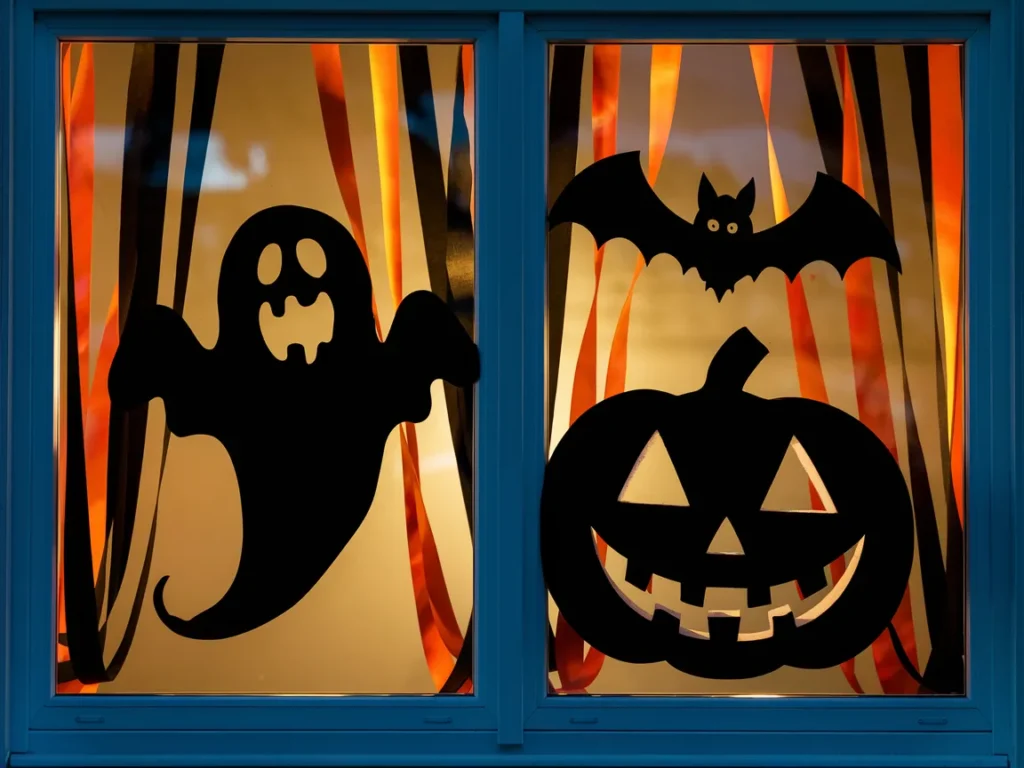
Backlit spooky silhouettes use light contrast to create strong visual shapes. Black cutouts placed against a lit background read clearly at night. Common shapes include bats, haunted trees, and figures. Silhouettes should cover a large portion of the window for street visibility. Cardboard, foam board, or vinyl works well. Indoor placement keeps materials safe from weather.
Silhouette success depends on even lighting. One light source behind the cutout works better than many small lights. The light should sit low and spread upward. This avoids glare and harsh shadows. Backlit silhouettes transform windows by turning them into bold nighttime frames.
Floating Ghost Window Scene
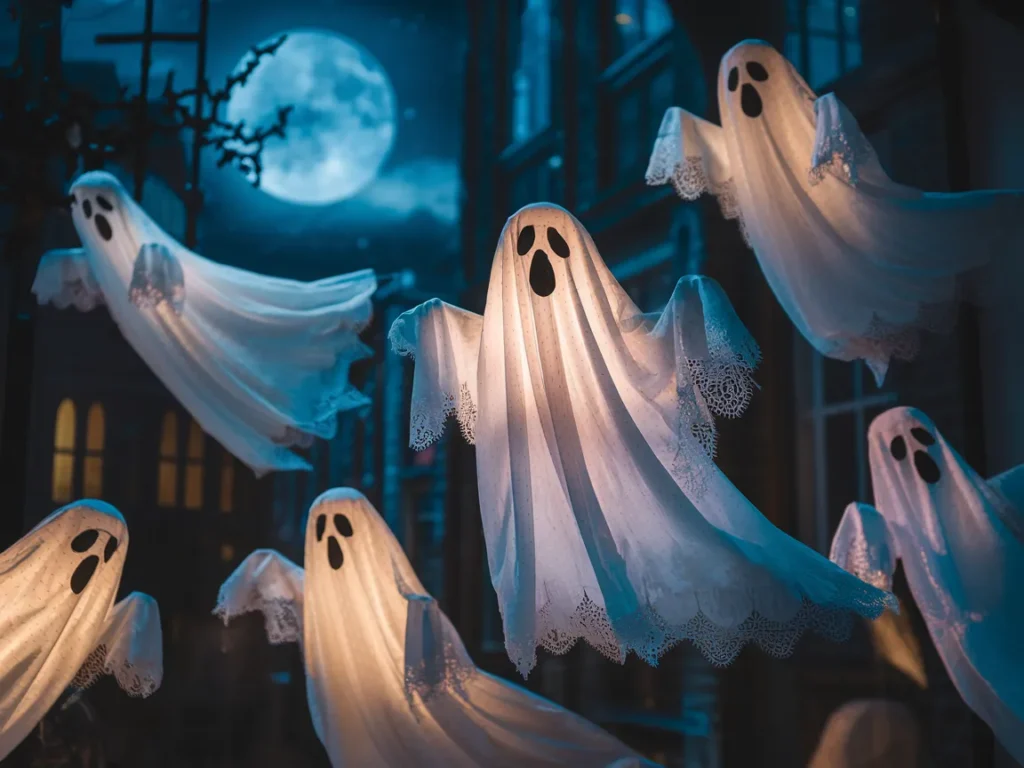
Floating ghost window scenes create motion through light fabric and airflow. Sheer white fabric shaped into ghost forms works best. These figures should hang from the top window frame using clear thread. Height matters. Ghosts should float at mid-window level for visibility from the street. Indoor placement keeps fabric clean and controlled.
Soft backlighting enhances the effect. Light should sit behind the ghosts, not in front. This creates depth and shadow movement. Fans should stay low-speed and hidden. Floating ghost scenes transform windows by adding motion without sound or clutter.
Window Frame Spider Webs
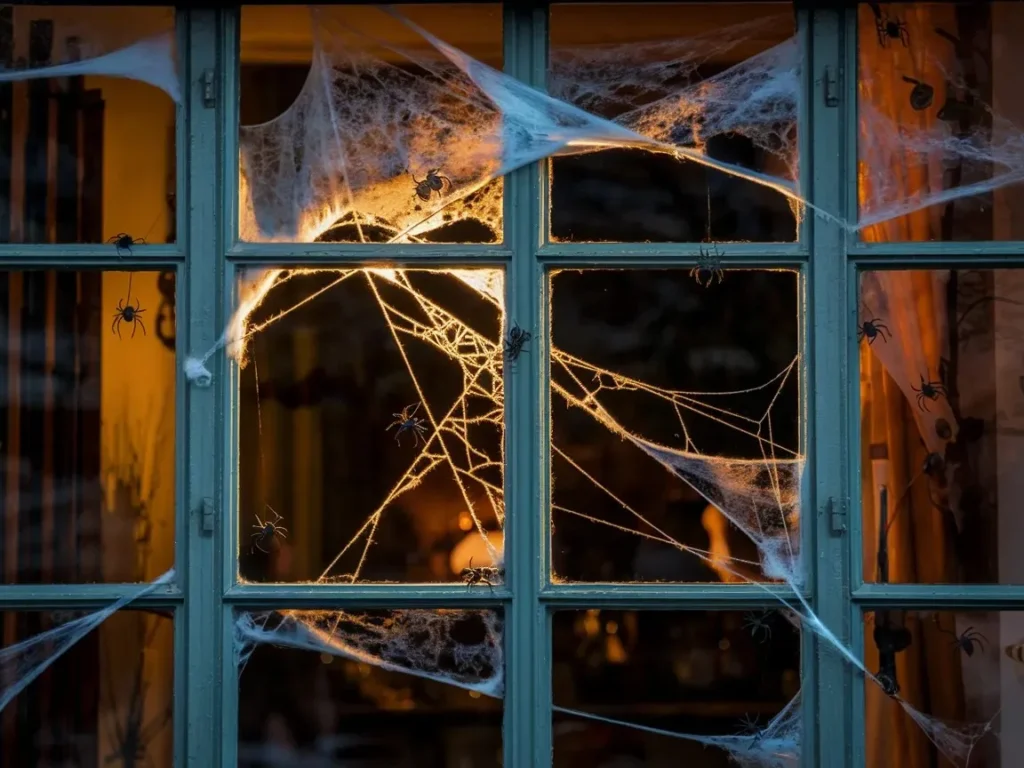
Window frame spider webs outline the window shape and draw focus. Stretchable web material works best for this effect. Webs should stay thin and pulled tight. Loose webbing looks messy and blocks light. Placement should follow window edges, not cover the glass fully.
Adding one or two spider shapes improves scale. Webs work best when paired with backlighting. Light passing through web strands creates texture. Window frame webs transform windows by framing the display without hiding interior light.
Glowing Eye Illusion
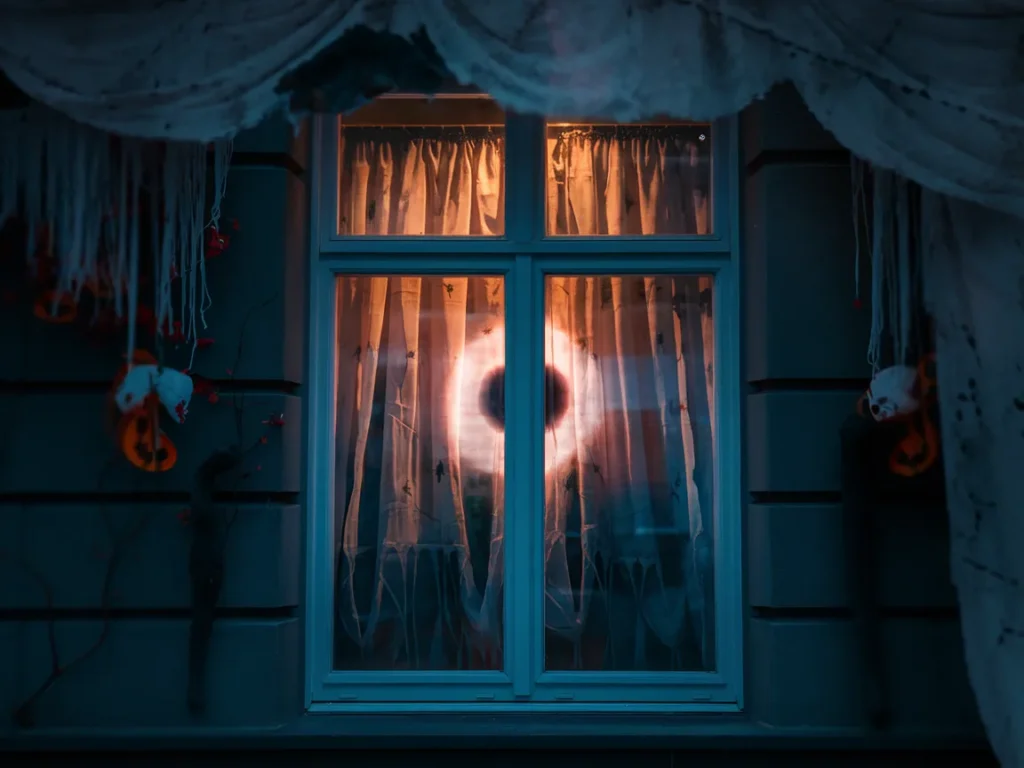
Glowing eye illusions use simple shapes and light to suggest presence. Eye cutouts placed behind curtains or frosted film work well. Spacing should match natural eye distance. Colors like red, yellow, or white read clearly at night.
Lighting should stay dim and focused. Overbright light reduces realism. Glowing eyes work best in single windows rather than groups. This illusion transforms windows by creating suspense without detailed props.
Shadow Figure Projection
Shadow figure projection uses light and cutouts to cast figures onto curtains or frosted glass. The figure sits between the light and the surface. Common shapes include people, hands, or creatures. Scale matters. Figures should appear human-sized for impact.
Projectors or strong lamps work well for this setup. The room should stay dark behind the light. Movement can be added by gently shifting the light. Shadow projections transform windows by creating depth and story through light.
Jack-O’-Lantern Window Lineup
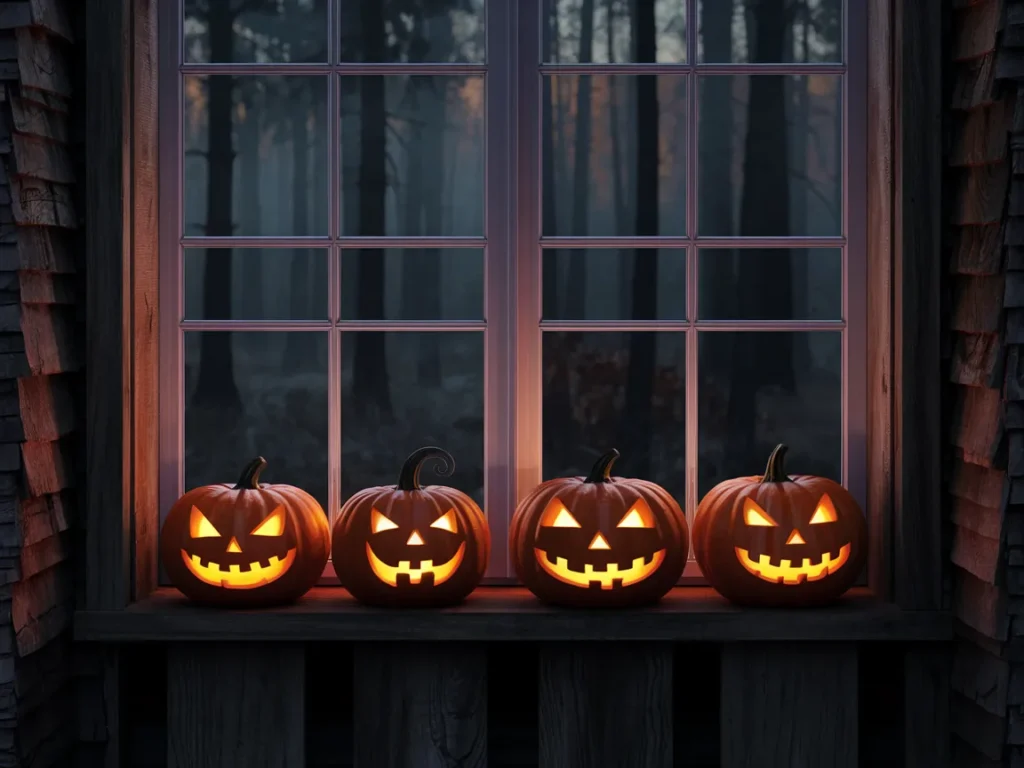
Jack-o’-lantern window lineups use familiar shapes with strong light contrast. Faux pumpkins work best for indoor windows. Real pumpkins spoil fast and block light unevenly. Pumpkins should line the bottom window edge or sit on an interior ledge. Spacing should remain even to avoid clutter. Faces with bold cuts read better from the street.
Lighting should come from inside each pumpkin using battery LEDs. Warm light improves visibility and keeps the glow soft. Too many pumpkins reduce clarity. Three to five pumpkins suit most windows. Jack-o’-lantern lineups transform windows by creating a clear seasonal signal without complex setup.
Haunted Curtain Effect
Haunted curtain effects use fabric to create depth and movement. Light curtains work best because they allow light to pass through. Curtains should hang straight with slight folds. Cutting small tears adds texture without damage. Curtains should never block window function.
Backlighting enhances the effect. Light placed low behind the curtain creates shifting shadows. Fans can add slow movement if hidden. Haunted curtain effects transform windows by adding drama while keeping decor minimal.

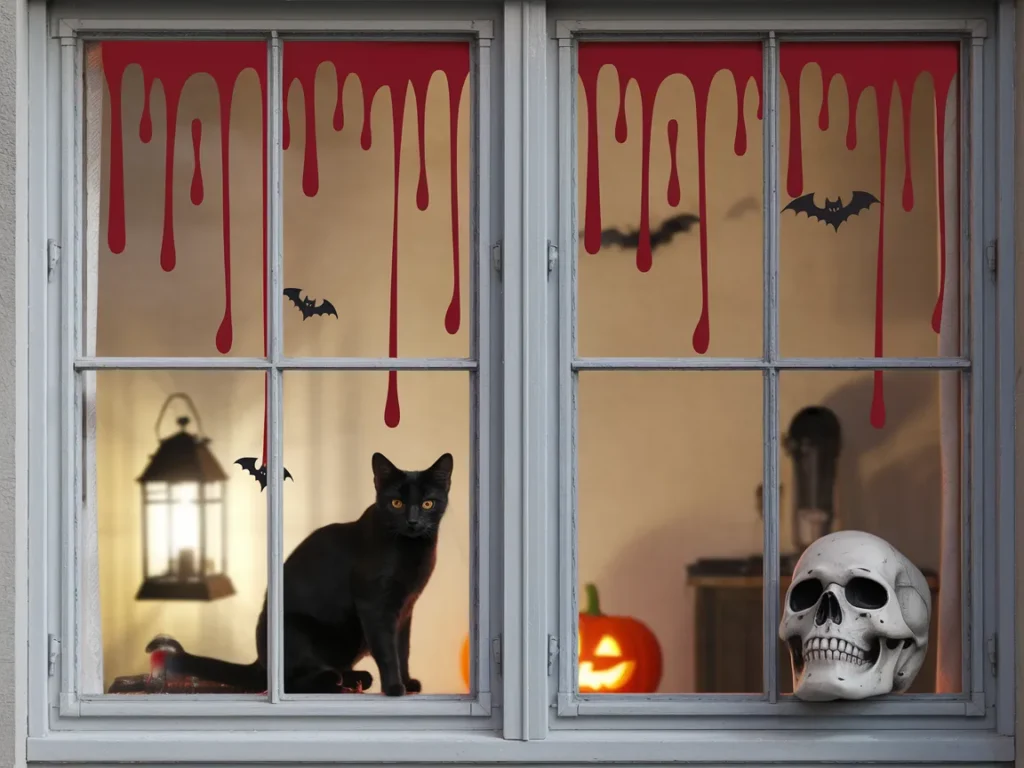
Blood-Drip Window Decals
Blood-drip window decals add strong contrast with minimal effort. Decals should stay at the top or sides of windows. Overuse makes windows hard to read from the street. Matte decals reduce glare. Red tones should stay dark for realism.
Decals work best on clear glass. They should not block all light. Pairing decals with soft backlighting improves visibility. Blood-drip decals transform windows by adding instant impact without bulky props.
Witch Silhouette Window Scene
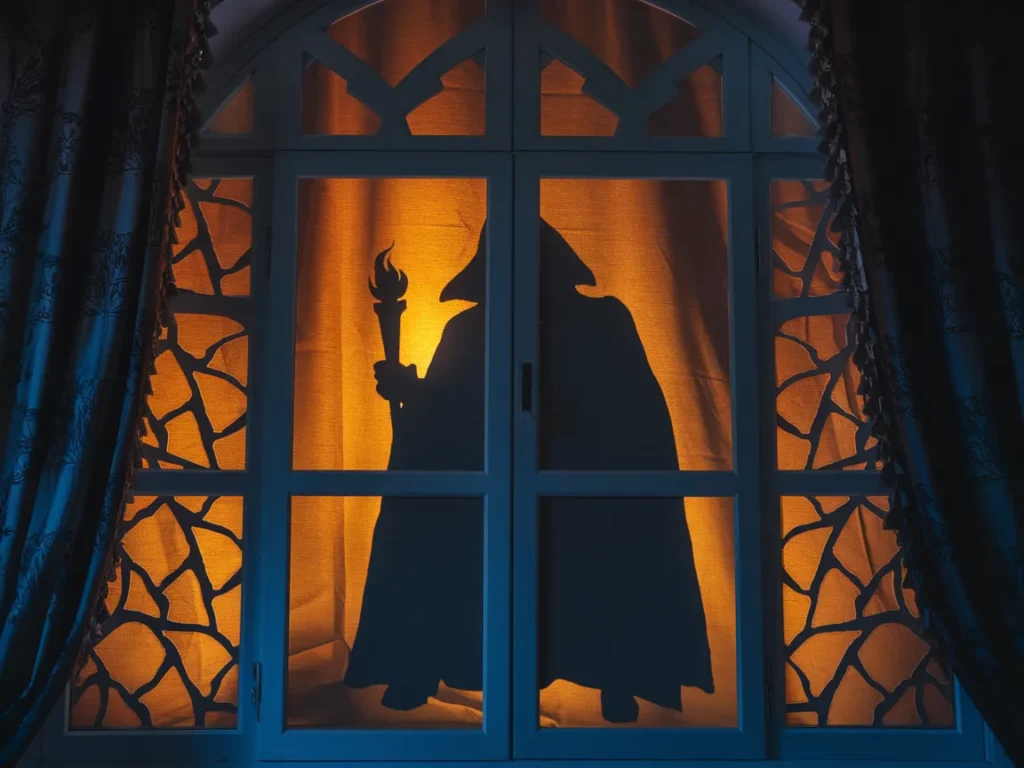
Witch silhouette window scenes use recognizable shapes for quick impact. Classic witch poses with hats and brooms read clearly at night. The silhouette should fill most of the window height. Cardboard or vinyl works well.
Lighting must sit behind the silhouette. One even light source prevents harsh edges. Witch scenes transform windows by using familiar Halloween imagery with clear contrast.

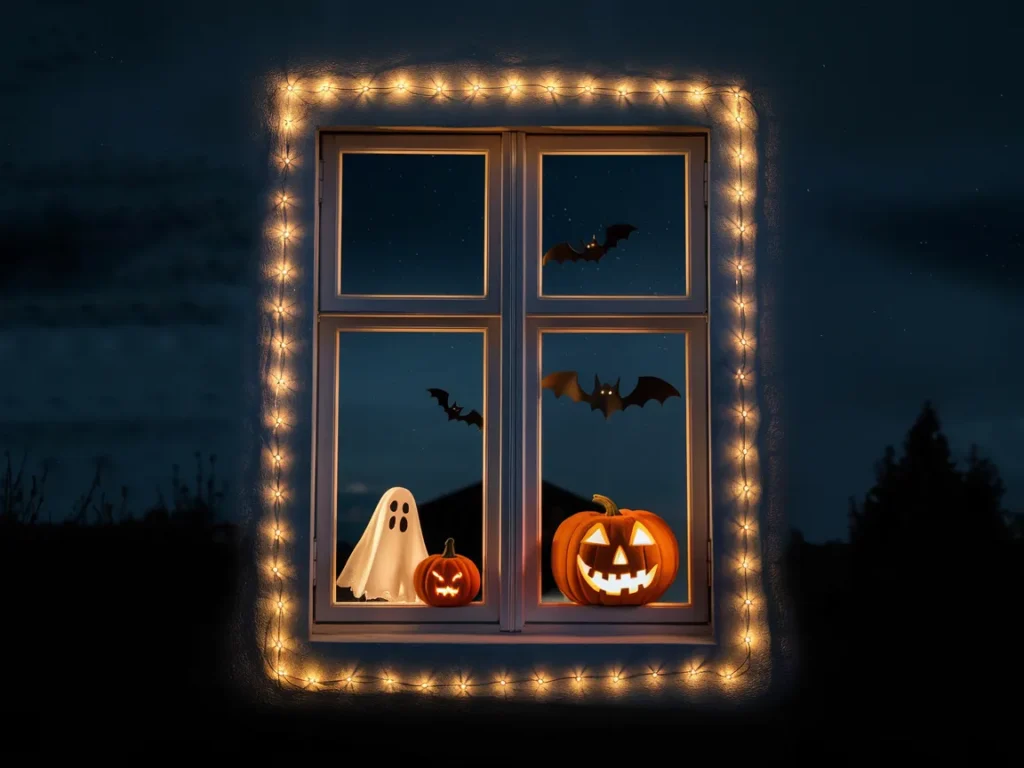
Window LED Outline Lighting
Window LED outline lighting traces the window frame with light. This creates a glowing border visible from far away. LED strips should stay warm white or soft purple. Bright colors reduce clarity.
Outlining works best when paired with simple interior decor. The outline frames the scene and guides the eye. Window LED outlines transform displays by boosting visibility without blocking glass.
Bat Swarm Window Display
Bat swarm window displays use repetition and direction to create motion. Bat cutouts should vary in size to suggest depth. Placement should start dense near one corner and spread outward. This creates a natural flow across the window. Black matte bats read best at night.
Backlighting improves contrast. Light should remain soft to avoid glare on glass. Bat swarms work well on large windows or grouped panes. This display transforms windows by adding movement without props or sound.

Fogged Glass Illusion
Fogged glass illusions simulate cold or haunted air behind windows. Frosted window film or removable spray works well. Coverage should stay uneven to look natural. Clear areas allow light to pass through. This effect suits narrow or tall windows.
Lighting should stay diffused. Bright point lights reduce realism. Fogged glass transforms windows by creating mystery without blocking all visibility.
Skeleton Peek-Through Window
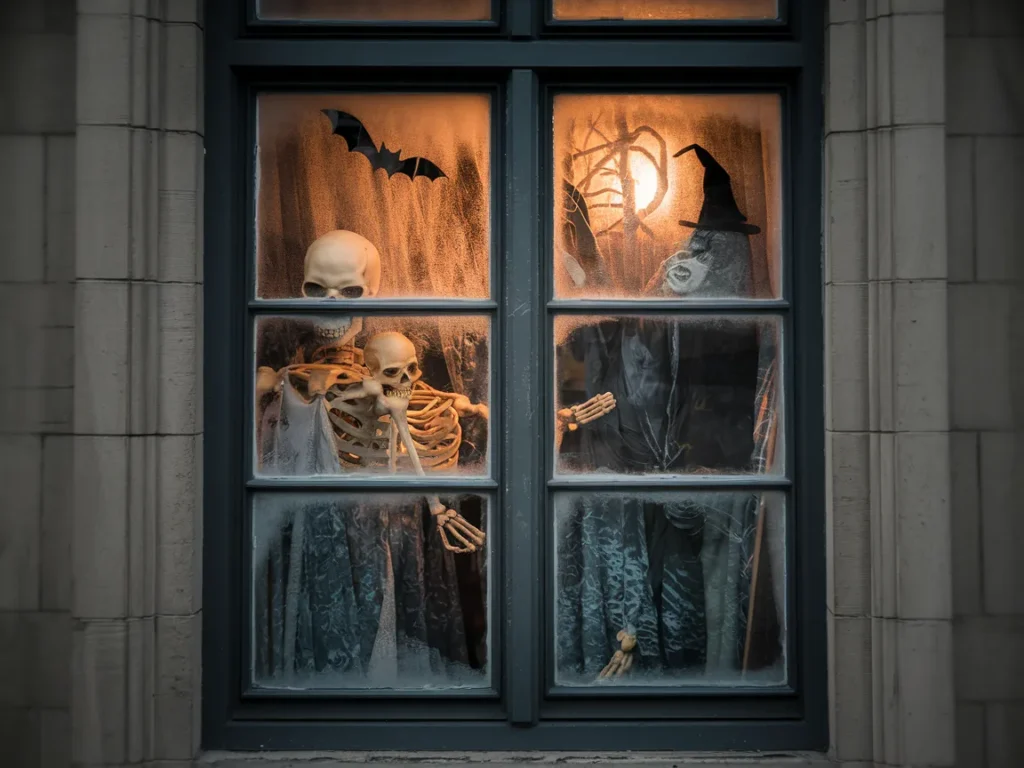
Skeleton peek-through window setups create character-based scenes. Skeleton heads or hands should appear near the bottom or side of the window. Full skeletons often look crowded indoors. Positioning should suggest someone looking out.
Backlighting helps outline bone shapes. The skeleton should not press directly against glass. Slight spacing improves depth. Peek-through scenes transform windows by adding story and humor without clutter.

Creepy Hand Print Effect
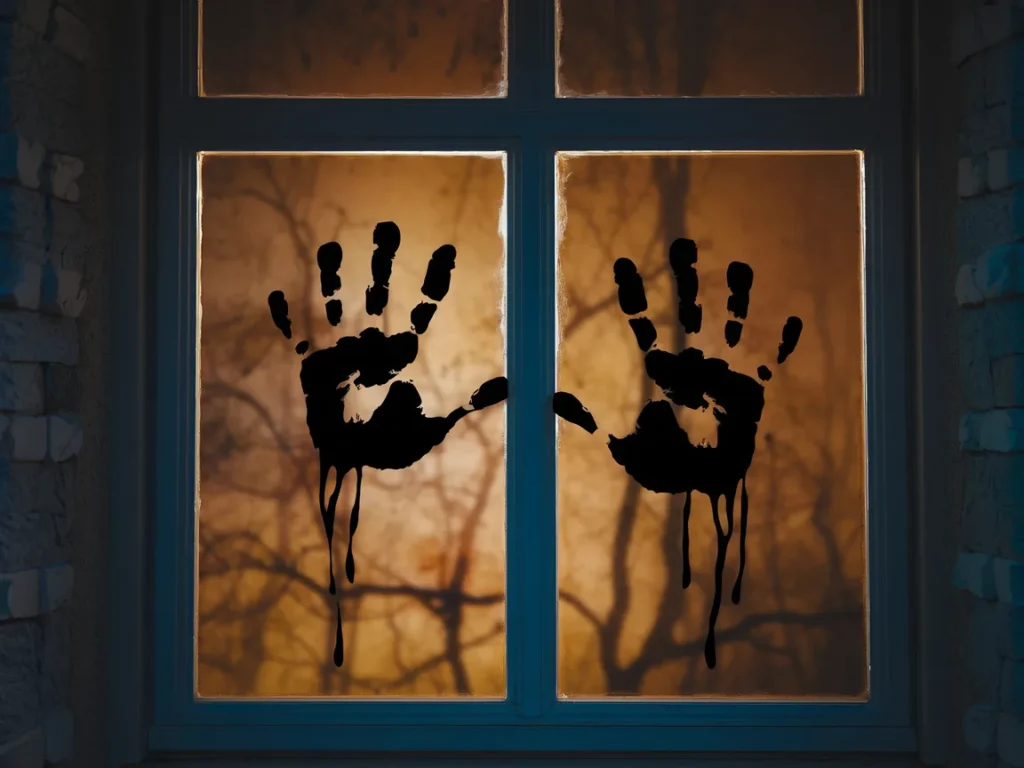
Creepy hand print effects use decals or washable paint to suggest contact. Hand prints should vary in size and angle. Placement near lower window areas feels more realistic. Red or gray tones work best.
Lighting should stay behind the window. This creates shadow depth around prints. Hand print effects transform windows by adding tension with minimal materials.
Color-Wash Lighting Scene
Color-wash lighting scenes use one color to fill the entire window. Purple, green, or amber work best for Halloween. The light should remain even. Spotty lighting breaks effect.
Color washes suit simple window setups. No additional props needed. Color-wash lighting transforms windows by changing mood instantly through light alone.
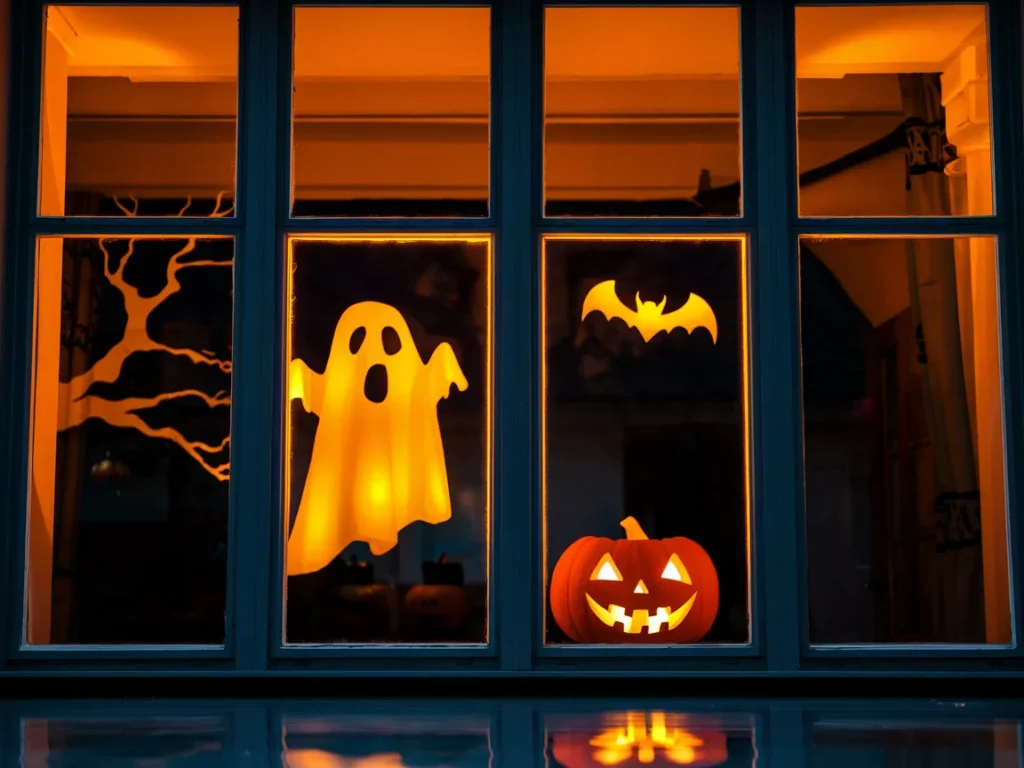
Window Candle Illusion
Window candle illusions recreate candlelight without fire risk. Battery candles work best for indoor windows. Candles should line the window base or sit on interior ledges. Heights should vary slightly for natural effect. Warm white light reads clearly from the street.
Candles should stay evenly spaced. Flicker modes add realism but must stay subtle. Window candle illusions transform windows by adding calm glow that fits both spooky and classic Halloween themes.
Image Prompt: Halloween window with battery candle illusion glowing warmly from inside, evenly spaced candles, calm spooky night scene, realistic photography
Animated Shadow Movement
Animated shadow movement uses slow motion behind curtains or frosted film. This effect works with simple cutouts or hands. Motion should stay slow to avoid distraction. Small movements feel more unsettling than fast ones.
Lighting must remain steady while the shadow moves. This contrast draws attention. Animated shadows transform windows by adding life without sound or bulky props.
Gothic Window Frame Styling
Gothic window frame styling decorates the edges of the window rather than the glass. Foam trim, faux stone panels, or printed overlays work well. Dark tones improve contrast. Frames should not block light.
This styling works best on large or ground-floor windows. Lighting from inside highlights the frame texture. Gothic frames transform windows by adding structure and drama without clutter.
Story Scene Window Setup
Story scene window setups combine multiple elements to tell one clear story. Scenes may show figures, props, and light together. The scene should stay simple. One clear message works better than many small details.
Planning matters for scenes. All elements must face the same direction. Lighting should highlight the main figure. Story scenes transform windows by creating narrative that holds attention longer.
Multi-Window Sequence Display
Multi-window sequence displays spread one design across several windows. Each window shows part of the scene. This works well for houses with two or more windows in a row. Consistent lighting connects the sequence.
Sequence displays should follow left-to-right flow. Viewers understand the story as they walk by. Multi-window sequences transform homes by extending visual impact beyond one frame.
Apartment-Safe Window Decor
Apartment-safe window decor uses lightweight and removable materials. Adhesive decals, paper cutouts, and LED lights work well. These items avoid damage and follow rental rules. Decor should stay fully inside the glass. Nothing should hang outside the window.
Lighting matters in apartments with street exposure. Soft backlighting avoids glare for neighbors. Apartment-safe decor transforms windows by allowing full Halloween displays without rule violations.
Sound-Free Scare Visuals
Sound-free scare visuals rely on sight instead of noise. Many neighborhoods restrict sound after dark. Visual scares like eyes, shadows, or figures work quietly. These displays stay effective for long hours.
Sound-free setups also suit apartments and shared buildings. Lighting and contrast create impact without disruption. Sound-free visuals transform windows by keeping displays bold and respectful.
End-Of-Night Glow Setup
End-of-night glow setups keep windows visible late without harsh light. Low-power LEDs or candles work best. This setup maintains atmosphere after peak hours. It also saves energy.
The glow should stay steady and soft. Flicker works but should remain subtle. End-of-night glow setups transform windows by extending visual appeal safely through the night.
Frequently Asked Questions
What Is The Best Lighting For Halloween Windows?
Warm or soft colored light works best.
Avoid harsh white bulbs.
Can Window Decor Work In Apartments?
Yes. Indoor-only decor works well.
Use removable materials.
How Many Items Should Go In One Window?
Few large items work best.
Crowding reduces clarity.
Should Window Decor Stay Up All Night?
Yes, if lights stay low.
Timers help control use.
Final Thoughts
Halloween window decorations deliver strong impact with simple planning. In real setups, displays failed when lighting stayed uneven or props stayed too small. The most effective windows used large shapes, strong contrast, and one clear idea. Indoor placement protected decor and kept setup safe. Apartment displays worked best with removable items and soft light. Multi-window scenes held attention longer than single props. Sound-free visuals avoided complaints while staying effective. End-of-night glow setups extended curb appeal without excess energy use. Windows succeeded when decor respected scale, light control, and viewing distance. For Halloween 2026, the most memorable window displays stayed clean, bold, and readable from the street without clutter or noise.