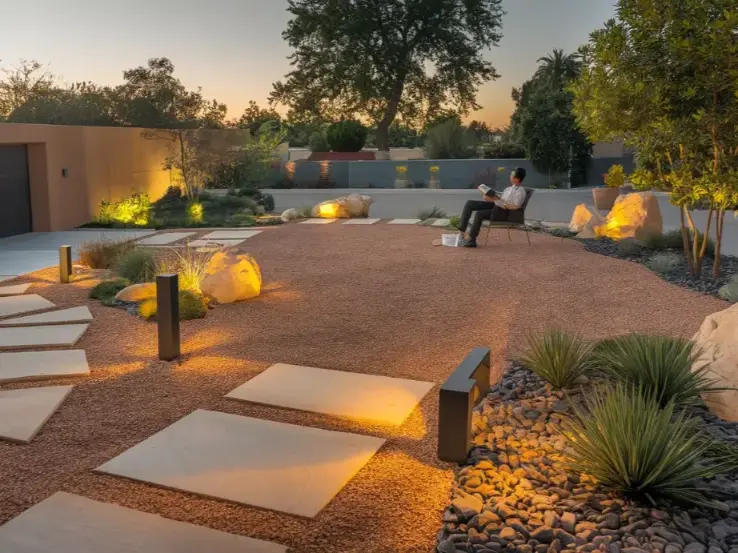

Yes, you can replace your grass lawn with a modern gravel garden and get back over 40 hours of your life every single year. No more mowing. No more edging. No more dragging the sprinkler around in July.
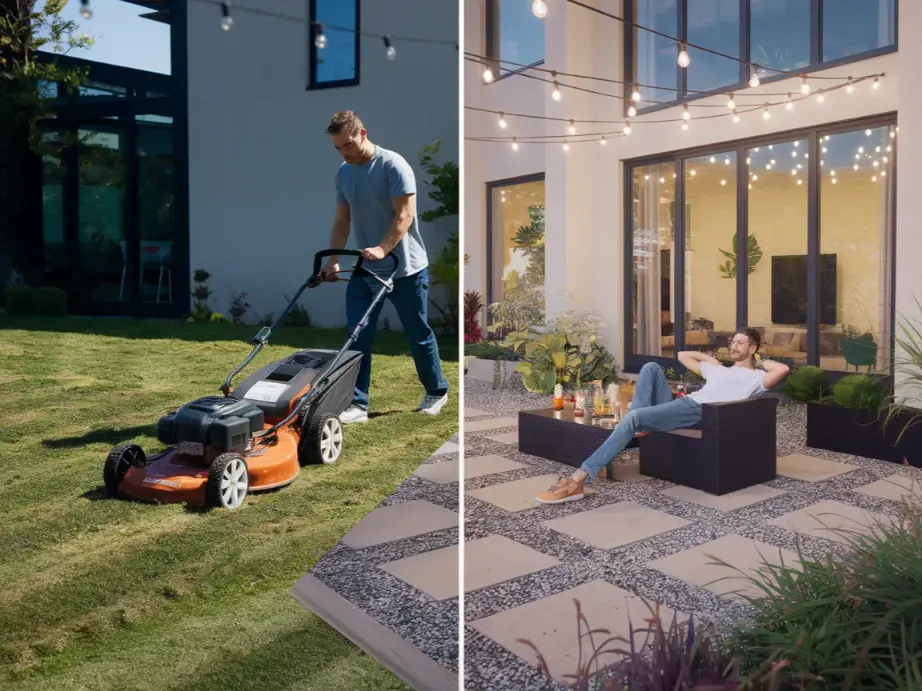
That number isn’t an exaggeration either. According to survey data from Today’s Homeowner, the average American spends over 384 hours of their lifetime mowing their lawn. In southern states like Georgia and Virginia, homeowners spend more than 20 hours per year on mowing alone. Add in the time you spend watering, fertilizing, weeding, edging, and dealing with equipment breakdowns, and that total easily climbs to 40, 50, or even 70 hours per year depending on where you live and how big your yard is.
That’s an entire work week. Every year. Spent pushing a loud machine back and forth across the same patch of green you pushed it across last week.
Gravel changes all of that. A well-designed gravel garden needs no mowing, very little watering, and only an occasional rake to stay looking sharp. And when it’s designed well, it doesn’t look like you gave up on your yard. It looks like you upgraded it. In this article, you’ll find 5 modern gravel designs that save you time, save you money, and honestly look better than the lawn they’re replacing.
The Real Cost of Keeping a Grass Lawn
Time, Money, and Sanity
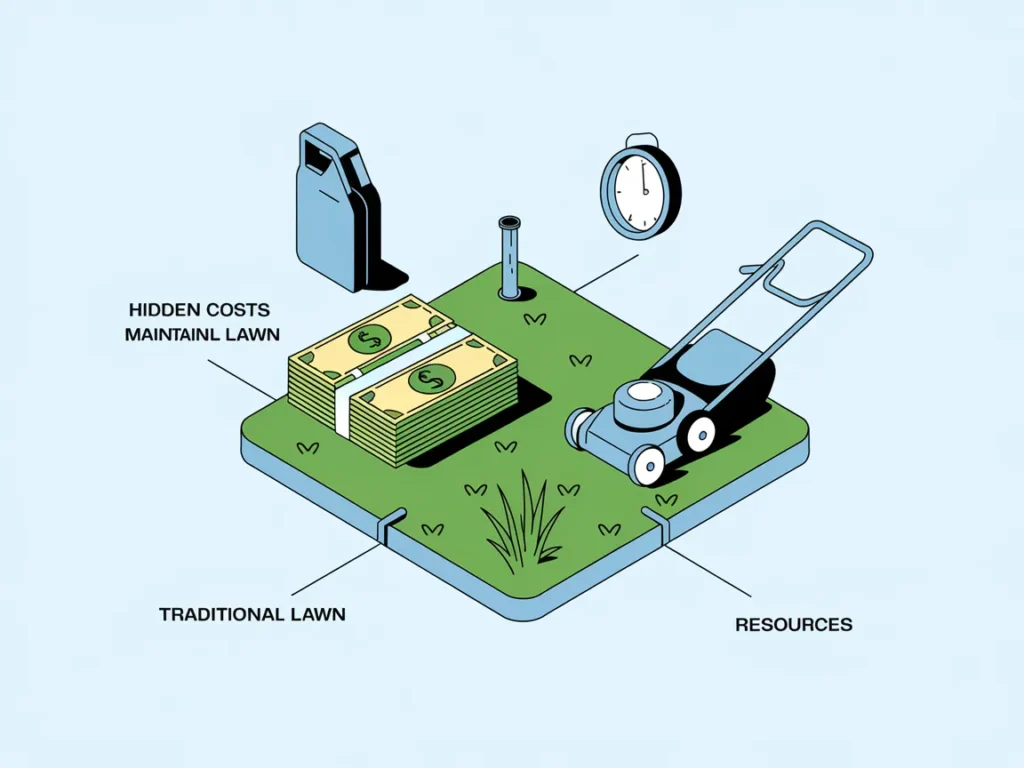
Before we jump into the designs, let’s look at what a traditional lawn actually costs you. Not just in dollars, but in hours, energy, and environmental impact.
The EPA estimates that residential outdoor water use in the U.S. accounts for nearly 8 billion gallons per day, and most of that goes to landscape irrigation. Up to 50 percent of that water gets wasted through evaporation and runoff from bad sprinkler systems. The average American family spends over $1,000 per year on water bills, and a major chunk of that goes to the lawn.
Then there’s the equipment. Gas, oil changes, blade sharpening, new spark plugs, new mowers every 5 to 8 years. The average homeowner who mows their own lawn spends roughly $1,750 on mower equipment over a seven-year cycle. And if you hire a pro instead, you’re looking at $30 to $80 per visit, 25 to 30 times a year.
| Lawn Expense | Estimated Annual Cost |
|---|---|
| Water | $200 – $500+ |
| Mowing (DIY fuel + maintenance) | $150 – $300 |
| Mowing (professional service) | $900 – $2,400 |
| Fertilizer and weed control | $100 – $300 |
| Equipment replacement (averaged) | $100 – $250 |
| Time spent (at $20/hr value) | $800 – $1,400 |
When you add it all up, a traditional lawn can cost you $1,500 to $4,000+ per year in real dollars and time value. A gravel garden? After the one-time installation, ongoing costs are nearly zero.
Design 1: The Minimalist Gravel Courtyard
Clean Lines, Maximum Impact
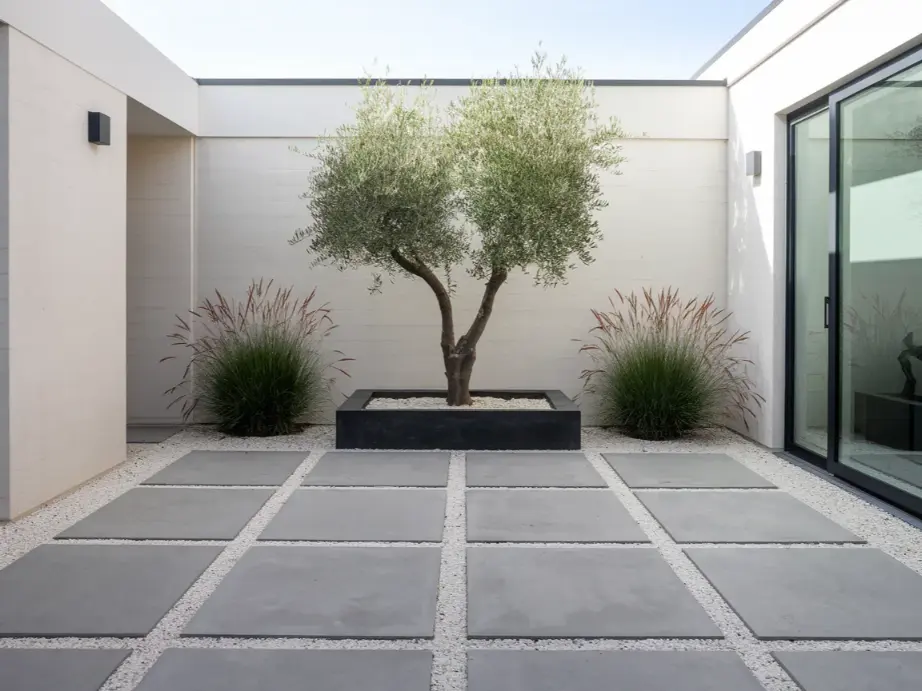
This is the design that looks like it came straight out of an architecture magazine. A minimalist courtyard uses large-format concrete or stone pavers set in a grid pattern, with fine gravel filling the spaces between them. The contrast between the smooth, solid pavers and the loose, textured gravel creates instant visual drama with almost zero complexity.
Choose a gravel color that contrasts sharply with your pavers. White pea gravel against dark concrete. Charcoal crushed granite against pale limestone pavers. That high-contrast look is what makes minimalist design feel expensive.
Plants That Complete the Look
Keep the planting sparse and architectural. One olive tree or multi-stem birch as a focal point. Two or three steel or concrete planters with ornamental grasses. Maybe a single row of low clipped boxwood for structure. That’s it. The emptiness is the design. The negative space is what makes everything else stand out.
This style works especially well with modern, contemporary, or mid-century home architecture. It extends the clean lines of the house into the landscape, creating a seamless indoor-outdoor flow.
If you love this sleek aesthetic, check out home decor entrance ideas that carry the same modern vibe right through your front door.
Design 2: The Mediterranean Gravel Garden
Warm, Fragrant, and Effortlessly Elegant
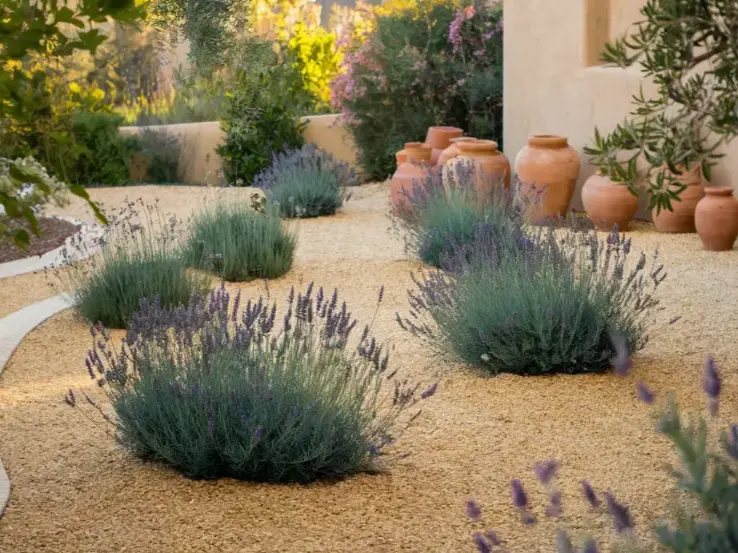
Close your eyes and think of the south of France. Stone walls. Terracotta pots. Lavender bushes humming with bees. A gravel path crunching underfoot. That atmosphere is exactly what a Mediterranean gravel garden delivers. And it does it with almost no maintenance.
Use warm-toned gravel like golden limestone, buff, or honey-colored pea gravel. These warm hues absorb the sunlight and make your whole yard feel like a vacation. Plant lavender, rosemary, thyme, and sage directly into the gravel or in grouped terracotta pots. These Mediterranean herbs love dry, well-drained conditions. Gravel is their dream home.
The Secret to Making It Look Expensive
Layer your heights. Tall lavender and rosemary in the back. Mid-height oregano and santolina in the middle. Low creeping thyme spilling across the gravel at ground level. This three-tier approach creates depth and fullness that looks like a designer planned it.
Add a simple curved gravel pathway through the planting areas. Let the herbs grow slightly onto the path so the edges feel soft and natural. Place a rustic wooden bench or a pair of weathered iron chairs at the end of the path. That destination gives the garden purpose and makes the whole space feel like a room.
Design 3: The Zen-Inspired Gravel Retreat
Peace, Quiet, and Zero Mowing
Japanese Zen gardens have been around for over 700 years. They’re one of the oldest and most proven garden design traditions in history. And they’re built entirely on gravel, stone, and minimal planting. No grass. No mowing. Just calm.
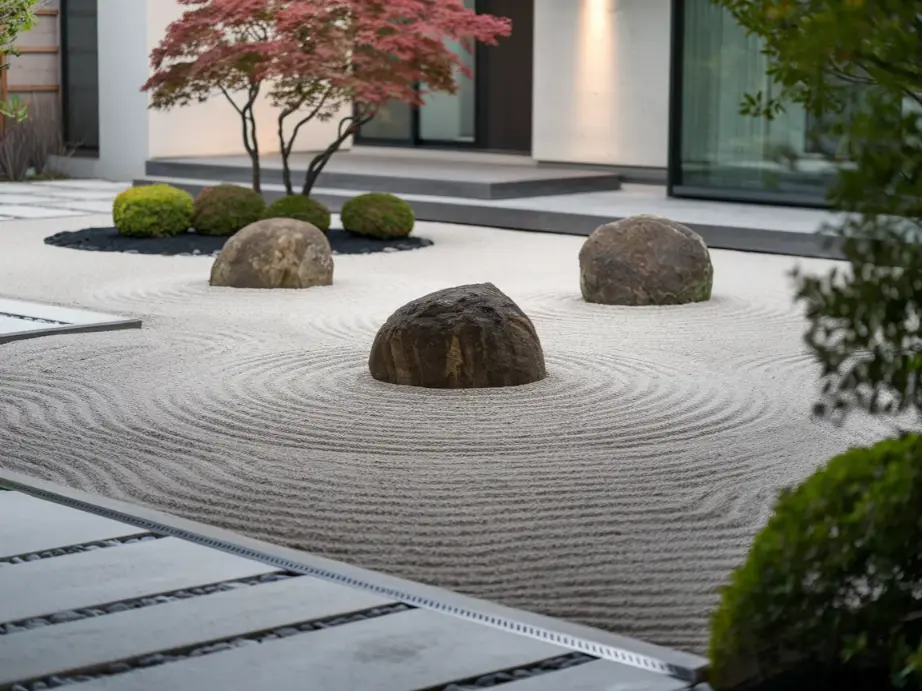
Use fine, light-colored crushed granite or white limestone gravel. Rake it into smooth, flowing lines that represent water and movement. Place three to five large, naturally shaped boulders in an asymmetric arrangement. Each boulder should feel like it was always there, like nature dropped it in the perfect spot.
Adding Life Without Adding Work
A Zen garden doesn’t need many plants, but the right few make all the difference. A single Japanese maple adds graceful form and fall color. A clump of black mondo grass or blue fescue provides contrast against the light gravel. A patch of moss around the base of a boulder adds that ancient, settled feel.
The maintenance is almost laughable compared to a lawn. Rake the gravel patterns fresh every week or two. It takes about ten minutes and most people find it genuinely relaxing. Trim the maple once a year. That’s it. Compare that to the 40+ hours of mowing, watering, and edging a lawn demands.
Design 4: The Gravel and Raised Bed Modern Garden
Structure, Greenery, and Practically Zero Upkeep
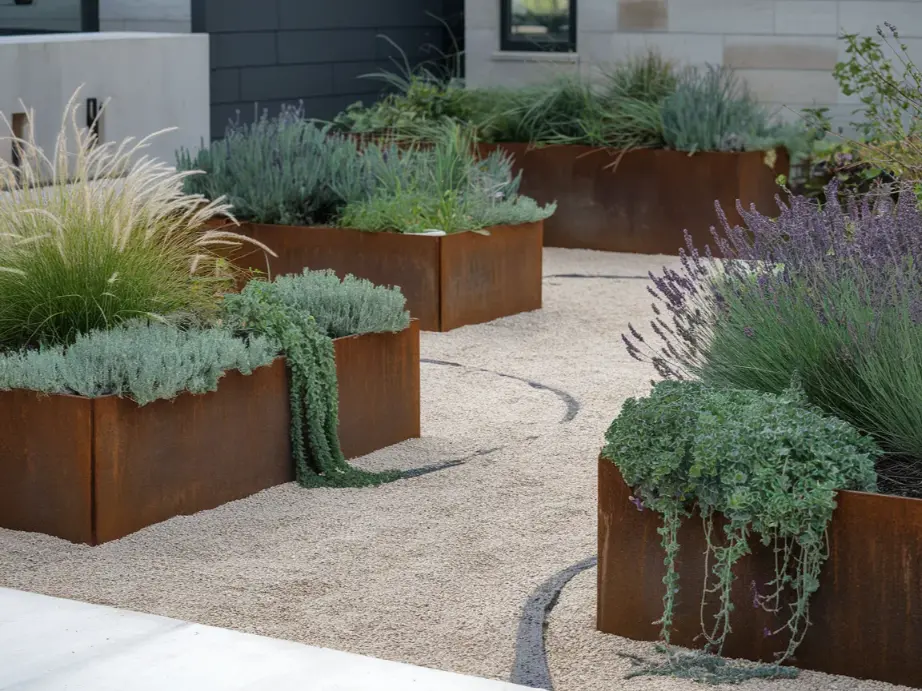
This design is for people who want the time savings of gravel but still crave real planting beds with color and life. The concept is simple but powerful. Cover the ground with gravel. Then build raised beds out of timber, corten steel, or natural stone to hold your plants. The gravel handles the “floor.” The raised beds handle the beauty.
The contrast between the clean gravel surface and the lush, overflowing raised beds is what makes this design look so polished. It’s like putting a frame around a painting. The gravel is the frame. The plants are the art.
Getting the Balance Right
Keep at least half of the total area as open gravel. This gives the space an airy, uncluttered feel. Two to four raised beds at different heights creates variety. Use the same material for all beds so the design feels cohesive.
Plant the beds with a mix of ornamental grasses, perennials like coneflower and salvia, and trailing plants that spill over the edges onto the gravel below. That softening effect where plants meet gravel is the detail that makes everything feel finished and intentional.
For more ideas on mixing materials and textures in your outdoor spaces, browse these patio decor lights ideas that can spotlight your new gravel garden beautifully at night.
Design 5: The Two-Tone Gravel Pattern Garden
Landscape Art That Maintains Itself
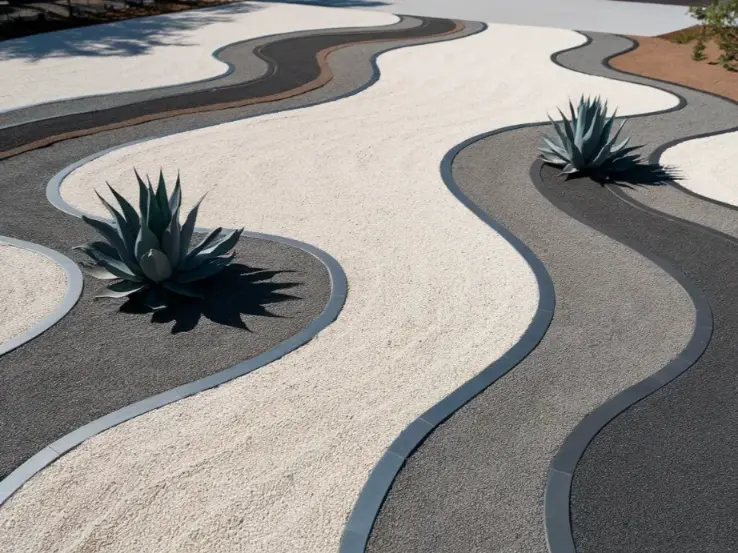
This is the showstopper. A two-tone gravel design uses two contrasting colors of gravel arranged in flowing patterns, geometric shapes, or distinct zones to turn your front yard into a piece of landscape art. It’s the design that stops people on the sidewalk.
The most popular combination is white or cream gravel paired with dark slate or charcoal. Flowing curves where one color sweeps into the other create organic, natural movement. Geometric shapes with crisp metal edging create a modern, structured look. Either way, the contrast is the star of the show.
Keeping the Colors Separate
The trick is good borders. Use thin metal landscape edging buried flush with the gravel surface to keep the two colors from blending over time. This invisible border maintains the crisp line between light and dark.
Add a few carefully chosen plants at the transition points. A single architectural agave or a clump of fountain grass where two colors meet creates a natural focal point. Keep the planting sparse. Let the gravel pattern do the talking.
For a leafblower (not a rake), clearing debris takes five minutes without disturbing the pattern. Compare that to an hour behind a mower every week. The math speaks for itself.
How Much Time You Actually Save
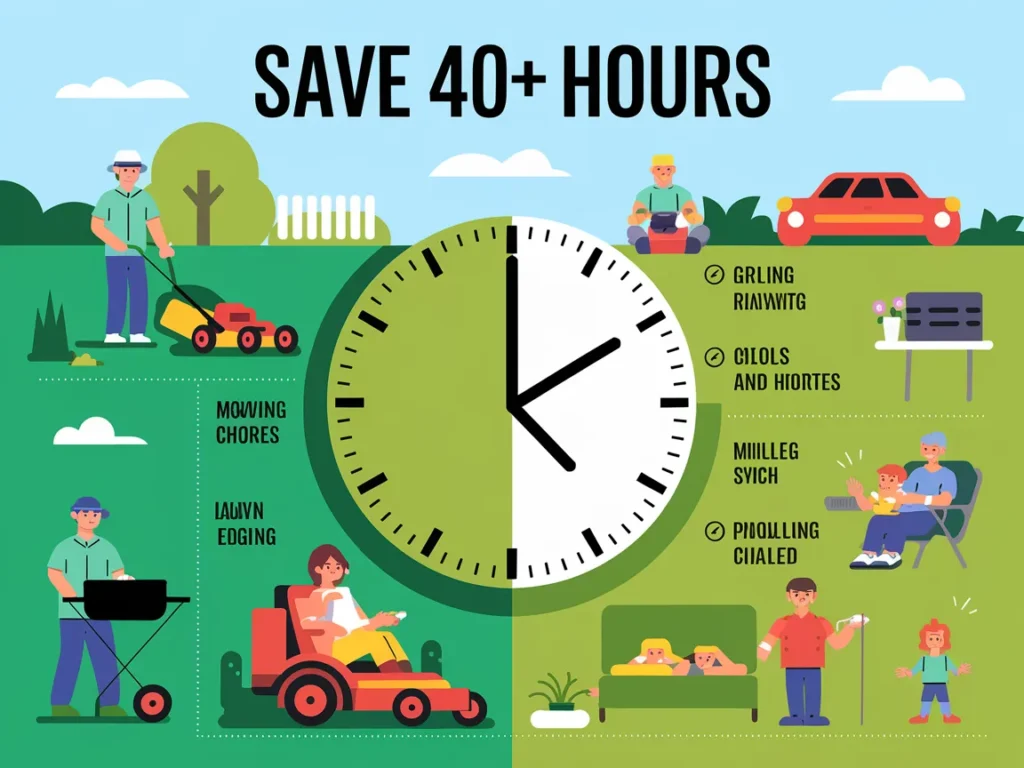
Let’s put real numbers on this. Here’s a comparison of annual time spent maintaining a traditional lawn versus a gravel garden for an average-sized front yard (about 1,000 to 2,000 square feet):
| Task | Grass Lawn (Hours/Year) | Gravel Garden (Hours/Year) |
|---|---|---|
| Mowing | 15 – 27 | 0 |
| Edging/trimming | 5 – 10 | 0 |
| Watering management | 5 – 10 | 0 – 1 |
| Fertilizing/weed treatment | 3 – 6 | 0 |
| Weeding | 5 – 10 | 1 – 2 |
| Raking/maintenance | 0 | 2 – 4 |
| Equipment maintenance | 3 – 5 | 0 |
| Total | 36 – 68 | 3 – 7 |
Even at the low end, you’re saving over 30 hours a year. At the high end, you’re saving 60+ hours. That’s multiple full weekends you get back. Weekends you can spend with your family, on hobbies, relaxing, or doing literally anything other than pushing a mower.
And remember, this comparison only covers the front yard. If you convert both front and back, the savings double. Some homeowners in warmer climates report saving well over 100 hours per year by going fully gravel.
Step-by-Step: How To Replace Your Lawn With Gravel
The Weekend Project That Changes Everything
Replacing a lawn with gravel is one of the most DIY-friendly landscaping projects you can do. Here’s the basic process:
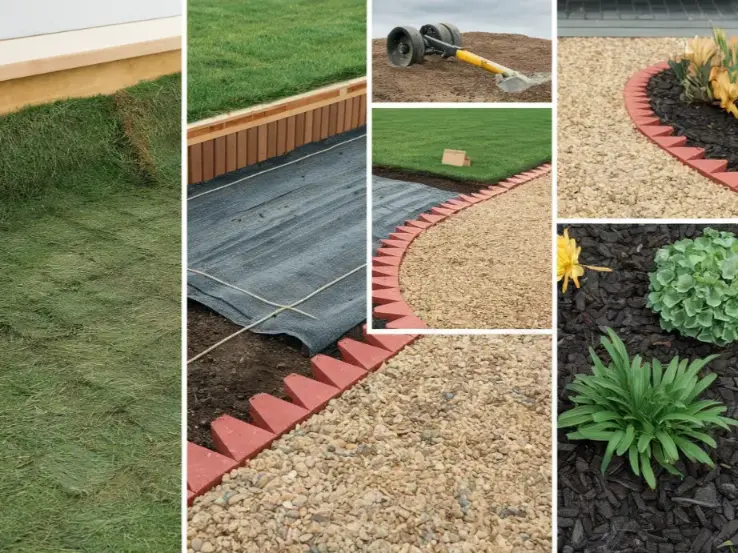
Step 1: Plan your design. Decide on your layout, gravel type, and where you want plants or features. Sketch it on paper or use a free garden planning app.
Step 2: Remove the grass. You can smother it with cardboard and mulch over several weeks, solarize it under clear plastic, or cut out the sod manually with a flat shovel. Avoid chemical herbicides if possible.
Step 3: Level and compact the soil. Rake the area smooth. Use a tamper or plate compactor to firm up the base. Address any drainage issues now by creating a gentle slope away from your home.
Step 4: Lay landscape fabric. Roll out weed-barrier fabric over the entire area. Overlap seams by at least 6 inches and secure with landscape staples. This is the step that prevents weeds for years.
Step 5: Install edging. Set metal, stone, or concrete edging around the perimeter and around any planting beds. Edging keeps gravel where it belongs and gives the design its clean, professional lines.
Step 6: Spread the gravel. Pour and rake gravel to a depth of 2 to 3 inches. For a 1,000-square-foot area, you’ll need roughly 3 to 5 cubic yards of gravel. Order about 10 percent extra to be safe.
Step 7: Add plants and features. Cut X-shaped slits in the landscape fabric where you want plants. Dig through and plant directly into the soil below. Add any boulders, pots, or lighting.
A small to medium front yard can be completed in a single weekend by two people. Cost ranges from $300 for a basic DIY project with budget gravel to $2,000+ for premium stone with professional edging and planting.
What the Neighbors Will Say (And Why It Matters)
Here’s something nobody talks about. When you replace your lawn with gravel, your neighbors will notice. Some will love it immediately. Others might wonder why you “got rid of your grass.”
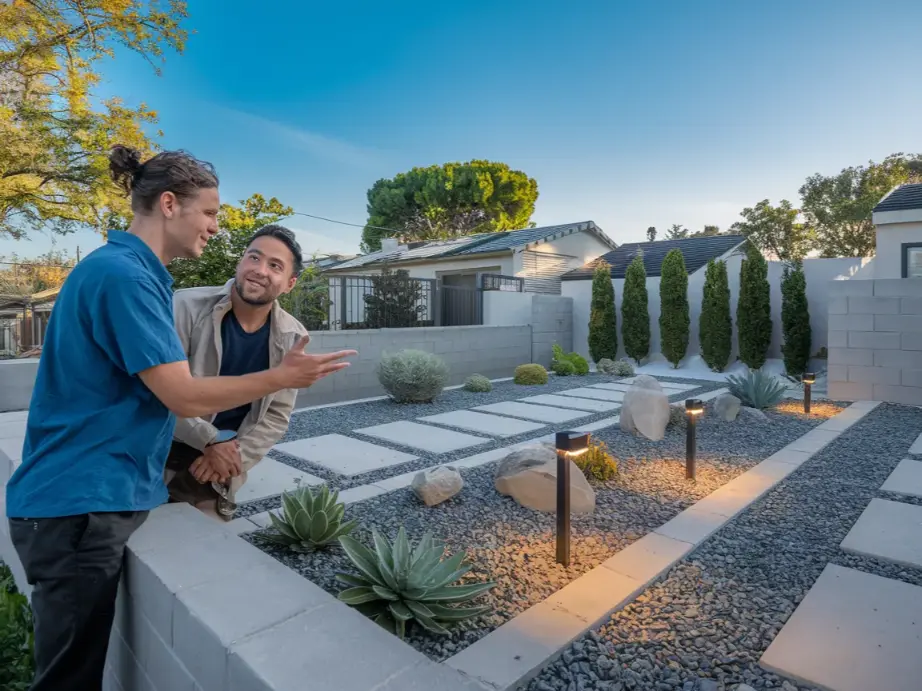
The difference between a gravel garden that gets compliments and one that gets raised eyebrows comes down to three things: clean edges, intentional planting, and good maintenance. A gravel yard with crisp edging, a few beautiful plants, and occasional raking looks like a deliberate design choice. A gravel yard with no edging, no plants, and scattered debris looks like a construction site.
The designs in this article all pass the “neighbor test” with flying colors because they follow design principles that signal care and intention. And once the first compliment comes in, the dominos start falling. Don’t be surprised when a neighbor or two asks you how you did it.
If you want to boost your entire home’s curb appeal, pair your new gravel garden with these entryway table decor ideas for a welcoming first impression inside and out.
FAQ
How Much Does It Cost To Replace a Lawn With Gravel?
For a DIY project, expect to spend $300 to $1,500 depending on the size of your yard and the type of gravel. Professional installation ranges from $1 to $4 per square foot. Compared to the $1,500 to $4,000+ annual cost of maintaining a grass lawn, the gravel investment typically pays for itself within one to two years.
Will Gravel Kill My Home’s Resale Value?
A well-designed gravel garden can actually boost curb appeal and attract buyers who want low-maintenance landscaping. The key is making it look intentional with clean edging, quality plants, and a cohesive design. Professional landscaping of any kind, including gravel, increases home value by an average of 7 percent.
How Do I Prevent Weeds in a Gravel Garden?
Lay high-quality landscape fabric before spreading gravel. This blocks 95 percent of weeds. The few that do pop through are easy to pull from loose gravel. Avoid using plastic sheeting, which traps water and doesn’t allow the soil to breathe. Woven geotextile fabric is the best option.
Does Gravel Get Too Hot To Walk On?
Light-colored gravel can reflect heat, and dark gravel can absorb it. In very hot climates, choose lighter gravel and create shaded pathways with trees or pergolas. For barefoot areas, pea gravel stays cooler than dark stone. You can also add stepping stones for comfortable walking in full sun.
How Often Does Gravel Need Replacing?
Gravel is extremely durable and typically lasts 10 to 20 years. You may need to top it up every few years as it settles or shifts slightly. A few bags of gravel every couple of years costs far less than a single month of lawn care.
Can I Put Gravel Over Existing Grass?
It’s not recommended. Grass underneath will decompose, create uneven surfaces, and allow weeds to push through. Always remove the grass first, level the soil, and install landscape fabric before spreading gravel. The extra prep work pays off with a much better result.
What About Rain and Drainage?
Gravel is actually better for drainage than most lawns. Water passes through gravel and into the soil below, reducing runoff and pooling. This is why many eco-conscious homeowners choose gravel. It’s a permeable surface that helps manage stormwater naturally.
Final Thoughts
Every hour you spend mowing your lawn is an hour you’ll never get back. And for what? A patch of green that turns brown in August, fills with weeds in September, and needs the same cycle of work all over again next spring.
A modern gravel garden breaks that cycle completely. It looks beautiful twelve months of the year. It costs almost nothing to maintain after installation. It saves water. It saves money. And most importantly, it saves your time. Thirty, forty, sixty or more hours every single year.
That’s not just a landscape upgrade. That’s a lifestyle upgrade.
Whether you choose the clean geometry of a minimalist courtyard, the warm fragrance of a Mediterranean herb garden, the quiet calm of a Zen retreat, the structured beauty of raised beds, or the bold drama of a two-tone pattern, you’re choosing a yard that works for you instead of against you.
So this weekend, instead of pulling out the mower, pull out a measuring tape. Sketch a design. Price some gravel. And take the first step toward the last lawn you’ll ever have to not mow.