

You can build your own outdoor jacuzzi! A DIY hot tub project saves you thousands of dollars compared to buying a ready-made spa. Most people spend between $500 and $3,000 on materials when building their own, while store-bought hot tubs cost $3,000 to $35,000. This guide shows you 10 creative ways to build an outdoor jacuzzi yourself, from simple stock tank setups to beautiful cedar tubs.
Building your own spa gives you full control over size, style, and features. You can match it to your backyard design and add personal touches. Whether you want a rustic wood-fired tub or a modern concrete spa, there’s a DIY option that fits your skill level and budget.
In this article, you’ll learn step-by-step methods for building different types of outdoor hot tubs. We cover materials, tools, heating options, and maintenance tips. By the end, you’ll have everything you need to start your own backyard jacuzzi project.
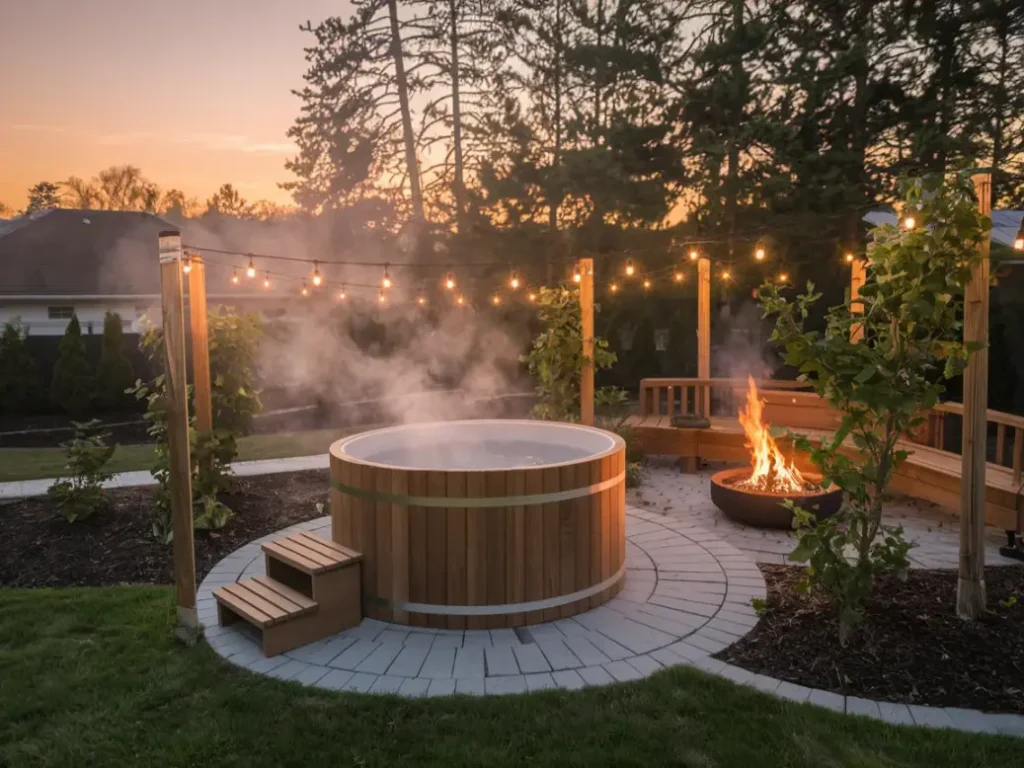
Why Build Your Own Outdoor Jacuzzi?
Save Money on Your Spa Dreams
The biggest reason to build your own hot tub is cost savings. A basic store-bought hot tub costs at least $3,000. Luxury models with jets and lights can run $20,000 or more. But a DIY stock tank hot tub might cost you just $500 to $1,500 total.
Even a fancy cedar tub built from scratch costs around $850 to $2,000 in materials. That’s a huge difference from what you’d pay at a spa store. Plus, you won’t have expensive delivery or installation fees.
Customize Your Design
When you build your own jacuzzi, you choose everything. Pick the exact size that fits your space. Select materials that match your deck or patio. Add features you actually want and skip the ones you don’t need.
Want a deep soaking tub for two? Or a large family-size spa? Building it yourself means you get exactly what you want. Check out 15 outdoor jacuzzi ideas for design inspiration that matches your style.
Enjoy the Pride of DIY
There’s something special about soaking in a hot tub you built with your own hands. It’s a satisfying project that adds real value to your home. Friends and family will be impressed by your handiwork.
Materials and Tools You’ll Need
Basic Materials for Most DIY Hot Tubs
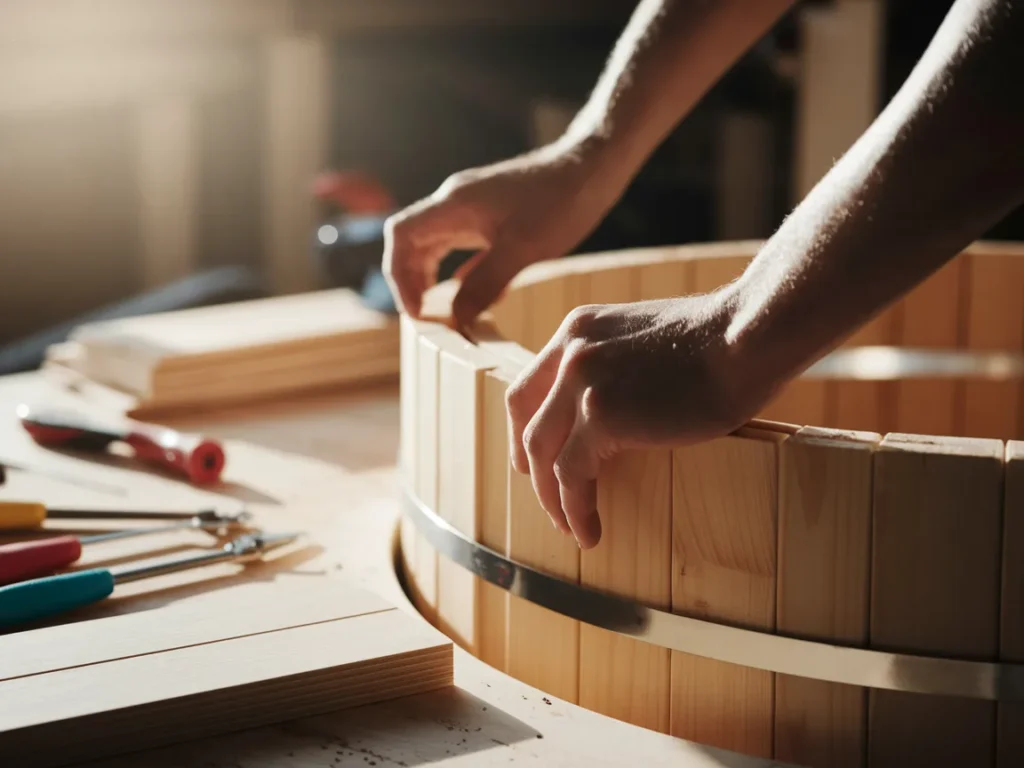
Before you start building, gather your supplies. The exact materials depend on which design you choose, but here are the common items:
For the tub structure: Stock tank or IBC container, cedar wood planks, concrete blocks, or pond liner with a wood frame. Cedar is popular because it swells when wet and creates a tight seal.
For heating: Electric spa pack with heater, wood-burning stove, copper coil heat exchanger, or propane heater. Each option has pros and cons we’ll cover later.
For water care: Pump, filter cartridge, chlorine or bromine tablets, pH testing strips, and shock treatment. Even DIY tubs need clean, safe water.
Essential Tools
Keep these tools handy for your project:
- Power drill and bits
- Circular saw or jigsaw
- Measuring tape and level
- Screwdrivers (Phillips and flathead)
- Pliers and wrenches
- Sandpaper or orbital sander
- Safety glasses and gloves
Material Cost Comparison
| DIY Method | Material Cost | Difficulty | Build Time |
|---|---|---|---|
| Stock Tank Tub | $500–$1,500 | Easy | 1–2 days |
| IBC Container Spa | $400–$1,000 | Easy | 1 day |
| Cedar Wood Tub | $850–$2,500 | Medium | 1–2 weeks |
| Concrete/Block Tub | $2,000–$5,000 | Hard | 2–4 weeks |
| Pond Liner Frame | $600–$1,500 | Medium | 3–5 days |

10 DIY Outdoor Jacuzzi Ideas
Stock Tank Hot Tub
The stock tank hot tub is the easiest DIY option. You use a metal or plastic livestock water trough as your tub. These come in many sizes and hold water well.
How to build it: Get a 100-gallon or larger stock tank from a farm supply store. Place it on a level surface like gravel or a concrete pad. Add a heating system—either a submersible heater or an external wood-burning setup with copper coils.
For a nicer look, wrap the outside with cedar or pine boards. This hides the plain tank and keeps heat in better. Add a simple wooden step for easy entry.
The Rubbermaid 100-gallon tank is popular because it’s deeper than metal tanks. Plastic is also more comfortable to lean against than cold metal.

Wood-Fired Cedar Tub
A cedar hot tub looks gorgeous and works great. Cedar wood naturally resists rot and insects. When the wood gets wet, it swells and seals the joints tight.
How to build it: Cut cedar staves (vertical boards) with angled edges so they fit together in a circle. Connect them with steel bands that tighten like a barrel. Build a floor from more cedar boards joined with dado joints.
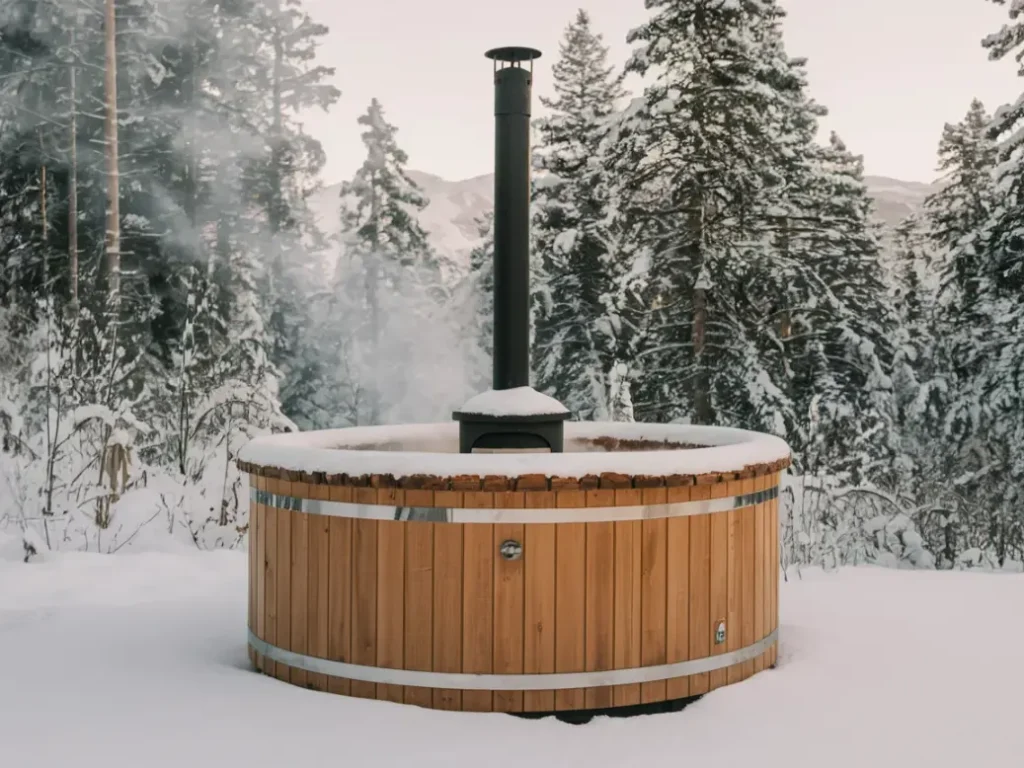
Heat the water with a submersible wood-burning stove or an external firebox. The wood-fired method takes 1.5 to 3 hours to heat the water to 102°F. No electricity needed!
One DIY builder spent around $850 total on materials for a 5-foot diameter cedar tub. Clear cedar lumber (without knots) is important—knots can leak.
IBC Container Spa
An IBC (Intermediate Bulk Container) makes a clever hot tub base. These 1,000-liter tanks come in a metal cage frame that provides structure.
How to build it: Get a clean, food-grade IBC container. Cut an opening at the top large enough to climb in. Keep the metal cage for support.
Cover the outside with nut-and-feder (tongue and groove) boards. This looks much nicer than the bare plastic. Add a pump and heater system, plus a wooden step for entry.
The top edge needs a wide board frame so you can rest your arms comfortably. Sand all edges smooth to avoid splinters.
For more spa inspiration for your outdoor space, explore these outdoor jacuzzi hot tub ideas.
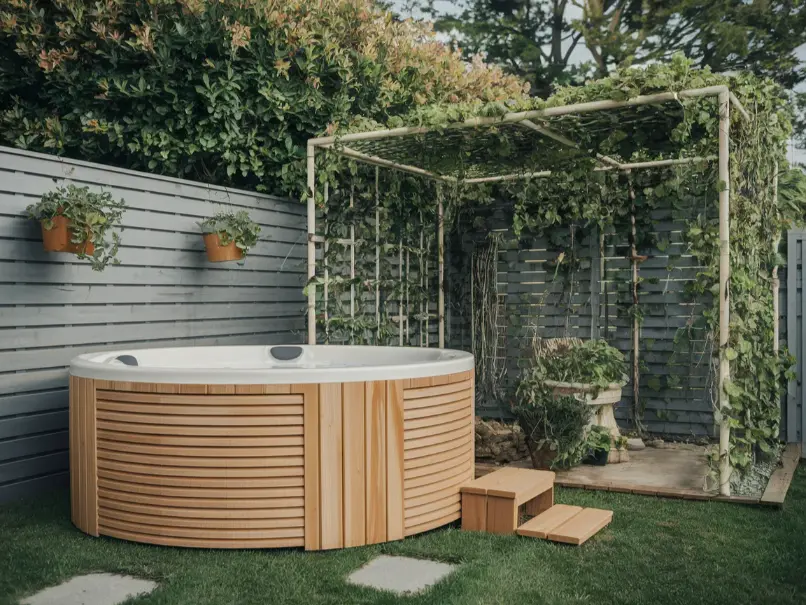
Concrete Block Jacuzzi
A concrete or block jacuzzi is permanent and can be any shape you want. This method takes more skill but gives professional results.
How to build it: Build walls from concrete blocks (breeze blocks) or pour concrete into forms. Line the inside with pool plaster, tiles, or waterproof membrane.
Install proper plumbing for jets, a skimmer, and returns. Add a heating system—usually electric for in-ground designs. This type needs a filter system like a regular pool.
You may not need a building permit for small hot tubs. Most areas allow pools under 50 cubic meters (about 13,200 gallons) without approval. Check your local rules first.
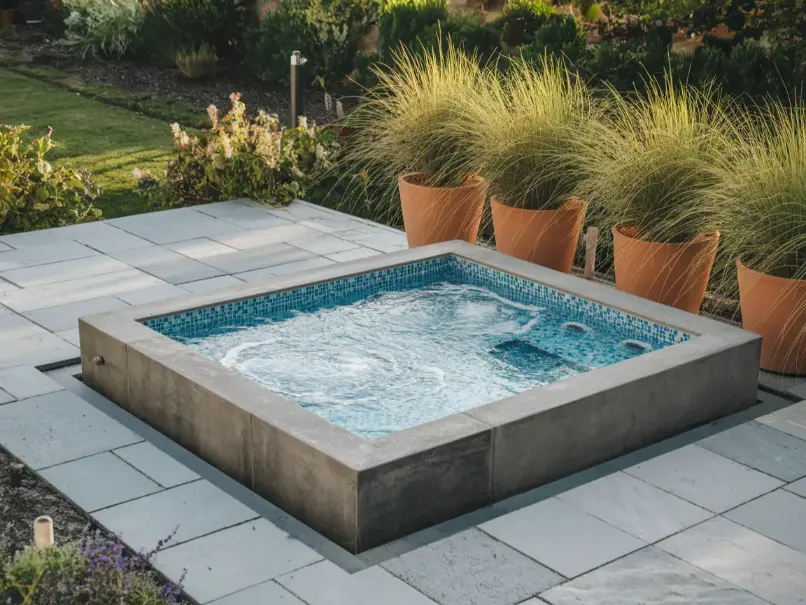
Pond Liner With Wood Frame
A pond liner makes a cheap, flexible tub lining. Build a wood frame around it for support.
How to build it: Create a sturdy rectangle frame from treated lumber. Add vertical posts at corners and along the sides. Line the inside with heavy-duty EPDM pond liner.
The liner conforms to the frame shape and holds water. Use a piece of outdoor carpet under the liner to protect it from the wood. Add benches inside using more framed lumber wrapped in liner.
This method lets you make any size or shape tub. It’s easier than building watertight wood joints from scratch.
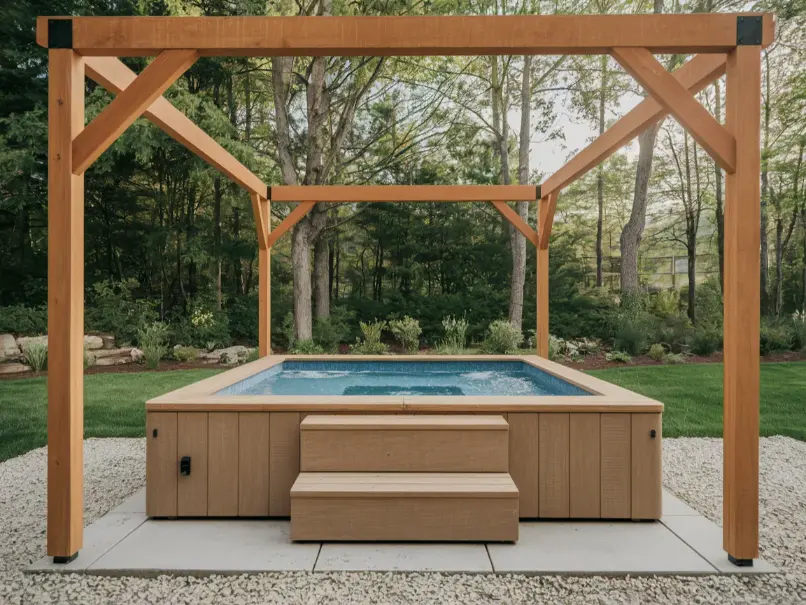
Recycled Bathtub Outdoor Spa
An old clawfoot or soaking bathtub becomes a charming outdoor spa. This upcycled approach has vintage appeal.
How to build it: Find a large cast iron or acrylic bathtub. Clean it well and check for cracks. Set it on a stable base oncrete blocks work great.
Add a small water heater that can maintain temperature. Use a simple submersible pump for circulation. You can also heat it with a copper coil and fire pit system.
Decorate around it with stones, plants, and outdoor lighting. A clawfoot tub in a garden setting looks magical.

Wooden Barrel Tub
Wine barrel-style tubs have old-world charm. You can build one from scratch or convert an actual large barrel.
How to build it: Use vertical staves held together by metal hoops, just like a wine barrel. The wood swells when wet and becomes watertight.
Popular woods include cedar, redwood, and cypress. These naturally resist water damage. Japanese-style ofuro tubs use this same building method.
Add a simple bench inside for seating. Heat with a wood stove or electric element. The round shape is cozy and holds heat well.
If you’re updating other areas of your home, see these home decor wood ideas for coordinated styling.
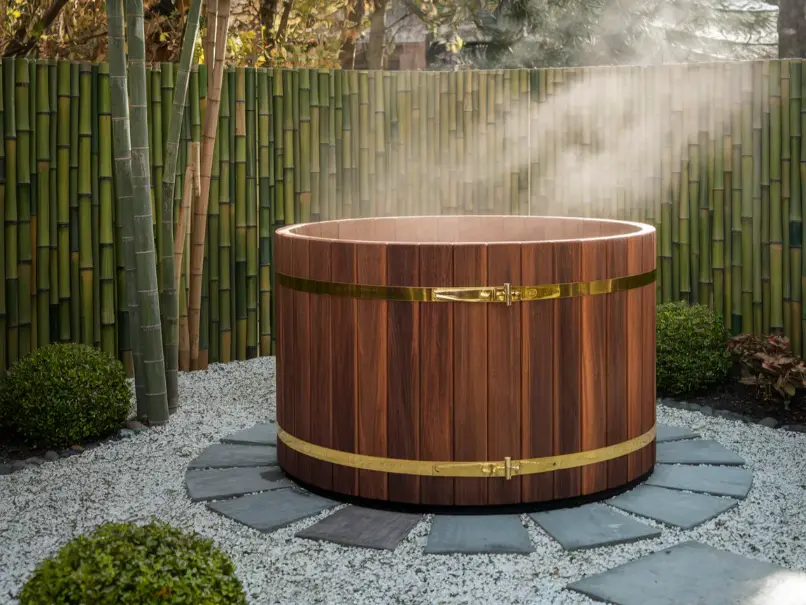
Pallet DIY Hot Tub
Pallets offer free building material for a budget hot tub surround.
How to build it: Use an inner container (stock tank, IBC, or pond liner) for the water-holding part. Build the outer structure and deck from disassembled pallet wood.
Clean the pallet wood well and sand it smooth. Use pallets stamped “HT” (heat treated) rather than chemically treated ones. Build a platform, steps, and surrounding deck.
This method is more about the surround than the actual tub. But it creates a beautiful rustic look for almost no cost.
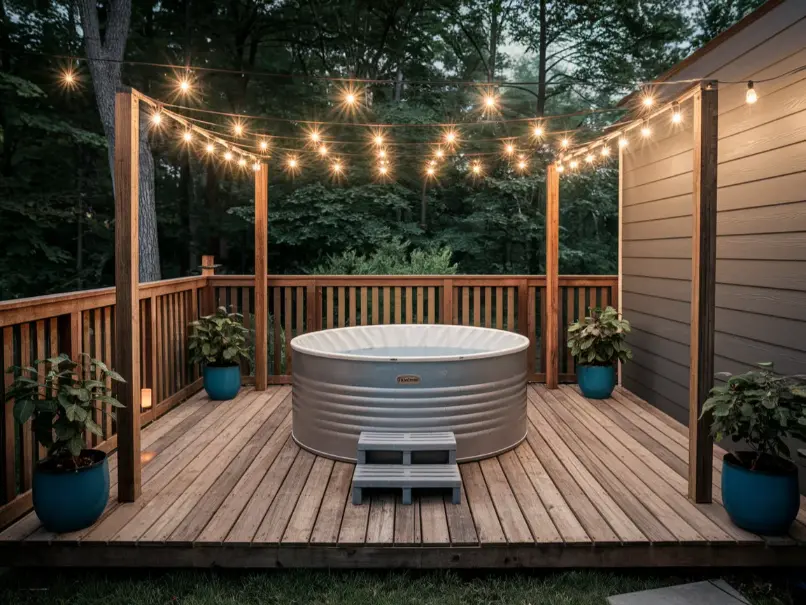
Above-Ground Plunge Pool Combo
A plunge pool with heating makes a great hot tub alternative. It’s bigger than a standard spa but smaller than a full pool.
How to build it: Use a pre-made fiberglass shell or build from concrete blocks. Size it around 8 to 12 feet long and 6 feet wide. Keep the depth at 4 feet or less.
Add a heat pump to warm the water. In summer, use it as a cool plunge pool. In winter, heat it up for hot tub sessions. This dual-use approach gives you more options.
Adding your spa near a home gym creates the perfect recovery station after workouts.
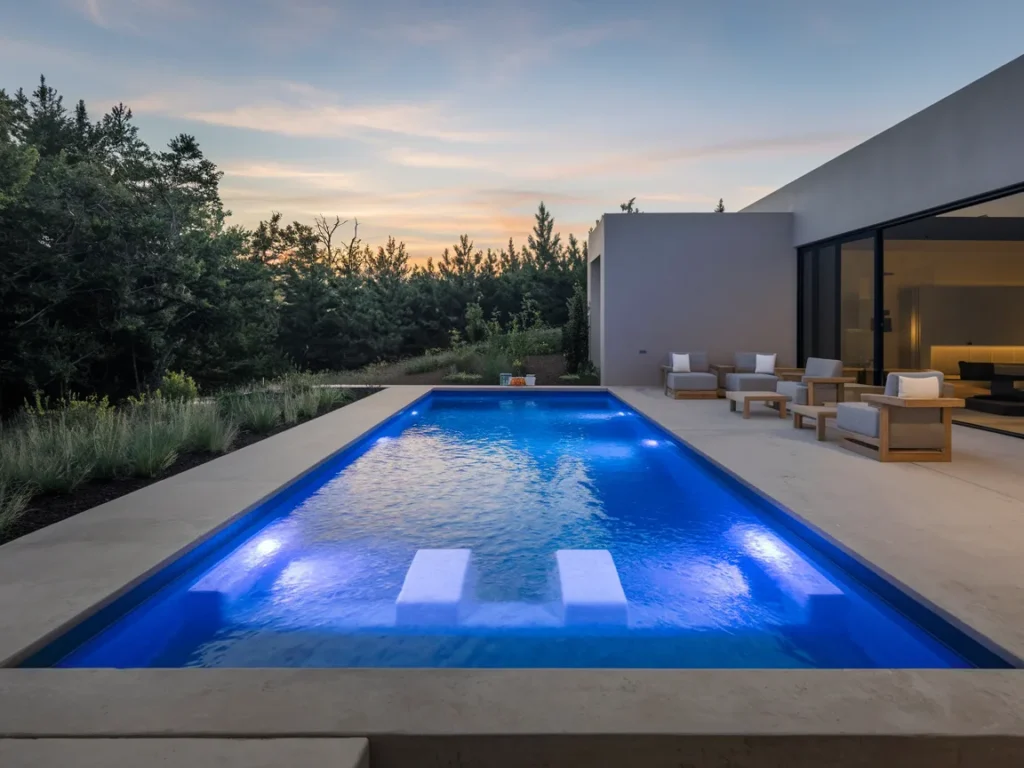
Solar-Heated Hot Tub
Use the sun’s free energy to heat your DIY spa.
How to build it: Start with any DIY tub design. Add a solar heating system using black tubing coiled inside a glazed collector box. Pump water through the sun-warmed coils and back into the tub.
Solar heating works best in sunny climates. It raises water temperature by 10 to 20 degrees on a good day. Combine it with another heating method for cloudy days.
One DIY solar heater uses 150 feet of black irrigation line in a simple plywood box. This setup can keep a 460-gallon tub warm through summer without electricity.
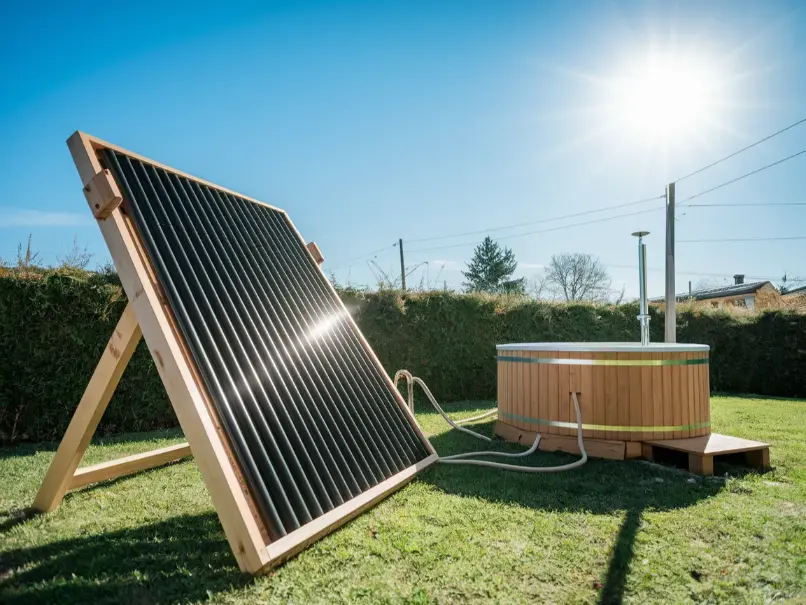
Heating Options for Your DIY Jacuzzi
Electric Heaters
Electric heaters are the most common choice for DIY hot tubs. A “spa pack” includes the heater, pump, and controls in one unit.
Pros: Easy temperature control, thermostat keeps water ready, works with a timer.
Cons: Uses electricity (about $20–$40 per month), needs proper wiring, requires professional electrical work for 220V systems.
Plug-and-play 110V heaters work with regular outlets but heat slowly. Dedicated 220V heaters heat faster and maintain temperature better.
Wood-Burning Heaters
Wood-fired heaters give that rustic off-grid feel. They come as internal stoves that sit in the water or external fireboxes that heat water through coils.
Pros: No electricity needed, uses free or cheap firewood, romantic atmosphere, lower ongoing costs.
Cons: Takes 1 to 3 hours to heat, no thermostat (you control by adding wood), need to tend the fire, smoke can be bothersome.
A submersible wood stove heats water faster because it sits right in the tub. External stoves are safer but less efficient.
Heat Pump Systems
Air source heat pumps are very efficient. They pull heat from the air and transfer it to your water.
Pros: Uses 1/3 the electricity of regular heaters, eco-friendly, works in most weather.
Cons: Higher upfront cost ($500–$2,000), needs electricity, less effective in very cold climates.
One hot tub owner reported 8 times faster heating and 66% lower running costs after switching to a heat pump.
Propane and Gas Heaters
Gas heaters warm water quickly without needing much electricity.
Pros: Fast heating, good for off-grid setups with propane tanks, powerful.
Cons: Fuel costs add up, need gas lines or tanks, requires proper ventilation.
Comparison Table: Heating Methods
| Method | Upfront Cost | Monthly Cost | Heat Time | Best For |
|---|---|---|---|---|
| Electric (110V) | $300–$800 | $30–$50 | 8–12 hours | Beginners |
| Electric (220V) | $500–$1,500 | $20–$40 | 4–6 hours | Regular use |
| Wood-burning | $200–$1,000 | $0–$20 | 1.5–3 hours | Off-grid, rustic |
| Heat pump | $800–$2,500 | $10–$20 | 2–4 hours | Energy savings |
| Propane | $400–$1,200 | $40–$80 | 1–2 hours | Quick heating |
Image Prompt 14: A split comparison image showing different hot tub heating options: wood-burning stove with flames visible, electric control panel with temperature display, and a heat pump unit
Choosing the Right Location
Foundation and Support
A filled hot tub is HEAVY. A 4-person tub holds about 400 gallons of water. That’s over 3,300 pounds, plus the people inside.
Good base options: Poured concrete pad (4 inches thick minimum), compacted gravel (6 inches deep), existing concrete patio, reinforced deck.
Bad choices: Grass, bare soil, weak decks, uneven ground.
Level the ground carefully. Even a small tilt causes problems with water lines and makes the tub uncomfortable.
Access to Utilities
Place your tub within reach of water and electricity. Long extension cords are dangerous and against code. Running new electric lines adds cost.
Consider where you’ll drain the water. You need to do this every 3 to 4 months. A spot that drains toward plants or a drain works best. The water (without chemicals) can even water your lawn.
Privacy and Views
Think about what you’ll see from the tub—and who can see you! Natural privacy options include hedges, tall grasses, bamboo screens, or lattice panels.
Position the tub to face your best garden view or sunset direction. Add patio decor lights to create ambiance after dark.

Water Care and Maintenance
Essential Chemicals
Even DIY hot tubs need proper water treatment. Without it, bacteria grow fast in warm water.
Sanitizer: Use chlorine granules or bromine tablets. These kill bacteria and keep water safe. Chlorine works fast; bromine lasts longer and smells less.
pH adjusters: Test pH weekly and adjust to 7.2–7.8 range. Use pH increaser (sodium carbonate) or pH decreaser (sodium bisulfate) as needed.
Shock treatment: Add once a week to oxidize contaminants. Use after heavy use or if water looks cloudy.
Alkalinity booster: Keeps pH stable. Target 80–120 ppm total alkalinity.
Testing Your Water
Test the water before each use with test strips. They check sanitizer levels, pH, and alkalinity in seconds. Adjust chemicals based on results.
Buy a basic hot tub starter chemical kit. It includes everything you need for the first few months.
Regular Maintenance Schedule
Daily: Check water temperature, remove floating debris.
Weekly: Test and adjust chemicals, wipe waterline, clean filter (quick rinse).
Monthly: Deep clean filter with filter cleaner, check equipment, clean cover.
Every 3–4 months: Drain completely, clean tub surface, refill with fresh water.
Wood-fired tubs without filtration need water changed more often—usually weekly with daily use.
Keeping Water Clear
Cloudy water usually means low sanitizer or high pH. Test and adjust. If that doesn’t help, shock the water.
Always shower before using the tub. Body oils, lotions, and soaps cause most water problems. This simple habit keeps your water cleaner longer.

Safety Tips for DIY Hot Tubs
Electrical Safety
Water and electricity don’t mix. Take electrical work seriously.
Hire a professional for any 220V wiring. This isn’t a DIY job unless you’re a licensed electrician. Improper wiring can cause fires or electrocution.
Use only outdoor-rated, GFCI-protected outlets for hot tub equipment. A GFCI breaker cuts power instantly if there’s a ground fault.
Keep all electrical connections away from splash zones. Never use regular extension cords with hot tub equipment.
Fire Safety for Wood-Burning Tubs
Wood stoves need extra care. Keep firewood away from the hot tub area until needed. Don’t leave fires unattended.
Build a protective barrier around external heaters. Bricks or concrete blocks work well. This protects pets, kids, and bare feet from burns.
Check local fire regulations before building. Some areas restrict outdoor fires or require permits.
General Hot Tub Safety
Keep water temperature at 104°F (40°C) or below. Higher temps can cause heat exhaustion. Pregnant women, young children, and people with heart conditions should consult doctors first.
Never soak alone. Have someone nearby in case of problems. Limit soaking time to 15–20 minutes at a time.
Add grab rails or handles near steps. Wet surfaces get slippery. Non-slip mats on surrounding areas help too.
Keep a cover on the tub when not in use. This prevents accidents with children and pets. It also keeps the water clean and warm.
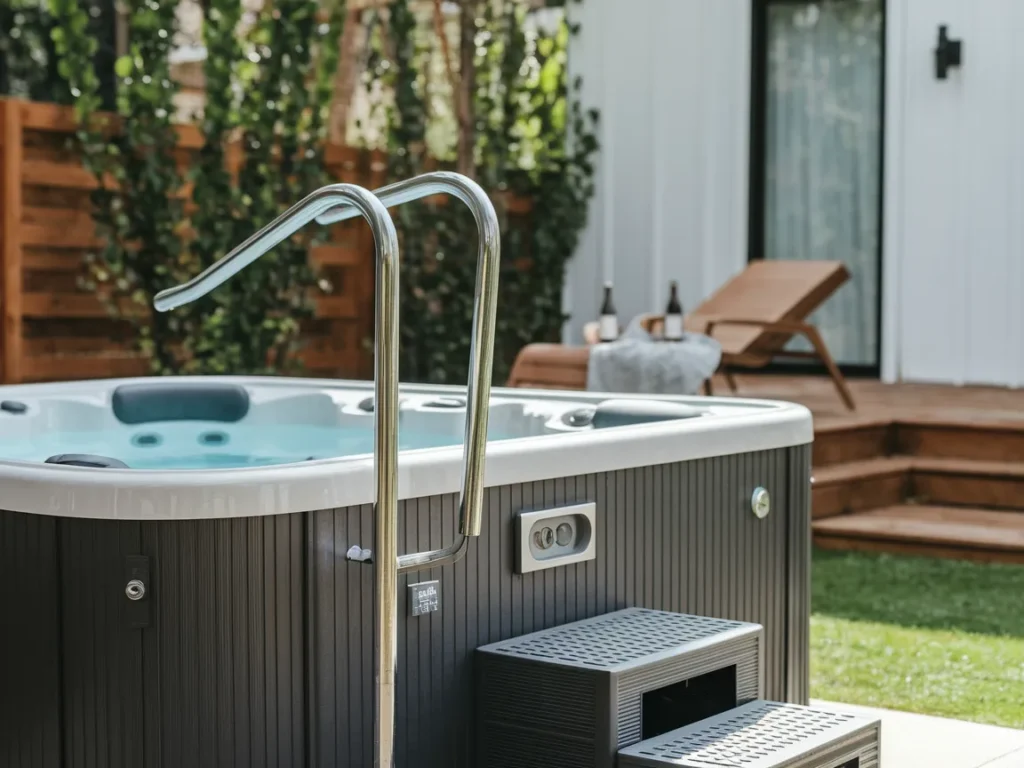
Decorating Your Outdoor Spa Area
Create a Relaxing Atmosphere
Your hot tub area should feel like a retreat. Add elements that engage all the senses.
Lighting: String lights create magical ambiance. Solar path lights guide the way at night. Underwater LED lights make the water glow. Explore more patio decor lights ideas for inspiration.
Plants: Surround your tub with lush greenery. Ferns, ornamental grasses, and bamboo work great near water. Potted plants let you change the arrangement easily.
Sound: A small water fountain adds peaceful sound. Or run speakers for your favorite relaxing music.
Privacy Solutions
Nobody wants to feel on display while soaking. Create cozy privacy without blocking all views.
Natural screens: Tall hedges, bamboo stands, or ornamental grasses grow into living privacy walls. They take time but look beautiful.
Built screens: Lattice panels with climbing vines, wooden privacy fences, or fabric curtains on a pergola frame work instantly.
Pergolas and gazebos: These provide overhead shelter plus privacy. Add curtains for complete enclosure when wanted.
Functional Additions
Make your spa area practical as well as pretty.
Steps and handrails: Safe entry is essential. Build sturdy steps that match your tub style.
Towel storage: A weatherproof cabinet or hooks keep towels dry and ready.
Drink holders: Built-in or attachable cup holders keep beverages within reach.
Seating nearby: Add a bench or chairs where non-soakers can relax and chat.
Your apartment balcony decor ideas can inspire small-space spa decorating too.
Common DIY Mistakes to Avoid
Poor Foundation Prep
Skipping proper base preparation causes serious problems. The tub settles unevenly. Cracks form. Water doesn’t drain right.
Take time to level and compact your base properly. It’s much harder to fix later when the tub is full.
Underestimating Costs
Budget for everything—not just the tub itself. Don’t forget:
- Electrical work and permits
- Plumbing connections
- Heating equipment
- Chemicals and test supplies
- Surround and decking
- Steps and safety features
- Cover for the tub
A realistic budget prevents stalled projects.
Ignoring Local Codes
Most areas have rules about outdoor structures, electrical work, and sometimes even water features. Check before building.
You might need permits for electrical work, fence heights, or structures near property lines. Fines for unpermitted work are expensive.
Skipping Water Treatment
“It’s just my personal tub” doesn’t mean you can skip sanitizing. Warm, still water grows bacteria fast. Legionnaires’ disease and other infections are real risks.
Treat your DIY tub with the same care as any spa. Test regularly. Maintain proper chemical levels. Change water on schedule.
Using Wrong Materials
Not all wood survives outdoor wet conditions. Untreated pine rots quickly. Some pressure-treated woods leach chemicals into water.
Stick to naturally rot-resistant woods: cedar, redwood, cypress, or teak. Or use proper outdoor-rated synthetic materials.
Frequently Asked Questions
How Much Does It Cost to Build a DIY Hot Tub?
DIY hot tubs range from $500 for a simple stock tank setup to $5,000 for a concrete spa with jets. Most projects fall between $1,000 and $2,500 for materials.
Add $500–$1,500 for heating equipment and $100–$200 for initial chemicals and supplies. If you need professional electrical work, budget another $500–$1,500.
How Long Does It Take to Build?
Simple projects like stock tank tubs take a weekend. Cedar tubs need 1–2 weeks of work. Concrete tubs require 2–4 weeks including curing time.
Work in stages if you’re short on time. Build the base one weekend, the structure the next, then finishing touches last.
Do I Need a Permit?
It depends on where you live. Most areas don’t require permits for small, portable hot tubs. But electrical work usually needs permits and inspections.
In-ground or permanently installed tubs may need building permits. Setback rules might affect placement near property lines. Call your local building department to be sure.
How Often Should I Change the Water?
Plan to drain and refill every 3–4 months with proper chemical maintenance. Change it sooner if the water stays cloudy despite treatment.
Wood-fired tubs without filtration need more frequent changes. Some owners change water weekly with heavy use.
Can I Build a Hot Tub on a Deck?
Yes, but the deck must be strong enough. A filled 4-person tub weighs over 3,500 pounds. Most residential decks aren’t built for that load.
Have a structural engineer or experienced contractor check your deck. You may need added support beams or footings. Some people build a new reinforced section just for the tub.
Is a DIY Hot Tub Worth It?
If you enjoy building things and want to save money, absolutely. You’ll get a custom spa for a fraction of store prices.
But be honest about your skills. Plumbing, electrical, and waterproofing require specific knowledge. If these things intimidate you, a quality used hot tub might be better.
Final Thoughts
Building your own outdoor jacuzzi is a rewarding project that saves money and gives you exactly what you want. From simple stock tank conversions to elegant cedar tubs, there’s a DIY method for every skill level.
Start with a clear plan. Choose the right location with a solid base. Pick a heating method that fits your lifestyle whether that’s convenient electric or rustic wood-fired. Don’t skip on water care to keep your spa safe and enjoyable.
Take your time with the build. Quality work now means years of trouble-free soaking later. And remember, even small backyards have room for a hot tub when you get creative with the design.
Your backyard spa is waiting to be built. Gather your materials, clear a weekend, and start creating your own relaxation oasis. There’s nothing quite like stepping into a bubbling hot tub you made with your own hands.
Ready for more backyard inspiration? Check out our guides on romantic bedroom decor ideas to extend that spa-like relaxation feeling into your home, or explore patio decor lights ideas to create the perfect evening ambiance around your new DIY jacuzzi.

