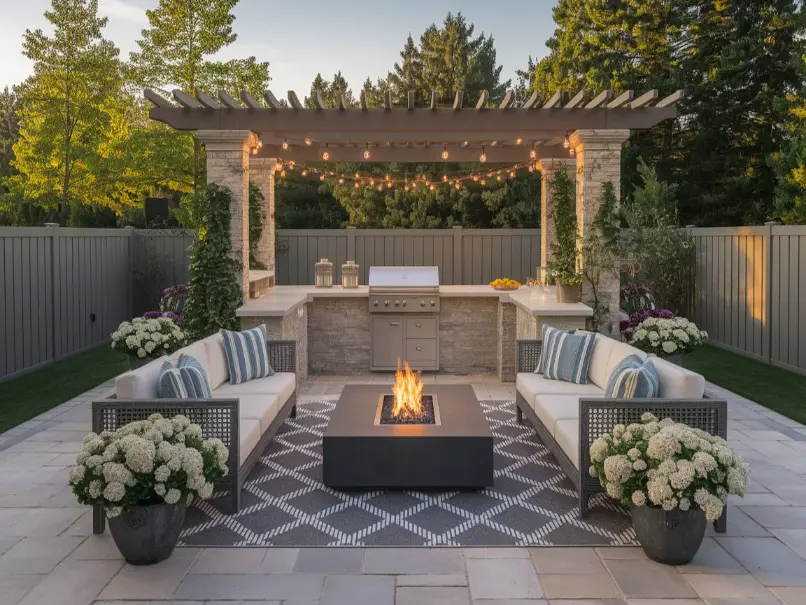

Want to make your backyard the best spot at your house? You’re in the right place!
An outdoor patio is like adding a whole new room to your home. It’s where you can eat dinner under the stars, hang out with friends, or just relax with a good book. The best part? You don’t need a huge budget or years of experience to create something amazing.
In this guide, you’ll find 12 outdoor patio ideas that work for any size space and any budget. We’ll show you how to add fire pits, create cozy corners, pick the right materials, and make your patio feel like home. Whether you have a tiny balcony or a big backyard, these ideas will help you create a space you’ll love spending time in.
Ready to turn that plain outdoor area into your favorite hangout spot? Let’s jump in!
Create a Cozy Fire Pit Centerpiece
Fire pits are the heart of any great patio.
They bring people together. When you add a fire pit to your outdoor space, you create a natural spot where everyone wants to gather. Fire pits serve as the centerpiece of backyard patios, providing warmth, ambiance, and a natural gathering place. The warm glow makes people feel relaxed and happy.
Fire pits come in many shapes and sizes. You can choose a round pit, a square one, or even a long rectangle. Built-in fire pits look really nice and last a long time. You dig them right into the ground and surround them with pavers or stones. If you want something easier, get a portable fire pit. These sit on top of your patio and can move around when you need them.
Choosing the Right Fire Pit Style
Think about how much space you have. Small patios do better with compact fire pits. Big yards can handle larger ones. The fire pit should fit your space without taking over.
Safety matters a lot. Keep your fire pit at least 10 feet away from your house, trees, and anything that can burn. Always have a fire extinguisher or water hose nearby. Never leave a fire burning when you’re not watching it.
Building Your Fire Pit Area
The ground needs to be level and stable. If you’re putting in a permanent fire pit, you’ll need to prepare the area first. Remove grass and dig down a few inches. Add gravel for drainage, then your fire pit base.
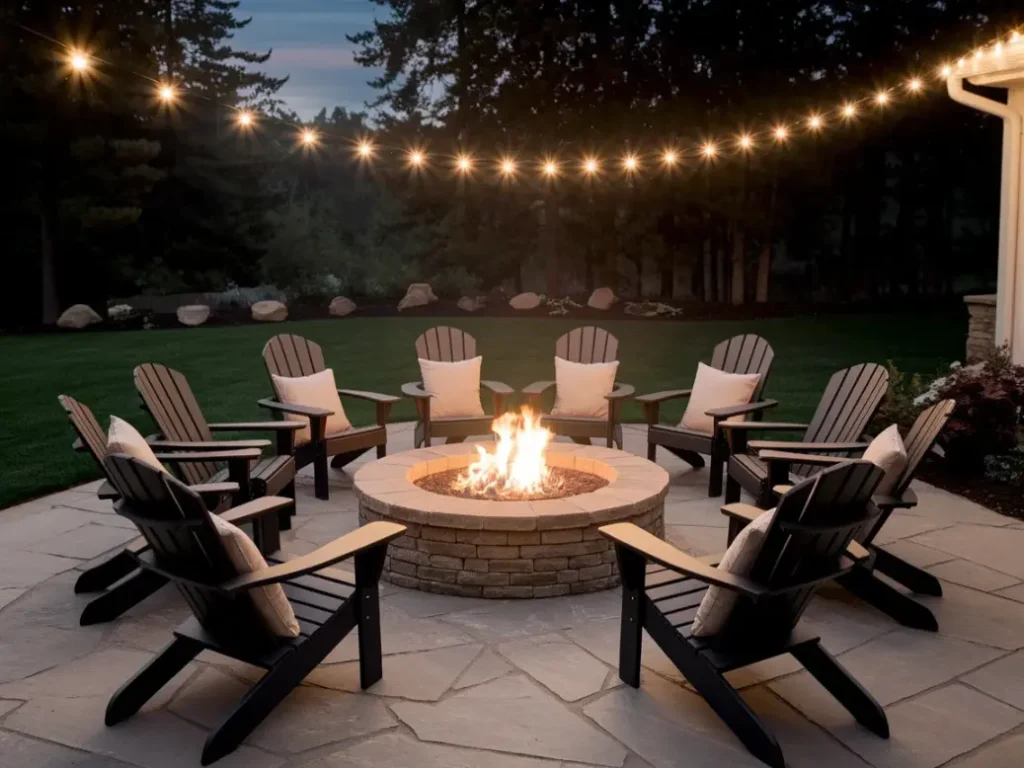
Seating around the fire pit is super important. People love to sit in a circle where they can see everyone’s faces. Add benches, outdoor chairs, or even big cushions on low walls. Make sure there’s enough room for people to walk behind the seats.
According to data from landscape designers, circular and rectangular fire pits work especially well with paver stones and create balanced layouts.
Add Comfortable Outdoor Seating
Good seating changes everything.
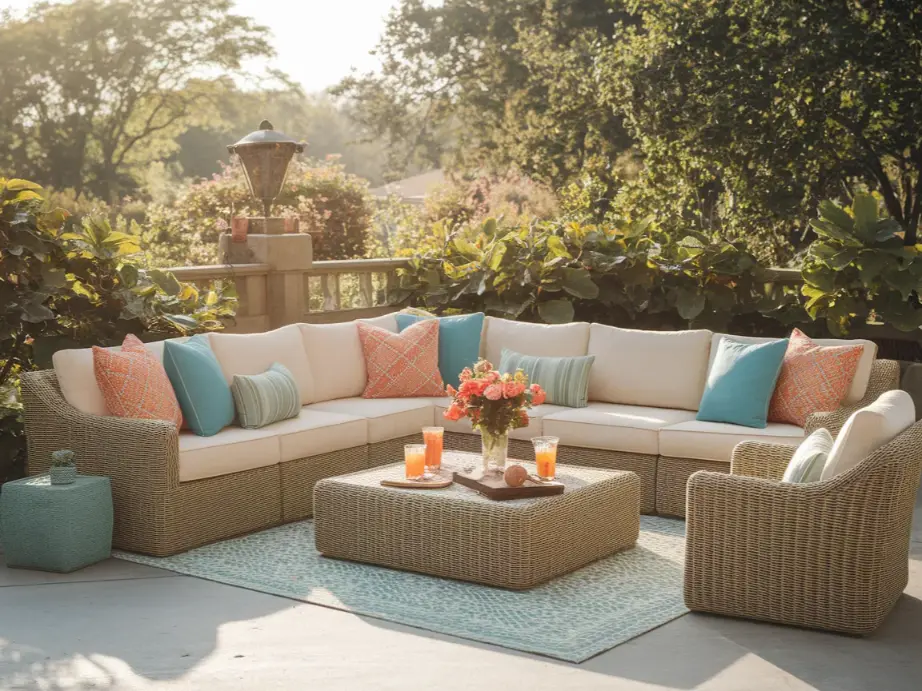
Your patio furniture should be as comfy as your living room couch. Arrange comfortable seating that encourages conversation by mixing sofas, lounge chairs, and even built-in benches. This creates a space where people actually want to sit and stay.
Think about how you’ll use your patio. Do you want to have dinners outside? Then you need a dining table with chairs. Want a place to relax? Go for deep sofas or lounge chairs. Many people create different zones with various seating types.
Picking Weather-Resistant Materials
Outdoor furniture needs to handle rain, sun, and wind. Look for these materials:
- Teak wood stays strong for years
- Wicker or rattan gives a cozy feel
- Metal frames last forever
- All-weather cushions dry fast
Rattan furniture continues to be popular, with searches up 64% from twelve months ago, thanks to its natural texture and durability. It works great for patios and gardens.
Cushions make a big difference. Get ones with outdoor fabric that resists water and fading. You can bring them inside when bad weather comes, but good outdoor cushions can handle some rain.
Creating Cozy Seating Zones
Don’t just line chairs up against a wall. Face seating pieces toward each other so people can talk. Put a coffee table in the middle for drinks and snacks.
Mix different types of seating. Use a sofa on one side and chairs on the other. Throw in some poufs or floor cushions for extra spots. This looks more interesting and works better for different activities.
Matching patio furniture sets look outdated, with designers recommending an eclectic mix of pieces with slightly different styles that stay on theme.
Add side tables next to every seat. People need somewhere to put their drinks, phones, and books. Small tables work great for this.
Install String Lights for Ambiance
Lights make your patio magical.
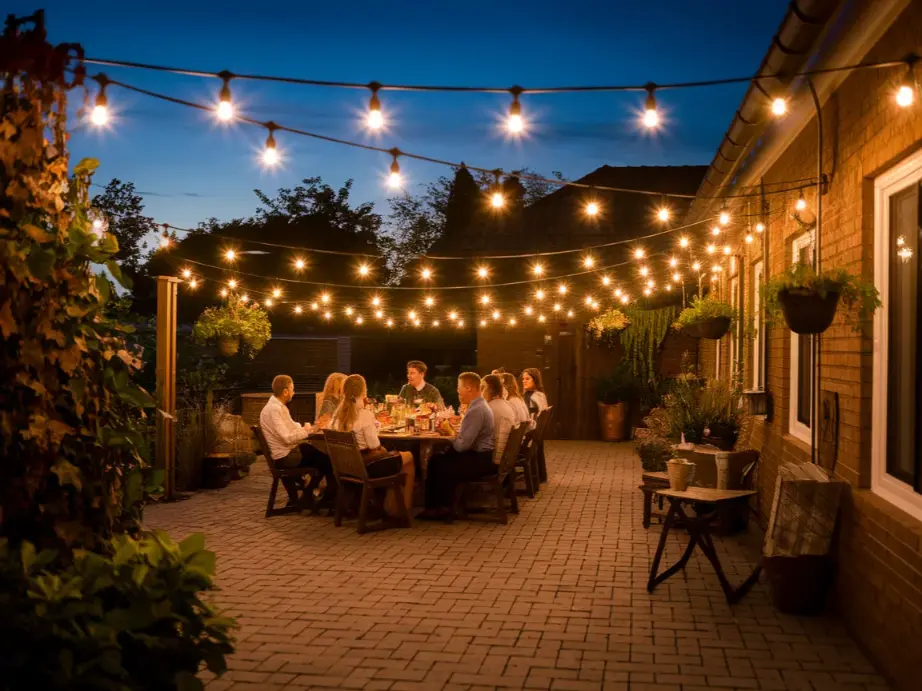
When the sun goes down, good lighting keeps the party going. Layered lighting with string lights, outdoor sconces, lanterns, and lamps adds warmth and depth, making the space feel cozy and inviting. The right lights create a mood that makes everyone feel relaxed and happy.
String lights are the easiest way to add magic to your patio. They’re not expensive, and almost anyone can hang them up. You can drape them across your patio roof, wrap them around posts, or hang them in patterns overhead.
Types of Outdoor Lighting
Start with string lights as your main light source. Edison bulbs give a warm, vintage glow. Globe lights look modern and clean. Fairy lights create a sparkly, romantic feel.
Add other light types too. Solar path lights guide people safely. Lanterns on tables add charm. Wall sconces near your door help people see.
Consider these lighting ideas:
- Hang string lights in a zigzag pattern
- Wrap lights around patio posts or trees
- Use solar-powered lights to save energy
- Add dimmers so you can control brightness
- Mix warm white lights with colored ones
Installing Your Lighting
Plan where your lights will go before you start. Draw a simple sketch. This helps you know how much string lights to buy.
String lights need something to hang from. You can use your house wall, posts, pergola beams, or trees. Make sure mounting points are strong enough to hold the weight.
Most outdoor string lights plug into regular outlets. Run the cord where people won’t trip on it. Use outdoor-rated extension cords if needed. Some new string lights run on batteries or solar power, which makes installation super easy.
Lights shouldn’t be too bright or too dim. You want enough light to see faces and food, but not so much that it feels like daytime. Test different heights and spacings until it looks right.
Build a Pergola for Shade
A pergola adds style and comfort.
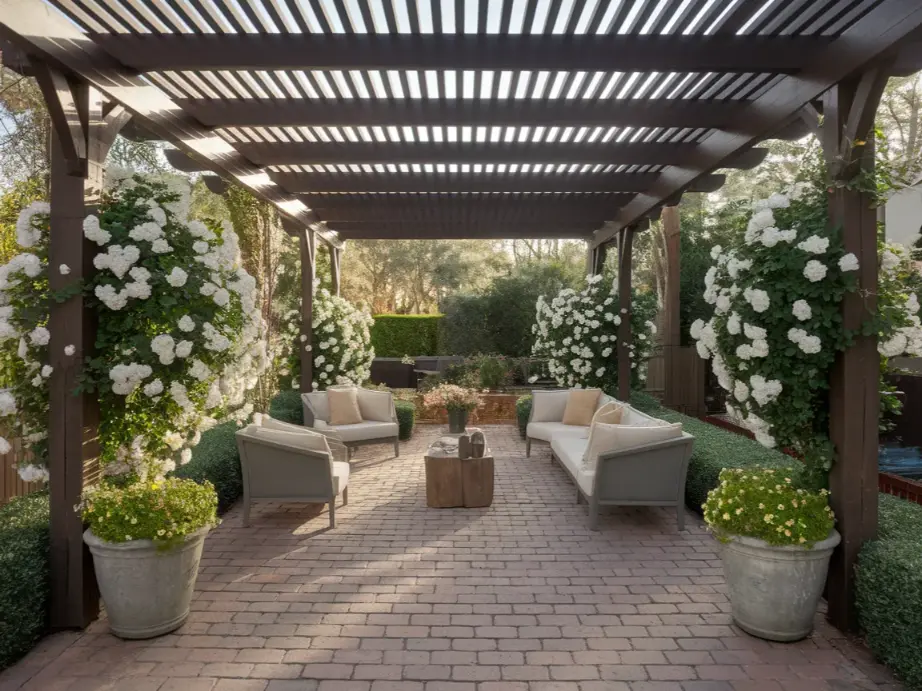
Nothing ruins outdoor fun faster than too much sun. A pergola gives you shade while keeping your patio open and airy. It’s like having a ceiling without walls, and it looks amazing.
Pergolas create a room-like feeling in your outdoor space. Installing a pergola not only protects the patio from the elements but also defines the space and adds structural interest. They mark where your patio “room” begins and ends.
Choosing Your Pergola Style
Pergolas come in different styles. Traditional ones have square posts and straight beams. Modern ones might have curved lines or sleek metal frames. Pick a style that matches your home’s look.
Wood pergolas feel warm and natural. Cedar and redwood resist rot and bugs. They need staining every few years to keep looking good. Metal pergolas last forever with almost no care. Vinyl pergolas never need painting but cost more up front.
Size matters a lot. A small pergola over a seating area creates a cozy nook. A big one can cover your whole patio for more shade and protection.
Adding Extras to Your Pergola
A basic pergola is great, but you can make it even better. Here’s how:
Hang curtains from the sides. They add privacy and block wind. You can tie them back when you want them open.
Grow climbing plants up the posts. Wisteria, jasmine, and grape vines look beautiful and add more shade. They take time to grow, but the result is stunning.
Bioclimatic pergolas with motorized louvers provide shade and shed rain with the touch of a button. These fancy ones let you control how much sun gets through.
Add a retractable shade cloth on top. This gives you more sun protection than the open beams alone. You can pull it back on cloudy days.
Install lights or fans in the pergola. Lights make it usable at night. Fans keep air moving on hot days.
Choose the Right Patio Flooring
Your floor sets the stage for everything else.
The material you pick for your patio changes how it looks, how much it costs, and how long it lasts. There’s no single “best” choice. It depends on your budget, your style, and how much work you want to do.
The cheapest patio material is pea gravel, while the most expensive types are natural stone pavers cut into polished designer shapes. Most patios cost between $5 to $35 per square foot installed, depending on what you pick.
Budget-Friendly Flooring Options
Gravel patios cost the least, around $6 to $16 per square foot. They drain water really well and look casual and relaxed. Pea gravel feels nice underfoot. Regular gravel works too but can be a bit sharp.
Setting up gravel is easy. Clear the area, lay down landscape fabric to stop weeds, add your gravel, and you’re done. The downside? Gravel moves around. You’ll need to rake it back into place sometimes.
Concrete slabs are another smart budget choice at $4 to $16 per square foot. Plain concrete might look boring, but you can make it special. Stamp patterns into wet concrete to look like stone or brick. Add color with stains. These upgrades cost more but still beat expensive materials.
Mid-Range and Premium Materials
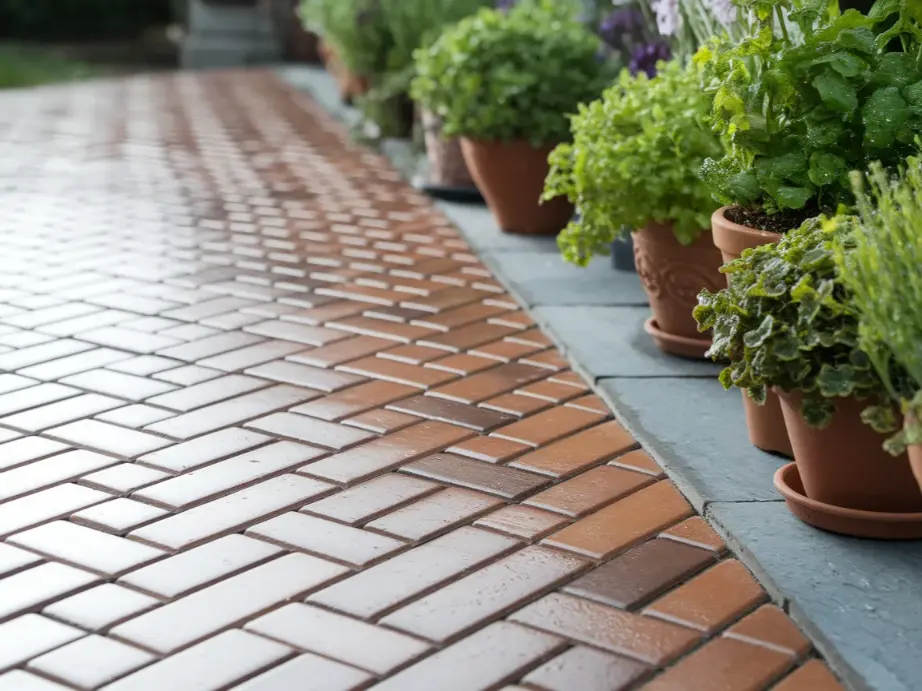
Concrete pavers cost $8 to $25 per square foot. They come in tons of colors, shapes, and sizes. You can create cool patterns with them. If one cracks, you can pop it out and replace just that piece.
Brick pavers run $10 to $25 per square foot. They give a classic, timeless look. Red brick works great for traditional homes. You can also find brick in gray, tan, and other colors.
Natural stone pavers are the fancy option at $16 to $35 per square foot. Flagstone, bluestone, and slate look incredible and last forever. Each stone is different, giving your patio a one-of-a-kind look. They cost more and need skilled installers, but many people think it’s worth it.
According to recent cost data, a 20×20 patio can range from $2,000 for basic gravel to over $14,000 for premium natural stone.
Comparing Your Options
Here’s a quick look at popular materials:
| Material | Cost per sq ft | Lifespan | Maintenance |
|---|---|---|---|
| Gravel | $6-$16 | 8-10 years | Low (rake sometimes) |
| Concrete Slab | $4-$16 | 30-50 years | Low (seal yearly) |
| Concrete Pavers | $8-$25 | 25-50 years | Medium (repoint joints) |
| Brick Pavers | $10-$25 | 25-100 years | Low (sweep, seal) |
| Natural Stone | $16-$35 | 50-100+ years | Low (clean, seal) |
Think about your climate too. Concrete can crack in areas with freeze-thaw cycles. Stone and pavers handle this better. In hot places, light-colored materials stay cooler than dark ones.
Create an Outdoor Kitchen Area
Take your cooking outside!
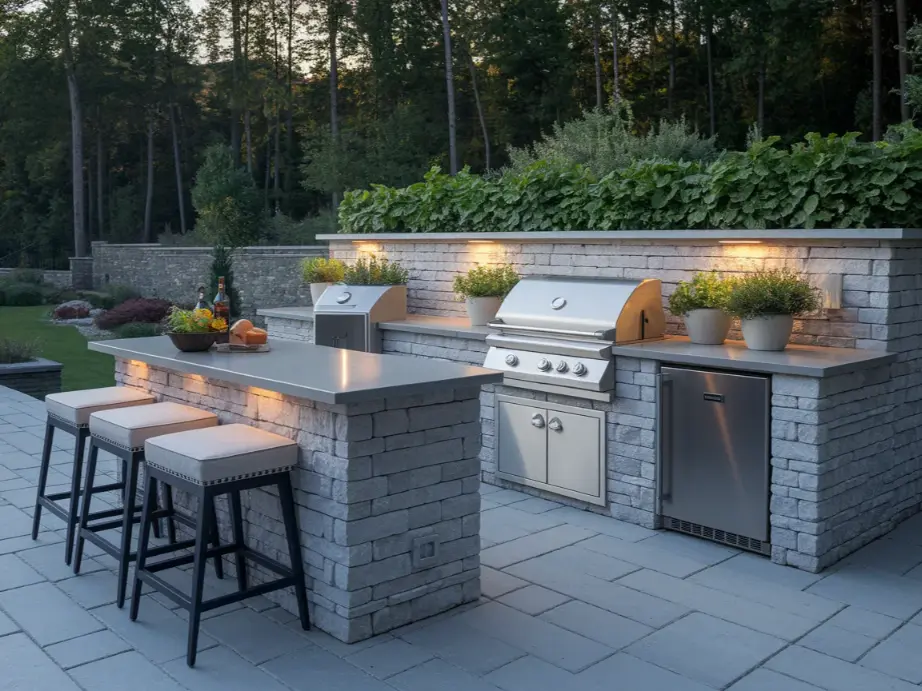
An outdoor kitchen makes your patio way more useful. You don’t have to run inside every time you need something. Everything you need is right there. Pavers provide a stable foundation for grills, prep areas, dining tables, and built-in seating, making them ideal for cooking spaces.
You don’t need a fancy setup. Even a simple grill area with a prep counter makes a big difference. As you add more features, your outdoor kitchen gets more useful and fun.
Starting with the Basics
Begin with a good grill. This is your main cooking tool. Gas grills are easy and convenient. Charcoal grills give food that smoky flavor. Some people have both.
Add a prep counter next to your grill. This gives you space to put food, tools, and plates. A simple counter top on a sturdy base works great. Make it about 36 inches high, the same as indoor counters.
Include a small table or cart for drinks and extra supplies. This keeps everything organized and within reach.
Building Up Your Kitchen
As your budget allows, add these features:
A small refrigerator keeps drinks cold and food fresh. You won’t need to walk inside constantly. Mini fridges work well and don’t cost much to run.
A sink makes cleanup so much easier. You can wash hands, rinse vegetables, and clean dishes right there. You’ll need to run a water line and drainage, which costs more but really pays off.
Storage cabinets keep everything neat. Store plates, cups, grilling tools, and napkins in weather-resistant cabinets. This protects your stuff and keeps the area looking clean.
A pizza oven is super fun if you love pizza. Wood-fired ones give authentic flavor. Electric ones are easier to use. Pizza ovens become conversation starters at parties.
Planning Your Layout
Put your grill away from the house and any low-hanging branches. You need good airflow when cooking. Leave at least 3 feet of space around the grill so you can move safely.
Create a work triangle like indoor kitchens have. Put your grill, prep area, and storage close together. This makes cooking easier and faster.
Add lighting above your cooking area. You need to see what you’re doing, especially at night. Under-cabinet lights work great for counter spaces.
Consider building an outdoor kitchen with an outdoor dining set, which allows you to enjoy dining together while someone cooks.
Add Plants and Greenery
Plants bring your patio to life.
They add color, fresh smells, and a natural feeling. A patio without plants can feel hard and empty. Plants soften edges and make the space feel like a garden room. Plants bridge the transition between indoors and outdoors, making the space feel cohesive.
You don’t need to be a gardening expert. Many plants are super easy to grow and care for. Pick ones that do well in your weather and the amount of sun your patio gets.
Container Gardens for Patios
Pots and planters are perfect for patios. You can move them around until you find the perfect spot. They come in all sizes, from tiny herb pots to huge planters that hold small trees.
Pick pots that match your style. Terra cotta looks classic and natural. Modern ceramic pots come in fun colors. Metal planters work for industrial looks. Make sure all pots have drainage holes so water doesn’t collect and rot roots.
Group pots of different heights together. This looks more interesting than having all the same size. Put tall plants in back, medium ones in middle, short ones in front.
There is more interest than ever in container gardening on decks and patios, with this option popular among both elder and younger gardeners.
Easy Plants for Patios
These plants work great for most patios:
Herbs smell amazing and you can use them in cooking. Basil, rosemary, thyme, and mint grow easily in pots. Keep them near your outdoor kitchen for easy picking.
Flowers add pops of color. Petunias bloom all summer. Geraniums come in many colors. Marigolds are almost impossible to kill. Pick flowers in colors you love.
Small trees or shrubs in large pots create height and shade. Dwarf citrus trees smell wonderful when they bloom. Japanese maples have beautiful leaves. Boxwood stays green all year.
Trailing plants look great in hanging baskets or tall planters. String of pearls, ivy, and sweet potato vine drape beautifully over edges.
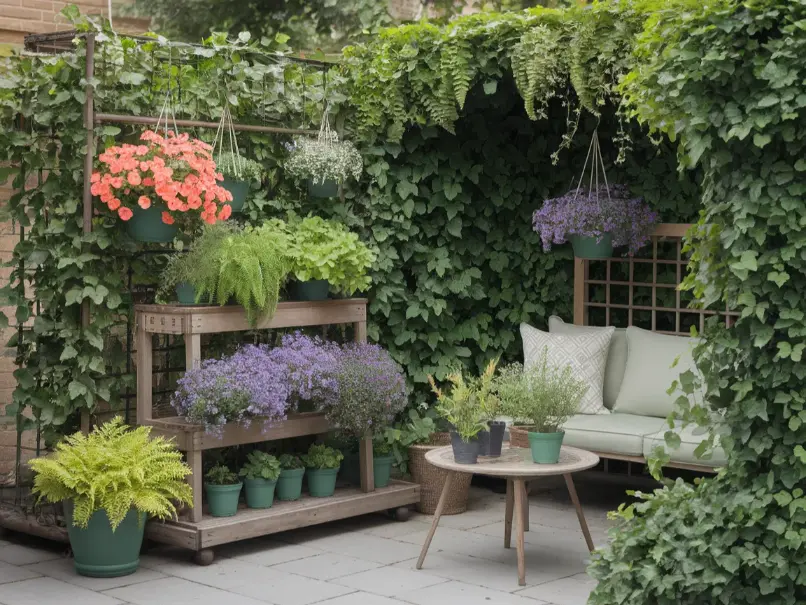
Creating a Vertical Garden
Limited floor space? Go up! Vertical gardens use walls instead of ground.
Hang planters on walls or fences. You can buy ready-made vertical garden systems or make your own. Old pallets work great for this. Mount the pallet to your wall, add small pots in the openings, and plant away.
Living walls create a stunning green backdrop. These need a bit more work to set up but look incredible. Special panels hold soil and plants. A watering system keeps everything alive. They provide natural air purification and temperature moderation.
Climbing plants on trellises add height without taking much space. Morning glories, clematis, and climbing roses all work well. Set up a trellis against your fence or wall and let plants climb up.
Use Outdoor Rugs to Define Spaces
Rugs aren’t just for inside!
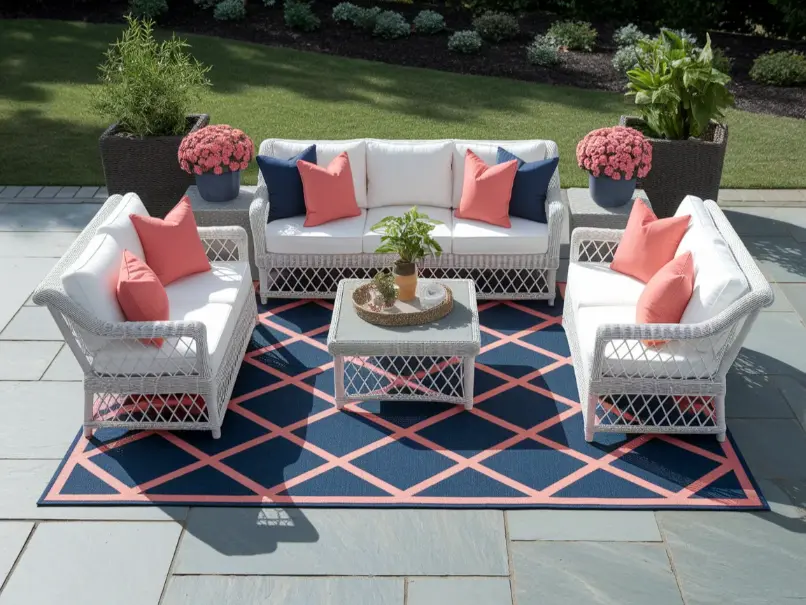
An outdoor rug makes your patio feel like a real room. It creates the feeling of a floor, just like indoor rugs do. Outdoor rugs visually pull a space together and define its boundaries. They show where your seating area or dining zone begins and ends.
Outdoor rugs also add color, pattern, and softness underfoot. They make your patio feel more finished and put-together.
Picking the Right Outdoor Rug
Size matters a lot. For a seating area, the rug should be big enough that all furniture legs sit on it. This looks best and keeps furniture stable. For dining areas, make sure the rug extends at least 24 inches beyond the table on all sides. This gives people room to pull out chairs.
Choose materials made for outdoors. Polypropylene (also called olefin) is perfect. It resists stains, dries fast, and stays bright in sunlight. You can literally hose it off if someone spills. If your patio is roofless in a sunny area, look for UV-resistant treated polypropylene so your rug doesn’t fade.
Other good outdoor materials include polyester and recycled plastic. Natural fiber rugs like jute can work on covered patios but will get damaged by rain.
Style and Pattern Choices
Pick colors and patterns that work with your furniture. Solid colors are safe and easy. Patterns add visual interest and hide stains better than solids.
Striped rugs make spaces feel longer. They work great on narrow patios. Geometric patterns look modern and trendy. Floral or botanical prints bring a garden feel.
Light colors make small spaces feel bigger. Dark colors create a cozy, intimate vibe. Bold patterns make a statement. Neutral rugs let your furniture be the star.
Outdoor rug searches are trending up 10% from twelve months ago, showing growing interest in this patio essential.
Using Multiple Rugs
On large patios with different zones, use multiple rugs. Put one under your seating area and another under your dining table. This clearly shows the different spaces and makes each area feel special.
Make sure the rugs coordinate. They don’t need to match exactly, but they should share colors or a similar style. This ties everything together visually.
Layering rugs is trendy too. Put a smaller, bold rug on top of a larger neutral one. This adds depth and interest.
Add Privacy Screens
Create your own private retreat.
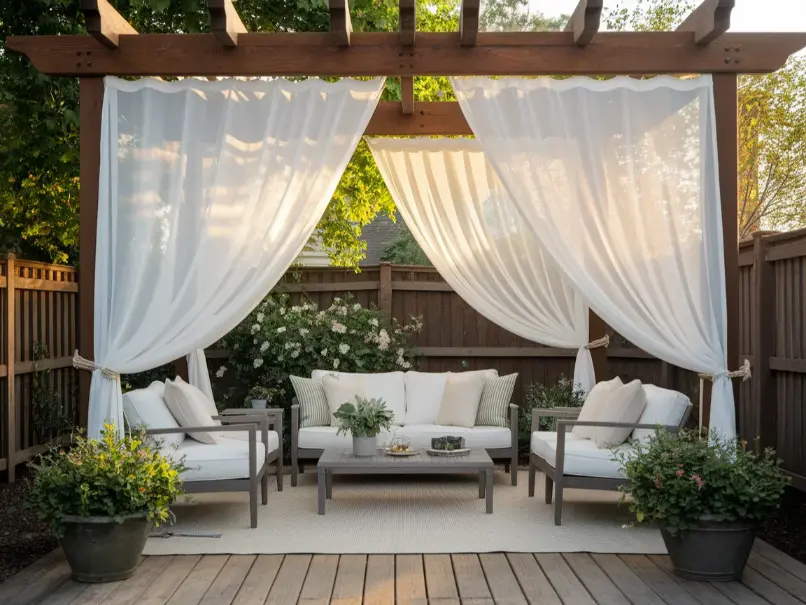
Privacy makes your patio feel more comfortable. You can relax without feeling like neighbors are watching. Privacy screens block views and wind while making your space feel cozier. Using outdoor curtains creates a soft barrier that can be opened or closed as needed.
The right privacy solution depends on your patio setup and what bothers you most. Maybe you just need screening on one side. Or perhaps you want your whole patio to feel enclosed.
Quick Privacy Solutions
Outdoor curtains are the easiest option. Hang them from a pergola, awning, or sturdy rod. Choose outdoor fabric that handles sun and moisture. You can tie them back when you want them open, or close them for privacy and shade.
Bamboo screens attach to fences or railings. They come in panels that install in minutes. Bamboo looks natural and tropical. It’s also cheap and light.
Lattice panels let light through while blocking views. You can paint them to match your house or leave them natural. Plants look great growing up lattice.
Privacy planters combine greenery with screening. Tall planters with bamboo or grasses create a living wall. Move them around as needed since they’re not permanent.
Building Permanent Privacy
Fences give complete privacy if your patio is at ground level. Wood fences are classic. Vinyl fences need no painting. Metal fences look modern. Check local rules about fence height before building.
Living walls or hedges create natural privacy. Plant evergreen shrubs in a row. As they grow, they form a green wall. This takes time but looks beautiful once established. Good privacy plants include arborvitae, boxwood, and holly.
Vertical gardens on walls do double duty. They add privacy and look gorgeous. See our guide on home decor ideas for more inspiration on creating layered outdoor spaces.
Stone or brick walls are permanent and sturdy. They block everything – views, wind, and noise. These cost more to build but last forever. Partial walls work well too. A 4-foot wall gives privacy when sitting without feeling closed in.
Making Privacy Feel Open
Too much privacy can make your patio feel like a box. Balance is key. Use see-through materials like lattice or thin slats. They give privacy without blocking light.
Vary the heights of your privacy elements. A mix of tall and medium screening looks more natural than one solid wall.
Add lights and plants to privacy screens. This makes them feel less like barriers and more like design features.
Install a Water Feature
The sound of water is so relaxing.
Water features add a peaceful feeling to your patio. The gentle sound of bubbling or flowing water covers up noise from traffic or neighbors. It creates a spa-like atmosphere right in your backyard.
You don’t need a huge pond or expensive fountain. Even small water features make a big impact. Water elements provide both visual appeal and therapeutic sound benefits, promoting relaxation and stress reduction.
Simple Water Feature Ideas
A bubbling fountain is the easiest option. These come complete and ready to plug in. Set them on your patio or tuck them into a garden bed nearby. The water bubbles up and flows back down. They’re pretty and peaceful.
Wall fountains attach to fences or walls. Water flows down a decorative panel into a basin. These save floor space since they hang vertical.
Solar-powered fountains need no electrical wiring. They run on sun power. Put them anywhere that gets good sunlight.
Bird baths double as water features. Birds love them, and the splash of birds playing is delightful. Plus, watching birds is entertaining.
Larger Water Features
A small pond creates a mini ecosystem. Fish, plants, and water work together. Ponds need more care than fountains but they’re stunning. Koi ponds are popular and the fish become pets.
Reflecting pools are shallow and still. They mirror the sky and surroundings. They look elegant and modern. These work great in formal patio designs.
Streams or waterfalls need space and planning. If you have a slope on your property, use it! Water can flow downhill naturally. Add rocks and plants along the edges. The sound of water cascading over rocks is magical.
According to landscape architects, water features like bubbling fountains, reflecting basins, or small waterfalls create calming atmospheres that pair well with pavers.
Water Feature Care
All water features need some maintenance. Keep water clean by adding treatments. Scoop out leaves and debris. Empty and clean basins every month or so.
In winter, you might need to bring small fountains inside. Larger ones need draining in freezing climates. Check manufacturer instructions.
Make sure fountains sit level. If they tilt, water can spill out instead of recirculating properly.
Image Prompt: “Small tiered stone fountain with water cascading down three levels, surrounded by smooth river rocks, ferns and hostas nearby, gentle ripples in basin, peaceful sound of flowing water, tranquil patio corner, natural zen atmosphere”
Create Different Activity Zones
One patio can do many things!
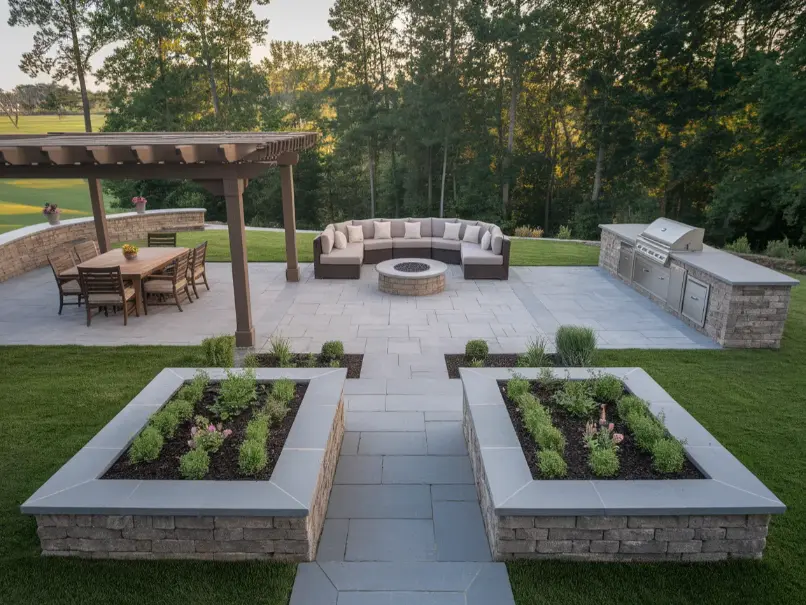
Instead of one big empty space, divide your patio into zones. Each zone serves a different purpose. This makes your patio more useful and interesting. Creating distinct zones for seating, dining, and relaxing helps maximize space efficiently.
Even small patios can have zones. You just need to plan carefully and use space wisely.
The Main Zone Types
A dining zone needs a table and chairs. This is where you eat meals outside. Make it big enough for everyone you usually host. Add an umbrella or pergola overhead for shade during lunch.
A lounging zone is for relaxing. Deep sofas or lounge chairs work here. Add a coffee table and side tables. This is your outdoor living room where you read, chat, or nap. Many homeowners create intimate outdoor gathering spaces where a close group of friends can gather around a fire pit.
A cooking zone includes your grill and outdoor kitchen stuff. Keep this separate from seating so smoke and heat don’t bother people relaxing.
A play zone gives kids a place to have fun. This might just be open space for running around. Or add a small play structure, sandbox, or outdoor games.
For more ideas on maximizing small spaces, check out these small kitchen remodel ideas which use similar zoning principles.
Separating Your Zones
You don’t need walls between zones. Use these tricks instead:
Rugs mark zones. Put one rug under dining furniture, another under lounging furniture. The different rugs show where each zone begins.
Different flooring helps too. Maybe dining is on pavers while lounging is on a wood deck. The change in material naturally divides spaces.
Planters between zones work like soft walls. A row of tall potted plants creates a boundary you can see through.
Changes in level separate areas. A few steps up to a dining area makes it feel special. A sunken fire pit area feels cozy and contained.
Furniture arrangement matters. Face lounging furniture one way and dining another. This shows they’re different spaces.
Making Zones Flow Together
Zones should feel connected, not choppy. Use the same color family throughout. If your dining chairs are blue, add blue cushions in the lounge area.
Create paths between zones. People need to walk from one area to another easily. Leave at least 3 feet for walking paths.
Use some matching elements in each zone. Maybe all your tables are wood, or all your cushions have outdoor fabric. This ties everything together.
Incorporate Smart Heating and Cooling
Enjoy your patio year-round!
Temperature often decides whether you go outside or stay in. Smart heating and cooling lets you use your patio in more weather conditions. This means more time enjoying your outdoor investment.
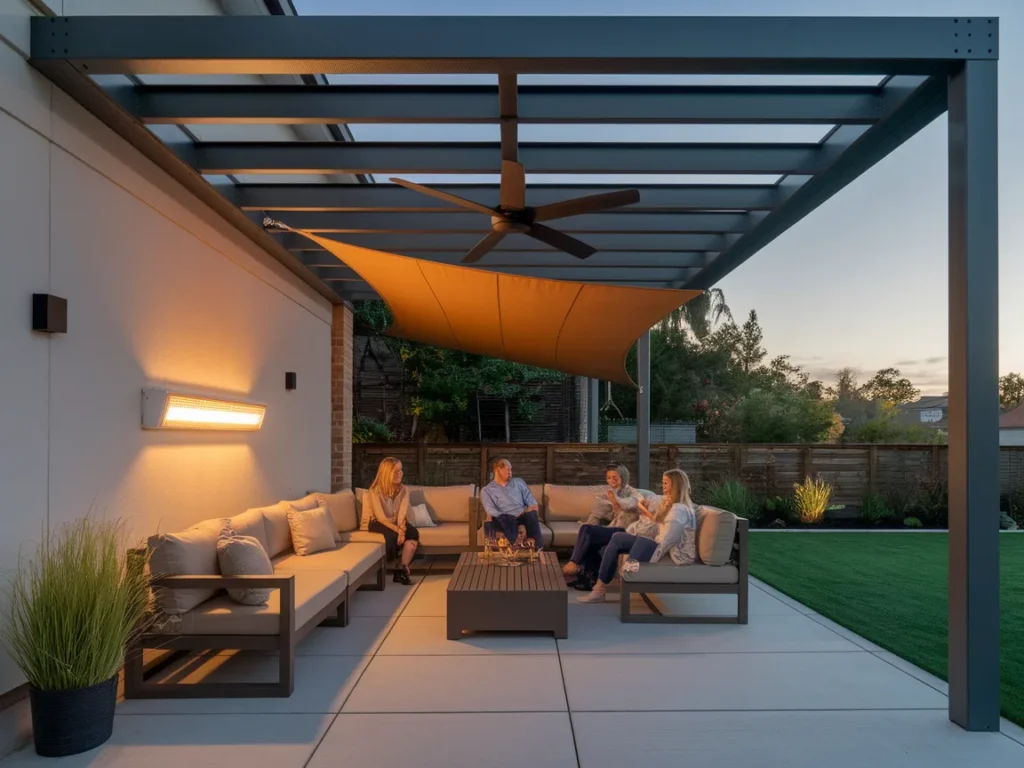
There’s a new kind of utility emerging that lives in plain sight, with integrated heaters slipping easily behind planters or along pergola beams, helping extend patio use beyond summer.
Heating Options for Cool Weather
Patio heaters extend your season into fall and spring. They come in several types:
Propane heaters are portable and powerful. The tall standing ones radiate heat in a circle. They work great for gathering areas. You’ll need to buy and replace propane tanks.
Electric heaters plug into outlets. Wall-mounted ones save floor space. Ceiling-mounted ones hang from pergolas. These cost less to run than propane but need electrical wiring.
Fire pits provide heat and ambiance together. They’re perfect for cool evenings when you want warmth and atmosphere. Make sure to check our outdoor jacuzzi hot tub ideas for more ways to stay warm outdoors.
Heat lamps focus warmth in specific spots. Mount them above seating areas or dining tables. They’re good for targeted heating.
Under-table heaters warm your legs while you dine. These attach under outdoor tables. People love them because you don’t feel cold wind on your legs.
Cooling for Hot Days
Shade is your first defense against heat. Pergolas, umbrellas, awnings, and shade sails all help. We covered pergolas earlier, but here are other options:
Large patio umbrellas create instant shade. Get ones with tilting or cantilever designs so you can adjust them as the sun moves. For inspiration, see these patio decor lights ideas which also help with sun control.
Retractable awnings give flexibility. Extend them when it’s sunny, retract them when it’s cloudy. They protect furniture from sun damage too.
Shade sails look modern and cool. These fabric triangles or squares stretch between poles. They come in many colors. Multiple sails at different heights look really interesting.
Misting systems spray fine water that evaporates and cools the air. They can drop temperature by 20-30 degrees! These work best in dry climates.
Ceiling fans in pergolas keep air moving. Moving air feels cooler even when temperature is the same. Get fans rated for outdoor use.
Smart Control Systems
New outdoor heating and cooling can connect to smart home systems. Control them with your phone or voice commands. Set schedules so heaters turn on before you go outside. Temperature sensors adjust automatically.
This technology costs more up front but adds convenience. You can turn things on from inside the house. If you forget to turn off heaters when you come in, you can do it remotely.
Final Thoughts
Your outdoor patio can become your favorite room.
We’ve covered 12 ideas to transform your patio from a plain slab to an amazing outdoor space. Let’s recap the key points:
Start with a strong foundation by choosing the right flooring material for your budget and style. Add comfortable seating arranged to encourage conversation. Create focal points with fire pits or water features. Don’t forget practical elements like shade, lighting, and privacy screens.
Most importantly, design your patio around how you’ll actually use it. Love cooking? Build that outdoor kitchen. Want quiet reading time? Create a cozy corner with comfy chairs and plants. Entertain often? Make sure you have enough seating and good flow between zones.
You don’t need to do everything at once. Start with one or two ideas that excite you most. Maybe begin with new furniture and string lights. Add a pergola next year. Build the outdoor kitchen the year after. Your patio can evolve over time as your budget and needs change.
Remember that weathering materials like concrete, pavers, and stone can range from $5 to $35 per square foot installed, giving you options at every price point. Focus on quality in areas that matter most to you.
The best patio is one you actually use and enjoy. It should fit your lifestyle, work with your space, and bring you happiness. With these 12 ideas, you have everything you need to create an outdoor space that becomes the heart of your home.
Ready to get started? Pick one idea from this list and take the first step today. Your dream patio is waiting!
Want more home design inspiration? Check out our guides on apartment balcony decor ideas and home decor entrance ideas to make every part of your home beautiful.