

A front yard fence is one of the first things people notice about your home. The right fence frames your property, adds charm, and makes the entire house look more polished. The wrong fence, or no fence at all, can leave your front yard feeling unfinished.
Whether you want a classic white picket look, a sleek modern design with horizontal slats, or a budget-friendly option that still looks great, this guide has you covered. We walk through the best front yard fence ideas for every style and budget. You’ll also learn which materials last longest, how much each option costs, and what actually adds value to your home.
Let’s find the perfect fence for your front yard.
Why a Front Yard Fence Matters More Than You Think
A fence in the front yard does much more than mark where your property starts and ends. It solves real problems and changes how your home looks and feels from the street.
Curb Appeal That Sells
First impressions happen fast. A clean, well-built fence tells anyone passing by that the homeowner cares about their property. According to the National Association of Realtors, landscaping features including fences can add up to 20 percent to a home’s perceived value. That’s a huge boost from something as simple as a fence.
Real estate experts say homeowners can often recoup between 30 and 70 percent of their fence installation cost when they sell. Wood and vinyl fences tend to deliver the strongest return because they balance good looks with long-term durability.
Safety for Kids and Pets
If you have children or dogs, a front yard fence is a game-changer. Even a low fence creates a clear boundary that keeps little ones and pets safely in the yard while playing. For families, a fenced front yard can be the difference between feeling relaxed and constantly worrying. With over 62 percent of American households owning pets, a fenced yard is one of the most sought-after features for home buyers.
Privacy Without Closing Off
Front yard fences don’t need to be tall privacy walls. In fact, most local codes limit front yard fences to 3 to 4 feet in height. That means you can define your space, block some street noise, and add structure to your yard without making it feel closed off. The best front yard fences balance openness with just enough separation.
Classic White Picket Fence
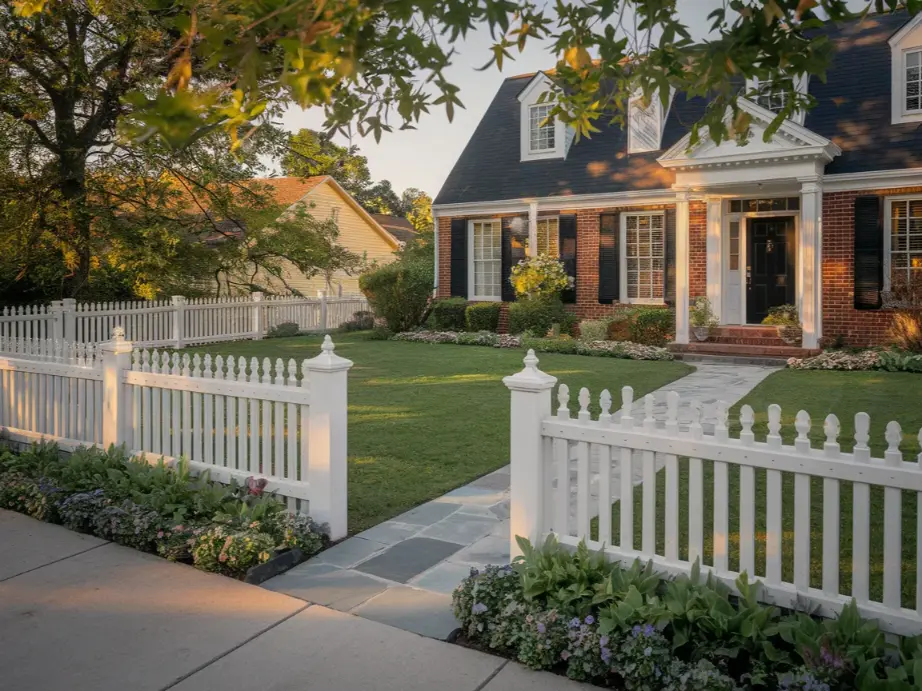
Let’s start with the original. The white picket fence is the most recognizable front yard fence in America, and it’s never gone out of style. There’s a reason it shows up on every “dream home” checklist. It looks warm, inviting, and timeless.
Modern Takes on the Classic
The modern version of the picket fence uses wider boards, cleaner lines, and sometimes a flat top instead of the traditional pointed peak. You can also skip white entirely and paint your pickets soft gray, sage green, navy blue, or even matte black for a fresh twist.
A picket fence typically runs 3 to 4 feet tall. That height keeps the yard feeling open and friendly while still framing the property. This style looks especially beautiful in front of cottage-style homes, Craftsman bungalows, and traditional living spaces.
Cost
A wood picket fence costs about $20 to $50 per linear foot installed. A vinyl picket fence runs $30 to $45 per linear foot and requires almost zero maintenance over its lifetime. For a 100-foot front yard run, you’re looking at roughly $2,000 to $5,000 depending on material and labor.
Horizontal Wood Slat Fence
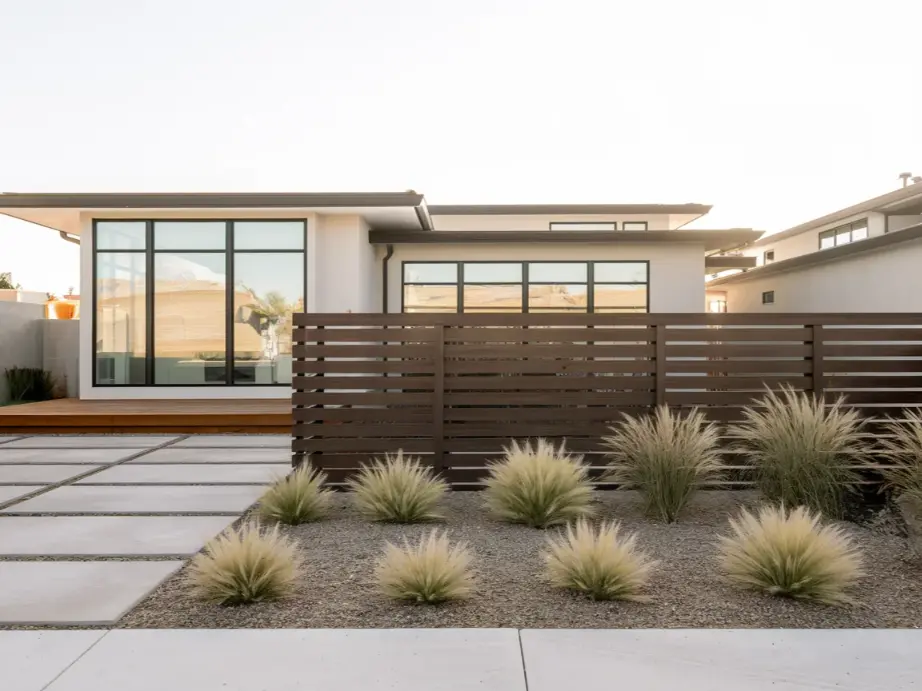
If your home has a modern or mid-century look, horizontal slats are the fence equivalent of a tailored suit. Clean lines run left to right instead of up and down, and the effect is striking. Horizontal fences make a yard look wider and more open, even when they provide real privacy.
Materials That Work Best
Cedar and redwood are the top choices for horizontal slats. Both resist rot and insects naturally, and they age into a gorgeous silver-gray patina if left unstained. For a darker, richer look, apply a semi-transparent stain in walnut, ebony, or natural cedar tones.
Composite boards are another strong option. They look like real wood but are made from recycled materials that won’t warp, crack, or attract bugs. They cost more up front but save money over time because they never need staining or sealing.
Cost
A horizontal wood slat fence costs about $25 to $50 per linear foot installed. Composite versions run $30 to $85 per linear foot depending on the brand and style. This design works beautifully alongside modern entryway ideas and contemporary landscaping.
Hog Wire Fence With Wood Frame
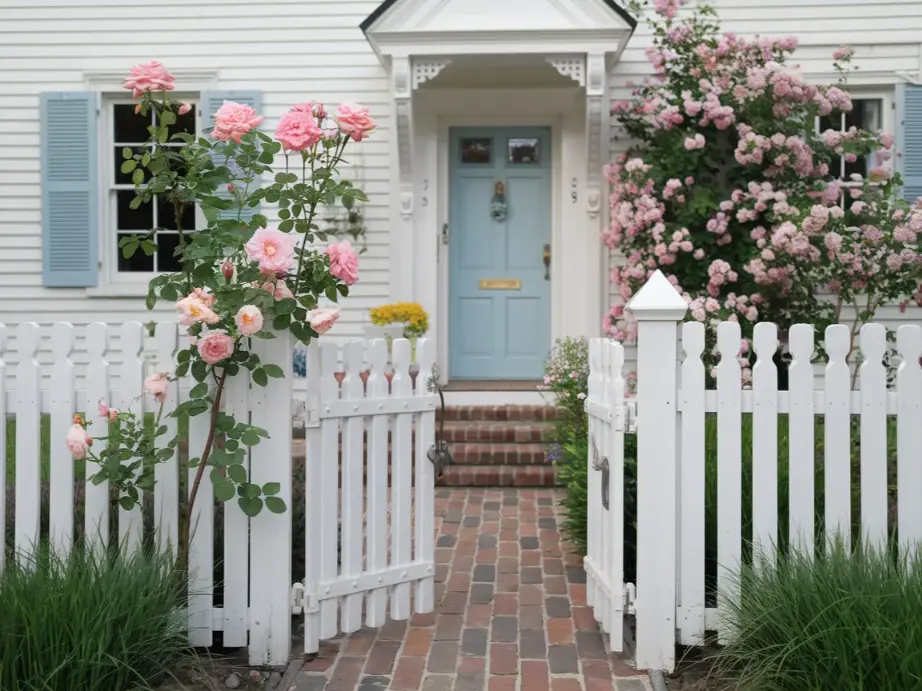
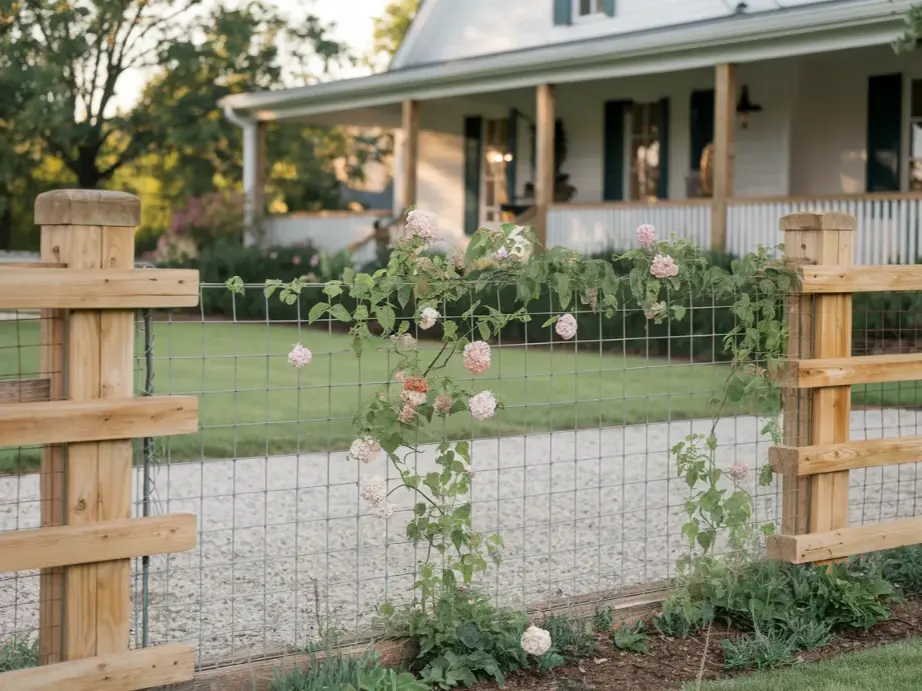
This style has exploded in popularity over the last few years, and for good reason. A hog wire fence uses rigid wire mesh panels framed by wood posts and rails. The wire is nearly invisible from a distance, so you get a clean, open look that lets your garden and landscaping shine through.
Why People Love It
Hog wire fences feel modern and farmhouse at the same time. They work with almost any home style. The wire mesh keeps kids and pets safely inside, while the wooden frame adds warmth and structure. You can leave the wood natural, stain it dark, or paint it white or black to match your house.
This fence style also makes a perfect trellis. Plant climbing roses, jasmine, or clematis at the base, and within a season or two, you’ll have a living wall of flowers weaving through the wire.
Cost
A hog wire fence with a wood frame costs about $15 to $40 per linear foot installed, making it one of the most affordable options that still looks high-end. DIY installation is very doable if you have basic tools and a weekend to spare.
Wrought Iron or Aluminum Fence
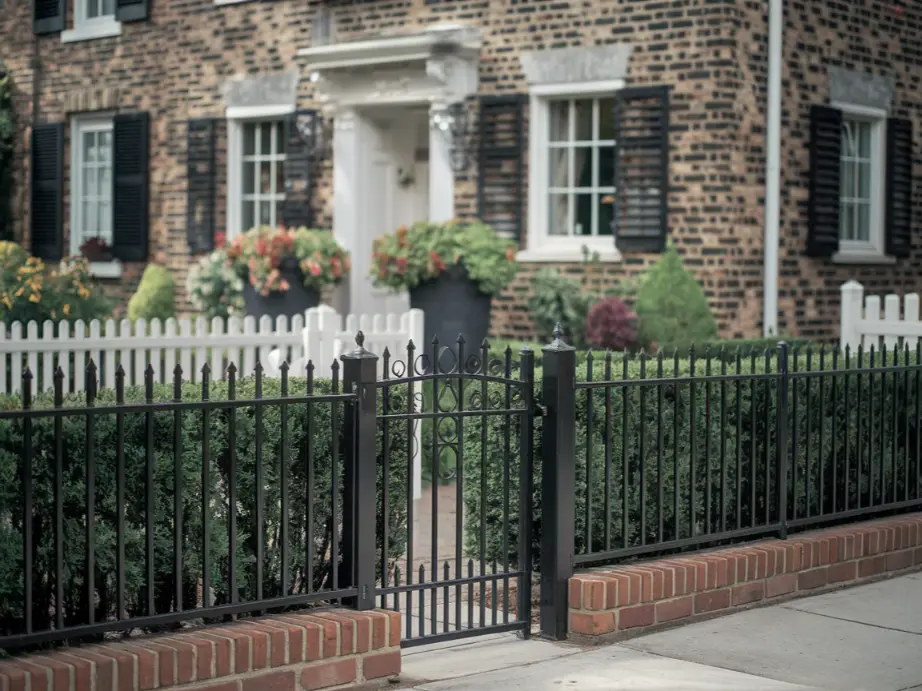
Few fences say “elegant” quite like wrought iron or aluminum. The thin metal bars create an open, airy feel that frames a front yard without blocking the view. This style is a perfect fit for Victorian homes, traditional brick houses, and Southern-style properties.
Iron vs. Aluminum
Real wrought iron is stunning but heavy and needs regular maintenance to prevent rust. Aluminum fencing looks almost identical to iron but weighs much less, costs less, and resists rust without any treatment. Most homeowners today choose aluminum for the look of iron without the upkeep.
You can find aluminum fences in classic black, bronze, and white. Some designs include decorative finials on top for an extra touch of elegance. This fence type also works well around outdoor living areas and pool surrounds.
Cost
An aluminum fence costs $25 to $75 per linear foot installed. Real wrought iron runs $50 to $85 per linear foot. Aluminum lasts 30 or more years with almost no maintenance, making it a solid long-term investment.
Low Stone or Masonry Wall
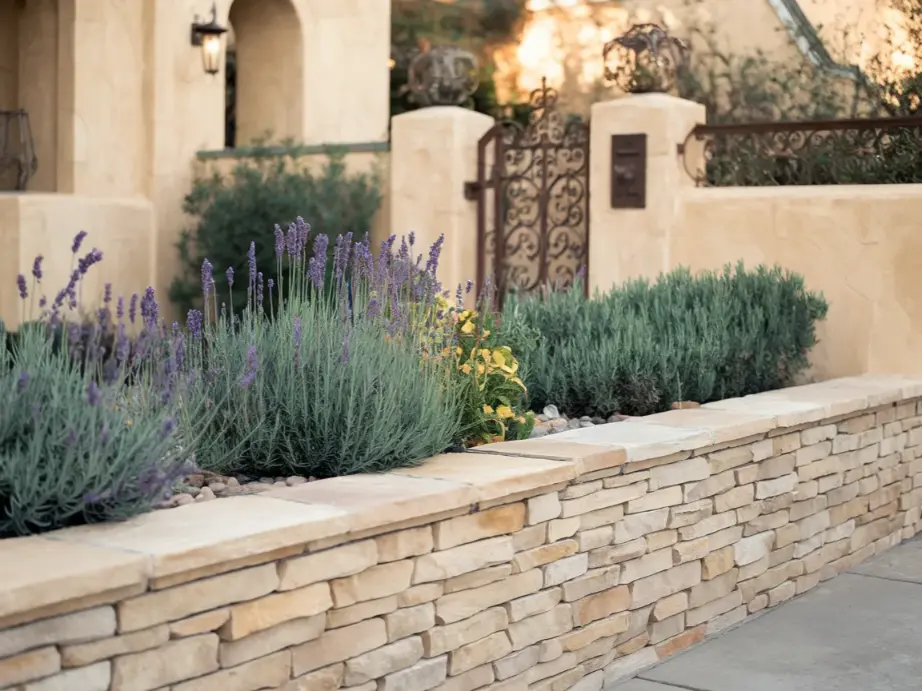
A low stone wall is one of the most permanent and impressive front yard boundary options. It doesn’t feel like a fence at all. It feels like architecture. Stone walls work especially well with Spanish-style homes, Mediterranean designs, and historic properties.
Style Options
You can build a wall with natural stacked stone, cut stone blocks, or stucco over concrete block. Heights usually stay between 2 and 3 feet for front yards. Add a wrought iron or aluminum gate at the walkway entrance for a polished finishing touch. Some homeowners build planter boxes into the top of the wall, creating built-in flower beds that line the entire front yard.
Cost
Stone and masonry walls cost more than most fence types, typically $30 to $75 per linear foot depending on the material and labor. But they last a lifetime. A well-built stone wall may outlast the house itself. For homeowners who want a once-and-done solution with maximum curb appeal, it’s hard to beat stone.
Vinyl Privacy Fence
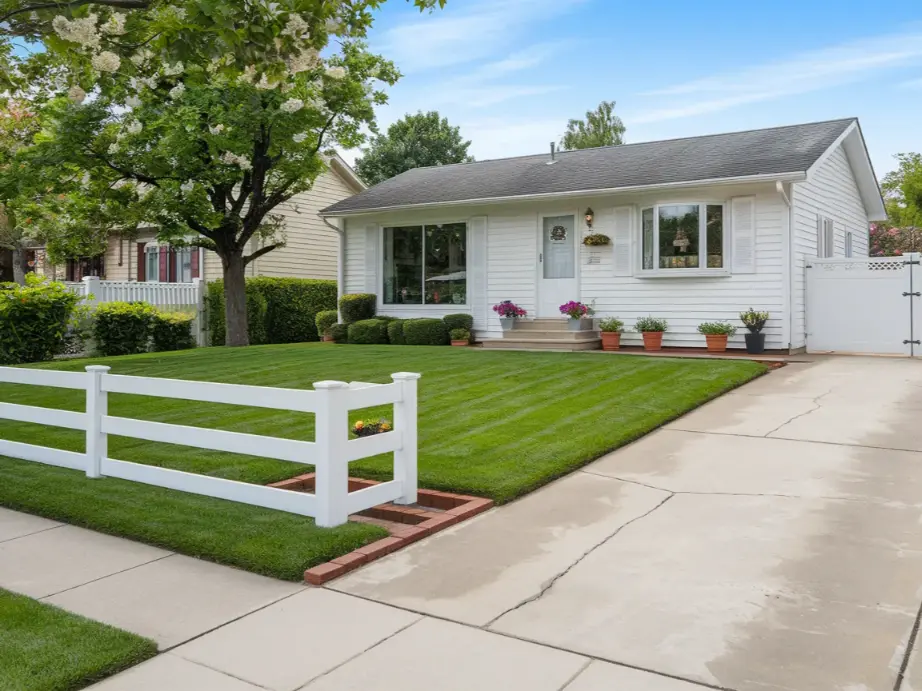
If privacy is your top priority and you hate maintenance, vinyl is your answer. Vinyl fencing looks clean and crisp from day one and stays that way for decades. No painting, no staining, no sealing. Just spray it with a hose once or twice a year and you’re done.
Front Yard Considerations
Most local codes limit front yard fences to 3 to 4 feet, so a full 6-foot privacy fence may not be allowed in the front. Check your local zoning rules before you build. A shorter vinyl fence with a solid panel still provides some screening from street traffic while staying code-compliant.
Vinyl comes in white, tan, gray, and even wood-grain finishes. For a front yard, white and gray are the most popular because they look clean and pair well with most house colors.
Cost
Vinyl fencing costs $30 to $60 per linear foot installed. A vinyl picket fence is the most budget-friendly option at $30 to $45 per linear foot. Privacy panels run higher at $40 to $85 per linear foot, especially for taller or textured styles.
Mixed Material Fence
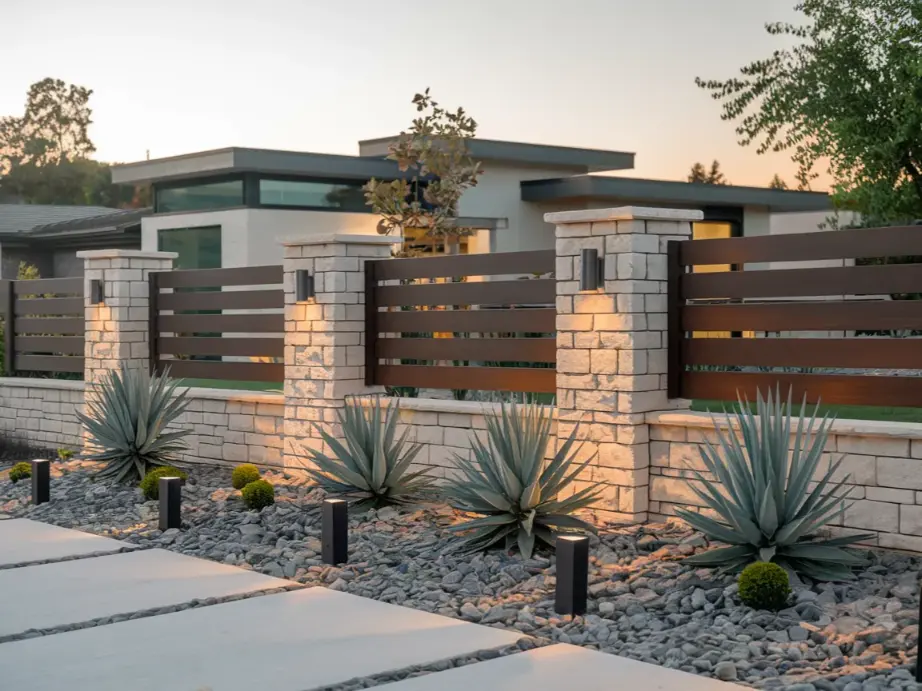
One of the hottest trends in 2026 is mixing two or more materials in a single fence design. Think wood panels between stone pillars. Or metal posts with horizontal composite boards. Or a low brick wall topped with aluminum pickets. These combinations look custom and expensive, even when the actual cost is reasonable.
Popular Combos
Wood and metal is the most common mix. Black steel posts with natural cedar slats create a modern-industrial look. Stone columns with horizontal wood panels feel upscale and architectural. Concrete and corrugated metal give a bold, contemporary edge that works well on modern homes.
Mixing materials also solves practical problems. Stone pillars anchor the fence and resist damage, while wood or metal panels between them keep costs manageable. The contrast between materials adds visual depth that a single-material fence can’t match.
Living Hedge Fence
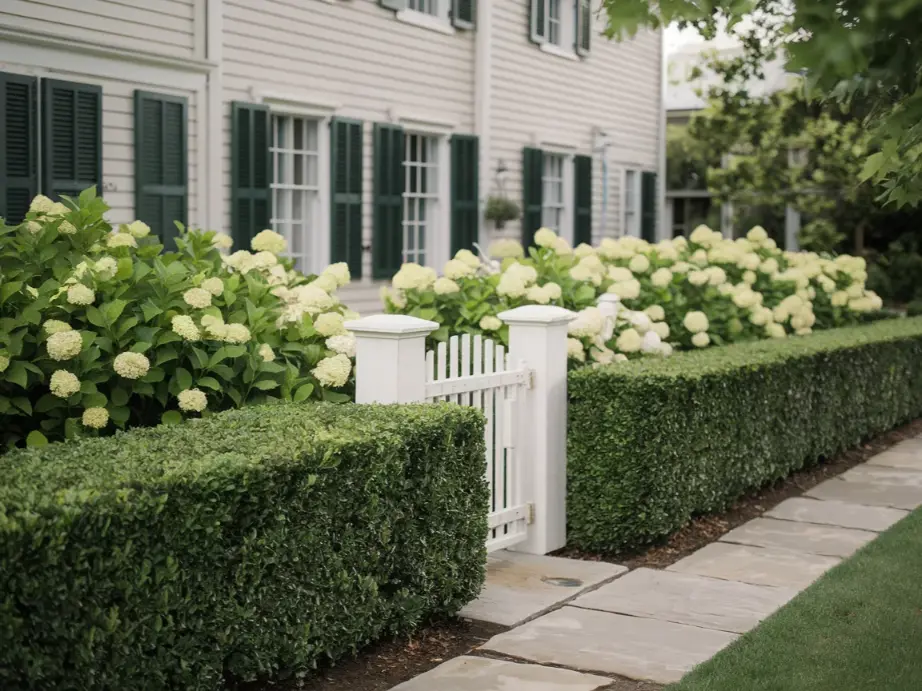
Sometimes the most beautiful fence isn’t a fence at all. A living hedge creates a natural green boundary that gets more beautiful every year. Boxwood, privet, holly, and arborvitae are popular choices for front yard hedges because they stay dense and green year-round.
Pros and Cons
A hedge is the most eco-friendly “fence” option. It produces oxygen, provides habitat for birds, and cools the air around your home. It also softens the look of a property in a way no manufactured material can.
The downside is maintenance. Hedges need regular trimming, usually two to three times per year, to stay neat. They also take time to grow. A newly planted hedge may need two to five years before it fills in enough to serve as a real boundary. For homeowners who enjoy gardening and don’t mind the wait, a living hedge is a stunning choice.
Cost
Hedging plants cost about $20 to $50 per plant, and you’ll need them spaced 2 to 4 feet apart depending on the species. A 100-foot hedge might cost $1,000 to $2,500 in plants alone, plus soil amendments and labor. Over time, it’s one of the most affordable and attractive front yard boundaries you can create. Pair a hedge with spring decor to create a truly inviting seasonal display.
Split Rail Fence
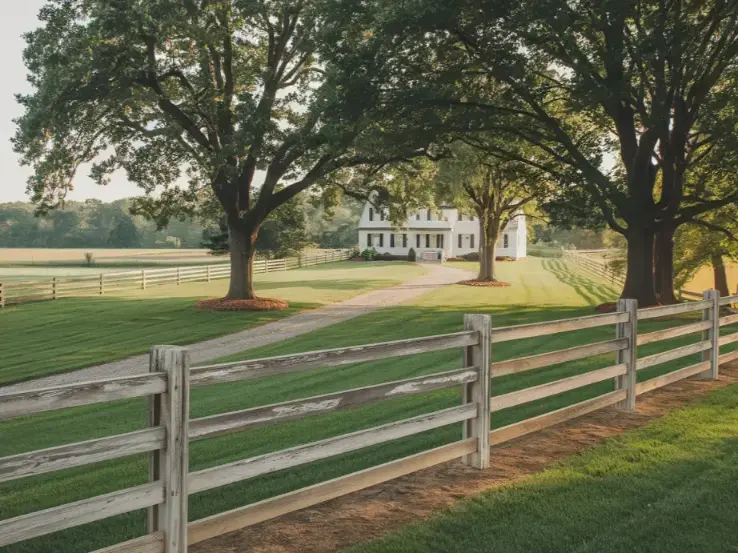
Split rail fencing gives a property a relaxed, rural character that feels open and welcoming. Two or three horizontal rails of rough-hewn wood sit between upright posts, leaving the view mostly unobstructed. This style works best on larger lots, corner properties, and homes with a farmhouse or country aesthetic.
Modern Rustic Twist
You can keep a split rail fence completely natural for a rustic look, or paint it white or dark gray for a cleaner feel. Adding wire mesh behind the rails keeps small pets contained while keeping the open look intact.
Cost
Split rail fences are one of the most affordable options, running about $12 to $35 per linear foot installed. Cedar and pine are the most common woods. For large front yards that need a lot of linear footage, split rail delivers big impact at a fraction of the cost of other styles.
Front Yard Fence Costs: A Quick Comparison
| Fence Type | Cost Per Linear Foot (Installed) | Lifespan | Maintenance Level |
|---|---|---|---|
| Wood picket | $20 – $50 | 15–25 years | Medium (stain/paint every 2–3 years) |
| Vinyl picket | $30 – $45 | 20–30 years | Very low (hose off occasionally) |
| Horizontal wood slat | $25 – $50 | 15–25 years | Medium |
| Composite | $30 – $85 | 25–30+ years | Very low |
| Aluminum | $25 – $75 | 30+ years | Very low |
| Wrought iron | $50 – $85 | 50+ years | Medium (rust prevention) |
| Hog wire with wood | $15 – $40 | 15–20 years | Low to medium |
| Stone/masonry wall | $30 – $75 | 50–100+ years | Very low |
| Split rail | $12 – $35 | 15–20 years | Low |
| Chain link | $10 – $40 | 15–20 years | Very low |
| Living hedge | $10 – $25 per plant | Indefinite | Medium (trimming 2–3x/year) |
This table gives you a side-by-side look at what each fence type costs, how long it lasts, and how much work it takes to keep looking good. Costs vary by region. Labor in high-cost areas can add 15 to 25 percent over national averages.
Things to Check Before You Build
Before you buy a single board or post, take care of a few important steps. Skipping these can cost you money, time, and serious frustration.
Local Zoning and HOA Rules
Most cities and towns limit front yard fence heights to 3 to 4 feet. Some neighborhoods have homeowners association rules that restrict materials, colors, and styles. Call your local building department or check their website before you start planning. A quick phone call now saves a major headache later.
Property Line Survey
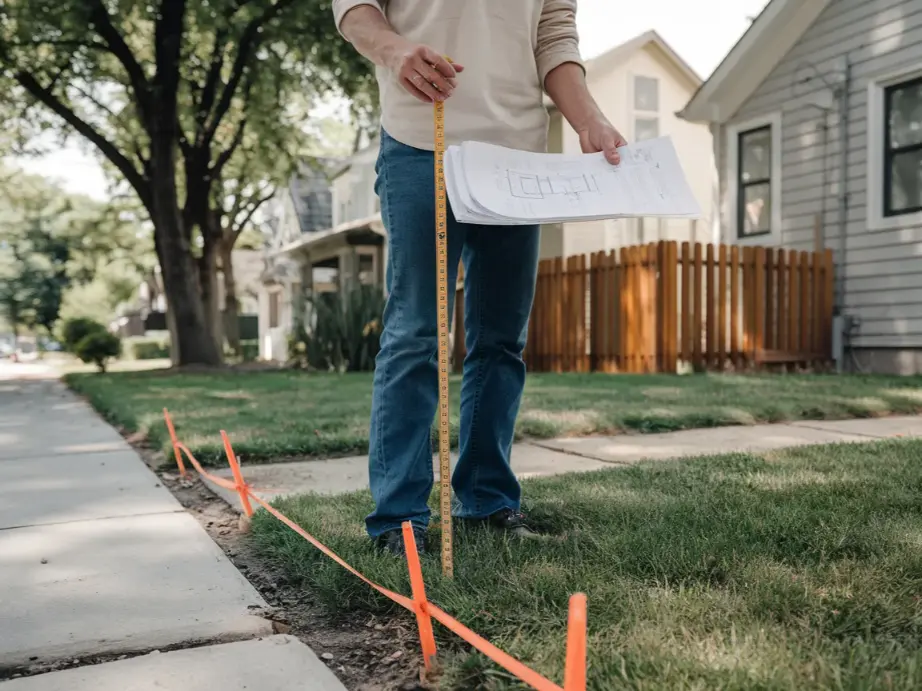
Build your fence on your property, not your neighbor’s. If you don’t know exactly where your property line sits, hire a surveyor or check your original property survey from when you bought the home. Boundary disputes are more common than you’d think, and a fence in the wrong spot can lead to expensive legal issues.
Utility Lines
Before you dig post holes, call 811. This free service sends utility locators to mark underground gas, electric, water, and cable lines. Hitting a utility line is dangerous and costly. This step is free and usually takes just a few business days.
Permits
Many areas require a permit for fence installation. The permit process usually involves submitting your fence plan, paying a small fee, and getting an inspection after the fence is built. Your contractor should handle this, but always confirm.
Budget-Friendly Front Yard Fence Ideas
You don’t need to spend thousands to get a good-looking front yard fence. These options prove that style and savings can go hand in hand.
Pallet Fence
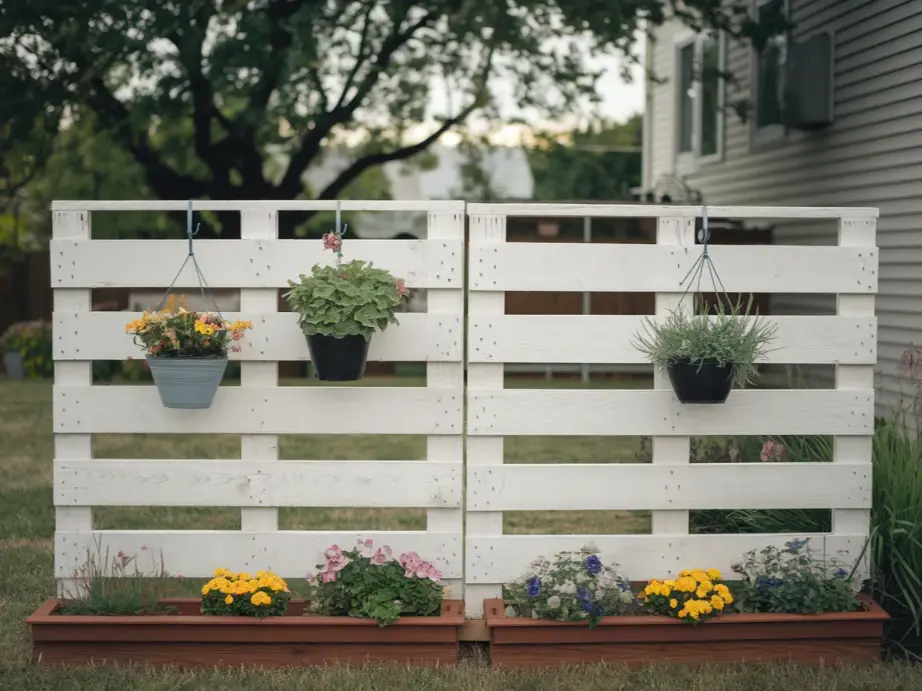
Reclaimed wood pallets can be turned into a charming rustic fence for almost nothing. Sand them down, paint or stain them, and install them between simple posts. A pallet fence costs as little as $2 to $12 per linear foot. It won’t last as long as cedar or vinyl, but for a short-term or decorative boundary, it works beautifully.
Chain Link With Climbing Plants
Plain chain link is the most affordable fence material, starting at $10 to $15 per linear foot installed. On its own, it’s not the most attractive option. But plant climbing vines like jasmine, honeysuckle, or morning glory along the base, and within a year, you’ll have a lush green wall that completely hides the metal.
Bamboo Screen Fence
Bamboo fencing rolls are surprisingly affordable and install quickly. Attach them to existing posts or a simple wood frame for an instant tropical or zen-garden feel. Bamboo screens cost about $5 to $15 per linear foot for materials. They work well for homeowners who want a natural, organic look without the price of hardwood.
Frequently Asked Questions
How Tall Can a Front Yard Fence Be?
Most local zoning codes limit front yard fences to 3 to 4 feet in height. This keeps the street view open and the neighborhood feeling friendly. Backyard fences can usually be taller, up to 6 or 8 feet. Always check your local regulations and HOA rules before building. Some areas allow taller front fences if they use visually open materials like pickets or aluminum bars.
Does a Fence Add Value to a Home?
Yes, in most cases. Real estate experts say a quality fence can help homeowners recoup 30 to 70 percent of the installation cost at resale. The return is strongest in neighborhoods where fenced yards are common, and for buyers with kids or pets. A well-maintained fence also improves curb appeal, which helps a home sell faster and attract stronger offers.
What Is the Cheapest Front Yard Fence?
Chain link is the most affordable fence material, starting at about $10 per linear foot installed. For a more attractive budget option, a hog wire fence with a wood frame costs $15 to $40 per linear foot and looks much more polished. Split rail fences are also affordable at $12 to $35 per linear foot and bring a warm, rustic charm.
What Fence Style Looks Best in a Front Yard?
It depends on your home’s architecture. Cottage and traditional homes look great with white picket fences. Modern and mid-century homes pair well with horizontal slats or mixed-material designs. Victorian and historic homes shine with wrought iron or aluminum. The key is matching the fence style to the house so everything feels like one connected design.
Do I Need a Permit to Build a Front Yard Fence?
In most areas, yes. Permit requirements vary by city and county, but most jurisdictions require a permit for any new fence construction. The process usually involves submitting a plan and paying a small fee. Some areas also require an inspection after the fence is installed. Your contractor should know the local requirements, but it’s always smart to verify yourself.
What Is the Most Low-Maintenance Fence?
Vinyl and aluminum fences require the least maintenance. Vinyl never needs painting or staining and cleans up with a garden hose. Aluminum resists rust and keeps its finish for decades. Both materials outlast wood by ten or more years and save significant time and money on upkeep over their lifetime.
Final Thoughts
Your front yard fence is the handshake your home gives to the world. It’s the first thing guests see, the frame around your garden, and the quiet signal that says this property is cared for.
The good news is that there’s a front yard fence idea for every home, every style, and every budget. A simple white picket fence can make a cottage feel like it belongs on a postcard. A sleek horizontal slat design can make a modern home look like it was pulled from an architecture magazine. And a low hog wire fence with climbing roses can turn even the plainest yard into something neighbors stop to admire.
Pick a style that fits your home. Choose a material that fits your life. And build something that makes you smile every time you pull into the driveway.
That’s what the right fence does.

