

Yes, cucumbers grow better on a trellis. When you lift those vines off the ground, you can boost your harvest by up to 50 percent. You also cut fungal disease risk and get straighter, cleaner fruit. The best part? You do not need to spend a fortune or be a carpenter to build one.
This article walks you through 13 trellis for cucumbers ideas that fit every garden size, skill level, and budget. Whether you have a tiny balcony garden or a full backyard plot, there is a trellis style here that will work for you. You will also learn why trellising matters, how to train your vines, and what materials hold up best season after season.
Let’s dig in.
Why Your Cucumbers Need A Trellis
Before we get to the fun ideas, let’s talk about why a trellis makes such a big difference. If you have ever let cucumber vines sprawl across the ground, you know the mess. The vines take over everything. They grab nearby plants. Fruit hides under leaves and gets too big and bitter before you find it.
More Sunlight Means More Cucumbers
When cucumber leaves grow up instead of out, every leaf gets better access to sunlight. That means the plant makes more energy. More energy means more flowers. More flowers mean more cucumbers on your plate. According to Penn State Extension, trellising improves both yield and fruit quality for multiple cucumber types.
Less Disease And Fewer Pests
Wet leaves sitting on damp soil are a recipe for powdery mildew and other fungal problems. A trellis lifts the leaves up where air moves freely. Leaves dry faster after rain. And when pests like cucumber beetles show up, you can spot them right away instead of digging through a jungle of ground vines.
Cleaner And Straighter Fruit
Ground-grown cucumbers often have white or yellow spots on the side that rests on dirt. They also tend to curl into weird shapes. Trellised cucumbers hang freely, so they grow straight and keep an even color all around. That means better-looking fruit for salads, pickling, or sharing with neighbors.
You Save A Ton Of Space
A single cucumber plant can sprawl 6 to 8 feet across the ground. On a trellis, that same plant grows up instead of out. You free up square footage for other crops like herbs, lettuce, or flowers. This matters a lot if you are working with a small kitchen garden or limited outdoor space.
Bush Vs. Vining Cucumbers: Pick The Right Type
Here is something important before you build any trellis. Not all cucumbers climb. There are two types of cucumber plants: bush and vining.
Bush Cucumbers
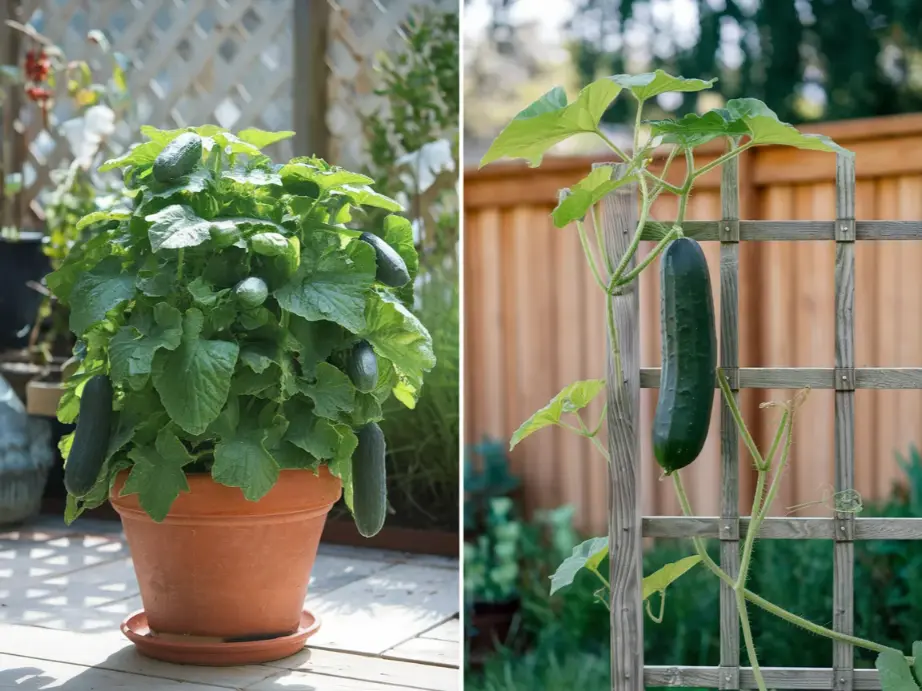
Bush varieties stay compact. They only grow about 2 to 3 feet long. They do not need a trellis and work great in containers or small beds. Popular bush types include Spacemaster and Bush Champion.
Vining Cucumbers
Vining varieties grow 4 to 8 feet long and love to climb. These are the ones that do best on a trellis. Their natural tendrils grab onto wire, string, and wood as they grow upward. Some great vining types include Marketmore 76, Lemon Cucumber, Suyo Long, and Homemade Pickles.
If you want to trellis your cucumbers, make sure the seed packet says “vining” before you plant.
| Feature | Bush Cucumbers | Vining Cucumbers |
|---|---|---|
| Growth Length | 2–3 feet | 4–8 feet |
| Needs Trellis? | No | Yes (recommended) |
| Best For | Pots, small beds | Trellises, raised beds |
| Yield | Moderate | High |
| Popular Varieties | Spacemaster, Bush Champion | Marketmore 76, Lemon, Suyo Long |
13 Trellis For Cucumbers Ideas
Now for the good stuff. Here are 13 trellis ideas that range from dirt-cheap to magazine-worthy. Each one works, and you can customize them to fit your garden.
1. The Classic A-Frame Trellis
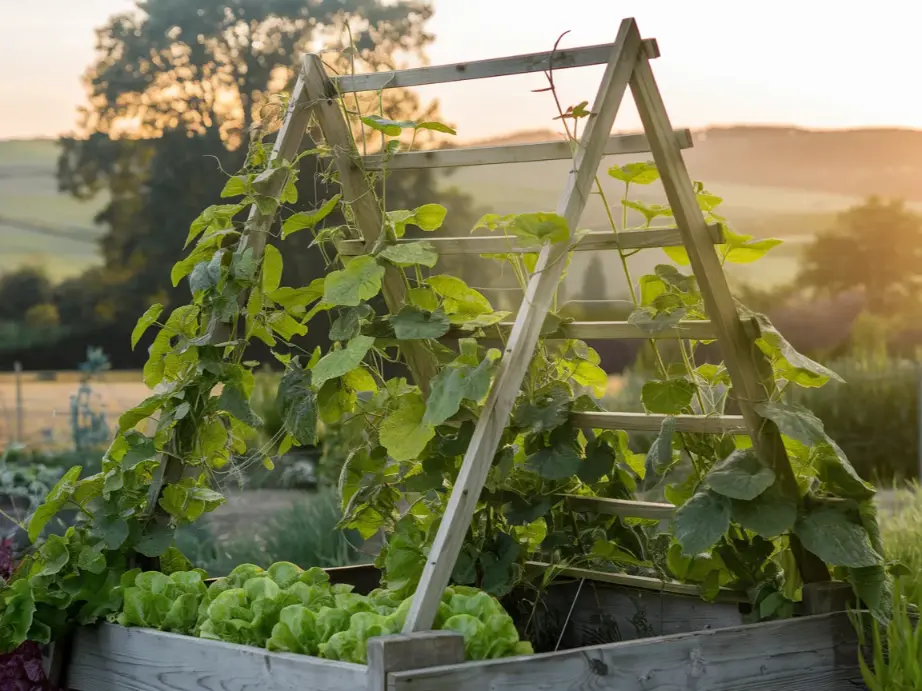
An A-frame trellis looks like an upside-down letter V. You make two frames from wood or bamboo, hinge them at the top, and spread the legs apart. Then stretch netting, chicken wire, or string between the two sides.
This design is a gardener’s best friend because it is sturdy, foldable, and you can plant cucumbers on both sides. That doubles your growing space. When the vines fill in, you get a green tunnel effect that looks amazing. Plus, the shaded area underneath is perfect for growing lettuce or spinach while the cucumbers are still small.
An A-frame trellis works best at about 5 feet tall. Taller than that, and harvesting the top gets tricky.
2. Cattle Panel Arch Trellis
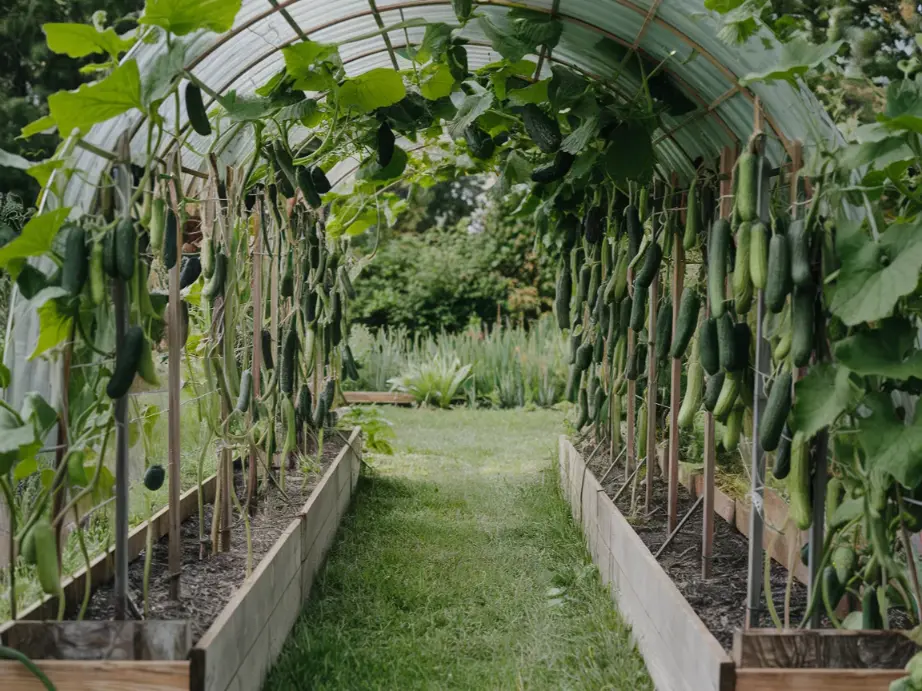
This one is a showstopper. Take a cattle panel (a rigid metal grid sold at farm supply stores) and bend it into an arch between two raised beds. The result is a gorgeous tunnel that cucumbers climb up and over.
The thick metal wire holds heavy vines with ease. Cucumbers hang down from the arch like green lanterns, making them super easy to spot and pick. You do not even need to bend over.
Cattle panels typically measure 4 by 16 feet, so one panel gives you plenty of length. Secure the ends into the soil or attach them to the sides of raised beds with zip ties or metal brackets.
3. Simple String Trellis
If you want the cheapest option, this is it. Drive two tall stakes or T-posts into the ground. Then tie horizontal rows of garden twine between them every 6 inches from bottom to top. Or run strings vertically from an overhead bar down to the base of each plant.
Cucumber tendrils will grab onto the string as they grow. This method costs almost nothing. The trade-off is that string usually only lasts one season. But replacing twine each year is fast and easy.
This trellis works great for gardeners who like a clean, minimal look. The strings almost disappear once the vines fill in.
4. Wire Mesh Panel Trellis
A flat panel of concrete remesh wire or welded wire fencing makes one of the sturdiest cucumber trellises you can build. Attach the panel to two wooden posts or T-posts in the ground. The rigid grid gives vines plenty of spots to grab.
This is a popular choice because the openings in the wire mesh are big enough to reach your hand through for easy picking. The panel also lasts for many seasons if you store it indoors over winter.
For a more finished look, build a simple wooden frame around the wire panel. This is how many experienced gardeners set up their permanent raised bed trellises.
5. Repurposed Wood Pallet Trellis
Got an old pallet sitting in your garage? Stand it upright in your garden bed and you have an instant trellis. The slats and gaps in a pallet give cucumber tendrils natural spots to grab and climb.
You can lean the pallet against a fence, prop it up with stakes, or screw it to a simple base. For extra charm, give it a coat of outdoor paint. Just make sure the pallet is not chemically treated with harmful substances. Look for pallets stamped “HT” (heat treated) instead of “MB” (methyl bromide treated).
This is a fantastic upcycle project that keeps materials out of the landfill and adds a rustic, farmhouse vibe to your outdoor space.
6. Bamboo Teepee Trellis
A teepee trellis is one of the easiest builds out there. Gather 4 to 6 bamboo poles (each about 6 feet long). Stand them in a circle and tie the tops together with twine or wire. Spread the bottoms out to create a stable base.
Then wrap horizontal rows of jute twine between the poles to give the vines more places to grip. Plant one cucumber at the base of each pole. As the vines grow, they spiral up and create a lush green cone shape.
Teepee trellises look beautiful in both large gardens and small ones. Kids love them because they can peek inside the “tent” of vines.
7. Old Ladder Trellis
This idea is pure genius for anyone who loves repurposing. Take an old wooden ladder (the kind you might find at a flea market or in your shed) and stand it upright in your garden. The rungs give cucumber tendrils plenty of places to latch on.
Bury the base a few inches into the soil for stability, or lean it against a fence at a slight angle. You can even hang small pots from the rungs for herbs or flowers to create a multi-level garden display.
An old ladder trellis adds instant vintage charm to any garden. Paint it or leave it natural for a weathered look.
8. Fence Trellis (Use What You Already Have)
If you have a fence in your yard, you already have a trellis. Plant cucumbers at the base of the fence and train the vines to grow up it. Chain-link fences work especially well because the diamond-shaped openings are perfect for tendrils.
For wood privacy fences, attach a strip of wire mesh or garden netting to give the vines something to grip. This approach costs almost nothing and requires zero building.
The only downside is cleanup at the end of the season. Dried cucumber vines can be stubborn to pull off a fence. But the convenience of not building anything makes it worth it.
9. PVC Pipe Trellis
PVC pipes are lightweight, cheap, and easy to work with. You can build a trellis frame in any shape you want using PVC connectors. The most popular PVC trellis designs are a simple rectangular frame or an A-frame shape.
Once you have the frame, attach garden netting or string between the pipes for the vines to climb. PVC does not rot like wood, so it lasts for years outdoors. You can also take it apart for storage and reassemble it each spring.
A PVC trellis is a great weekend project that even beginning gardeners can handle with no special tools.
10. Tomato Cage Trellis
Tomato cages are not just for tomatoes. The cone-shaped wire cages work surprisingly well for cucumbers too. Place one cage over each cucumber plant and let the vines climb the wire rings.
This method is ideal for growing cucumbers in containers or small patio spaces. Standard tomato cages are about 4 to 5 feet tall, which is the right height for most vining cucumber varieties.
For a sturdier option, use heavy-duty cages made from hardware cloth or concrete wire. The store-bought flimsy green ones can tip over once the vines get heavy.
11. Garden Netting Wall Trellis
Stretch a sheet of garden netting between two posts, and you have a lightweight wall of support for your cucumbers. Netting comes in rolls and is very affordable. The mesh openings let vines weave through easily.
You can hang netting from an overhead beam, stretch it between fence posts, or attach it to a simple wooden frame. Some gardeners even use netting on a balcony railing for container-grown cucumbers.
The key is to make sure the netting is pulled tight. Saggy netting causes vines to bunch up and reduces airflow.
12. Pergola Or Overhead Trellis
If you want to go big and beautiful, train cucumbers over a pergola or overhead structure. Plant them at the base and guide the vines up and over the top. Once the vines fill in, cucumbers hang down from above. You can pick them by simply reaching up.
This design doubles as a shaded sitting area or a garden walkway. Imagine having lunch under a canopy of cucumber vines with fresh fruit hanging right above your head. It is equal parts practical and magical.
An overhead trellis works best in larger gardens. Make sure the structure is strong enough to hold the weight of mature vines loaded with fruit.
13. Copper Pipe Trellis
For gardeners who want something that looks as good in winter as it does in summer, a copper pipe trellis is a beautiful choice. Build a frame from copper pipes and connectors, then add netting or string for the vines.
Copper develops a natural green patina over time that looks stunning in a garden. The material is strong, weather-resistant, and adds an artistic touch to your outdoor space. This design works especially well in modern or minimalist garden layouts.
A copper trellis costs more than wood or PVC, but it lasts for decades and becomes a permanent garden feature.
How To Train Cucumbers On A Trellis
Building a trellis is half the job. You also need to teach your cucumbers to climb it. Here is how.
Start Early
Begin training when the vines are about 6 to 8 inches tall. At that stage, the stems are flexible and easy to guide without breaking. If you wait too long, the vines get stiff and are harder to redirect.
Guide The Tendrils
Cucumber plants grow small curly tendrils that act like tiny fingers. These tendrils naturally reach out and grab whatever they touch. Gently wrap the tendrils around the trellis wire, string, or wood. Within a day or two, the tendrils will grip tight on their own.
Check Every Few Days
Make it a habit to visit your trellis every 2 to 3 days. Guide any stray vines back toward the trellis. This takes just a minute and keeps things tidy. Think of it like brushing a kid’s hair. A little attention often prevents a big tangle later.
Use Soft Ties If Needed
For stubborn vines that won’t stay put, use soft garden ties or strips of old t-shirt fabric. Tie them loosely around the stem and the trellis. Never tie too tight or you will cut into the growing vine.
Best Materials For Cucumber Trellises
Not sure what to build with? Here is a quick comparison of the most popular trellis materials.
| Material | Cost | Durability | Ease Of Build | Best For |
|---|---|---|---|---|
| Wood (Cedar/Redwood) | Medium | 5–10 years | Easy | Raised beds, permanent setups |
| Bamboo | Low | 2–3 years | Very Easy | Teepees, temporary setups |
| Cattle Panels | Medium | 10+ years | Easy | Arches, tunnels |
| PVC Pipe | Low | 5+ years | Easy | Portable, lightweight trellises |
| Wire Mesh/Remesh | Low–Medium | 5–10 years | Easy | Flat panels, A-frames |
| String/Twine | Very Low | 1 season | Very Easy | Cheap, quick setups |
| Copper Pipe | High | 20+ years | Moderate | Decorative, permanent features |
Pick the material that matches your budget and how long you want the trellis to last.
Common Trellis Mistakes To Avoid
Even experienced gardeners make these mistakes. Here is how to dodge them.
Building Too Short
A cucumber trellis should be at least 5 feet tall. Vining cucumbers can easily grow 6 feet or more. If your trellis is too short, the vines will flop over the top and tangle on the ground. If the vine outgrows the trellis, let it drape back down the other side.
Forgetting To Anchor It
A trellis full of mature cucumber vines acts like a sail in the wind. If it is not anchored well, one strong breeze can knock the whole thing over. Bury posts at least 12 inches deep. Use stakes, brackets, or zip ties to secure your trellis to raised beds or fences.
Choosing The Wrong Cucumber Variety
If you plant bush cucumbers and then wonder why they won’t climb, that is the variety, not the trellis. Always choose vining types for trellis growing.
Overcrowding Plants
Give each plant at least 12 inches of space along the base of the trellis. Crowded plants compete for sunlight and water, which leads to smaller harvests and more disease.
Growing Tips For Trellised Cucumbers
Once your trellis is up and your cucumbers are climbing, here are a few tips to keep things going strong.
Water Deeply And Regularly
Cucumbers are thirsty plants. They need about 1 to 2 inches of water per week. Water at the base of the plant, not on the leaves. Drip irrigation or soaker hoses work best for trellised cucumbers because they keep the foliage dry.
Feed The Soil
Cucumbers love rich soil. Before planting, mix in compost or well-aged manure. Once the plants start flowering, add a balanced organic fertilizer every 2 to 3 weeks to keep them producing.
Mulch The Base
Spread 2 to 3 inches of mulch (straw, wood chips, or leaves) around the base of your plants. Mulch keeps the soil moist, cool, and weed-free. It also helps prevent soil-borne diseases from splashing up onto lower leaves.
Harvest Often
Pick cucumbers when they are medium-sized and firm. Do not wait for them to get huge. Overripe cucumbers taste bitter and signal the plant to stop making new fruit. Harvesting every 2 days during peak season encourages the plant to keep producing.
Pick The Right Spot
Cucumbers need 6 to 8 hours of direct sunlight each day. Place your trellis where it will not shade out other sun-loving plants. In the northern hemisphere, the north side of a garden bed is often the best spot for a tall trellis.
Frequently Asked Questions
Do Cucumbers Really Need A Trellis?
No, cucumbers do not need a trellis. They will grow on the ground just fine. But a trellis helps them grow better. You get more fruit, less disease, and cleaner harvests. If you have limited space, a trellis is almost essential.
How Tall Should A Cucumber Trellis Be?
Aim for 5 to 6 feet tall. Most vining cucumber varieties grow 4 to 6 feet long, so this height gives them plenty of room. If vines grow longer, just let them drape over the top and back down.
Can I Use A Tomato Cage For Cucumbers?
Yes! Tomato cages work well for cucumbers, especially in containers. Use heavy-duty cages for best results since flimsy ones can tip over.
What Is The Best Material For A Cucumber Trellis?
That depends on your budget and goals. Cattle panels and wire mesh are the most durable. Bamboo and string are the cheapest. Wood offers a nice balance of looks and strength.
When Should I Set Up My Trellis?
Set up your trellis before you plant or at planting time. It is much easier to install a trellis in an empty bed than to wrestle one in around growing plants. If you forgot, you can still add one carefully when plants are young.
Can I Grow Cucumbers On A Balcony With A Trellis?
Absolutely. Use a container with a compact trellis, tomato cage, or netting attached to the railing. Vining cucumbers do surprisingly well on apartment balconies with the right support.
Do I Need To Tie Cucumbers To The Trellis?
Usually not. Cucumber tendrils naturally grab and climb. You may need to guide the vines in the right direction at first, but they typically take over on their own within a week or two.
Final Thoughts
Growing cucumbers on a trellis is one of the easiest upgrades you can make in your garden. It saves space, prevents disease, and gives you a bigger, cleaner harvest. Whether you build an elegant copper frame or just lean an old pallet against a fence, your cucumbers will thank you.
Start with the trellis idea that fits your space and budget. You do not need to overthink it. A five-dollar string trellis produces just as many cucumbers as a fancy arch. What matters most is that your vines have something to climb.
So grab some posts, string, or panels and give your cucumbers the lift they deserve. Your future self, standing in the garden with a basket full of straight, spotless cucumbers, will be glad you did.

