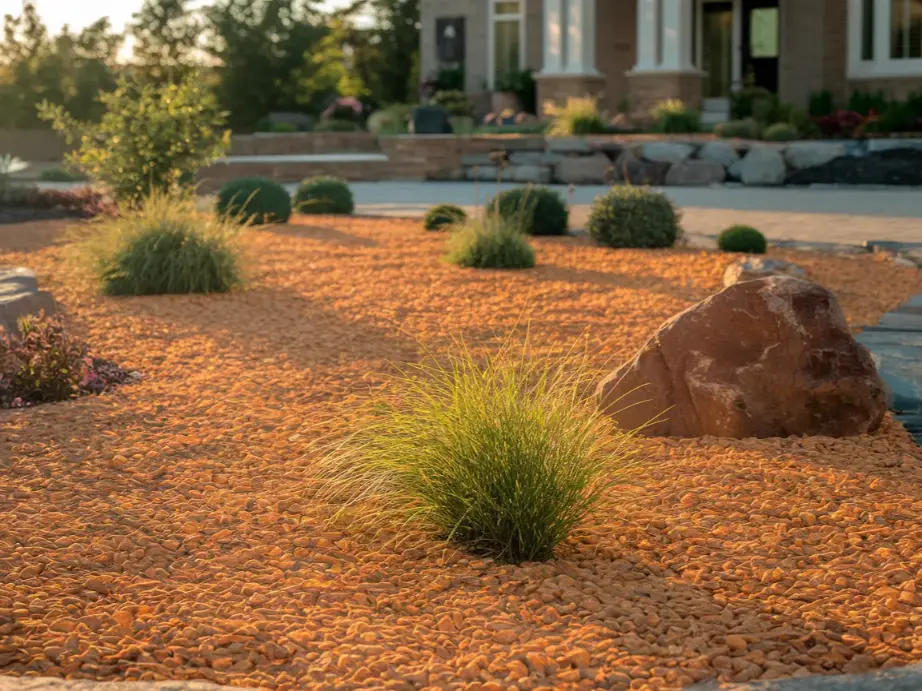

Yes, a gravel garden can look more expensive, more polished, and more intentional than a traditional grass lawn. And here’s the kicker. It usually costs less to install and almost nothing to maintain year after year.
Most people think of gravel as something cheap you dump in a driveway. But designers have been using decorative gravel to create stunning outdoor spaces for centuries. From the raked Zen gardens of Japan to the sun-soaked courtyards of southern France, gravel has always been a material of elegance when used with thought and care.
The numbers back this up too. Gravel typically costs between $0.50 and $4.00 per square foot installed. Compare that to $6 to $15 per square foot for concrete or $10 to $25 per square foot for pavers. And unlike a lawn, gravel doesn’t need weekly mowing, watering, fertilizing, or weed treatments. The average American family spends over $1,000 per year on water alone, and a huge portion of that goes straight to the sprinkler. A gravel garden cuts that bill dramatically.
In this article, you’ll find 8 gravel garden designs that will make your neighbors think you hired an expensive landscape architect. Each one is achievable on a regular budget. Let’s dig in.
1. The Mediterranean Herb Garden
Sun, Stone, and Lavender
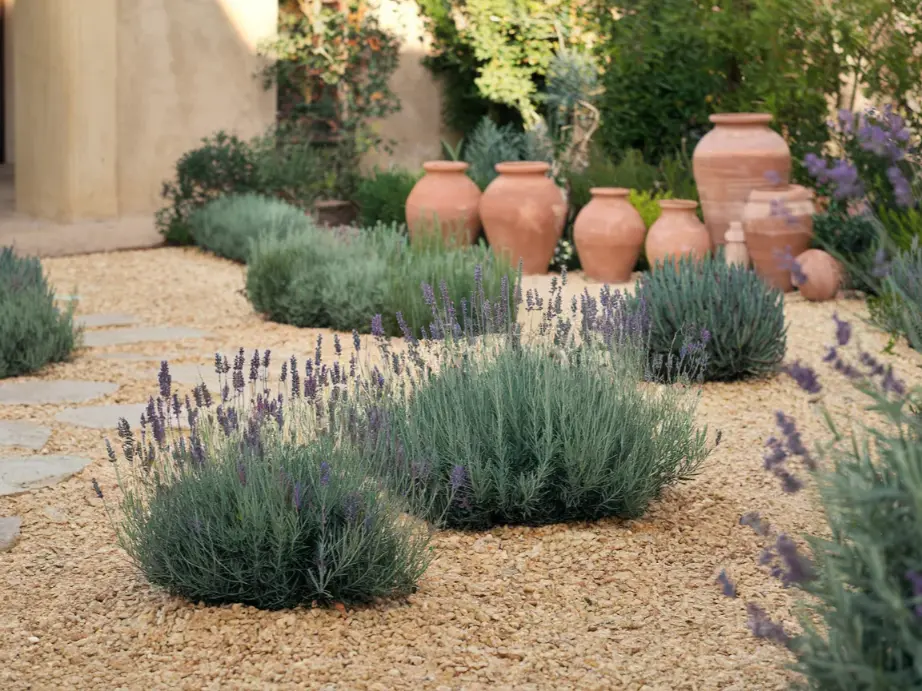
Close your eyes and picture a small village in the south of France. Warm stone walls. Terracotta pots overflowing with rosemary. Lavender lining a gravel path. The air smells incredible. That’s exactly the feeling a Mediterranean gravel garden brings to your front yard.
This design uses warm-toned gravel like buff, tan, or golden limestone as the base. Then you plant directly into the gravel or in clusters around it. The star players are Mediterranean herbs that thrive in dry, well-drained conditions. Lavender, rosemary, oregano, thyme, and sage all love gravel. They grow happily with minimal water and reward you with fragrance, flowers, and herbs you can actually cook with.
Design Tips That Make It Pop
Place a few large terracotta or stone pots as focal points. Group them in odd numbers. Three is the magic number. A tall rosemary in the biggest pot, lavender in the middle, and trailing thyme in the smallest creates a layered, professional look.
Add a simple gravel pathway that curves slightly through the planting areas. Straight paths feel formal. Curved paths feel relaxed and inviting. Let the herbs spill over the edges of the path just a little bit. That soft, blurred boundary between path and planting is what gives Mediterranean gardens their effortless charm.
This style pairs beautifully with home decor entrance ideas that carry that warm, welcoming feel from outside right through your front door.
2. The Japanese Zen Gravel Garden
Calm, Clean, and Deeply Impressive
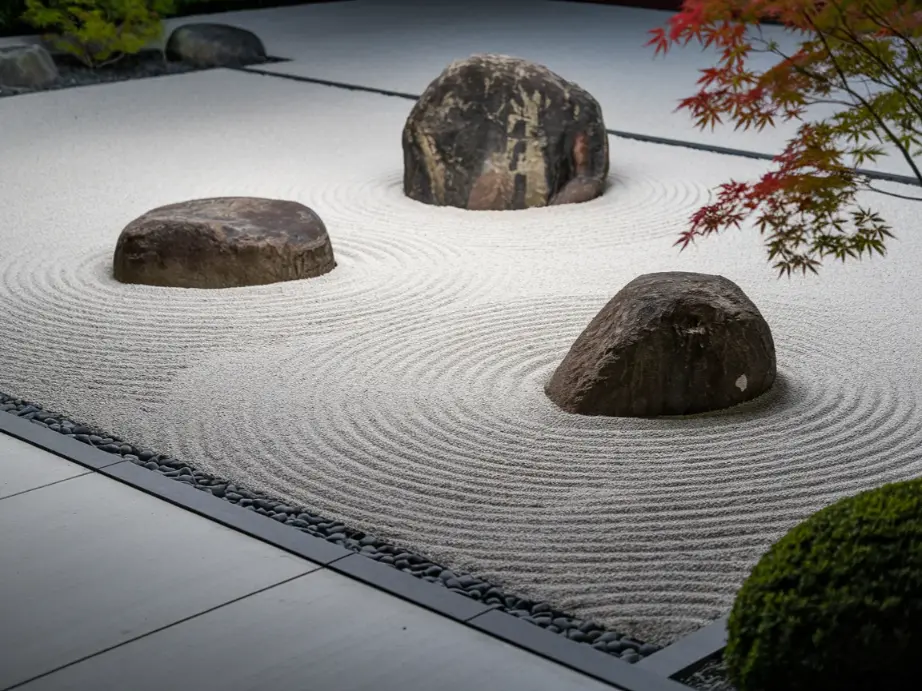
There’s a reason Zen gardens have survived for over 700 years. They work. The combination of raked gravel, carefully placed stones, and minimal planting creates a sense of peace that hits you the moment you see it. And in a front yard, a Zen-inspired design looks absolutely stunning.
Use fine, light-colored gravel like crushed granite or white limestone. Rake it into smooth, flowing lines or gentle wave patterns. These patterns represent water and movement. Place three to five large, naturally shaped boulders in an asymmetric arrangement. Add a single small Japanese maple or a clump of black mondo grass for a controlled pop of color.
Why Less Feels Like More
The power of a Zen gravel garden is in restraint. Every element is chosen with purpose. There’s no clutter. No overgrown edges. No weeds fighting for attention. That clean, intentional look is what makes people stop and stare. It signals care, thought, and taste, all things that expensive landscaping communicates.
Keep the raking pattern fresh every week or two. It takes about ten minutes with a garden rake and it’s actually quite relaxing. Some people find it meditative. Your “yard work” becomes a calming ritual instead of a sweaty chore.
3. The Modern Geometric Gravel Courtyard
Bold Lines and Designer Vibes
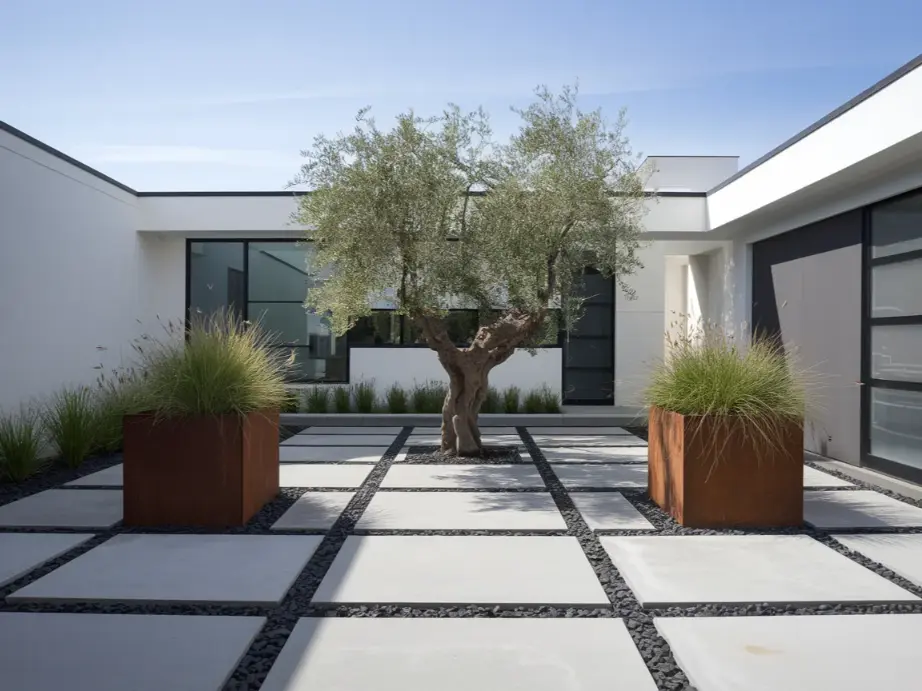
This is the design that makes people think you spent serious money. A modern geometric gravel courtyard uses clean lines, contrasting materials, and architectural plants to create a space that looks like it belongs in a design magazine.
The layout is simple but striking. Large square or rectangular concrete pavers are set in a grid pattern with gravel filling the gaps between them. The contrast between the smooth, solid pavers and the loose, textured gravel creates instant visual interest. Choose a gravel color that contrasts with your pavers. Dark charcoal gravel with light concrete. White pea gravel with dark slate pavers. The contrast is what makes it pop.
Plants That Sell the Look
Keep planting minimal and architectural. One or two tall ornamental grasses like Karl Foerster or fountain grass. A row of low, clipped boxwood spheres. A single specimen tree like an olive tree or a multi-stem birch. These plants have strong shapes that complement the geometry of the hardscape.
Add a few steel or concrete planters for extra structure. Corten steel planters (the ones with that beautiful rust-colored patina) look incredible against gravel and instantly elevate the entire design. They age beautifully over time, which adds even more character.
4. The Cottage Garden Gravel Path Design
Gravel Meets Blooms for Old-World Charm
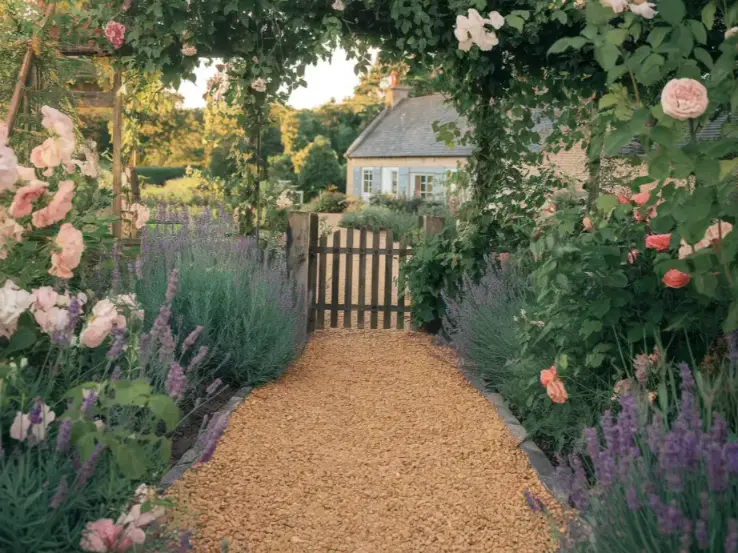
Not every gravel garden needs to look sleek and modern. A cottage-style gravel garden feels warm, romantic, and a little wild in the best possible way. Think of an English country garden where a soft gravel path winds through overflowing flower beds bursting with color.
Use a warm, natural-colored gravel like honey limestone or golden pea gravel. Keep the stones small (10mm to 14mm) for a comfortable walking surface. Then go wild with the planting on either side. Roses, foxgloves, delphiniums, catmint, and hardy geraniums all thrive alongside gravel paths. Let the flowers lean into the path and blur the edges. That gentle spill-over effect is the signature of cottage garden style.
Making It Look Intentional
The secret to a cottage gravel garden that looks expensive rather than overgrown is structure underneath the chaos. Use metal or stone edging beneath the plants to keep the gravel contained. Plant in repeating clusters. If you use catmint on the left side of the path, repeat it on the right side twenty feet later. That rhythm gives the eye something to follow and makes the whole design feel planned.
Add a rustic garden gate, an arbor covered in climbing roses, or a weathered bench at the end of the path. These focal points give the garden a destination and a story. People love a garden that feels like it’s inviting them somewhere.
For more ideas on creating cozy, charming outdoor settings, check out these outdoor jacuzzi ideas that bring that same inviting warmth.
5. The Desert Oasis Gravel Garden
Making Dry Climates Look Luxurious
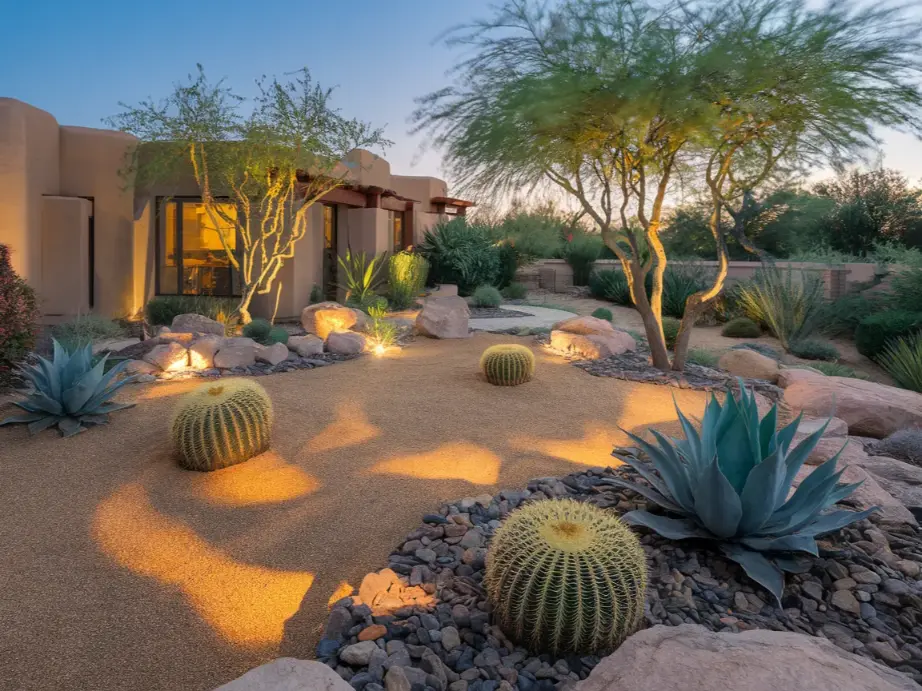
If you live somewhere hot and dry, this is your design. A desert oasis gravel garden leans into the natural landscape instead of fighting it. And when done right, it looks like a high-end resort entrance.
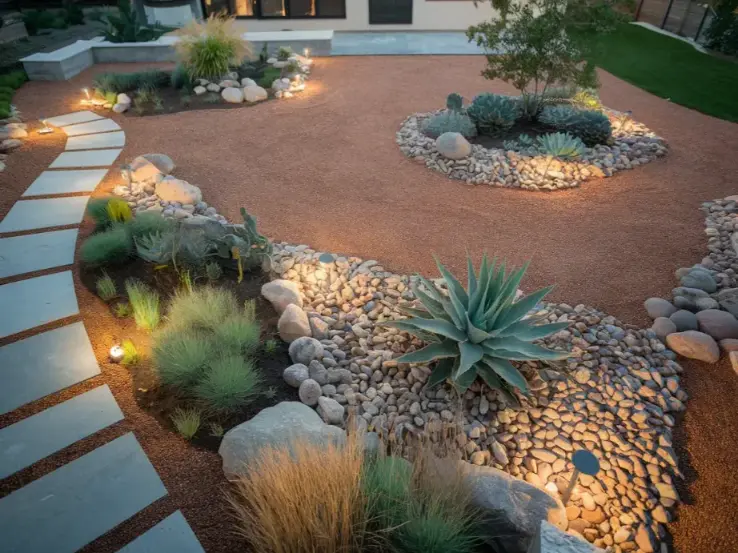
Start with a base of warm-toned decomposed granite or desert gold gravel. Then add bold, sculptural desert plants. Large agave, prickly pear cactus, golden barrel cactus, and tall yucca plants create dramatic silhouettes that look incredible against the gravel. Desert ironwood or palo verde trees provide dappled shade and a canopy layer.
The Secret Sauce: Boulders and Lighting
Scatter a few large natural boulders throughout the design. Desert landscapes look their best when they have that raw, geological feel. The boulders anchor the planting and give the garden a sense of permanence. Choose stones with interesting shapes, colors, or textures. A single stunning boulder can become the focal point of the entire front yard.
Then add landscape lighting. Uplights behind agave plants create dramatic shadows on walls. Path lights along the gravel walkway make the garden glow at night. Warm-toned LED lights enhance the desert palette. When the sun goes down, a well-lit desert gravel garden looks absolutely breathtaking and far more expensive than it actually is.
6. The Gravel and Raised Bed Combo
Practical, Beautiful, and Budget-Smart
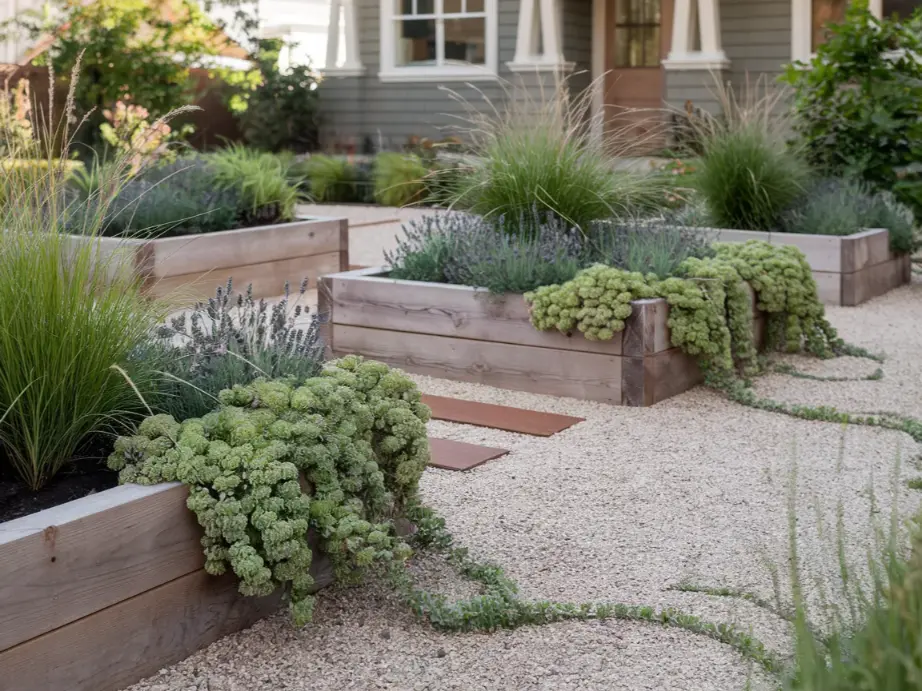
This design is perfect for people who want the clean, low-maintenance look of gravel but still want real planting beds with flowers, shrubs, or even vegetables. The concept is simple. Cover the main ground area with gravel, then build raised beds out of timber, stone, or weathered steel to hold your plants.
The raised beds create height, structure, and defined planting zones. The gravel keeps everything around them clean, weed-free, and tidy. It’s the contrast between the neat gravel surface and the lush, green raised beds that makes this look so polished.
Getting the Proportions Right
Balance is everything here. If you have a small front yard, use two or three medium-sized raised beds. For a larger yard, you can go bigger and add more beds at different heights for visual variety. Keep at least half of the total area as open gravel so the space feels airy and uncluttered.
Use the same material for all your raised beds so the design feels cohesive. Cedar or redwood ages to a beautiful silver-grey. Natural stone gives a timeless, upscale look. Corten steel matches that modern industrial aesthetic. Whatever you choose, consistency is the key to making it look expensive.
Plant the beds with a mix of ornamental grasses, perennials, and small shrubs. Add a few trailing plants that cascade over the edges of the beds and onto the gravel below. That softening effect makes the whole scene feel more finished and designed.
7. The Gravel Patio and Seating Area
Your Front Yard Becomes Outdoor Living Space
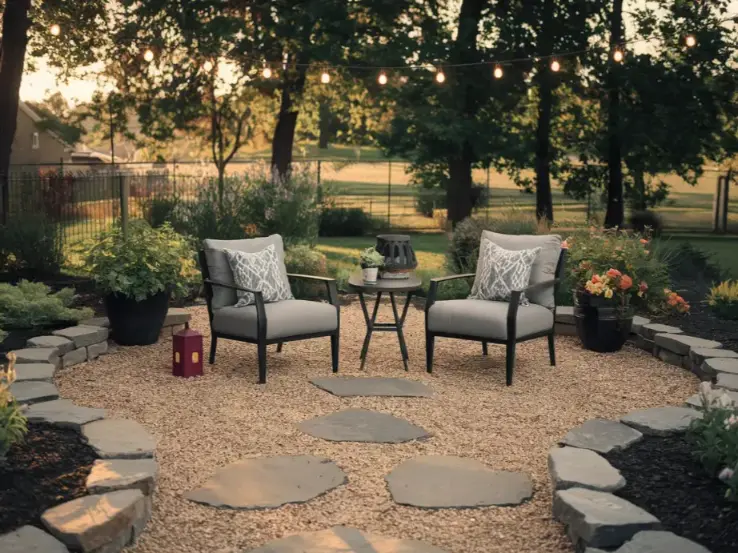
Who says your front yard has to just be something you look at? A gravel patio turns it into a space you actually use. Set up a defined seating area with gravel as the “floor.” Add comfortable outdoor chairs, a small bistro table, and maybe a fire pit or chiminea for cooler evenings.
The gravel provides excellent drainage, so you’ll never deal with puddles after rain like you would on a solid patio. It also creates that satisfying crunch underfoot that makes outdoor spaces feel alive and textured. Use a slightly larger gravel (14mm to 20mm) for seating areas so chairs sit more stably.
Framing the Space
Define the patio area with a border of stone, brick, or metal edging. This keeps the gravel contained and makes the seating zone feel like a deliberate “room” within your yard. Add a few potted plants around the perimeter. String lights overhead for evening ambiance. Maybe a small outdoor rug under the table.
These small touches turn a simple gravel area into an outdoor living room that looks designer-planned. And the total cost? A fraction of what you’d pay for a poured concrete or paver patio. Gravel patios typically cost $1 to $3 per square foot compared to $6 to $15 for concrete.
If you love outdoor entertaining spaces, you’ll also enjoy these patio decor lights ideas for making your new gravel patio glow at night.
8. The Two-Tone Gravel Pattern Garden
Art Under Your Feet
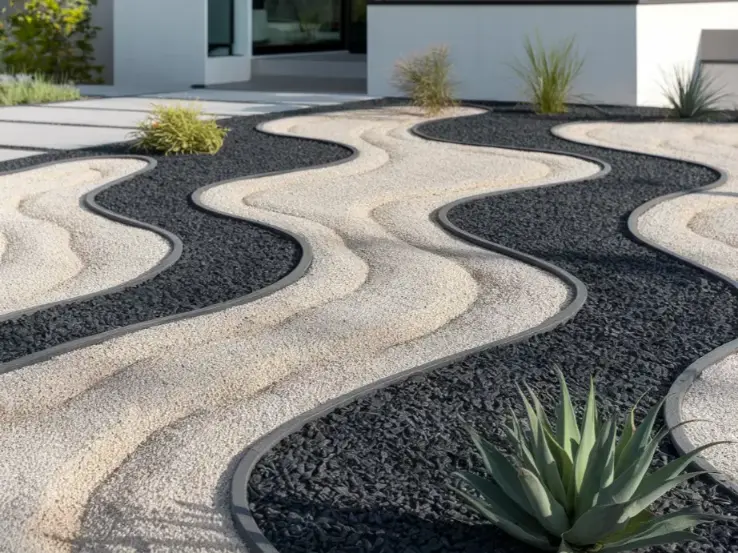
This is the design that turns heads. A two-tone gravel pattern uses two contrasting colors of gravel arranged in flowing shapes, geometric patterns, or distinct zones to create a garden that looks like landscape art.
The most popular combination is white or cream gravel paired with dark slate or charcoal. The light and dark contrast creates visual drama that’s impossible to ignore. You can create flowing curves where one color sweeps into the other. Or use metal or stone edging to create crisp geometric shapes. Circles, spirals, and organic wave patterns all work beautifully.
Keeping It Clean
The key to maintaining a two-tone design is good borders between the colors. Use thin metal landscape edging buried flush with the gravel surface. This keeps the two colors from mixing over time. Leaf blowers work better than rakes for clearing debris without disturbing the patterns.
Add a few carefully chosen plants at the intersections or borders of the two colors. A single architectural plant where two patterns meet draws the eye and creates a natural focal point. Keep the planting sparse so the gravel pattern remains the star of the show.
This design works especially well for home decor signs ideas when you want your outdoor space to make a statement that’s as bold as your interior style.
Choosing the Right Gravel for Your Design
Types and What They’re Best For
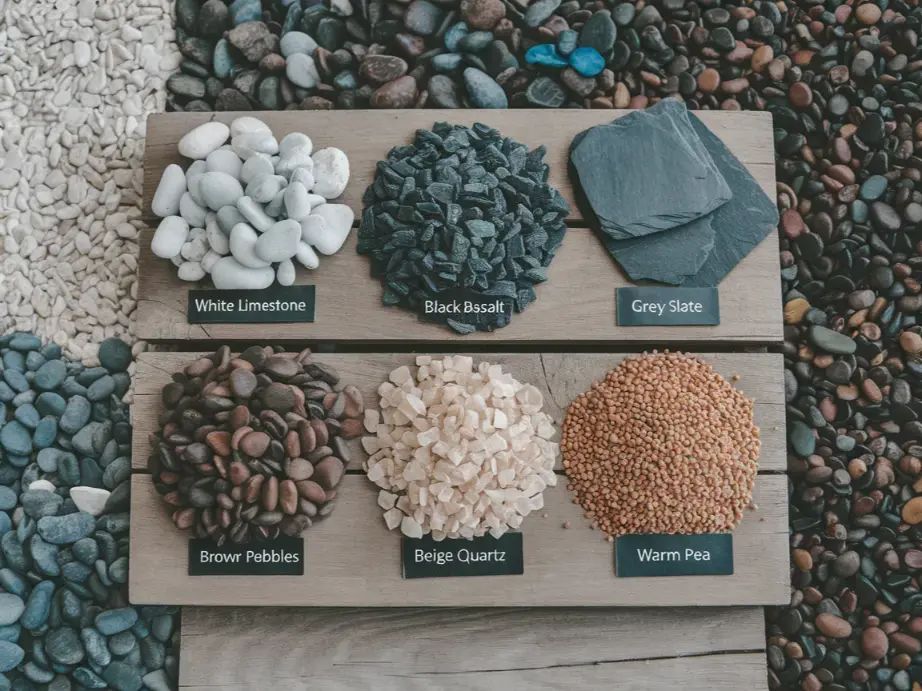
Not all gravel is created equal. The type you choose sets the entire tone of your garden. Here’s a quick comparison:
| Gravel Type | Size | Look | Best For | Cost per Sq Ft |
|---|---|---|---|---|
| Pea Gravel | 3/8 inch | Smooth, round, natural | Patios, paths, seating areas | $0.50 – $1.50 |
| Crushed Granite | Fine | Compact, clean, earthy | Modern designs, xeriscaping | $0.50 – $2.00 |
| White Limestone | 10-20mm | Bright, crisp, elegant | Zen gardens, Mediterranean | $1.00 – $3.00 |
| River Rock | 1-3 inch | Smooth, polished, organic | Dry creek beds, accents | $1.00 – $4.00 |
| Decomposed Granite | Fine powder | Firm, walkable, warm | Pathways, desert gardens | $0.40 – $1.50 |
| Slate Chippings | 10-20mm | Flat, dark, modern | Geometric, two-tone designs | $1.50 – $4.00 |
Depth and Coverage
For most garden applications, you need a gravel layer about 2 to 3 inches deep. One ton of gravel covers roughly 100 square feet at that depth. Always order about 10 percent more than you think you need. Running short mid-project is frustrating and can delay your timeline.
Lay landscape fabric underneath your gravel to suppress weeds. This single step makes a massive difference in long-term maintenance. Without fabric, weeds will eventually push through. With it, you’ll barely see a weed for years.
Common Mistakes That Make Gravel Gardens Look Cheap
Gravel gardens only look expensive when they’re done right. Here are the mistakes that ruin the effect.
Skipping the edging is the number one mistake. Without clean borders, gravel creeps onto sidewalks, mixes into flower beds, and generally looks messy. Invest in proper edging from the start. Metal, stone, or even simple concrete borders keep everything crisp and contained.
Using the wrong size matters more than most people realize. Gravel that’s too large feels like a construction site. Gravel that’s too fine can be dusty and uncomfortable. For most garden designs, 10mm to 20mm is the sweet spot. It’s small enough to look refined but large enough to stay put.
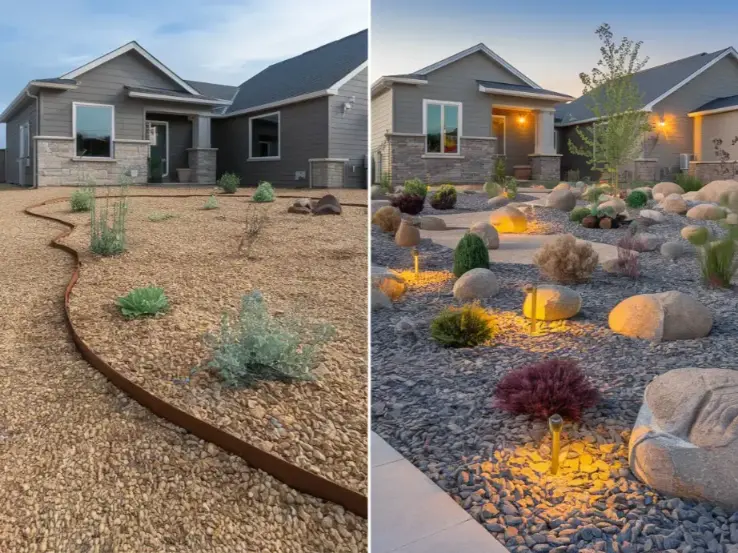
Too much of one thing makes any design look flat. Break up large gravel areas with planting, boulders, pavers, or changes in gravel color. A garden that’s 100 percent gravel with nothing else looks unfinished. A garden that’s 70 percent gravel with 30 percent plants, stone, and structure looks intentional and expensive.
Ignoring lighting is the last common mistake. A gravel garden that looks great during the day can look like an empty lot at night. A few well-placed landscape lights transform it into something magical after dark. Solar path lights are an easy, affordable starting point.
FAQ
Is a Gravel Garden Cheaper Than a Lawn?
Yes, significantly. Gravel costs about $0.50 to $4.00 per square foot installed, and it needs no ongoing mowing, watering, or fertilizing. A traditional lawn costs thousands per year in water, maintenance, and lawn care products. Over five years, a gravel garden saves most homeowners a substantial amount.
Does Gravel Attract Weeds?
Gravel alone won’t stop all weeds, but laying landscape fabric underneath dramatically reduces weed growth. With proper fabric and a 2 to 3 inch gravel layer, you’ll see very few weeds. Any that do pop up are easy to pull from loose gravel.
Can You Walk Comfortably on Gravel?
Yes, if you choose the right type and size. Pea gravel (3/8 inch) and small crushed stone (10-14mm) are comfortable for walking. Decomposed granite compacts into a firm, stable surface that’s easy to walk on. For high-traffic areas, add stepping stones or pavers within the gravel.
How Long Does a Gravel Garden Last?
Gravel is incredibly durable. Most gravel gardens last 10 to 20 years or more with minimal maintenance. You may need to top up the gravel every few years as it settles or gets displaced. A few bags of gravel every couple of years is far cheaper than ongoing lawn care.
Will Gravel Damage My Home’s Resale Value?
A well-designed gravel garden can actually increase curb appeal and attract buyers who want low-maintenance landscaping. The key is making it look intentional with good edging, quality plants, and a cohesive design. A patchy, neglected lawn hurts resale value far more than a beautiful gravel garden.
What Goes Under the Gravel?
Start with cleared, leveled ground. Lay a high-quality landscape fabric or geotextile membrane on top. This blocks weeds while allowing water to drain through. Then spread your gravel on top of the fabric. For pathways, add a compacted base layer of crushed stone beneath the fabric for extra stability.
Can I Install a Gravel Garden Myself?
Absolutely. A basic gravel garden is one of the most DIY-friendly landscaping projects. Clear the area, lay fabric, spread gravel, and add plants. You can transform a small front yard in a single weekend. For larger or more complex designs, a landscaping professional can help with grading and layout.
Final Thoughts
A gravel garden is one of the smartest investments you can make for your front yard. It costs less than a lawn to install. It costs almost nothing to maintain. It uses barely any water. And when designed with care, it looks like you spent ten times what you actually did.
The secret isn’t the gravel itself. It’s the design thinking behind it. Clean edges. Intentional plant choices. Contrasting textures. Good lighting. These are the details that separate a pile of rocks from a stunning outdoor space. And every single one of those details is achievable on a normal budget with a little planning.
Whether you go Mediterranean and fragrant, Japanese and serene, modern and geometric, or cottage and charming, there’s a gravel garden style that fits your home, your climate, and your personality.
So the next time you’re standing in your front yard, staring at that patchy lawn that needs mowing again, ask yourself: what if I just didn’t? What if instead, I created something beautiful, something low-maintenance, something that made every single person who walked by stop and look twice?
That’s what a great gravel garden does. And now you know exactly how to make it happen.