

A bird bath is one of the simplest things you can add to your yard, and it makes one of the biggest differences. I placed a shallow stone bird bath near my garden bed last spring, and within a week, I had finches, sparrows, and even a pair of cardinals visiting every morning. The sound of birds splashing in water while you sip your coffee is the kind of backyard moment that makes all the landscaping effort worth it.
Bird baths do more than look pretty. They provide fresh water for drinking and bathing, which is something birds need every single day. According to the Cornell Lab of Ornithology, adding water to your yard can attract species that would never visit a seed feeder. That means more variety, more color, and more life in your garden. The National Wildlife Federation also highlights water as one of the four essential elements for creating a certified wildlife habitat in your backyard, alongside food, cover, and nesting areas.
Let us bring your landscape to life.
Classic Pedestal Bird Bath
The Timeless Garden Anchor
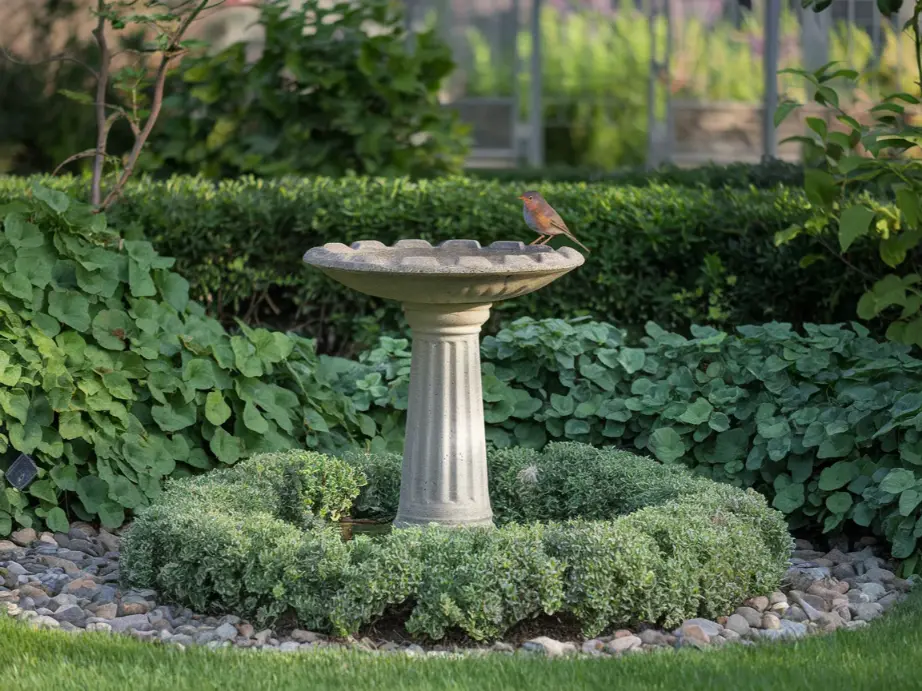
The pedestal bird bath is what most people picture when they think of a bird bath. It stands about two to three feet tall, has a wide shallow basin on top, and acts as a natural focal point in any garden. There is a reason this design has been around for centuries. It works. The height keeps birds safe from ground predators like cats, while the wide basin gives multiple birds room to drink and splash at the same time.
Pedestal bird baths come in concrete, cast stone, resin, and even metal. Concrete is the most popular because it weathers beautifully over time and develops a natural patina that blends into the landscape. The rough texture also gives birds a better grip, which is important. According to birding experts, birds avoid slippery surfaces like glazed ceramic because they cannot get a secure foothold.
Landscaping Around It
Place a pedestal bird bath in an open area of your yard where birds can see it from a distance. Surround the base with low-growing ground cover like creeping thyme, sedum, or moss. This softens the look and connects the bath to the surrounding garden. Add a ring of small river stones around the base for drainage and visual contrast.
Keep the bath about 10 to 15 feet from shrubs or trees so birds have a clear escape route if a predator approaches, but close enough that they can fly to a perch after bathing to dry off.
Ground Level Stone Basin
Mimicking Nature at Its Best
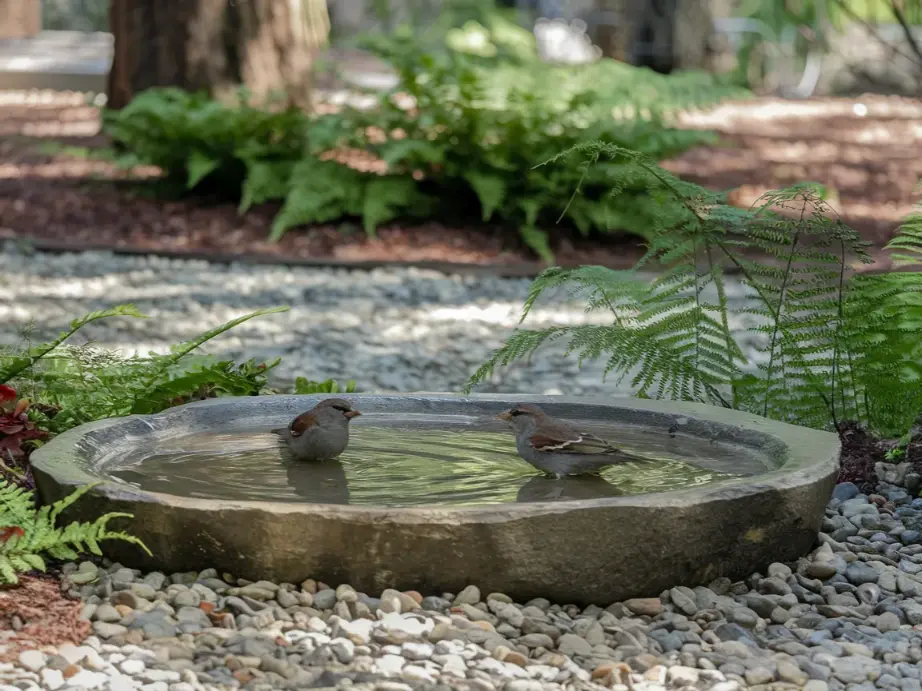
A ground level bird bath is simply a shallow stone basin set into the earth, and it is one of the most effective styles for attracting a wide range of birds. This design mimics natural puddles and shallow streams, which is exactly how birds find water in the wild. Ground-feeding birds like sparrows, doves, and blackbirds are especially drawn to this style because it feels familiar and safe to them.
The Cornell Lab of Ornithology recommends keeping bird bath water no deeper than one inch at the edges and a maximum of two inches in the center. A natural stone basin set at ground level meets this perfectly without any modifications.
How to Landscape This Style
Dig a shallow depression in your garden bed and set a flat stone basin or a large plant saucer into the ground so the rim sits flush with the soil. Surround the basin with a bed of gravel or small pebbles to improve drainage and prevent mud from splashing into the water. Plant ornamental grasses, ferns, or native wildflowers around the area to create a natural woodland feel.
This style blends perfectly with biophilic design landscapes and gardens that prioritize a natural, organic look.
Stacked Stone Bird Bath
Rustic Charm With Zero Effort
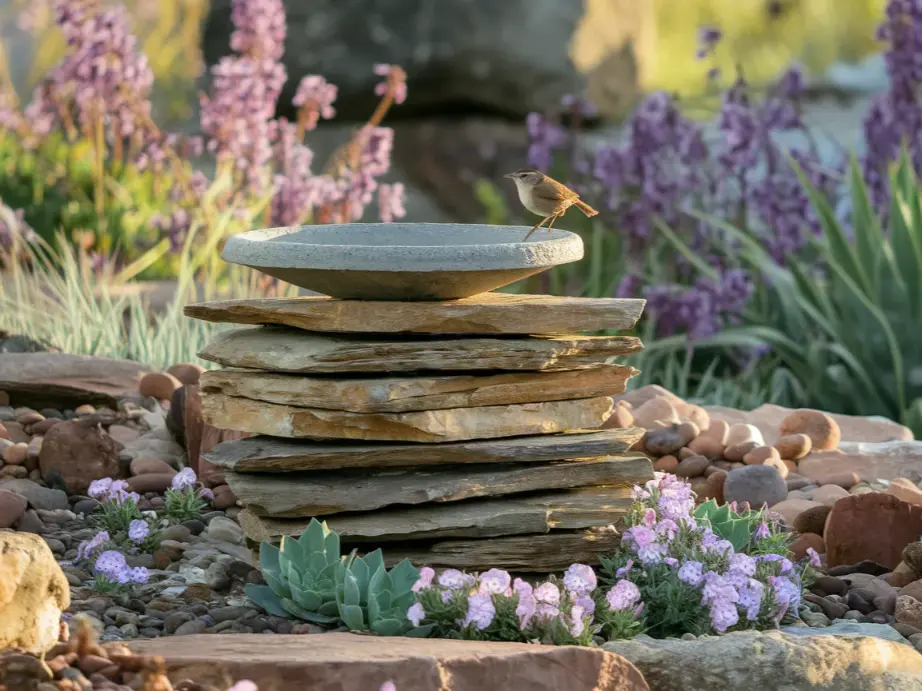
A stacked stone bird bath is made by layering flat rocks on top of each other to create a pedestal, then placing a shallow stone or concrete bowl on top. The natural, rugged look fits perfectly into cottage gardens, rock gardens, and rustic landscapes. It feels like something that has always been part of the yard rather than something you bought and placed there.
What I love about this style is that you can build it with stones you already have. If your property has natural fieldstone or you have leftover landscape rocks from a patio project, you can stack them into a bird bath column in under an hour. No mortar is needed if the stones are flat and stable, though you can use landscape adhesive for extra security.
Styling the Surrounding Area
Place the stacked stone bath at the edge of a garden path or in a rock garden where it blends with the existing stonework. Plant low-growing succulents, hens and chicks, or creeping phlox around the base. The key is to let the stone texture be the star and keep the surrounding plants low and simple.
This idea also works well as an anchor piece in a patio decor area where you want a natural accent without heavy landscaping.
Modern Concrete Geometric Bird Bath
Clean Lines for Contemporary Yards
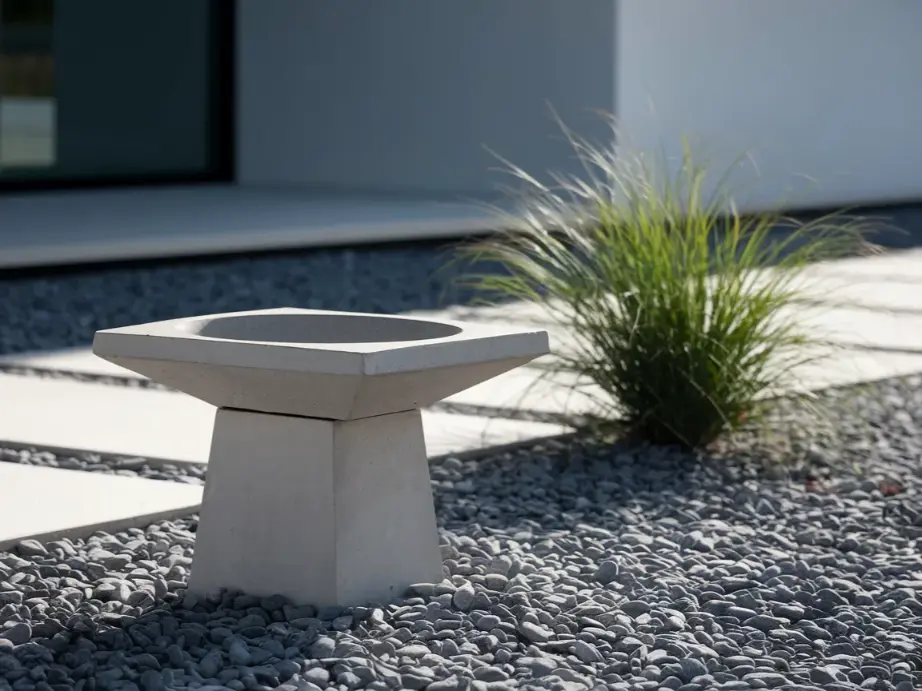
The 2026 landscaping trend is leaning heavily into minimalism, and modern bird baths are following suit. Instead of ornate carvings and traditional shapes, today’s homeowners are choosing bird baths with clean geometric silhouettes, raw concrete textures, and sleek metal finishes. These baths act as sculptural focal points in the landscape while still serving their purpose for wildlife.
A geometric concrete bird bath looks stunning on a patio, in a gravel courtyard, or as the centerpiece of a minimalist garden. The beauty is in the simplicity. One strong shape, one neutral material, and nothing extra.
Where to Place It
Position a modern bird bath in an open area with clean lines around it. A gravel bed, a concrete patio, or a manicured lawn all work well as backdrops. Avoid surrounding it with busy plantings. Instead, let the bath stand alone or pair it with a single ornamental grass or a sculptural plant like agave or a Japanese maple.
This style complements modern home exteriors, especially those with clean entryway designs and minimal outdoor furniture.
Solar Fountain Bird Bath
Moving Water That Birds Cannot Resist
If you want to attract the most birds to your yard, add moving water. Ornithologists and birding experts consistently agree that the sight and sound of running water is one of the strongest attractants for wild birds. Many species that ignore a still bird bath will come running for a fountain, a dripper, or a bubbler.
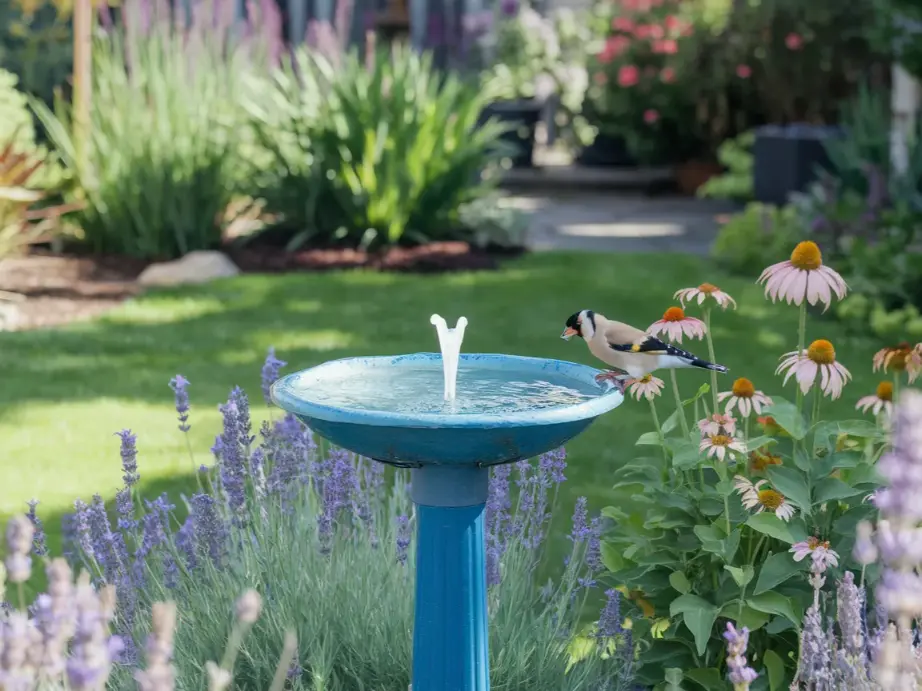
A solar fountain bird bath uses a small solar-powered pump to keep water gently bubbling or spraying. There is no wiring, no electricity, and no complicated setup. You just place the solar panel in the sun, set the pump in the basin, and let it run. The gentle movement also helps prevent algae growth and keeps mosquitoes from breeding in the standing water.
Landscaping Tips
Place the solar bird bath in an area that receives at least four to six hours of direct sunlight so the pump works consistently. Surround the bath with flowering plants that attract butterflies and pollinators, like lavender, coneflower, or bee balm. This turns the bird bath area into a full wildlife zone that buzzes with activity all day.
The sound of trickling water also creates a calming backdrop for any outdoor relaxation area or garden seating zone.
Upcycled Vintage Bird Bath
Old Items, New Purpose
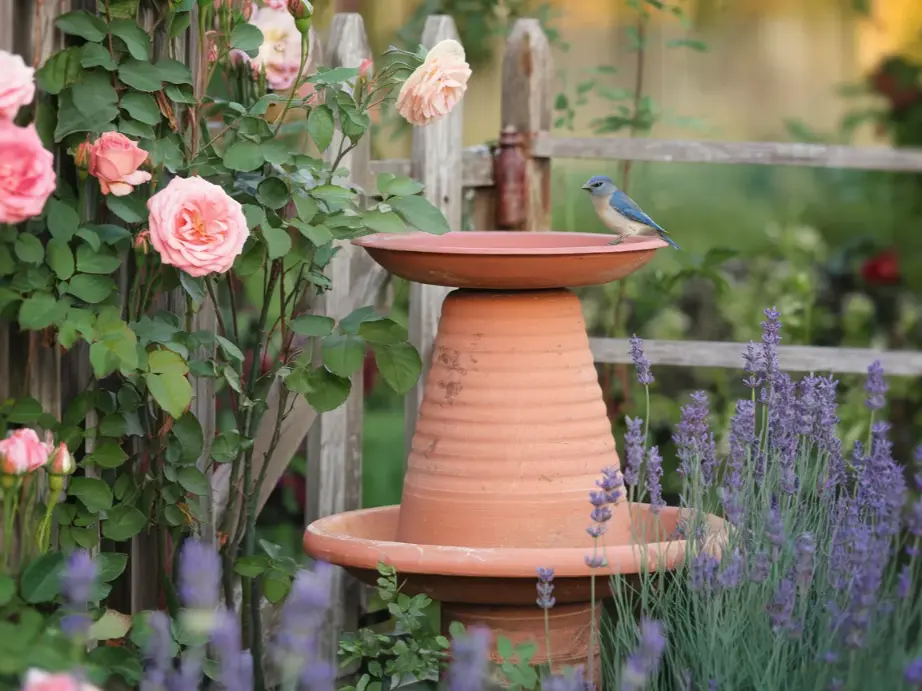
One of the most creative approaches to bird bath landscaping is repurposing vintage or salvaged items. An old terra cotta pot turned upside down with a plant saucer on top. A thrifted glass light fixture hung from a branch. A vintage urn or garden planter with a shallow bowl inside. These all become one-of-a-kind bird baths that give your garden personality and tell a story.
I have seen people use old cake pans, antique serving bowls, and even stacked teacups to create bird baths. The birds genuinely do not care what the vessel looks like as long as the water is shallow, clean, and accessible. What matters to you is that it fits your garden’s style and makes you smile when you look at it.
Making It Work in Your Landscape
Place your upcycled bath in a cottage garden, a wildflower bed, or near a potting bench where the vintage vibe fits naturally. Surround it with climbing roses, sweet peas, or lavender for a romantic English garden feel. If you are using a lighter material like glass or ceramic, stake or secure it so it does not tip in the wind.
This style pairs beautifully with vintage home decor carried from the indoors out into the garden.
Hanging Bird Bath
Perfect for Small Spaces
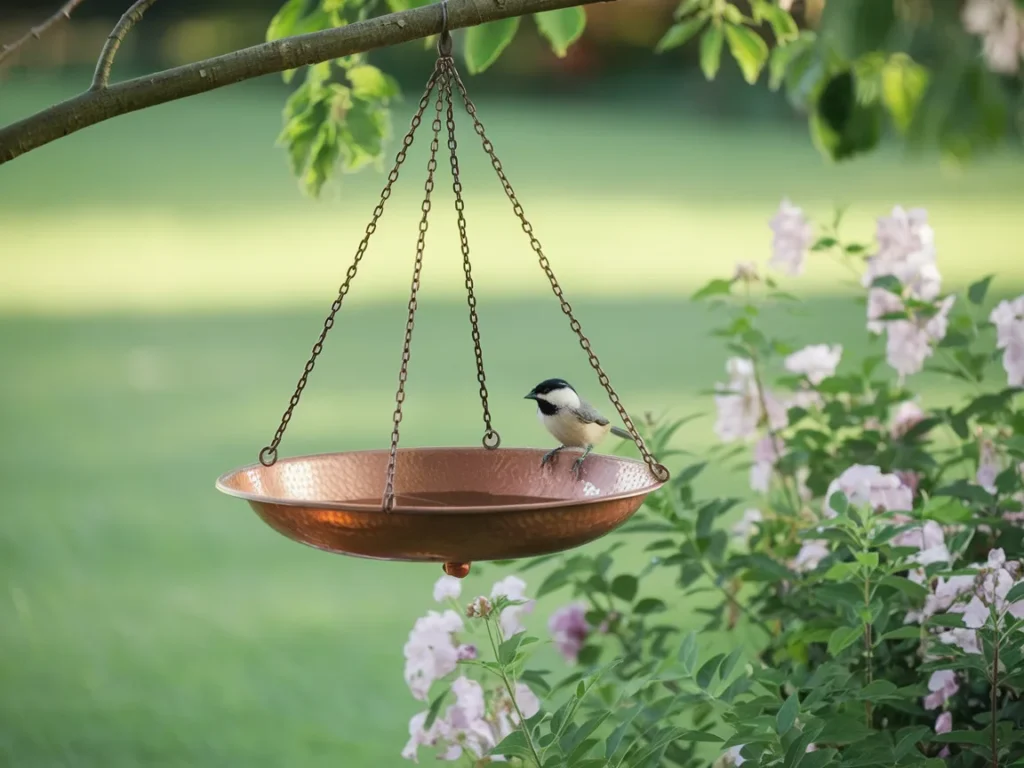
Not every yard has room for a pedestal or a ground-level bath. If you have a small patio, a balcony, or a compact garden, a hanging bird bath is the perfect solution. These baths hang from a tree branch, a hook on a pergola, or a shepherd’s hook stake in the ground. They take up zero ground space and still give birds a safe place to drink and bathe.
Hanging baths also have a built-in safety advantage. Because they are elevated and swinging slightly, ground predators like cats have a much harder time reaching the birds. Smaller songbirds especially appreciate this extra layer of security.
How to Set It Up
Choose a shallow, lightweight basin. Glass, copper, or resin work well. Attach it to three chains that connect to a single hook above. Hang the bath from a sturdy branch at about five feet high, or use a decorative shepherd’s hook staked into the garden bed. Keep it near enough to a tree or shrub that birds can fly to safety, but far enough that the branch does not hang directly over the basin and drop debris into the water.
This idea works especially well on apartment balconies where ground space is limited but you still want to invite nature closer.
Succulent Planter Bird Bath Combo
When the Bath Becomes a Garden
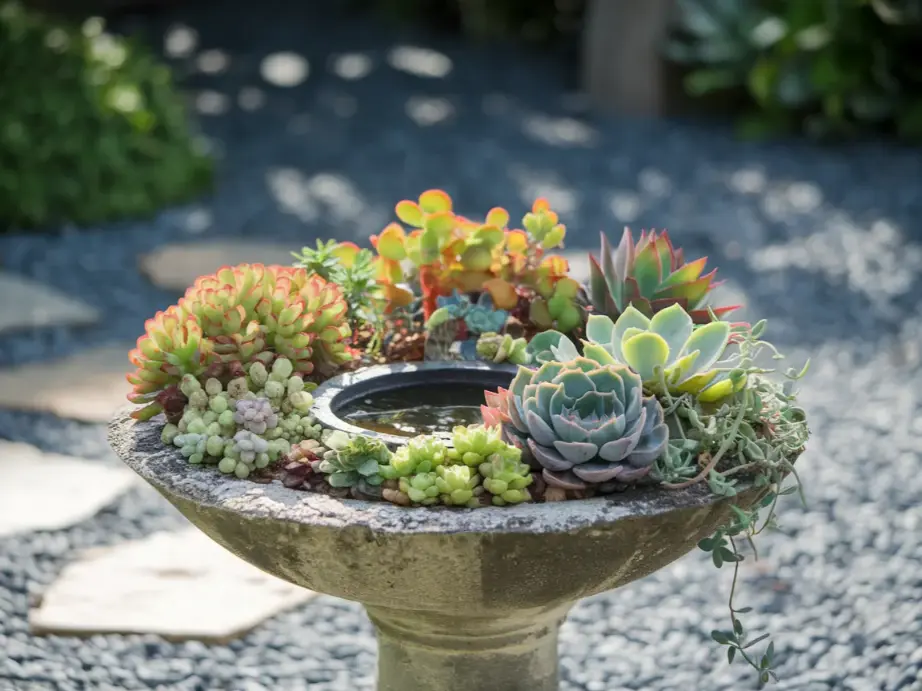
Here is a creative twist that gardeners love. Instead of using a bird bath only for water, you convert part of it into a succulent planter while keeping a small basin of water in the center or nearby. The succulents fill the wide basin with color and texture, and a small dish or cup of water tucked among the plants gives birds a place to drink.
This idea works perfectly for old, cracked bird baths that no longer hold water well. Instead of throwing them away, you give them new life as a living garden feature. Succulents like hens and chicks, sedum, and echeveria thrive in the shallow, well-drained environment that a bird bath basin provides.
Planting and Placement
Add a layer of gravel to the bottom of the basin for drainage. Fill with cactus or succulent-specific soil mix. Plant a variety of succulents with different shapes, colors, and heights. Leave one small area with a shallow dish of water for the birds, or place a separate small water dish on the pedestal base.
Set the planter bath in a sunny spot that gets at least six hours of direct light. Surround it with gravel mulch or stone pathways for a clean, desert-garden feel that ties into the succulent theme.
Japanese-Inspired Zen Bird Bath
Calm, Balanced, and Beautiful
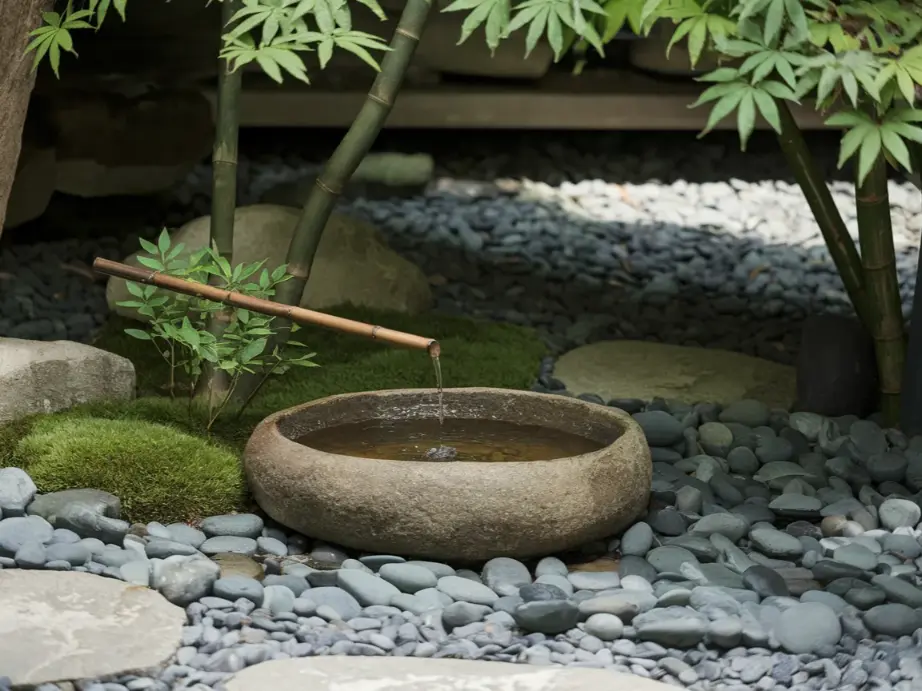
A Japanese-style bird bath, sometimes called a tsukubai, brings a sense of calm and balance to the landscape. These baths are typically low to the ground, made from natural stone, and surrounded by carefully placed rocks, moss, and bamboo. The design philosophy is about simplicity, harmony with nature, and creating a meditative atmosphere.
This style works well in shaded garden corners, near water features, or along a quiet garden path. The bird bath becomes more than a water source. It becomes a design statement that sets the mood for the entire garden area.
Creating the Zen Landscape
Place a low stone basin on a flat rock or a bed of dark gravel. Surround it with smooth river stones, patches of green moss, and one or two small ferns or bamboo plants. Keep the area clean and uncluttered. Every element should feel intentional and placed with care.
A small bamboo fountain spout (called a shishi-odoshi) that drips water into the basin adds authentic Japanese garden character and the sound of moving water that birds love.
Copper Bowl on a Tree Stump
Warm Tones Meet Woodland Style
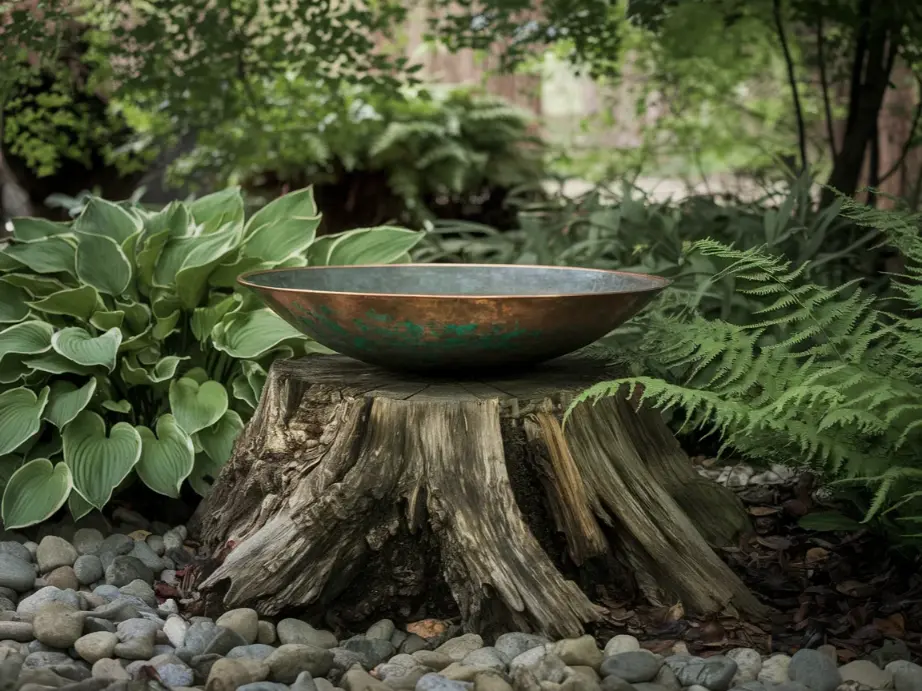
A copper bowl sitting on a tree stump creates a bird bath that looks like it grew right out of the landscape. The warm, reddish tones of copper develop a beautiful green patina over time as the metal weathers. This aging process adds character and makes the bath look more natural with each passing season.
Tree stumps are one of the most underused landscape features. Instead of grinding a stump down, you can turn it into a bird bath pedestal that becomes a conversation piece and a wildlife magnet. The organic shape of the stump and the smooth copper bowl create a contrast that is visually interesting and completely unique to your yard.
How to Set It Up
If you have an existing tree stump, level the top surface with a saw or chisel. Place a wide, shallow copper bowl on top. Make sure the bowl sits flat and does not rock. If you do not have a stump, you can buy a section of log from a garden center or firewood supplier and set it in a garden bed.
Surround the stump with shade-loving plants like hostas, ferns, or coral bells. A few river rocks scattered at the base help blend the stump into the garden floor and prevent grass from growing up against it.
Multi-Level Cascading Bird Bath
A Water Feature and Bird Bath in One
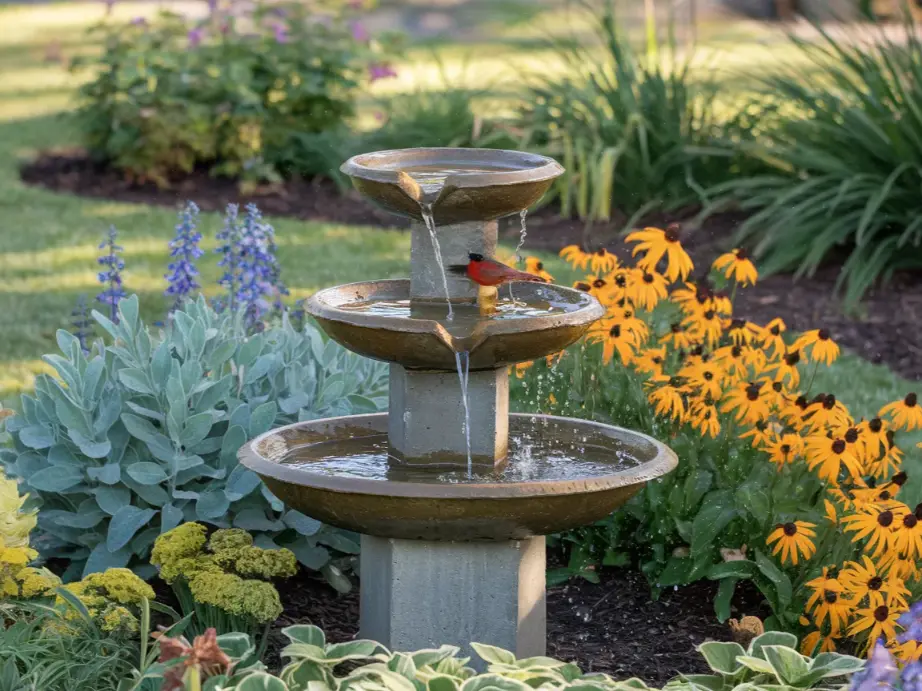
A multi-level cascading bird bath combines two or three tiers of basins where water flows from the top down to the bottom. This creates constant water movement, gentle sound, and multiple bathing spots for birds of different sizes. Smaller birds prefer the shallow upper tiers, while larger birds gravitate to the deeper bottom basin.
This style is the ultimate statement piece for a front yard, a garden entrance, or a patio area. It functions as a water feature, a bird bath, and a piece of garden art all in one. Many models come with built-in electric or solar-powered pumps that circulate the water continuously.
Placement and Landscaping
Place a tiered bird bath as the centerpiece of a circular garden bed or at the end of a garden path as a focal point. Surround it with layered plantings. Tall flowers and grasses at the back, medium perennials in the middle, and low ground cover at the front. Good companion plants include Russian sage, black-eyed Susan, salvia, and creeping Jenny.
The sound of cascading water draws birds from a distance and also adds a soothing background noise to any outdoor relaxation space.
Bird Bath Placement and Care Quick Guide
Here is a handy reference table to help you choose the right bird bath style for your yard and keep it working well.
| Bird Bath Style | Best Landscape | Ideal Placement | Maintenance Level |
|---|---|---|---|
| Classic Pedestal | Traditional gardens | Open lawn, 10-15 ft from trees | Medium, clean weekly |
| Ground Level Stone | Woodland, natural gardens | Garden bed, flush with soil | Low, refill as needed |
| Stacked Stone | Rock gardens, cottage yards | Garden path edge | Low, check stability |
| Modern Geometric | Minimalist, contemporary | Patio, gravel courtyard | Medium, clean weekly |
| Solar Fountain | Wildlife gardens | Sunny spot, 4-6 hrs sun | Low, clean pump monthly |
| Upcycled Vintage | Cottage, eclectic gardens | Near potting bench or roses | Medium, varies by material |
| Hanging | Small patios, balconies | Tree branch, shepherd’s hook | Medium, refill daily |
| Succulent Planter | Desert, modern gardens | Full sun, 6+ hrs | Low, water succulents |
| Japanese Zen | Shade gardens, meditation | Shaded corner, garden path | Low, remove debris |
| Copper on Stump | Woodland, shade gardens | Under tree canopy | Medium, polish optional |
| Multi-Level Cascade | Front yards, focal areas | Garden bed center, path end | Medium, clean pump |
Tips to Attract More Birds to Your Bird Bath
Keep the Water Fresh and Clean
This is the single most important thing you can do. Birds avoid dirty, stagnant water. Change the water every one to two days and scrub the basin with a stiff brush weekly. Avoid using soaps or chemicals. A tablespoon of apple cider vinegar per gallon of water can help prevent algae without harming birds.
Add Stones for Shallow Perching
Most songbirds prefer water that is only one to two inches deep. If your basin is deeper than that, add flat stones or river rocks to create shallow areas where smaller birds can stand comfortably. This one change can dramatically increase the variety of species that visit.
Use Moving Water
The sound of dripping, bubbling, or flowing water is one of the strongest attractants for wild birds. A simple solar bubbler, a dripper attached to a hose, or a small fountain pump can transform a quiet bird bath into a buzzing wildlife hub. Many birds that ignore still water will fly in from across the neighborhood when they hear moving water.
Plant Native Species Nearby
Birds feel safer near plants they recognize. Native shrubs, grasses, and flowering plants provide food, shelter, and nesting material while making the bird bath area feel like a natural habitat. Good choices include serviceberry, elderberry, native ferns, and ornamental grasses specific to your region. The National Wildlife Federation recommends native plantings as the foundation of any bird-friendly yard.
Frequently Asked Questions
Where Is the Best Place to Put a Bird Bath in My Yard?
Place your bird bath in a partially shaded, open area about 10 to 15 feet from shrubs or trees. Birds need clear sightlines to watch for predators, but they also want nearby perches where they can fly to dry off after bathing. Avoid placing the bath directly under trees that drop a lot of leaves or sap into the water.
How Deep Should a Bird Bath Be?
The ideal depth is one to two inches. The edges should be shallower, around half an inch, sloping to a maximum of two inches in the center. If your basin is deeper, add stones or pebbles to create shallow standing areas. Most songbirds avoid deep water because they cannot stand safely in it.
Do Bird Baths Attract Mosquitoes?
Still, stagnant water can attract mosquitoes. The best way to prevent this is to change the water every one to two days or use a solar-powered fountain or bubbler to keep the water moving. Mosquitoes cannot lay eggs in moving water, so even a small amount of circulation solves the problem.
What Material Is Best for a Bird Bath?
Concrete and natural stone are the top choices because they have a rough texture that gives birds a secure grip. Terra cotta and cast stone also work well. Avoid smooth glazed ceramic or slippery plastic, as birds have difficulty standing on these surfaces. Metal options like copper are excellent because they develop character over time and have natural antimicrobial properties.
How Often Should I Clean My Bird Bath?
Clean your bird bath at least once a week. Dump out the old water, scrub the basin with a stiff brush, rinse thoroughly, and refill with fresh water. In hot weather, you may need to clean more often because algae grows faster in warm conditions. Never use bleach, soap, or household cleaners, as residue can harm birds.
Can I Use a Bird Bath in Winter?
Yes. Birds need water year-round, and a bird bath in winter can attract species you rarely see in warmer months. In freezing climates, use a bird bath heater or de-icer to keep the water from freezing solid. Never add antifreeze or glycerin to the water, as both are toxic to birds. Simply breaking the ice daily is a safe and effective alternative.
Do Bird Baths Really Increase Bird Visits?
Absolutely. Water attracts bird species that would never visit a feeder. Birds like warblers, tanagers, and buntings are insect eaters that ignore seed feeders but are drawn to water sources. Adding a bird bath with moving water can significantly increase both the number and variety of birds visiting your yard, especially during migration seasons.
Final Thoughts
A bird bath is one of the easiest and most rewarding additions to any landscape. It brings movement, sound, and life to your garden in a way that few other features can match. Whether you choose a classic pedestal, a modern geometric design, or a creative upcycled vintage piece, the birds will find it and make it their own.
The 11 ideas in this guide cover every landscape style and budget. Pick the one that fits your yard, place it thoughtfully, keep the water fresh, and then sit back and enjoy the show. There is something deeply satisfying about watching wild birds choose your garden as their favorite spot.
If you are also working on your outdoor space this season, explore ideas for patio lighting and outdoor jacuzzi setups to create a complete backyard retreat that you and the birds will love.
Happy landscaping.